Human-Centered AI: Utah’s Trailblazers Define the Next Era of Innovation
The 2025 Utah AI Summit panel showcased human-centered AI leadership. Paul Allen, Travis Oliphant, and Andrew Carr shared with moderator Cydni Tetro and the audience insights on iteration, experimentation, and empowering teams, emphasizing culture as the key to AI adoption.
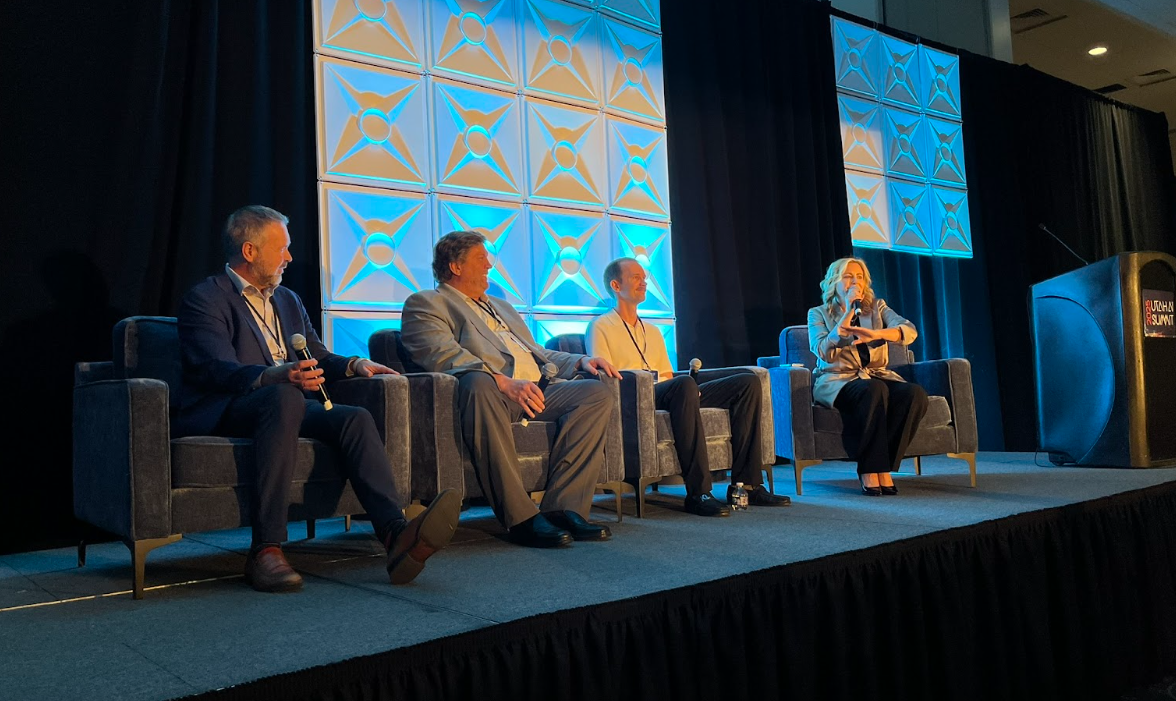
Utah AI Summitafternoon panel: AI Trailblazers – Visionary Leaders Defining the Next Era of AI. Paul Allen, Travis Oliphant, Andrew Carr, and Cydni Tetro (moderator), 12/02/2025
Utah AI Summitafternoon panel: AI Trailblazers – Visionary Leaders Defining the Next Era of AI. Paul Allen, Travis Oliphant, Andrew Carr, and Cydni Tetro (moderator), 12/02/2025
Salt Lake City, Utah - December 5, 2025
At the 2025 Utah AI Summit, the afternoon panel discussion, “AI Trailblazers – Visionary Leaders Defining the Next Era of AI,” brought together three groundbreaking leaders—Paul Allen, Travis Oliphant, and Andrew Carr—for an in-depth conversation on the future of artificial intelligence. Moderated by veteran technology executive, serial entrepreneur and champion of women in tech, Cydni Tetro, the session highlighted how these visionaries are not just adapting to the AI revolution but actively setting the national standard for responsible, human-centered innovation.
Allen, co-founder of Ancestry.com and now CEO of AI studio SOAR, highlighted the work of Citizen Portal, a SOAR subsidiary that uses AI to consolidate government documents and meetings, providing clear, accessible information for everyday citizens.
Oliphant, creator of Python libraries SciPy, NumPy, and Numba and CEO of Quansight, emphasized making open-source contributions sustainable for developers while enabling rapid innovation.
Carr, co-founder of Cartwheel, a startup providing AI toolkits for animators, scientists, and artists, shared insights from his work on OpenAI Codex, Google Brain, and Lyft’s self-driving car projects.
AI’s Biggest Changes in the Last Three Months
Tetro asked the panel: “As you think about your industries in the last three months, what’s changed what you do the most because of AI?”
The conversation quickly turned to “vibe coding,” iterative, AI-driven experimentation. Allen explained, “My experience recently with vibe coding has convinced me that I don't want any employees in the next 90 days who aren't vibe coding and vibe marketing constantly.” He noted that despite investments and subscriptions, many people fear AI, which prevents them from experimenting and iterating quickly. Allen likened the current moment to a near-deity level of creation: “We now live in a time where we can create things by simply speaking them into existence.” He plans to hire experts to train his team in effective AI usage to accelerate innovation.
Vibe coding refers to an iterative, experimental approach to using AI in creative and technical workflows. It emphasizes speed, flexibility, and constant feedback rather than perfect first attempts. The idea is to rapidly generate ideas, code, or designs using AI tools, test them immediately, gather user or system feedback, and refine the results in real time.
Oliphant echoed Allen’s points, emphasizing that Quansight has built the operating system to enable people to experiment efficiently. He acknowledged the fear among students and professionals worried about AI replacing jobs: “I think all these young people that are worried about the future should be thinking, oh, there are massive companies out there that need help to be guided into the AI era.”
Carr offered a cautionary note, warning that uncontrolled experimentation could become “vibe debugging.” Nevertheless, he affirmed that AI has dramatically enhanced the productivity of Cartwheel’s scientific team.
The Power of Iteration and Feedback
A major theme of the panel was iteration. Oliphant stressed that success in AI isn’t just about tools—it’s about asking better questions and embracing feedback. “Most first iterations are terrible,” he said. “If you have a hard problem, break it up into smaller problems and solve those, and keep doing that.” He highlighted that many new graduates equate feedback with failure, but in reality, it’s a key component of learning and improvement.
Allen shared how Citizen Portal leverages 40,000 daily user interactions to refine its platform. With the speed enabled by vibe coding, the team can implement changes within 24 hours and observe how users respond, enabling unprecedented experimentation and execution.
Carr described how Cartwheel empowers its scientists by providing dedicated computing resources. He built a miniature data center in his Utah County shed, with city-approved power upgrades, allowing five scientists to train 15 different models a day. “Owning our compute lets my team experiment freely,” he said.
Moving Forward
The panel concluded with a unified message: the time to act is now. The tools and infrastructure exist; the main barriers are organizational culture and individual willingness to experiment. While some view AI as a threat, the panelists agreed it presents a life-changing opportunity for those willing to iterate and innovate.
Allen is pushing his team to master AI immediately. Carr ensures his scientists have the freedom and resources to experiment. Oliphant continues to foster open-source collaboration as a driver of innovation. As Carr put it, we should strive to become “agentic” ourselves—taking initiative, experimenting, and embracing AI as a tool to amplify human potential.
The summit made one thing clear: AI’s future is inextricably human-centered, and Utah is positioning itself to lead the way.