Lauren Mason Carris is Chief Inspiration Officer at Colibri Insights and Senior Product Strategist at Codingscape. She sat down with SheTech-TechBuzz Media Interns, Lucciana Venancio and Julia Tullis, to discuss leadership, technology and education.
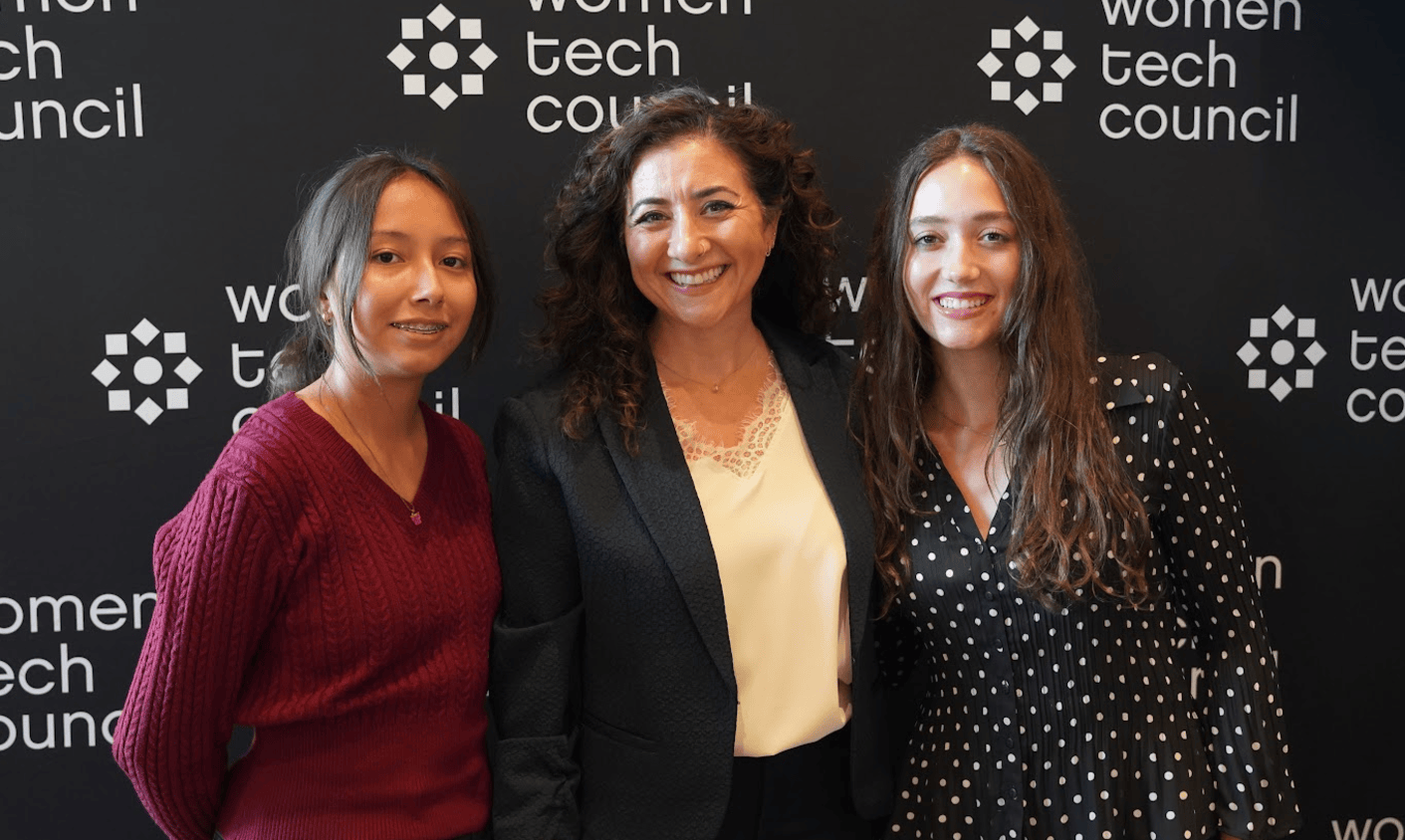
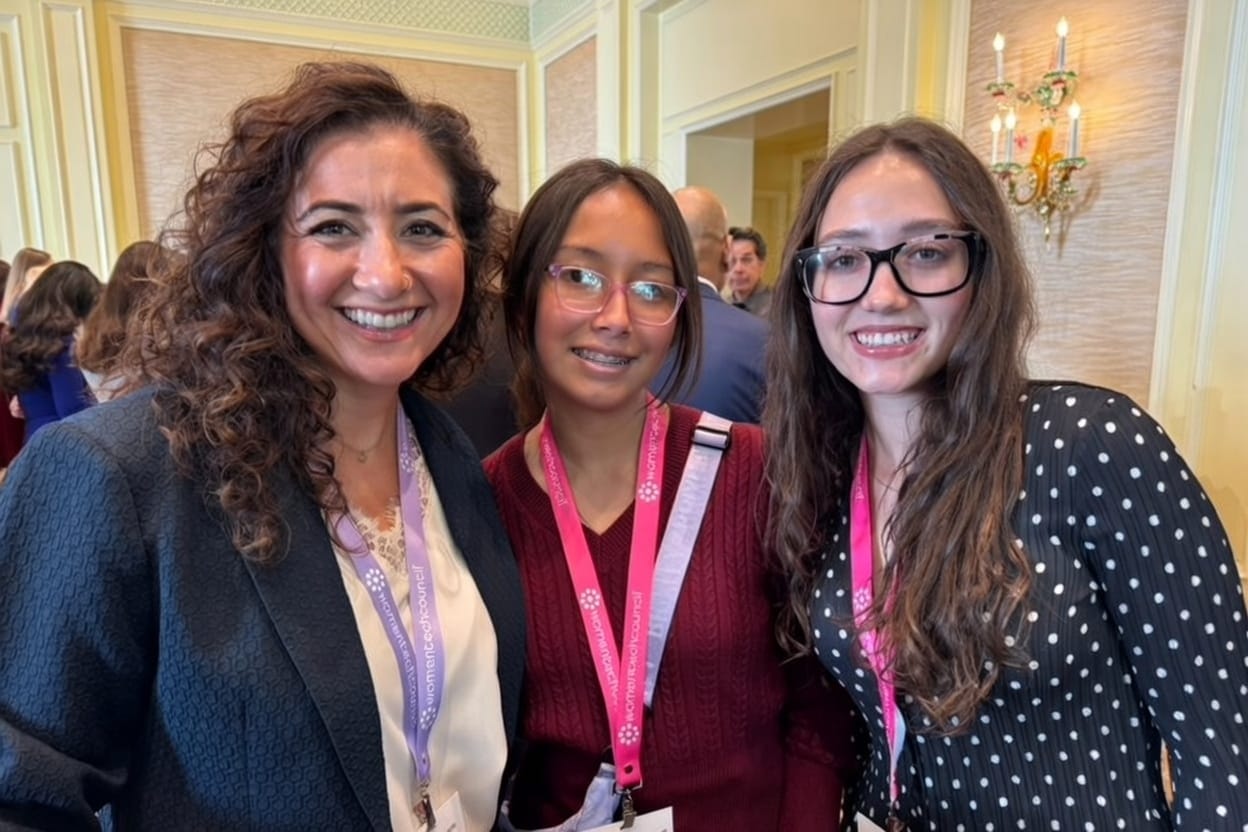
Lauren Mason Carris, Lucciana Venancio, and Julia Tullis at Women Tech Awards, October 3, 2025, Salt Lake City
Lauren Mason Carris, Lucciana Venancio, and Julia Tullis at Women Tech Awards, October 3, 2025, Salt Lake City
A Conversation with Lauren Mason Carris on Leadership, Technology, and Education
Salt Lake City, Utah — January 26, 2026
Lauren Mason Carris is Chief Inspiration Officer at Colibri Insights and Senior Product Strategist at Codingscape. Both jobs are based in Salt Lake City. She was a finalist for the 2025 Women Tech Awards. Previously she was VP of Product and Learning Design at Penny AI and Find Your Grind, a career exploration platform that helps students discover future pathways through short, mobile-first lessons.
Before her work reached learners at scale through technology, Carris taught English to the children of migrant farmworkers in Southern California. Those early classroom experiences continue to shape how she approaches leadership today. “I got super passionate and politicized about access to education,” Carris says. “I wanted to inspire young people to learn more about themselves and explore their options.” For her, education was never just about content—it was about giving students a sense of control over their own futures.
While teaching, Carris saw firsthand how access to learning could shape opportunity, confidence, and long-term outcomes. Students who felt seen and supported were more likely to imagine futures beyond the limits placed on them. That idea stayed with her and helped guide the direction of her career: education should open doors, not reinforce barriers.
Before her work reached learners at scale through technology, Carris taught English to the children of migrant farmworkers in Southern California. Those early classroom experiences continue to shape how she approaches leadership today. “I got super passionate and politicized about access to education,” Carris says. “I wanted to inspire young people to learn more about themselves and explore their options.” For her, education was never just about content—it was about giving students a sense of control over their own futures.
While teaching, Carris saw firsthand how access to learning could shape opportunity, confidence, and long-term outcomes. Students who felt seen and supported were more likely to imagine futures beyond the limits placed on them. That idea stayed with her and helped guide the direction of her career: education should open doors, not reinforce barriers.
Carris’s path into education was not linear. She began her academic journey at a community college in Los Angeles while living with her aunt, navigating higher education step by step. That experience made her especially aware of how important access and support systems are for students who don’t follow traditional paths. She later transferred to the University of California, Santa Barbara, where she studied anthropology and Spanish. There, she became interested in how language, culture, and communication shape identity, power, and belonging.
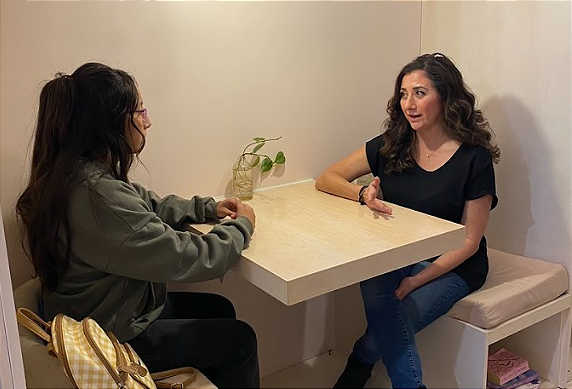
Lucciana Venancio interviewing Lauren Mason Carris at Maven Create, Salt Lake City
That curiosity eventually led her toward linguistic anthropology and education. Rather than focusing only on theory, Carris wanted to understand how ideas about language and culture could actually show up in classrooms—especially those serving multilingual students and English language learners. Her background helped her see how teaching methods could be adjusted to better reflect students’ lived experiences.
To bring those ideas into practice, Carris pursued graduate studies at UCLA, earning a TESOL (Teaching English to Speakers of Other Languages) certification. During that time, she began experimenting with digital learning tools, well before online education became common. “I got really interested in assistive technology for language learners,” she explains. “Even when faculty weren’t familiar with it, students were thriving online.”
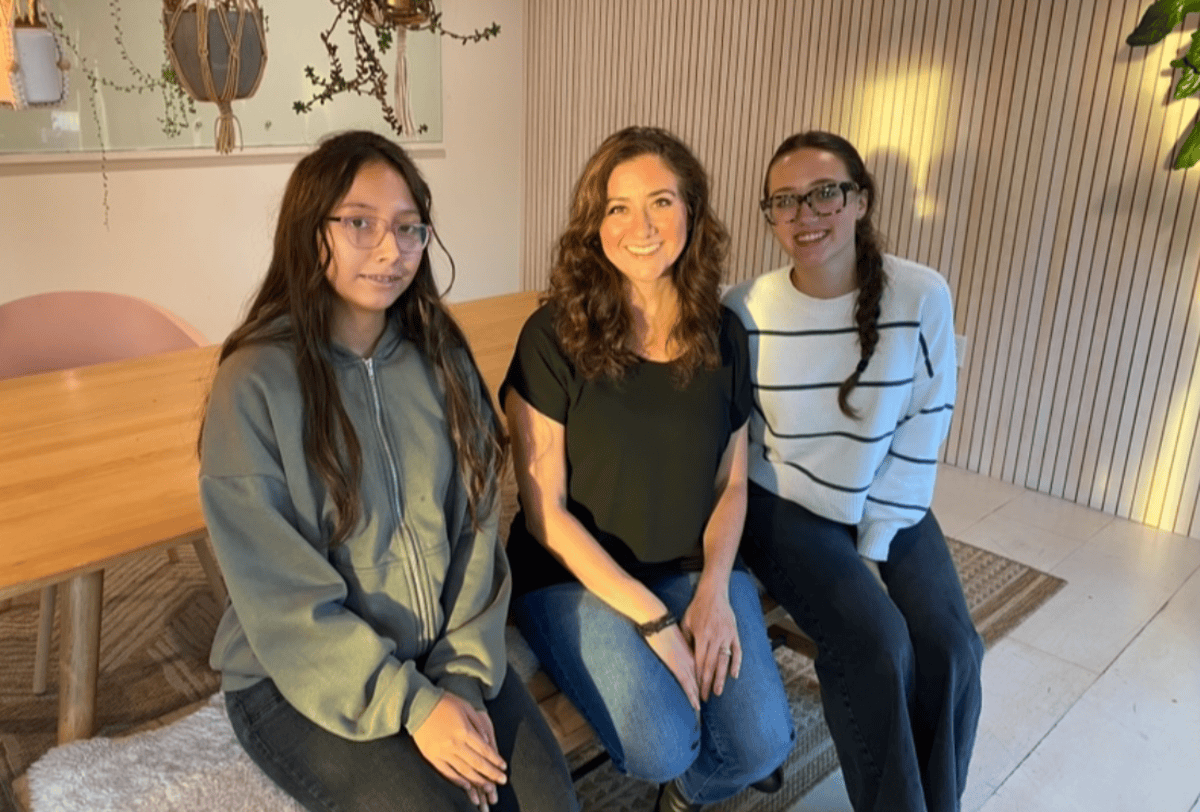
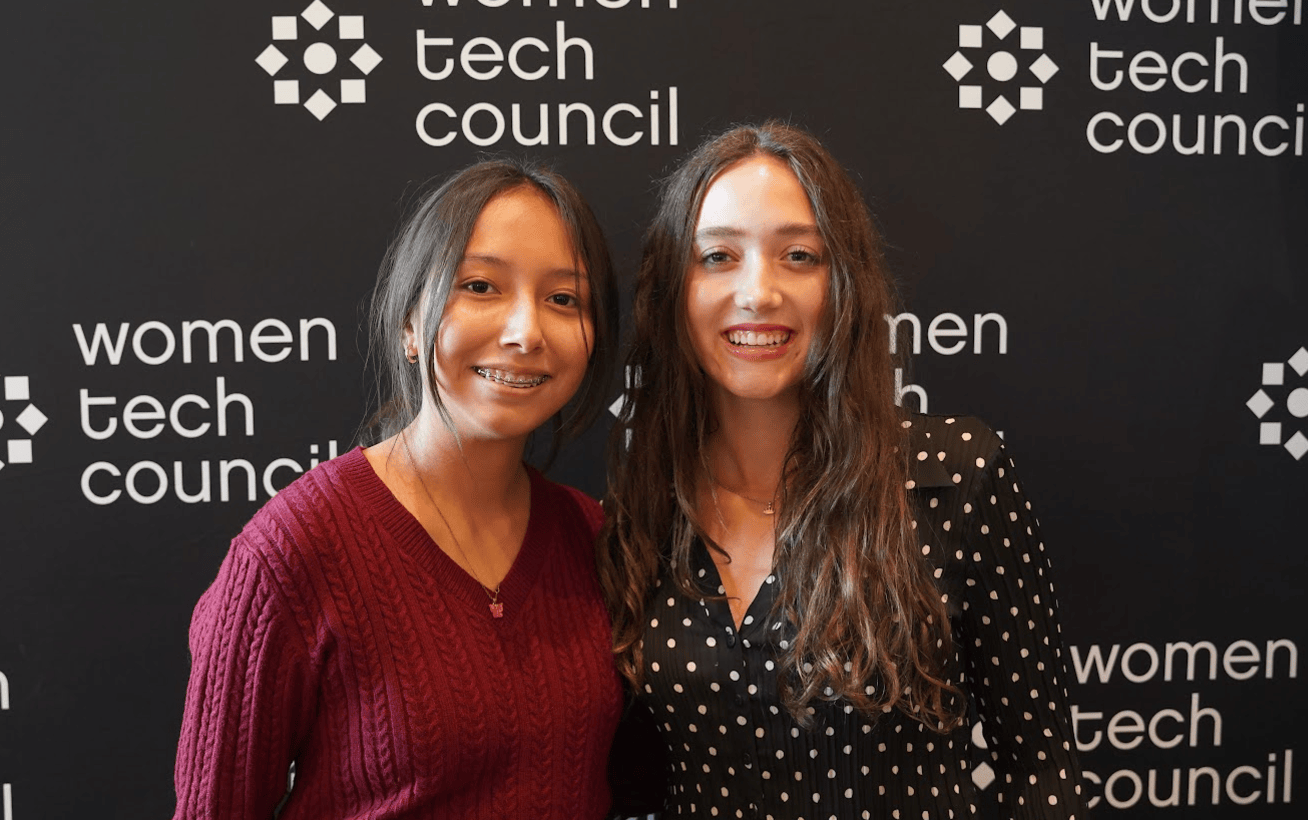
Lucciana Venancio, Lauren Mason Carris, and Julia Tullis at Maven Create, Salt Lake City
Carris used early digital platforms like discussion boards, chat tools, and social media groups to create learning communities outside the classroom. These spaces were especially helpful for immigrant and marginalized students who often felt disconnected in traditional school settings. For Carris, technology was never about trying something new just for the sake of it. “It was about removing barriers,” she says, “and creating spaces where students could support one another and feel heard.”
After graduate school, Carris took her work to a global level as Director of Program Design for a large, multi-country education system. In this role, she helped develop curriculum that could be adapted across different cultures and languages. “It was super fun, but also challenging,” she says. “You had to constantly rethink what learning looks like in different environments.” That experience helped her learn how to design programs that actually work for students in different countries and cultures—skills she now uses in her leadership role in education technology.
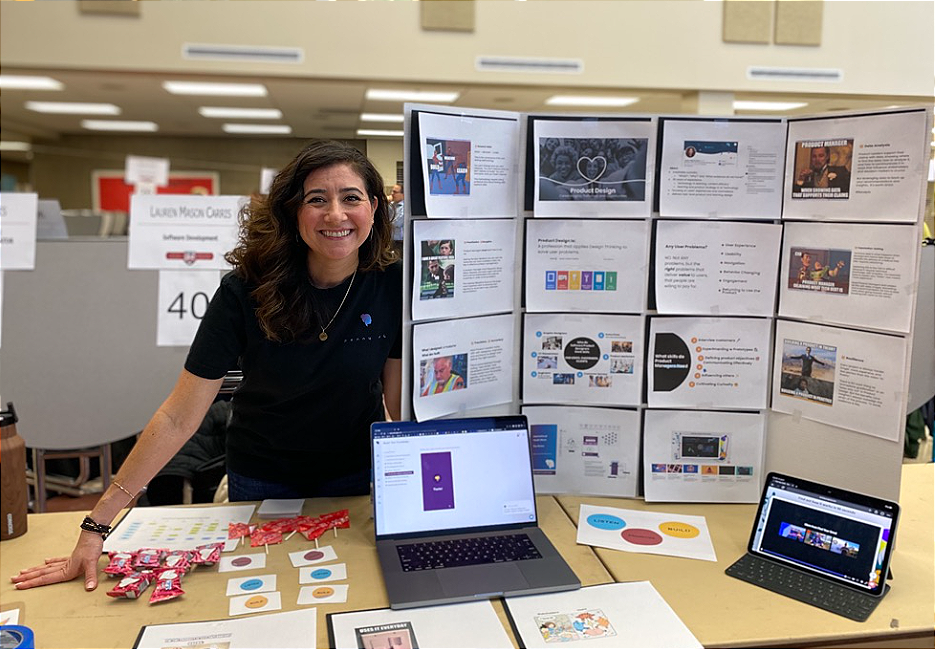
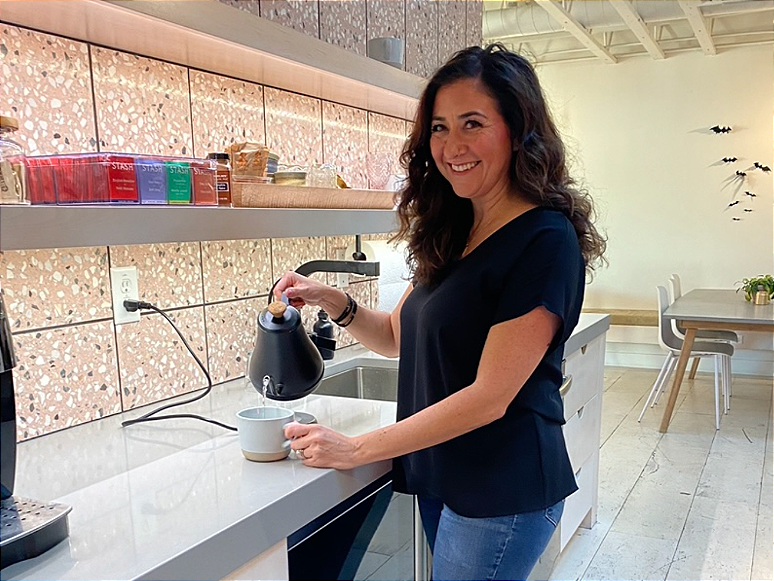
Lauren Mason Carris at Maven Create, Salt Lake City
Today, Carris serves as an executive product and strategy leader, working across technology, education, and workforce systems to design human-centered products, platforms, and AI solutions at scale. She partners with leadership teams as a fractional executive, advisor, and facilitator to help organizations manage disruption in the age of AI by leading product strategy, learning design for internal career pathways, and business outcomes in moments of transformation.
Lauren's work spans startups, nonprofits, and innovation communities, impacting over 750,000 learners, professionals, and leaders. She is known for designing inclusive, evidence-informed experiences that expand access to opportunity and elevate how organizations think about growth, talent, and impact. Carris is recognized for her ability to translate complex challenges into clear product direction, inclusive experiences, and durable systems for growth. Her leadership demonstrates how thoughtfully designed technology and people-centered leadership can create meaningful, scalable change.
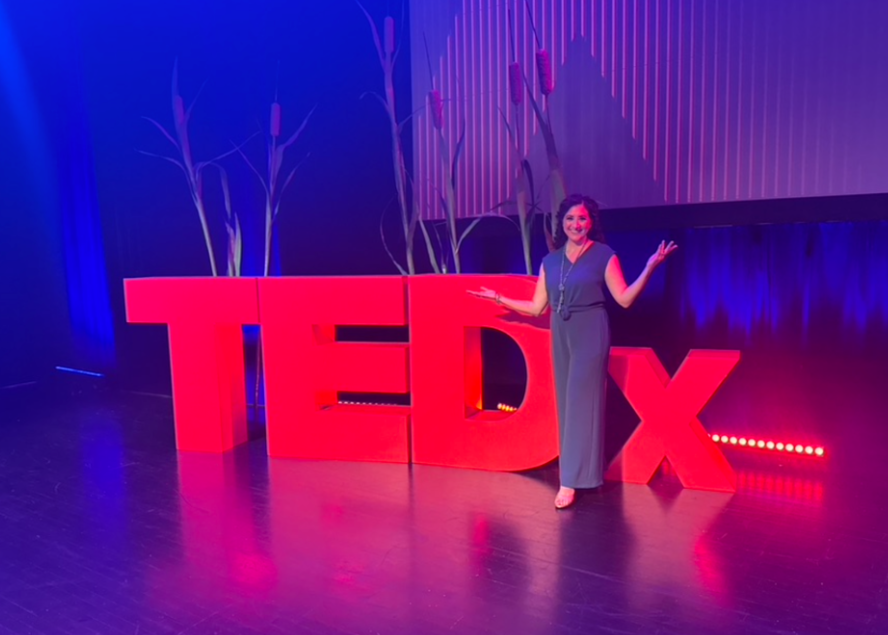
Carris is deeply committed to mentorship and community involvement. She mentors emerging leaders through Silicon Slopes Women in Leadership, supports K–12 STEM initiatives, and speaks on education, leadership, events such as TEDxSaltLakeCity where she recently shared her idea about how tech can contribute to innovative climate solutions. Her impact has also been recognized through honors like the Women Tech Awards, which celebrate leaders using technology for social good.
Carris is intentional about modeling balance and authenticity in leadership. She values family, music, and creative environments that encourage collaboration. “These co-working spaces keep work interesting,” she says. “It’s nice to be somewhere lively and creative, not isolated at home.” Her openness, curiosity, and commitment to inclusion make her a strong role model for aspiring educators, technologists, and young women figuring out their own paths.
Lauren Mason Carris, Lucciana Venancio, and Julia Tullis at Women Tech Awards, October 3, 2025, Grand America, Salt Lake City
For students and young professionals—especially young women—who may feel unsure about their futures, Carris offers simple but meaningful advice: stay curious and don’t feel pressured to have everything planned out. “You don’t have to have it all figured out,” she says. “Try things, pay attention to what energizes you, and let yourself change.” She encourages students to see learning as something that grows with them, rather than a final destination.
Carris’s story shows that impactful leadership is built through empathy, persistence, and a willingness to take nontraditional paths. From teaching English to migrant children to designing technology-based learning experiences used by students around the world, her journey highlights how education and innovation can come together to create real opportunity. Her work is a reminder that when purpose drives progress, lasting change is possible.
Lucciana Venancio Mostaceli and Julia Tullis are 2025-26 SheTech Media Interns with the Women Tech Council and TechBuzz News.
Lucciana Venancio Mostaceli is a freshman at Utah County Academy of Sciences (UCAS) in Provo, Utah. She dreams of a future in STEM. Originally from Peru, she loves friends, family, and hopes to make a difference.
Julia Tullis is a senior at Karl G Maeser Preparatory Academy in Lindon, Utah. She is interested in history, reading, and playing electric bass in her rock band. She is a SheTech board member and SheTech-TechBuzz media intern.
Lucciana and Julia will be joining thousands of young women at SheTech Explorer Day 2026 on February 24, a hands-on STEM conference for Utah high school girls, offering workshops, mentors, role models, career pathways, and collaborative tech challenges in an engaging, supportive environment.
Share this article
The link has been copied!
Your link has expired. Please request a new one.
Your link has expired. Please request a new one.
Your link has expired. Please request a new one.
Great! You've successfully signed up.
Great! You've successfully signed up.
Welcome back! You've successfully signed in.
Success! You now have access to additional content.