In the Arena: UVU Sandbox Students Pitch 25 Startups
Utah Valley University’s Sandbox Demo Day showcased 25 student startups applying AI and SaaS models across industries, highlighting rapid execution, early traction, and the program’s emergence as a serious startup pipeline.
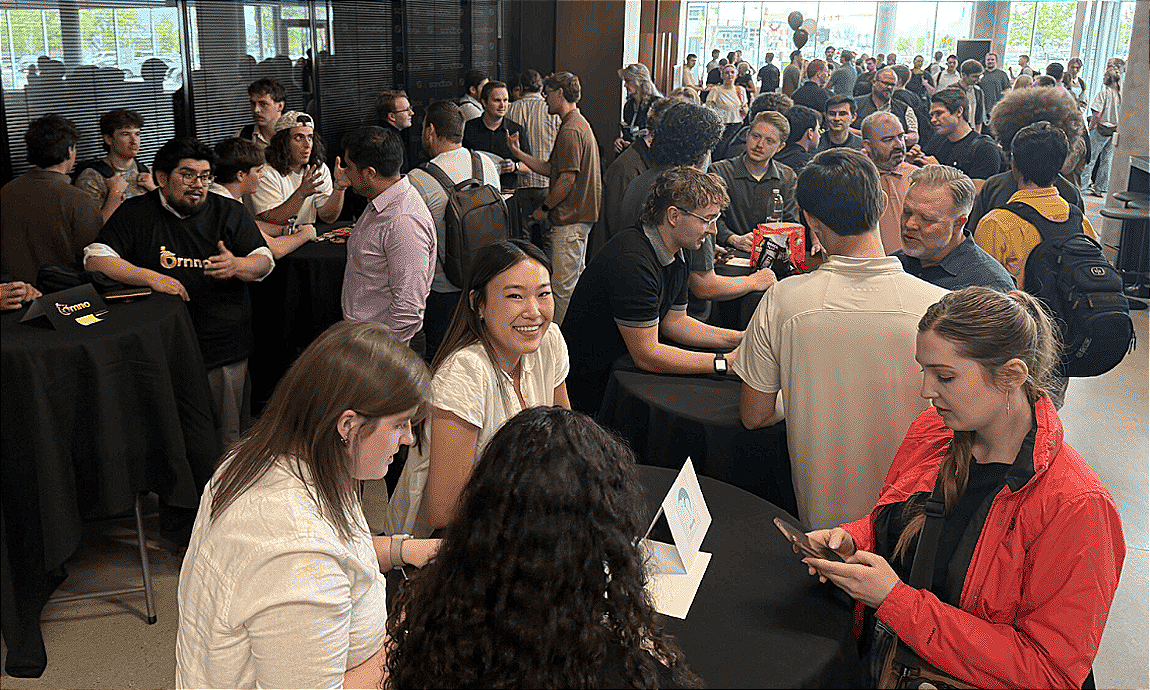
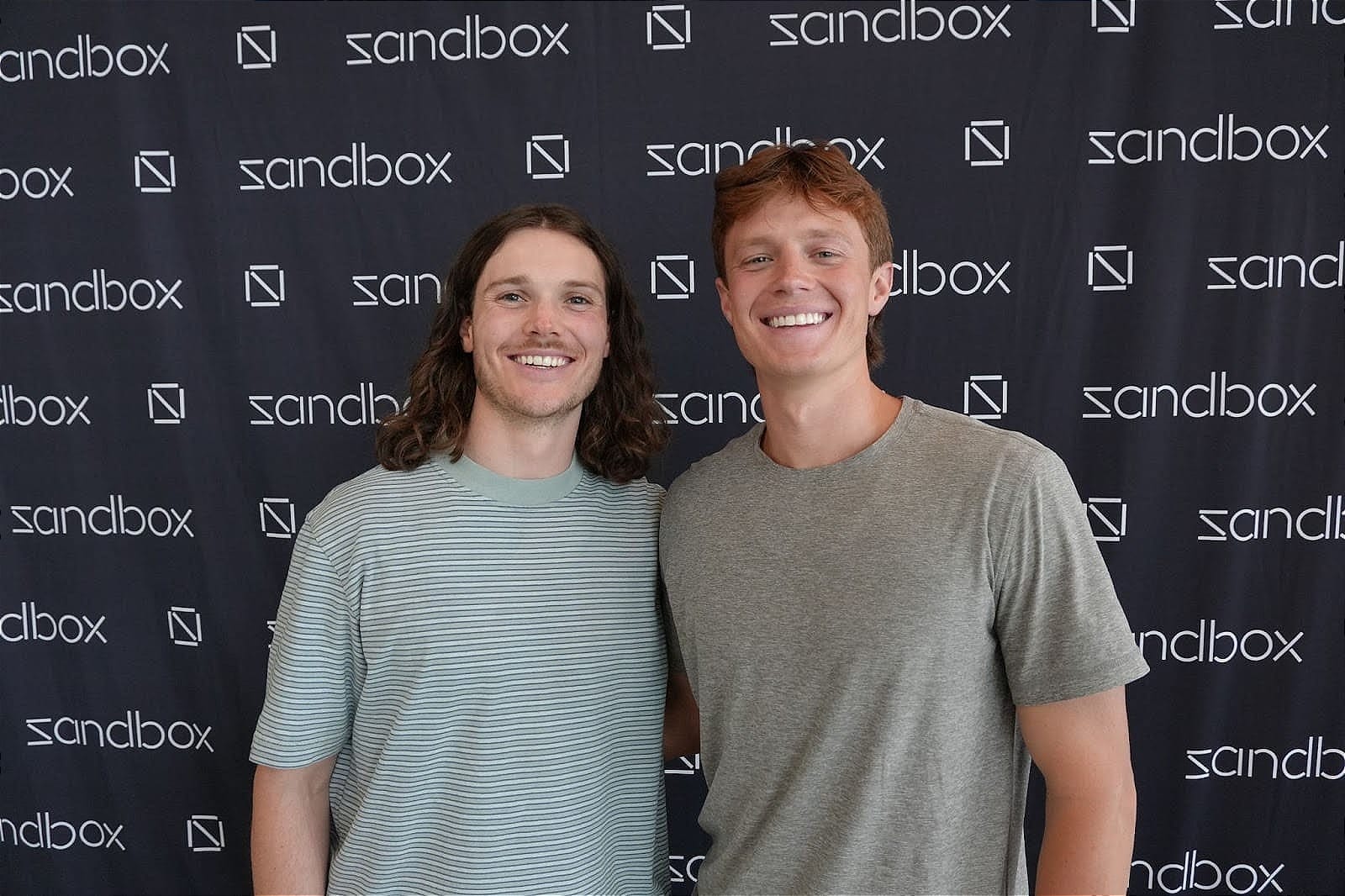
Sandbox founders mingling with attendees at 2026 Sandbox Demo Day, UVU Vallejo Auditorium, Orem, Utah
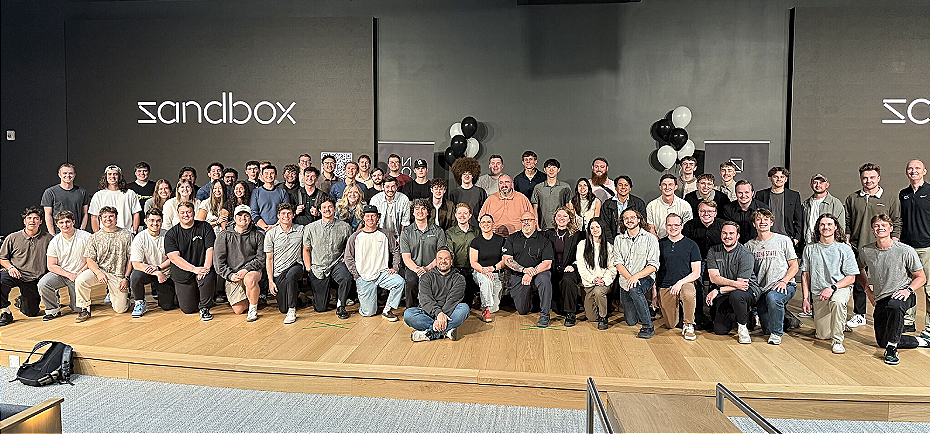
Sandbox founders mingling with attendees at 2026 Sandbox Demo Day, UVU Vallejo Auditorium, Orem, Utah
Orem, Utah — April 3, 2026
Earlier this week twenty-five student-built startups from the sixth Sandbox cohort (SB05) pitched to a packed audience at Utah Valley University’s Sandbox Demo Day, capping a year-long entrepreneurship program that is quickly becoming one of the most productive student accelerators in the state. The pitches ranged from AI-powered tax preparation to mesh networking for stadiums.
The event was hosted by Tyler Jennings, who leads the state’s entrepreneurial ecosystem under the Governor’s Office of Economic Opportunity and also runs the UVU Sandbox program in an adjunct role. He set the tone early by calling out a former Sandbox student in the audience.
“Hunter, tell everyone real fast what milestone you just crossed,” Jennings said. “$100,000 of monthly recurring revenue from something you started.”
The moment underscored the program’s focus: Sandbox is not a classroom exercise—it is about building real companies.
“Lives Change in Sandbox”
Jennings opened by contrasting Sandbox with a traditional university course.
“There’s not a syllabus that says, ‘Hey, do this and do that and you’re going to get an A,’” he said. “Building a company is a whole other beast.”
Earlier in the week, Jennings shared a quote from investor Sahil Bloom with the cohort: intelligence is abundant, but courage is not. He followed that with a story about Qualtrics founder Ryan Smith, emphasizing not just intellect but a bias toward action.
“What was special about Ryan was his willingness to take risks and to get in the arena,” Jennings said.
He closed his remarks with a familiar message to founders: keep building.
“Don’t let this be the end of your building journey,” he said. “Let this be the beginning of what you build.”
The Pitches: 25 Teams, 90 Seconds Each
What followed was a rapid-fire showcase of 25 startups, each given roughly 90 seconds.
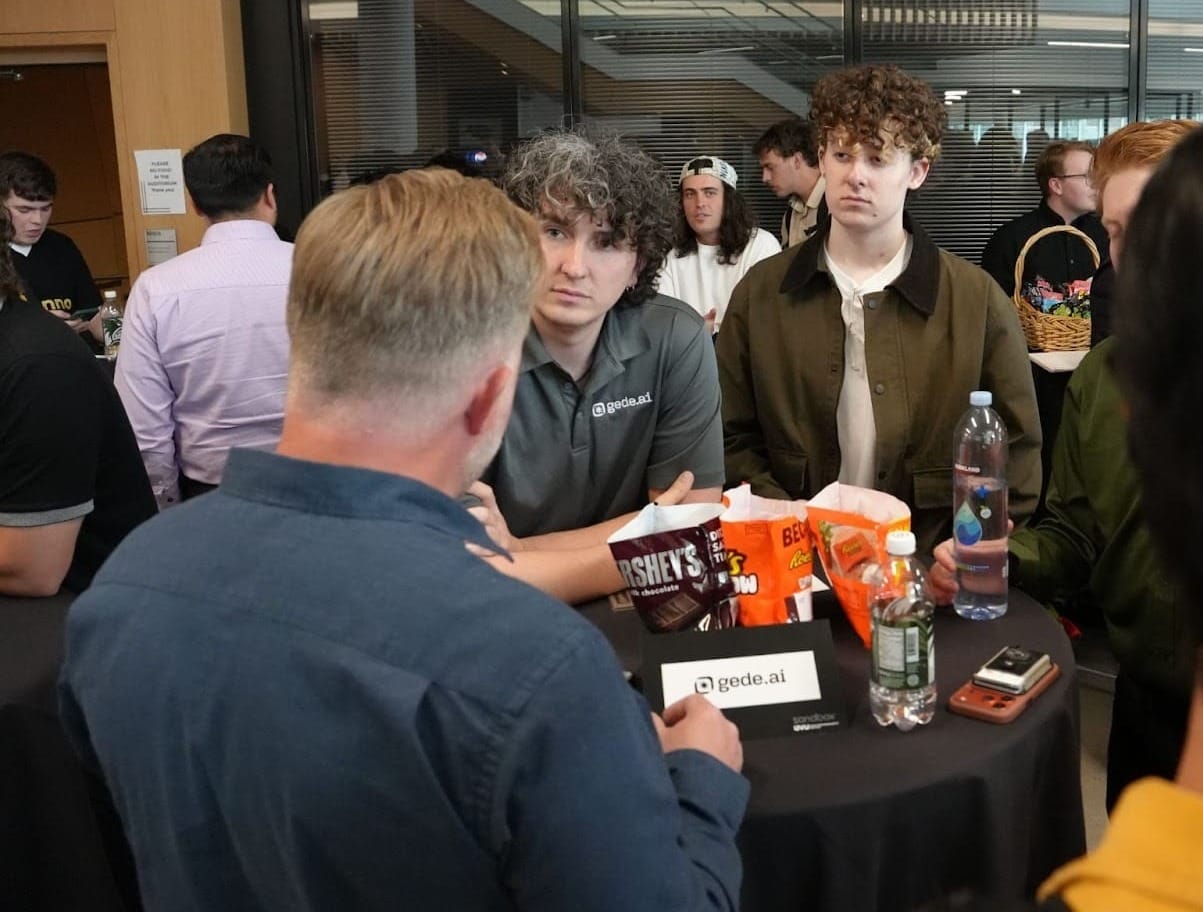
Gede AI meeting with attendees at 2026 Sandbox Demo Day, UVU Vallejo Auditorium, Orem, Utah. (Credit: Conrad Bradford)
AI Applied to Niche Industries
A clear pattern emerged: teams identified manual, fragmented workflows in overlooked industries and applied AI to automate them.
Gede AI reported $538,000 in annual recurring contract revenue, an 80% close rate, and an average deal size of $125,000. The company builds a deterministic rules engine designed to turn one-off AI outputs into structured, reusable logic.
Alate is developing a parts-sourcing agent for independent powersport and motorcycle shops, where technicians often spend hours tracking down components across multiple distributors. The team signed three pilot agreements during a three-week validation phase and has several more clients nearing contract.
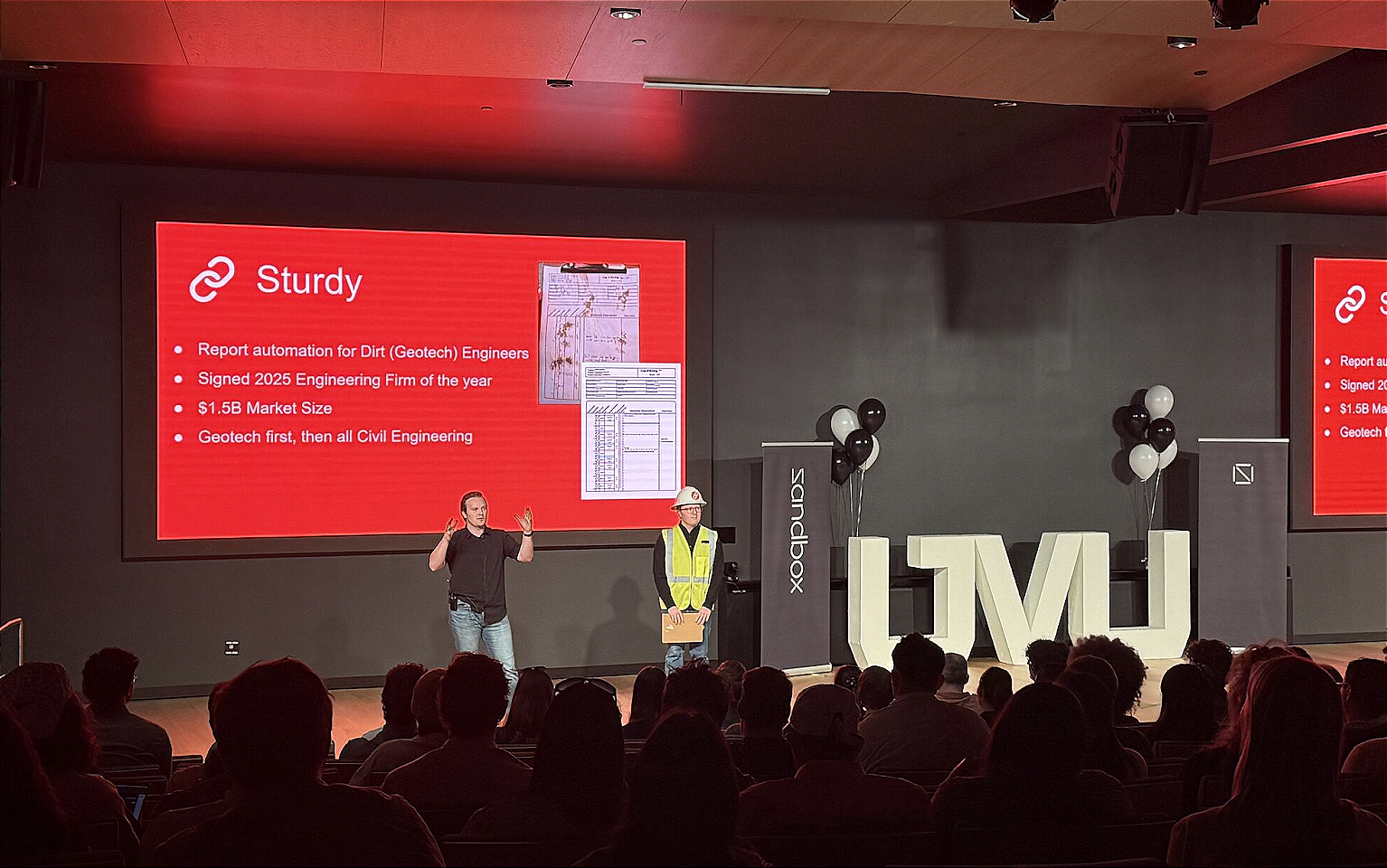
Sturdy founders Andrew Ostler and James Knowles pitching at the 2026 Sandbox Demo Day. UVU Vallejo Auditorium, Orem, Utah.
Sturdy targets geotechnical engineers, who frequently transfer data manually between field, lab, and office systems. Its product converts field logs into finalized reports in minutes. The company has already signed a major engineering firm in Utah.
Paloma focuses on tax accountants, automating document intake and data entry. The company launched in early February, during peak tax season, and has already secured paying customers.
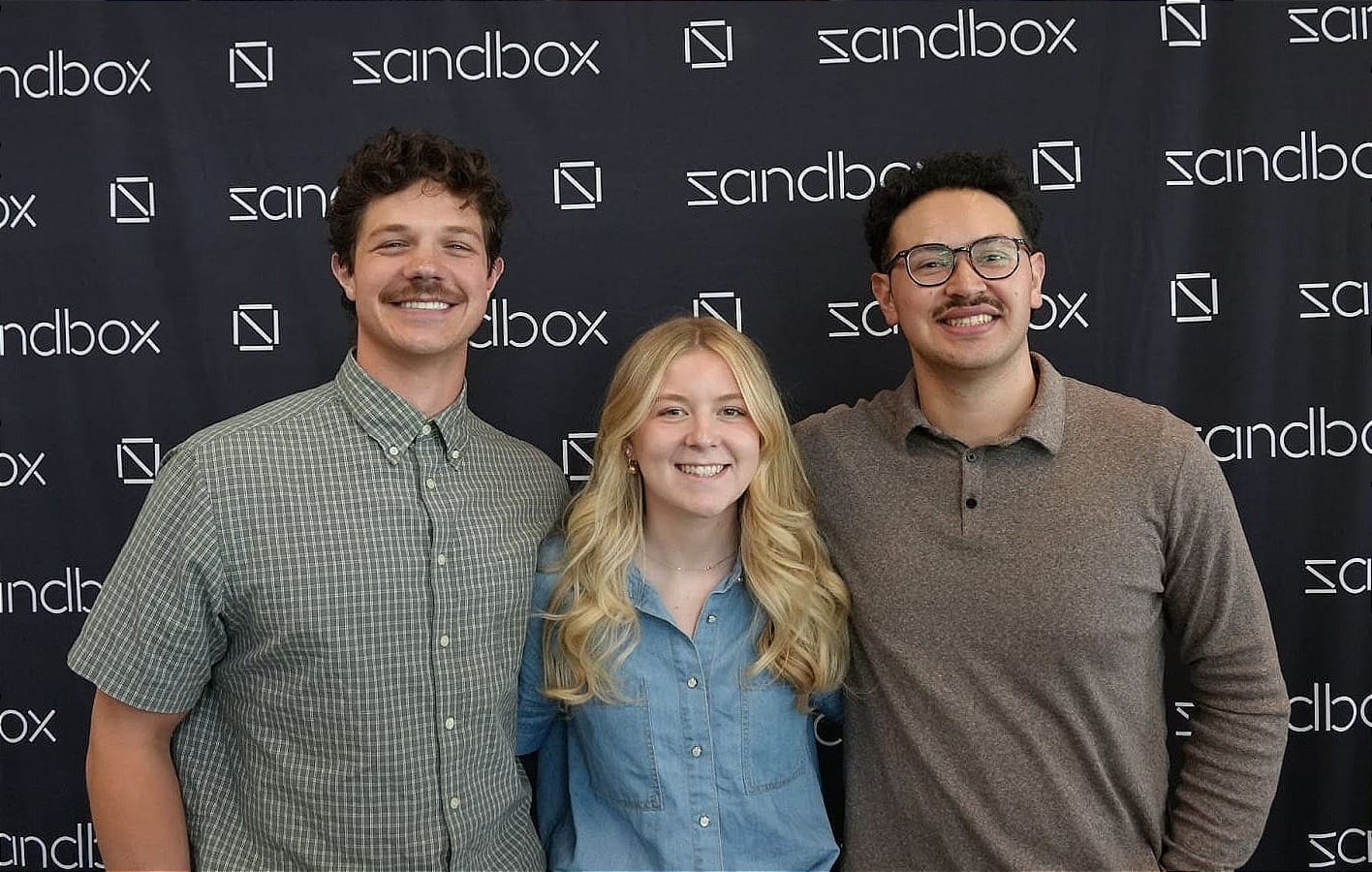
Abby Melby, Stevie Ibarra, and Bronson Hatch of Paloma at the 2026 Sandbox Demo Day. UVU Vallejo Auditorium, Orem, Utah. (Credit: Conrad Bradford)
Consumer and Social Impact
Several teams focused on consumer-facing problems and financial access.
Wagevo aims to replace payday loans by giving employees access to earned wages for a flat fee. The company is operating across dozens of restaurant and hotel locations and has raised early funding.
Rooms AI is experimenting with a different approach to dating apps, using conversational AI to assess compatibility and explain match recommendations. Early users have already gone on multiple dates through the platform.
Remembrance is working on early detection of cognitive decline related to Alzheimer’s and similar conditions, using AI-driven analysis. The company reported rapid early revenue growth.
Infrastructure and Technical Systems
A smaller group of teams tackled more technically ambitious problems.
Zeva is building mesh networking systems that turn phones in a crowd into distributed network nodes, potentially replacing traditional infrastructure at large events. The founder has prior experience developing similar systems for military applications.
Terra Scout is developing an off-grid communication and tracking platform aimed at outdoor users. The team cited early demand, including letters of intent and initial product sales.
B2B SaaS Across Verticals
A large portion of the cohort focused on vertical SaaS.
Vuely co-founders Spencer Browning and Jack Kelly, posing after pitching at 2026 Sandbox Demo Day, UVU Vallejo Auditorium, Orem, Utah. (Credit: Conrad Bradford)
Nolly captures institutional knowledge from employees before they leave and turns it into a searchable AI system for new hires.
HingeFlow tracks door and hardware installation in commercial construction, where delays can have cascading effects on project timelines.
Synker automates scheduling for part-time employees and recently signed a university contract, with thousands of shifts already processed through the platform.
Vuely generates measurements, mockups, and proposals for signage companies from a single uploaded image, significantly reducing turnaround time.
Klovva tracks legislation in real time and generates AI summaries, targeting government and policy workflows.
Also presenting were Skedra (scheduling for assisted living facilities), dductly (financial dashboard for small businesses), Lot Logic (used car reconditioning workflow), Parent Bridge (AI-driven co-parenting app), Bruno (auto detailing booking platform), SoundHaven (a sound-based stress regulation app), Latch Base (bid automation for door installation companies), and PIKLO (a pickleball community and tracking app).
The Arena
Jennings closed by emphasizing the effort required to build even a single successful product experience.
“The amount of work, blood, sweat, and tears that went into just one person using your product is the journey of a lifetime,” he said.
He also made a case to employers in attendance, describing Sandbox participants as unusually strong hires due to their hands-on experience building companies from scratch.
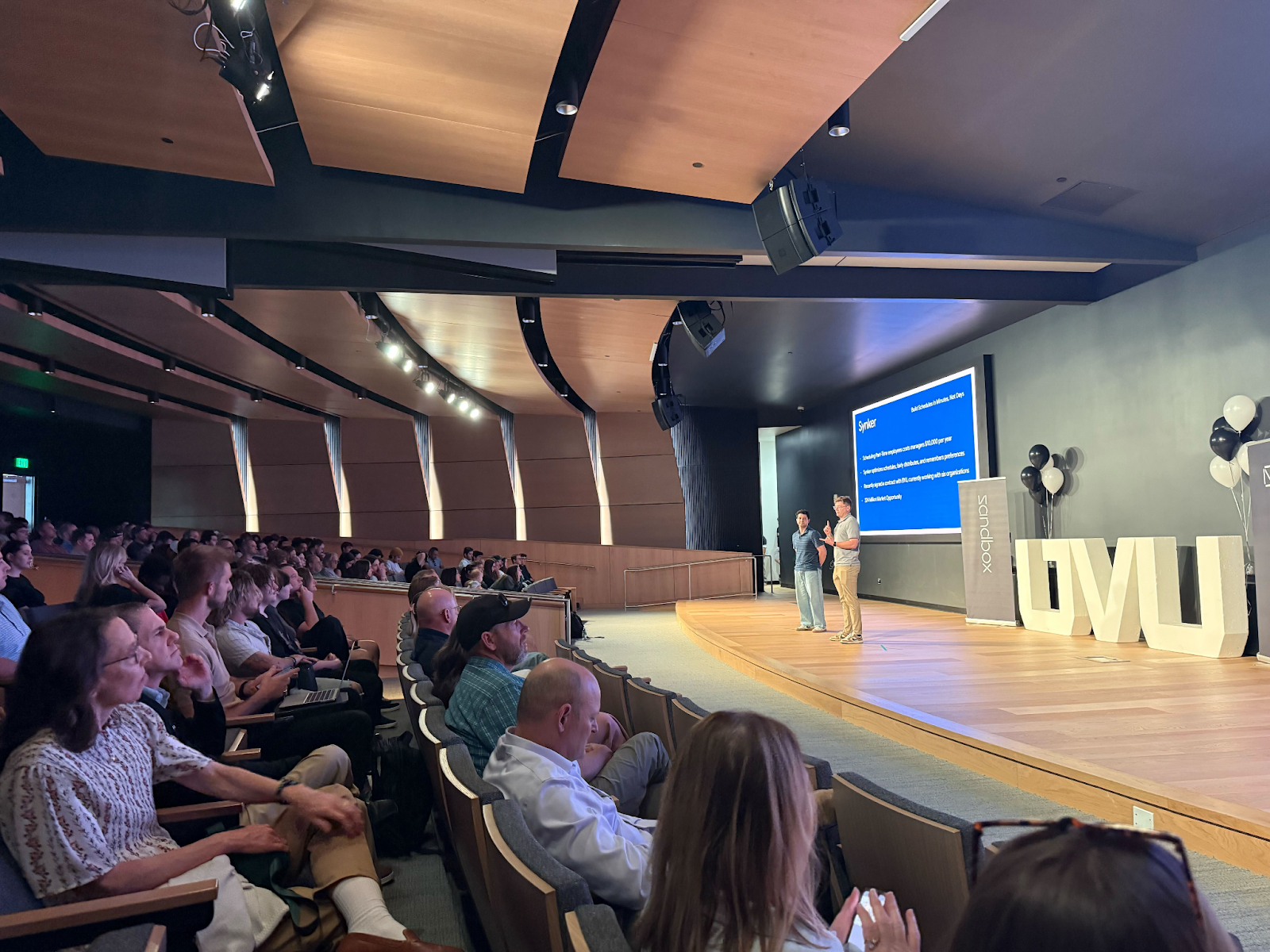
Synker co-founers, Nic Bramble and Carter Duncan, pitching at 2026 Sandbox Demo Day, UVU Vallejo Auditorium, Orem, Utah
A Growing Pipeline
For students who continue beyond the program, Sandbox is increasingly functioning as a launchpad.
Between Gede AI’s contract revenue, Wagevo’s early traction, and other Sandbox alumni hitting meaningful revenue milestones, the outcomes are beginning to resemble early-stage startups more than class projects.
Next year’s cohort was in the audience. They will take the stage in 12 months.