BYU’s Sandbox program — founded in 2020 and now spanning nine universities across five states — held its sixth annual Demo Day in Provo, with roughly forty student-founded startups pitching across healthcare, fintech, AI infrastructure, sales automation, and consumer technology.
Sandbox Demo Day at BYU's Varsity Theater, Provo, Utah, April 1, 2026. Credit: Spencer Bartholomew
Sandbox Demo Day at BYU's Varsity Theater, Provo, Utah, April 1, 2026. Credit: Spencer Bartholomew
Provo, Utah — April 1, 2026
At BYU's Varsity Theater today forty six student-founded companies each took the stage for sixty seconds to make their case. Several are mentioned below. BYU Sandbox Demo Day is the culminating showcase of BYU’s entrepreneurship program. The statewide Sandbox Demo Day on April 28 is a must-attend fixture on Utah’s startup events calendar.
From BYU Experiment to Multi-State Program
Sandbox was founded at BYU in 2020 as an experimental, for-credit startup incubator within the Marriott School of Business. The concept was straightforward but demanding: give students two full semesters to build a real company, not a class project, culminating in a public Demo Day showcase. Co-founder and CEO Chris Crittenden set the tone in 2014. "Students get real world experience launching something real," he has said. "Our students are putting in 25 hours a week minimum — the best teams are putting in 40, 60, 80 hours a week."
Also in 2024, Crittenden announced that Sandbox would expand beyond BYU to three additional Utah institutions: Utah State University, Utah Tech University, and Utah Valley University. That was only the beginning. Over the following two years, the program spread to BYU-Idaho, Northern Arizona University, Boise State University, and the University of Louisville — crossing state lines for the first time. Then, in March 2026, the University of Utah announced its own Sandbox partnership, a high-profile collaboration spanning the Kahlert School of Computing, the College of Science, the David Eccles School of Business, the Lassonde Entrepreneur Institute, and the Doman Innovation Studio. U of U President Taylor Randall called the partnership a way to give students "pathways to be entrepreneurial and make measurable impact, while helping develop Utah's next generation of business leaders."
Sandbox says over a dozen of their companies have been venture backed at a combined valuation of $180 million and six of them have been accepted to Y Combinator.
The cohort of 46 companies that presented at Demo Day this week, SB05 (the first was a pilot), is the sixth cohort at BYU — the original Sandbox campus — and the breadth and maturity of what they've built reflects a program that has found its stride.
Sales, Revenue Intelligence & Business Automation
Credit: Spencer Bartholomew
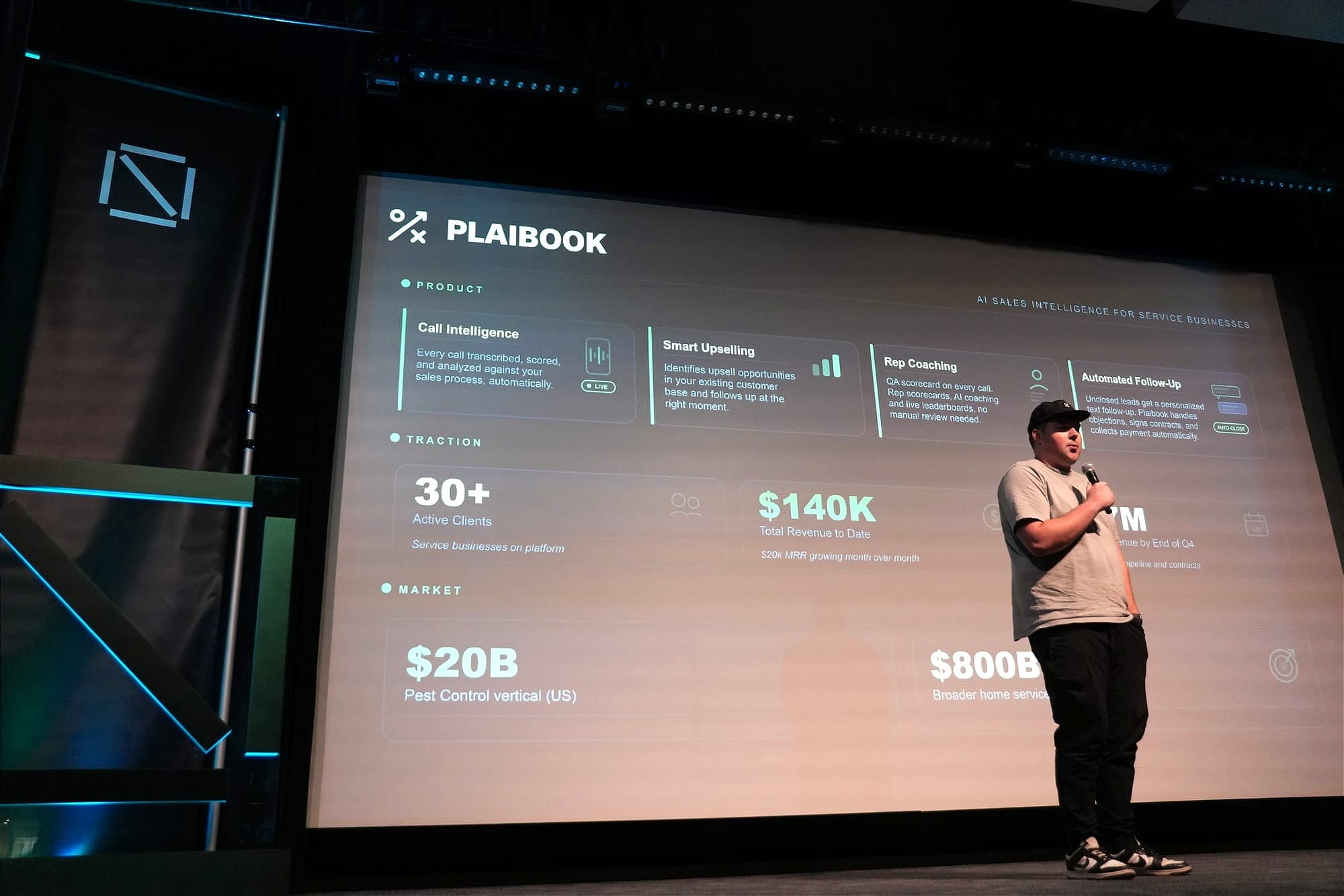
Several of this cohort's most traction-heavy companies are attacking sales and revenue operations. Plaibook, perhaps the most seasoned pitch on the stage, started as a call intelligence tool for a pest control company, pivoted into an AI chatbot that books mosquito control jobs (generating $700,000 in revenue for their first client and a $70,000 cut for the team), and has now evolved into a full call intelligence and automated follow-up platform. With 33 signed clients, $130,000 in revenue, $20,000 in monthly recurring revenue, and a projection of $1.7 million by year-end, Plaibook is the kind of story Sandbox was built to produce.
Credit: Spencer Bartholomew
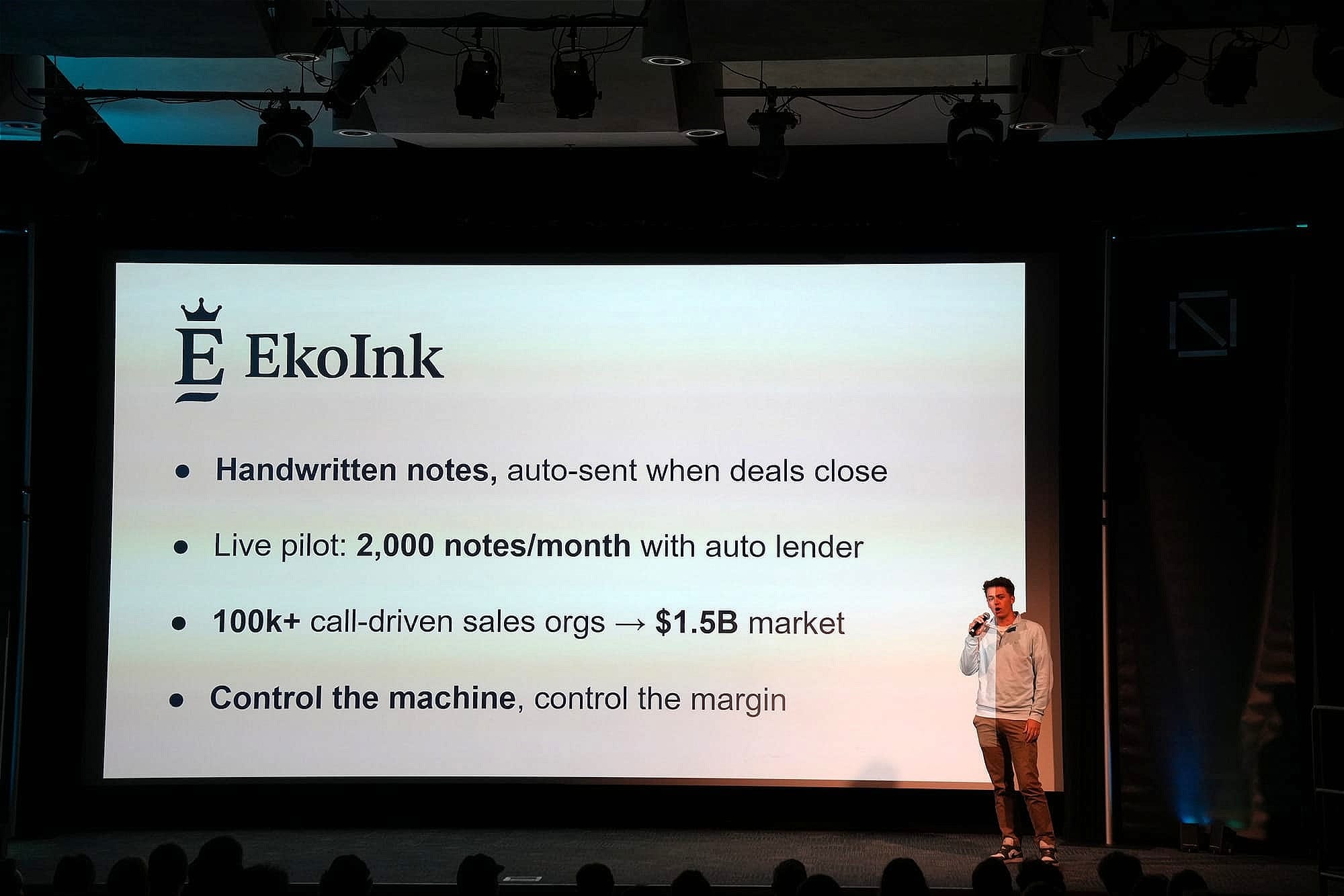
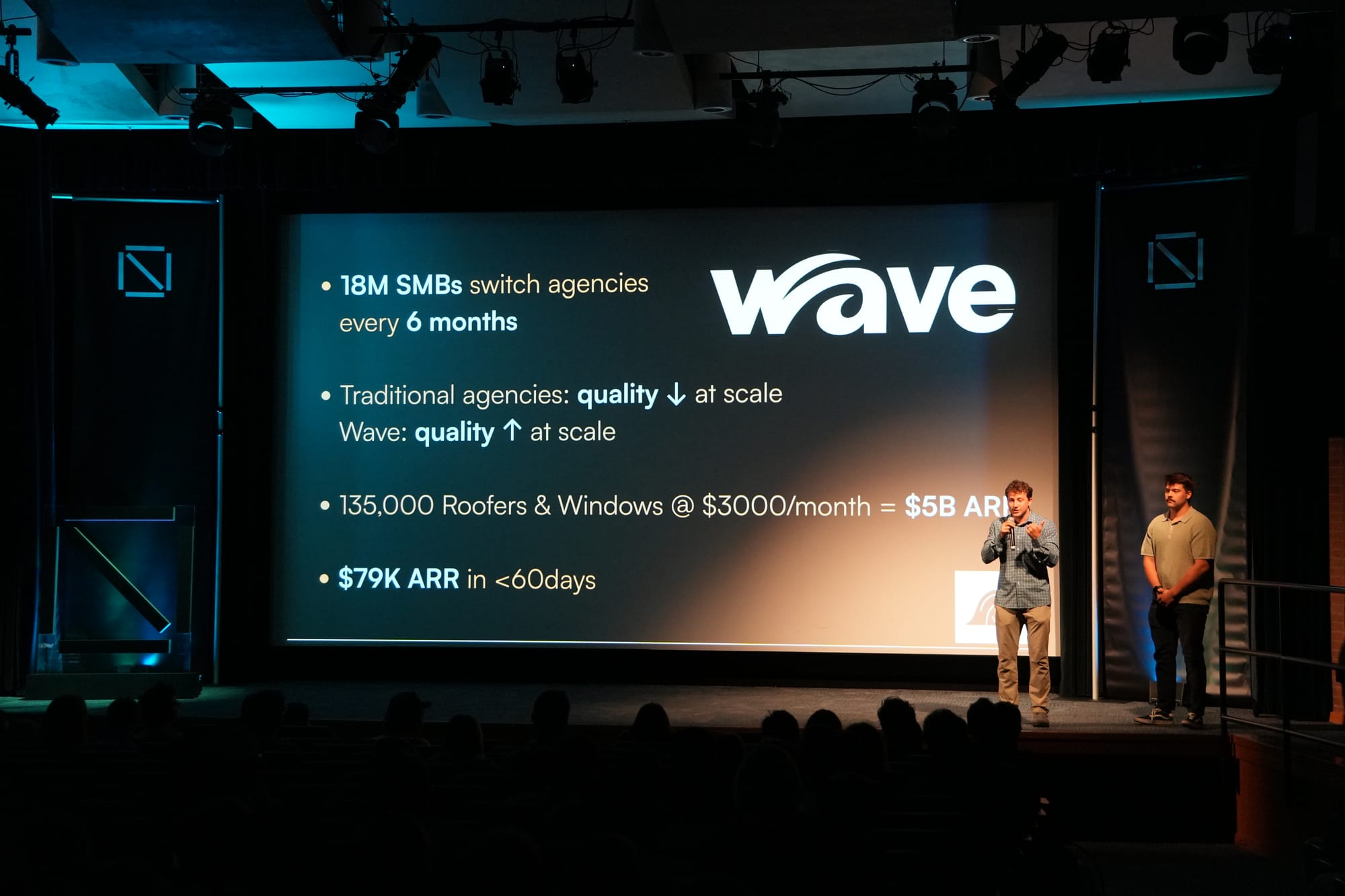
EkoInk is solving a different kind of sales problem: the thank-you note nobody sends. The company automates the entire process of sending handwritten notes to customers — from the sales call through handwriting and mailing — and is going live with an auto lending company processing 2,000 notes a month. Wave, an AI-powered marketing agency tool for roofing and window contractors, arrived at $79,000 in ARR in under 60 days.
Credit: Spencer Bartholomew
Healthcare, Senior Care & Skilled Nursing
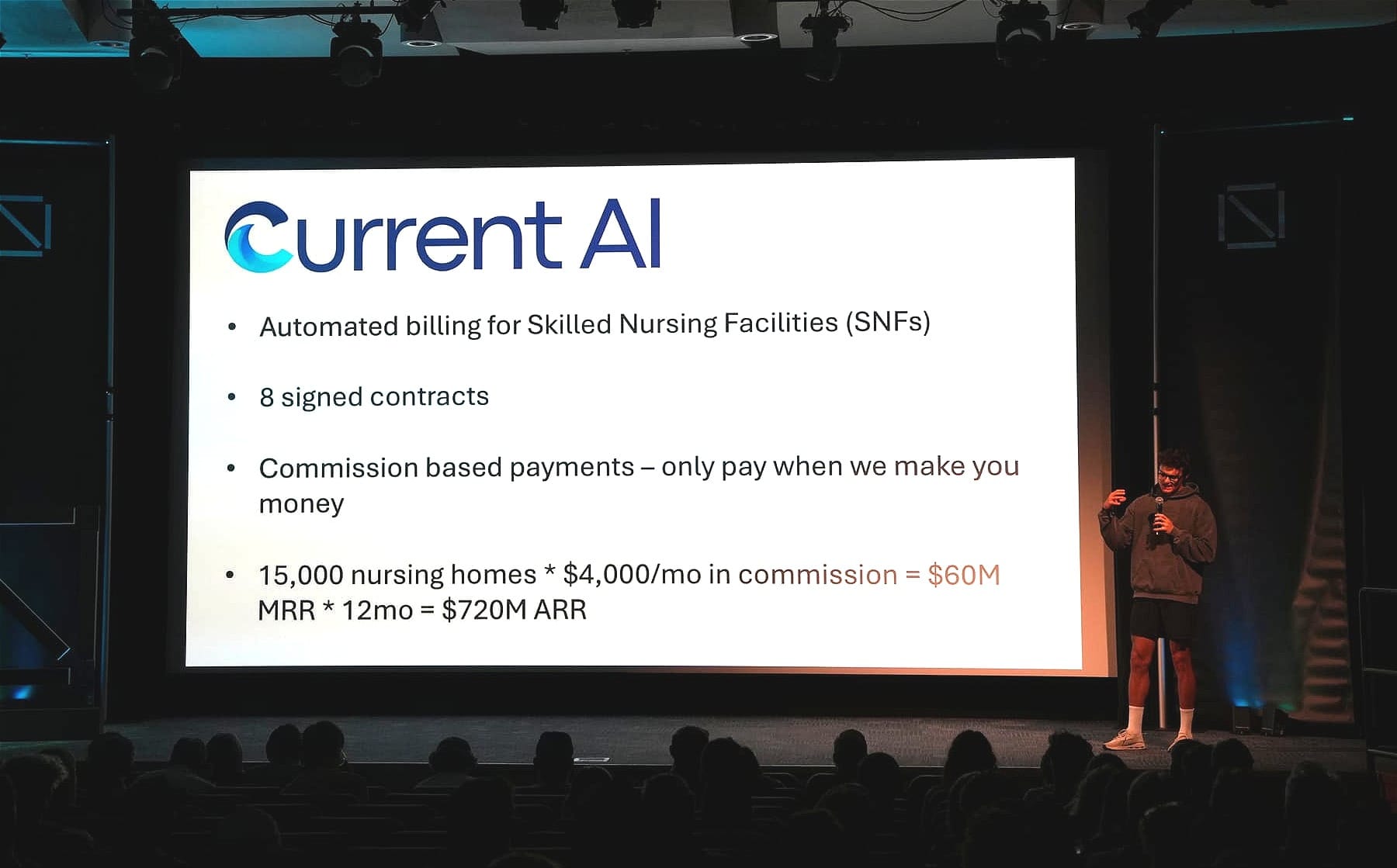
Healthcare dominated a significant slice of the cohort, with multiple teams targeting the skilled nursing and senior living space specifically. Current AI focuses on Medicare billing accuracy — finding claims that skilled nursing facilities missed and taking a commission on what it recovers. With eight signed contracts and large operators who could roll the product across dozens of facilities, the team is chasing what they estimate is a $720 million market. Sauce AI is attacking the intake side of the same industry: ingesting 50-to-200 page patient referral packets and automating admissions decisions for skilled nursing facilities, with three coordinators ready to pay once the product reaches HIPAA compliance.
Credit: Spencer Bartholomew
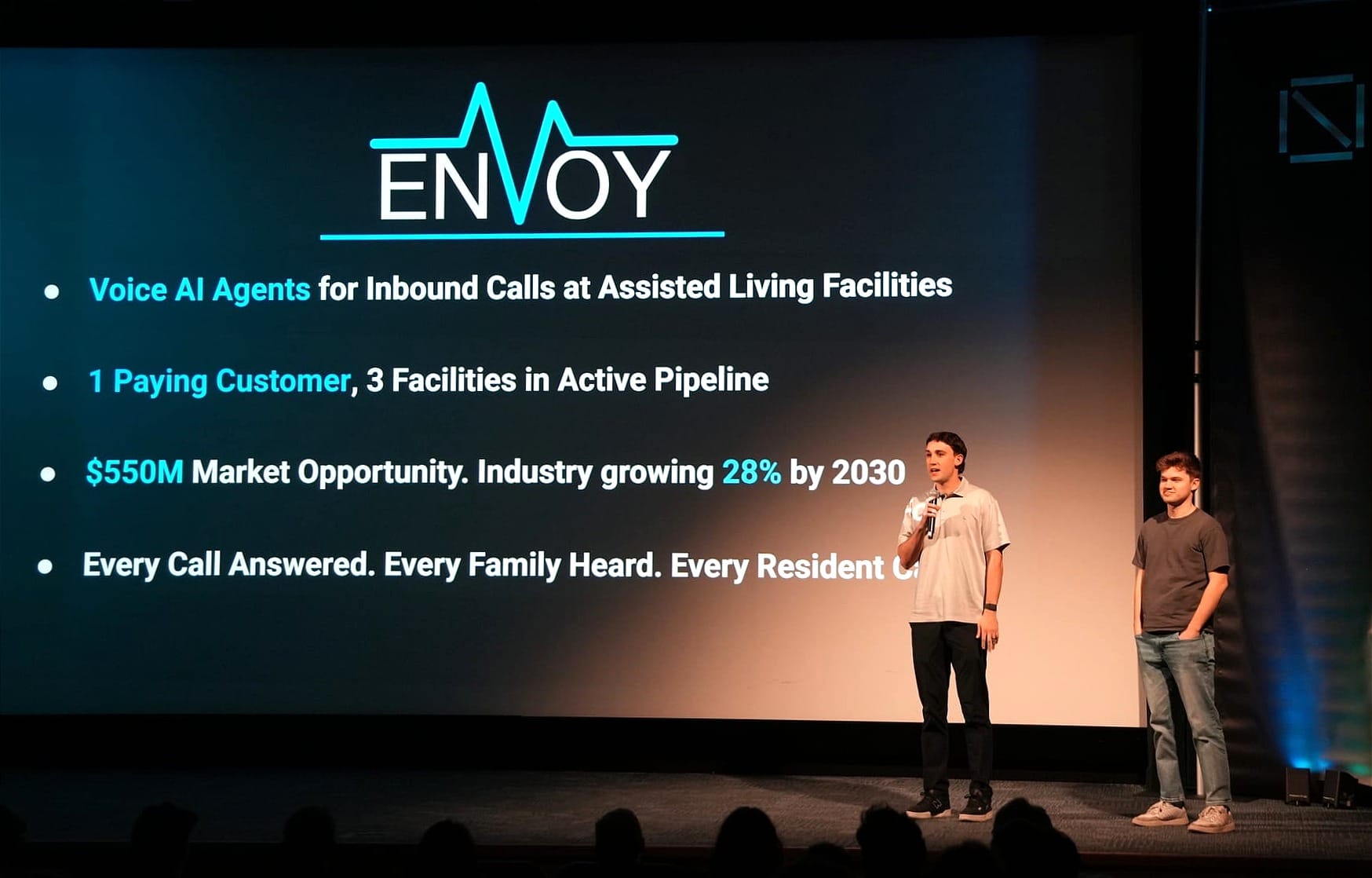
Envoy is using AI voice agents to ensure senior living facilities never miss a call from a family inquiring about a loved one's care, with one paying facility live and three more on the way. Schedule solves a different operational headache at the same facilities — when an employee calls out, the platform texts all eligible staff and adds the first respondent to the shift. With 150 daily users across 40 facilities, Schedule has found a product that fits naturally into how frontline workers actually communicate. Remembrance, one of the cohort's most emotionally resonant pitches, offers early cognitive decline detection for Alzheimer's and dementia, claiming the ability to identify markers three to five years before physical symptoms appear — and reporting $4,000 in monthly recurring revenue after just 30 days.
Credit: Spencer Bartholomew
On the women's health side, one team is building a platform, Herra, that helps women with reproductive chronic conditions — a group representing over 12 million Americans — communicate more effectively with their doctors before appointments. With 950 downloads and a user base that grew sixfold in two weeks after launching in January, the team is building something that addresses a gap that has long existed in healthcare.
Credit: Spencer Bartholomew
Insurance, Finance & Fintech
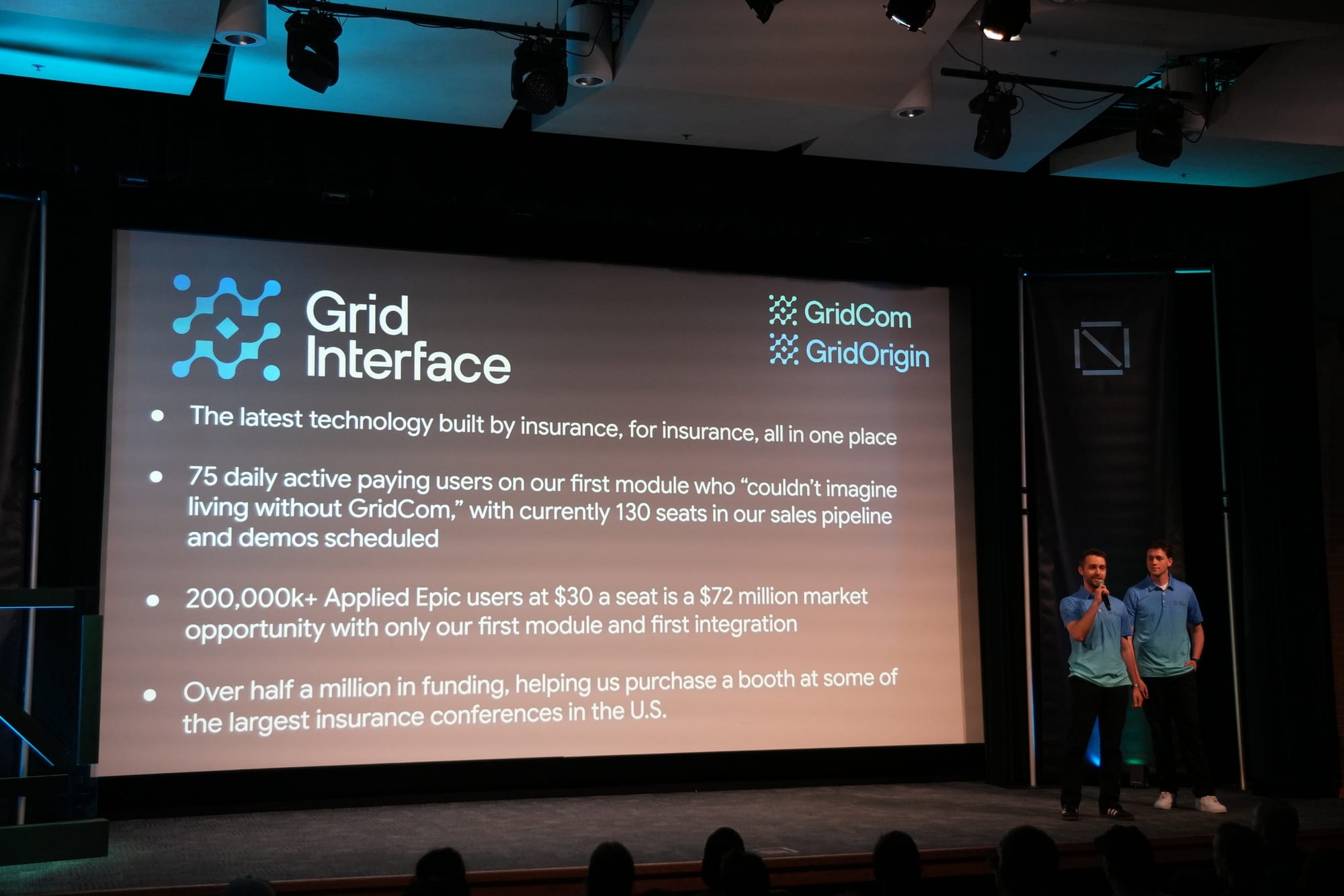
GridInterface is building an all-in-one platform for insurance agencies, integrating directly with agency management systems and centralizing client communication, data, and workflows. The founding team brings insurance industry experience, and the platform's first module — GridCom — is already live, with a CRM module in development. Overhead Flow is solving commission tracking for Medicare field marketing organizations, a niche but high-friction problem that currently requires multiple softwares and messy reconciliation. The team targets $2,000-to-$8,000 per month per client.
Credit: Spencer Bartholomew
Construction, Real Estate & Field Services
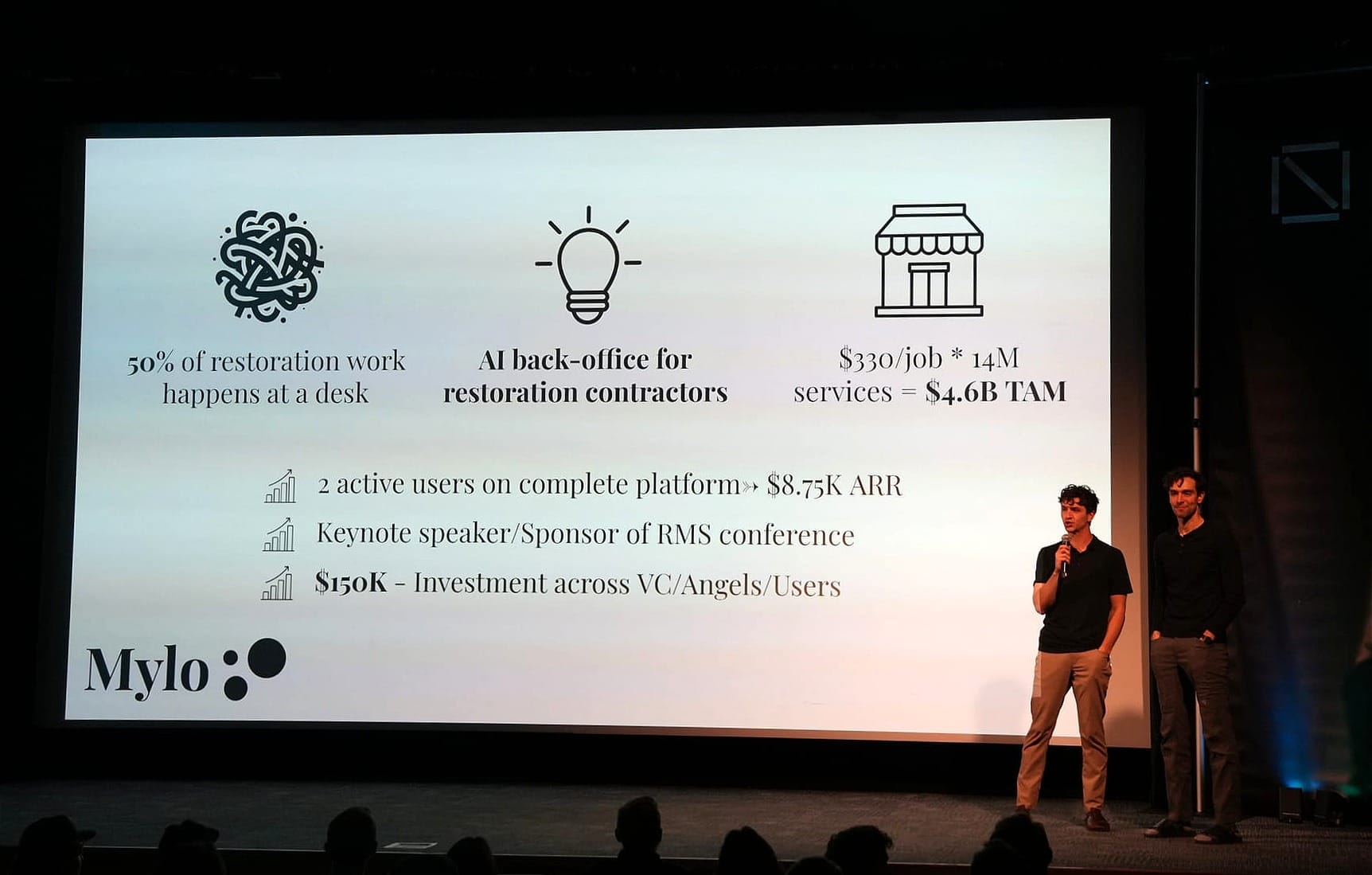
Mylo is building an AI-powered platform to handle the desk work of restoration contracting — insurance negotiation, estimate writing, scheduling, and communication — with five companies onboarded and two transitioning to its more complete product. The team has raised $150,000 and has been invited to keynote the largest restoration conference in Utah in May. The sign company tool (whose name was unclear in the audio) helps sign companies upload a photo of a site and generate measurements, a branded mockup, and a proposal in minutes rather than weeks — 55 users, 50 companies in the pipeline, and $7,000 in MRR after just two months. The team was voted best booth at a recent sign industry expo and is headed to the largest sign expo in the world.
Credit: Spencer Bartholomew
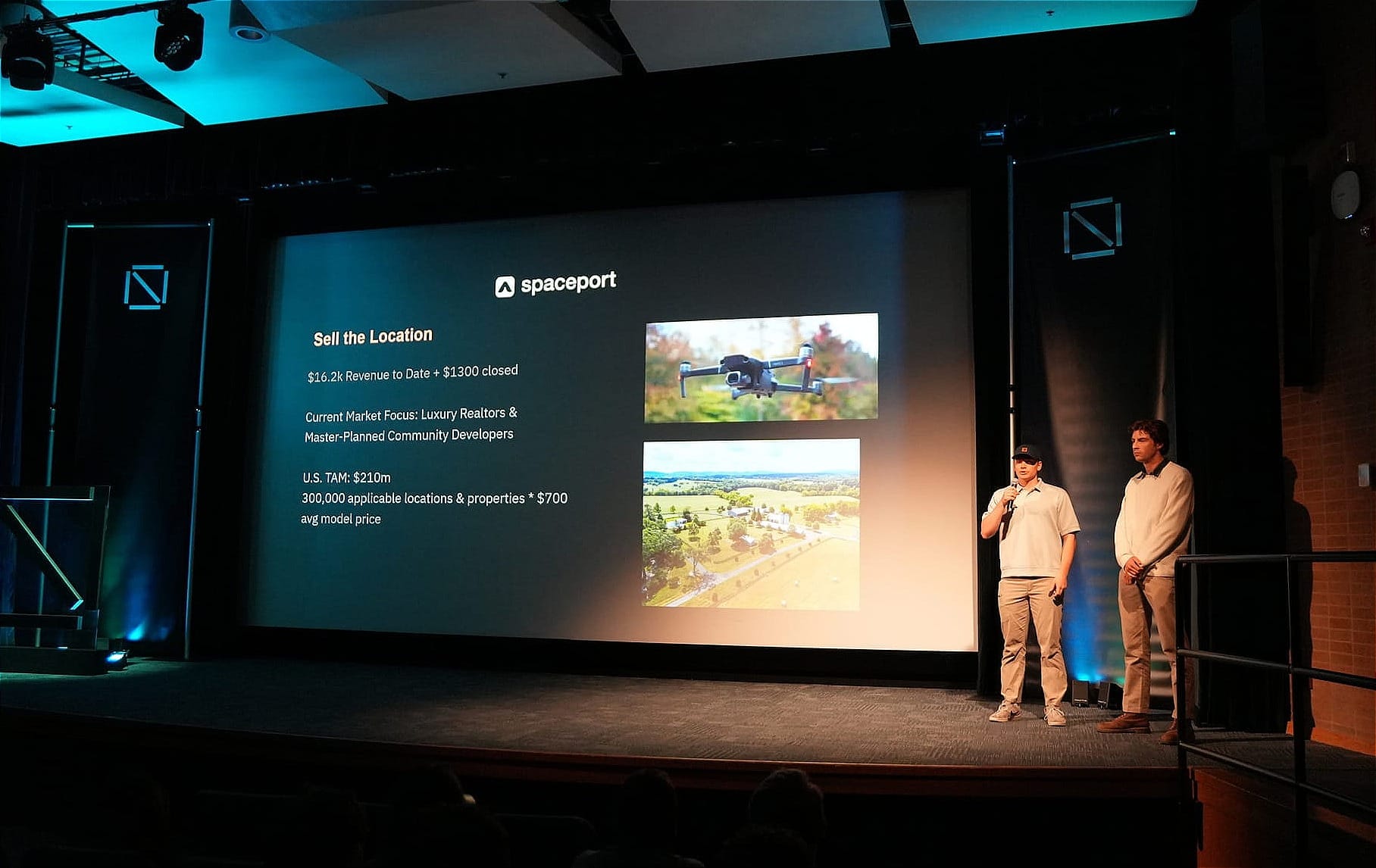
Spaceport is converting drone photography into lightweight 3D property models that luxury real estate developers and brokers can use to get buyer buy-in before anyone travels to the site. With $16,000 in revenue and an estimated 300,000 properties in the US that could use the product, the team has strong early validation. Exact Fuel Grouts is giving pest control operators real visibility into job-level profitability — pulling data from QuickBooks and field service software to surface the KPIs that actually show where money is being made or lost, with two deposits already in hand.
Credit: Spencer Bartholomew
Legal, Compliance, GovTech & EdTech
Klovva is automating bill tracking and legislative monitoring for lobbyists and government affairs teams in Arizona, generating $10,000 in ARR in just a few months and targeting a $24 million market in Arizona alone before expanding nationally. Audit Us AI is automating food safety compliance documentation for manufacturers — three design partners are seeing an 80% reduction in compliance prep time, and the team is awaiting a $50,000 ARR contract for seven plants. Forge is deploying AI agents to handle warranty claim submissions at automotive dealerships, a process that currently consumes 40-plus hours of staff time every week per store. Seven dealerships have already verbally committed to $1,500 per month post-approval.
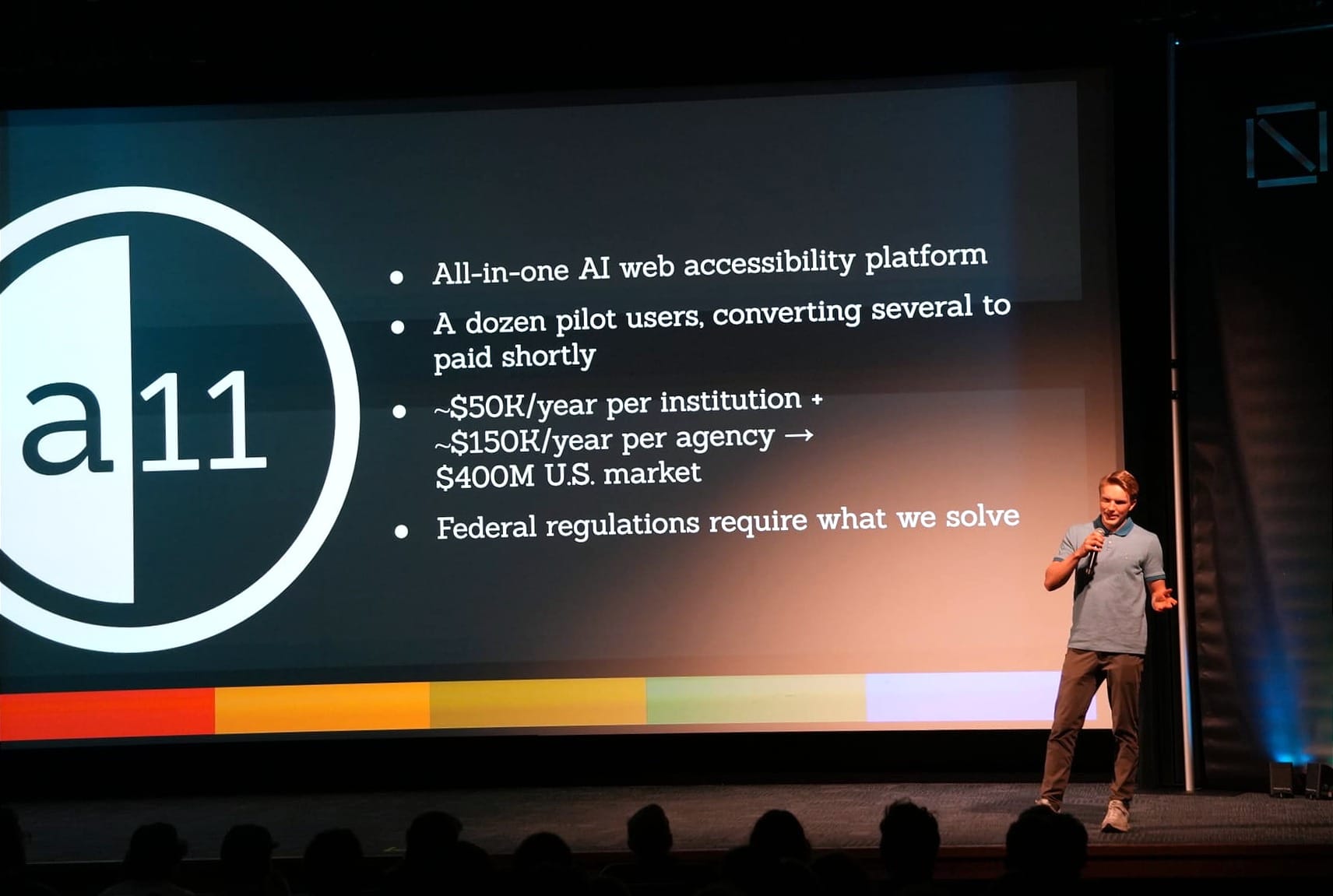
A11 is addressing digital accessibility compliance for universities, converting lecture content into fully accessible documents and videos in one place — already piloted with over a dozen institutions. Admission Software is building the intake management system for the CAPS network, a fast-growing high school program giving students real-world industry experience; the product is fully built and the market — 150 schools — is defined. Post Game AI turns a coach's voice memo on the drive home into individual player feedback, team insights, and skill resources, with 60 active users and several Utah youth soccer clubs ready to onboard.
Credit: Spencer Bartholomew
Developer Tools, AI Infrastructure & Cybersecurity
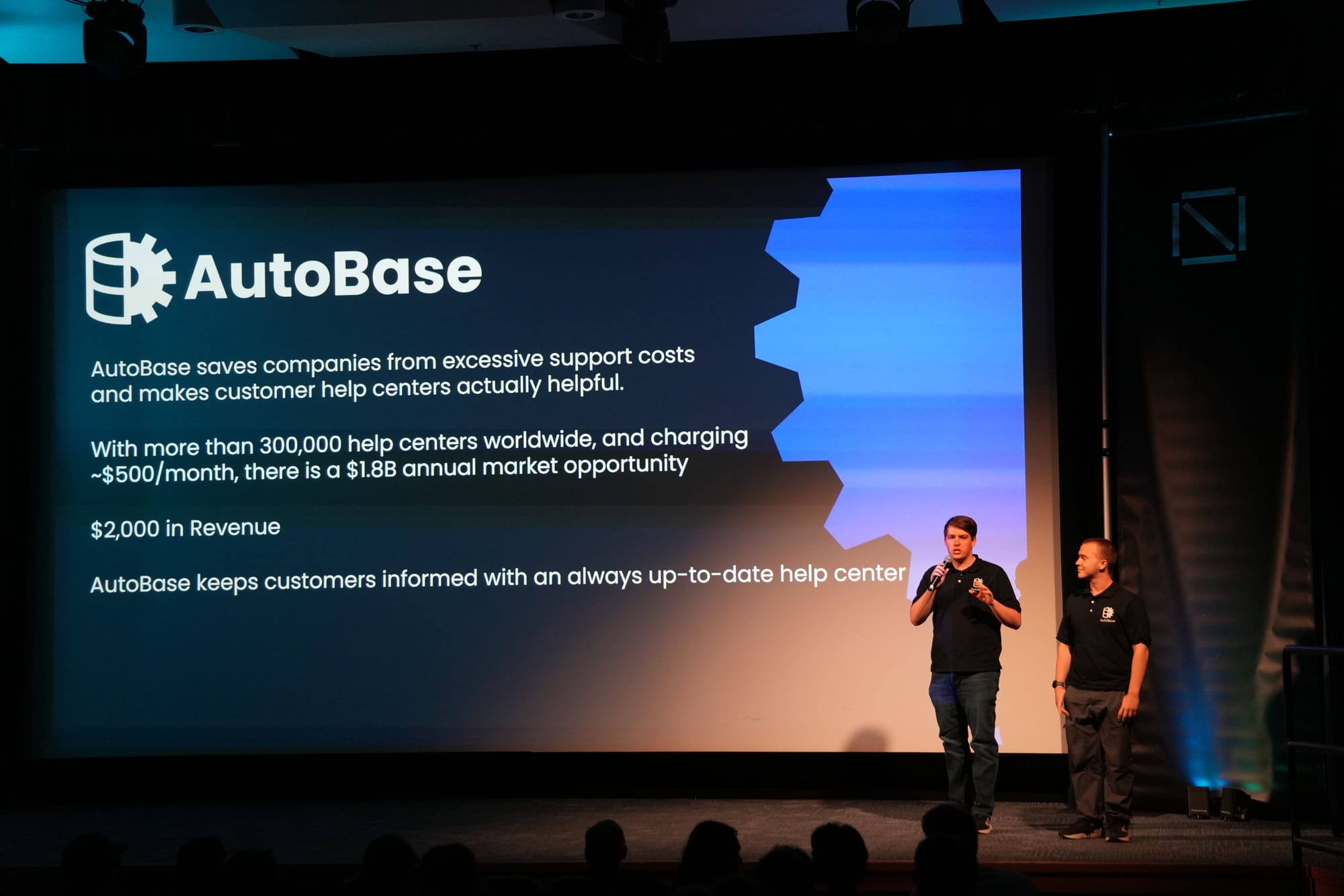
Autobase monitors GitHub for product changes and automatically updates the corresponding help center articles — solving a problem that costs companies thousands per month in support labor. One early customer reported saving over $4,000 in a single month. Riva is building customizable AI toolkits so that agents only have access to the tools they actually need, addressing a real pain point for anyone building AI workflows at scale. The platform has launched 120 tools, 12 customizable agents, and 4 agentic triggers in its first six weeks. Fornode is a control-plane agent that gives companies real-time visibility and governance across their entire AI workflow — validated by 25 cybersecurity experts and already protecting live deployments.
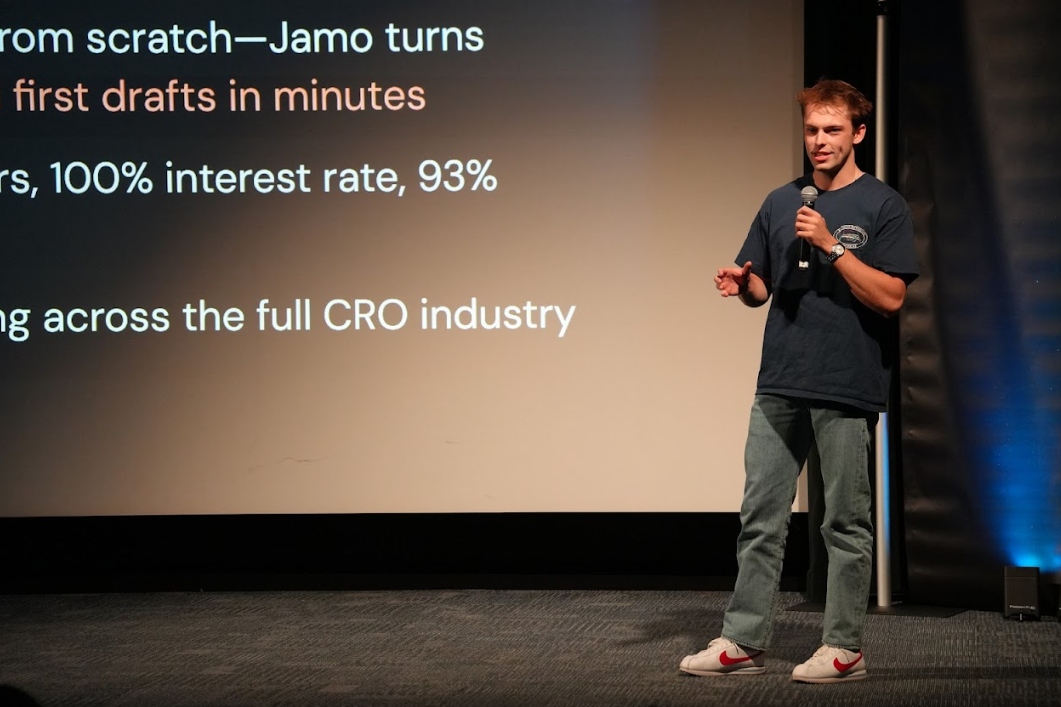
Two teams are targeting the contract research organization space, where proposal creation for clinical trials can cost weeks and hundreds of thousands of dollars. Jamo is an AI proposal manager that compresses that work to minutes, while a second team is building specialized negotiation and budgeting agents for the same industry. Both teams are in early pricing conversations with potential clients.
Credit: Spencer Bartholomew
Consumer, Lifestyle & Entertainment
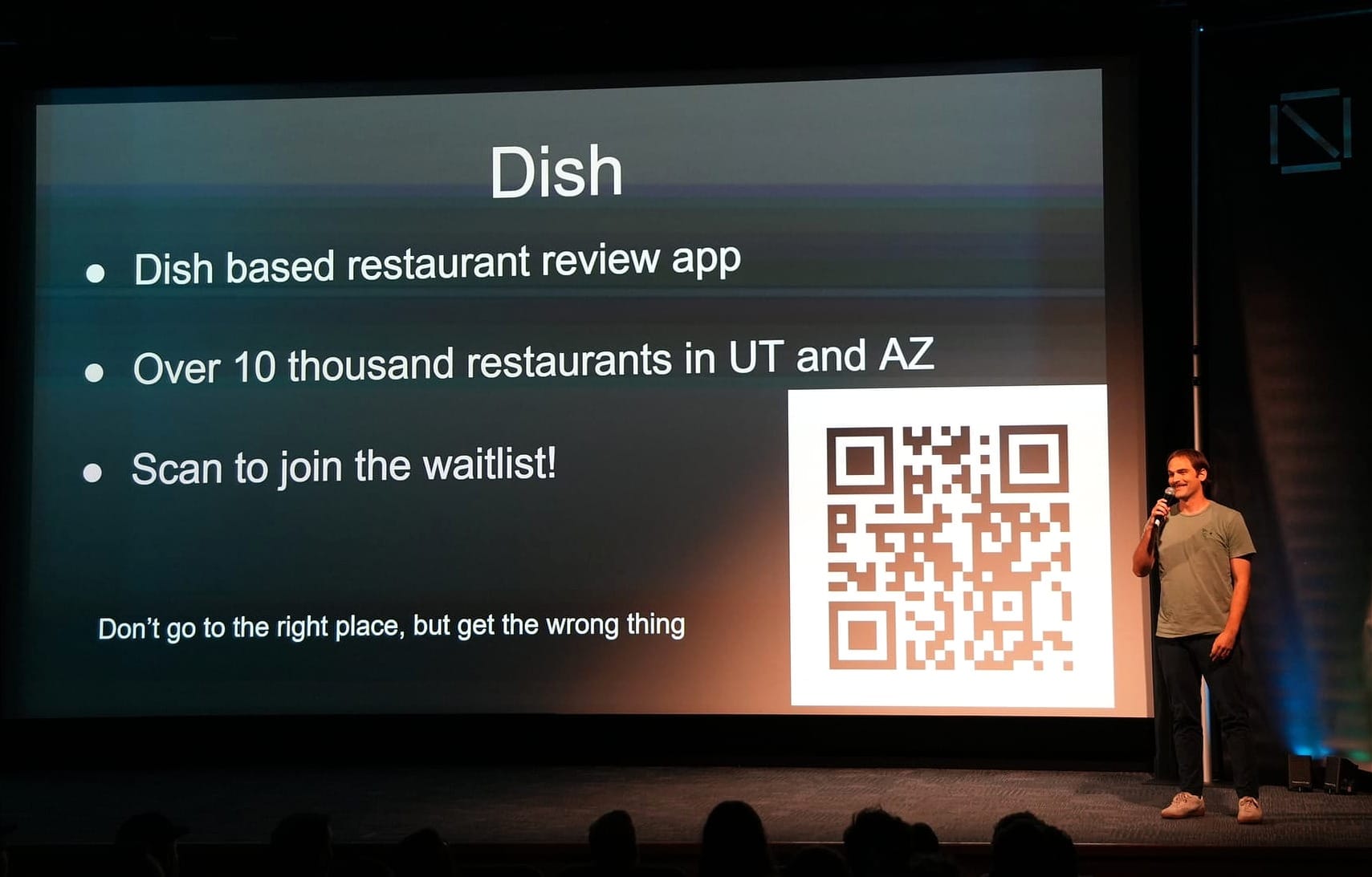
Dish is a restaurant app built around the dish, not the restaurant — allowing users to search for the best butter chicken or wood-fired pizza rather than simply the highest-rated place nearby. With 100,000 dishes catalogued across 10,000 restaurants in Arizona and Utah, the team is in growth mode before layering in restaurant revenue. Bounty is building financial accountability into personal goal-setting: users put money on the line and must verify completion or lose the funds to friends. The platform has achieved a 90% free-tier conversion rate and is approaching 1 million social media views while completing its data testing phase.
Credit: Spencer Bartholomew
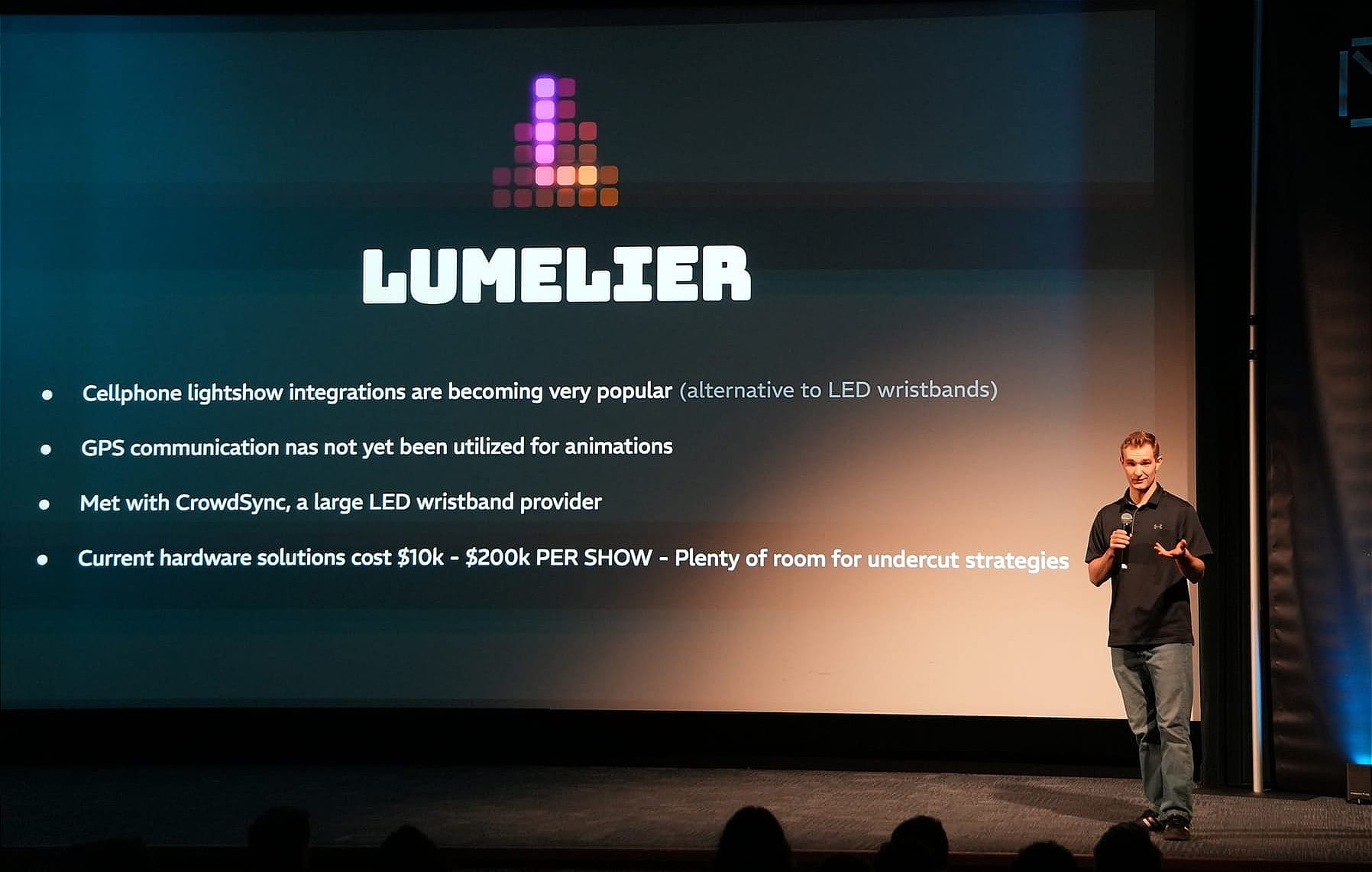
Lumilier is replacing expensive LED concert wristbands with a network server that synchronizes audience cell phone screens into a coordinated light show — effectively turning a crowd into an LCD display. Eight weeks into development, the team is already in conversations with major players in the live events industry.
A Program That Has Found Its Stride
What stands out across this cohort isn't any single company — it's the density of traction. These aren't concept pitches. Dozens of teams arrived at Demo Day with paying customers, signed contracts, and measurable revenue. Several are already in the six-figure ARR range. A few are on trajectories that would be impressive for seed-funded companies, let alone student founders still enrolled in school.
That's what Chris Crittenden set out to build when he launched Sandbox at BYU in 2020 — a program that operates less like a classroom and more like an accelerator, with the stakes and accountability to match. As Sandbox now spans nine universities across five states, this BYU cohort serves as both a proof of concept for the model and a reminder of what's possible when students are trusted to build real things and go from zero to one.
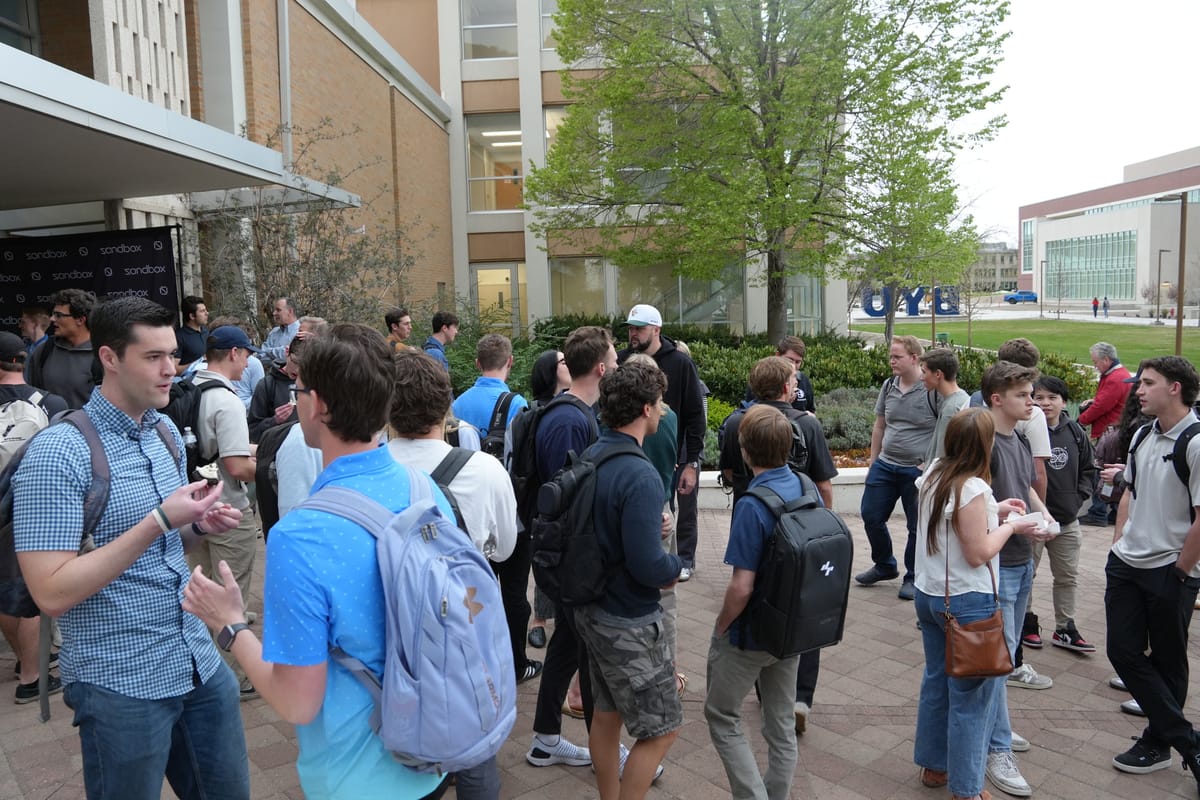
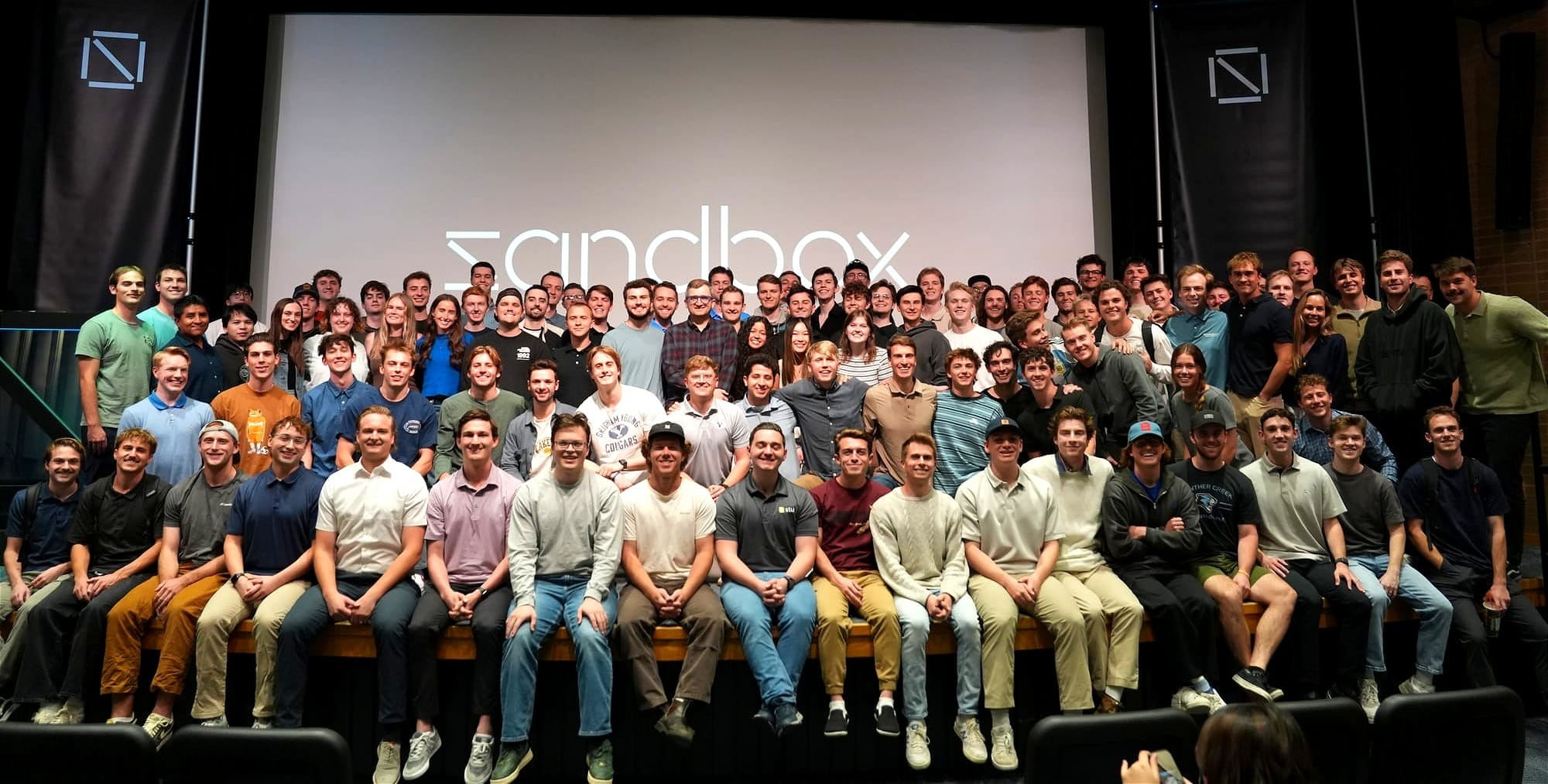
Founders from forty six student-launched companies gather at BYU's Sandbox Demo Day in Provo, Utah, on April 1, 2026. The cohort — the sixth since Sandbox launched at BYU's Marriott School of Business in 2020 — represented startups spanning healthcare AI, fintech, sales automation, cybersecurity, and consumer technology. They each had one minute to pitch their startups to an audience and judges. Credit: Spencer Bartholomew
Share this article
The link has been copied!
Your link has expired. Please request a new one.
Your link has expired. Please request a new one.
Your link has expired. Please request a new one.
Great! You've successfully signed up.
Great! You've successfully signed up.
Welcome back! You've successfully signed in.
Success! You now have access to additional content.