Draper’s Disruptors: How Three of Utah’s Top Startups Are Rewriting the Rules with AI
Today at Pelion, "Utahverse" hosted three Utah startup CEOs who discussed how AI, talent, and execution are reshaping industries—highlighting rapid growth, bold strategies, and why Utah is emerging as a powerful alternative to Silicon Valley.
Three of Utah's most closely watched startup CEOs gathered at a Utahverse VIP summit for a candid conversation about AI, defensibility, and what it means to build when the rules of software no longer apply.
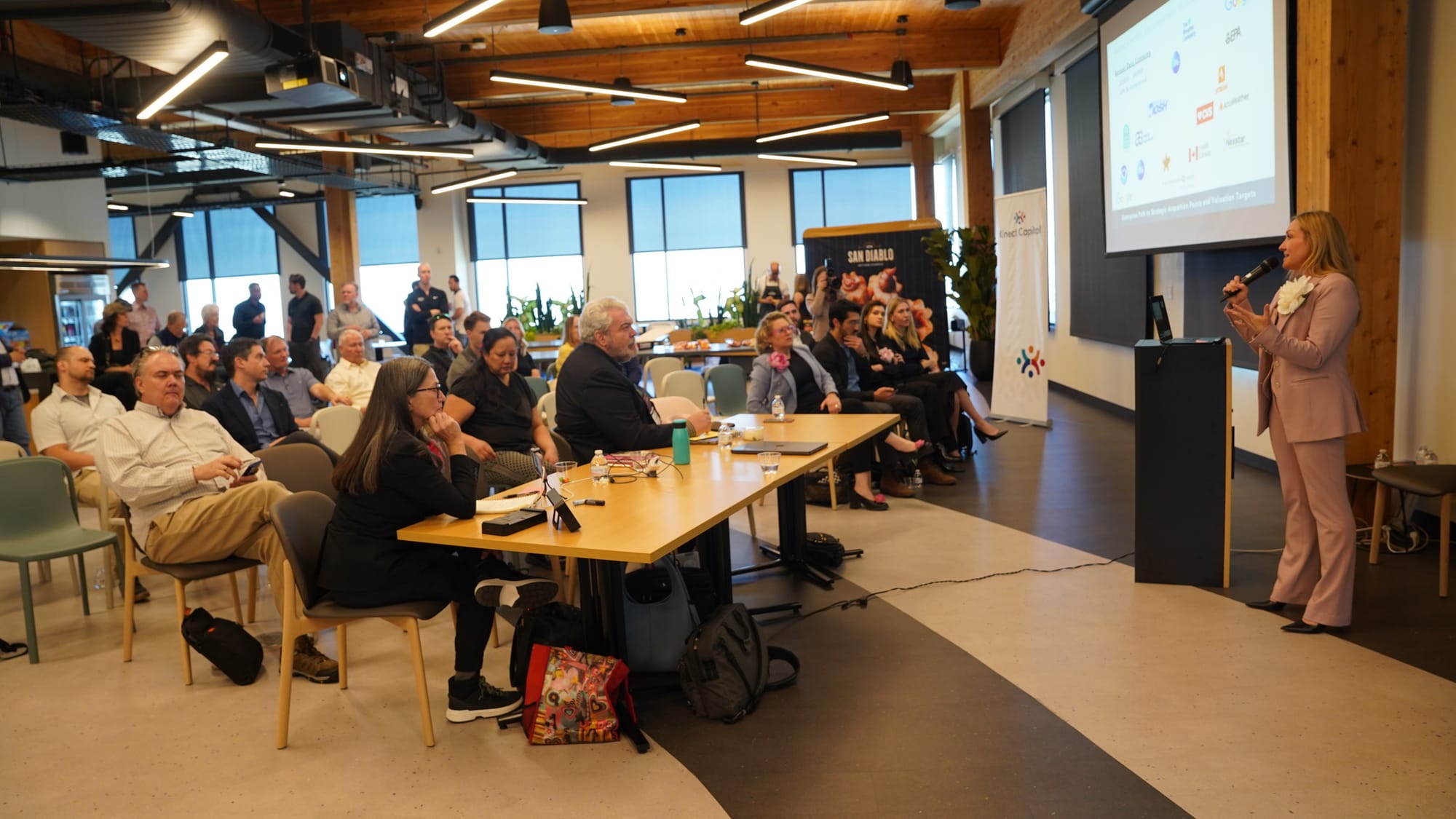
The 5th floor east-facing community room at Pelion held roughly 100 people, including 20 international guests representing global scale-ups, alongside 70 or 80 local investors, founders, and industry leaders. It was part of a tightly curated program organized by Nucleus, Reference Group, Kinect Capital and Third Thursday at Three. Happily, Third Thursday's Ray Smithson joined remotely from Taiwan, greeting attendees via a roving iPad operated by his mother.
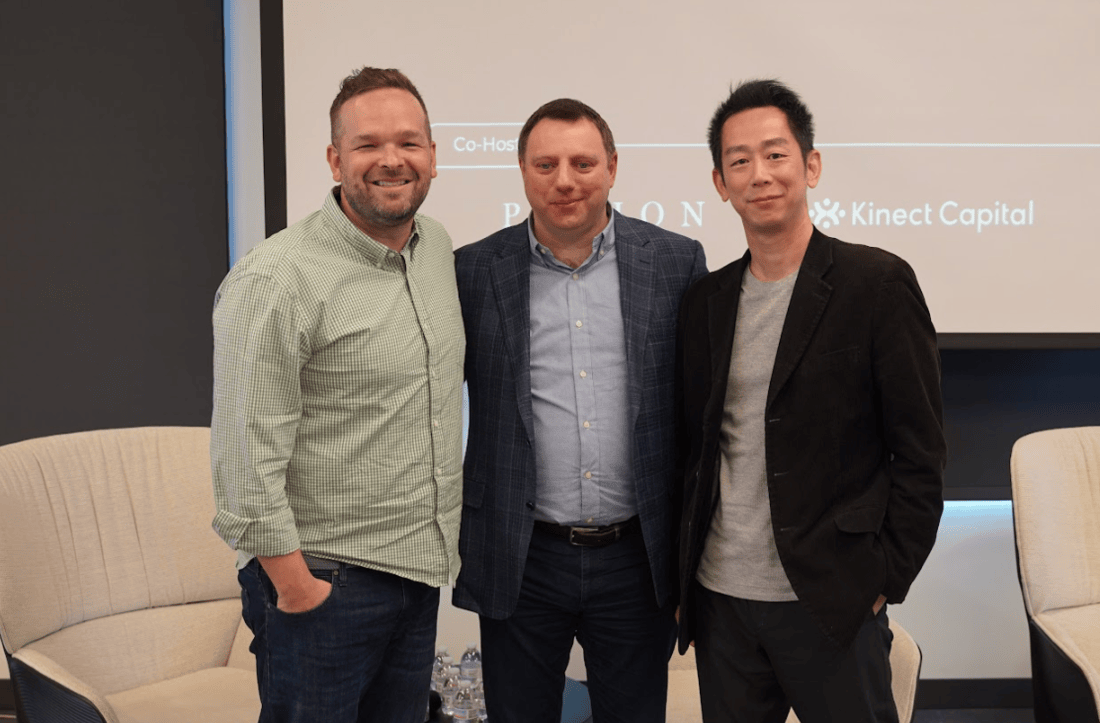
The event began with a global business panel featuring Tyler Jennings (Director of Entrepreneurship and Ecosystem Development at GOEO) and two international founders, Brendan Noud (LearnUpon) and Andy Lin (YO-KAI EXPRESS).
It also featured a fast-moving series of startup pitch session during lunch, ably hosted by Vanessa Perez (MakeUtah).
Tyler Jennings (GOEO), Brendan Noud (LearnUpon) and Andy Lin (Yo-Kai Express)
In the afternoon was the conversation for which everyone anxiously awaited; it felt like a backstage pass to the future of tech.
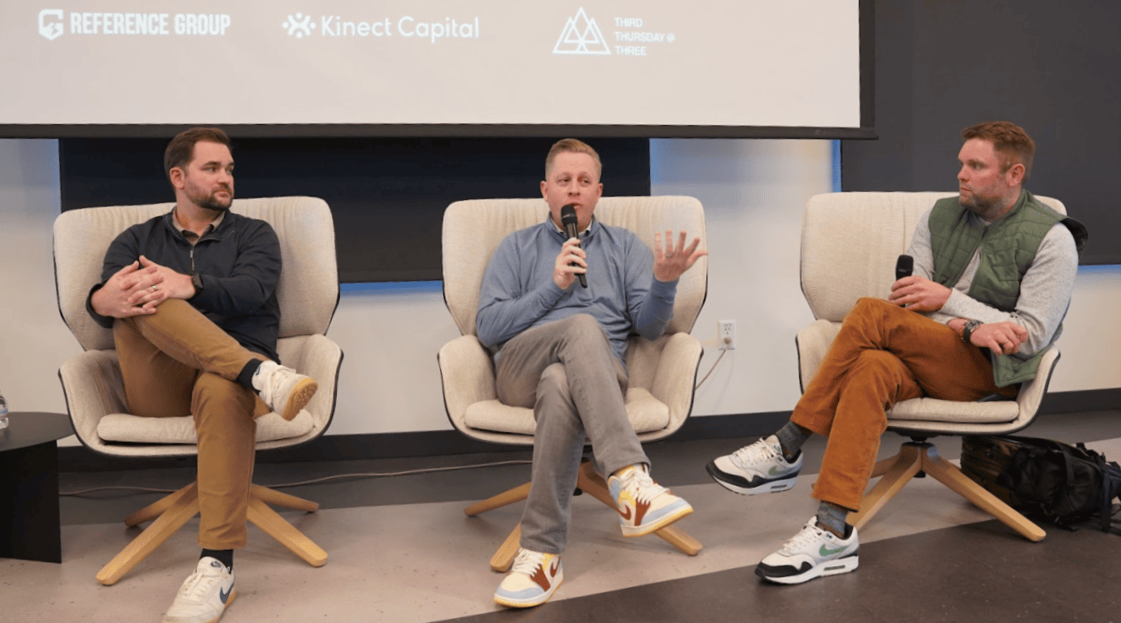
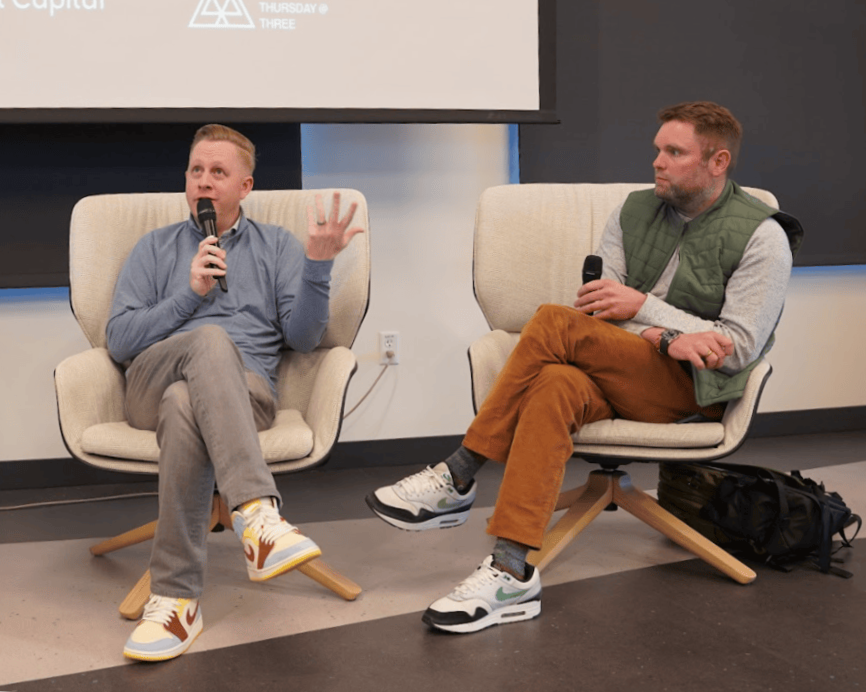
Tyler Hogge, Partner at Pelion Venture Partners, took the stage with three founders that his firm has backed heavily — companies that in aggregate have raised approximately $150 million in the past four months alone.
Tyler Hogge, Partner, Pelion Venture Partners
Hogge opened plainly: he believes them to be among the best three companies Utah has ever produced. What followed was one of the most candid founder conversations this publication has attended in a long while.
"In my whole life, I've never experienced anything like what's happening right now" — and the room went quiet, because everyone in it knew exactly what he meant.
That line came from Doug Barnett, CEO of Remi. It landed in the middle of Hogge's panel that ranged from autonomous bug-fixing AI agents to the death of software moats to why Utah — and not San Francisco, not New York — is the right place to build right now.
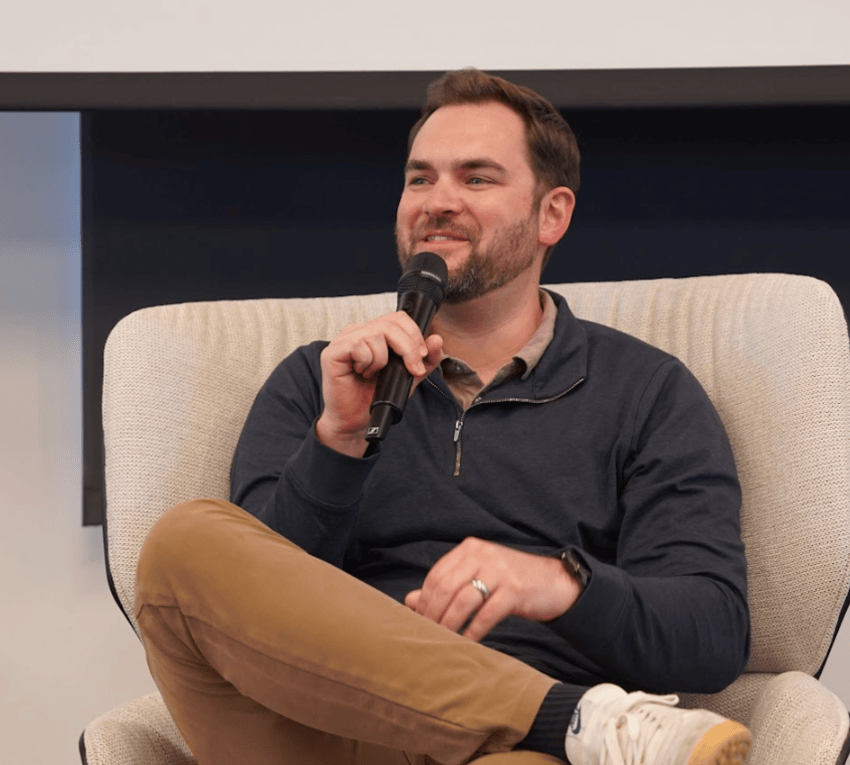
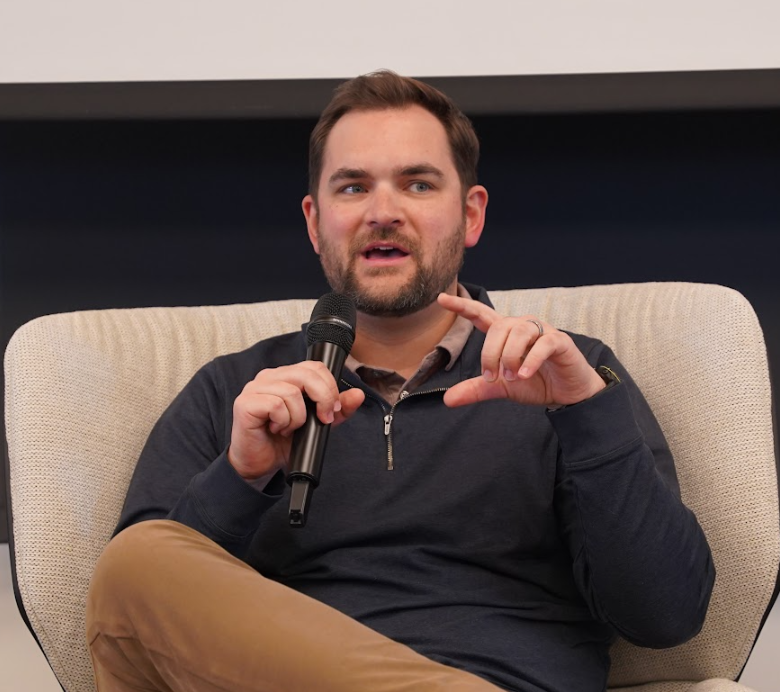
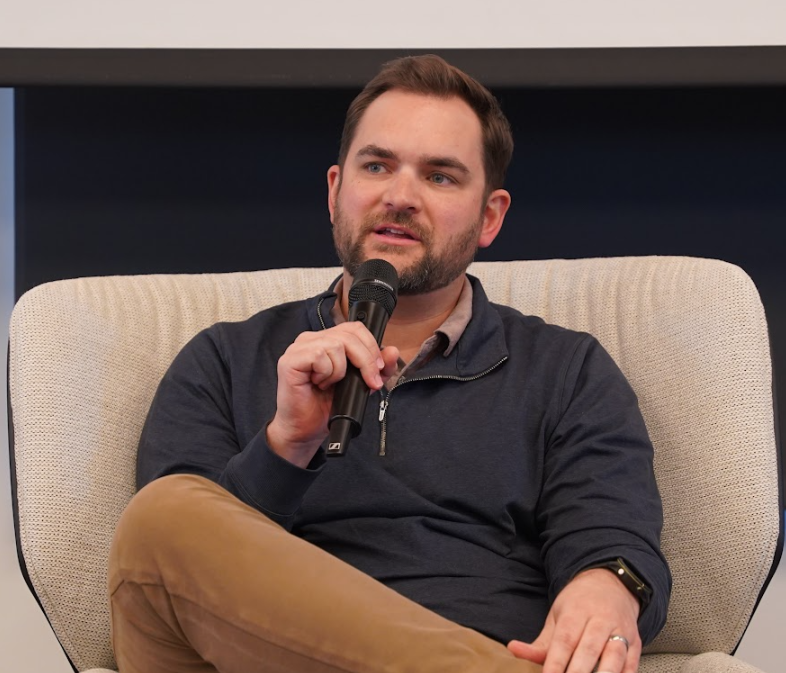
Parker Ence, CEO Jump AI, Doug Barnett, CEO of Remi, and Tyler Hogge, Partner, Pelion Venture Partners
Barnett was joined by Parker Ence of Jump AI and Sterling Snow of Redo. All three are Pelion-backed. All three are growing at a pace that would have seemed implausible two years ago. And all three arrived, from very different directions, at the same unsettling, galvanizing conclusion: the software playbook that has governed venture-backed startups for a generation is being shredded in real time — and the founders paying attention are the ones rewriting it.
The Companies in the Room
To understand the conversation, start with who was talking.
Doug Barnett, CEO, Remi, started out with: "Roofing is a very fragmented industry — the largest roofer in the United States has less than 1% market share. About 40% of all roofing happens through about 100 large enterprises. We are the marketplace that sits between them, the contractors, and the homeowners. We'll probably replace about 30,000 roofs this year."
Doug Barnett, CEO of Remi
Remi operates at the intersection of physical infrastructure and enterprise technology. The company has built proprietary LIDAR-based technology that can quote a roof remotely, nearly instantaneously, and sells into large enterprise customers including American Family Insurance, Travelers, Sunrun, and Opendoor. It looks, at first glance, like a software company, but is in fact something harder and more durable to replicate: a two-sided marketplace with deep operational weight on both sides.
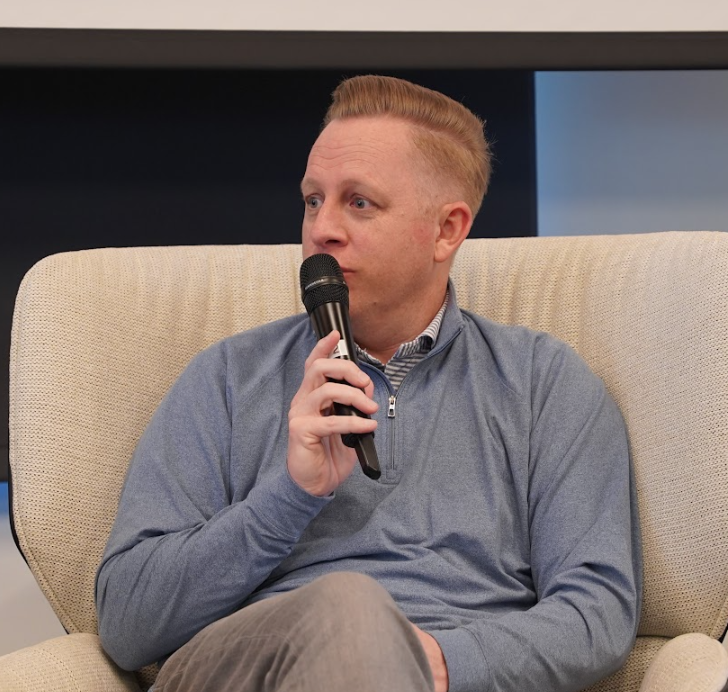
Parker Ence, CEO, Jump AI chimed in: "The relationship between the advisor and the client is the engine of the business, and it's unbelievably manual. The average financial advisor spends about a third of their time on administrative work. We cut that by 90%. We went from our first customer in January 2024 to about 27,000 financial professionals today."
Parker Ence, CEO, Jump
Jump targets the roughly 9 million Americans working in relationship-driven financial services. Generative AI, Ence argues, can for the first time read and write the messy, unstructured data that dominates these relationships — conversations, emails, documents — and automate the administrative overhead that has always consumed a third of an advisor's day. The growth numbers are striking: from zero to 27,000 paying users in roughly 14 months.
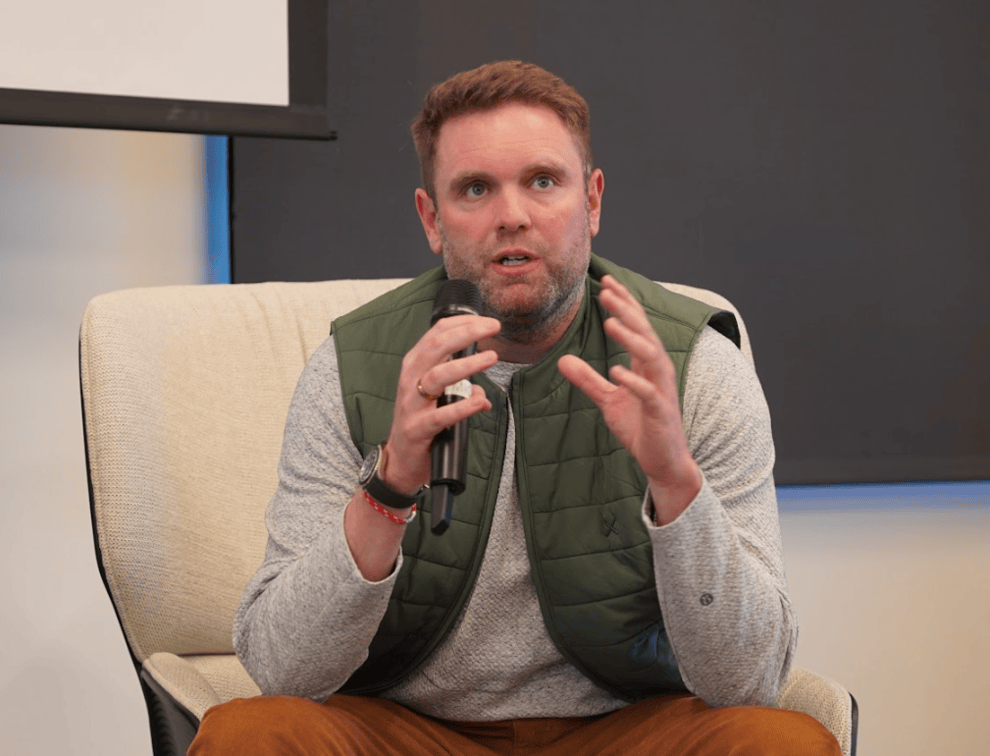
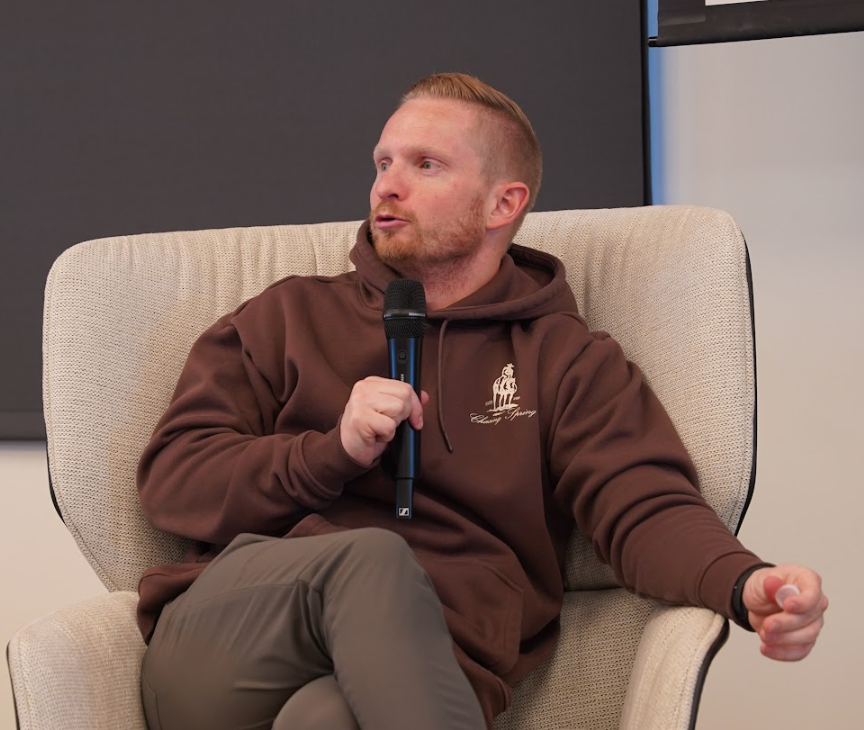
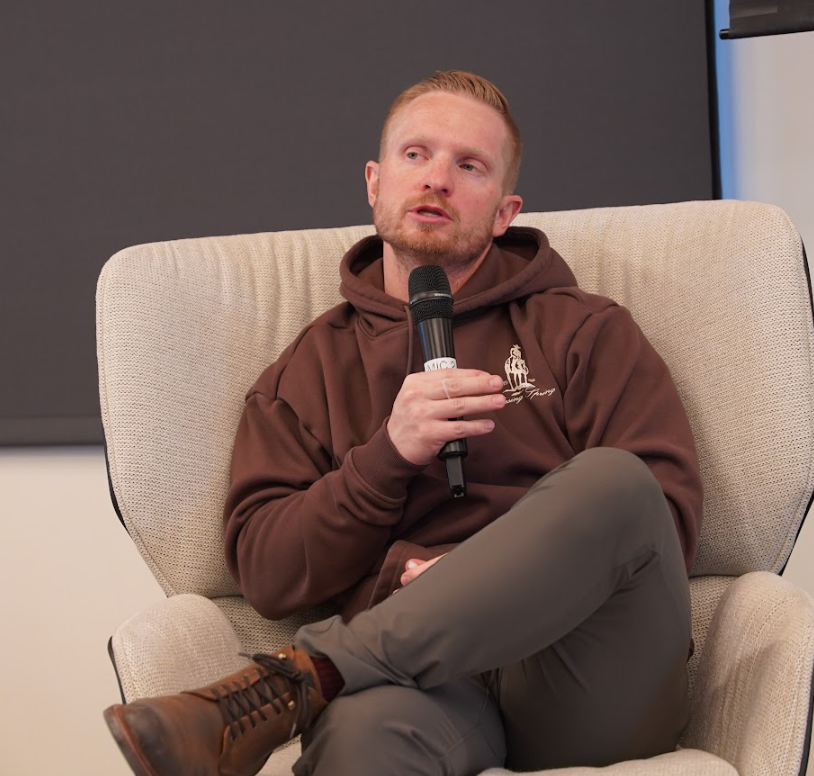
Sterling Snow, CEO, Redo explained the company's rapid evolution succinctly, "A year ago we did returns. Since then we've reached into owning all of the touchpoints between a shopper and a brand — the emails and texts, the order tracking updates, the AI chat support. Back then we had around 800 brands. Today it's about 4,000."
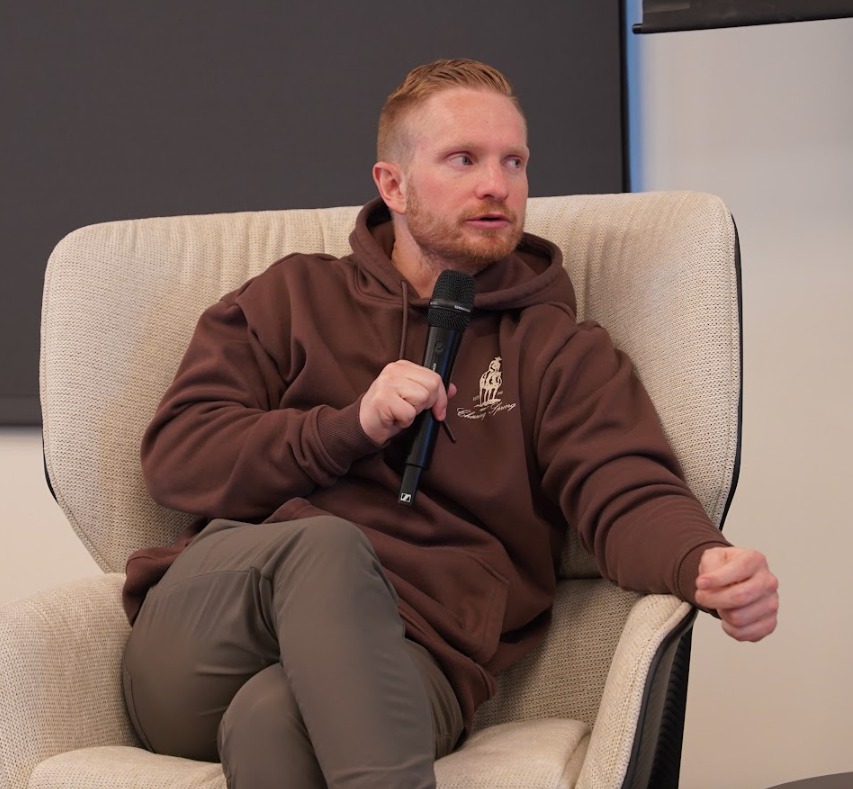
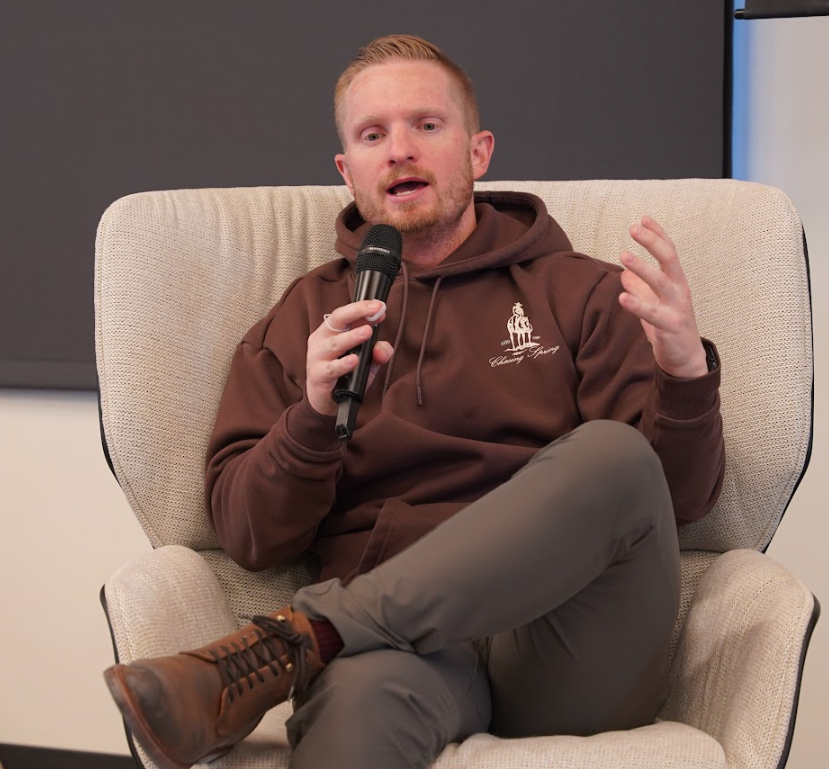
Sterling Snow, CEO, Redo
Redo may have executed the most visible strategic expansion in Utah tech in recent memory. What began as a reverse logistics solution — an Amazon-style returns experience democratized for every e-commerce brand — has grown into a full post-purchase communication layer touching every moment of a shopper's relationship with a brand after checkout. In twelve months, the company quintupled its brand count. The expansion, as Snow would later explain, is not incidental. It is a direct strategic response to the new realities of software defensibility.
Why Utah? Why Now?
Hogge's first question was the one that tends to produce the most honest answers from founders who chose not to leave: why here? All three had options. None of them hedged.
Barnett led with the talent case, drawing a clear distinction between where Utah already wins and where it's still catching up. "When it comes to customer care, sales, and operations, I can't think of a better place in the country to recruit from," he said. On engineering talent, he was candid. Utah hasn't closed the gap with the Valley. But he kept returning to a single word: slope. "The slope is very good," he said, twice. In venture capital, slope is the whole argument.
Parker Ence, CEO Jump AI
"There's something in the water in Utah. The original settlers showed up in this dust-like wasteland and thought, this is a good spot. That pull-yourself-up-by-the-bootstraps, no-entitlement attitude. I think it's even more important now, because the way AI is changing professional work requires everyone to be a little mini entrepreneur of their own job." — Parker Ence, CEO, Jump AI
Ence's reframe was perhaps the most intellectually interesting moment of the first half of the conversation. His argument: as individual contributors increasingly manage fleets of AI agents and make decisions that once required a manager, the instinct to just figure it out — to act like a founder even when you're not one — becomes table stakes. Utah, he suggested, has always been a place that selects for exactly that instinct.
Sterling Snow, CEO, Redo
Snow brought it somewhere more personal. Utah, he said plainly, is the best place in the world to raise a family. You can be on a trail or a ski run in fifteen minutes. But then he added something that cut deeper: "It's really fun to try and build something to be a little bit better than it was, instead of going to New York or Silicon Valley and just being part of what they've already done." There is a version of ambition that's about joining the party. And there's a version that's about throwing a better one from scratch.
The three people on stage are unmistakably the second type.
The AI Reckoning: What's Actually Happening Inside These Companies
The conversation's register shifted when Hogge turned to AI. He framed the question deliberately. For those who may be skeptical, or simply unaware of how quickly things are moving, can you share what you're actually seeing? What followed was not a pitch. It was a field report.
Barnett went first. What he described at Remi is the kind of thing that gets dismissed as hype until you hear it from someone clearly living it.
"The average engineer at Remi today versus six months ago is five times more productive. But more than that. Our agents, we call them Rovers, fully autonomously keep our system bug-free every single day. When a bug is flagged, our system kicks off its own server. The agent works in a sandbox, researches what the bug is really doing, finds a solution, ships the fix, and other agents review that code. No human reviews. That happens every day." — Doug Barnett, CEO, Remi
"I don't know a complete 180 from where we were even six months ago," Barnett continued. "In my whole life, I've never experienced anything like what's happening right now. The amount of change required just to keep up. It's wild. If there are skeptics in this room, come spend a day at Remi. You will not be a skeptic for much longer."
Ence's example arrived from an entirely different direction: not the engineering team, but the finance function. After Jump recently moved into new office space, they needed a conference room booking system. They looked at off-the-shelf software. The leading product (Envoy, a company that has raised over $100 million) felt like overkill for a startup with a handful of offices. So Jump's controller, an accountant who had never written a single line of code in his life, built one over a weekend.
Parker Ence, CEO Jump AI
"Our accountant, who had literally never written a line of code, built a conference room booking system with an interactive office map over the weekend. The team uses it now. That's one piece of software we're probably never going to buy. As a startup that makes software, that is a call to wake up and think hard about what's defensible long-run."— Parker Ence, CEO, Jump AI
Hogge pressed the sharper question underneath the story: how do you respond to that as a CEO? What does it mean for what you're building?
Ence didn't soften it. The foundational AI lab companies have moved far more aggressively than anyone anticipated. They are no longer just APIs. They are building the tools by which anyone can vibe-code their own solutions. "The threshold of the buy-versus-build debate has gone way down," he said. "There are a lot of software companies whose days are numbered because of this phenomenon." He invoked Hamilton Helmer's 7 Powers — the canonical framework for durable competitive advantage — but said the underlying assumptions that gave those powers their teeth have fundamentally shifted. "Systems of record are no longer invincible. These seven powers have to be reapplied and redefined."
Parker Ence, CEO Jump AI
His own prescription: network effects, and the switching costs that come from deeply customized workflows and proprietary data. But he was careful not to oversell certainty. "The old assumptions are no longer going to hold up," he said. "It's crazy to think about."
Snow extended the argument to its logical endpoint — and it is not a comfortable place to arrive.
"Software is going to be more of it than ever. But almost nobody's going to make money on it that way. You'll have to use it as connective tissue, but not the end itself, not the value itself. Take Redo: we do returns, the software is great. But you're probably going to make your money with return center warehouses and robotics and physical operations. I don't think you're going to see that many companies make that much money off of what we've historically thought of as software."— Sterling Snow, CEO, Redo
Sterling Snow, CEO, Redo
It's a striking thing to hear from a software CEO. But it is also, increasingly, the correct read: durable businesses will not be the ones that protect their code. They will be the ones that use code as a lever into something physical, relational, or networked, something that can't be replicated over a weekend by a motivated accountant with a good prompt and a capable AI.
On Competition and the Myth of the Moat
An audience member asked each of the three about competition: where do their real defenses live?
Barnett pointed to the physical world: the contractor network, the enterprise trust, the logistics of replacing 30,000 actual roofs. "A lot of the network effects and scale dynamics make it very, very difficult to replicate," he said. "Our moats live in things that don't really have anything to do with software."
Doug Barnett, CEO of Remi, and Tyler Hogge, Partner, Pelion Venture Partners
Snow was characteristically direct and provocative. "We have one trillion competitors," he said, letting that bombshell statement settle. "They number as the sands of the sea, and they keep me up all night." And then: "I don't believe in moats. With enough time and money, you can build anything, you can acquire any customer base. The only thing that ever mattered was speed and execution and vision — and the ability to go find the next market and stack these things over decades. That hasn't changed a bit. It's just that now everybody realizes it."
A final audience question brought the conversation back to earth: where are these companies seeing AI actually deliver in customer-facing interactions? What does it take to make it work?
Sterling Snow, CEO, Redo
Snow answered first. Redo's AI now handles roughly 45% of all customer support tickets end-to-end, with no human in the loop, from question to resolution. "To make that successful, it's all about really, really good documentation and knowledge management," he said. Redo has a dedicated team whose entire job is giving the AI what it needs to answer correctly. The challenge: their software evolves so fast that keeping documentation current has become its own AI-assisted problem they haven't fully solved yet. It was a rare moment of candor about where the edges still fray.
Ence's team took a different approach. Rather than maintaining documentation manually, they routed every support question directly through the codebase itself. The AI reads the code and its inline documentation to generate answers. "It's 95% accurate as of this morning," he said. "It's incredible." Snow, visibly impressed: "That's very good."
Five Takeaways from Tyler Hogge's Panel
Engineering productivity has already crossed a threshold
When Barnett says his engineers are five times more productive than six months ago — and that autonomous agents are shipping and reviewing code daily with zero human involvement — this is not a forecast. It is a reported operational fact. The gap between companies that have internalized this reality and those that haven't is widening faster than most people appreciate.
The build-vs-buy calculus has fundamentally changed
Ence's accountant story is not a curiosity. It is the new baseline. When a non-technical employee can build functional enterprise software over a weekend, the market for straightforward point solutions has a structural problem. Every software company should be asking honestly: could one motivated non-engineer replace us in 48 hours?
Software is becoming a commodity layer, not a destination
Snow's thesis — that almost nobody will make durable money on software as software — deserves to be taken seriously. The companies that will be durable are those that use software as connective tissue binding physical infrastructure, human networks, or proprietary data. Code alone is no longer a business. It is an ingredient.
Utah's pioneer instinct is an AI-era structural advantage
Ence's reframe was the most thought-provoking moment of the afternoon. The no-entitlement, bootstrap, figure-it-out culture that has always defined Utah's workforce may be uniquely suited to a world where every knowledge worker needs to act like a mini-founder managing their own AI stack. That cultural default is not an accident of geography. It is a compounding edge.
Speed has always been the only real moat — now everyone knows it
Snow's blunt dismissal of moats is the line that should follow every founder and investor out of the room. The frameworks still apply. The analysis still applies. But the comfortable fiction that a well-constructed moat buys you time has been stripped of its comfort. AI has made this undeniable. The companies that survive the next decade will be the ones running as if there are a trillion competitors — because there are.
Earlier in the day, Kris Klein, CEO and Co-Founder of Provo, Utah-based Pollen Sense, discussed her company's patented platform for real-time airborne particle identification. Her company has raised over $2 million and has doubled revenue to nearly $1 million ARR. Audience members asked her about its applicability for identifying toxic dust particles emanating from a shrinking Great Salt Lake.
Share this article
The link has been copied!
Your link has expired. Please request a new one.
Your link has expired. Please request a new one.
Your link has expired. Please request a new one.
Great! You've successfully signed up.
Great! You've successfully signed up.
Welcome back! You've successfully signed in.
Success! You now have access to additional content.