Embedding AI into Workflows: How Leaders Turn Agents into Organizational Advantage
SageCreek AI provided an executive briefing on AI agents and workflow transformation. Hosted by Pelion (Draper, UT) at their stylish top-floor HQ, the event explored real-world ROI, generative AI strategies, and behavioral frameworks with Nisha Advani (Chicago) and Dr. Barclay Burns (UVU).
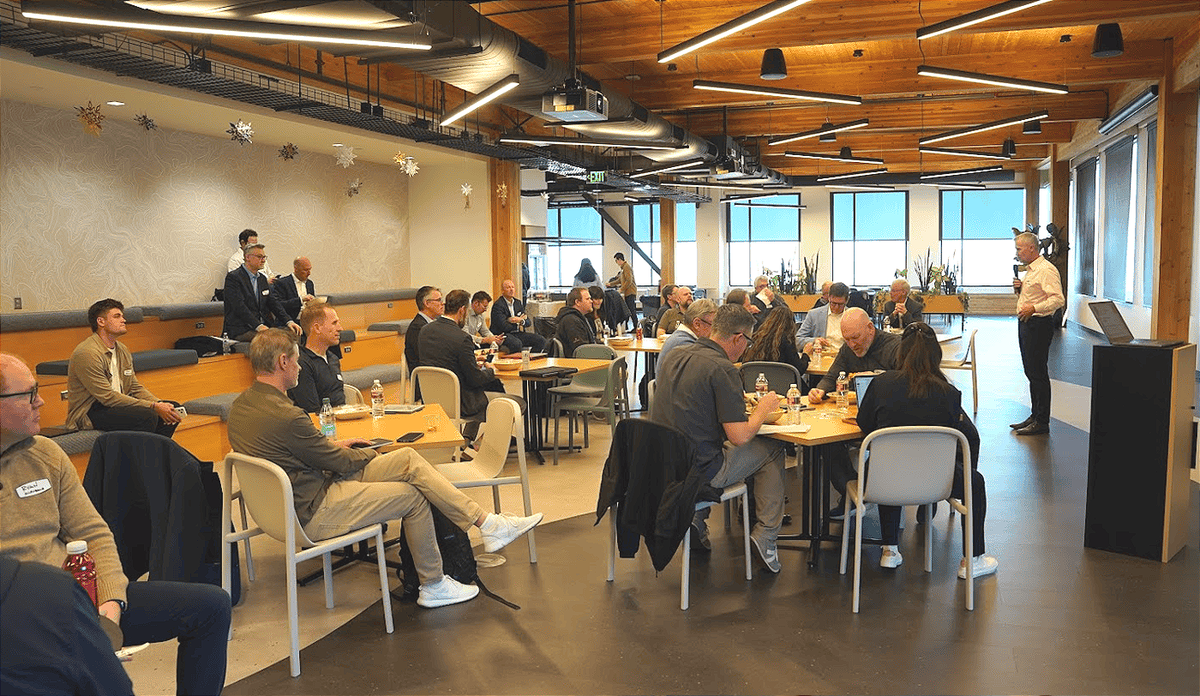
At an executive briefing and luncheon at Pelion's headquarters Draper, Utah, leaders from Utah's technology and higher education sectors gathered to tackle a question every organization is now asking: How do we make AI deliver real business value?
The series of AI briefings has been organized by SageCreek AI and supported by UVU's Smith College of Engineering and Technology. The topic of today's briefing was: Architecting Generative Systems: How Working AI Agents are increasing Business ROI.
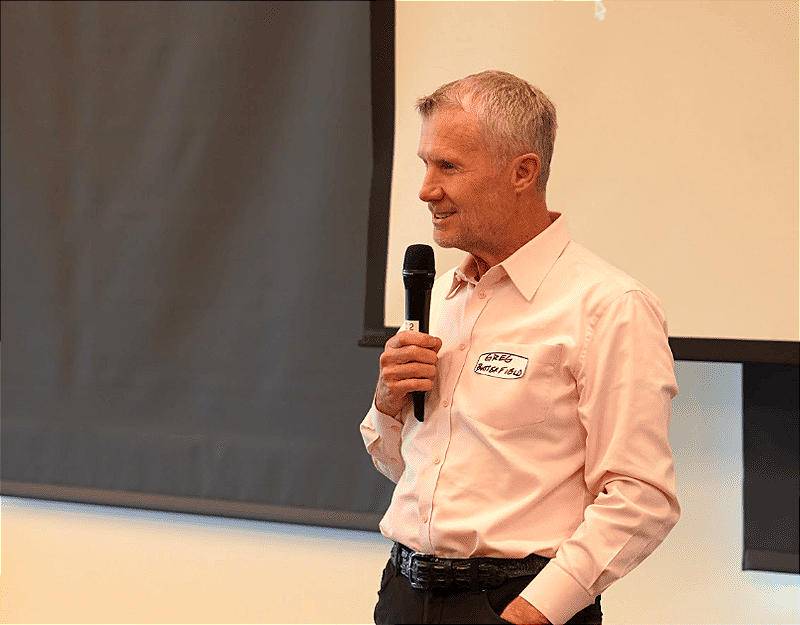
Greg Butterfield, Managing Partner of SageCreek AI, set the tone for the briefing by reflecting on the state of the local tech ecosystem and the importance of building strong technical foundations. “Back in 2002, we built a software company here in Utah, before Silicon Slopes, before even the basic infrastructure we take for granted today,” he said. “One of the challenges we had was simply finding enough engineers to meet the demand.”
Greg Butterfield, Managing Partner, SageCreek and SageCreek.ai. Former CEO of Altiris and Vivint Solar. Former President and Chairman of Lumio. Butterfield has held senior roles at Symantec, Novell, WordPerfect, and other tech companies. He has served on numerous boards including Utah Valley University’s Board of Trustees.
Butterfield’s opening remarks framed AI adoption not just as a technological challenge, but as part of a broader community and economic ecosystem. His perspective emphasized that building capability—whether in human talent or AI-enabled workflows—requires both vision and intentional collaboration.
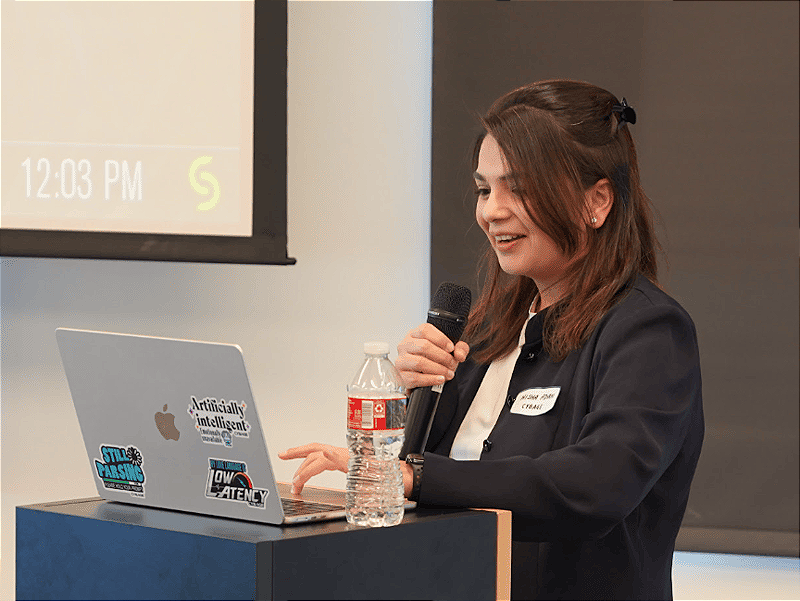
Today, that same ecosystem is grappling with a different kind of challenge: integrating AI agents into workflows in ways that produce measurable ROI. Two speakers, Nisha Advani, Head of Generative AI Projects at Cybage Software (Chicago), and Dr. Barclay Burns, Assistant Dean of Smith College of Engineering and Technology at Utah Valley University, shared frameworks and case studies showing how AI can move from experimentation to becoming an operational capability.
AI ROI Isn’t About Tools—It’s About Workflows
Many organizations approach AI with the mindset that it’s a productivity tool: deploy a chatbot, buy licenses for enterprise Copilots, or automate specific tasks. Advani cautioned that this view often yields shallow returns. ROI “doesn’t come from more copilots. It comes from rethinking how work actually flows through your organization,” she explained.
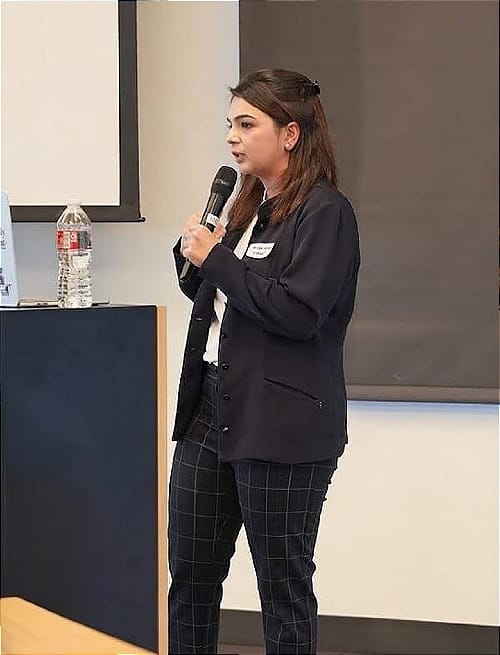
Nisha Advani, Head of Generative AI Projects, Cybage Software
According to Advani, AI value compounds when it is embedded into workflows rather than layered onto existing tasks. She outlined three dimensions that define ROI: efficiency, experience, and enablement. Efficiency saves time or cost; experience ensures employees and customers trust and adopt the systems; and enablement allows organizations to scale and adapt rapidly to new use cases.
Nisha Advani’s case studies reinforce this perspective: agents that are embedded into workflows, acting as active participants rather than passive tools, compound value across efficiency, experience, and enablement, precisely because they operate across these three behavioral layers. “AI value compounds when it is designed around workflows and not rules,” Advani explained, showing how alignment across machine behavior, human interaction, and systemic processes drives measurable ROI.
AI adoption succeeds only when organizations understand behavior at multiple levels. Burns framed AI value through a behavioral lens, emphasizing three levels of analysis:
Machine behavior – How AI agents behave on their own. This includes their decision-making, learning patterns, and recursive interactions. He noted that “a lot of AI projects are getting trapped where they’re just trying to optimize around the machine behavior of the agent, and they’re not going to the people and machines and the networks across the system.”
Dyadic behavior (people and machines) – How humans interact with AI agents in workflows. Here, human identity, trust, and alignment are crucial: “It takes work. You have to be really good at management, you have to be really good at economics, you have to be really good at people to do this kind of thing.”
Systems-level behavior – How humans, machines, and organizational structures interact as a network. Effective AI adoption requires modeling these interactions to ensure integration and alignment, otherwise interventions can cascade in unintended ways. Burns emphasized: “If you don’t integrate it, and it’s not aligned, and it’s not governed wisely, you will actually lose—and there are times the systems collapse.”
In practice, achieving this balance requires design decisions, not just technology deployment. Advani illustrated this with examples from a global network security provider and a major marketing firm, where AI agents were not simply answering questions but actively coordinating actions across systems. “Agents move work forward. They don’t just answer questions—they are actual participants in the process,” she emphasized.
AI Agents Are Generative Participants
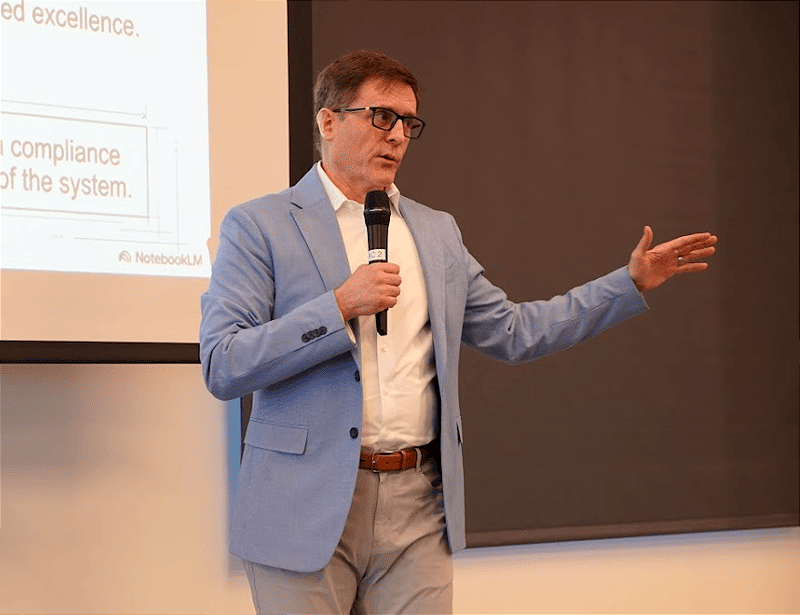
Dr. Burns highlighted the deeper principle behind AI adoption: agents, like humans and organizations, are generative. “AI agents are organizational participants, not just software… they are active decision-making workflow participants,” he said, noting that generative behavior is recursive, emergent, and multiplicative. He compared it to language itself: finite rules, a limited lexicon, but infinite expressive potential. In organizations, governance, incentives, and capabilities interact in the same way, producing outcomes that are greater than the sum of their parts.
Dr. Barclay Burns, Assistant Dean of Smith College of Engineering and Technology, Utah Valley University
“If you have low governance, low integration, low alignment, there is a big cost. You think you’re doing something good, but if you’re not integrated and aligned, you can actually lose,” Burns explained, underscoring that mismanaged AI can cascade into unintended consequences.
Human Identity and Organizational Alignment Are Critical
Both speakers stressed that technology alone cannot drive value. Humans must remain central to AI deployment. Burns shared insights from UVU’s experience integrating agents across 45 departments and multiple colleges, where faculty initially resisted adoption out of concern for their roles. “If you don’t spend the time to bring people along and experiment at an identity level, you’re just dumping machines into a system, and they’re not going to check it,” he said.
Advani echoed this, noting that enterprise AI requires intentional ownership and accountability. “Ownership and accountability are extremely important. Without them, AI remains an experimental project, not an operational capability,” she explained. The combination of human-centered change management with workflow-centric AI design is where real ROI emerges. It’s not a single project; it’s a holistic approach involving design, experimentation, and iterative learning across systems.
Nisha Advani, Head of Generative AI Projects, Cybage Software
Scaling AI Requires Thoughtful Design and Reuse
Both speakers underscored that scale is achieved not by more tools, but by creating reusable architectures. Advani shared how her teams build component libraries, enabling organizations to roll out new AI use cases faster and cheaper after the initial deployment. Burns extended this concept to organizational networks, where hundreds—or even thousands—of agents must interact without creating chaos. “We have 45 departments… every department wants a different AI agent. You have to think carefully about how you coordinate these new world actors into the system,” Burns said.
By aligning agents with human decision-making, organizational values, and workflow structures, both speakers argued, AI moves beyond experimentation into core operational capabilities that actually drive business outcomes.
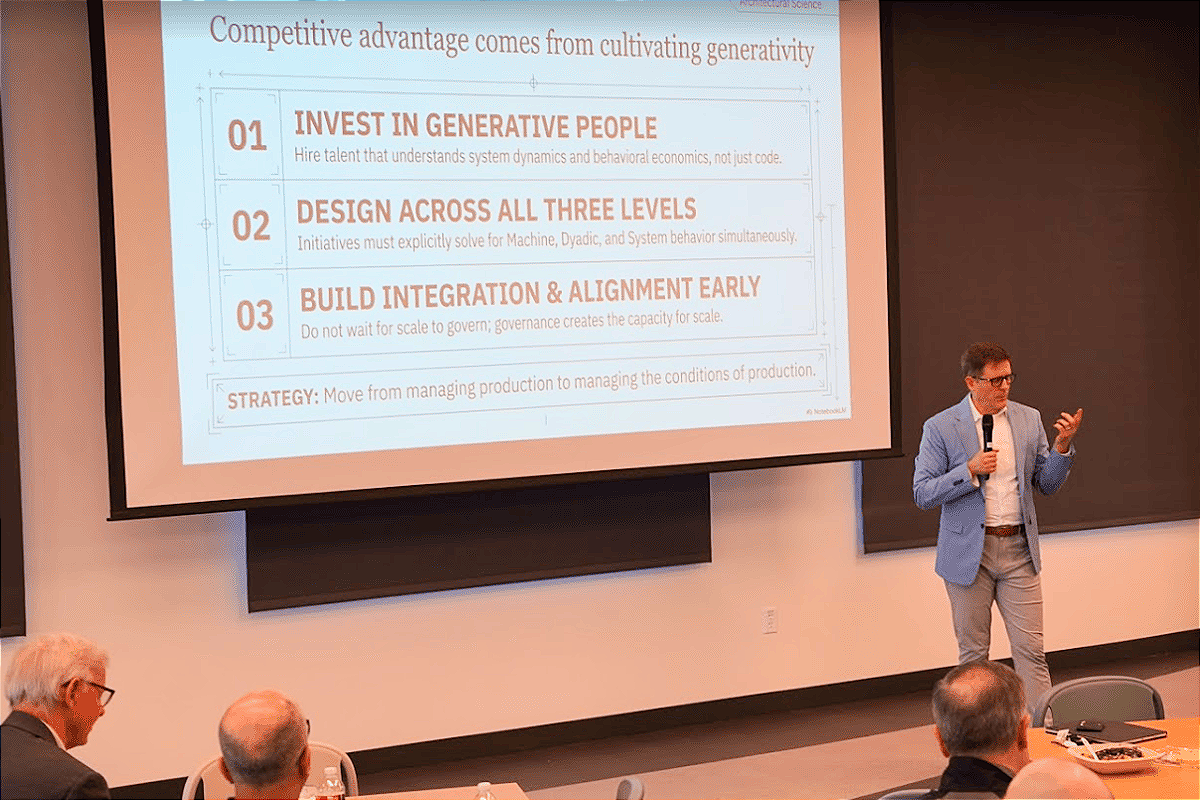
Dr. Barclay Burns, Assistant Dean of Smith College of Engineering and Technology, Utah Valley University
The Takeaway: ROI Comes From Generativity, Not Speed
The briefing left executives with a clear message: true AI value is not about automating tasks faster. It is about designing systems where AI agents are generative participants, workflows are reimagined, humans are engaged at an identity level, and organizational alignment ensures that agents produce multiplicative outcomes.
“If you want to gain competitive advantage, you treat people generatively, you engage them in the process, you honor their identities, you design across all three levels of behavior, and then you integrate and build alignment,” Burns concluded. Advani added, “AI value compounds when it is designed around workflows and not rules.”
As Utah’s tech leaders learned in the briefing at Pelion, the path to AI ROI is less about the tools you buy and more about the human, organizational, and workflow design choices you make. The organizations that master this balance will be the ones that see AI deliver measurable, sustainable impact in 2026 and beyond.
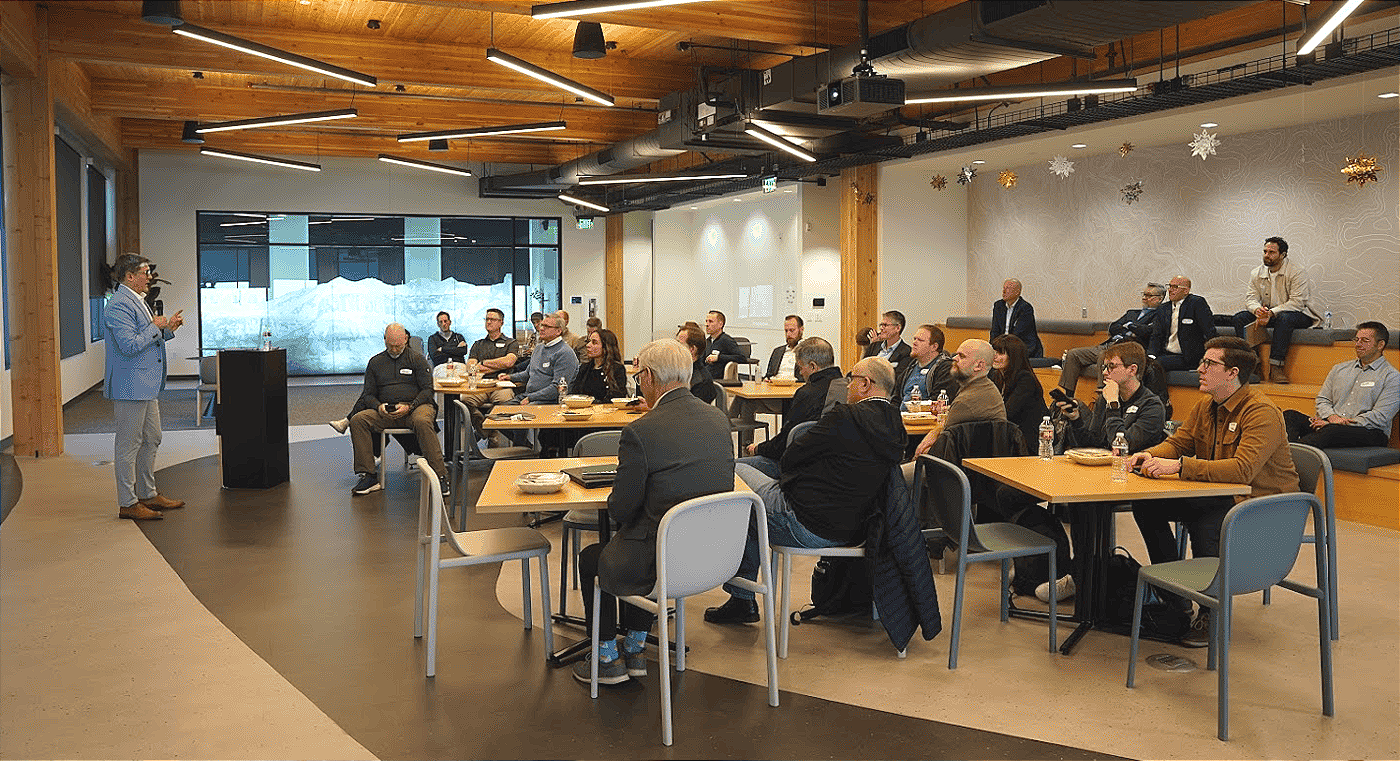
Dr. Barclay Burns, Assistant Dean of Smith College of Engineering and Technology, Utah Valley University, addressing the 40+ audience of tech leaders at Pelion's headquarters in Draper, Utah
Sagecreek hosts a monthly executive briefing series for C-suite and VP-level leaders focused on practical AI strategy, drawing approximately 25–30 executives per session. The series emphasizes real-world implementation over vendor-driven pitches, alternating between technical deep dives and business-focused discussions.
This January 27 event—the third in the series. Previous sessions addressed AI-enabled “builder” teams and the shift from traditional SEO to large-language-model-driven search.
Attendees have described the series as unusually substantive, with venture-backed founder Zac Park calling it “the best AI event I’ve been to,” and Dr. Burns characterizing it as “bar-none the best event series” he has attended.
TechBuzz will post upcoming Sagecreek events well in advance.
Share this article
The link has been copied!
Your link has expired. Please request a new one.
Your link has expired. Please request a new one.
Your link has expired. Please request a new one.
Great! You've successfully signed up.
Great! You've successfully signed up.
Welcome back! You've successfully signed in.
Success! You now have access to additional content.