Building Futures in STEM: SheTech Explorer Day 2026 Sparks Passion, Mentorship, and Discovery
SheTech Explorer Day 2026 united 3,500 Utah high school girls with mentors, hands-on STEM experiences, and industry leaders, inspiring confidence, curiosity, and community while showcasing real-world innovation and rallying the next generation of women in STEM.
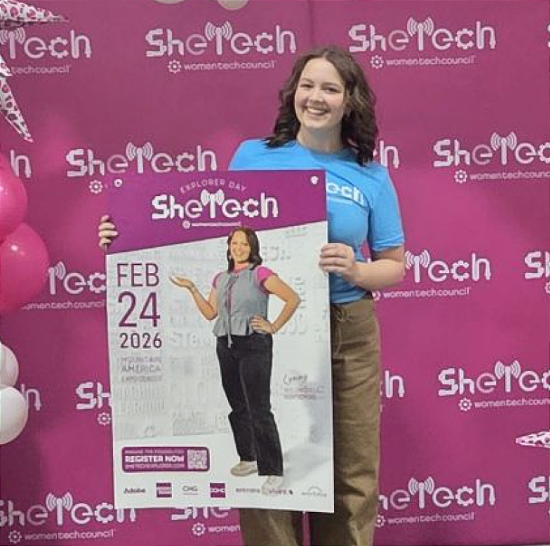
SheTech Explorer Day 2026 brought together 3,500 girls from 161 schools across Utah to the Mountain America Expo Center in Sandy, Utah for a full day of hands-on STEM exploration. With more than 1,000 mentors and 150 companies participating, students rotated through workshops, listened to industry leaders, and explored future education and career pathways.
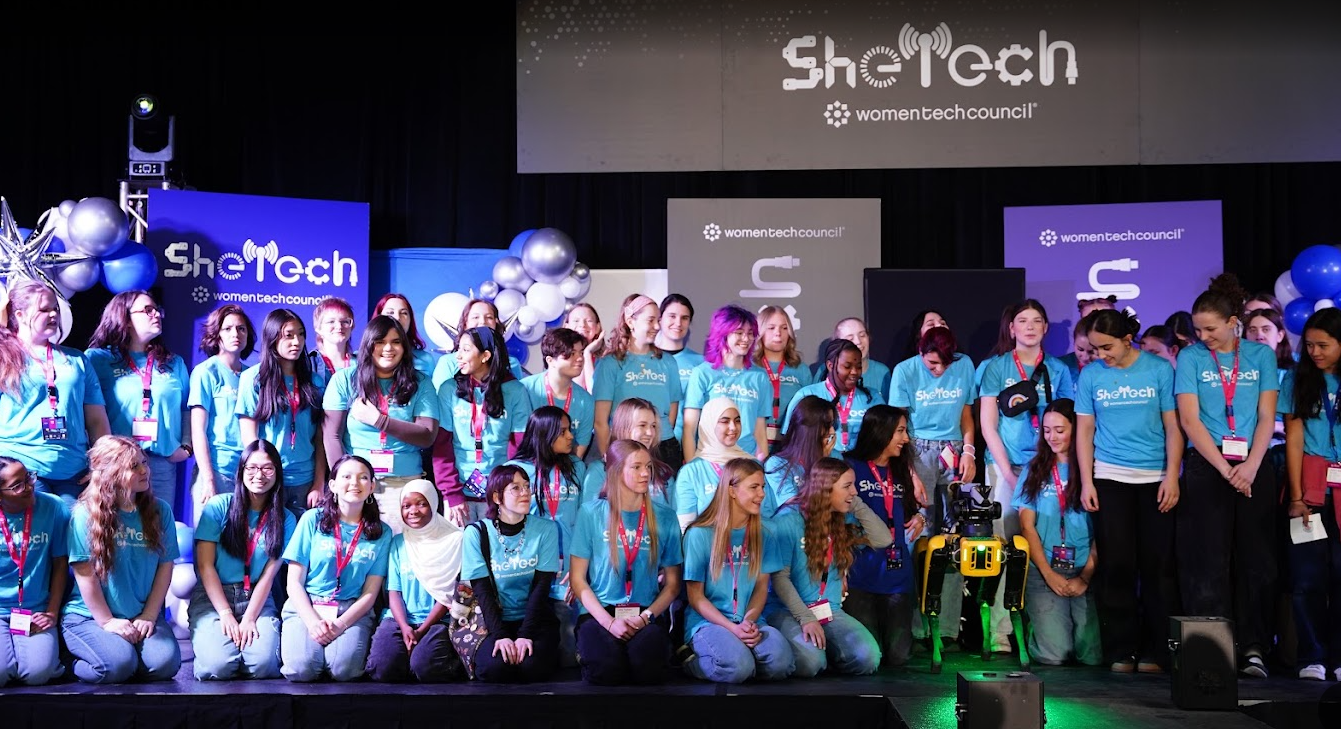
This year featured more robotics and AI experiences than ever before. From dancing robots to AI design and ethics workshops, students were able to interact directly with the technologies shaping the workforce. Instead of just hearing about innovation, they got to experiment with it.
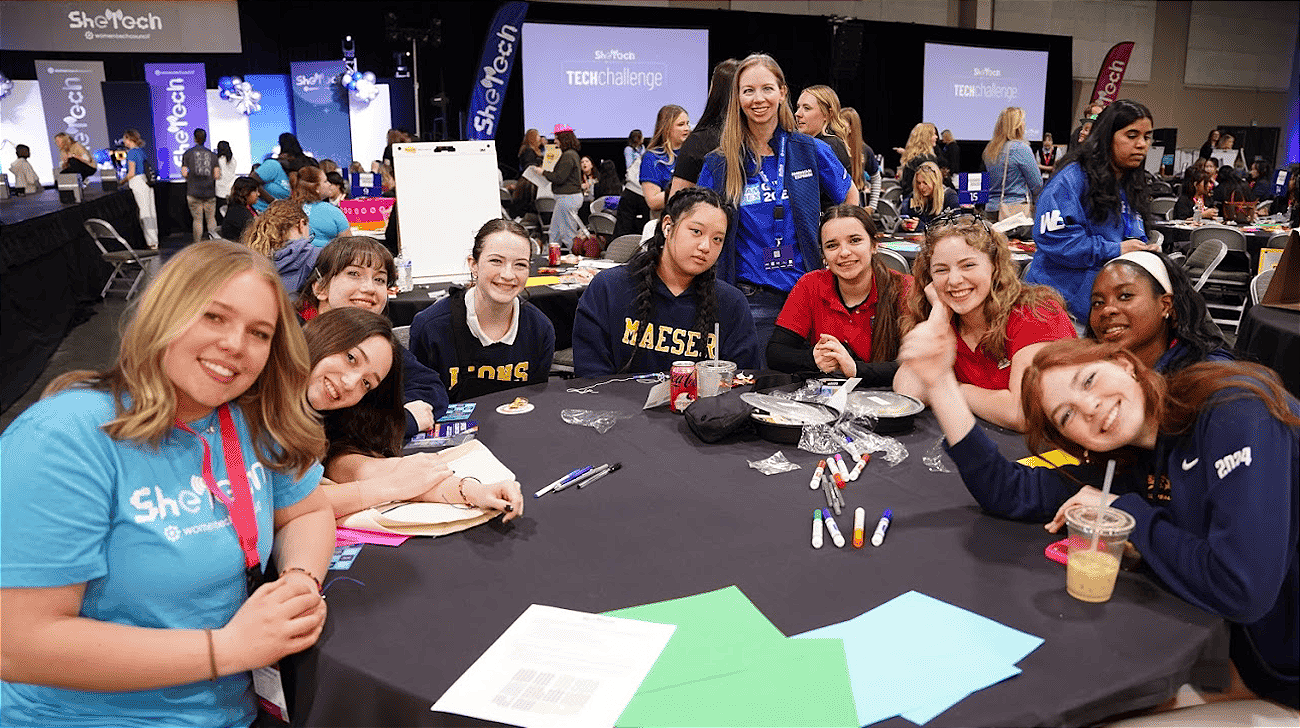
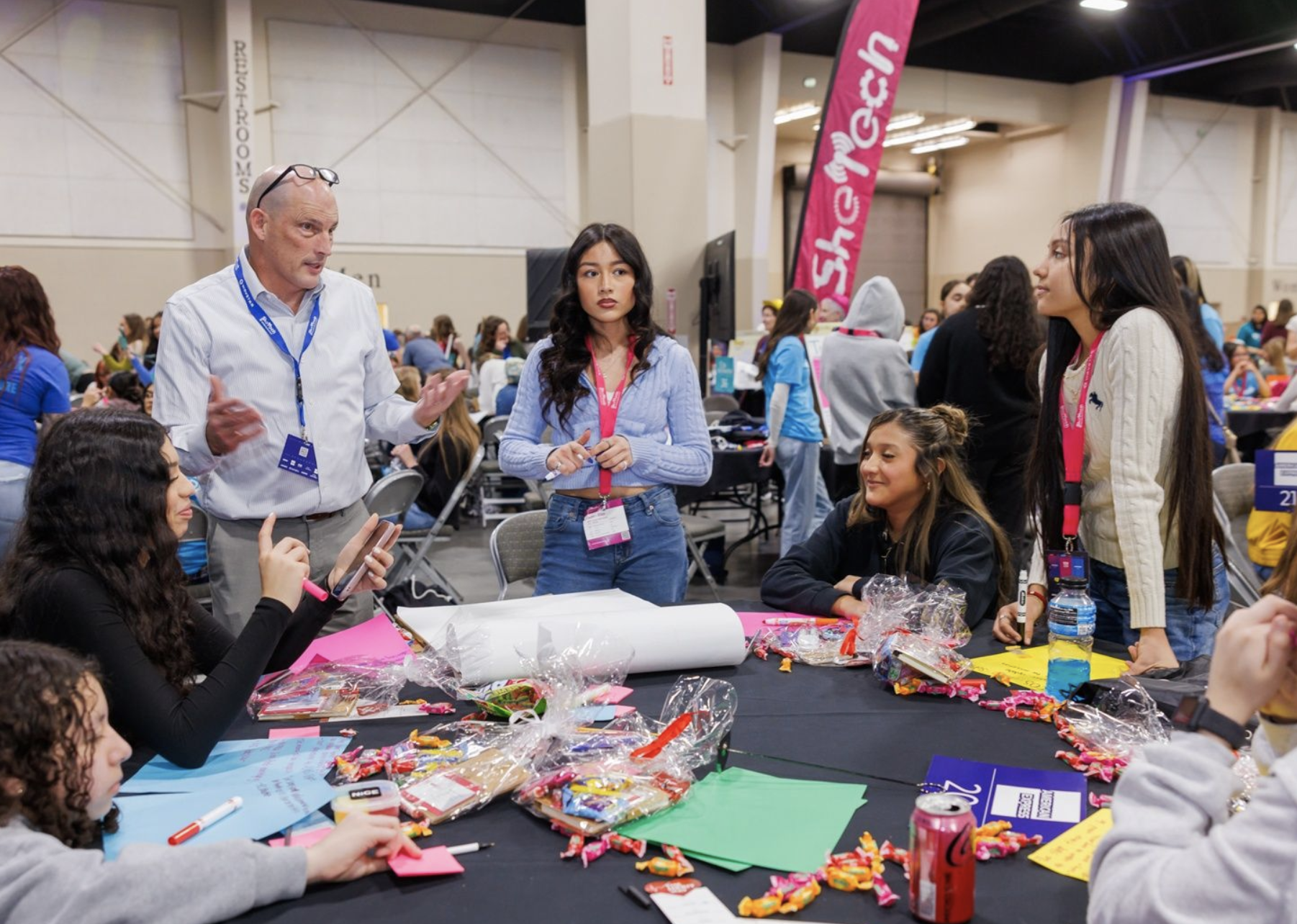
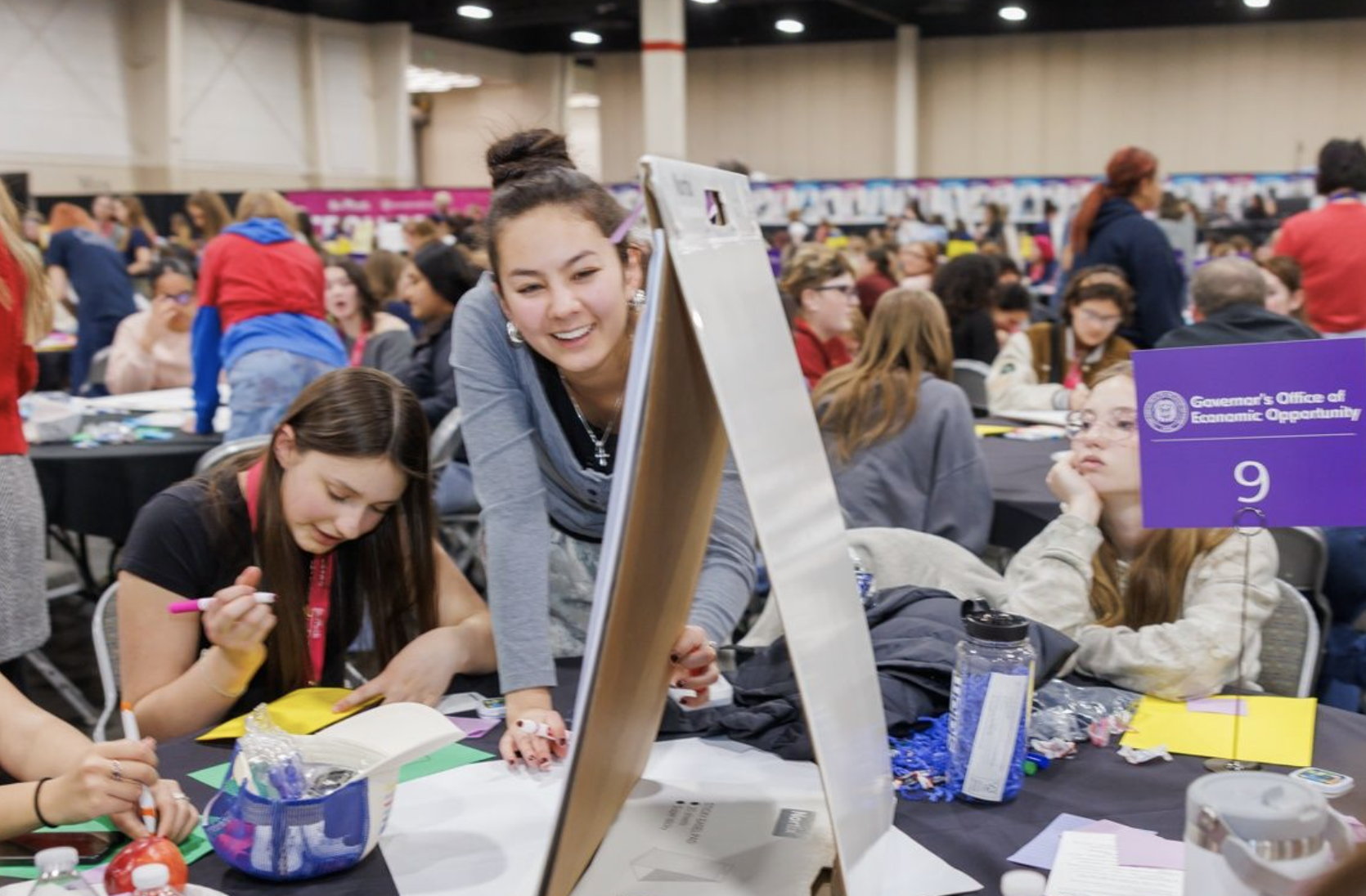
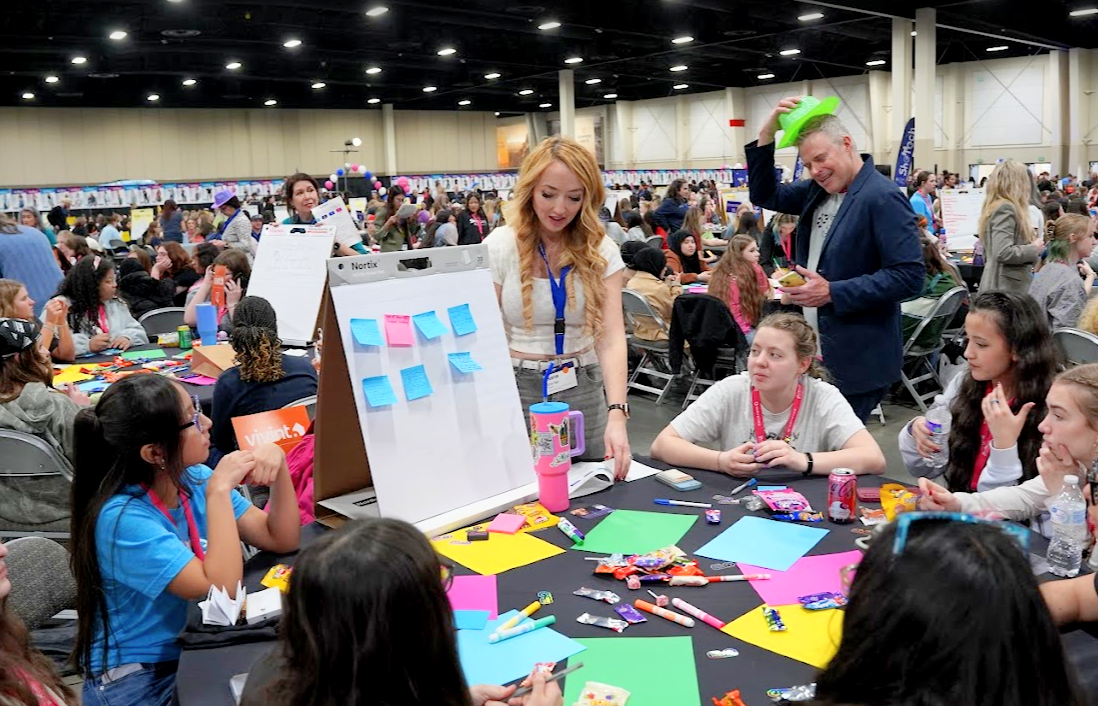
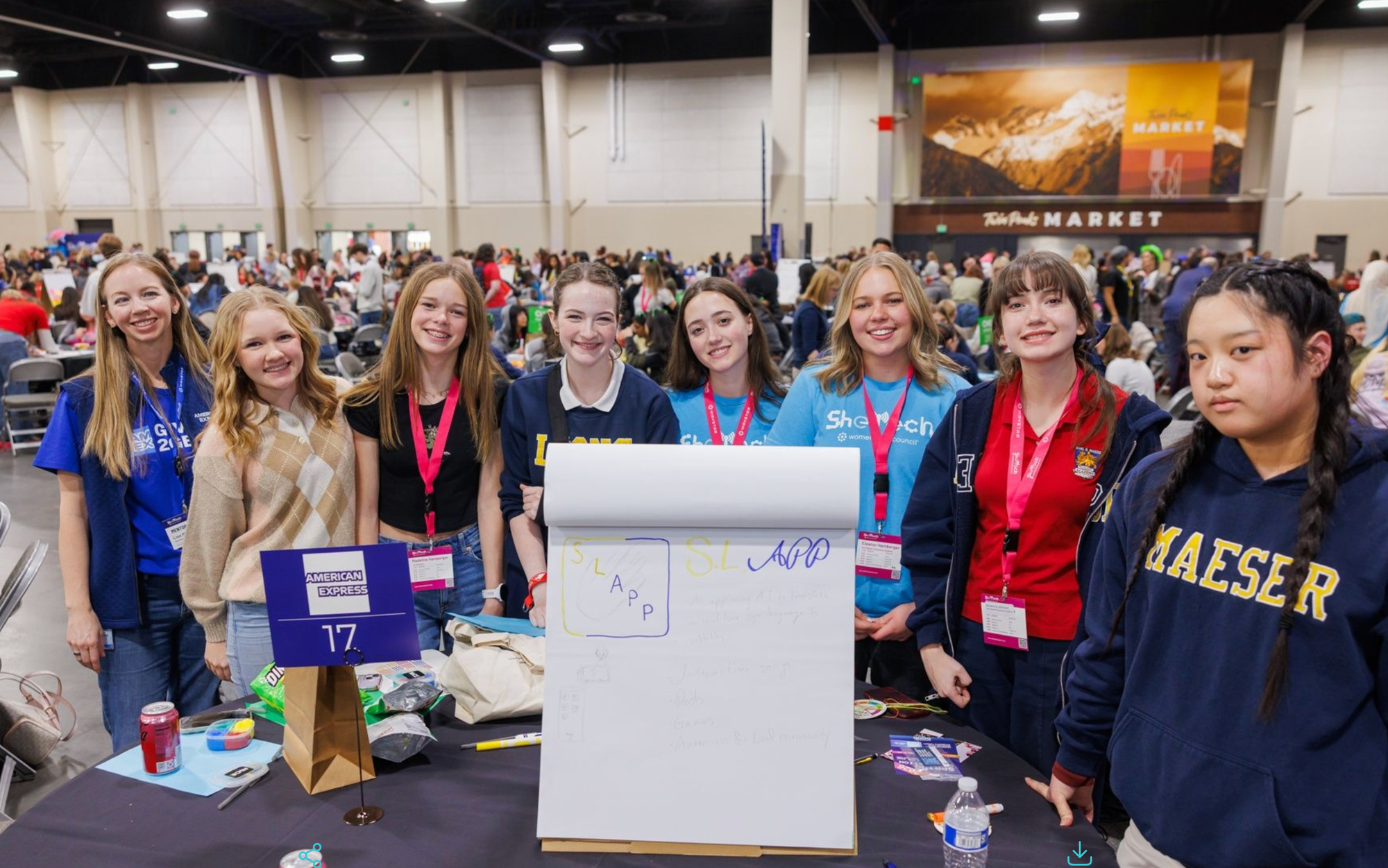
One of the most exciting parts of the day was the TechChallenge, where we were asked to create an AI- and human-powered solution to solve a real problem in their communities. The from dozens of tables ideas ranged from environmental projects tracking conservation efforts to a biometric scanner that could help teens create personalized diets and ensure proper nutrition. Another team designed a “teacher’s pet AI,” a classroom assistant meant to support both teachers and students by answering questions and helping manage assignments. The challenge highlighted how students are already thinking critically and creatively about the role of AI in society.
TechChallenge 2026 (Karl G. Maeser Preparatory Academy table)
At the SheTech–TechBuzz booth, we had the opportunity to interview leaders from across Utah’s economy, gaining firsthand insight into careers spanning education, venture capital, nonprofit innovation, entrepreneurship, and beyond:
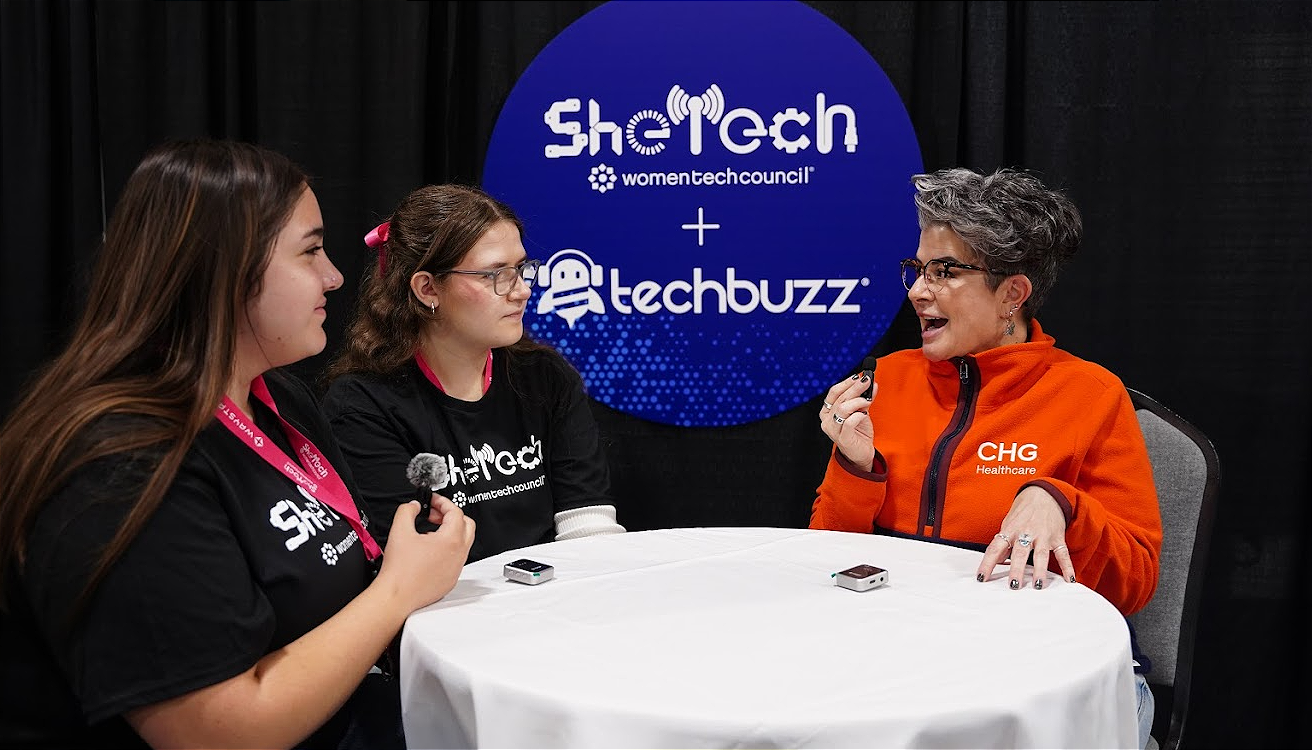
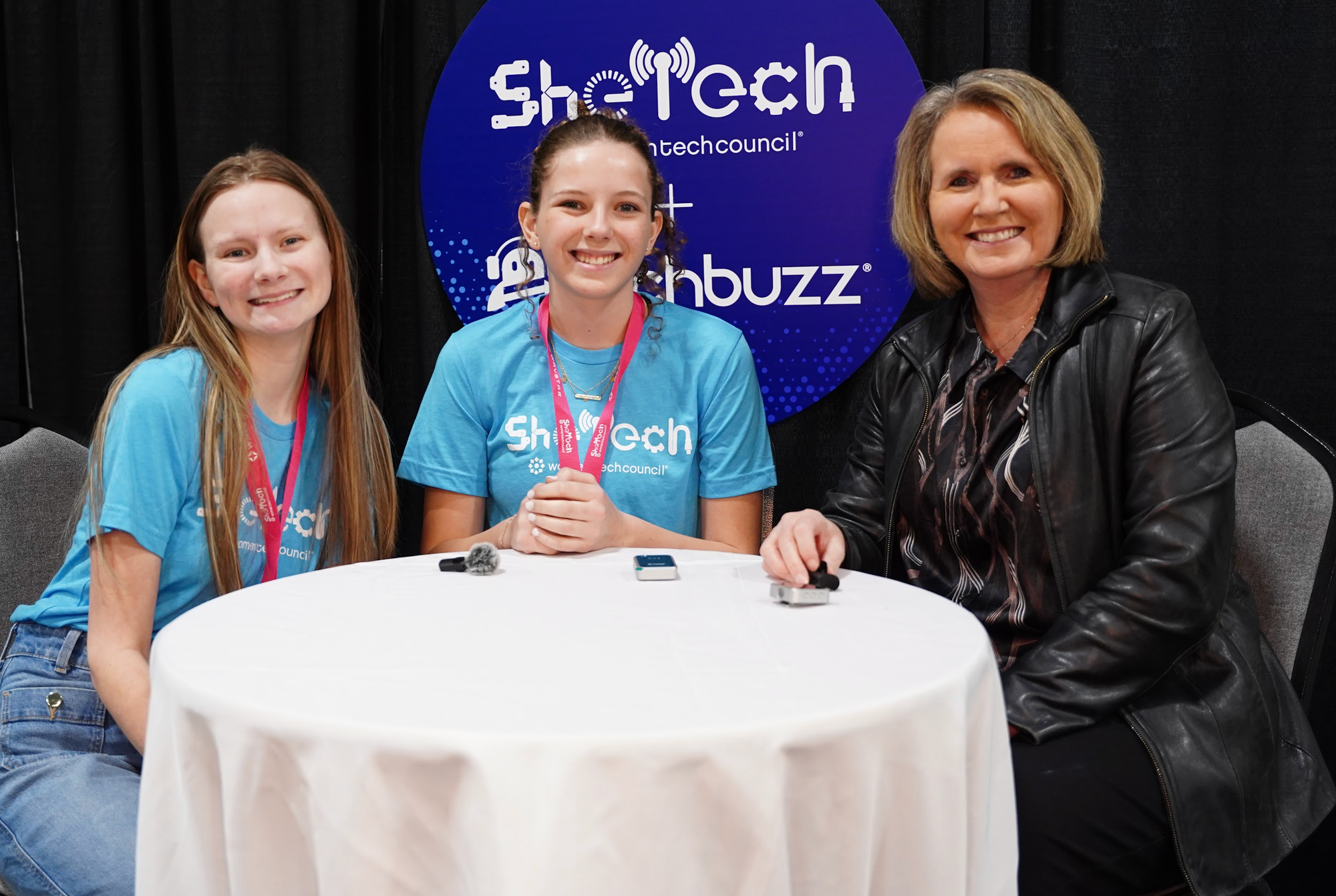
Dani Weigand, Product Manager at CHG Healthcare and an avid Explorer Day Mentor, spoke with Kennedi Gonzalez and Alyzabeth Grover about her path in STEM. “For me, the best part of STEM is curiosity,” Weigand said. “It’s about talking with people, understanding the problems they want solved, and then building solutions together. At CHG Healthcare, we do that every day: connecting doctors to communities where there’s a need for specialized clinicians. It’s challenging but incredibly rewarding to see your work make a real difference.”
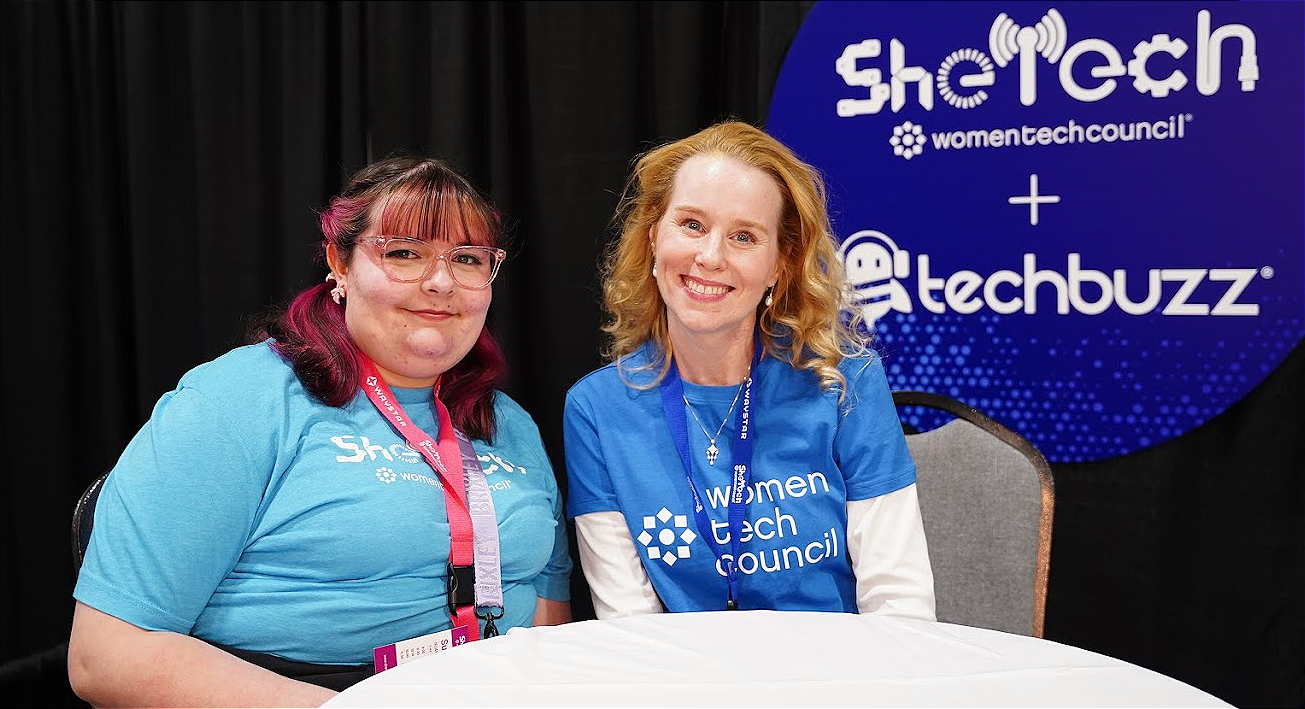
Kennedi Gonzalez and Alyzabeth Grover with Dani Weigand, Manager of Product Management, CHG Healthcare and Explorer Day Mentor
Weigand encouraged students to overcome hesitation when asking questions. “I think, especially as women, it can feel hard to raise your hand and speak up,” Weigand said. “But don’t be afraid to be seen. Ask questions, share your ideas, and take ownership of your learning. That’s how you grow in STEM.”
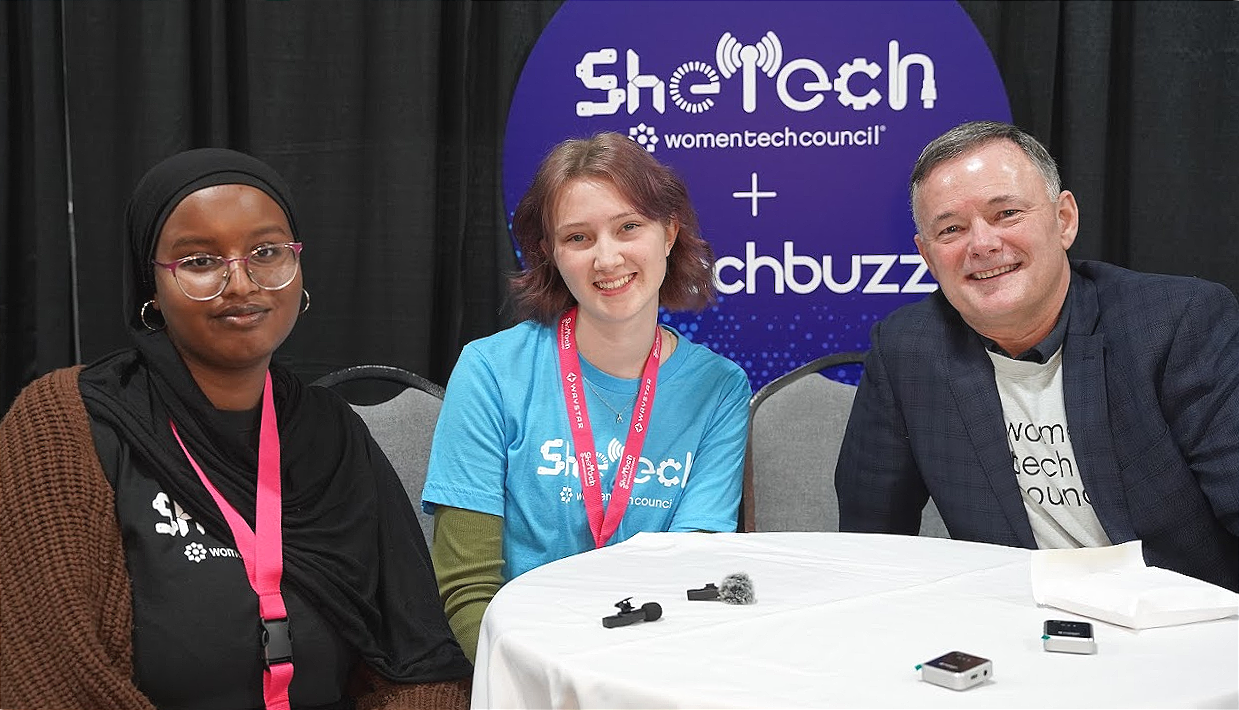
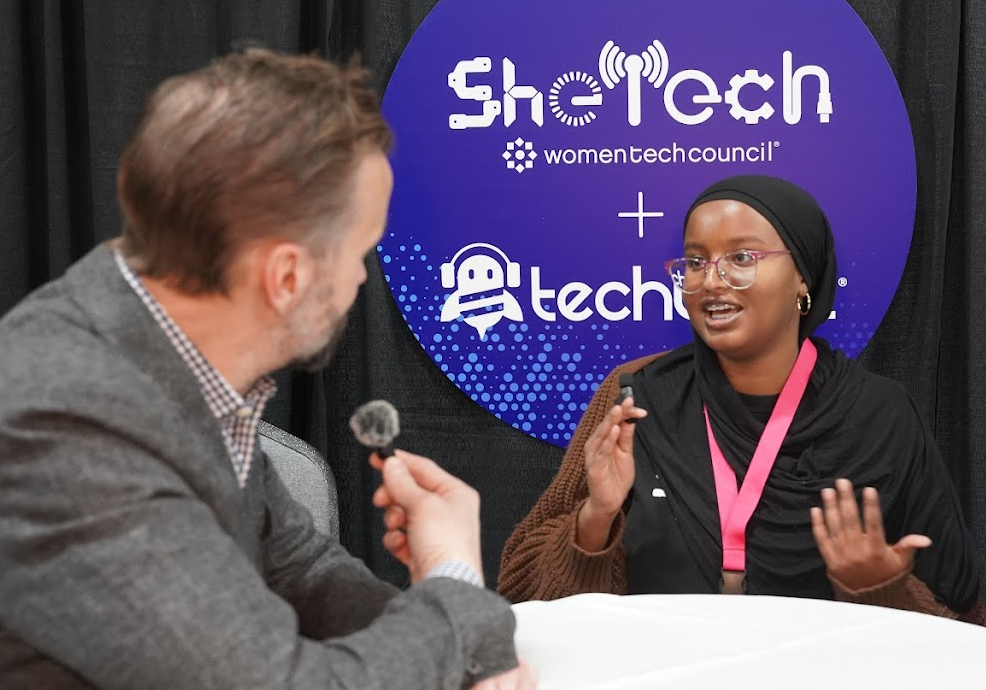
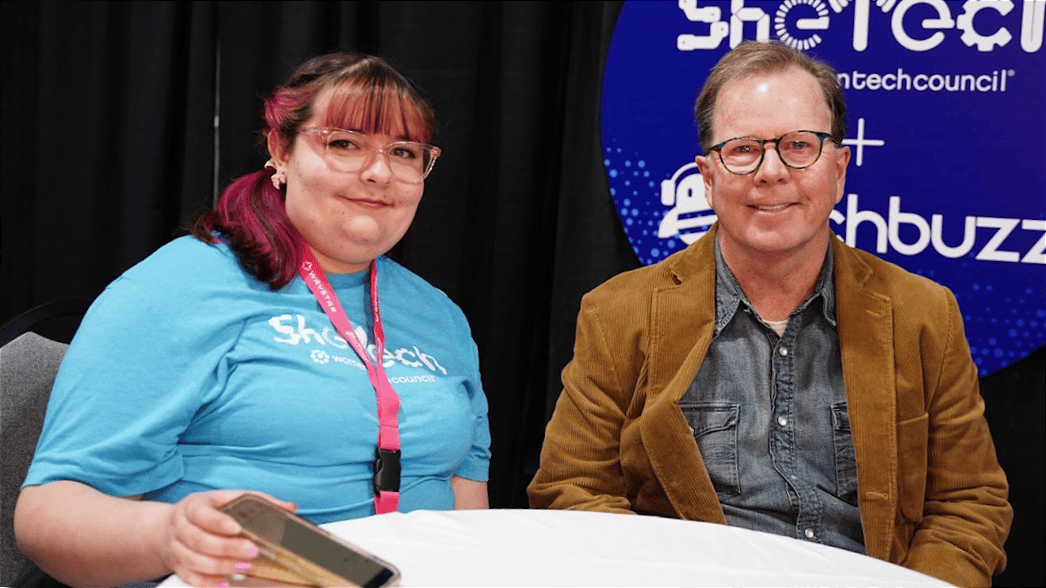
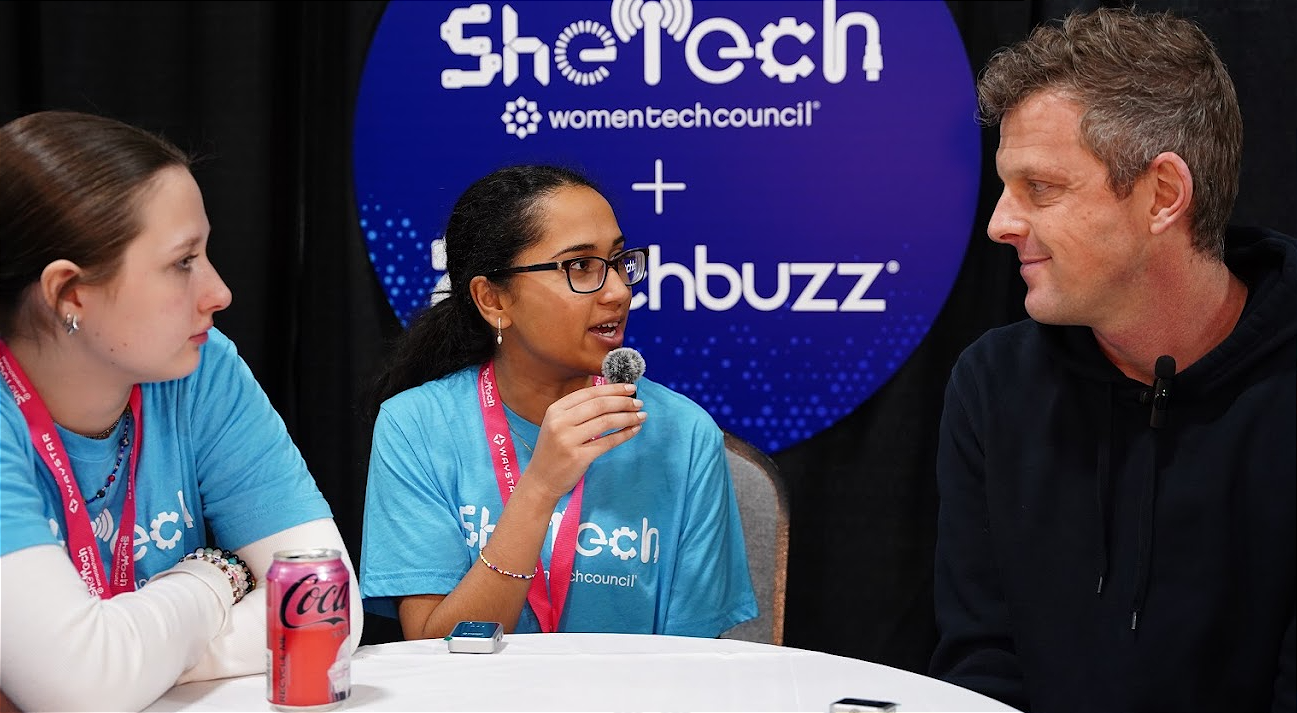
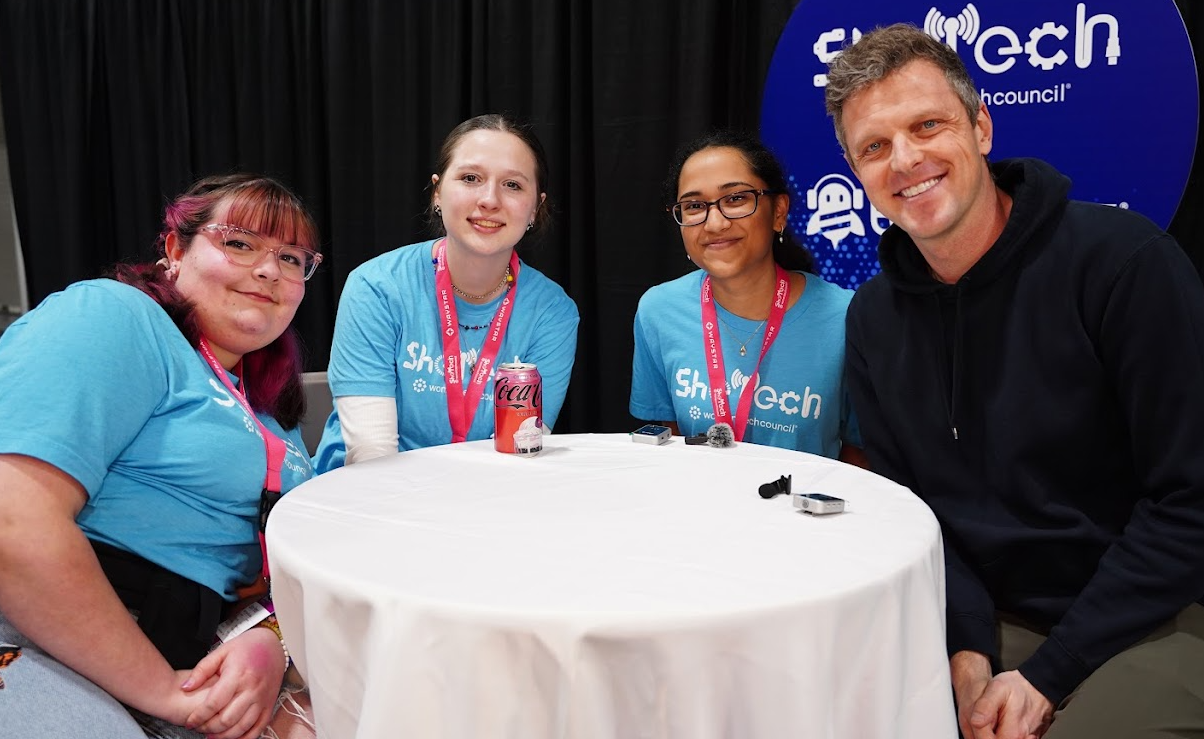
McKay Christensen, CEO of Thanksgiving Point, shared his insights on leadership, resilience, and exploring STEM with Najma Ahmed and Agatha Hunnicutt. Christensen oversees the organization’s science centers, welcomes millions of visitors annually, and is leading the development of a new technology center at Thanksgiving Point. He described his career journey, which began at Procter & Gamble working in engineering, packaging, and logistics. “I just sort of got hooked into the industry,” he said. Later, moving to Utah, he wanted to dedicate his experience to a nonprofit that could make a difference for kids and families.
Najma Ahmed and Agatha Hunnicutt with McKay Christiansen, CEO, Thanksgiving Point
Christensen emphasized resilience as a core lesson for both scientists and young people pursuing STEM. “One thing that Thanksgiving Point teaches kids is how to be resilient,” he explained. “That’s what scientists do. They try, they fail, they try again. Each failure is just a step toward a solution.” He noted that persistence is not only essential in science but also in careers and business: “You’re going to have successes and failures, but staying persistent eventually gets you to the right place.”
For young women exploring STEM, Christensen encouraged curiosity, experimentation, and hands-on learning. “Try everything. Even if you fail, it teaches you something,” he said. “Take risks, dive into new classes, do internships. Try it all. Don’t just dip your toes in; get fully in. That’s when you realize what truly excites you.” His advice underscores the value of exploring broadly to discover one’s passions and gain confidence through experience.
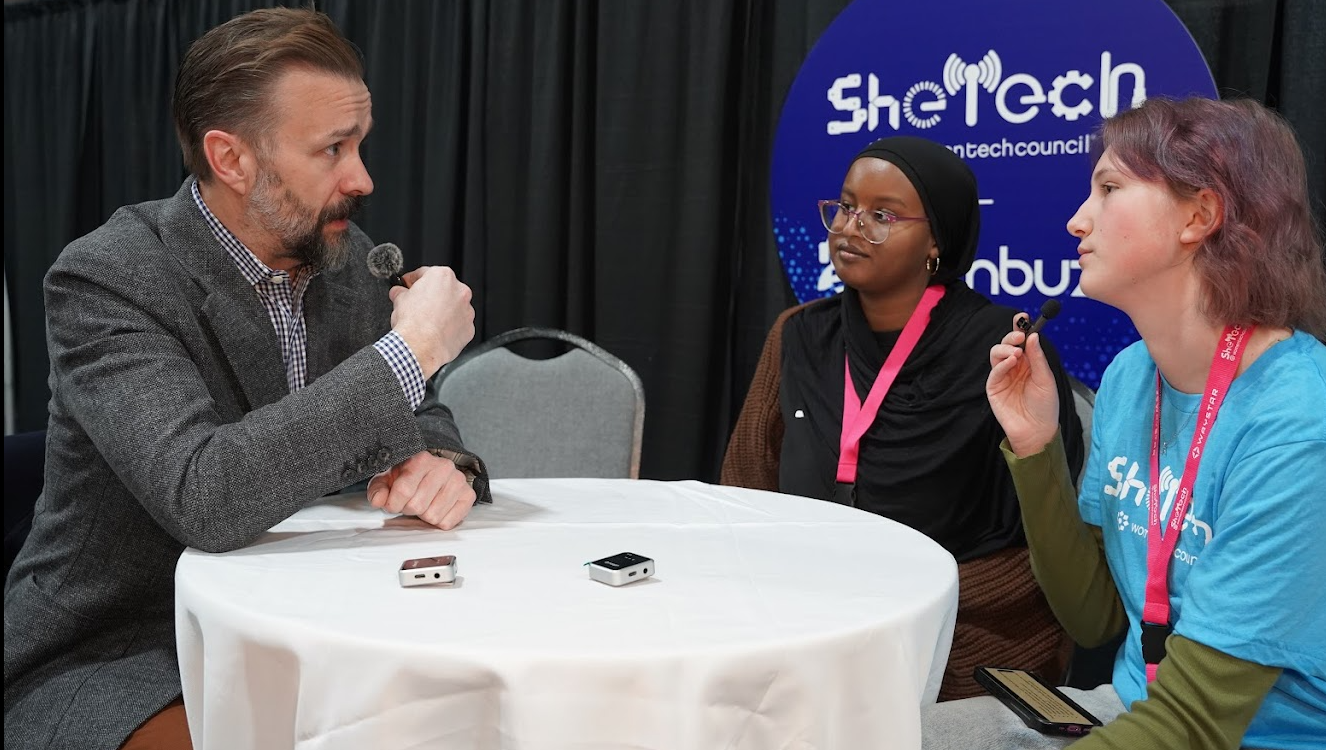
Geoff Landward, Commissioner of Higher Education for the state of Utah, also sat down with Najma Ahmed and Agatha Hunnicutt, shared his journey in education, and discussed the opportunities available for young women in STEM. Landward oversees 16 colleges and universities across the state and reflected on what first sparked his passion for learning. “College sparked my imagination,” he said. “I realized there were so many things I didn’t know, and I wanted to learn them all. It gave me the freedom to explore areas I’d never encountered before and figure out what I wanted to do with my life. I absolutely loved every minute of it.”
Geoff Landward, Commissioner of Education, USHE with Najma Ahmed and Agatha Hunnicutt
Landward shared how his career path took unexpected turns. “I went to law school and practiced employment law as a trial lawyer,” he said. “I hated it. I just couldn’t fathom doing that for 30-plus years. I had to explore different paths and figure out what I was naturally good at. Now, I run a system of higher education, and I never in a million years would have thought I’d end up here. But it worked out, because I found a path that fit my strengths and passions.” He emphasized the importance of stepping outside one’s comfort zone and exploring multiple pathways, whether that’s a technical certificate, a four-year degree, or a completely different field. “The possibilities are massive. If you want to stay happy in life, you have to stay curious, keep learning, and keep exploring.”
Geoff Landward with Najma Ahmed
He also addressed gender barriers in education, encouraging young women to pursue STEM and leadership opportunities without hesitation. “One of the greatest tragedies is when young women feel like certain doors are closed just because of their gender. That’s not true. It’s a societal mistake, and it needs to be broken. Don’t ever let anyone tell you there’s something you can’t do because you’re a woman,” he said. Landward urged students to seek out scholarships, programs, mentors, and other resources to make the most of their opportunities. “If you want to do something, pursue it, explore it, and know that those doors are open to you. In some areas, like engineering and tech, we’re even creating extra doors to give you more opportunities.”
TechChallenge 2026 (Credit: Laura Kinser)
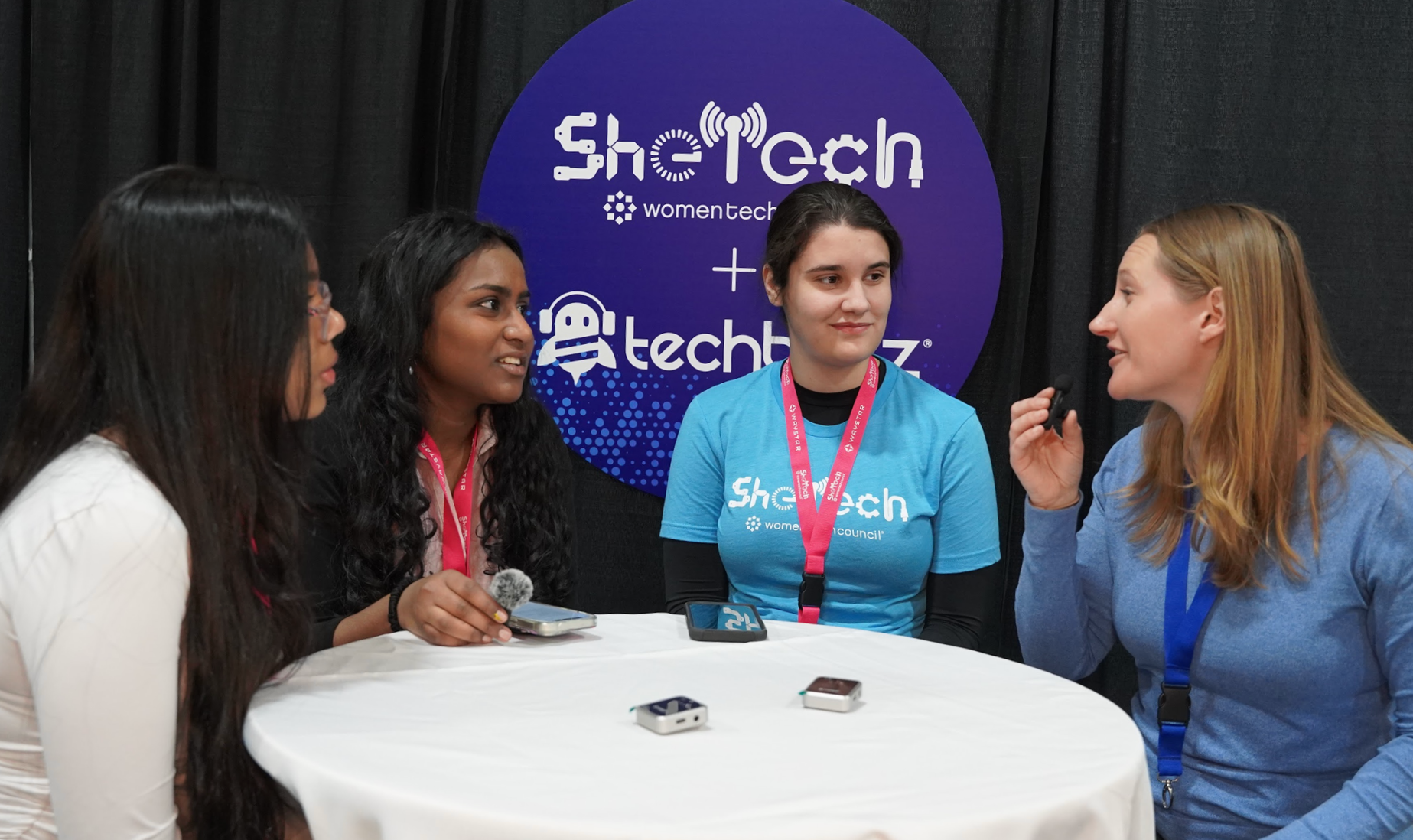
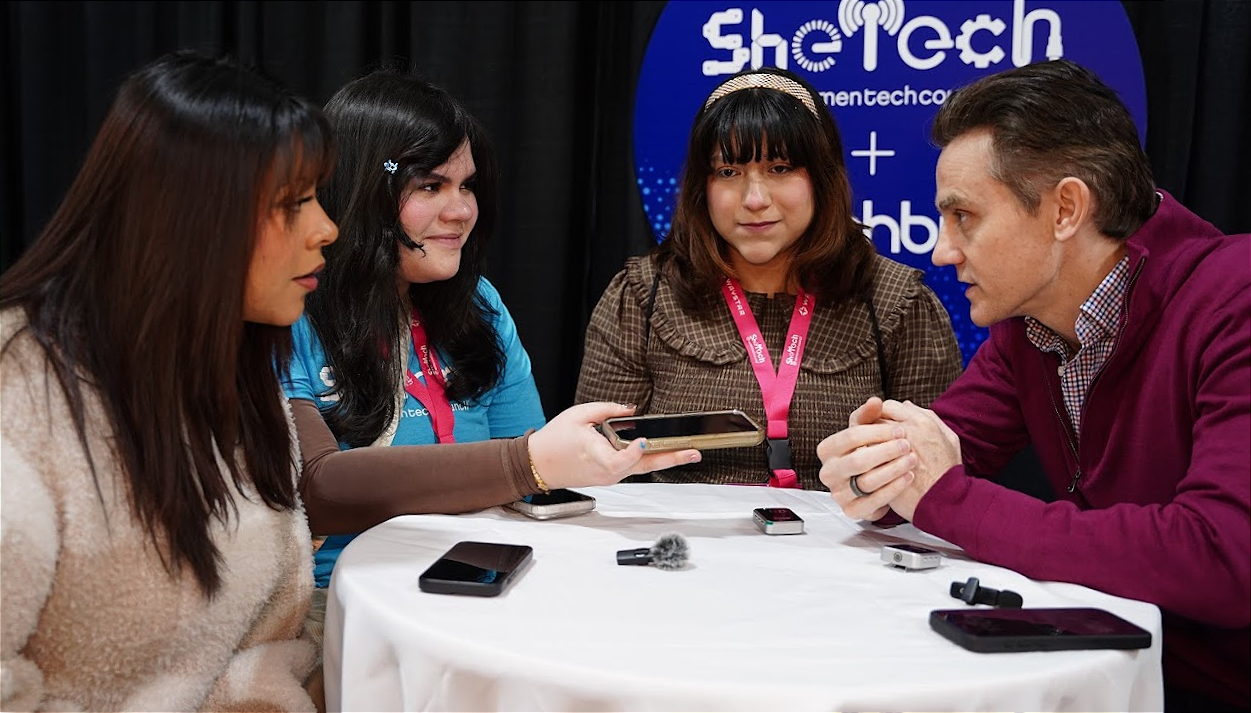
Kristin Wihera, Director of Fund Operations at Nucleus Institute, shared her perspective on investing in Utah’s innovation economy and supporting early-stage deep tech startups with Samhita Chavakula, Jaswitha Jadapalli, and Hannah Haney. “We just made a couple of exciting investments: One in neurotech and another in small-molecule therapeutics,” she said. “It’s intellectually fascinating work, and it’s designed to make Utah a little more future-proof. We’re creating innovations that will help people long-term, and that’s exciting to be part of.” Wihera oversees the day-to-day operations of Nucleus’s venture fund, working closely with entrepreneurs, startups, and students to guide them from concept to market.
SheTech-TechBuzz Media interns Samhita Chavakula, Jaswitha Jadapalli, and Hannah Haney interview Kristin Wihera, Director of Fund Operations, Nucleus Institute
Wihera described a major upcoming project, Convergence Hall, a new building at The Point in Utah. “It’s going to be a place for government, academia, and industry to come together and work on projects collaboratively,” she explained. “It’s a physical manifestation of everything we’ve been doing virtually, bringing people and ideas together in one space to innovate and problem-solve.” Her work emphasizes not only financial investment but also creating environments where collaboration and creativity thrive, helping startups scale while benefiting Utah’s economy and communities.
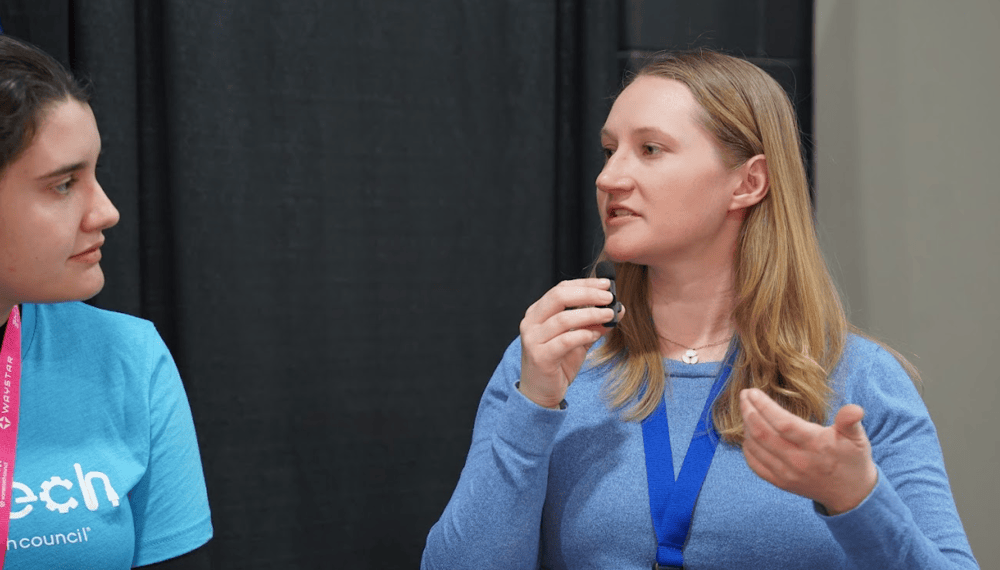
Hannah Haney with Kristin Wihera, Director of Fund Operations, Nucleus Institute
She also shared insights for young women entering STEM and innovation. “Be aware of your superpowers and what makes you uniquely human,” Wihera stated. “Explore a lot of things. You don’t know what you don’t know. Try things that might seem outside your comfort zone, and you might discover a passion you never knew existed.” She added that curiosity is essential for thriving in tech: “The people who excel ask lots of questions. They’re not afraid to look inexperienced or to keep learning. That insatiable curiosity will take you very far.” Reflecting on her own path, Wihera credited her military background in the Navy for instilling a sense of service and purpose that guides her career today. “Working in a mission-driven role that aligns with my values makes every day exciting,” she said. “We’re helping entrepreneurs, creating jobs, driving innovation, and improving lives. It’s incredibly rewarding to see the impact on both the community and myself.”
TechChallenge 2026 (Credit: Laura Kinser)
Clark Ivory, founder and CEO of Ivory Homes, shared with Sunny Perez his perspective on leadership, problem-solving, and community impact. “I’m a builder, a problem solver,” Ivory stated. “My two main focuses every day are helping people lead our company and solving problems. If anything isn’t going well, I need to know about it and see what we can do to make it better.” He emphasized that effective leadership requires removing roadblocks, encouraging collaboration, and creating an environment where employees can reach their full potential.
Sunny Perez with Clark Ivory, CEO, Ivory Homes
Ivory’s motivation extends beyond his company to the broader community. “Our mission is to build quality homes with lasting value, produce happy customers, and give back,” he explained. Since 2003, Ivory Homes has donated 27.5% of profits to charitable causes, including building affordable housing, awarding scholarships to first-generation students, supporting literacy programs, and environmental initiatives such as planting 30,000 trees across Utah. “We want to help people flourish — not just within our company, but across the community,” he said.
Reflecting on his own journey, Ivory credited international experiences and family mentors for shaping his perspective. “I spent seven years in Europe and two on the East Coast, and that gave me perspective and motivation,” he said. For aspiring entrepreneurs and students, he offered this advice: “Set ambitious goals and don’t let your current circumstances limit your vision. Take advantage of every opportunity to work with people, build teams, and be a leader, but also a good follower. Look at everything as a chance to make an impact. Don’t just show up. Make your mark, and think about what’s best for the whole.”
TechChallenge 2026
Jens Gould, founder and CEO of Amalga Group, spoke with SheTech and TechBuzz interns Jenny Flores Perez, Lexaide Araujo and Aileen Prieto about the role of AI and technology in today’s workplace. Amalga Group is a nearshore BPO and ITO company that specializes in supporting fast-growing U.S. companies across tech, legal, finance, and retail industries. “We’re backed by highly skilled professionals from Latin America,” Gould explained. “Our teams optimize operations, scale businesses quickly, and deliver top-tier results — all with speed, cultural fluency, and elite execution.”
Jenny Flores Perez, Lexaide Araujo, and Aileen Prieto with Jens Gould, CEO, Amalga Group
Gould discussed how AI is integrated into Amalga’s work. “AI is not here to replace people,” he said. “It handles routine, behind-the-scenes tasks, freeing employees to focus on more high-impact work. We want to empower teams, not eliminate jobs.” He emphasized that when used intentionally, AI can increase productivity, creativity, and collaboration.
For students thinking about careers in tech or entrepreneurship, Gould’s advice was straightforward: “Stay curious. Technology is evolving fast, and the tools you have today will be different tomorrow. Learn to experiment, explore, and see how these tools can solve real problems. That mindset — curiosity plus creativity — is what makes you ready for any challenge in the tech world.”
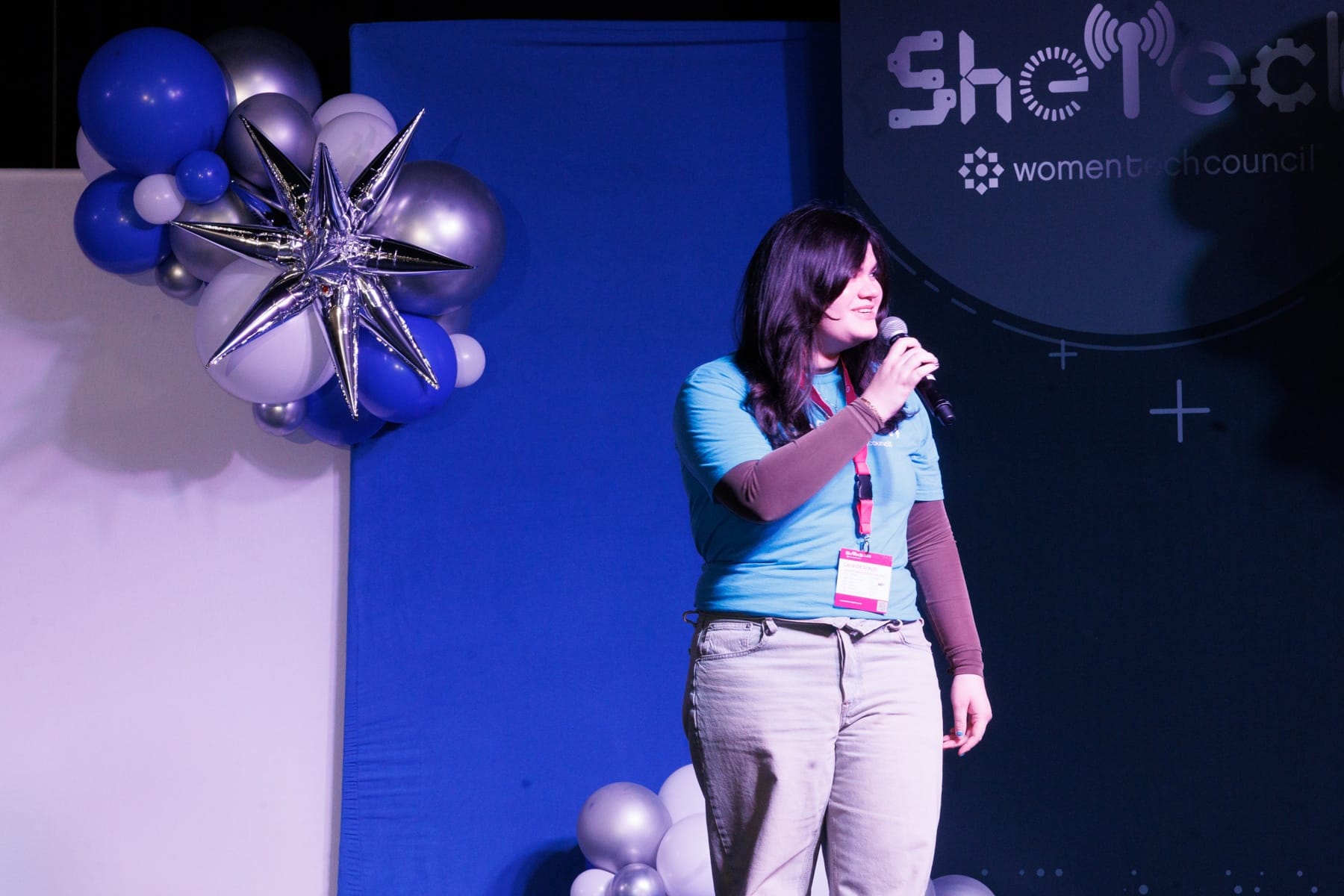
Lexi Araujo on stage inspiring her peers at Explorer Day 2026 (Credit: Laura Kinser)
Caleb Hicks, CEO and founder of SchoolAI, designed his AI platform from his experience as a former classroom teacher. “SchoolAI is teacher-managed and focused on learning,” he explained to Sunny Perez, Alice Brewster, and Shruthi Kamalanathan. “It doesn’t do the work for students. It guides them through essays, interviews, and interactive exercises. The goal is to help teachers see who needs support and create moments of real understanding.” Hicks described how the platform allows students to practice skills in creative ways, like interviewing historical figures or role-playing as a water droplet in the water cycle, turning lessons into interactive, “magic school bus” experiences.
Alice Brewster and Shruthi Kamalanathan with Caleb Hicks, CEO and Founder, School AI
Hicks emphasized that the ethical use of AI is a central part of the platform. “Most AI is designed to do things for you, but we want students to develop their own ideas,” he said. “SchoolAI is a learning assistant, not an assistant that does your work. It helps you think, practice, and improve. It’s about building skills rather than shortcuts.” He also addressed the role AI will play in the future of work, noting that some jobs will evolve dramatically while others, especially those requiring human connection, will still rely on people. “Teachers, for example, can spend less time on grading and more time supporting students who need them,” he said, “and students can get guidance that helps them truly learn and grow.”
For students exploring technology and AI, Hicks’ advice is simple but powerful: “Use AI to build connections, not shortcuts. Let it help you think, not replace your thinking.” He encourages young people to approach AI responsibly and creatively, using it as a tool to enhance their learning and relationships. “Find ways to use AI to connect with your hobbies, your friends, and the world around you. That’s what’s truly exciting. It’s not just about technology; it’s about what it enables you to do beyond the screen.”
Sunny Perez, Alice Brewster, and Shruthi Kamalanathan with Caleb Hicks
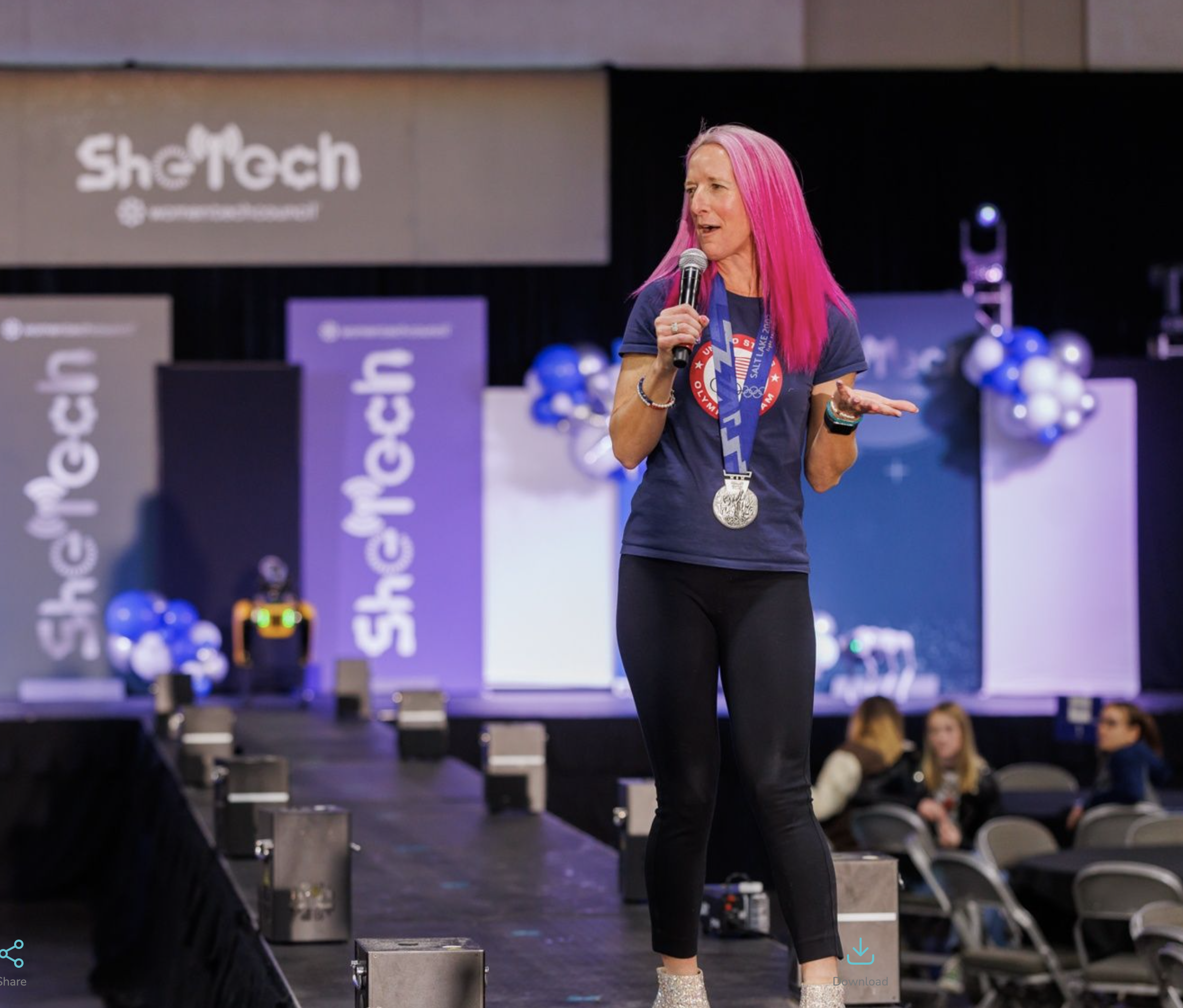
Shannon Bahrke, two-time Olympic medalist and founder of Champions Advantage, shared her journey with Kenn Gonzalez and Alyzabeth Grover, from a young skier to an Olympian and now mentor to young athletes. “I started skiing at the age of three,” she recalled. “When I was 12, a coach from Squaw Valley, now Palisades Tahoe, invited me to try freestyle skiing. At first, I thought it looked so hard. My knees hurt just watching it! But I slowly got better, and that love for the sport kept me going. By 18, I made the U.S. Ski Team and four years later walked into the opening ceremonies at the 2002 Salt Lake City Olympics.” Bahrke competed for 12 years on the U.S. Ski Team, earning two Olympic medals along the way.
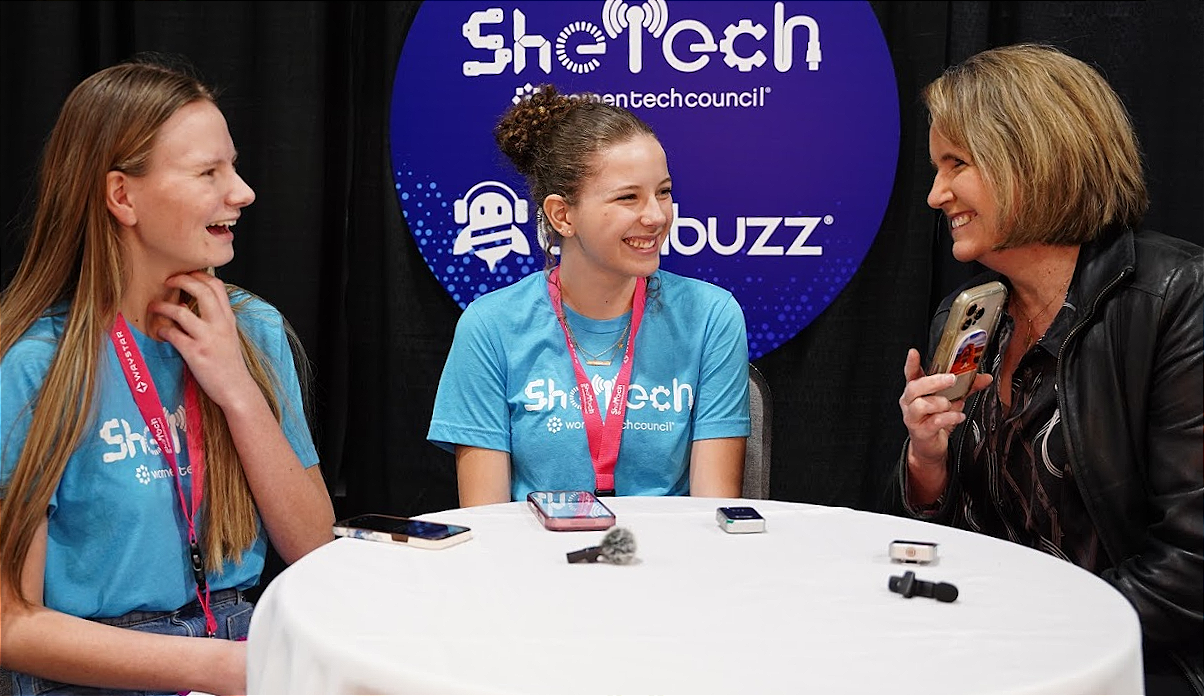
Kennedi Gonzalez and Alyzabeth Grover with Olympian Shannon Bahrke
Bahrke now channels her experience into her company, Champions Advantage, which teaches mental performance skills to youth sports teams. “The things that mattered so much in my career as an Olympian, I’m trying to pass on to young kids,” she said. “Whenever kids get nervous or burned out, we give them tools to handle the pressure, build confidence, and perform at their best. Seeing them grow and shine, that human connection, is my favorite part of what I do.” She emphasized the importance of embracing challenges and setbacks: “It’s okay to come up short, to get injured, or to be scared. What matters is that you keep going and learn the skills to push through.”
Shannon Bahrke on the runway earlier in the day presenting at Explorer Day 2026 (Credit: Laura Kinser)
For students pursuing their own passions, Bahrke’s advice is simple but powerful: “Find something you truly love. There has to be a sparkle in your heart for what you do, because life is going to be hard, and there will be challenges you can’t even imagine. If you have that passion, you’ll be able to get through anything.” Her story highlights how perseverance, love for one’s work, and mental resilience can transform both athletic performance and personal growth. These are lessons that extend far beyond sports into STEM, entrepreneurship, and leadership.
Thurston Evans, a technology leader in financial services, spoke with Sunny Perez about her career and leadership lessons. She started in quantitative work and coding before moving into management, now leading programmers and developers across global teams. “My workday starts early,” she said, “because about half of my team is in Bangalore. I start around six-thirty and then do meetings until 2:30, leaving the last hour to catch up on other work.”
Sunny Perez with Thurston Evans an engineer with prominent fintech company in the Salt Lake City area
Evans credited her grandmother, Jean Jackson, as a major inspiration. “She was tiny, from humble beginnings, and became the first real estate broker in California. She walked into negotiation tables and accomplished incredible things for her time.”
She reflected on her career path, explaining that she had initially planned to go to medical school, but found financial services fulfilling: “By the end of two years on Wall Street, I realized medical school didn’t make sense. I loved what I was doing.”
Leading global teams is challenging, especially across cultures. “I’ve learned that I never want to be the smartest person in the room,” Evans said. “In some regions, I have to step back so my team’s ideas can shine. They’re smarter and more experienced than I am.”
She also emphasized the value of authenticity: “Early in my career, I tried to act like my peers to be taken seriously. Once I started being myself, showing vulnerability, balancing work and family, I earned real respect.”
Evans’ advice for young women in STEM: “Bring yourself into the room, listen deeply, and lean on the people around you. That’s where real growth happens.”
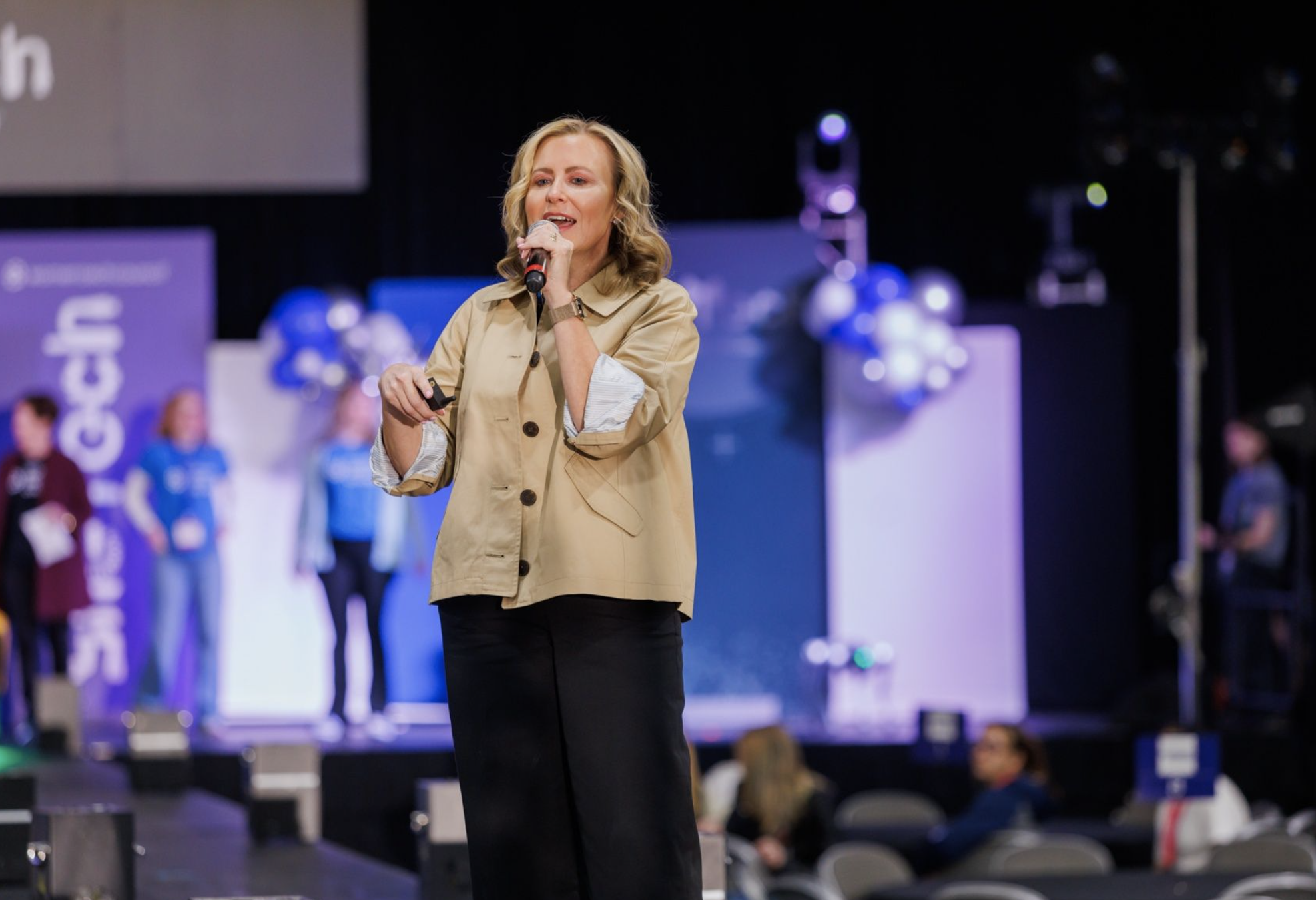
Cydni Tetro onstage speaking to Explorer Day 2026 audience (Credit: Laura Kinser)
Dr. Susan Madsen, Founder & Director of the Utah Women and Leadership Project and a professor of leadership at Utah State University, is a globally recognized expert on women and leadership and author, Dr. Madsen has written or edited nine books and hundreds of articles. Her research has been cited by U.S. News & World Report, The Atlantic, The New York Times, and Forbes.
Dr. Madsen sat down with Inga Wilkowske and Brielle Schwendiman to share her passion for mentoring young women in STEM: “I’ve always been interested in helping girls and young women know they have a voice," said Dr. Madsen. "They need confidence, they need to speak, and they need to know they’re smart.” She encourages students to combine knowledge, passion, and action, or what she calls “head, heart, and hands,” to make a meaningful impact in STEM and leadership."
Brielle Schwendiman and Inga Wilkowske with Susan Madsen, Founder & Director, Utah Women and Leadership Project
She emphasized the importance of education, exploration, and early engagement. “Get all the education you can. Higher education is not just about marketable skills. It’s about critical thinking, problem solving, and finding what connects to your heart,” she said. On building confidence, she advised, “Don’t get stuck in perfectionism. Put yourself out there, get used to failing, sometimes succeed, and you’ll learn where your talents are.” Reflecting on her experiences as a woman leader, Madsen said, “The biggest benefit is meeting fascinating, passionate women. Girls should start thinking about STEM as early as three, four, or five years old. Early exposure and mentorship make a difference.” She encouraged students to grow outside their comfort zones: “Whatever you’re doing, especially the hard things, is where you learn the most and develop leadership. Bring it on, because that’s how you become better.”
When asked about advice for students entering technology, Dr. Madsen stressed the value of education and exploration. “Get all the education you can,” she said. “Higher education is not just about marketable skills; it’s about critical thinking, problem solving, and figuring out what connects to your heart. Even if you don’t major in a technology field, you can still work in technology.” She also highlighted the importance of gaining confidence through experience: “Don’t get stuck in perfectionism. Put yourself out there, get used to failing, sometimes succeed, and you’ll learn where your talents are.”
Brielle Schwendiman and Inga Wilkowske with Susan Madsen
Dr. Madsen reflected on the rewards of being a woman leader and building community in STEM. “The biggest benefit is meeting fascinating, passionate women,” she said. “When women pull each other along, mentor, and step into leadership roles, we create innovation and better products. Girls should be thinking about STEM as early as three, four, or five years old, because early exposure and mentorship make a difference.” She encouraged young women to develop themselves as leaders by stepping outside their comfort zones and growing both as people and as professionals: “Whatever you’re doing, especially the hard things, is where you learn the most and develop leadership. Bring it on, because that’s how you become better.”
(Credit: Laura Kinser)
SheTech Explorer Day 2026 was a powerful celebration of curiosity, creativity, and ambition. For the 3,500 girls from 161 schools across Utah, it offered a firsthand look at how STEM can shape careers, communities, and the world. From hands-on robotics and AI workshops to mentorship from accomplished leaders like Dr. Susan Madsen, McKay Christensen, Kristin Wihera, Thurston Evans, Jens Gould, Geoff Landward, and Shannon Bahrke, participating young women left with more than knowledge — we left with confidence.
The packed day highlighted the real-world impact of women in STEM and the importance of mentorship, risk-taking, and persistence. We saw how failure is a step toward discovery, how curiosity fuels innovation, and how leadership can be learned, practiced, and shared. Programs like the culminating TechChallenge, where thousands of young women and mentors designed hundreds of AI and human-powered solutions for nutrition, environmental challenges, and classroom tools, demonstrated that exploration and creativity know no limits.
At its core, SheTech Explorer Day creates a community of inspiration and possibility. It rallies the next generation of women in STEM, showing that doors are open, voices are valued, and ideas can become real-world solutions. For every girl who attended, it was an exhilarating reminder that our future in technology and innovation is not just achievable — it’s waiting for us to shape it.
Lynny Gibson and Julia Tullis are 2025-26 SheTech Media Interns with the Women Tech Council and TechBuzz News.
Lynny Gibson is a junior at Taylorsville High School in the Granite School District. She serves as a SheTech Student Board member, Keys to Success Ambassador, and MyHometown Board Member. Lynny is actively involved in DECA, FBLA, NHS, and Pit Orchestra, and this marks her second year as a SheTech media intern.
Julia Tullis is a senior at Karl G Maeser Preparatory Academy in Lindon, Utah. She is interested in history, reading, and playing electric bass in her rock band. She is a SheTech board member and SheTech-TechBuzz media intern.
Share this article
The link has been copied!
Your link has expired. Please request a new one.
Your link has expired. Please request a new one.
Your link has expired. Please request a new one.
Great! You've successfully signed up.
Great! You've successfully signed up.
Welcome back! You've successfully signed in.
Success! You now have access to additional content.