Faith and Innovation in Action: BYU Hosts SIG to Explore Purpose-Driven Entrepreneurship
At USASBE 2026, the Faith + Entrepreneurship SIG explored BYU’s campus and Rollins Center, connecting researchers, students, and professionals, blending values with entrepreneurial action, and sampling the Creamery’s storied ice cream flavors.
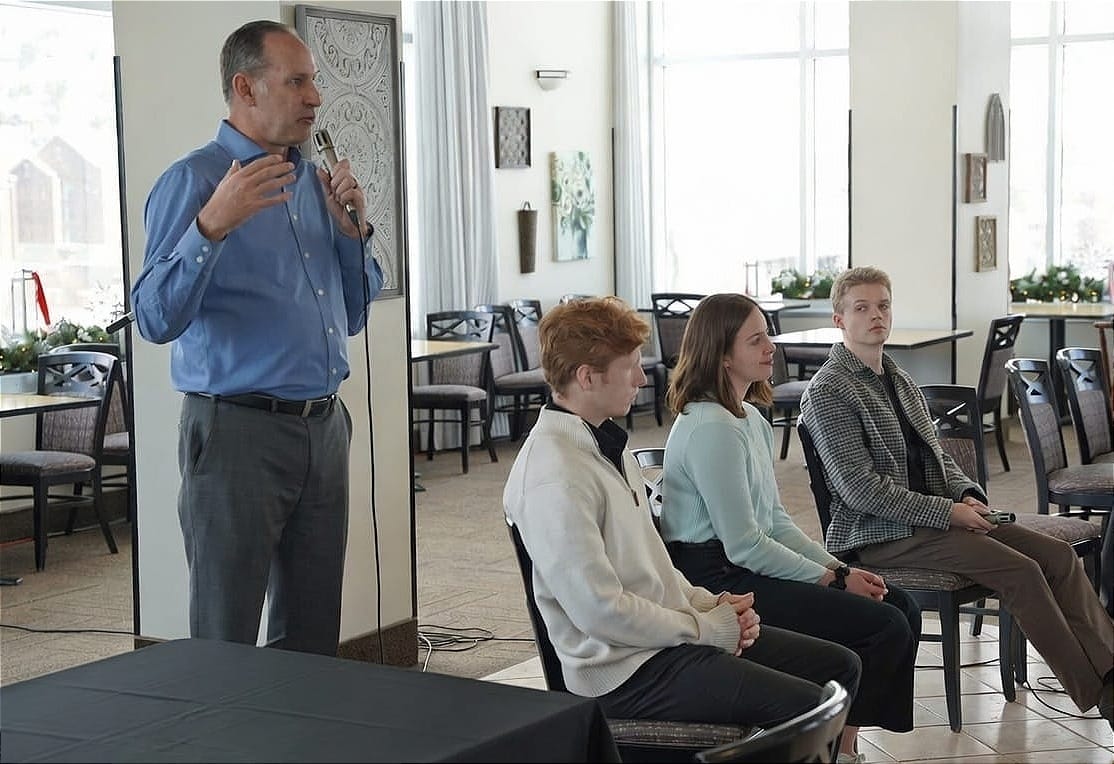
BYU entrepreneurship students: Tanner Gunnell, Katie Edwards, and Taylor Hart, presenting to the inaugural Faith + Entrepreneurship Special Interest Group as part of the USASBE Annual Conference, Skyroom, BYU, Provo, Utah
BYU entrepreneurship students: Tanner Gunnell, Katie Edwards, and Taylor Hart, presenting to the inaugural Faith + Entrepreneurship Special Interest Group as part of the USASBE Annual Conference, Skyroom, BYU, Provo, Utah
Provo, Utah - February 20, 2026
Brigham Young University hosted a unique assembly of academics, students, and entrepreneurial practitioners gathered for the inaugural meeting of the Faith & Entrepreneurship Special Interest Group (SIG) of the 2026 USASBE Annual meeting. The event is taking place February 19 - 21 at the Salt Lake City Hilton. It is sponsored by Babson College, Miller School of Entrepreneurship, Regnier Institute for Entrepreneurship and Innovation, an interdisciplinary institute housed within the Henry W. Bloch School of Management at the University of Missouri‑Kansas City (UMKC), and the Rollins Center for Entrepreneurship and Technology at Brigham Young University, alongside many other institutions.
The Faith + Entrepreneurship SIG was designed to bring together people from a wide variety of backgrounds who are curious about how deeply held values and entrepreneurial action can intersect, without requiring adherence to any particular faith. The SIG met for the first time this week in Salt Lake City at USASBE 2026.
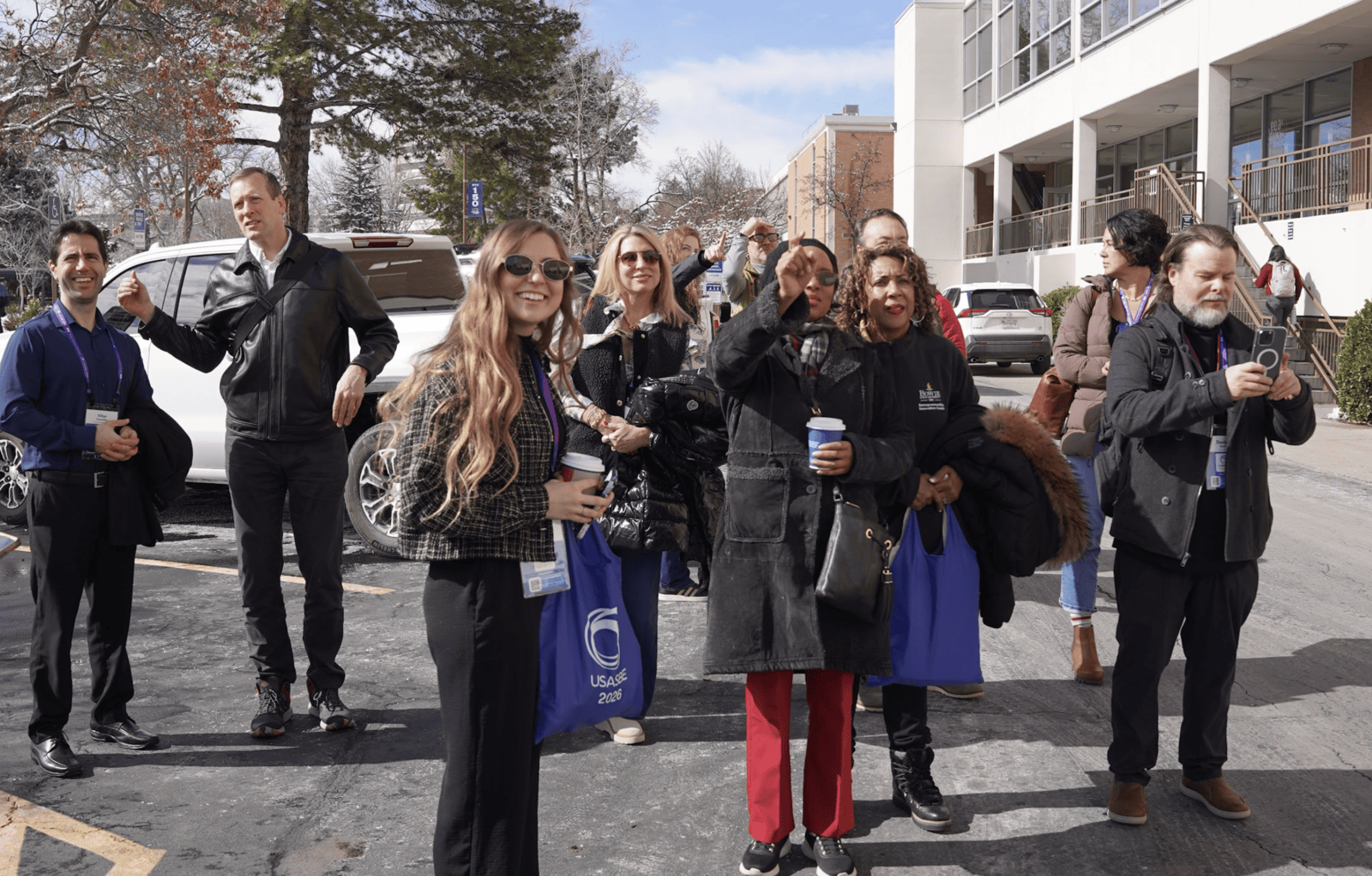
Jeff Brown, Rollins Center Program Director (Seed, Launchpad, and Miller Grants) helping SIG members spot the Y on Y Mountain, hidden under fresh snow, as they begin their campus tour
Following introductions and a discussion about the SIG's purpose and vision at the Hilton, SIG members boarded vans for the one-hour drive to Provo where they experienced a tour of the snow-blanketed BYU campus, including the Rollins Center for Entrepreneurship and Technology. One unforgettable moment occurred moments after their arrival. The group attempted (with patient assistance from Rollins Center's Director, Jeff Brown) to spot the iconic white “Y,” in its rare state of perfect camouflage, thanks to a fresh layer of snow: a playful reminder that meaning sometimes hides in plain sight and requires shared effort to uncover.
Faith Meets Practice: Student Presentations
The heart of the visit was a panel of student presentations showcasing how young entrepreneurs are blending purpose with practical innovation.
Tanner Gunnell, Enrollment Manager, Cumorah Academy
Cumorah Academy Tanner Gunnell, Enrollment Manager with Cumorah Academy, spoke passionately about the academy’s mission and his own transformational experience with the program. Cumorah Academy, based in Prague in the Czech Republic, brings students from more than 40 countries to learn entrepreneurship and leadership through immersive, experiential programming. Gunnell explained that Cumorah’s Founders for the Future initiative pairs students with experienced business consultants and mentors, guiding them from idea to revenue in just 90 days. Drawing on his own journey, he described how his focus shifted from personal entrepreneurial goals to serving others who are equally driven but have fewer opportunities, a shift that fundamentally reshaped his vision of business as a vehicle for service and impact. His remarks highlighted how Cumorah Academy blends rigorous business training with a purpose‑driven mindset, helping students discover their entrepreneurial potential while fostering global community and practical problem‑solving.
Tanner Gunnell and Katie Edwards
Katie Edwards, a second‑year MBA student at the BYU Marriott School of Business, spoke about the Faith & Belief at Work MBA Case Competition, an annual event hosted by BYU that brings together MBA teams from across the country to tackle real‑world workplace challenges through the lens of faith and belief.
Her remarks reflected both her academic background and her experience organizing and participating in the competition, which emphasizes inclusion, compassion, and interfaith dialogue as drivers of better business outcomes.
Katie Edwards, Second‑year MBA student, BYU Marriott School of Business
The case competition she described draws diverse schools and sponsors and challenges students to propose practical solutions that respect faith in professional settings, all while learning to lead with empathy and collaboration. Katie’s contribution to the panel highlighted the importance of experiential learning and real business problem‑solving in shaping how future business leaders think critically about faith, belief, and workplace culture
Royal Kindred Founded by BYU student entrepreneur Taylor Hart, Royal Kindred integrates personal values with fashion. Rather than relying on surface‑level messaging, Hart’s brand uses design to invite deeper reflection about identity, purpose, and meaning. The venture, built from heartfelt conviction and early traction among faith‑curious audiences, challenges students and educators alike to think beyond standard market formulas and toward impact‑oriented branding.
Old-world, Christian-inspired designs on Royal Kindred jeans were on display at the Faith + Entrepreneurship SIG meeting, Skyroom, BYU
Dean Brigitte Madrian: Purpose, Impact, and Leadership
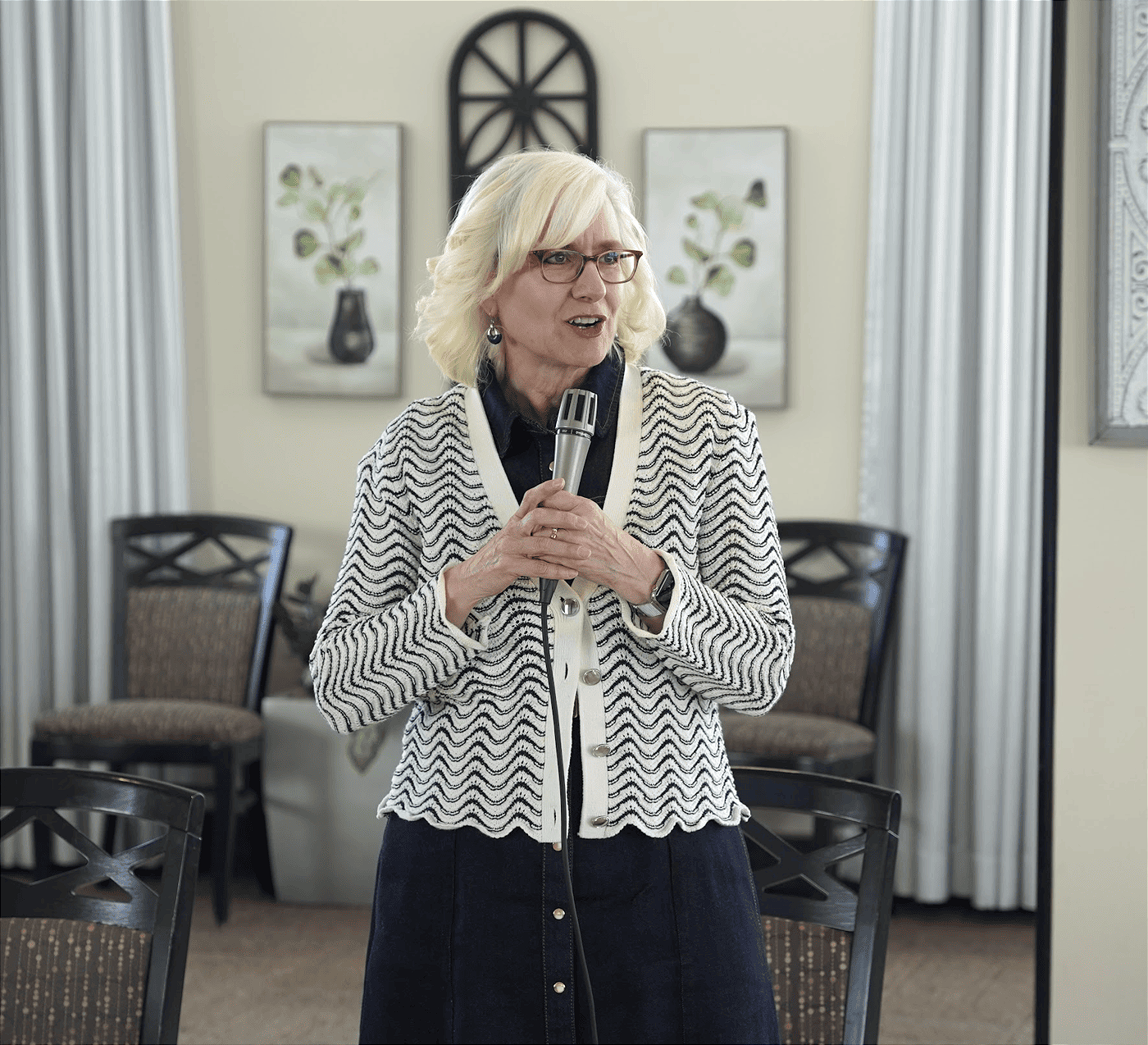
At a luncheon hosted in the Skyroom, Dean Brigitte Madrian of the BYU Marriott School of Business offered reflections that connected the day’s themes to broader questions about leadership, meaning, and the role of faith‑informed thinking in business education.
Dr. Madrian situated the gathering within a broader institutional effort at BYU to engage faith thoughtfully and constructively in both higher education and the workplace. Referencing the American Council on Education’s recent commission on faith-based universities (on which BYU President C. Shane Reese serves) she said she saw it as “clearly something important to this institution,” adding that it raised a larger question: “How do we advance the role of faith in higher education, writ large?”
Dean Brigitte Madrian, BYU Marriott School of Business
Drawing on her own experience, she reflected on arriving at BYU after 25 years at secular universities. “There was very little interest in having conversations about faith,” she said, describing a broader cultural norm in which “faith is not something that we talk about at work.” That reality, she suggested, has shaped much of the institutional landscape in both academia and corporate America.
In response, she explained, the Marriott School has been asking what it can do “in our little sphere of the earth to try and make higher education more faith-friendly, and to try and make the workplace more faith-friendly.” The Faith & Belief at Work Case Competition, she noted, is one expression of that effort. So too are convenings like this Faith + Entrepreneurship SIG gathering, cross-institutional meetings among social impact center directors, and an upcoming event she will host for deans of other faith-based business schools. The goal, she said, is to “collaborate and unify our efforts so that the whole is greater than the sum of the parts.”
Madrian also emphasized the value of intellectual and cultural exchange across traditions. “It’s helpful to have these sort of cross-pollination experiences,” she said, noting how conversations with colleagues of other Christian faiths had deepened her own understanding. Engagement across perspectives, she suggested, strengthens rather than diminishes serious inquiry.
Framing the day for participants, she encouraged them to think expansively about the implications of their work — not only for entrepreneurship as a discipline, but for the broader question of how faith-informed dialogue might shape institutional culture and professional life.
Spotting the well-hidden Y after a long overdue February storm provided an engaging diversion for members of the Faith + Enterpreneurship SIG, most of whom were unacquainted with the Utah practice of adorning mountains with large white letters. Can you see it?
Mike Hendron: Building Entrepreneurial Culture and Student Opportunity
Complementing the Dean’s big‑picture perspective, Mike Hendron, Director of the Rollins Center for Entrepreneurship and Technology and a professor of entrepreneurship and strategy, offered remarks grounded in student experience and culture.
Mike Hendron, Director of the Rollins Center for Entrepreneurship and Technology, speaking at the Faith + Entrepreneurship luncheon at BYU's Skyroom, with Rollins Center entrepreneurship students: Tanner Gunnell, Katie Edwards and Taylor Hart
Hendron has been instrumental in shaping the Rollins Center as a hub for hands‑on entrepreneurial education, blending classroom learning with real venture practice. He emphasized that the Center isn’t just a launching pad for startups, but it’s also a community space where students explore ideas, experiment boldly, and engage with mentors, partners, and peers. And it has a well-stocked soda bar.
During the panel event, Hendron spoke to the value of inclusive entrepreneurial opportunities for all students, whether they come from business, arts, engineering, or social science backgrounds. He highlighted programs like Creators Club and Sandbox that provide entry points into entrepreneurial thinking, noting that many students find their passion for innovation by first engaging with practical, collaborative challenges.
Hendron’s remarks underscored the importance of experiential learning: classrooms matter, but nothing accelerates growth like doing. His leadership reinforces the idea that entrepreneurship education can be both rigorous and accessible, empowering students to take courageous steps into uncertainty while supporting them with mentorship and infrastructure.
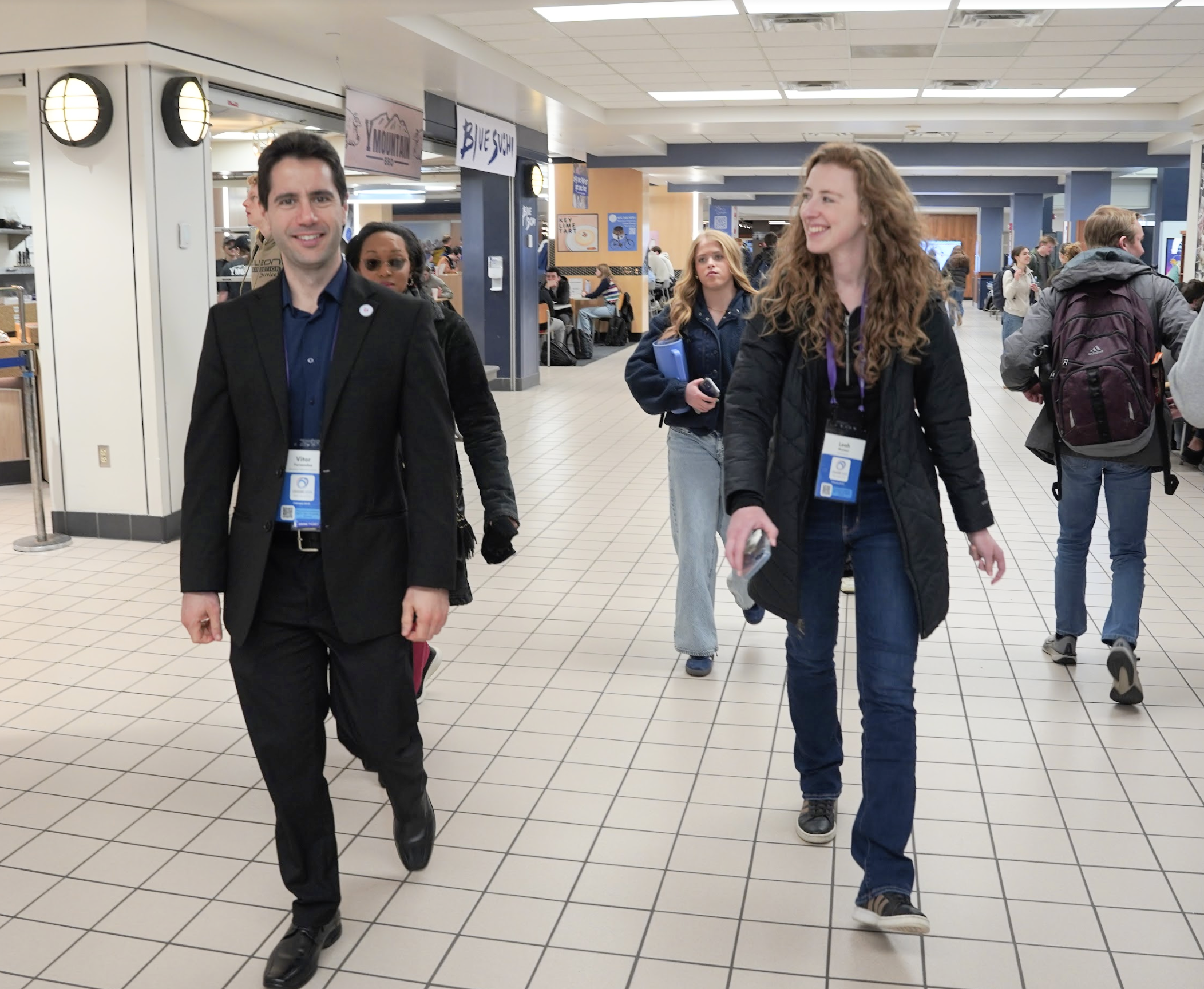
Members of the Faith + Entrepreneurship SIG, touring BYU campus
A Community of Shared Purpose
Beyond the formal presentations and leadership remarks, the SIG meeting was defined by conversation: hallway chats, a shared meal in BYU's Skyroom, ice cream at the Creamery, and moments of spontaneous connection during campus tour. The group’s time together revealed several recurring themes:
Inclusivity and Openness: The SIG’s welcoming tone was intentional, making space for diverse voices regardless of faith tradition, discipline, or professional background.
Narrative and Reflection: Participants repeatedly highlighted storytelling as a tool for research, teaching, and entrepreneurial practice, a way to humanize abstract concepts and make ideas actionable.
Bridging Theory and Practice: Whether through student ventures, case competitions, or applied labs, attendees emphasized that entrepreneurship education must connect conceptual frameworks with lived experience.
Collaborative Networks: Many participants expressed enthusiasm for future collaboration from research partnerships to student exchanges and joint workshops that extend beyond the SIG meeting.
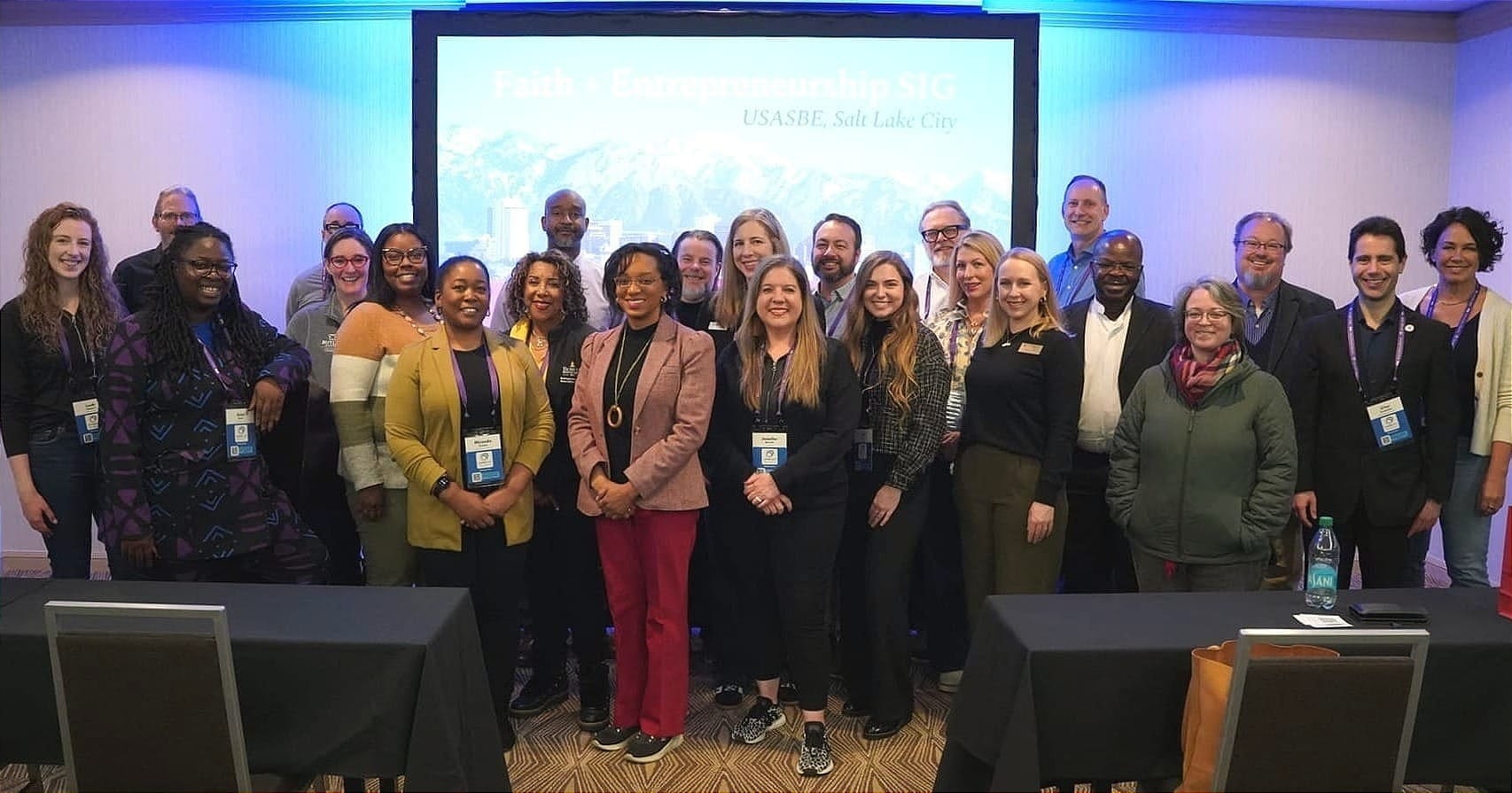
Members of the inaugural Faith + Entrepreneurship SIG, USASBE 2026 Conference, Salt Lake City Hilton, February 19, 2026
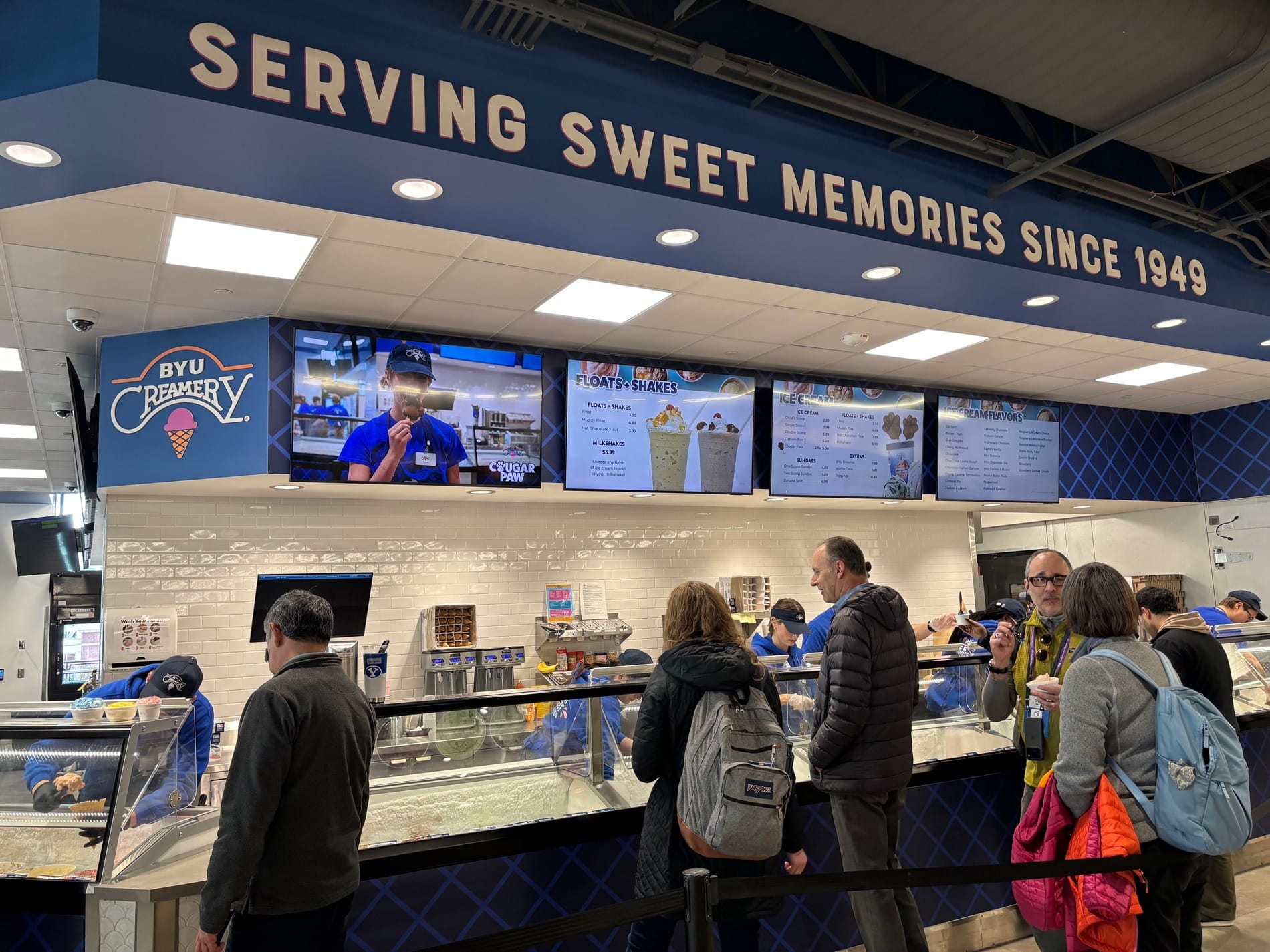
After a final stop at BYU’s newly expanded Creamery, where participants sampled its storied ice cream flavors, the SIG vans carried the group back to Salt Lake City for the broader USASBE 2026 conference. The tour offered more than just a taste of campus life, it left participants energized with fresh ideas, new connections, and a renewed sense of purpose. Conversations sparked during the day reinforced a key insight: blending values with entrepreneurial action is not merely an academic curiosity but a dynamic, living practice. For these researchers, educators, and entrepreneurs, the experience served as a reminder that the work of integrating faith, ethics, and enterprise is ongoing, collaborative, and deeply impactful. It is a mission they carry forward well beyond the conference walls.
Mike Hendon and Faith + Entrepreneurship SIG members carefully selecting their scoops at BYU’s newly upgraded Creamery, a perfect ending to a day of exploration, inspiration, and new connections
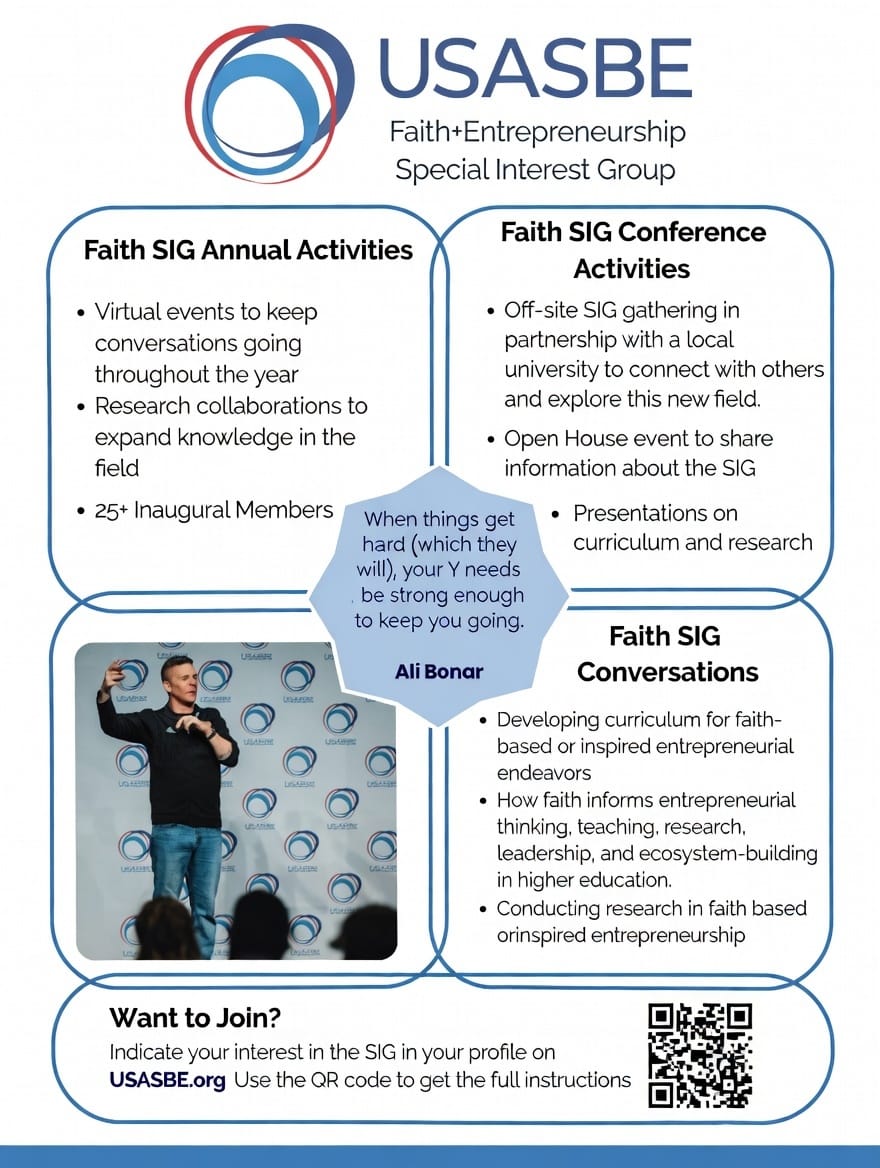
To join the Faith + Entrepreneurship SIG, you first need to be a member usasbe.
More details of the SIG below:
Share this article
The link has been copied!
Your link has expired. Please request a new one.
Your link has expired. Please request a new one.
Your link has expired. Please request a new one.
Great! You've successfully signed up.
Great! You've successfully signed up.
Welcome back! You've successfully signed in.
Success! You now have access to additional content.