Gotcha QR Launches With a Low-Tech Solution to a High-Stress Problem: Losing What Matters
Gotcha QR (Santaquin, UT) has launched a battery-free QR code recovery system for lost items, pets, and vulnerable individuals. The subscription-based service enables anonymous, real-time connection between finders and owners—no app, GPS, or exposed personal data required.
Dano Ybarra and Boyd Peterson, Co-founders of Gotcha QR, visiting the TechBuzz Offices on the launch of their QR-powered recovery system designed to help reunite people with lost property, pets, and loved ones.
Dano Ybarra and Boyd Peterson, Co-founders of Gotcha QR, visiting the TechBuzz Offices on the launch of their QR-powered recovery system designed to help reunite people with lost property, pets, and loved ones.
Santaquin, Utah — February 11, 2026
A lost backpack at CES. A dog that clears six-foot fences. A child who disappears in a crowded mall. An aging parent with dementia driving hours from home.
These aren’t edge cases. They’re common, stressful, and often chaotic moments. And they’re exactly the kinds of situations that inspired Utah-based startup Gotcha QR, which officially launched its product this week.
The company, headquartered in Santaquin, is betting that the simplest technology may be the most effective: QR codes.
A Recovery Tool—Not a Tracker
Gotcha QR is not a GPS device. It doesn’t require batteries. It is water-proof. There’s no hardware to charge, no Bluetooth pairing, and no tracking map.
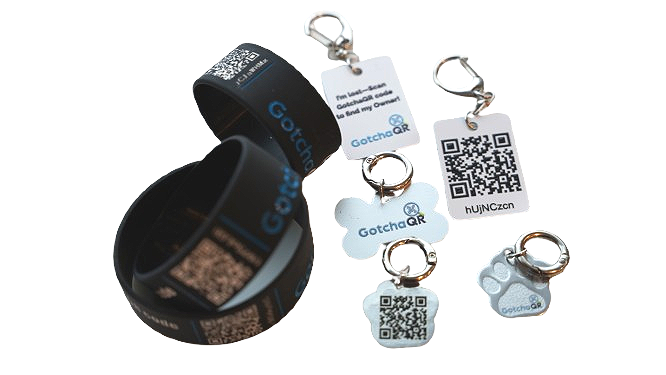
Instead, the company produces durable QR code tags and wearable bands designed for three categories: personal property, pets, and people.
The concept is straightforward.
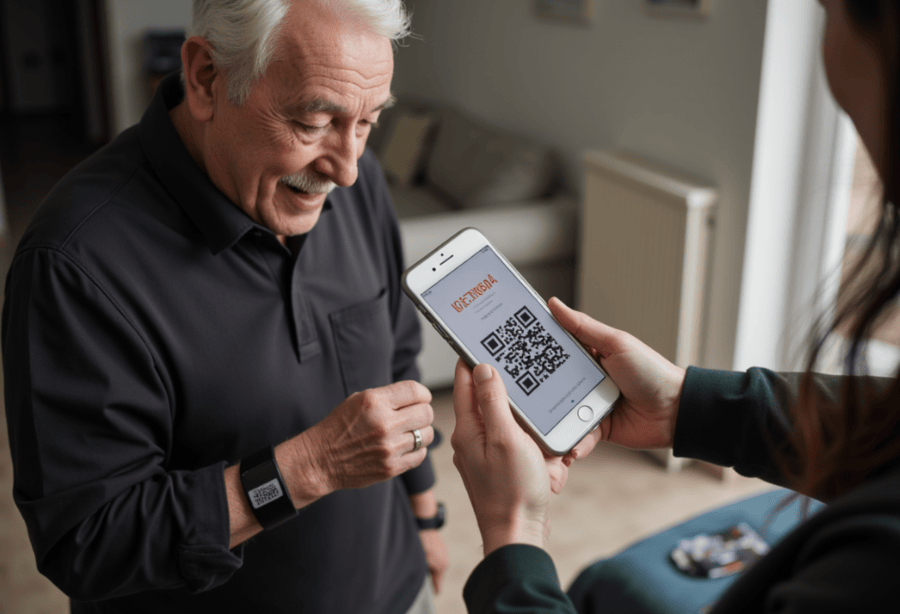
If an item—or person wearing a band—is found, a Good Samaritan scans the QR code with their phone. No app is required. The scan opens a web-based interface that connects the finder and the owner in real time, enabling communication without revealing either party’s personal contact information.
“It’s about keeping it simple,” said co-founder Dano Ybarra. “We intentionally removed as much tech as possible. No batteries. No GPS. Just a direct connection.”
The system allows optional video, audio, and location sharing. Owners control their privacy settings, and phone numbers are never exposed.
From Community Newspapers to QR-Based Recovery
Co-founder Boyd Peterson brings a background in media and digital marketing. He previously built a network of 14 community newspapers in Utah before selling the business in 2014. Since then, he has focused on digital marketing and backend automation—skills now applied to building Gotcha QR’s subscription infrastructure.
Dano Ybarra is a seasoned tech executive, entrepreneur, and global speaker with more than 30 years of experience in technology, sales, and business growth. He holds a Bachelor of Science in Computer Science and began his career in Silicon Valley, including a key role at Adobe where he led the company’s largest PostScript licensing deal. Ybarra also worked as a consultant during a pivotal phase at Apple, where his analysis helped shape the concept for what became the Apple Store model. Later, he co-founded and helped scale a startup to a unicorn-level exit, and has launched businesses in over 15 countries. He is a #1 global bestselling author and frequent international keynote speaker on leadership and growth.
Between them, the founders have accumulated no shortage of cautionary tales.
Ybarra recalls multiple occasions when expensive bikes were left at his home after neighborhood visits, with no way to quickly identify the owners. Peterson describes a border collie that wandered from Riverton (near 126th South) all the way to Bluffdale (around 14400 South / 140th South area). Despite wearing a traditional tag, the dog’s rescuers couldn’t get close enough to read it.
More serious were incidents involving dementia and autism. Ybarra’s grandfather, suffering from dementia, repeatedly drove long distances after losing his bearings. In another case, a neighborhood child with autism frequently wandered and boarded public transit.
“In those moments, you don’t need advanced tracking,” Ybarra said. “You need a fast connection.”
Form Factors: Stickers, Tags, and Wearables
At launch, Gotcha QR offers:
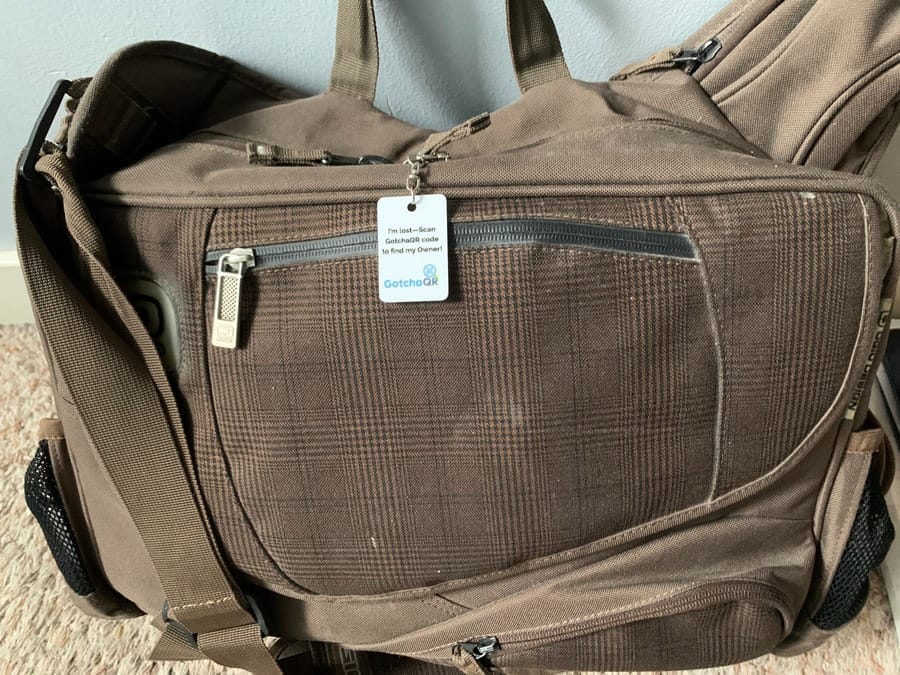
Property tags designed for backpacks, luggage, and equipment
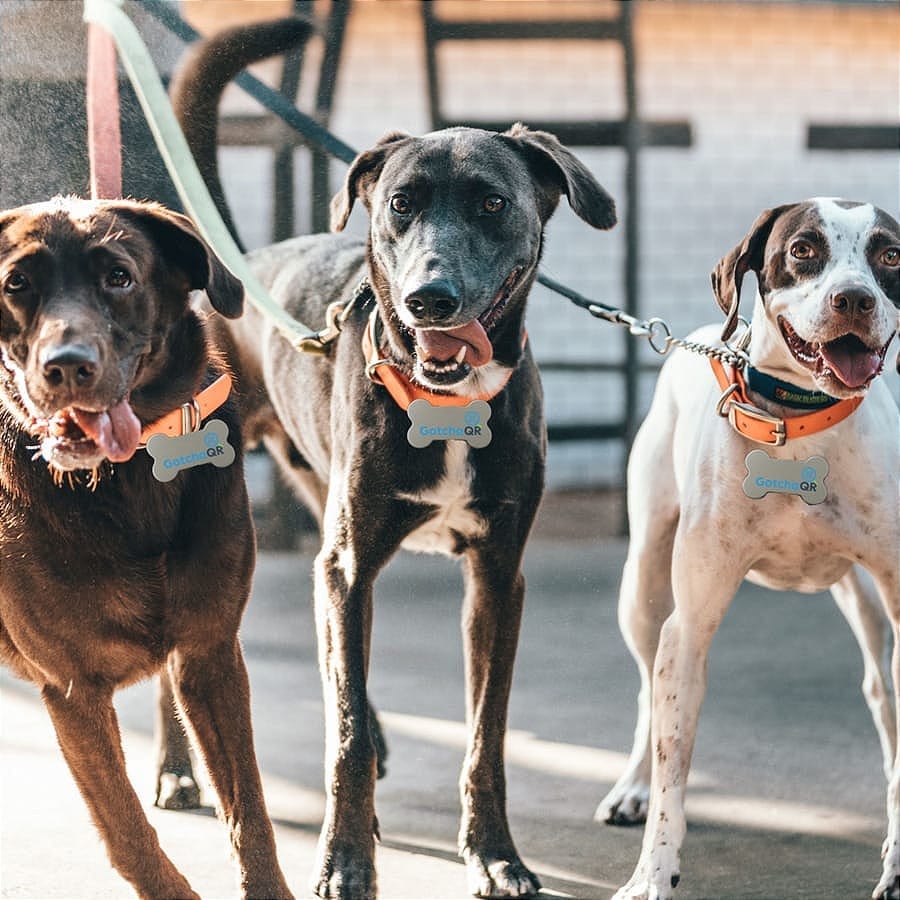
Pet tags for collars
Wristbands in different sizes for children, seniors, or individuals with special needs
Waterproof adhesive stickers are in development and expected to be added to the product lineup soon. The company also plans to expand into more stylized designs and additional formats.
The tags are built with raised, embossed QR codes to improve durability and prevent wear.
The use cases are broad:
Travelers who want a secure alternative to visible name tags
Photographers and professionals managing expensive equipment
Parents navigating crowded public spaces
Caregivers of seniors with dementia
Event organizers handling high volumes of shared gear
Unlike traditional luggage tags that display personal information, Gotcha QR anonymizes the connection while still enabling immediate contact.
Betting on Human Nature
The model depends on something increasingly rare in tech narratives: optimism.
Gotcha QR assumes that most people who find lost property want to return it. The challenge isn’t intent—it’s friction. Locked phones, missing IDs, airport lost-and-found bureaucracy, and privacy concerns all slow the process.
By reducing the steps to a single scan, the founders hope to remove that friction.
“If you find a phone or a bag, what are you going to do with it?” Peterson said. “Most people want to get it back to the owner. We just make that easy.”
Subscription-Based Business Model
Gotcha QR operates on a subscription model:
$10 setup fee, which includes the physical tag or band
$9.97 per month subscription for the service connection
The founders spent as much time building automated backend systems as they did developing the software interface, aiming to create a scalable service platform rather than just a physical product.
Early traffic following the launch has been driven largely by social media. While it’s too soon to measure traction, the company reports immediate inbound interest from travelers, parents, and professional photographers.
A Utah Launch With Broader Ambitions
The product went live on February 10th, placing Gotcha QR among a growing ecosystem of Utah startups blending physical products with cloud-based services.
While the concept is simple, the company sees expansion opportunities ahead—additional product types, customizable designs, and broader retail distribution.
For now, the focus is on solving a universal problem.
“Losing something is incredibly stressful,” Ybarra said. “If we can remove even a little of that stress by reconnecting people quickly, that’s the win.”