Inside the New AI Curriculum Coming to Utah Schools
At Beehive Science and Technology Academy (Sandy, UT), Utah’s top-ranked STEM charter school, technology teacher Erum Naz is pioneering AI education for middle school students.


At Beehive Science and Technology Academy (Sandy, UT), Utah’s top-ranked STEM charter school, technology teacher Erum Naz is pioneering AI education for middle school students.
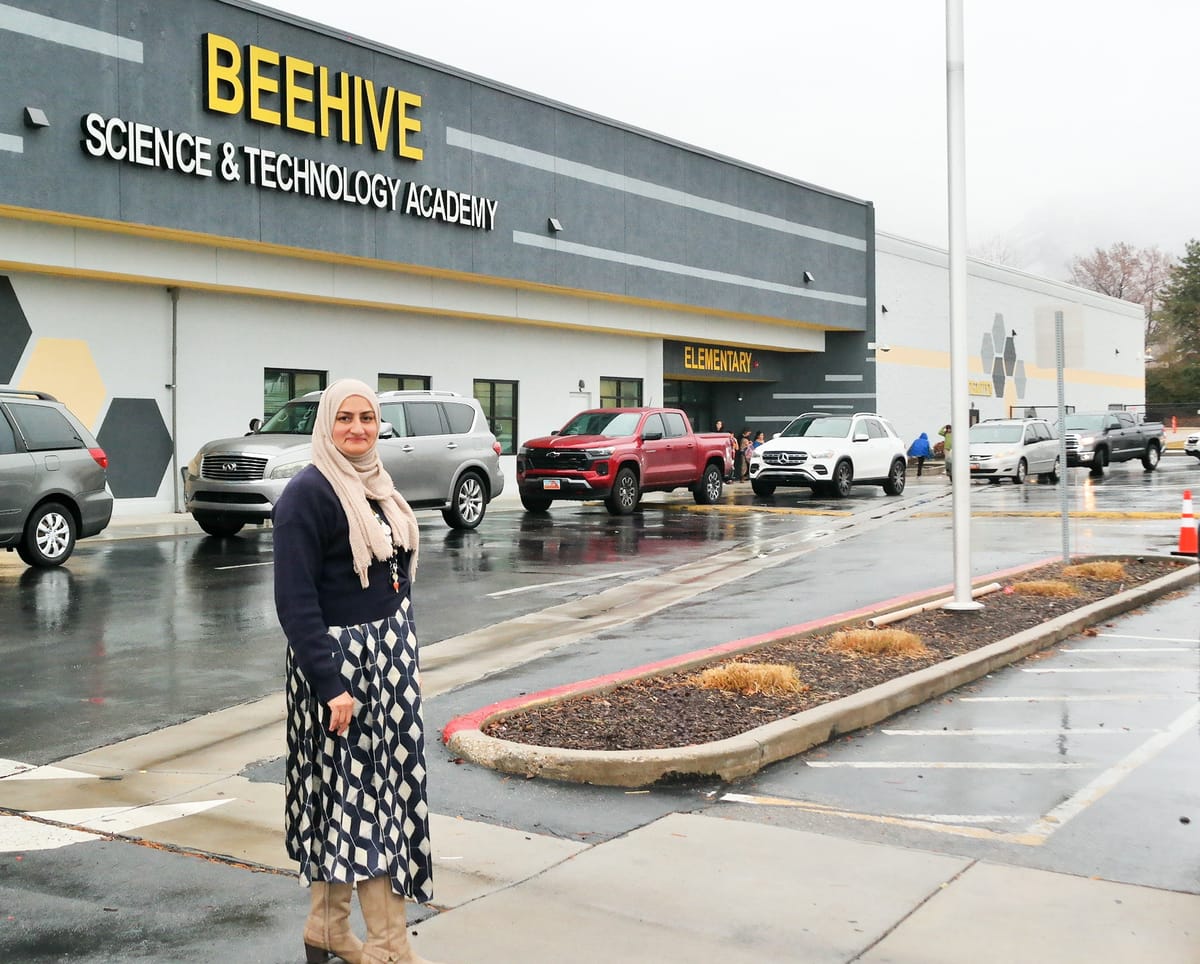
Sandy, Utah — December 8, 2025
“We cannot protect them from AI, but we can teach them to use AI as a tool,” said Erum Naz, a computer-technology teacher at Beehive Science and Technology Academy (BSTA), Utah’s top-ranked high school according to U.S. News & World Report 2025-2026 rankings.
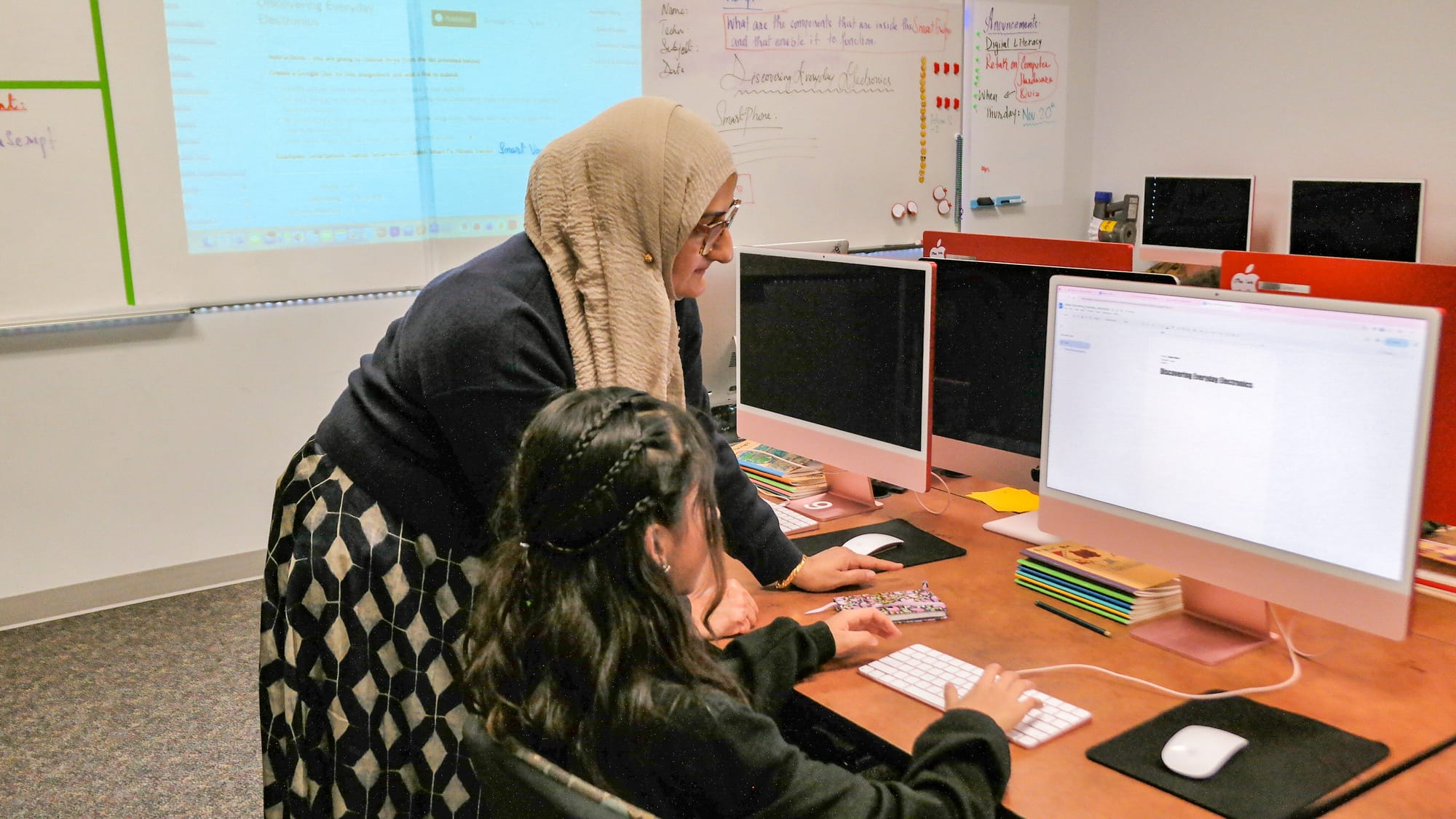
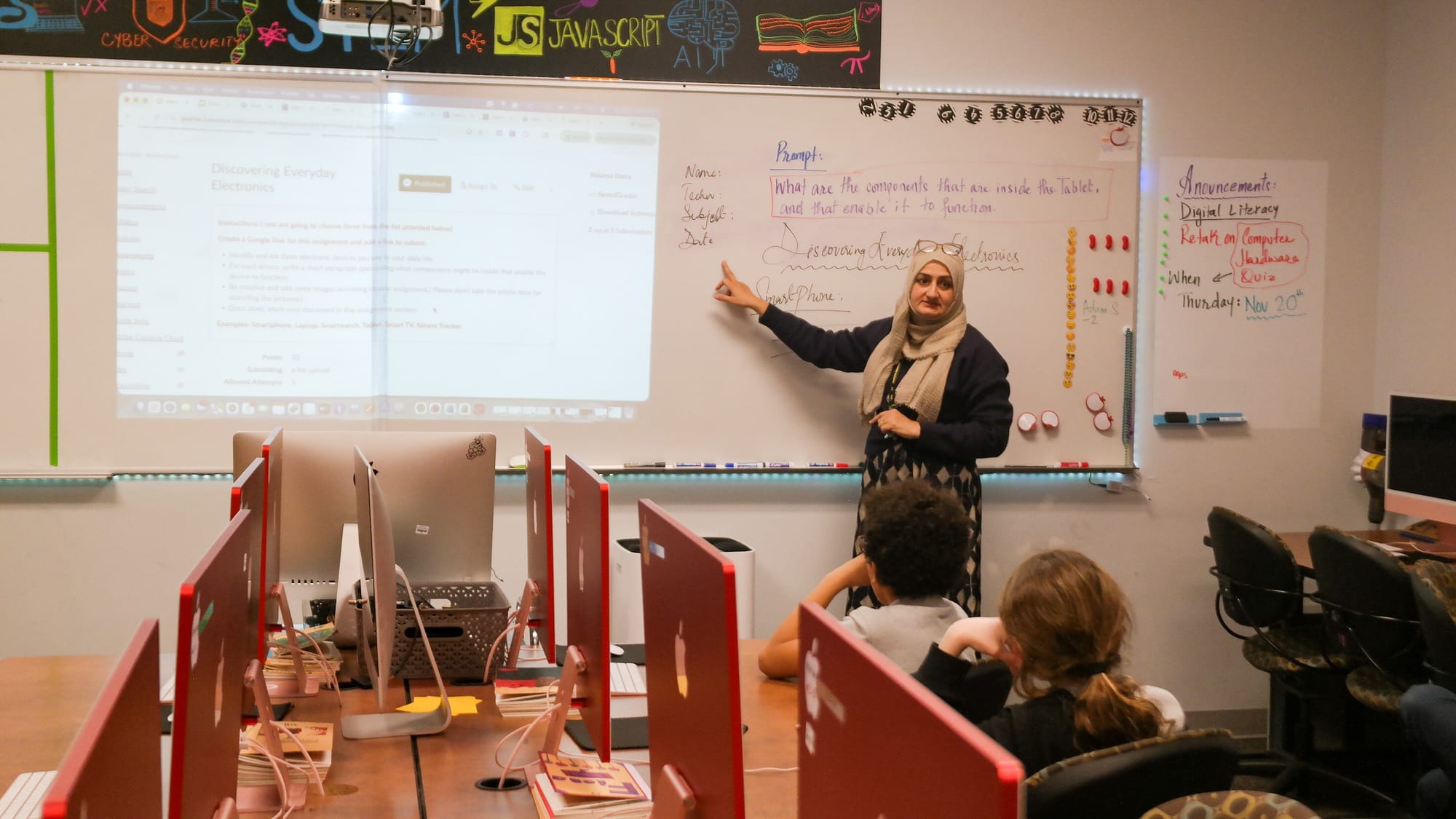
Naz is pioneering AI education for middle school students in the state. When ChatGPT and similar tools reached her classroom, she realized the importance of teaching students both the potential and pitfalls of AI. During one early lesson, she asked students to generate an image of their ideal birthday using AI. She did the same and displayed her result to the class. “I gave prompts to create Pakistan around 1980 and show kids with paper boats,” she recalled. “There was rain, streets filled with water, kids playing in the street — and all the kids shown were boys.” The exercise illustrated a crucial lesson: AI is biased, and users must learn to recognize those biases.
Naz is among the few educators in Utah currently teaching AI. Earlier this year, the Utah State Board of Education approached her to help design a statewide curriculum. She has since been collaborating with Kristina Yamada, a CTE Education Specialist with USBE and 2022 Women Tech Education Excellence Award recipient, a team of software engineers, and BSTA’s principal, Halis Kablan. Their curriculum, set to launch in 2026, aims to make AI literacy accessible to all middle schoolers.
“Right now I’m working with a content development team on curriculum development and research collaboration,” Naz said. “The focus is on helping students understand AI and use it responsibly.” Her core goal is to build foundational AI literacy so students can make better choices when interacting with any AI platform.
Curriculum Highlights
The program will cover five main components:
Why Early AI Education Matters
Students are taught to imagine the future with AI, emphasizing irreplaceable human skills like empathy and nuanced ethical judgment, and exploring AI-influenced career possibilities. In recent years, nearly three-quarters of U.S. teens have tried AI companions — chatbots that write and talk like humans — and many are experimenting with AI for schoolwork and creative projects, though academic adoption is still growing.
“I realized that students are really attracted to AI,” Naz said, “but they don’t always understand the consequences.” Adolescents are particularly vulnerable: the prefrontal cortex, responsible for reasoning, planning, and impulse control, doesn’t fully mature until after age 25 (Harvard Medical School ). Interacting with a human-like, yet non-human, technological tool can be risky without guidance.
National stories of young people falling prey to AI, combined with her role as both teacher and parent, motivated Naz to act — not only to protect students but to empower them. AI is not going away. “It’s a good tool,” she said, “but we have to develop critical thinking in our kids.”
Her curriculum equips students with choices and ethical frameworks rather than restrictions. “You are given the choice to do wrong or right,” Naz told her students. “Your heart will tell you when you are in the wrong place. The decision is in your hands. Think ten times about ethics, because AI will not.”
BSTA’s top-ranking status in Utah underscores the significance of this initiative. As AI becomes increasingly integrated into daily life, educators like Naz are preparing the next generation to navigate it with skill, awareness, and responsibility.
"Erum Naz is definitely a pioneer by offering Artificial Intelligence as a middle school elective course," said Halis Kablan Ed.D, secondary school principal of Beehive Academy. "In the spring of 2024, when we were talking about elective courses for the 2024-2025 school year, she offered to teach an elective called Artificial Intelligence. When I explained to her that there were no courses, thus no standards and curriculum for the course by USBE, she committed to building the course from the ground up. Her dedication to providing students with up-to-date content is driving her passion to go to conferences to come back with great ideas. She plays an important role in expanding Beehive Academy's STEM education mission."
Celebrating 20 years in 2025, Beehive Science and Technology Academy (BSTA) in Sandy, Utah (2165 E 9400 S) is a tuition-free, open-enrollment public charter school in Utah with a STEM-focused curriculum for grades K–12. Founded in 2005 by a group of scholars who saw the growing demand for science, technology, engineering, and math education, Beehive emphasizes project-based learning, hands-on experimentation, and college readiness.
The school has operated in three locations, most recently moving three years ago into a converted Shopko building that now houses both the elementary and secondary programs in the same facility, with separate start times, administrative offices, and entrances. Students receive individualized attention, with teachers conducting annual home visits and allowing students to pursue independent projects tailored to their interests.
Be it through iPads, digital platforms like Google Classroom and Canvas, or participation in STEM competitions such as Robotics, FIRST Lego League, MathCounts, and state science fairs, students at Beehive develop critical thinking, problem-solving, and computational skills. Engineering principles are introduced as early as 6th grade through Project Lead the Way courses, while high school students engage in Advanced Placement, Career and Technical Education (CTE), and concurrent enrollment programs at Salt Lake Community College.
While STEM is the central focus, Beehive also supports arts and extracurricular engagement, including stage productions, ensuring students graduate well-rounded and prepared for college and career success. The school’s mission is to cultivate responsible, capable, and tech-savvy graduates who can thrive in a complex, multicultural, and increasingly technological society.
Learn more at Beehive Science and Technology Academy.

Erin Dixon can’t keep her mouth shut, verbally or on paper. She frequently splatters words across conversations, stories, poetry, and journalism. Blank stares are the typical response, especially when she rambles about the philosophical and psychological consequences of being a Homo sapiens.
As a child, Dixon spent most of her time reading — often finishing a Harry Potter book in just two days. The words she devoured tumbled into her own movie-making adventures and short stories. At the University of Utah, studying ancient Greek and Roman history and language sharpened her skills for turning thought into written word. Even the most humdrum textbook, she discovered, teems with stories; every spoken and written word carries preference, perspective, and opinion.
After college, she covered the local government beat for City Journals, learning that modern people aren’t so different from those who lived 2,000 years ago. Governments, businesses, and everyday citizens collide, cooperate, and, inevitably, reveal their own stories shaped by bias and experience.
Between writing for newspapers, magazines, artists, and government agencies, Erin indulges her love of all things Star Wars with her spouse, two children, and their dog — because even a wordsmith needs downtime in a galaxy far, far away.