Resilient Economy, Expensive Capital: The New Math for Tech in 2026
At Bank of Utah’s Economic Forecast, economist Tim Mahedy argued the U.S. economy remains resilient, but structurally higher interest rates, persistent inflation and federal deficits signal a lasting shift that founders and investors can’t ignore.
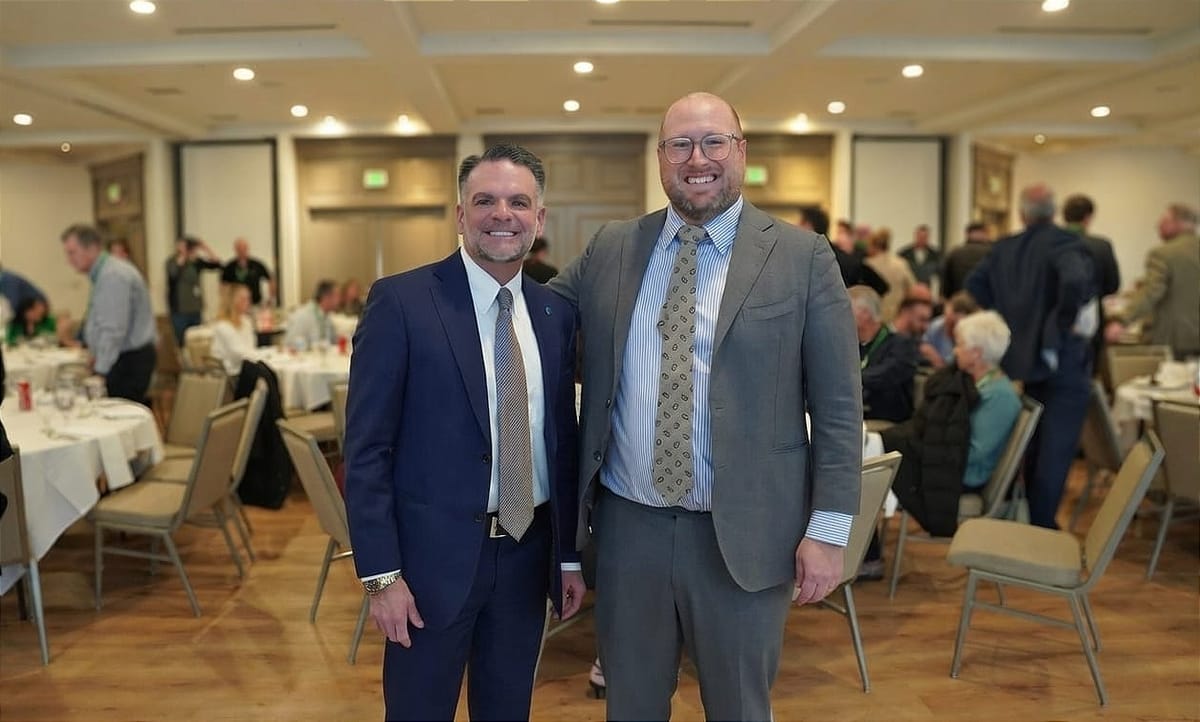
Branden Hansen, President of the Bank of Utah, with economist Tim Mahedy following his keynote at the Bank of Utah Economic Forecast event at Thanksgiving Point, where Mahedy shared insights on inflation, interest rates, and the 2026 economic outlook
Branden Hansen, President of the Bank of Utah, with economist Tim Mahedy following his keynote at the Bank of Utah Economic Forecast event at Thanksgiving Point, where Mahedy shared insights on inflation, interest rates, and the 2026 economic outlook
Lehi, Utah — February 12, 2026
At today's Bank of Utah’s Economic Forecast, economist Tim Mahedy Economic Forecast Highlights Opportunities, Constraints, and Fed Realities for 2026
At the Bank of Utah Economic Forecast event that took place today at Thanksgiving Point's Garden Room in Lehi, Utah, national economist Tim Mahedy presented his 2026 outlook to a room of the bank’s executives and customers, the final stop in the bank’s multi-city series across several Utah cities (Odgen, Logan, Kaysville, Salt Lake City) over the past few days.
Tim Mahedy, founder and chief economist of Access/Macro, brings Wall Street–level expertise to businesses and banks seeking actionable economic insights. His experience spans the Federal Reserve, Bloomberg, KPMG, and the International Monetary Fund, giving him a unique perspective on inflation, monetary policy, and strategic decision-making.
He framed the current economic environment as resilient yet structurally different from the ultra-low-cost capital world of the past decade. His talk was data-rich (slides below), lively, interactive, and tailored for professionals looking for actionable insights to guide investment, hiring, and growth strategies in a rapidly evolving economy.
Consumer Spending Remains the Engine Mahedy opened with the fundamental driver of the U.S. economy: consumer spending. Accounting for roughly 70% of GDP, American consumers continue to underpin economic growth. Even amid global uncertainty and tariffs, spending has not faltered. “The American consumer is still standing. Even with tariffs and global uncertainty, people kept spending—70% of the economy is in their hands,” he noted, underscoring the reliability of this sector. He highlighted that while tariffs created temporary disruptions and front-loaded investment in some quarters, consumer demand has steadily absorbed shocks, helping the economy maintain momentum.
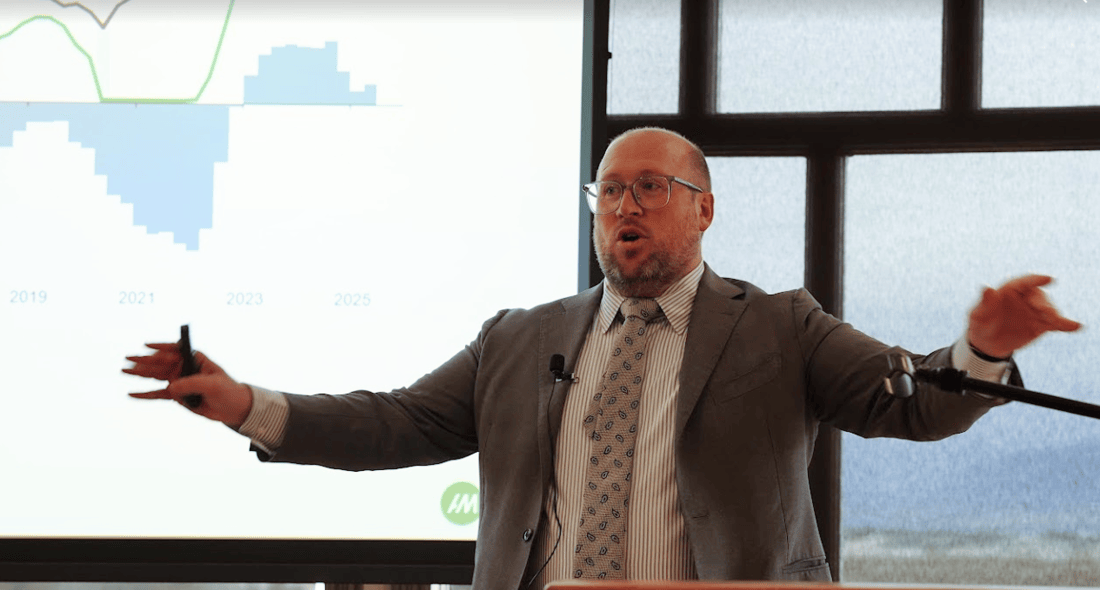
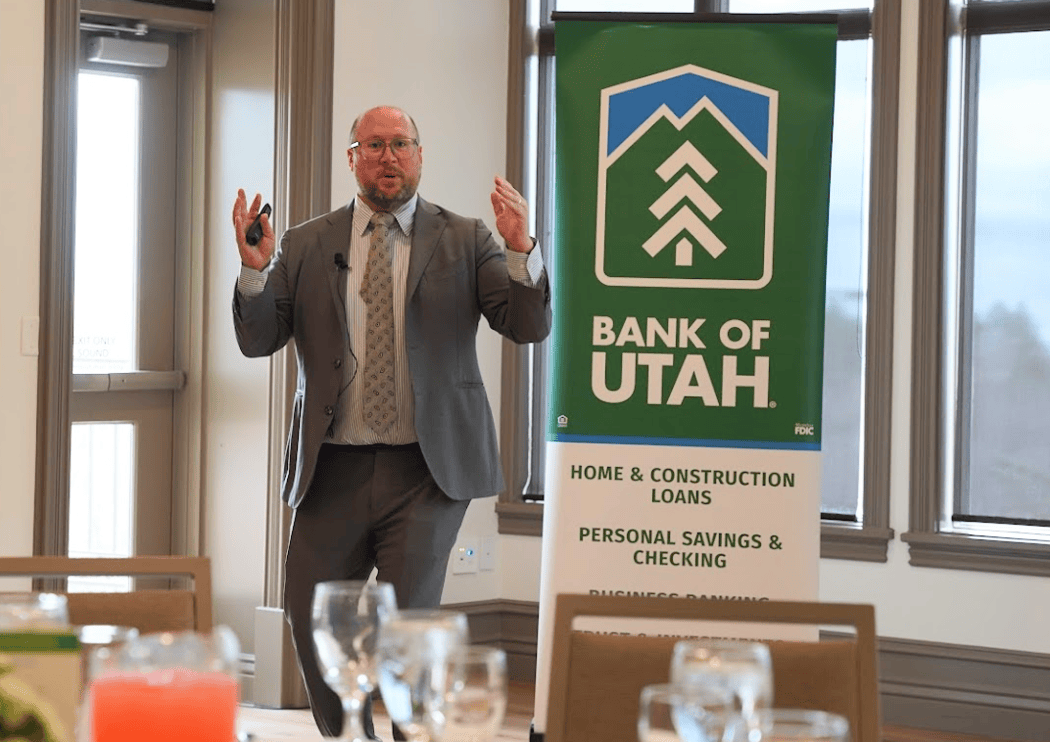
Economist Tim Mahedy presenting his 2026 economic outlook to Bank of Utah customers at Thanksgiving Point, sharing expert insights on inflation, interest rates, and business trends, Lehi, Utah, February 12, 2026
He broke down GDP into its core components: consumption, investment, government spending, and net exports. While net exports have oscillated due to trade policies and import surges, business investment has shown strong, if uneven, contributions. For entrepreneurs and tech firms, this signals a marketplace where demand remains robust, though competitive pressures and global supply chain disruptions continue to create friction.
Tariffs, Corporate Absorption, and Inflation Turning to inflation, Mahedy emphasized that the much-discussed tariff effects were largely muted thanks to corporate absorption. Companies have opted to maintain market share rather than immediately pass costs to consumers. “Corporate profits absorbed much of the cost shocks. That’s why tariffs didn’t send inflation soaring. It’s a reminder that the economy has buffers we often overlook,” he explained. For startups and tech firms, this highlights the need to monitor both supply costs and consumer price sensitivity—opportunities exist for agile firms that can navigate these margins effectively.
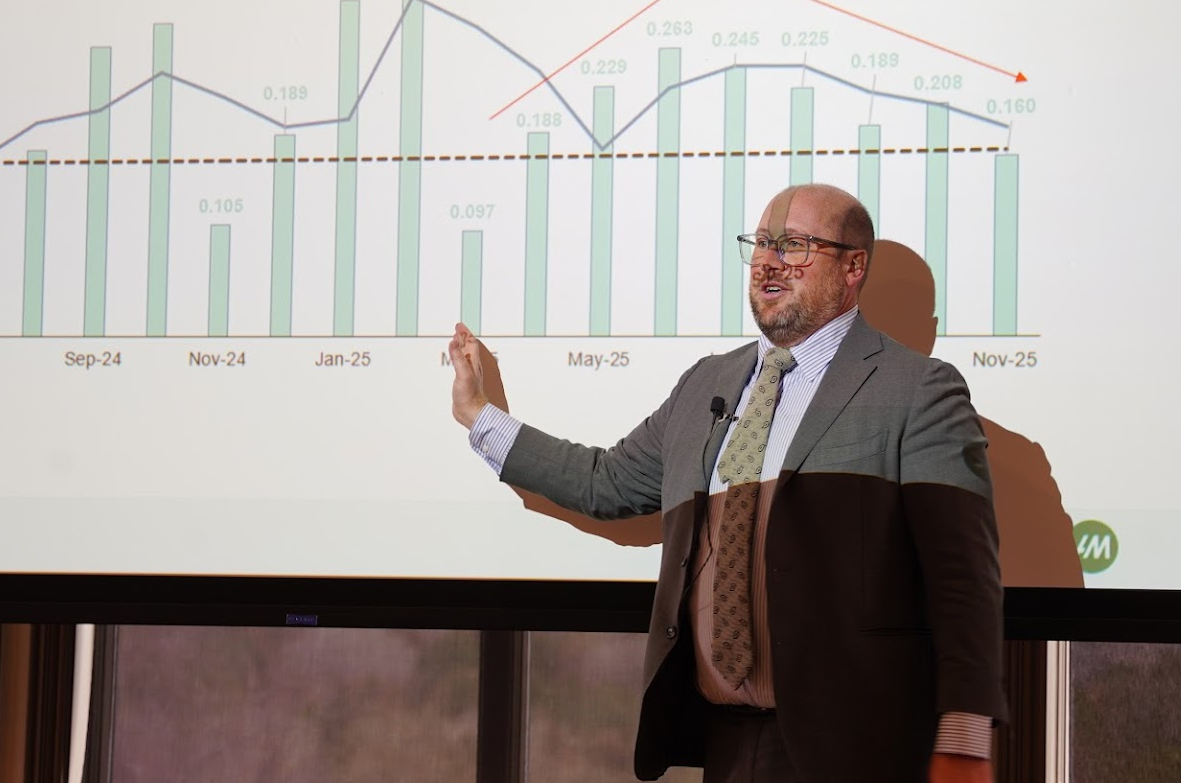
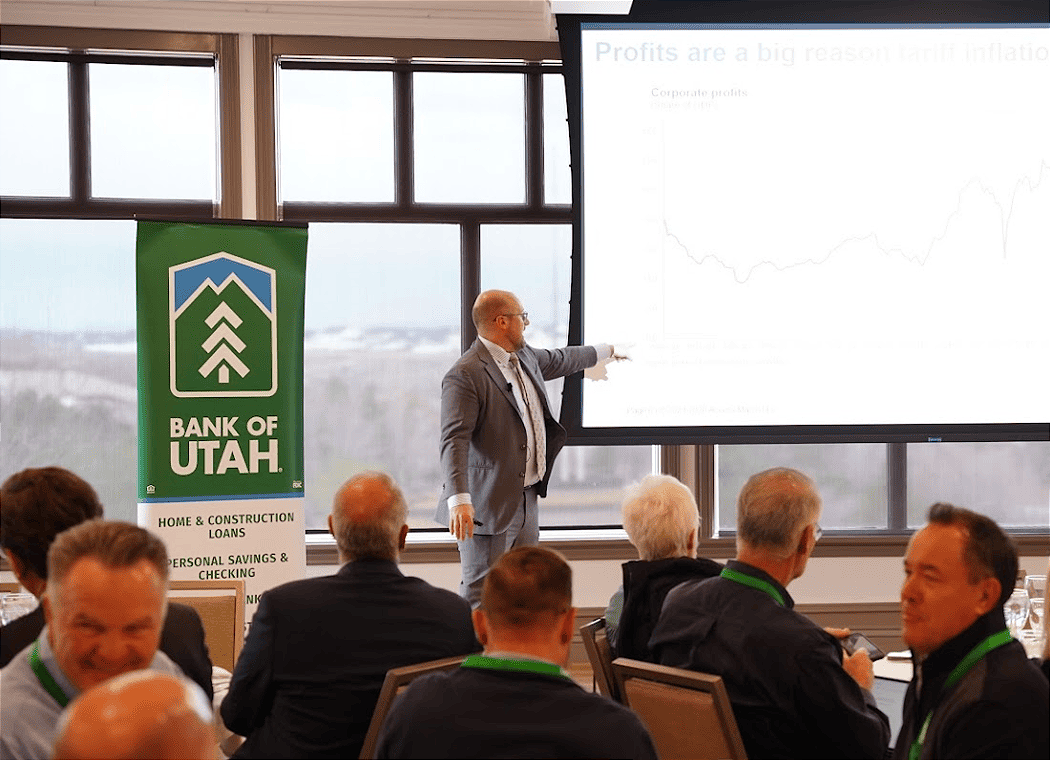
Economist Tim Mahedy walking the audience through his 2026 economic outlook at Thanksgiving Point, sharing expert insights on inflation, interest rates, and business trends to Bank of Utah executives and customers, Lehi, Utah, February 12, 2026
He detailed the mechanics of inflation measurement, focusing on core PCE, the Federal Reserve’s preferred gauge, which strips out volatile food and energy prices. Mahedy noted that while headline inflation spikes have drawn attention, underlying trends have been stabilizing, with a three-month moving average converging toward the Fed’s 2% target. However, he cautioned against over-optimism: even if month-over-month changes appear favorable, year-over-year trends lag, requiring careful interpretation for strategic planning.
Monetary Policy and the Fed’s Neutral Stance Mahedy provided a clear-eyed assessment of the Federal Reserve’s approach. The Fed’s dual mandate (stable prices and full employment) frames every decision on interest rates. He emphasized that despite strong growth, the Fed is approaching a neutral stance. “We’re close to neutral. The Fed doesn’t need to cut much more if everything holds as it is,” he said. For tech founders and entrepreneurs, this translates into a realistic expectation: borrowing costs are unlikely to drop dramatically, and funding strategies must account for structurally higher interest rates than in the post-pandemic era.
Tim Mahedy discussing monetary policy at the Economic Forecast session at Thanksgiving Point's Garden Room in Lehi, February 12, 2026
He explained the dynamics using the federal funds rate, the New York Fed’s economic models, and the concept of “near neutral” rates. Essentially, the Fed’s actions are now calibrated to sustain growth without overheating the economy. Mahedy’s analysis showed that the pace of job creation, productivity, and sectoral employment all influence where rates settle. Notably, healthcare and social assistance have absorbed much of the net job growth, a structural feature of the current labor market that may limit broad-based wage pressures but signals areas for targeted talent acquisition.
Financial Markets, Yield Curves, and the Cost of Capital One of Mahedy’s most important points for entrepreneurs was the structural shift in borrowing costs. Using the Treasury yield curve as a benchmark, he illustrated how long-term financing rates have adjusted upward following the Fed’s aggressive post-pandemic tightening. “The ultra-cheap capital era is over. Growth remains possible, but valuations and fundraising strategies must adjust to structurally higher borrowing costs,” he said, framing the new reality for startups relying on venture capital or long-term debt.
He walked the audience through the mechanics of bond pricing and yields, emphasizing that long-term borrowing, including 10-year Treasuries, which influence mortgage and corporate debt rates, has stabilized at higher levels than the pre-pandemic era. Factors include fiscal deficits, market uncertainty, and residual inflation expectations. For tech companies planning expansion or product development, this means capital efficiency and careful cost-of-capital calculations are critical. The window for low-cost, aggressive leverage is gone; strategy must now accommodate a more conservative financing environment.
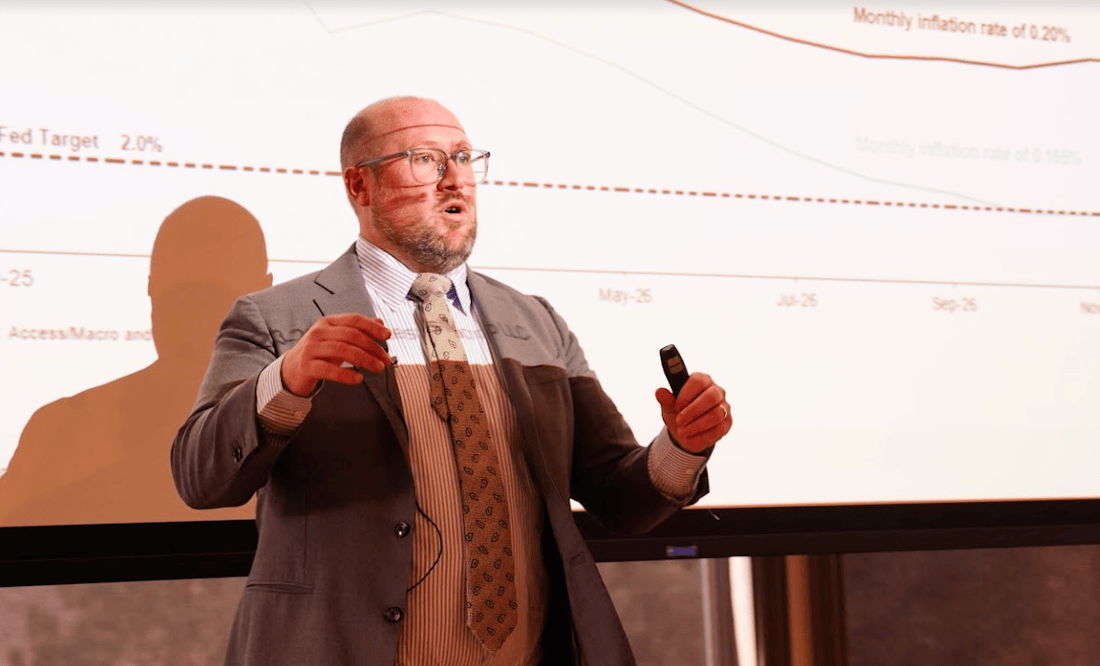
Tim Mahedy presenting passionately to a room full of Bank of Utah executives and customers during the Economic Forecast session at Thanksgiving Point in Lehi, February 12, 2026
Opportunities in a Resilient Economy Despite these constraints, Mahedy highlighted areas of opportunity. Consumer demand remains strong, corporate balance sheets are robust, and the economy has shown remarkable resilience through trade disruptions and post-pandemic adjustments. For entrepreneurs, the implication is clear: growth is still achievable, but success hinges on navigating structural shifts, including higher borrowing costs, changing labor market dynamics, and evolving sector-specific risks.
He also noted that policy developments, particularly the Fed’s balance sheet management, could influence the yield curve and credit conditions. While some strategies, like reducing the Fed’s balance sheet, might steepen the curve and create opportunities for banks and lenders, they simultaneously increase long-term borrowing costs for companies. Entrepreneurs must be prepared for a mixed environment where some sectors benefit while others face headwinds.
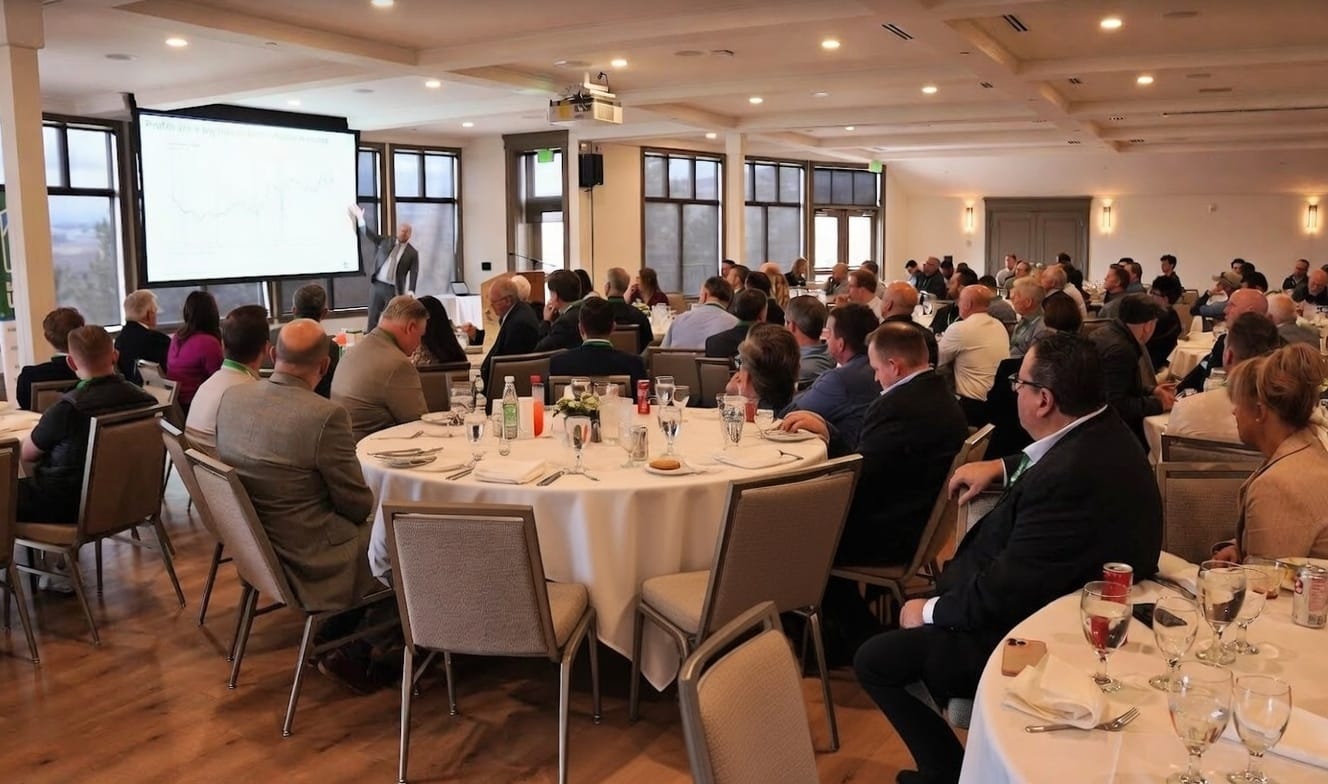
Audience members at the Bank of Utah Economic Forecast in Lehi take in Tim Mahedy’s insights on inflation, interest rates, and economic trends for 2026, February 12, 2026
Strategic Takeaways for Tech and Venture Leaders For a tech-savvy, venture-focused audience, Mahedy’s forecast offers several actionable lessons. First, plan for higher and more stable borrowing costs; the era of ultra-low interest rates is over. Second, consumer-driven demand remains strong, particularly in sectors aligned with digital services, health, and essential consumption. Third, labor market shifts, particularly in acyclical sectors like healthcare, may shape hiring strategies and compensation expectations. Fourth, remain alert to policy developments, particularly around fiscal deficits and Fed balance sheet decisions, as these will impact financing conditions, risk premiums, and the broader cost environment.
Throughout his presentation, Mahedy emphasized the resilience of U.S. markets, the adaptability of corporations, and the nuanced signals from economic data. For tech and entrepreneurial audiences, the message is pragmatic: growth is attainable, but the playing field has fundamentally changed. Strategies that succeed in 2026 will rely on precise financial modeling, flexible capital deployment, and an understanding of the evolving macroeconomic landscape.
Attendees at the February 12, 2026 Bank of Utah Economic Forecast at Thanksgiving Point's Garden Room listened as national economist Tim Mahedy shared insights on the 2026 economic outlook. The session, in partnership with Utah Valley Chamber of Commerce, was one of five events across the state
Conclusion Mahedy’s presentation underscored a critical point for innovators and business leaders: the economy is neither collapsing nor booming uncontrollably. It is recalibrating. Investors and entrepreneurs must recalibrate as well. By anticipating structural shifts, monitoring consumer behavior, and adjusting for higher financing costs, companies can seize opportunities in a market that rewards adaptability and foresight. His insights from Bank of Utah’s multi-city Economic Forecast series provide a roadmap for navigating 2026 with both caution and confidence.
For more research and economic insights from Tim Mahedy and the Access/Macro team, visit: