SageCreek Executive Briefing Reveals How AI Drives Measurable Results
SageCreek’s March 10 AI briefing at Pelion explored how organizations can achieve measurable AI impact through workflow redesign, integrated data, and operational alignment. Speakers Matt Smith and Bob Bodily shared practical case studies, strategies, and lessons for executive adoption.
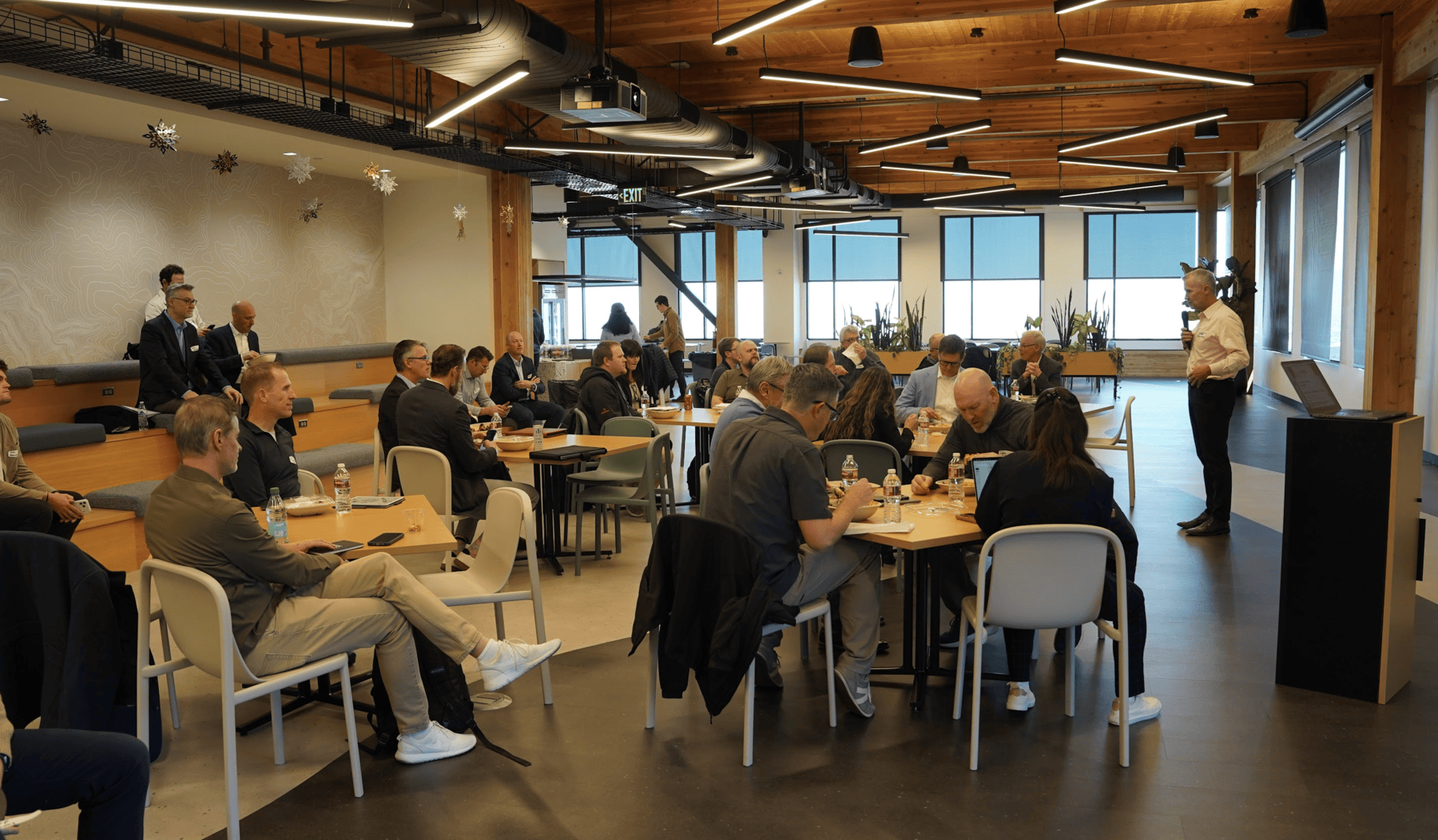
SageCreek continued its executive AI briefing series on March 10, 2026, again at Pelion Venture Partners, drawing senior leaders from Utah’s technology and higher education sectors.
The guiding question of this briefing: what actually changes inside an organization to produce measurable AI returns?
Unlike conventional AI events that focus on tools, hype, or speculative applications, this session emphasized workflow-centered adoption, practical implementation, and measurable outcomes. Attendees left equipped with both strategic frameworks and tactical examples that could be applied immediately to their own organizations.
Setting the Stage: Leadership, Networks, and Strategic Partners
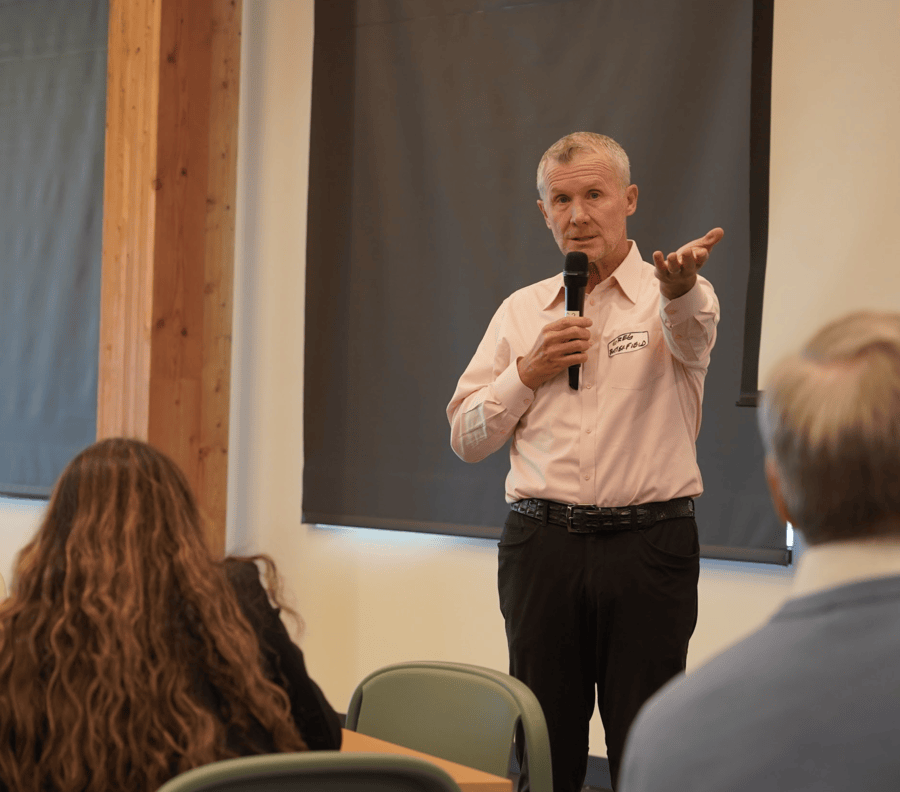
As in previous briefings, Greg Butterfield opened the event by framing both the purpose of the briefing series and the broader philosophy behind it. “It’s not about showing off tools,” he said. “It’s about meeting new people, learning something meaningful, and building relationships that improve the work we do.” Butterfield encouraged participants to engage with one another, noting that the event is as much about cultivating networks as it is about AI itself.
Greg Butterfield, Managing Partner, SageCreek and SageCreek.ai. welcoming the audience at the previous executive session
Drawing from recent leadership conferences and research from institutions like Harvard, Stanford, and Oxford, Butterfield highlighted a core truth: who you surround yourself with significantly influences your personal and professional success.
“Back in the day, I was nominated to participate in the World Economic Forum as part of a group called Technology Pioneers," Butterfield recounted. "In our group of about 20, we had Steve Jobs, Sergey Brin from Google, Jeffrey Moore, and even Jim Collins. The goal was to figure out what we could do with technology to make humanity better—everything from water and food logistics to security."
Butterfield credits his experience at the World Economic Forum with showing him that groundbreaking technology and meaningful impact require the right team, the right ideas, and collaboration at the highest level
Butterfield also thanked strategic partners, including Pelion Venture Partners, whose support and facilities make the SageCreek series possible. He framed the event as a continuation of a broader series of briefings, as previously covered by TechBuzz, to equip executives with actionable knowledge on AI adoption, governance, and operational alignment.
AI in Practice: Matt Smith on Workflow Integration
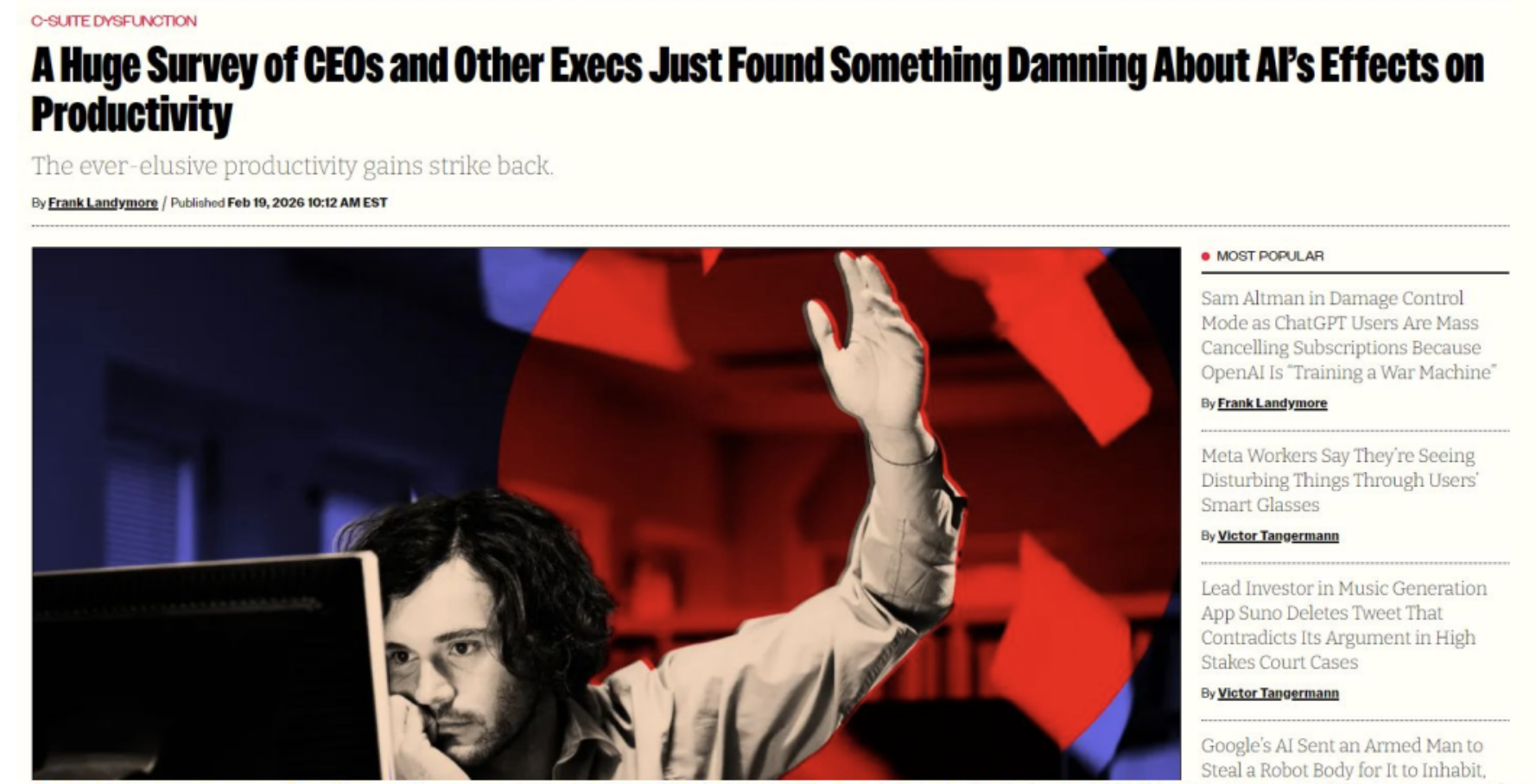
The first featured speaker, Matt Smith, Chief Strategy Officer at Techcyte, brought the discussion from principle to execution. Smith opened with a striking statistic from the National Bureau of Economic Research: in a survey of 6,000 CEOs, CFOs, and top executives, roughly 90% reported that AI had no measurable impact on employment or productivity within their organizations.
Smith’s message was clear: AI is not inherently transformative. The problem is poor integration and misaligned implementation, often compounded by top-down mandates. Employees are stressed and disengaged when asked to adopt AI without workflow alignment, clear purpose, or measurable objectives.
Using Techcyte’s work in pathology as a case study, Smith illustrated the difference between “Digital 1.0” and “Digital 2.0.” Many healthcare organizations had digitized pathology slides years ago, only to leave the resulting data siloed, inaccessible, and underutilized. AI tools, Smith explained, cannot deliver value in isolation; they are only effective when embedded directly into user workflows.
At Techcyte, his team observed pathologists’ processes across multiple systems, such as electronic medical records, imagery repositories, prior case histories, and case notes, and re-engineered the workflow so that AI could deliver actionable insights where and when they were needed. By integrating data streams and contextualizing information, pathologists could access a consolidated view, allowing AI to pre-populate reports, flag potential errors, and ultimately increase both efficiency and accuracy.
Smith highlighted several actionable lessons for executives:
Prioritize workflow, not tools: Identify 3–5 high-leverage workflows where AI can produce measurable gains.
Pilot carefully: The first project sets the tone for adoption. Poor execution can create long-term resistance.
Measure impact: Establish KPIs upfront (time saved, output improved, accuracy increased, etc.) and track them consistently.
Integrate thoughtfully: AI must be embedded in existing workflows, not added as an external layer.
Share success stories: Peer examples of AI success encourage adoption more effectively than top-down mandates.
Compliance and governance: Especially in healthcare, AI models must be validated and locked to meet FDA or CE standards.
Smith underscored that AI is not a universal solution. It is a tool to enhance existing capabilities, reduce error, and unlock capacity, but only when leaders invest in strategy, workflow redesign, and thoughtful implementation. His presentation offered tangible proof: AI in pathology at Techcyte has improved sensitivity and specificity across multiple tests while allowing pathologists to process more cases with less stress.
The Step Change: Bob Bodily on LLM Usability
Bob Bodily, CTO and co-founder of Citrix AI, expanded the discussion to the broader AI landscape, emphasizing a recent step change in large language models (LLMs). He argued that while LLMs have existed for decades, the past three to six months marked a critical usability threshold: AI is now fast, cheap, and reliable enough to be integrated into production workflows across industries.
2020–2022: GPT-3 and ChatGPT made AI interesting but not yet fully dependable for production.
2025–2026: Models reach a usability threshold: capable of consistent performance in real-world workflows.
To illustrate, Bodily shared his personal experience over the past two months, demonstrating AI applied across infrastructure, content, engineering, and marketing:
Automating infrastructure deployment for new domains, including database provisioning and front-end setup.
Generating hundreds of blog posts in hours, complete with internal linking, SEO, and structured content management.
Developing full-stack applications, including real-time servers, with AI handling event interpolation and backend logic.
Streamlining research, sales, and operational processes through AI-assisted workflows.
The takeaway: AI’s productivity impact is now measurable and scalable, but only with intentional, structured implementation.
Bodily framed this within a six-pillar framework for AI adoption, which mirrors and complements Smith’s workflow-focused perspective:
Champion: A dedicated leader accountable for cross-functional AI adoption.
Training: Teams must understand how, when, and why to use AI tools.
Workflow Integration: AI must be embedded in daily processes.
Data: Contextually relevant and centralized data is essential for effective AI.
Tools: Custom workflows must interface with existing software systems.
Bodily emphasized that organizations adhering to these pillars can unlock productivity, revenue growth, and operational efficiency, while avoiding common pitfalls like employee burnout or failed adoption. He also stressed that engineering education and internal training must evolve, focusing on systems architecture, applied AI, and cross-functional collaboration rather than pure coding or theoretical computer science.
Finally, Bodily addressed nuances in AI deployment, including:
Deterministic vs. non-deterministic models: the balance between predictable automation and flexible problem-solving.
Model selection for tasks: some models excel at strict instruction execution, others at creative output.
Infrastructure considerations: on-prem vs. cloud deployments, and the relative maturity of local models versus hosted solutions.
Common Themes and Executive Takeaways
Across the two presentations, several common threads took shape:
ROI comes from workflow, not tools. Both Smith and Bodily emphasized that AI alone does not transform organizations. Value emerges when AI is integrated into workflows that matter.
Human factors matter. Employee buy-in, peer-led adoption, and clear leadership accountability are crucial to avoid frustration and disengagement.
Measure everything. Operational KPIs, financial ROI, accuracy, and efficiency metrics are essential to track progress and adjust execution.
Pilot strategically. The first AI initiative shapes future adoption. A small, high-impact, well-supported pilot is better than multiple unfocused experiments.
Cross-functional frameworks drive success. Combining champions, training, workflow integration, data management, tools, and operational support creates sustainable AI adoption.
Education must evolve. Engineers need systems thinking, product-focused AI strategy, and cross-disciplinary skills rather than purely coding-based computer science training.
In addition to a vegetarian lunch, attendees walked away with strategic frameworks and practical examples, from AI-assisted pathology at Techcyte to automated infrastructure, content creation, and workflow tools at Citrix AI, that could be adapted to their own organizations. The session reinforced that successful AI adoption is deliberate, structured, and measurable.
Looking Ahead
SageCreek’s series continues to explore the intersection of AI technology, human factors, and operational alignment. Previous sessions have tackled generative agents, system design, and behavioral dynamics. March 10’s briefing moved from principle to execution, providing executives with a roadmap for embedding AI into core workflows while tracking measurable results.
As AI models continue to evolve and usability thresholds rise, the challenge for organizations is no longer whether AI can be useful, but whether leaders are prepared to integrate it thoughtfully into the human, operational, and data systems that generate real-world impact.
On April 14, 2026, SageCreek is hosting the next executive session at the same venue with the same interactive format. It will go deeper into workflow-centered AI ROI.