From Groupon to Park City: How Shawn Bercuson is Building the Infrastructure Private Markets Never Had
Earlyasset (Park City, UT) emerges from stealth with $2 million to build infrastructure for the venture secondary market. TechBuzz sat down with its Co-Founder, Shawn Bercuson, to find out its origin story and vision.
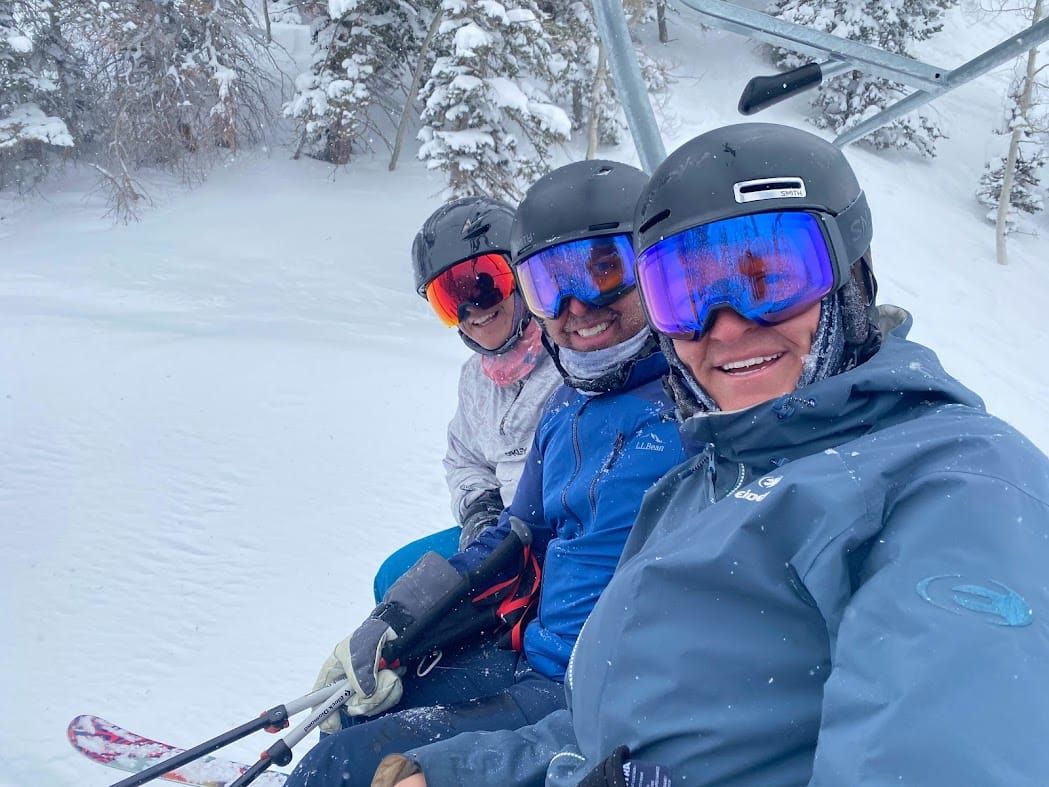
At a Founders 'n Funders event: in the foreground is Salt Lake City resident Franz Kofler and investor at Next Frontier Ventures, Shawn Bercuson, Co-founder Earlyasset, in the middle, and Taylor Oliver of Cervin Ventures, an Earlyasset investor, Solitude. Credit: Jeff Erickson
At a Founders 'n Funders event: in the foreground is Salt Lake City resident Franz Kofler and investor at Next Frontier Ventures, Shawn Bercuson, Co-founder Earlyasset, in the middle, and Taylor Oliver of Cervin Ventures, an Earlyasset investor, Solitude. Credit: Jeff Erickson
Park City, Utah — April 7, 2026
In 2010, Shawn Bercuson had a problem that almost no one in the country knew how to solve.
He had helped found Groupon — at the time, the fastest-growing company in internet history, hitting a billion dollars in revenue in under two years — and he was leaving. His stock options were set to expire within 90 days. Exercising them meant a serious tax bill. And the company was still private, which meant there was no obvious way to generate the cash to pay it.
"I didn't even know it was a thing," Bercuson recalls. "I just knew I wasn't going to walk away from what I'd built. So I figured out a way to sell enough shares to cover my taxes."
What followed was a crash course in how fragmented, opaque, and friction-laden the secondary market for private company shares actually was. There were few established platforms. Selling was considered vaguely taboo — a signal, some thought, that something was wrong with the company or the seller. The process was slow, expensive, and largely bespoke.
The one viable company existed at the time, SecondMarket.com (later acquired by NASDAQ and rebranded NPM), a brokered marketplace model that charged 5% to the seller and 5% to the buyer. That model did not appeal to Bercuson. He thought there could be a more efficient way to handle the transaction.
So he created Earlyasset, a Park City-based startup that emerged from stealth last week with $2 million in pre-seed funding to build what he calls the missing infrastructure layer for the venture secondary market.
Two Paths to Park City
After leaving Chicago — partly in search of new opportunities, partly because Groupon's rocket-ship growth had made San Francisco the center of gravity — Bercuson found himself becoming an unlikely expert in something most people had never heard of. Facebook and Twitter were still private. The JOBS Act hadn't passed yet. But founders and early employees were sitting on real equity with no reliable way to convert it into cash.
"People heard I had figured it out and wanted the playbook," he says. So he started giving it to them.
That led to a series of One Medical secondary transactions — 30 in total, across one company, before it went public and was eventually acquired by Amazon. His investors took note. He launched BullVC, a venture secondary fund, in 2021. And somewhere along the way, he ended up in Park City.
Co-founder Alex Lurie arrived in Park City during COVID, having relocated from San Francisco where he worked at 137 Ventures, a well-regarded secondary firm. Park City being a small town, it wasn't long before mutual friends suggested the two meet.
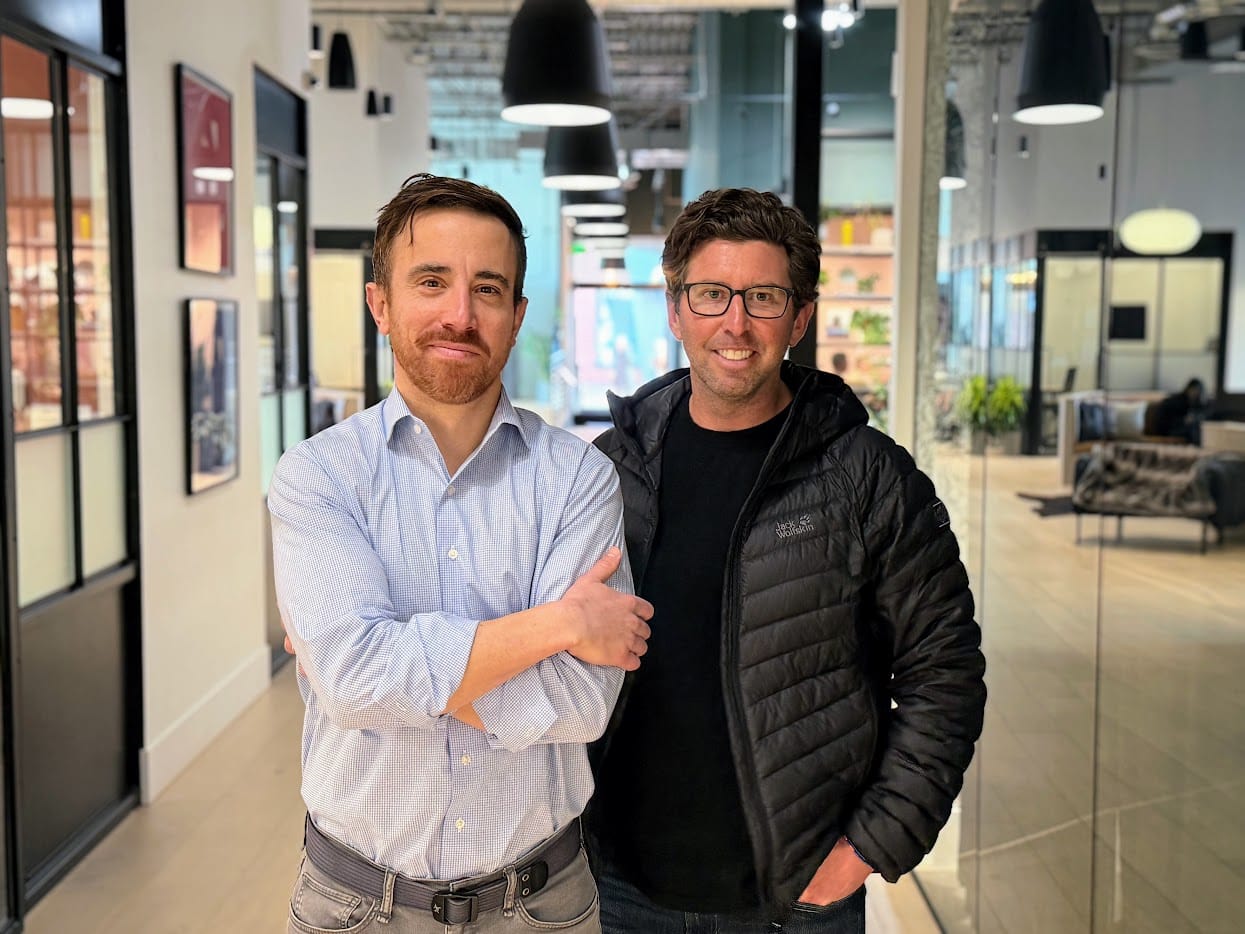
Earlyasset co-founders Alex Lurie and Shawn Bercuson
"There aren't a lot of people doing secondaries in Utah, let alone Park City," Bercuson noted with a laugh.
They started sharing deal flow — passing transactions that didn't fit one fund's mandate to the other — and met regularly for coffee or lunch. Eventually Bercuson laid out his vision for what the secondary market could look like with the right technology underneath it.
Lurie was in.
A Structural Problem, Not a Cyclical One
To understand what Earlyasset is building, it helps to understand why the secondary market is broken in the first place.
Start with the numbers. There are roughly 1,500 venture-backed unicorns today. The IPO market has been largely closed for the better part of two years. According to Blackstone, the average time from founding to IPO has stretched from about six years in 2000 to roughly 14 years today. At the current velocity of public offerings, clearing the backlog of unicorns alone would take approximately 49 years.
"This is structural," Bercuson says flatly. "It is not cyclical."
The shift has accumulated quietly over two decades. The JOBS Act of 2012 raised the cap on private company shareholders from 500 to 2,000, enabling companies to stay private far longer.
Twenty-five years ago, public markets had twice as many listed companies as they do today. The companies that used to go public at $100 million in revenue largely can't anymore. The bar has moved to $500 million and above. What happened to all those companies? They're stuck. Still growing, still generating real value, but no longer able to access public markets and no longer early enough to attract venture dollars.
The result: more than $4 trillion in private company equity is held by roughly four million shareholders — founders, employees, and early investors — with limited access to liquidity. And the existing secondary market isn't helping most of them.
Data from Caplight shows that more than 80% of secondary transaction volume is concentrated in just ten companies. The structural reasons for that concentration are straightforward: institutional buyers want to write large checks ($10 million minimum, realistically closer to $50 million), which pushes activity toward the biggest, most recognizable names. It's not worth the same diligence effort to write a $5 million check as a $50 million one.
"If you have a billion dollars to deploy, are you going to do that across 200 companies or 20?" Bercuson asked. "The answer is 20. So as a result, buyers only want to be in the top 10 names, and that's where all the volume ends up."
The tens of thousands of companies that fall outside that elite tier. Real businesses with real revenue and real shareholders who need liquidity are largely left out.
Infrastructure, Not a Marketplace
This is where Earlyasset's positioning becomes important. The company is deliberately not building a marketplace.
Platforms like Forge, Hiive, and EquityZen operate as brokered exchanges, matching buyers and sellers in a semi-public setting. That model creates real problems for the private companies at the center of those transactions. When you post shares for sale at a price that contradicts what a company is telling investors in a fundraising round, it can cause serious damage.
Bercuson recalled a real example: a company that had raised at $11 per share and was seeking $15 per share in a new round. An early employee — whose options were about to expire — posted shares at $2.50 because he wanted something rather than nothing. "At the same time, the company is asking investors to buy in at $15. They're seeing publicly that somebody's trying to sell at $2.50. That's a problem."
With Earlyasset, transactions are handled discreetly. There is no public order book. Companies are partners, not subjects. And that alignment, being genuinely useful to the company rather than a nuisance, is central to Earlyasset's go-to-market approach.
On the operational side, the friction in today's secondary market is substantial. A typical transaction can take two to three months and run into the tens of thousands of dollars in legal and administrative costs. Bercuson described a CFO or general counsel being pulled away from core responsibilities for weeks to manage documents, board approvals, and shareholder rights review. The process is almost entirely manual.
Earlyasset is building software to streamline those workflows: standardized legal documentation (which companies can use or substitute with their own), guided transaction processes, and a proprietary valuation model to bring greater price transparency. Bercuson described it, memorably, as "SAFE notes for secondaries" — off-the-shelf instruments that make smaller, faster transactions practical for the first time.
"We provide the legal documentation. If they want to use ours, it will save them thousands of dollars, just on that," Bercuson noted. "If they want to use their own documents, that's fine too."
The target companies are growth-stage, not pre-product: Earlyasset applies what Bercuson calls a "Rule of 30" — $30 million in revenue, 30% year-over-year growth, 30% margins — as a floor, with most transactions happening in the $50 million to $200 million revenue range. Series B and beyond. Companies that have survived long enough to have real shareholders with real liquidity needs, but that aren't SpaceX.
"Companies are staying private longer, which means equity is accumulating across millions of shareholders," said Nick Moran, General Partner at New Stack Ventures. "The infrastructure around that ownership hasn't kept pace. Earlyasset is building the kind of market infrastructure needed to unlock liquidity across a much broader set of companies."
The broader market context adds weight to that bet. In 2025, Goldman Sachs acquired Industry Ventures and Morgan Stanley acquired EquityZen. Both moves signaled that institutional capital is taking the venture secondary space seriously. Earlyasset is positioning itself on the infrastructure side of that wave, not the brokerage side: less like a stock exchange, more like the pipes that make exchanges possible.
Earlyasset's platform is expected to launch later this year. Shareholders can already join the waitlist to register holdings, access pricing insights, and request liquidity as the company builds out its investor network. The companion investment vehicle, Earlyasset Capital, serves as the financial partner for transactions on the platform.
The Chairlift as a Conference Room
There is one more dimension to the Earlyasset story that doesn't show up in any press release: Skiing in Utah
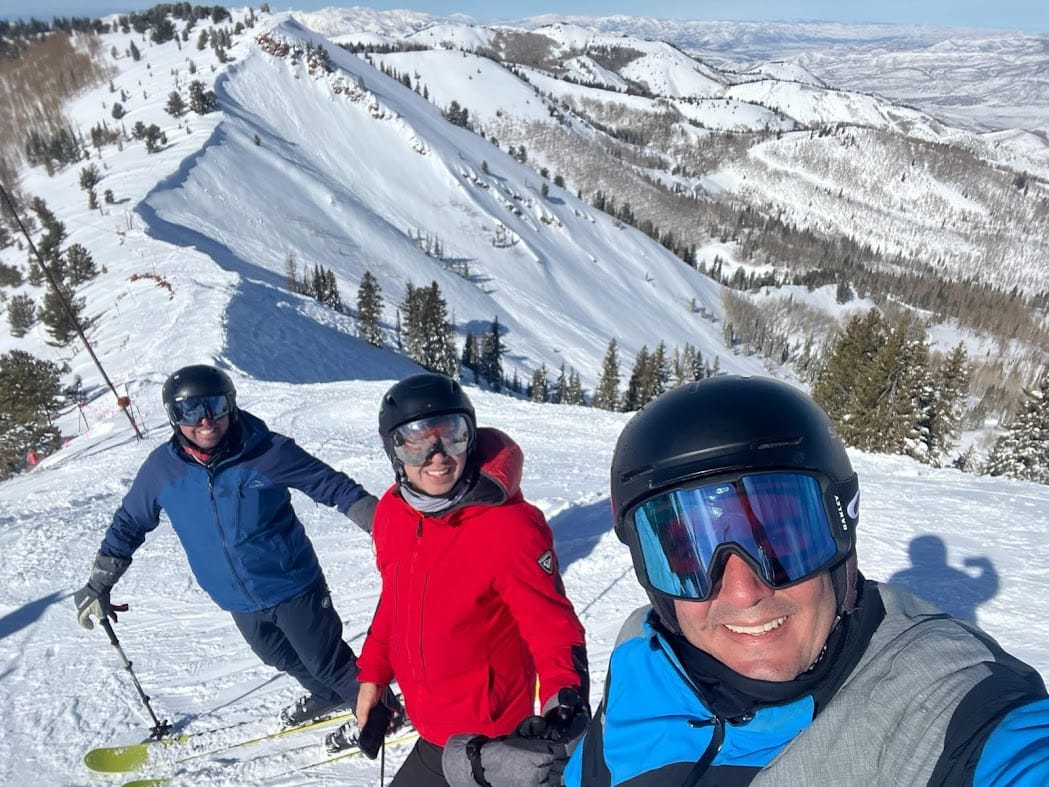
Shawn Bercuson (left in background) at the top of 9900 in The Canyons with Anthony Millet (an Earlyasset investor) and Managing Partner at Antler; and a visiting Australian entrepreneur (who is taking the picture)
Bercuson has been coming to Park City since 1998, bought a place in 2010, and moved here full-time in 2016 with his wife and two kids. He was an early adopter, not a COVID transplant. And he's built something unusual over the intervening years. He has become the person that founders, VCs, and LPs call when they're passing through town and want a guide on the slopes.
"I get to go skiing with entrepreneurs, with VCs, with LPs," he said. "And I get these natural chairlift rides where you get 15 to 20 minutes of undivided time to get to know somebody."
He makes a comparison to golf — the four-hour relationship-building session — but notes a key difference. On a ski mountain, there's enforced separation between conversations, punctuated by descents that create their own kind of intensity. And when someone from out of town asks to try a double black diamond and Bercuson takes them down a narrow, steep chute, something happens that no boardroom can replicate.
"At some point they're leaning on you for every turn," he said. "You develop trust. And that carries over."
The space Earlyasset operates out of is Park City Kiln, itself something of a local landmark — a converted bowling alley that used to be called Jupiter Bowl, opened near the start of COVID and now a hub for the tech community that has grown up on the Wasatch Front. Bercuson noted that the people who come through town between December and April — when the skiing is at its peak — tend to have time in a way that a trip to San Francisco or New York doesn't afford. That accessibility has become a genuine business asset.
"I wish I was smart enough to predict this when I moved here," he says. "But it just kind of evolved naturally."
Utah's tech community has developed its own gravitational pull for exactly this reason. Conferences taking place in Salt Lake City or Lehi routinely sell on the added ski day at Deer Valley, Snowbird, or Snow Basin, as much as the agenda. And for Bercuson, operating from a stylish, converted bowling alley at 7,000 feet with a 36-minute drive to the Salt Lake airport turns out to be a surprisingly effective place to build a fintech company aimed at Wall Street.
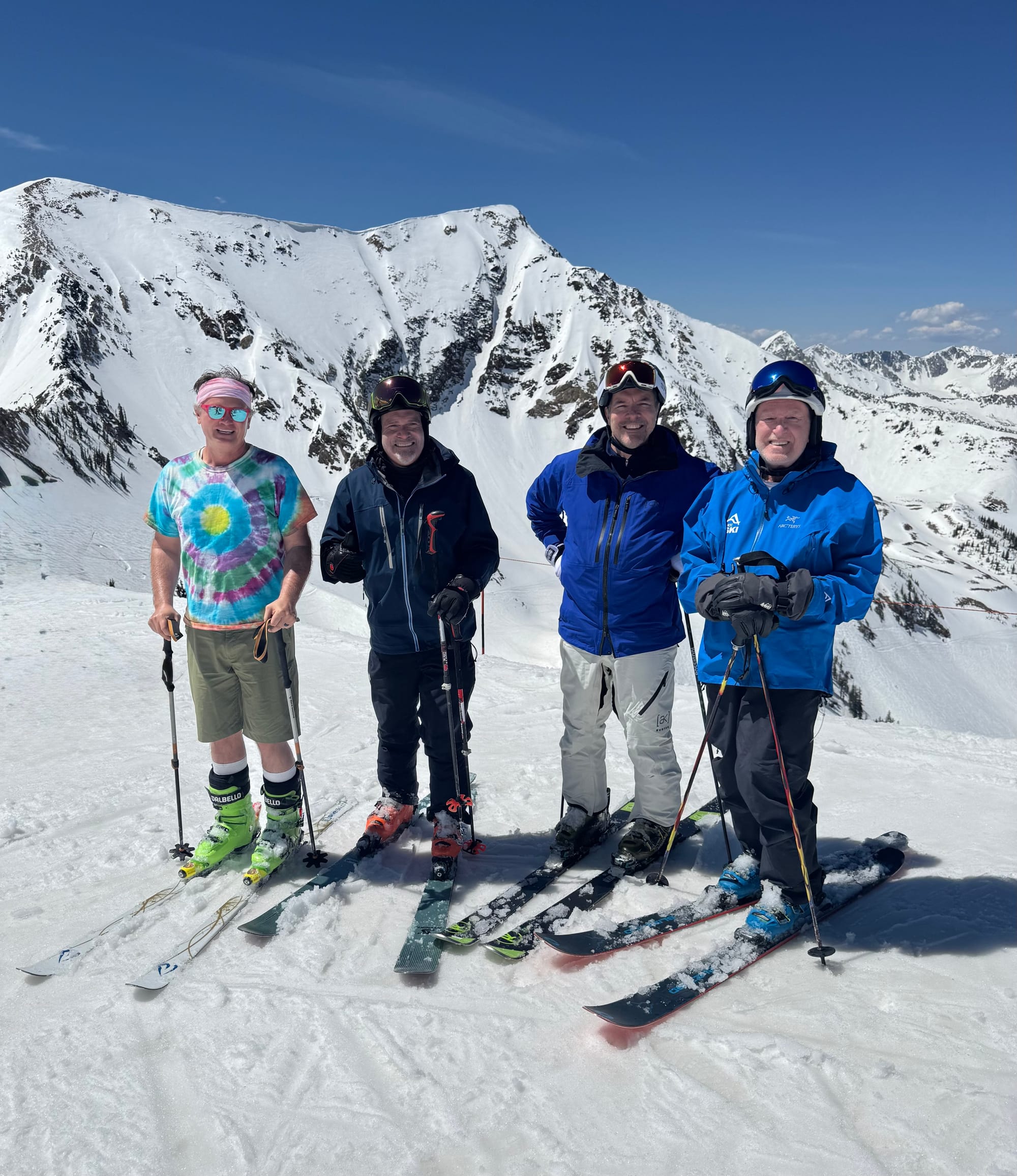
Jeff Erickson, Co-founder of Founders n' Funders, (in shorts), skiing with friends, Hidden Peak (11K ft), Snowbird. Credit: Jeff Erickson