The Latin Problem: BYU's Roger MacFarland on What We Have — and Haven't — Found in the Herculaneum Papyri
BYU classicist, Roger MacFarland, who has spent more than three decades hunting for lost Latin literature in carbonized scrolls came to UVU with an honest assessment: most of the discovered Herculaneum papyri is barely readable. But what we might still find could change everything.
A BYU classicist who has spent more than three decades hunting for lost Latin literature in carbonized scrolls came to UVU with honest news: most of what we've found is barely readable. But what we might still find could change everything.
Orem, Utah — April 10, 2026
Roger MacFarland walked to the front of a Clarke Building lecture hall at UVU and did something unusual for a man who has spent 35 years working on one of the great unsolved puzzles of the ancient world. He warned the audience not to get their hopes up.
"The Latin papyri are in pretty uniformly wretched condition," he said, with the cheerful candor of someone who has made peace with a very hard problem. "There's one that's okay. But more on that in a bit."
The caveat, it turns out, is not despair. It is precision. And precision, in the field of Herculaneum papyrology, is everything.
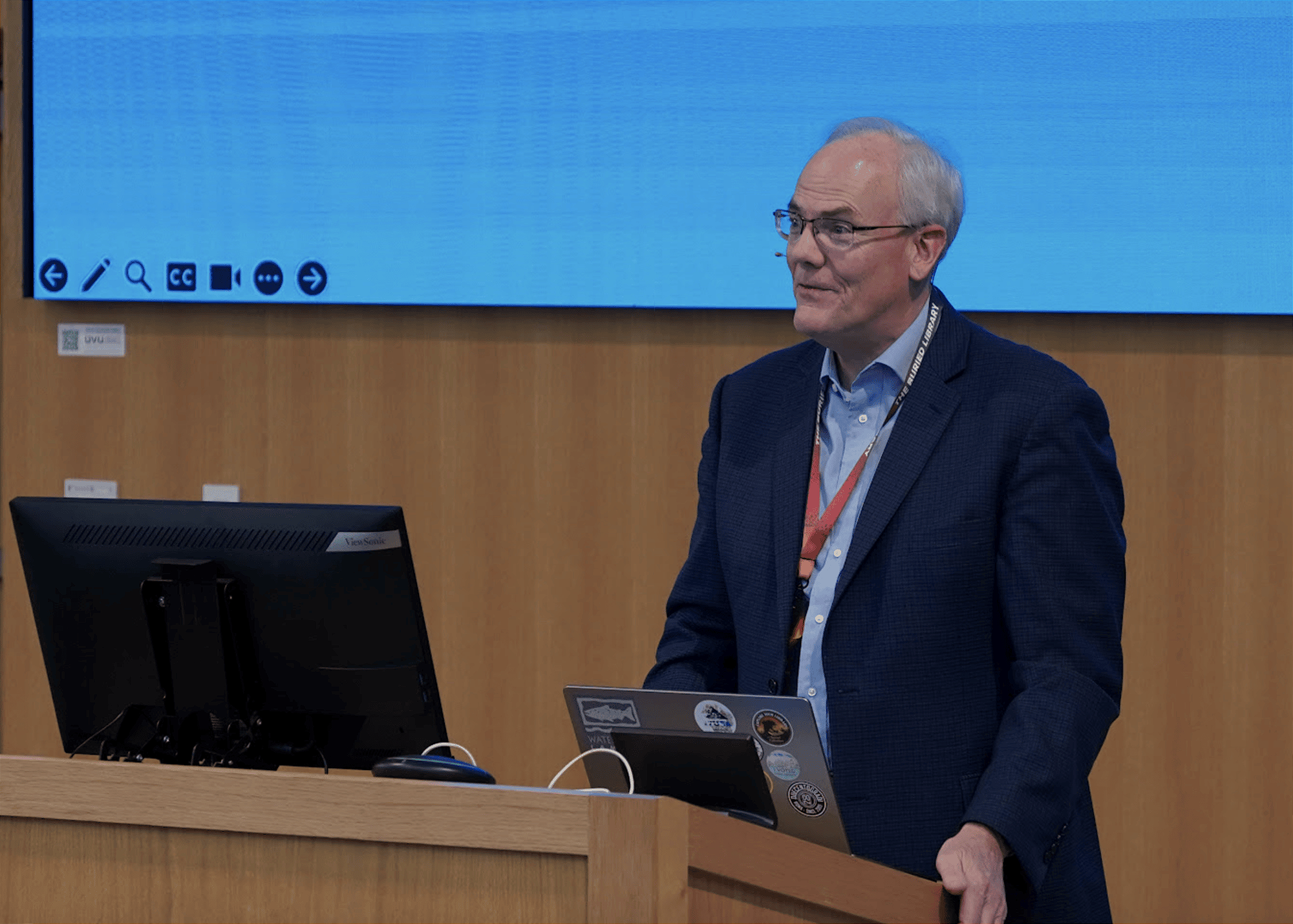
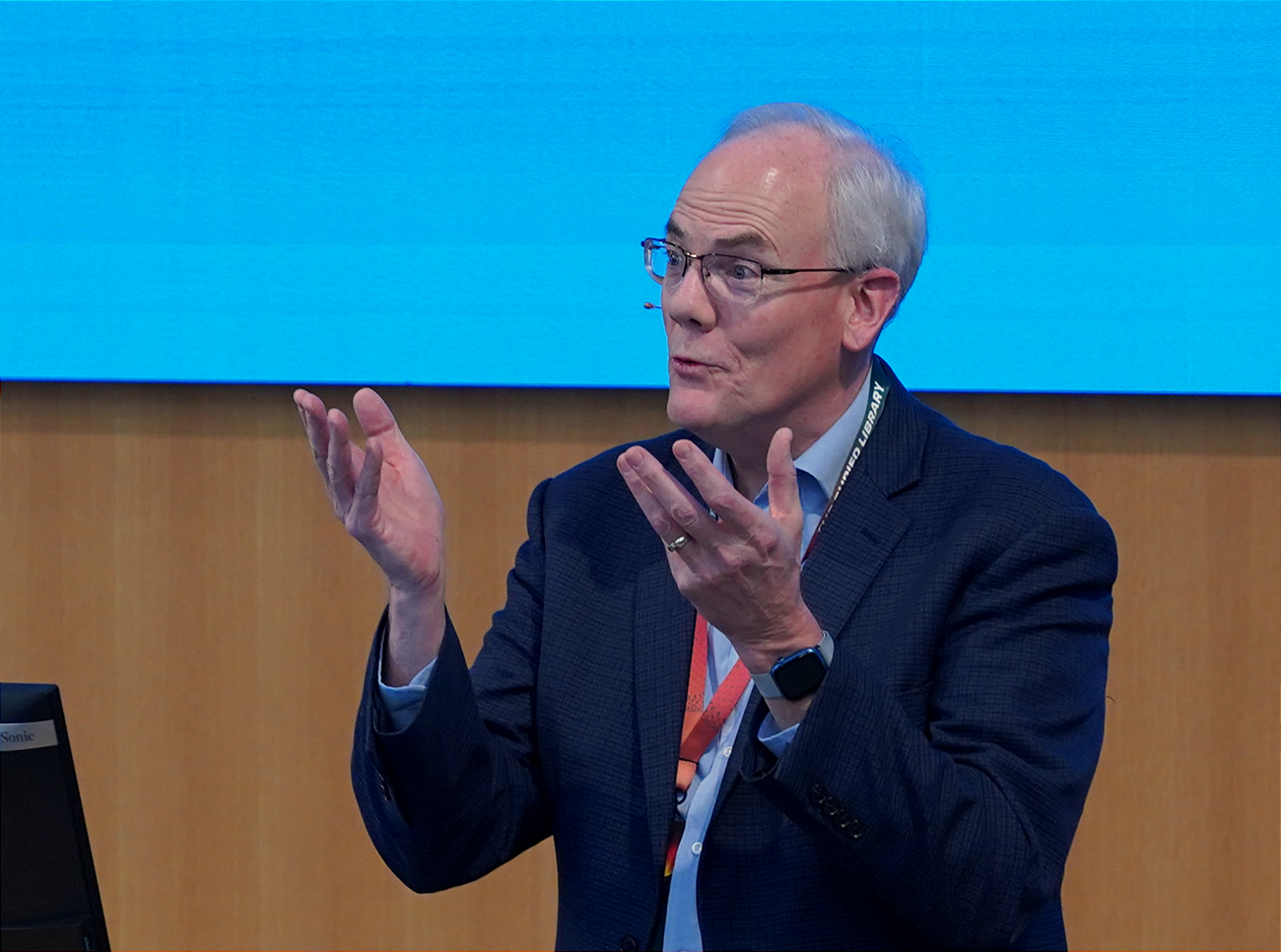
Roger MacFarland, Professor of Classics at BYU and director of the Herculaneum Papyrus Project, delivers his talk at The Buried Library: Herculaneum Papyri and AI Conference at Utah Valley University, Orem, Utah
Dr. Roger T. MacFarland, Professor of Classics at Brigham Young University, has taught Latin, Greek, and classical civilization there since 1989. In 2004, he became director of the Herculaneum Papyrus Project, which transferred to BYU's College of Humanities and began the systematic near-infrared and multispectral imaging of every open Herculaneum papyrus in Naples, London, and Oxford. It was an undertaking that would quietly transform the field over the following two decades.
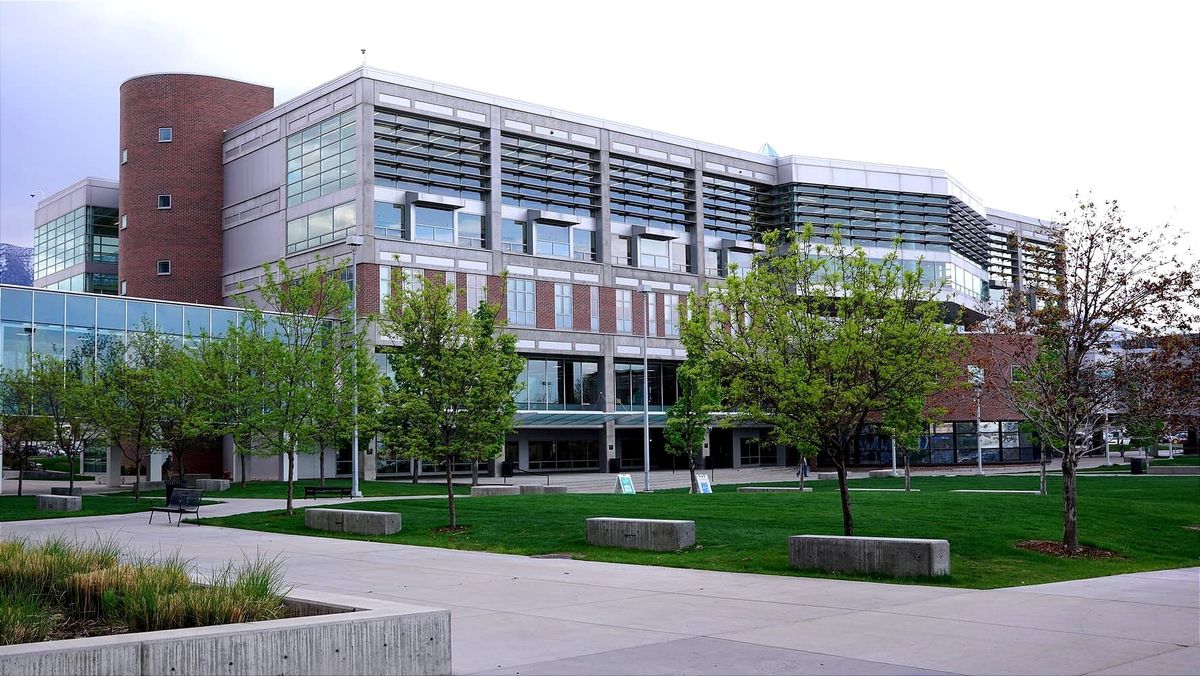
He spoke Thursday at "The Buried Library: Herculaneum Papyri and AI Conference," a free symposium running this week at Utah Valley University. His talk served as a ground-level tour of what Latin scholarship in this collection actually looks like, letter by uncertain letter.
The Two-Century Wish List
Before Dr. MacFarland got to the papyri themselves, he took the audience on a brief tour of longing.
From the moment European scholars learned that a library had been buried at Herculaneum, the speculation about what it might contain has been almost comically ambitious. A letter from 1753 — before serious attempts to open the scrolls had even begun — already expressed hope for a portion of Livy's history of Rome, most of which has been lost to time. By 1739, a German scholar was wishfully cataloging the texts he hoped to find: Diodorus Siculus, Berossus on Babylon, Megasthenes on India, Livy, Sallust, and, in a note that MacFarland clearly relished, "the Five Books of Sallust, although in that event all the labor I have already expended in attempting to reconstruct them would itself be rendered futile."
The list has only grown since. Tacitus. The missing half of Ovid's Fasti. Pliny the Elder's twenty books on German customs, which Tacitus himself consulted and which have otherwise vanished. All of Cicero — though, as MacFarland noted, we have a good deal of Cicero already.
In 1804, the German playwright and man of letters August von Kotzebue reported breathlessly from the workshops in Naples: among seven Latin manuscripts currently being unrolled, one had been found "written in the style and manner of Livy."
"It ain't Livy," MacFarland corrected. The audience laughed. "But it's in the style of Livy."
What BYU Built — and What Kentucky Is Doing With It
For over twenty years, BYU's imaging work formed the backbone of what scholars could see inside the Herculaneum collection. Using near-infrared light (primarily at 950 nanometers) MacFarland's team photographed every open papyrus accessible in Naples, London, and Oxford. The results doubled the known count of Latin papyri in the collection: where previous scholarship had recognized roughly 60, careful analysis of the BYU images revealed at least 120.
MacFarland is generous, even proud, in crediting what has come after. The EduceLab team at the University of Kentucky — whose work with the Vesuvius Challenge was described in detail by Brent Seales earlier in the conference — has pushed well beyond what BYU achieved. Seales and his EduceLab team's imaging captures data at multiple wavelengths simultaneously, processes fragments faster, and introduces three-dimensional virtual models that allow scholars to manipulate a papyrus on screen as if holding it in their hands.
"The acceleration in the capture process by the Kentucky-Naples team makes it possible to capture images much faster and much more thoroughly," MacFarland said. "And I'm proud to know about that."
But BYU's images, he argued, still matter, and will continue to matter, for one reason that no amount of better technology can replace: they are an archive of how things were.
He showed the audience a side-by-side comparison from a recent publication in Cronache Ercolanesi. The Kentucky image is on top; the BYU image is on the bottom. In one section, the texts disagree. Something that appears in the older BYU photograph is simply gone in the new one — a fragment, or a layer of material that was once present on the papyrus and has since disappeared, either through natural deterioration or some other cause that MacFarland declined to specify with diplomatic vagueness.
"The papyrus has changed," he said simply. "So this gets us, in one glimpse, to an important role that the BYU images will continue to play — this archival role. We can always scroll back and look at the way things were."
The Latin Papyri, One by One
The heart of MacFarland's talk was a tour through the Latin collection — its stars, its controversies, and its persistent difficulty. Perhaps the most compelling item in the collection is P.Herc. 817.
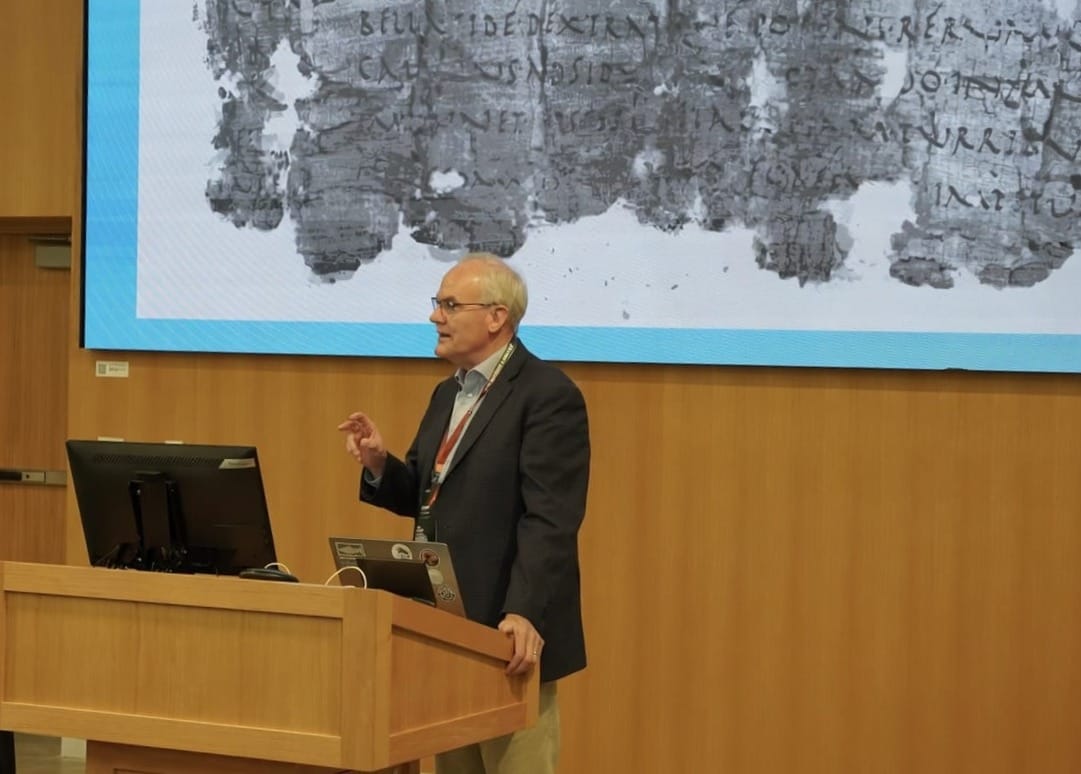
Roger MacFarland, Professor of Classics at BYU and Director of the Herculaneum Papyrus Project, speaking at The Buried Library: Herculaneum Papyri and AI Conference at Utah Valley University, Orem, Utah
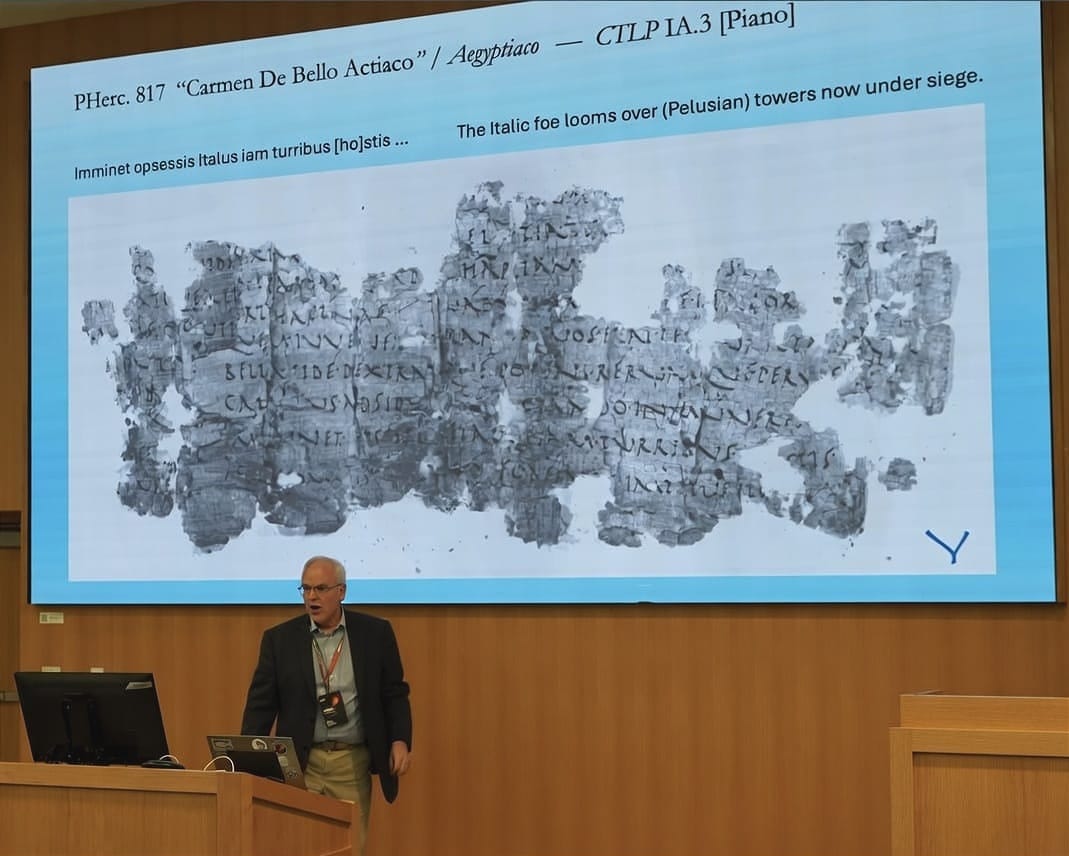
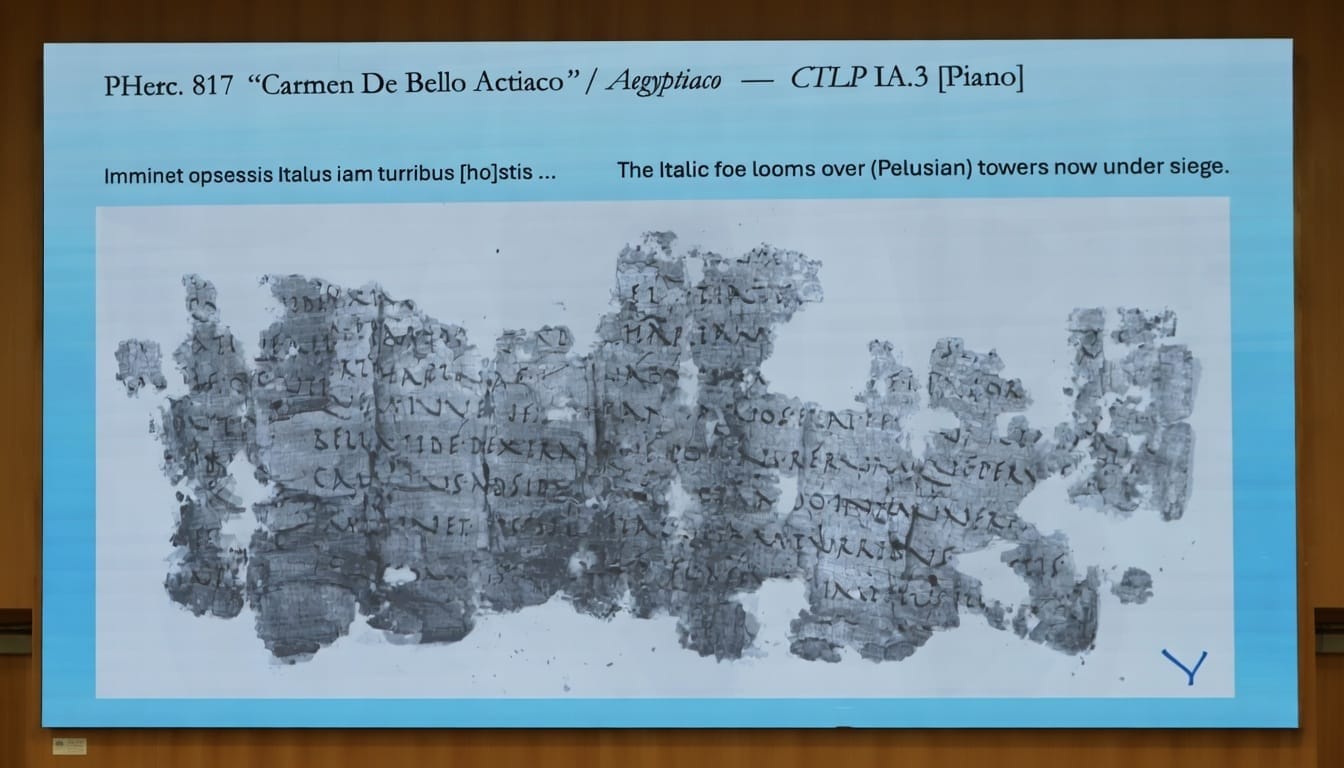
P.Herc. 817 represents the summit of Latin readability in the collection, the one MacFarland called "okay." It is a poem written in dactylic hexameters, the meter of Virgil and Homer, describing events around the Battle of Actium in 31 BC, the naval clash in which Octavian defeated the combined forces of Mark Antony and Cleopatra, effectively ending the Roman Republic’s civil wars and paving the way for Octavian to become Augustus, the first Roman emperor.
Roger MacFarland, discussing P.Herc. 817, the most legible Latin papyrus in the Herculaneum collection at The Buried Library: Herculaneum Papyri and AI at Utah Valley University, Orem, Utah
MacFarland read aloud one vivid line — "the enemy looms over the gates already under siege" — describing Octavian's assault on Alexandria. The poem's authorship remains contested. MacFarland laid out the candidates: Lucius Varius Rufus, a poet closely associated with Virgil and Horace; Gaius Rabirius, whose reputation in ancient sources ranges from "grandiose" to "worth reading if you have time to kill"; and Cornelius Severus, author of a verse history of Rome that would be thematically appropriate.
"Even a clearly preserved papyrus such as this," MacFarland noted, requires working with columns that are fragmentary at the top, layered with overlapping material, and missing entire sections. He once told an Emory University audience that editing P.Herc. 817 was "like taking a walk in the park on a sunny day." The audience here understood the irony.
P.Herc. 817, the most legible Latin papyrus in the Herculaneum collection. A poem in dactylic hexameters about the Battle of Actium, its authorship remains debated. Even this relatively well-preserved specimen presents substantial challenges to modern editors.
Three Claims That Didn't Hold
MacFarland is too careful a scholar to let enthusiasm outrun evidence, and he spent the latter portion of his talk revisiting three claims that, in his view, have not survived scrutiny.
P.Herc. 78 was once presented as containing text by Caecilius Statius, a Roman comic playwright active around 179 BC. The key evidence was a subscription reading, tenuously, Caecili Statius. MacFarland spent years trying to verify one specific letter — an O — that he could not locate on the papyrus itself. He eventually found it in the tray, broken off, reduced to "a small speck of ink with a smaller speck of sand on the middle of it." The inscription could not be substantiated. Holger Essler's recent assessment in the Corpus now treats the text as literary prose about a military topic — not comedy, not drama, not Caecilius Statius.
P.Herc. 395 was claimed by Norwegian scholar Knut Kleve to contain portions of Lucretius' De Rerum Natura, the great Epicurean philosophical poem. Knut Kleve was a Norwegian scholar and papyrologist known for his pioneering efforts to read and reconstruct the carbonized scrolls of the Herculaneum papyri, helping advance modern understanding of ancient philosophical texts. He died in 2006.
Kleve's identification depended on reading specific words that Lucretius uses in a particular passage of Book Five. MacFarland showed the audience the relevant line and offered his own reading of what the papyrus actually seems to say. The letters don't match. Mario Capasso, the eminent Italian papyrologist who died recently, was among the skeptics. He traced the desire to find Lucretius at Herculaneum back to nationalist motivations in the 1920s — a longing, in some quarters, for the great poet to have lived near Pompeii, to have farmed the nearby hillsides, to have left his masterwork at the Villa of the Papyri.
"We could do nothing for you," MacFarland quoted Capasso's mentor as saying, when presented with what appeared to be corroborating evidence. He did not believe in the reading. MacFarland does not either.
The third disputed claim — that P.Herc. 21 contains text by Quintus Ennius, the father of Roman epic — MacFarland dispatched briefly and promised to address at greater length elsewhere. He does not believe it. The evidence, in his view, does not hold up.
What's Actually There, and What Might Still Come
MacFarland ended with two lists.
The first was a summary of wins and losses — a rubric he immediately undermined by pointing out that the paderni fragment, the very first Herculaneum papyrus ever to appear on the European scene, is neither exactly a win nor a loss. It appeared in a letter to the Royal Society in London in the 1750s. Its location is now unknown. It might have been from a different site entirely.
"I don't really know what wins and losses mean," he said. "But the last three are losses. We wanted something so badly we couldn't really find it. We overreached."
The second list was the wish list — his own.
He has been reading Philodemus' Epigrams with a student this semester and is struck by how many times the Epicurean philosopher seems to anticipate or echo the Latin poets: Catullus, Propertius, Horace. The web of influence between the Greek philosophical texts that dominate the Herculaneum collection and the Latin literary culture of the same period is everywhere. Which means the odds are not negligible that the library above — wherever it is, if it has survived — contains Latin poetry.
"I'd love it if we found Catullus," he said. "Horace. Propertius. They're all possibilities. How about Varius Rufus, for reasons explained above? Or — yeah — Lucretius. Ennius. Caecilius Statius, but for real this time. Livy. And what's wrong with finding the rest of all of Cicero?"
He paused.
"Something that's not trashed when it comes to the desk."
Roger MacFarland at The Buried Library: Herculaneum Papyri and AI conference at Utah Valley University, Orem, Utah
He meant it as a joke. The room laughed. But underneath the laughter was the thing that has kept scholars coming back to this problem for 270 years: the reasonable, documented, historically grounded possibility that the library at Herculaneum is not exhausted. That somewhere in the hill above the coastline, in the unexcavated rooms of the Villa of the Papyri, are scrolls that haven't been touched since Vesuvius covered them in 79 AD.
"The Latin library," Mario Capasso wrote in 1989, "is almost certainly in the villa."
MacFarland does not disagree.
Context: A Semester That Started Something
MacFarland's appearance at UVU was not incidental. This semester, he and UVU's Mike Shaw have been co-teaching an unprecedented joint seminar on Herculaneum — students from BYU and students from UVU, in the same class, working through the same texts and problems together.
"The students at UVU," MacFarland told the room, with what sounded like genuine feeling, "I hate to say this — but you've totally knocked my socks off."
The conference—organized through the tenacious efforts of Mike Shaw and his wife, Shannon Musette, with support from UVU’s Office of the Provost, the Kahlert Applied Artificial Intelligence Institute, and several colleges across campus—is itself a product of that collaboration. It also serves as a signal: the intersection of classical scholarship and digital imaging technology is giving rise to a new field, one that is drawing contributors from well beyond traditional centers like Naples, Oxford, or Cambridge.
Provo-Orem, Utah is now one of those places.
MacFarland is, among his many roles, founding trustee of the Friends of Herculaneum in Oxford, and was elected president of the American Friends of Herculaneum in January of this year. Last week he was appointed a councillor on the board of CISPE — the International Centre for the Study of the Herculaneum Papyri — one of twenty scholars worldwide to hold that position.
He spent the talk being honest about what we haven't found. He ended it talking about what we might.
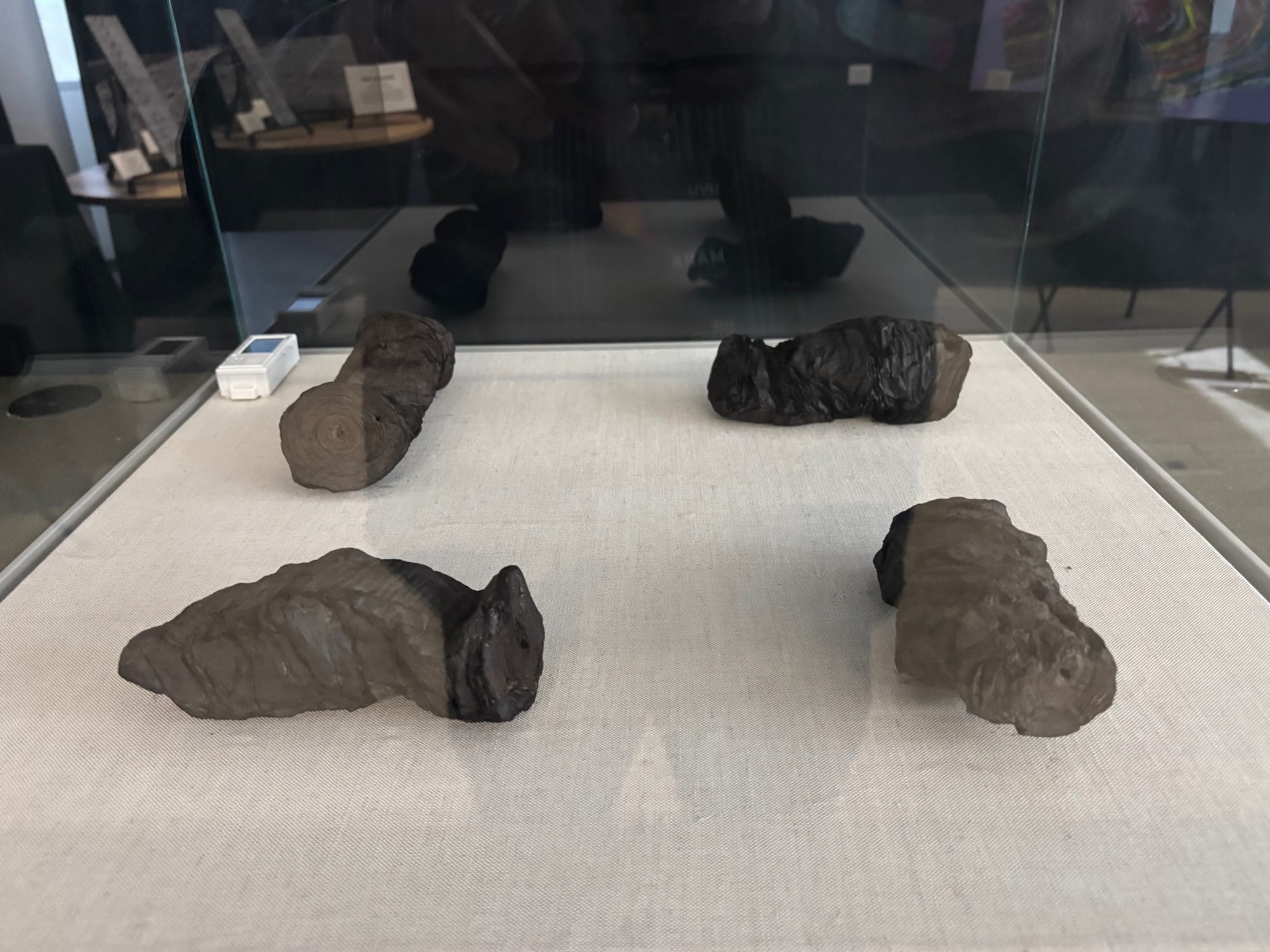
"The Buried Library: Herculaneum Papyri and AI Conference" runs through April 10, 2026 at the Clarke Building at Utah Valley University in Orem. The event is free and open to the public. Four authentic Herculaneum papyri, shown below, on loan from the National Library in Naples, are on display through Friday on the fifth floor.