The Office That Puts Humans Back in Control of the Machine
Arch Nexus’s Salt Lake City headquarters challenges smart-building orthodoxy by empowering humans as active stewards. It uses simple technology to keep humans actively involved in reducing energy use while increasing accountability and resilience.
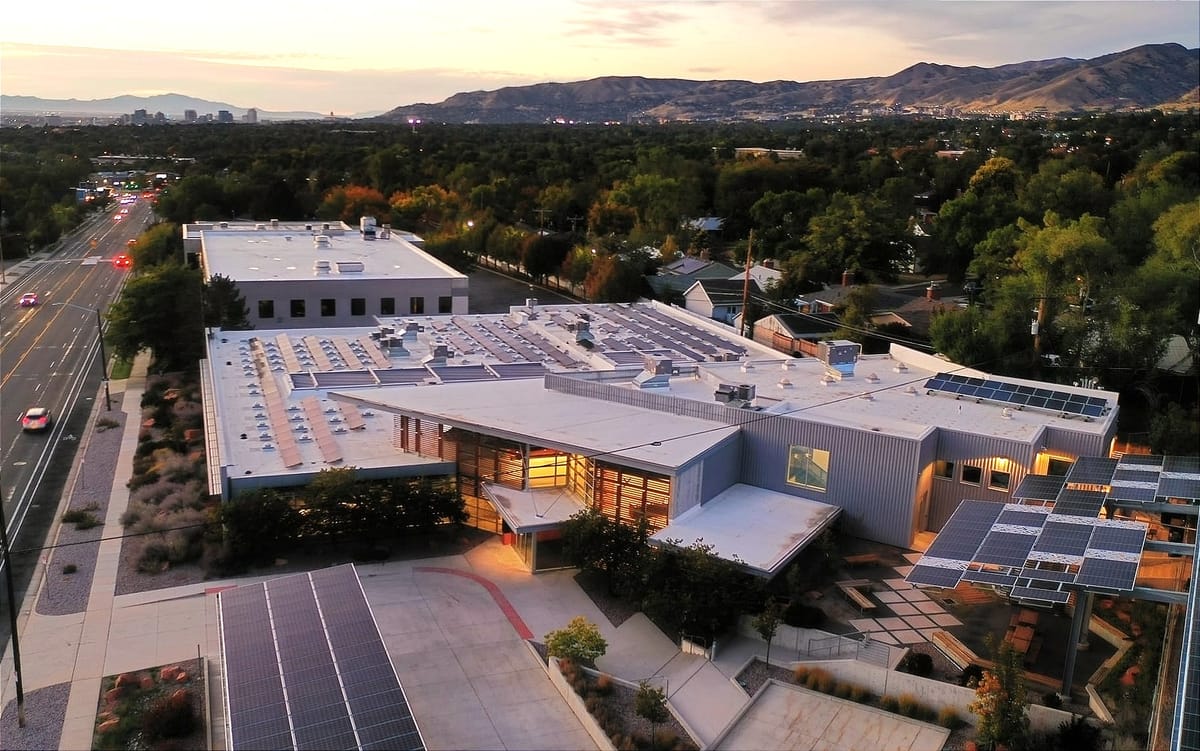
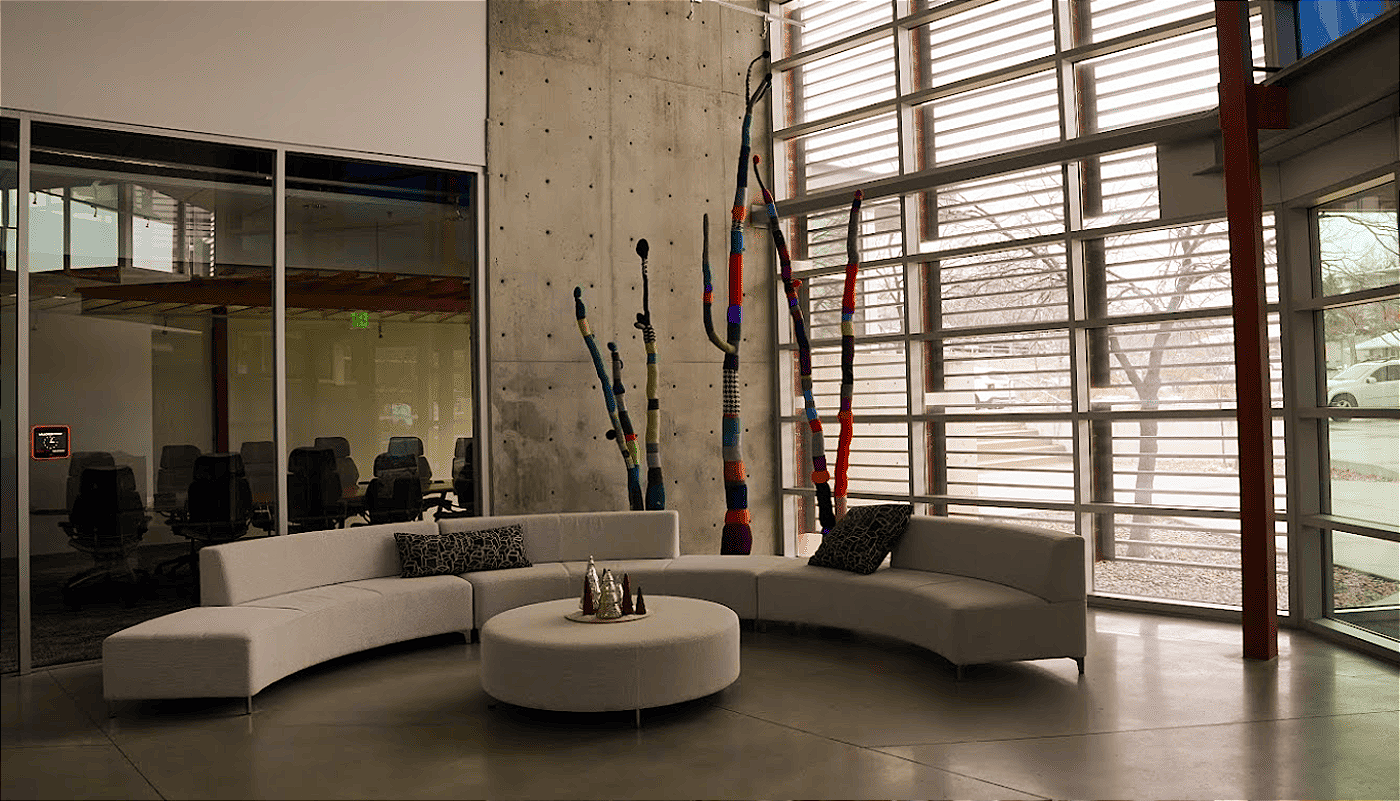
Arch Nexus’s Salt Lake City headquarters on Parleys Way, Salt Lake City, Utah
Arch Nexus’s Salt Lake City headquarters on Parleys Way, Salt Lake City, Utah
January 12, 2026
Arch Nexus Redefines Smart Buildings by empowering humans as active stewards
As Brian Cassil leads a tour of Arch Nexus’s Salt Lake City headquarters, he pauses to cite an unlikely source of architectural wisdom: Jurassic Park.
“When you rely on automation too much,” Cassil says, “that’s when the dinosaurs start eating the people.”
It’s a joke—but not really. For Cassil, principal at the Salt Lake City and Sacramento–based architecture firm, the line captures a serious critique of how “smart” buildings are typically designed. In an industry racing toward ever more automated systems—climate controls, lighting, ventilation, water, security—Arch Nexus has taken a deliberately contrarian path: using technology not to remove humans from the equation, but to force them back into it.
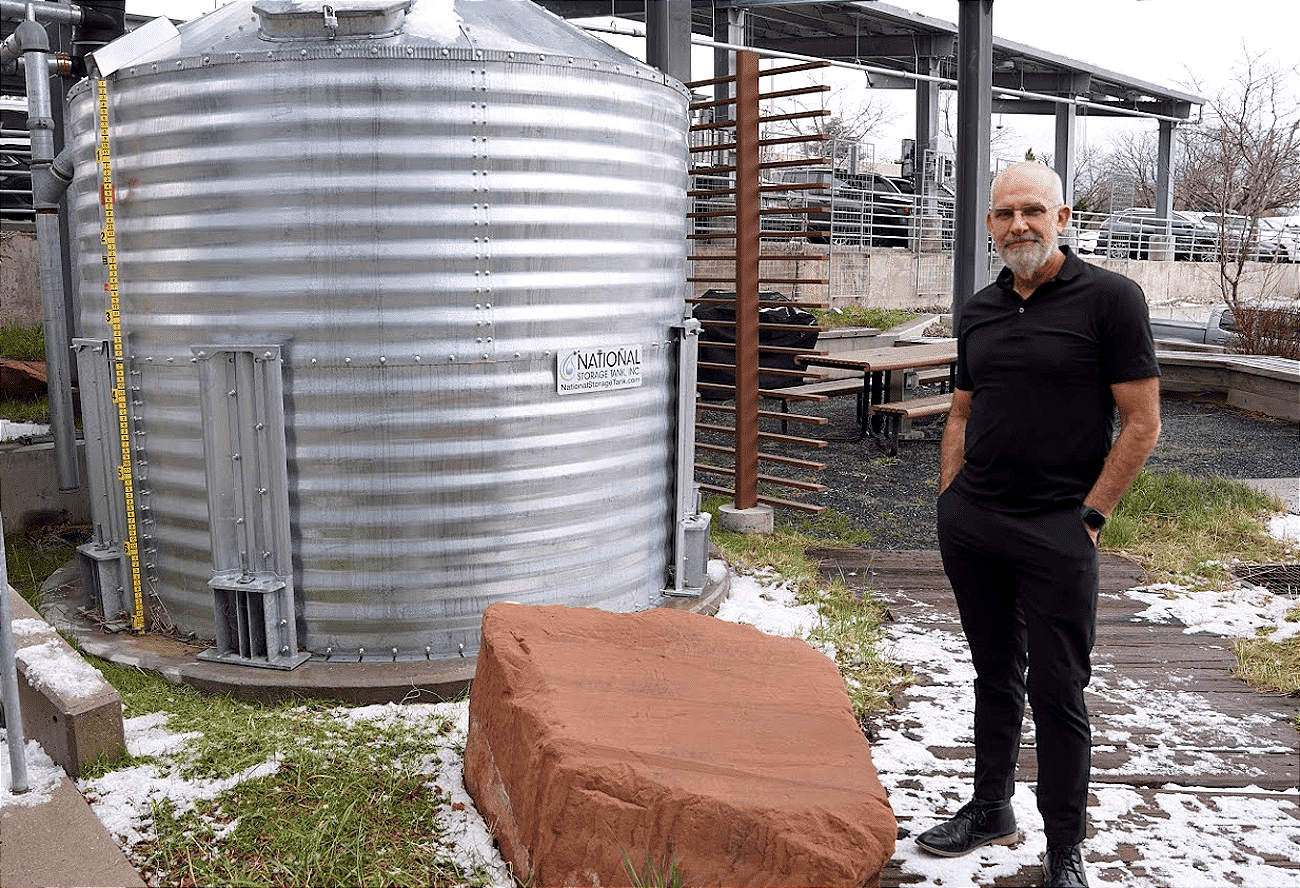
Brian Cassil, principal at Arch Nexus, stands beside the firm’s rainwater storage system, which captures runoff from the parking lot and surrounding roofs—technology designed to work with intelligent human oversight.
The result is a building that is neither low-tech nor high-tech, but intentionally human-in-the-loop.
The Case Against Fully Automated Buildings
Most commercial buildings are designed around a core assumption: people are a liability.
Building engineers often assume occupants can’t be trusted to interact with systems responsibly—that they’ll leave windows open, override controls, or “mess it up.” The solution has been automation layered on automation, until occupants are passive users of environments they neither understand nor control.
Cassil and his colleagues see it a different way.
“Technology doesn’t improve the environment by itself,” he shared with TechBuzz. “Humans do. Technology is just a tool they can use.”
At Arch Nexus, that philosophy shows up everywhere—not as flashy innovation, but as careful integration. Much of the technology in the building isn’t cutting-edge on its own. What’s unusual is how it’s deployed, and how explicitly it depends on human participation.
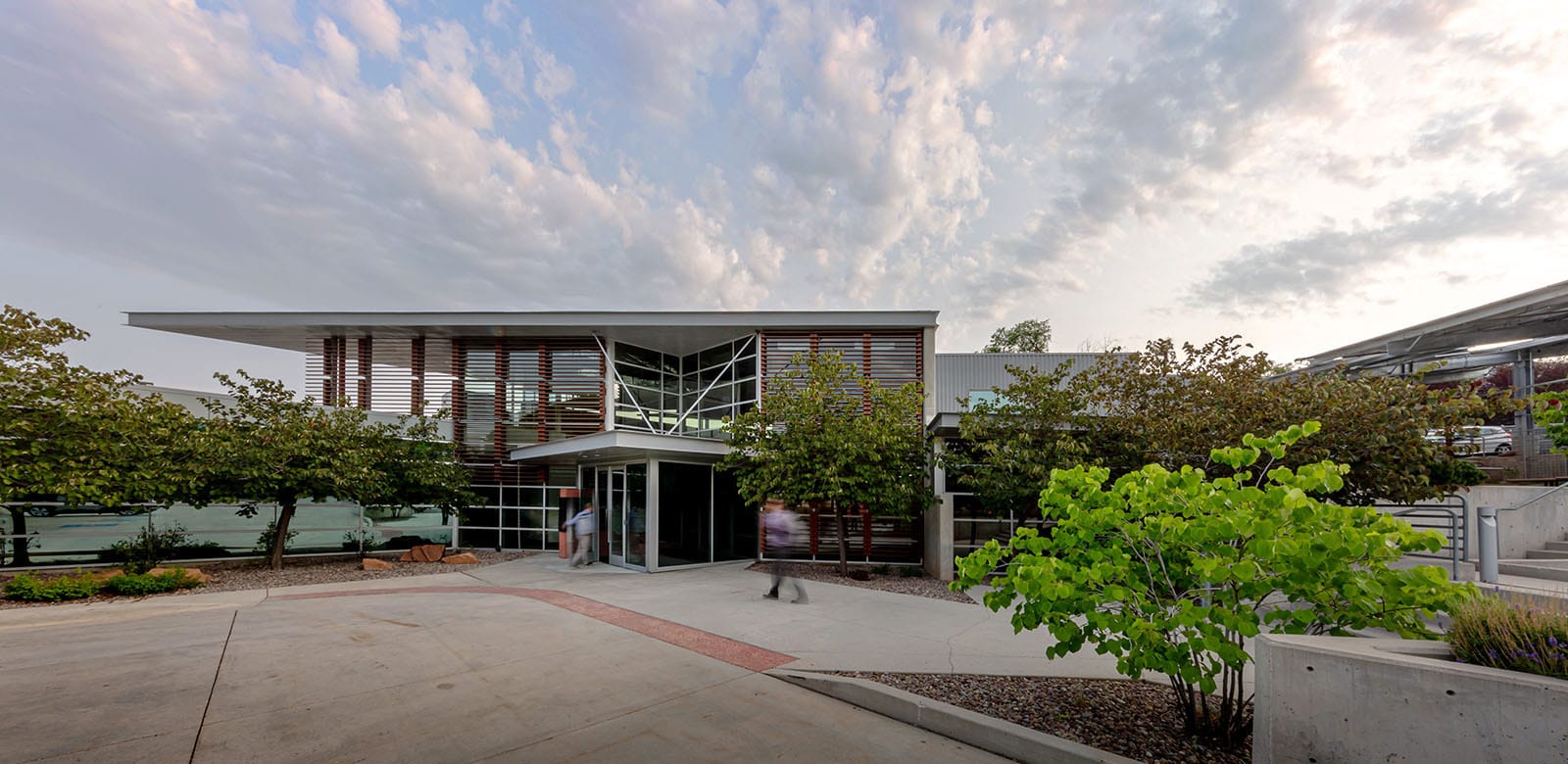
Arch Nexus’s Salt Lake City headquarters on Parleys Way, Salt Lake City, Utah
A Smarter Way to Open a Window
One of the clearest examples is the building’s approach to ventilation.
On mild days, the most energy-efficient move isn’t running air conditioning—it’s opening the building to outside air. Yet most commercial buildings don’t allow this. Operable windows are considered risky: someone might forget to close them, or open them at the wrong time.
Arch Nexus solved the problem with a system that’s almost comically simple.
A small, inexpensive weather station—about $150—monitors temperature, humidity, and air quality. When conditions are right, a small indicator light turns on and an email goes out to staff: it’s time to open the doors.
That’s it.
An employee turns off the HVAC system. Someone else opens the large exterior doors. The building breathes. When conditions change, the light goes off, another notification goes out, and the doors are closed.
No motors. No complex automation. No expensive maintenance contracts.
“If you tried to automate the doors,” Cassil says, “they’d be expensive, prone to breaking, and potentially unsafe. And you’d take away the opportunity for people to participate in the stewardship of the place.”
In other words: fewer dinosaurs.
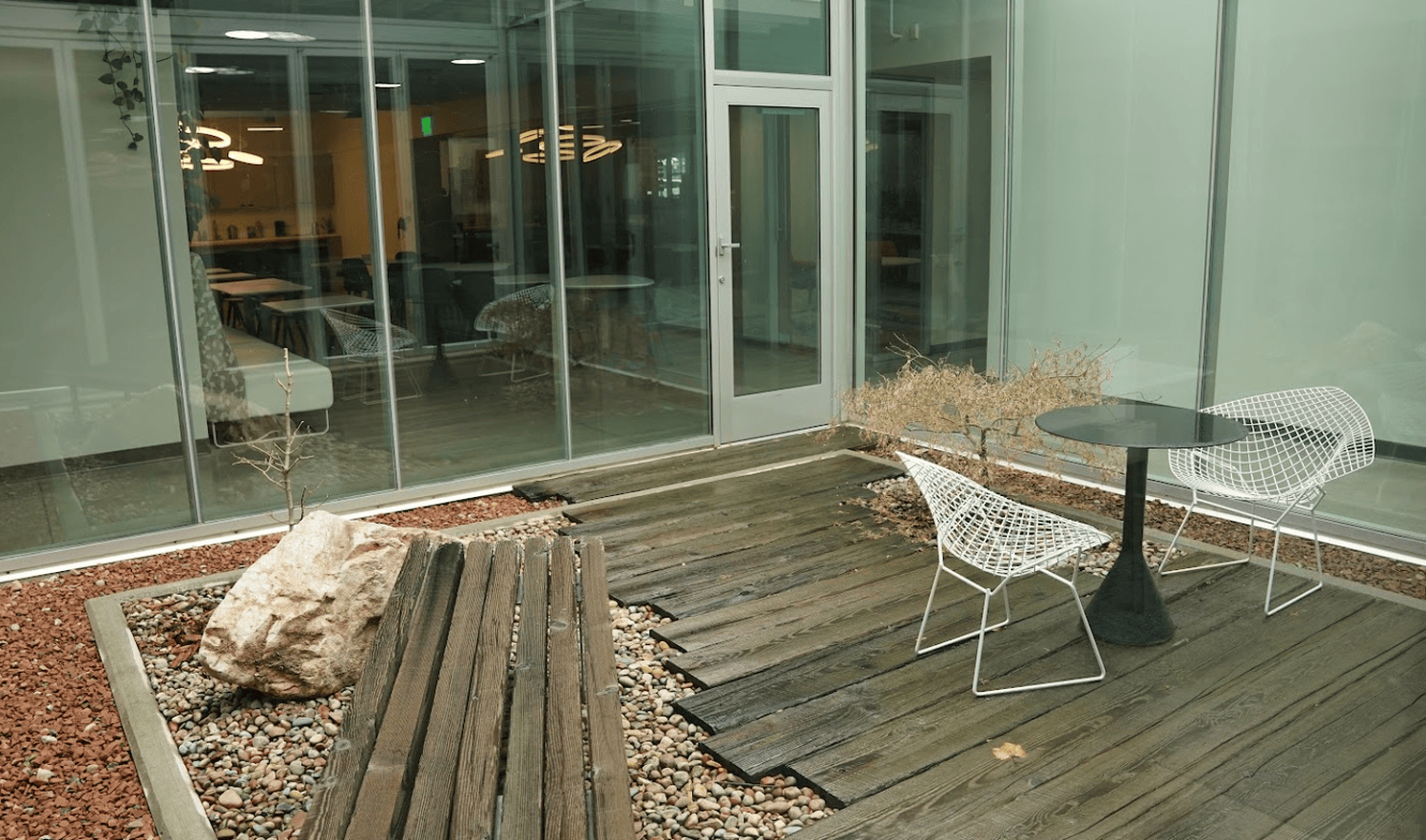
Large door panels at Arch Nexus open directly into sunlit mini-courtyards, transforming outdoor spaces into functional extensions of the office and encouraging employees to interact with the environment.
Technology as a Prompt, Not a Crutch
This pattern repeats throughout the building. Technology acts as a signal or guide, not a replacement for human judgment. The systems are designed to be legible—employees can see when something changes, understand why, and respond accordingly.
That design choice runs counter to prevailing trends in smart-building technology, which increasingly treat buildings as autonomous machines. Cassil sees that approach as brittle.
“When people stop paying attention, systems fail,” he says. “That’s the real risk of over-automation.”
At Arch Nexus, participation is a feature, not a flaw. Employees don’t just occupy the building—they operate it.
Beyond LEED: Designing for an Ideal, Not Just Less Harm
The building has achieved multiple LEED (Leadership in Energy and Environmental Design) certifications, but Cassil is quick to point out the limits of that framework.
“LEED is about reducing the impact you’re having on the ecosystem,” he says. “That’s important. But it’s not the same as being part of the ecosystem.”
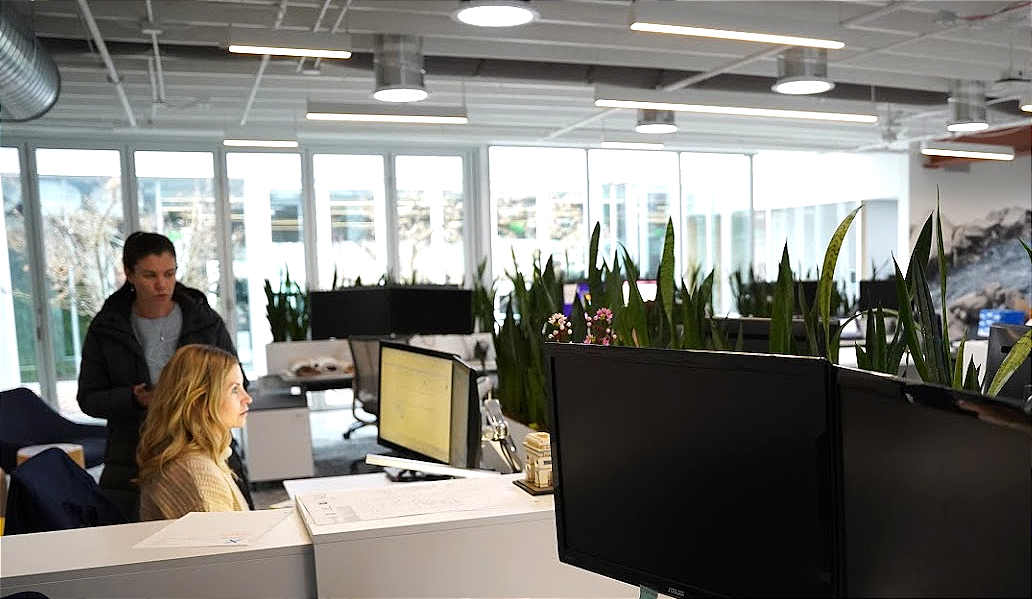
Arch Nexus employees collaborate in an open workspace where snake plants act as living partitions—providing visual separation while preserving daylight, airflow, and a sense of openness, part of the firm’s human-in-the-loop design philosophy.
Arch Nexus designed its headquarters around the Living Building Challenge, a more demanding standard that asks architects to imagine buildings as functioning components of their local environment rather than isolated industrial nodes.
That mindset shapes everything from daylighting to water use to material selection—but always with the same constraint: systems must work with people, not in spite of them.
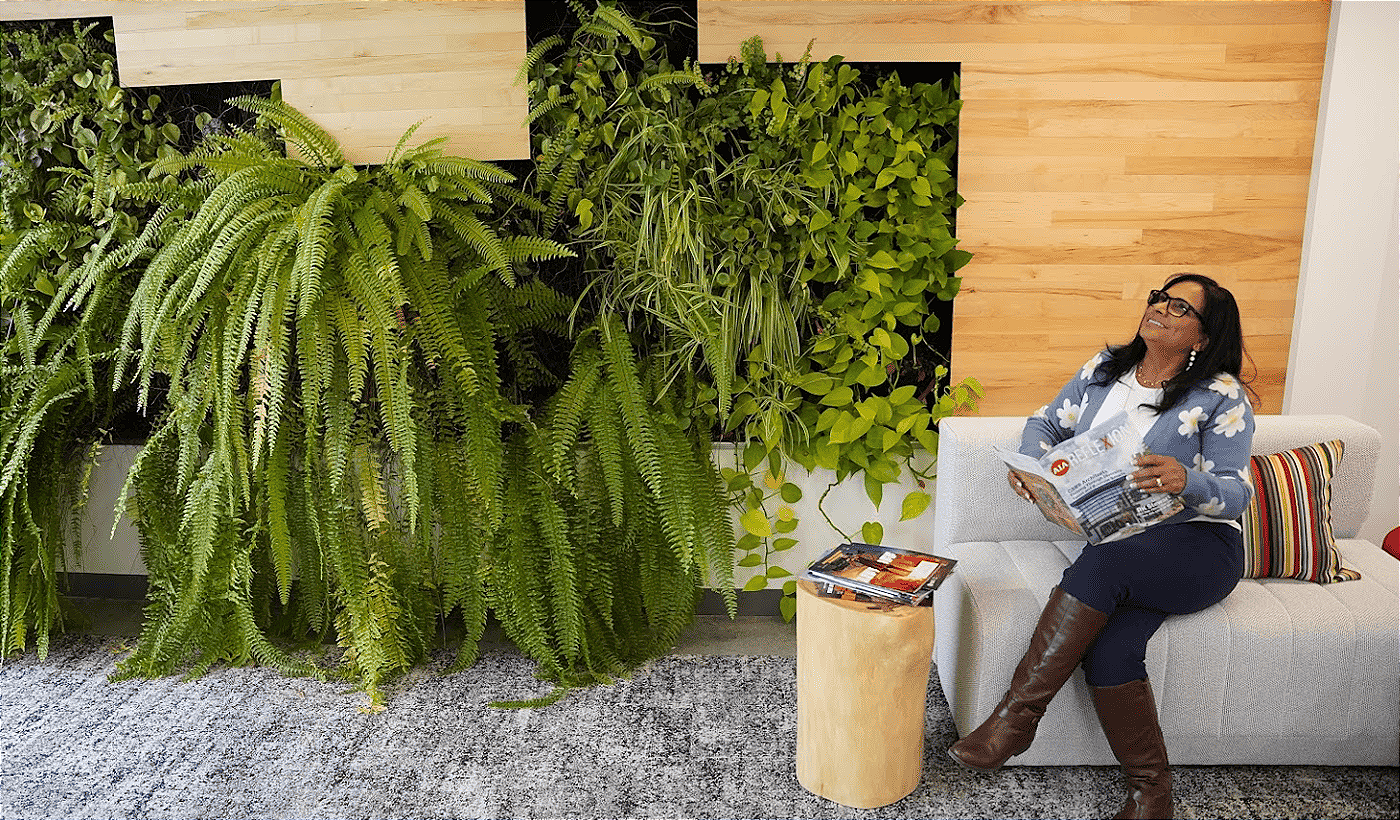
The building’s gray water system feeds a series of living walls, including several prominently displayed in open workspaces. Cassil describes it as part of the firm’s “living laboratory” approach: the plants aren’t just decorative—they filter daylight, create soft partitions, and respond to natural cycles, while the gray water system demonstrates sustainable reuse in a visible, human-scaled way. It’s another example of how Arch Nexus designs systems that require attention and stewardship rather than automation alone.
Alta Calcagno, architect at Arch Nexus, sits beside a living wall of plants nourished by the building’s integrated gray water system, part of a “living laboratory” linking water reuse, daylight, and human-centered design.
When Policy, Not Technology, Is the Bottleneck
In theory, the building could operate almost entirely on rainwater collected onsite. Structurally, it’s designed to do so. In practice, legal restrictions cap storage at 2,500 gallons and prohibit converting collected rainwater into potable water.
As a result, Arch Nexus uses municipal water for drinking, recycles sink and shower water through a graywater system for toilet flushing, and uses rainwater exclusively for irrigation. The only water sent to the sewer is toilet waste.
The system works—but Cassil is clear that the primary constraints aren’t technical.
“The building can do more than the law allows,” he says.
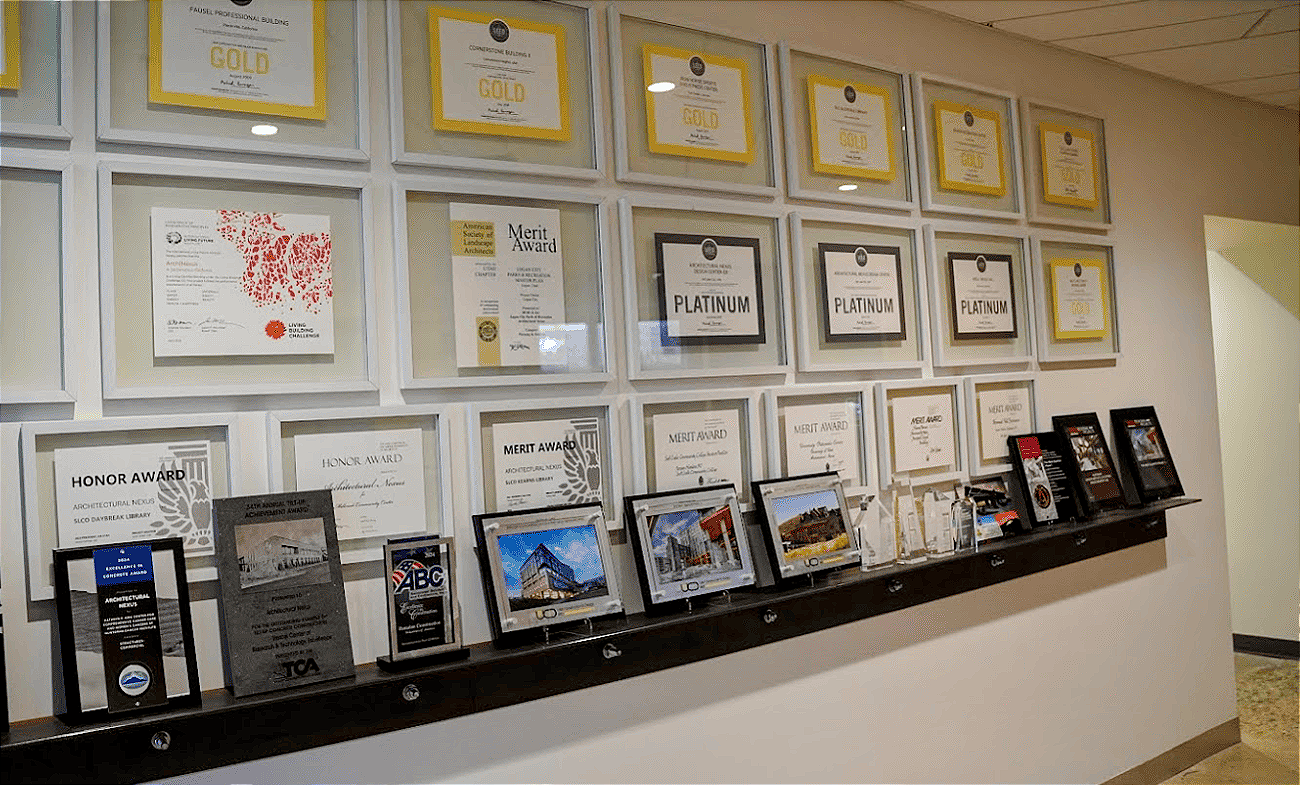
The company's award wall, reflecting the firm’s achievements in sustainable design, biophilic architecture, and innovative human-centered building practices.
The Invisible Layer: Human Health
Perhaps the building’s most consequential feature is also the least visible.
Every material used in the structure—paints, adhesives, sealants, fabrics, assemblies—was vetted to ensure it’s free of so-called Red List materials—a catalog of chemicals and substances known to be carcinogenic, toxic, or harmful to the environment, maintained by the International Living Future Institute. Every adhesive, paint, sealant, fabric, and assembly was vetted to avoid off-gassing or other health hazards, creating one of the healthiest indoor environments the team has ever experienced. By prioritizing material transparency and occupant safety, the building demonstrates that human health can be a central design goal, not an afterthought.
Coupled with frequent natural ventilation, the result is an indoor environment designed to minimize exposure to toxins most occupants never think about—but live with daily.
“This is the part people don’t see,” Cassil says. “But it may be the most important.”
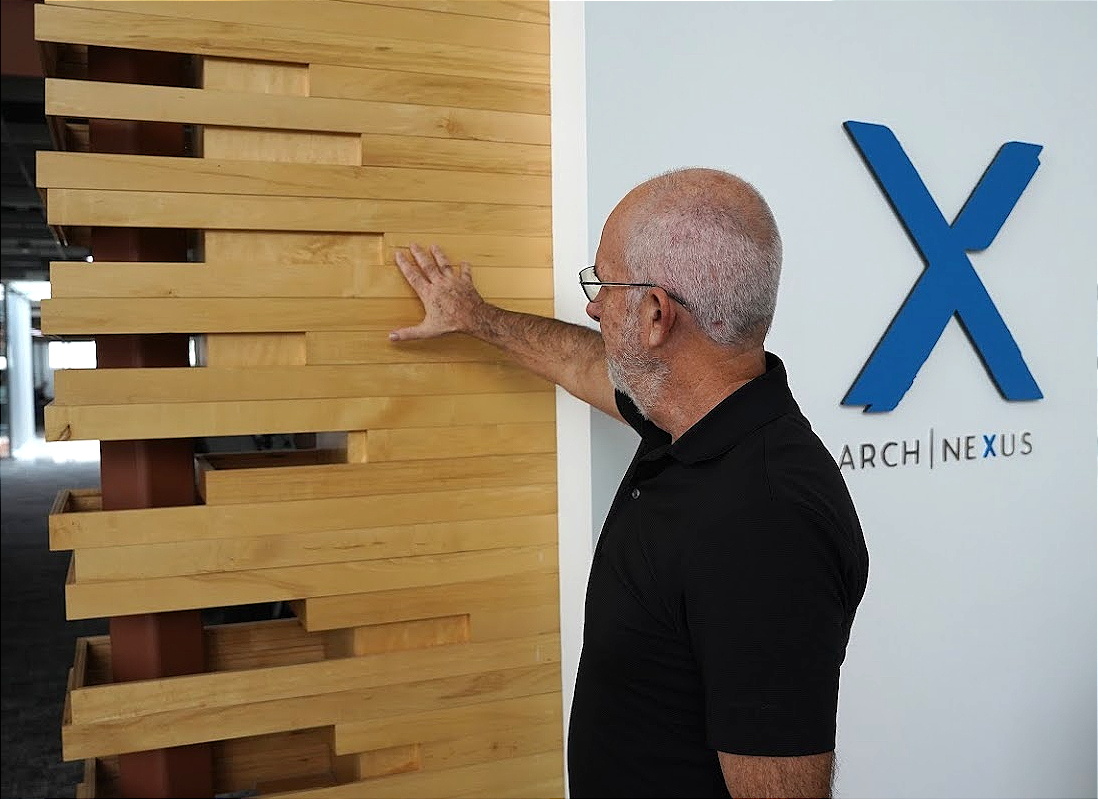
The reception area features design touches made from the original building’s gym floor, including decorative wood accents, highlighting Arch Nexus’s commitment to reuse and material storytelling.
Brian Cassil points out sections of the reception area where old floor boards from the gym of the previous building have been repurposed as decorative wood accents, blending sustainability with design continuity.
A Different Vision of “Smart”
Instead of buildings that quietly make decisions for their occupants, Arch Nexus’s Salt Lake City headquarters offers a model where people are expected to notice, respond, and participate—not abdicate. The building's systems don’t disappear into the background—they invite engagement.
It’s a reminder that the future of intelligent environments may not hinge on more automation, but on better judgment about when not to automate.
Arch Nexus is an architecture firm with offices in Salt Lake City (Parley's Way) and Sacramento specializing in sustainable, biophilic design that integrates technology to empower human stewardship of the built environment. The firm pursues high-performance, healthy, and ecosystem-conscious buildings, including projects certified under LEED and the Living Building Challenge, blending innovation with practicality and playfulness.
Clients include: University Healthcare, Salt Lake County, Myriad Genetics, Sysco Foods, Hill Air Force Base, US Army Corps of Engineers, Woodbury Corporation, and the Huntsman Cancer Institute.