UVU to Host Groundbreaking AI and Papyrology Conference Unlocking Ancient Herculaneum Scrolls
The Herculaneum Papyri and AI Conference at Utah Valley University explores groundbreaking interdisciplinary research using artificial intelligence to virtually unroll and decipher ancient Herculaneum scrolls, fostering collaboration across papyrology, classics, computer science, and archaeology.
The rare and fragile Herculaneum scrolls are carefully preserved and studied at the Nazionale di Napoli Library in Naples, Italy, offering a glimpse into the lost texts of the ancient world (Credit: UVU)
The rare and fragile Herculaneum scrolls are carefully preserved and studied at the Nazionale di Napoli Library in Naples, Italy, offering a glimpse into the lost texts of the ancient world (Credit: UVU)
Orem, Utah — March 13, 2026
A UVU conference in April 2026 will bring global researchers together to explore the Herculaneum papyri
For nearly 2,000 years, the writings lay sealed inside carbonized scrolls — ancient texts reduced to what looked like lumps of charcoal.
Now, artificial intelligence is beginning to read them.
From April 7–10, 2026, scholars from around the world will gather at Utah Valley University for “The Buried Library: Herculaneum Papyri and AI Conference.” The free event will take place in rooms CB 511 and CB 101 of the Clarke Building on the north side of campus, near the Fulton Library. It will explore one of the most remarkable intersections of archaeology, classical scholarship and modern computing: the effort to digitally recover texts buried when Mount Vesuvius erupted in A.D. 79.
The conference is organized by UVU philosophy professor Michael Shaw with assistance from Shannon Mussett and will feature researchers from Europe and the United States working at the forefront of papyrology, artificial intelligence and archaeology.
Professor Mussett likens the discovery of the Herculaneum scrolls to “uncovering the Library of Alexandria.” She emphasizes that these charred, ancient texts—never read since the Vesuvius eruption—offer a completely unique and unprecedented opportunity for scholars. For the first time in centuries, researchers can examine writings thought lost to history, unlocking insights into the classical world, philosophy, and early literature.
Dr. Shannon Mussett, Professor of Philosophy, UVU
“We suddenly have texts that humanity lost, and we’re only just beginning to see what’s there,” noted Mussett.
A Lost Library Beneath Volcanic Mud
The story begins in the 18th century.
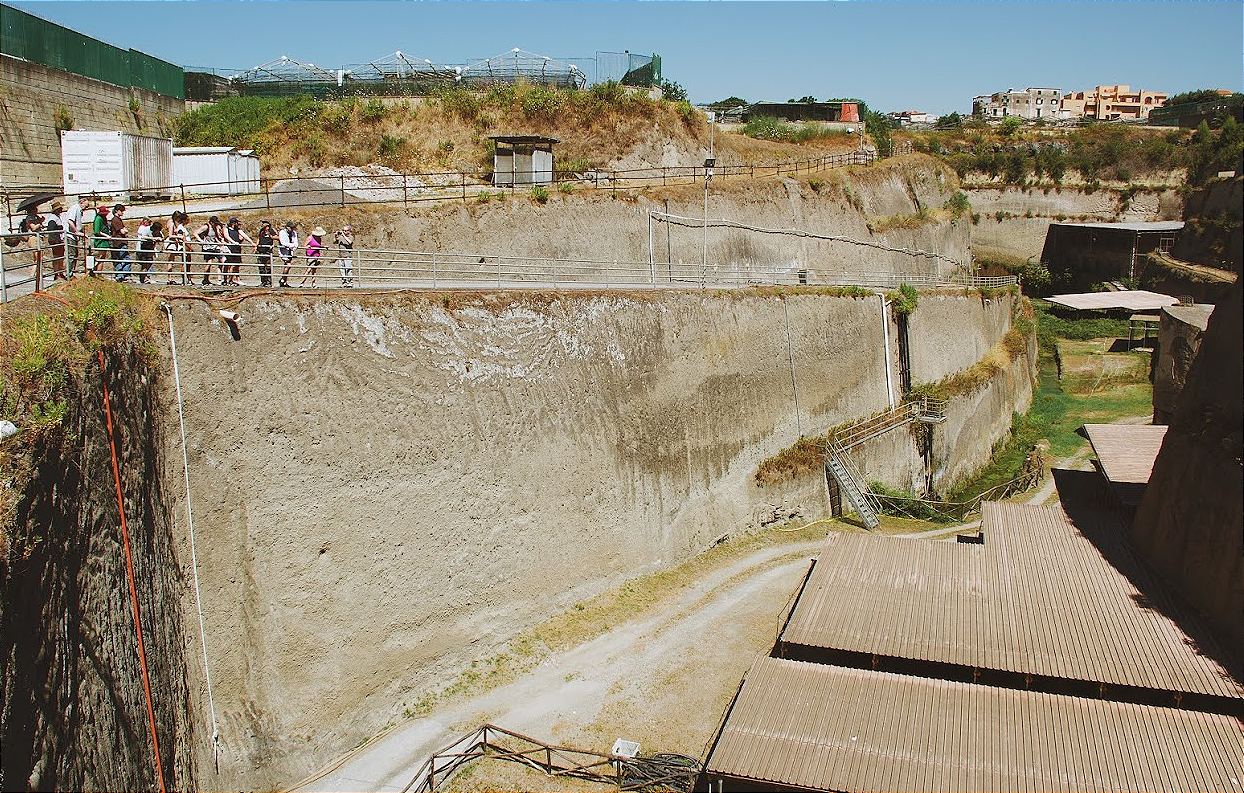
Around the 1750s, workers digging a well near the Italian town of Herculaneum struck the buried remains of an ancient theater. The city had been destroyed during the same eruption of Mount Vesuvius that famously buried Pompeii.
Unlike Pompeii, which was covered mainly by ash, Herculaneum was sealed beneath thick volcanic mud and pyroclastic flows. The hardened material created an oxygen-poor environment that preserved organic material for centuries.
Eventually excavators uncovered a sprawling seaside estate now known as the Villa of the Papyri.
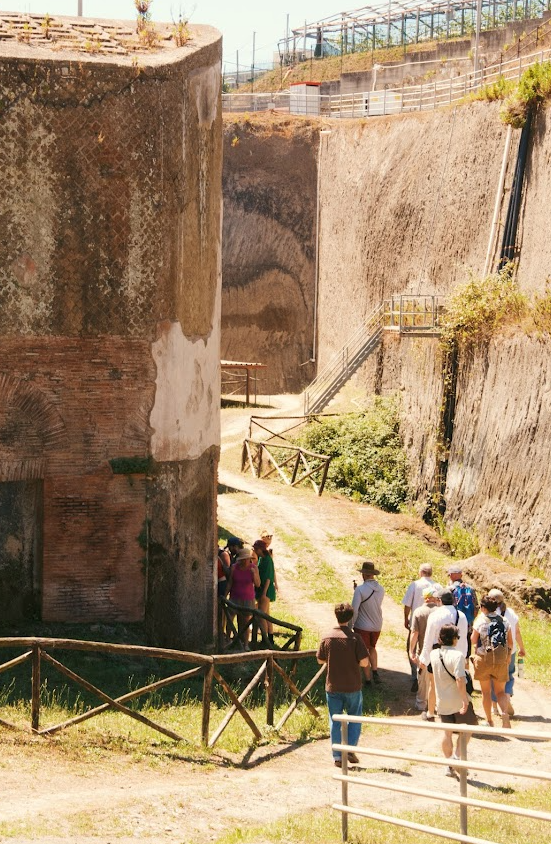
UVU students and faculty at the Villa of the Papyri (Credit: UVU)
Inside it was something extraordinary: hundreds of papyrus scrolls — the remains of a private philosophical library.
Scholars believe the villa may have belonged to relatives of Julius Caesar. The library itself appears to have centered on the Epicurean philosopher Philodemus, who may have lived and taught there.
Some historians even speculate that the Roman poet Virgil studied at the villa.
What makes the discovery extraordinary is that the library may contain works long thought lost, including writings by the philosopher Epicurus.
“Almost everything written by Epicurus has been lost,” Shaw said. “We know he wrote dozens of books, but the texts themselves vanished.”
Charred Scrolls Once Thought Unreadable
The scrolls survived the eruption, but barely.
Extreme heat carbonized them, turning fragile papyrus into brittle black cylinders resembling charcoal. Early excavators sometimes mistook them for fuel and threw them into fires before realizing their significance.
Using AI to digitally unwrap and read the charred scrolls (Credit: UVU)
Attempts to physically unroll the scrolls often destroyed them. Even careful efforts caused layers of papyrus to crumble.
For centuries, historians believed the remaining scrolls could never be read.
The problem was simple but seemingly impossible: the ink used by ancient scribes was also carbon-based. Once burned, the ink and the papyrus became nearly indistinguishable.
“There was no technology that could tell the difference between the writing and the paper,” Shaw said.
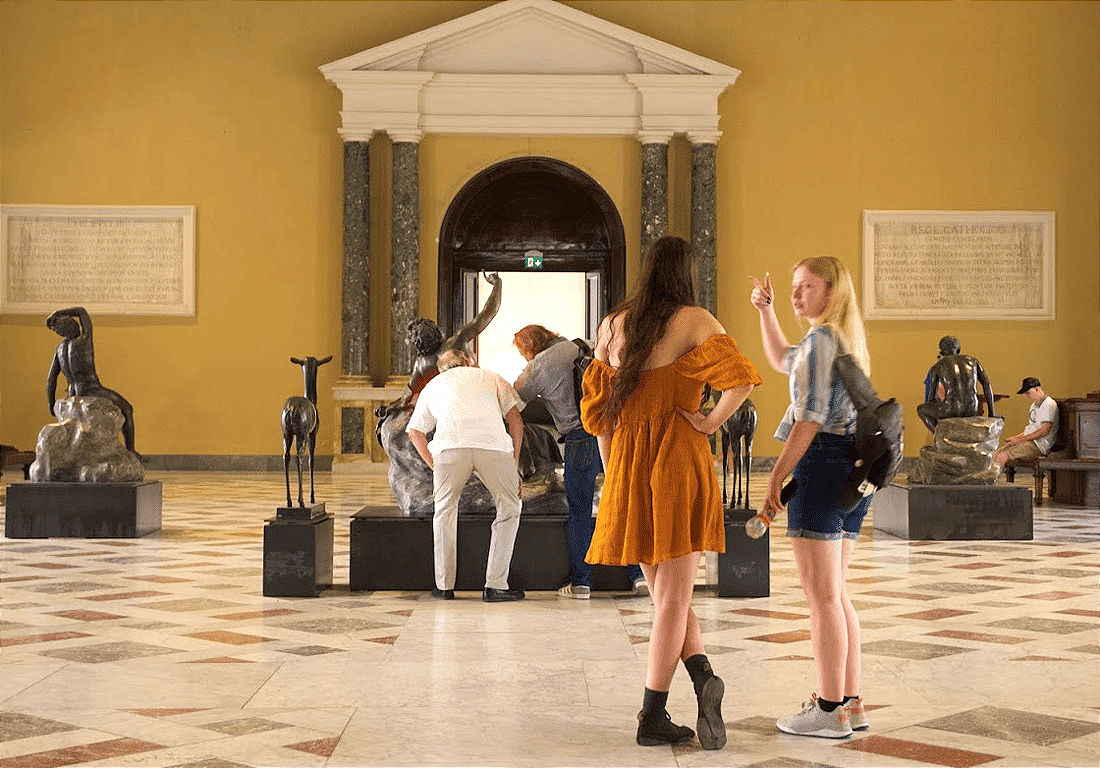
UVU Students and Italian Scholars at the Museo Archeologico Nazionale di Napoli (Credit: UVU)
AI Finds the Ink
That changed in recent years thanks to advances in digital imaging and artificial intelligence.
Researchers use high-resolution scans to capture detailed internal images of the tightly rolled scrolls. Computer models then reconstruct the layers digitally, effectively “unrolling” the scroll inside a computer.
Machine-learning systems perform what researchers call ink detection, identifying subtle differences between carbonized ink and papyrus that human eyes cannot see.
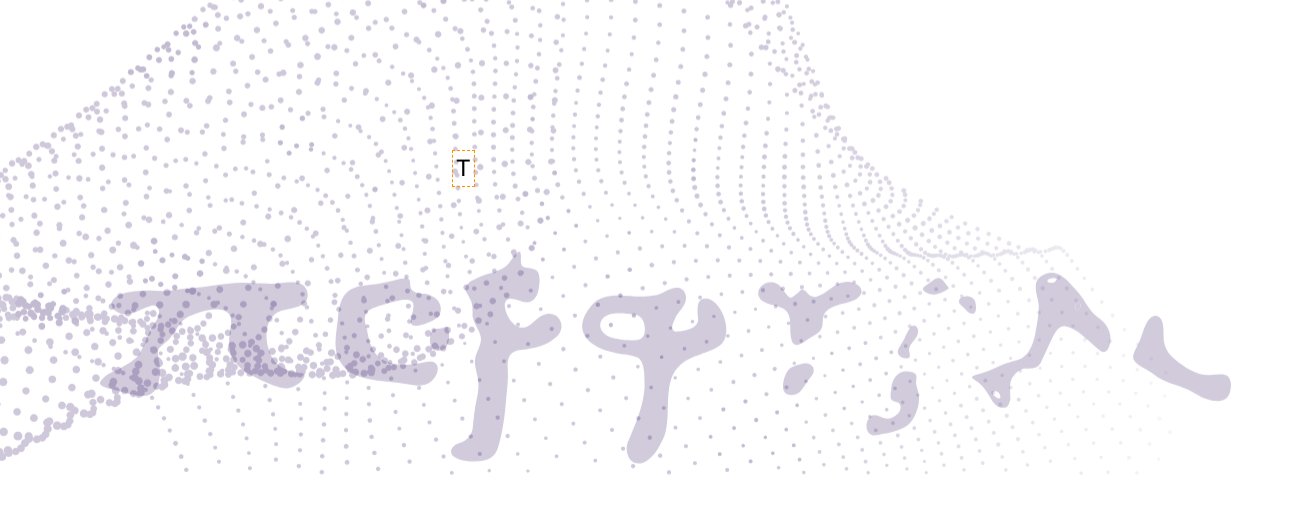
The breakthrough drew worldwide attention in 2023 when researchers identified the first readable word inside an unopened scroll: porphyras, the Greek word for “purple.”
Greek word for purple
The discovery was part of the Vesuvius Challenge, a global competition encouraging researchers to develop AI tools capable of deciphering the scrolls.
The competition attracted computer scientists and engineers from around the world, many of whom had little background in classical studies.
“It’s the technology sector that’s making these breakthroughs possible,” Shaw said. “Once people in AI hear about the project, they become fascinated by it.”
A Rare Gathering of Experts
The UVU conference will bring together scholars working across multiple disciplines.
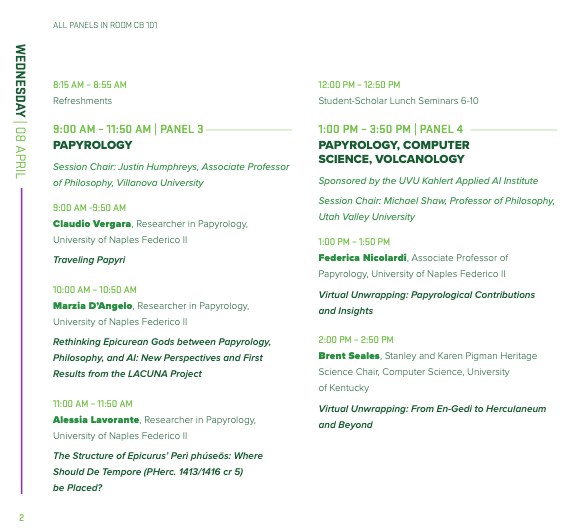
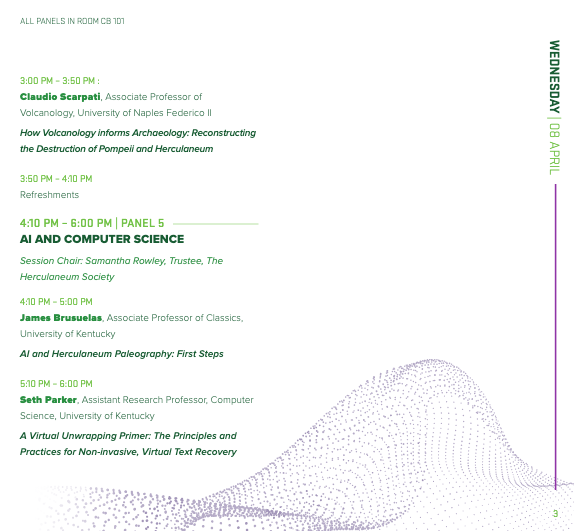
Papyrologists will discuss methods used to reconstruct ancient Greek handwriting. Computer scientists will present the algorithms behind digital unwrapping and ink detection. Archaeologists and volcanologists will explain how the eruption preserved the ancient library.
UVU Faculty and Students and Fabrizio Diozzi, Former Director of the Officina dei Papiri Ercolanesi Marcello Gigante – Biblioteca Nazionale di Napoli (Credit: UVU)
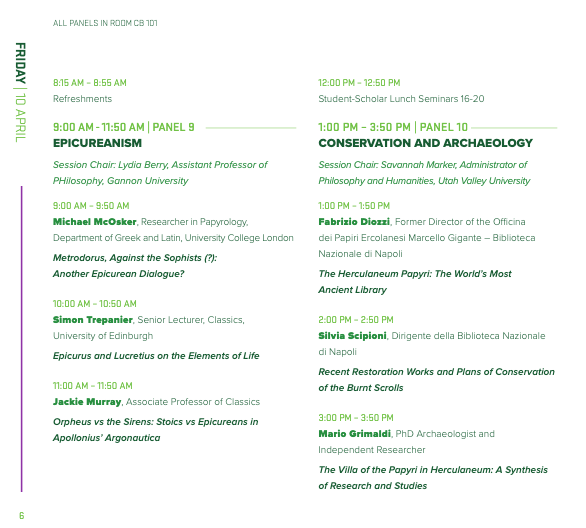
Speakers include researchers from institutions such as University of Naples Federico II, University of Kentucky, University College London and University of Edinburgh.
The conference will feature multiple thematic panels on artificial intelligence, papyrology, Epicurean philosophy, archaeology and conservation.
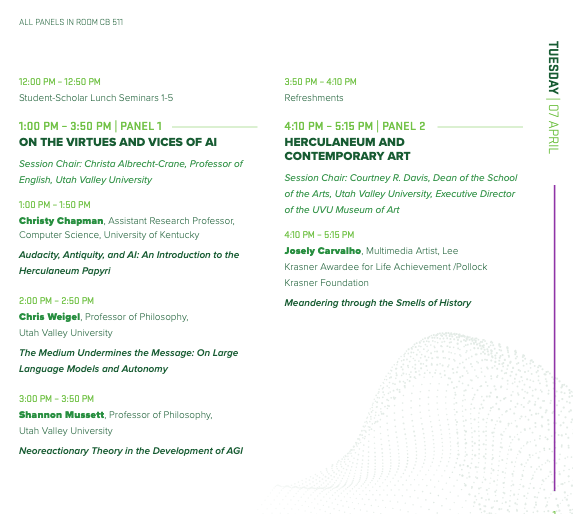
Philosophy professor Shannon Mussett present research on some of the theories behind the development of artificial intelligence.
“It’s rare for these scholars to spend several days together discussing their work,” Shaw said. “That kind of interaction can lead to real breakthroughs.”
Ancient Scrolls on Display
One of the most unusual features of the event will be the presence of actual Herculaneum papyri.
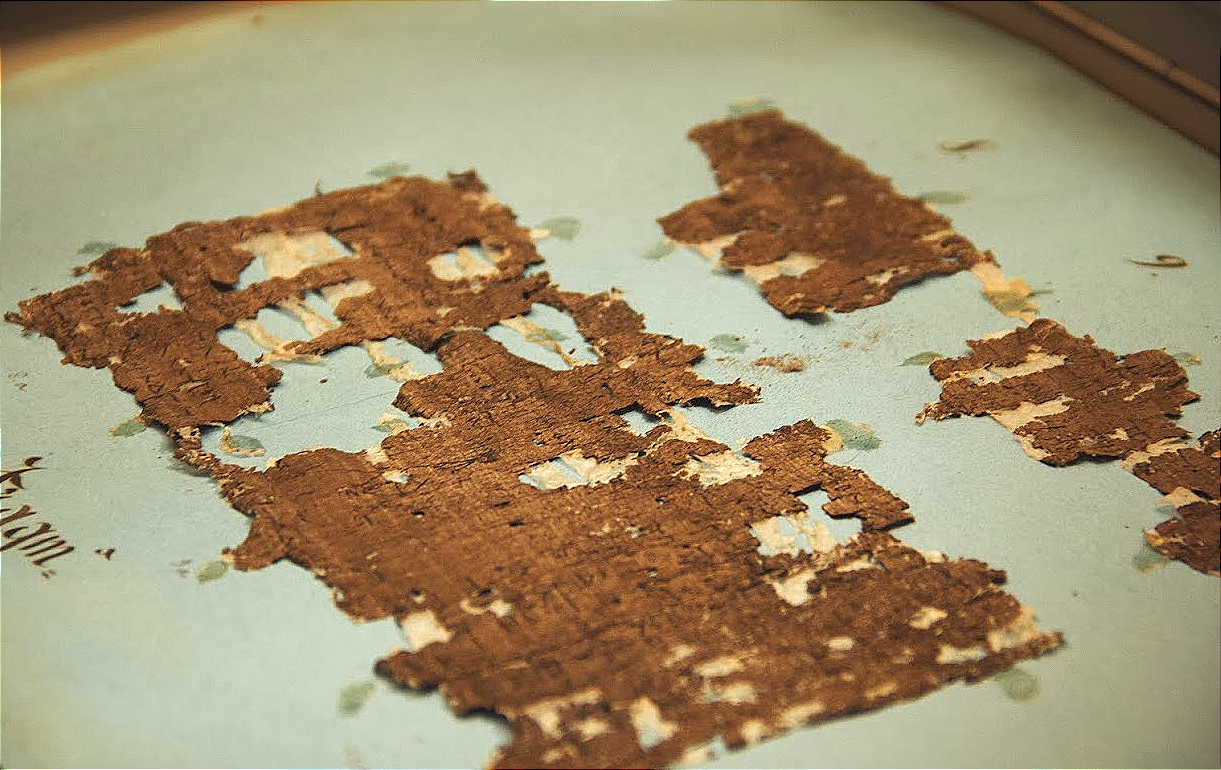
Several scrolls will be transported to Utah and displayed in a specialized museum-grade case designed to regulate humidity and protect the fragile artifacts from light exposure.
Fragments of the papyri (Credit: UVU)
Because of their fragility, access will be limited. Visitors must register for at least one conference panel to receive a ticket to view the scroll exhibit.
“We simply can’t accommodate thousands of people,” Shaw said. “But we want visitors to engage with the research and understand the scholarship behind it.”
A Campus-Wide Effort
Bringing the international conference to Utah required support from across the university.
The event also includes collaboration with Brigham Young University, where Classical Studies Professor Roger T. McFarland and other scholars have long been involved in research related to imaging and analyzing ancient papyri.
UVU students and faculty at the Villa of the Papyri (Credit: UVU)
Organizing the conference took nearly two years of planning.
“It really required a perfect storm of support,” Shaw said. “We had interest from people working in AI, from classical studies, from archaeology, and administrators who recognized the significance of the project.”
Rediscovering Ancient Voices
The Herculaneum papyri represent a rare window into the intellectual world of antiquity.
Most ancient philosophical works survive only as fragments or references quoted by later authors. Entire libraries vanished over centuries of war, decay and neglect.
The scrolls buried at Herculaneum may restore texts that scholars believed were lost forever.
“This is a library that is completely unique,” Mussett said. “We don’t have anything else like it.”
For her, the project represents more than a technological breakthrough.
It shows how collaboration across disciplines can achieve something remarkable.
“It gives me hope,” Mussett said. “You have people from very different fields coming together for something that benefits humanity as a whole.”
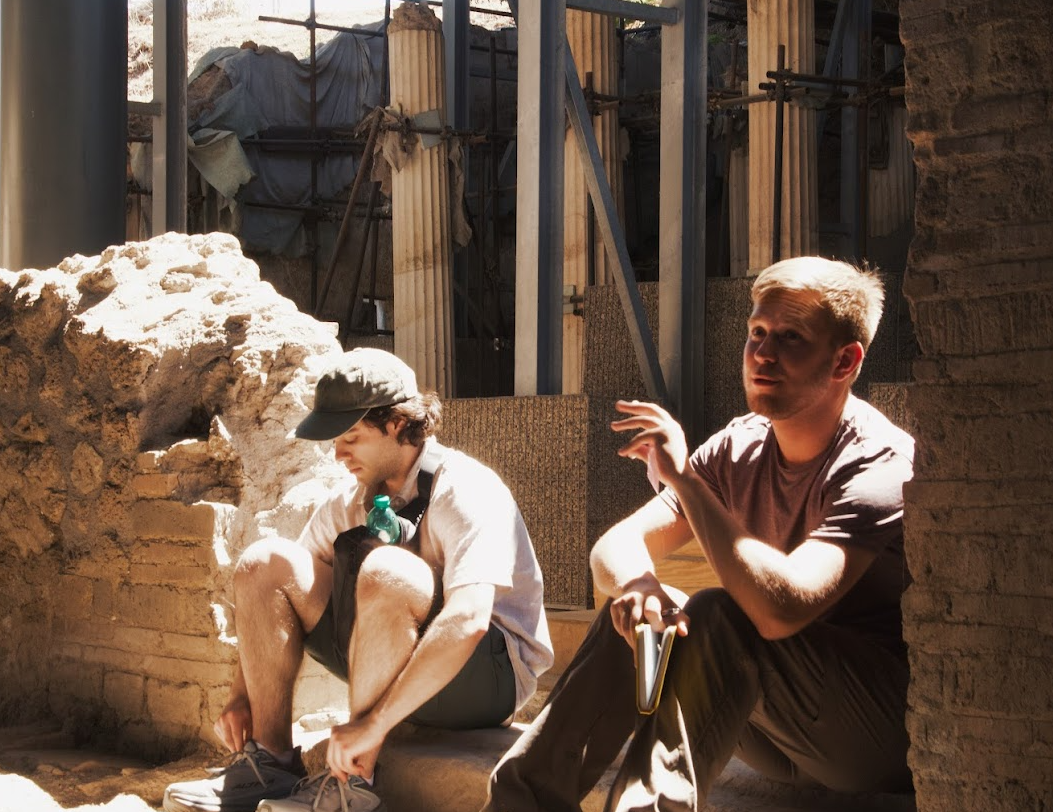
UVU Students at Herculaneum Site (Credit: UVU)
Technology as a Tool for Discovery
For Shaw, the project offers an unexpected perspective on modern technology.
As a philosopher who studies the history of human conflict, he often sees technological innovation linked to warfare and competition.
The Herculaneum project, he said, tells a different story.
“This is technology bringing people together,” Shaw stated. “It encourages collaboration and gives humanity something beautiful: the recovery of knowledge we thought was lost forever.”
And as scholars gather in Utah in April, some discoveries may be revealed to the public for the first time.
“We’ve been told there may be announcements at the conference,” Shaw hinted. “So someone in that room might present something that no one else in the world has seen before.”
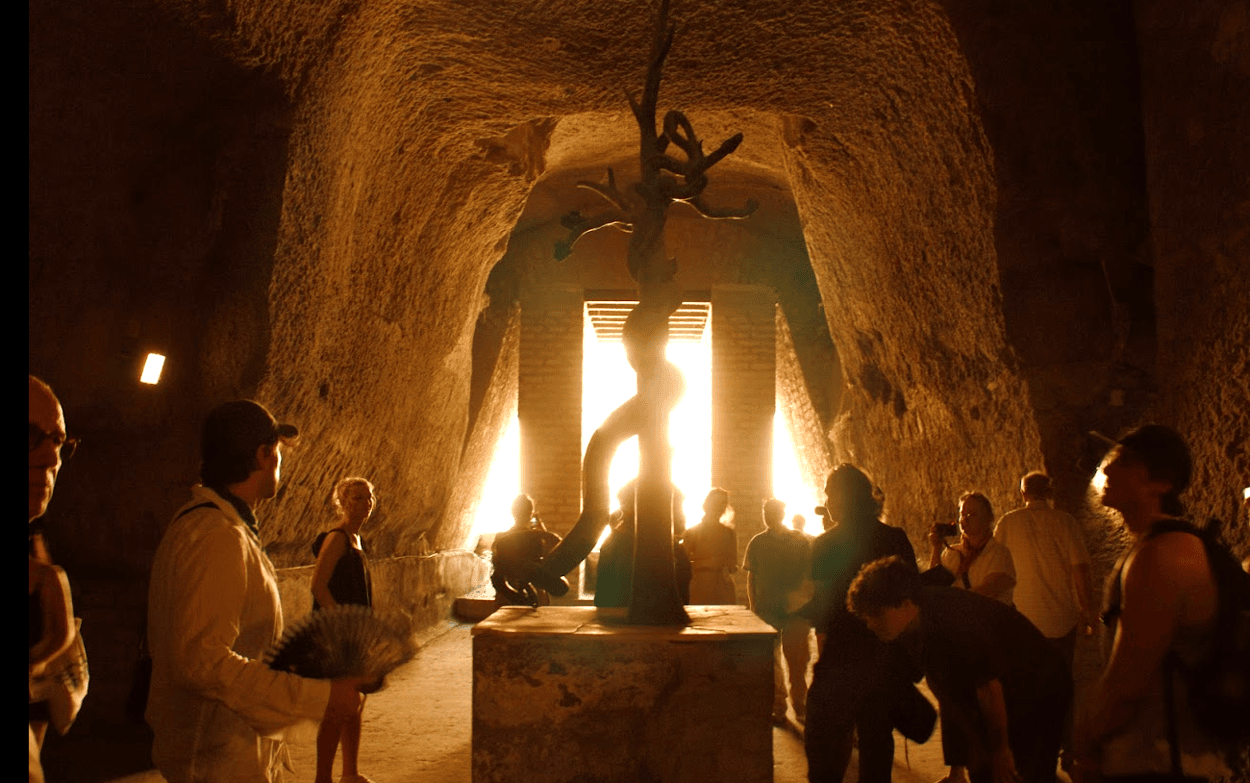
The Palaestra Cavern, a reproduction of the bronze fountain depicting the Hydra, Herculaneum (Credit: UVU)
Somewhere inside those fragile scrolls, there may still be words no one has read for nearly two thousand years.
The conference is made possible through generous support from its sponsors and is free and open to the public. It will take place in UVU's Clarke Building (room CB 511 and the large auditorium, CB 101).
For a detailed schedule of panels, speakers, and events, view the full conference program below:
Share this article
The link has been copied!
Your link has expired. Please request a new one.
Your link has expired. Please request a new one.
Your link has expired. Please request a new one.
Great! You've successfully signed up.
Great! You've successfully signed up.
Welcome back! You've successfully signed in.
Success! You now have access to additional content.