You Don’t Rise to the Level of Your Goals — You Fall to the Level of Your Readiness
Rob Shipp shares a tense USS Nimitz replenishment-at-sea where the tanker drifted, prompting a perfect emergency breakaway by the crew. From his Navy background, he and the team at ThetaCore (Lehi, UT) champion the concept of "readiness"—the true driver of team performance under pressure.
On the bridge of USS Nimitz, 1,000 feet of steel was drifting out of alignment.
Rob Shipp had the helm.
It was only his second time ever driving an aircraft carrier.
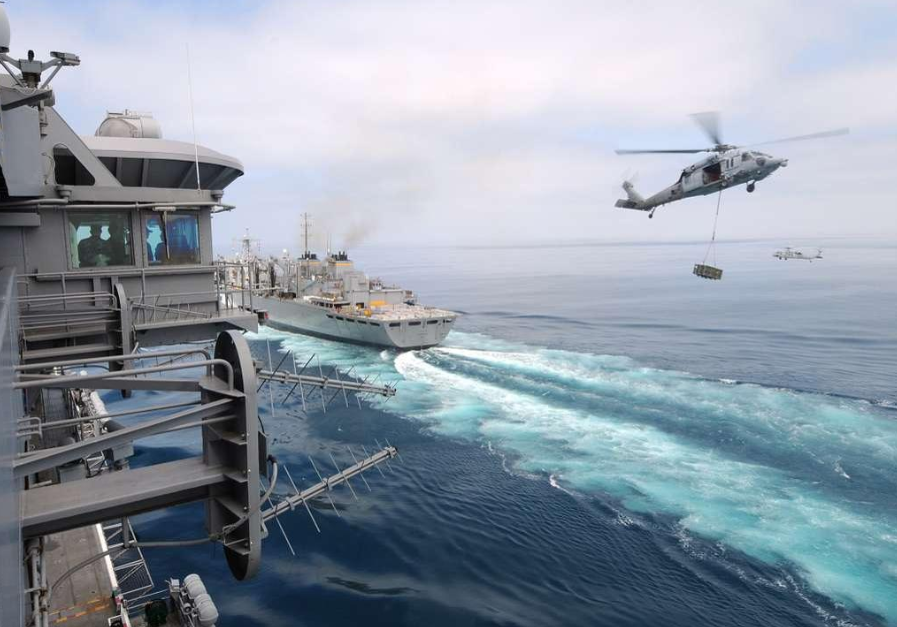
Nimitz and a replenishment tanker were operating in parallel, just 200 feet apart, transferring fuel, food, cargo, and packages from home. Helicopters ferried pallets overhead. Steel cables, under heavy tension, stretched between the ships. Millions of gallons of jet fuel sat onboard the tanker.
Replenishment at sea is routine for a carrier strike group. It is also unforgiving.
USS Nimitz (CVN 68) pulls alongside fast combat support ship USNS Rainier (T-AOE 7) during a replenishment at sea, May 7, 2012, in the Pacific Ocean. (Credit: US Navy)
As the two ships draw close, water accelerates between their hulls. The Venturi effect creates suction, pulling the vessels toward each other. Even small deviations in course can compound quickly. A carrier pivots roughly a third of the way back from the bow; if the front drifts off line, two-thirds of the ship swings toward the tanker.
On a ship that long, geometry becomes risk.
Course corrections are made in half-degree increments.
Overcorrect, and instability multiplies. Under-correct, and drift compounds.
Midway through the evolution, Shipp noticed something wrong. The “phone and distance” line, a rope stretched between the ships with markers every 20 feet, was paying out. Sailors on the flight deck were letting it run through their hands.
The distance was increasing.
From the bridge, it looked like the carrier was losing position.
The assumption was obvious: he was making a mistake.
Behind him stood a captain and a navigator, both more experienced. The tanker crew were seasoned civilian mariners who drove ships for a living. If something was wrong, it had to be the new guy at the helm.
Shipp began issuing increasingly aggressive course corrections.
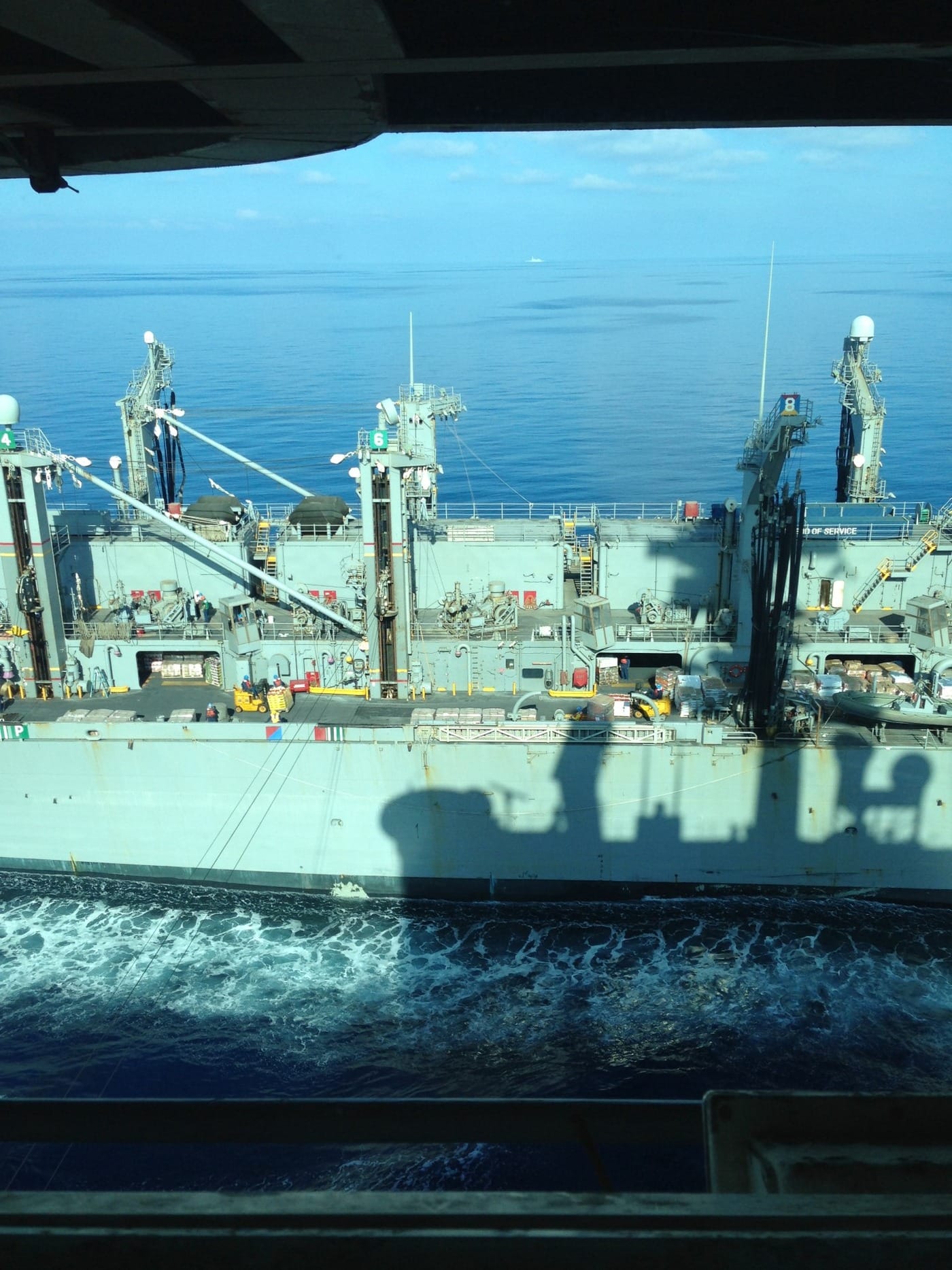
A naval tanker steaming alongside USS Nimitz during a replenishment at sea operation. (Credit: Rob Shipp)
Half-degree adjustments became five degrees. Then ten.
The sailors holding the line were nearly at the end of the 350-foot rope. One reached the edge of the flight deck and looked up toward the bridge, nearing the end of the rope.
Then the line went slack.
The tension reversed. Sailors began hauling it back in.
The tanker, not the carrier, had drifted.
In the seconds that followed, the rest of the ship executed emergency breakaway procedures without waiting for instruction. Fuel lines were disconnected. Cargo cables were safely released. Helicopter transfers halted.
If one of those tensioned cables had snapped under load, the recoil could have been lethal. If a fuel hose had ruptured, jet fuel could have sprayed across steel decks. A collision between the vessels could have caused catastrophic damage.
None of that happened.
No cables parted. No fuel spilled. No collision occurred.
Shipp later asked his navigator how many times he had experienced a breakaway like that.
“None.”
The captain?
“None.”
In all their experience, it had never happened.
Yet when it did, the crew performed with precision.
“That’s what readiness looks like,” says Shipp.
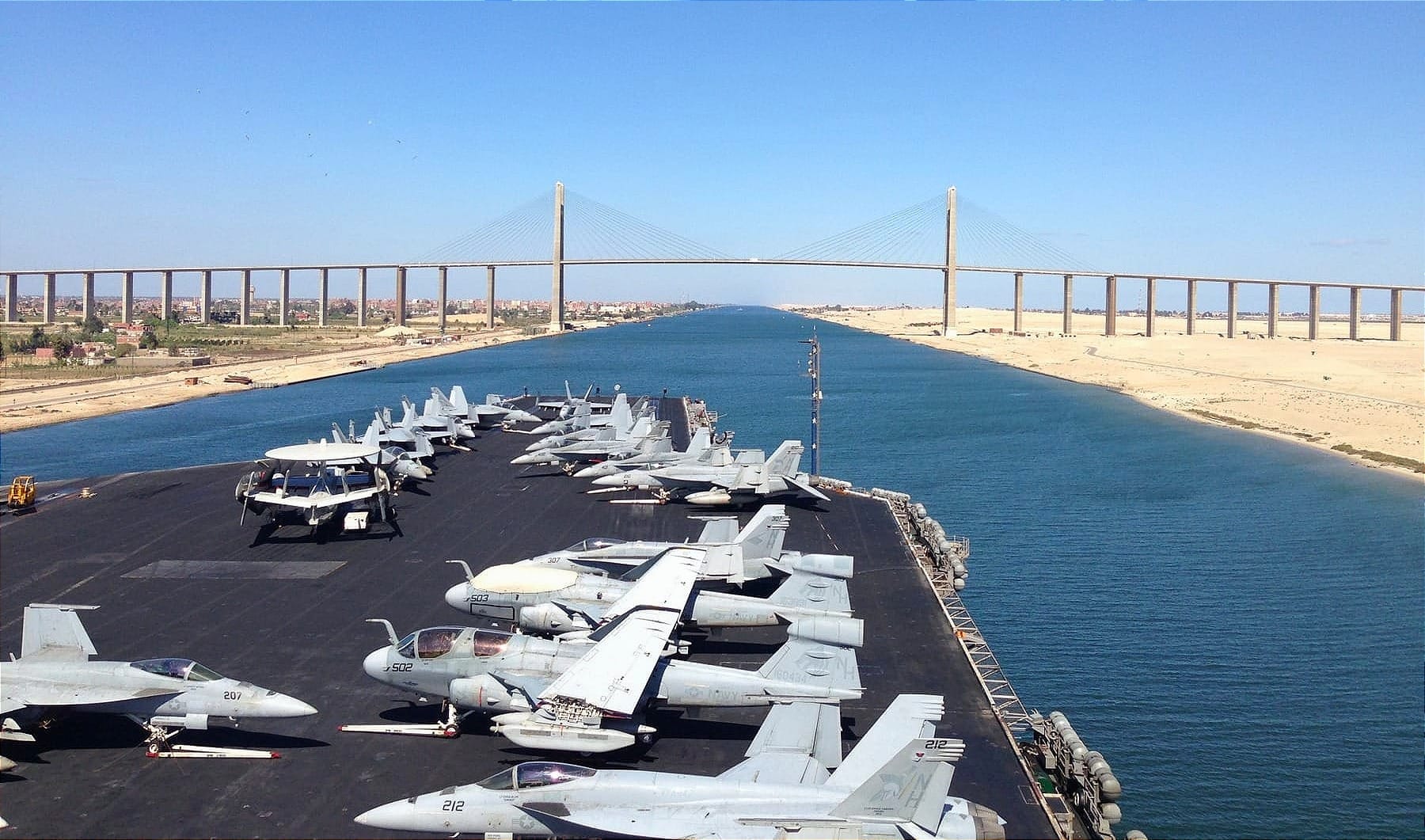
USS Nimitz transits the Suez Canal, its flight deck packed with carrier-based aircraft as the 1,000-foot warship threads one of the world’s most strategically vital maritime corridors (Credit: Rob Shipp)
The Submarine Crucible
Shipp didn’t arrive at that moment by accident.
He spent 27 years in the U.S. Navy, beginning in the nuclear power program and serving aboard submarines before commissioning and eventually driving aircraft carriers. He retired as an officer after rising through the enlisted ranks to Engineering Department Master Chief, overseeing nuclear propulsion operations.
Submarines are a crucible for human systems.
You take roughly 130 people, seal them in a steel tube, and submerge them for months at a time. There is no escape from friction, ego, conflict, or dysfunction. There is also no tolerance for technical failure. Nuclear reactors power propulsion. Mistakes compound quickly.
“You learn the real side of people,” says Shipp.
In that environment, he came to a realization that would define the rest of his career: mastering the technical system wasn’t enough. The human system determined whether performance held under stress.
Later, when he transitioned from submarines to aircraft carriers, the scale changed dramatically, from crews of roughly 150 to floating cities of 5,000 to 6,000 personnel.
Some of what he thought he understood about leadership didn’t translate.
The larger the organization, the more invisible the fractures.
The Readiness Tax
Today, Shipp serves as Vice President of Growth at ThetaCore, a Lehi, Utah-based behavioral wellness and leadership platform that uses applied behavioral science, real-time analytics, and AI-powered tools to provide non-clinical mental health support, enhance communication and interpersonal connections, boost motivation, and improve team performance and organizational health.
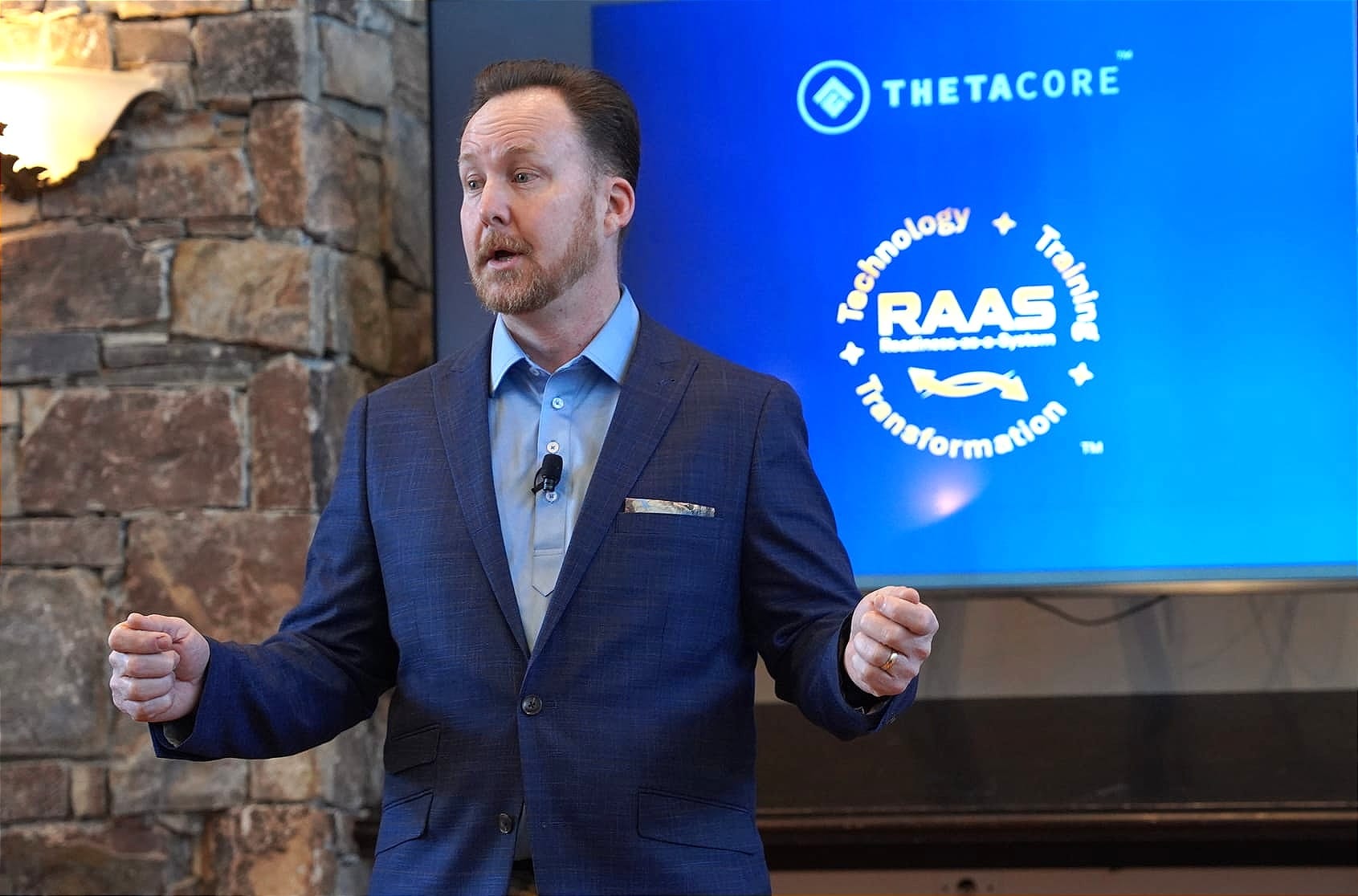
Rob Shipp Vice President of Growth at ThetaCore, speaking at a ThetaCore workshop in Lehi, Utah, January 2026
Shipp sat down with TechBuzz to discuss their flagship offering, ThetaCore Connect. It is part of a broader "Readiness-as-a-System" ecosystem, designed to help leaders foster psychological safety, prevent risks, and drive sustained personal and team readiness—primarily serving sectors like the military, education, healthcare, and high-performance organizations. The firm works with organizations (government, non-profit, private sector) to quantify and operationalize the concept of “organizational readiness.”
His central claim is not that companies lack goals.
It’s that they underestimate what he calls the “readiness tax.”
The readiness tax is the hidden cost organizations pay when human systems fail under pressure.
It shows up as:
Teams that won’t communicate
Leaders who avoid conflict
High-performing but toxic managers
Attrition tied to culture rather than compensation
Delayed decisions because information isn’t shared
The cascade is straightforward.
When two team members stop communicating, information flow narrows. When information narrows, decision-making slows. When decisions slow, problems persist. When problems persist, revenue leaks.
Most organizations track process metrics obsessively. Few track the health of the human system producing those metrics.
“Approximately seventy percent of people leave jobs because of culture or leadership,” Shipp says. “Not because of the job itself.”
That attrition, disengagement, and misalignment is the readiness tax. It doesn’t show up on a dashboard until performance drops.
By then, it’s expensive.
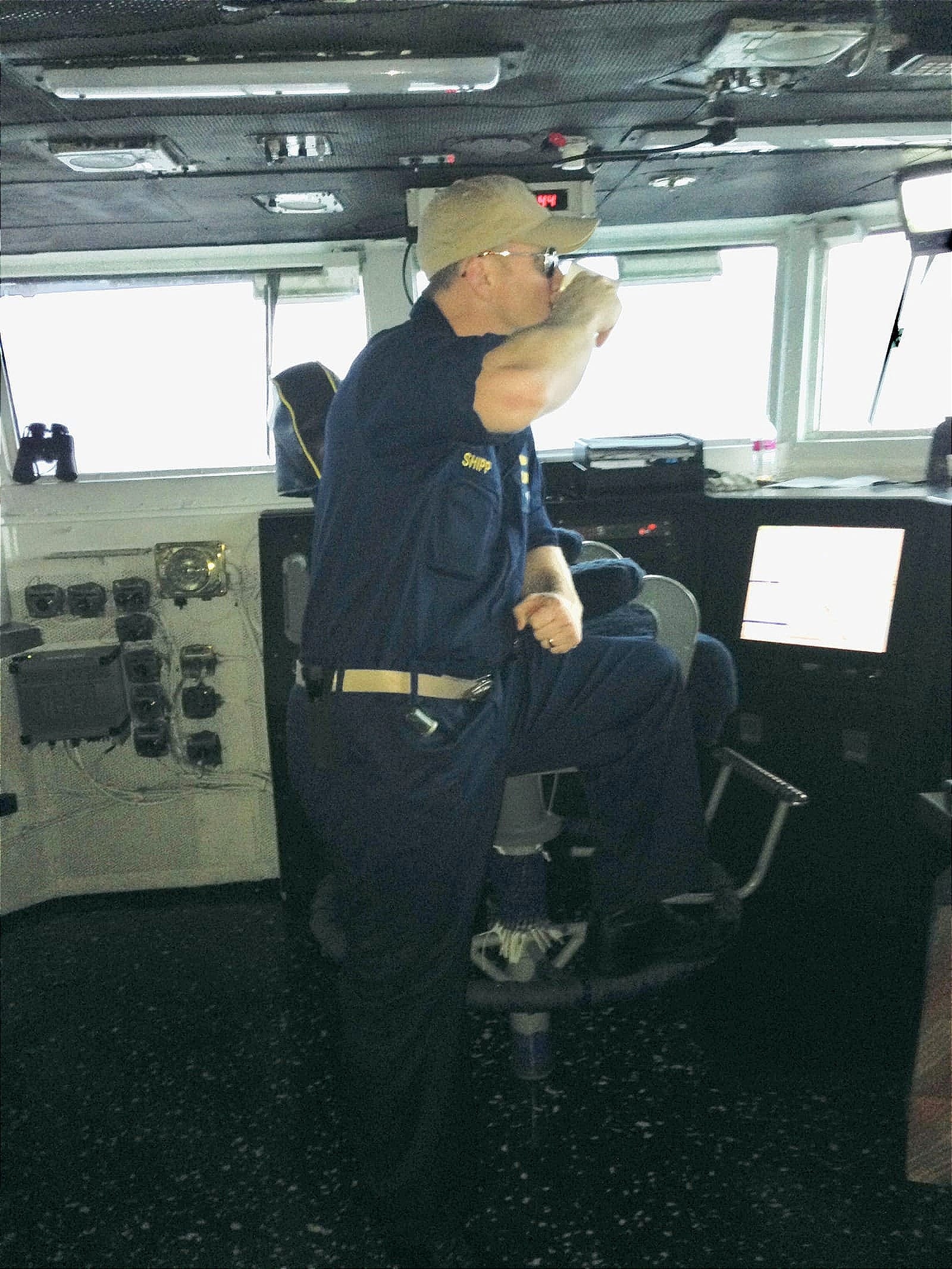
Rob Shipp having a cup of coffee on the bridge of USS Nimitz (Credit: Rob Shipp)
You Fall to the Level Your Readiness
Shipp’s most direct formulation is blunt:
“You don’t rise to the level of your goals. You fall to the level your readiness.”
It’s an inversion of the aspirational language common in business culture.
Goal-setting is easy. Vision decks are easy. Strategy sessions are easy.
Readiness is structural.
On the USS Nimitz, the crew didn’t rise heroically to the moment. They fell to the level of preparation they had built through drills, debriefs, and systems thinking. Emergency breakaway was not improvisation; it was rehearsed architecture.
Training alone doesn’t create that outcome.
Systems do.
Efficacy, Effectiveness, Efficiency
One of Shipp’s sharper frameworks distinguishes between three stages of performance validation:
Efficacy — Can it work under controlled conditions? Effectiveness — Does it work in the real world? Efficiency — Does it make economic sense?
He illustrates the difference with nuclear fusion. Scientists have demonstrated fusion reactions in controlled environments. It works, technically. But the energy input required, the infrastructure strain, and the rebuild time make it economically impractical at scale.
Many leadership programs, he argues, resemble fusion reactors. They demonstrate efficacy in workshops. Participants feel energized. Concepts test well. But once reintroduced into real operations, under stress, deadlines, and budget constraints, the effect dissipates.
The economic return never materializes.
ThetaCore’s model attempts to close that gap by turning qualitative behavioral science into measurable inputs, such as motivation levels, engagement positioning, communication styles, and feeding them back into operational decision-making.
The ambition is to move from anecdotal leadership to data-informed readiness.
ThetaCore defines sustained readiness through six interlocking pillars: relationship management, conflict management, change management, complex systems management, self-management, and transformation management. Together, they form a practical framework for strengthening people, improving performance, and driving durable organizational change. The model spans everything from individual behavior and team dynamics to enterprise-level systems under stress, ensuring that readiness is not situational but structural. Organizations built on this foundation adapt faster, recover cleaner from disruption, and perform reliably when conditions deteriorate, not just when they’re favorable.
Half-Degree Corrections
The aircraft carrier offers a useful metaphor for executive behavior.
On Nimitz, helmsmen don’t spin the wheel wildly. Corrections are made in half-degree increments. Stability depends on restraint.
Corporate overcorrection can be equally destabilizing: mass restructuring, abrupt pivots, reactionary leadership changes. Conversely, ignoring small misalignments allows drift to compound until structural damage occurs.
The discipline lies in calibrated adjustment.
The same applies to culture.
When early indicators of disengagement appear, the question isn’t whether to overhaul the organization. It’s whether leaders are attentive enough to make half-degree corrections before the readiness tax grows.
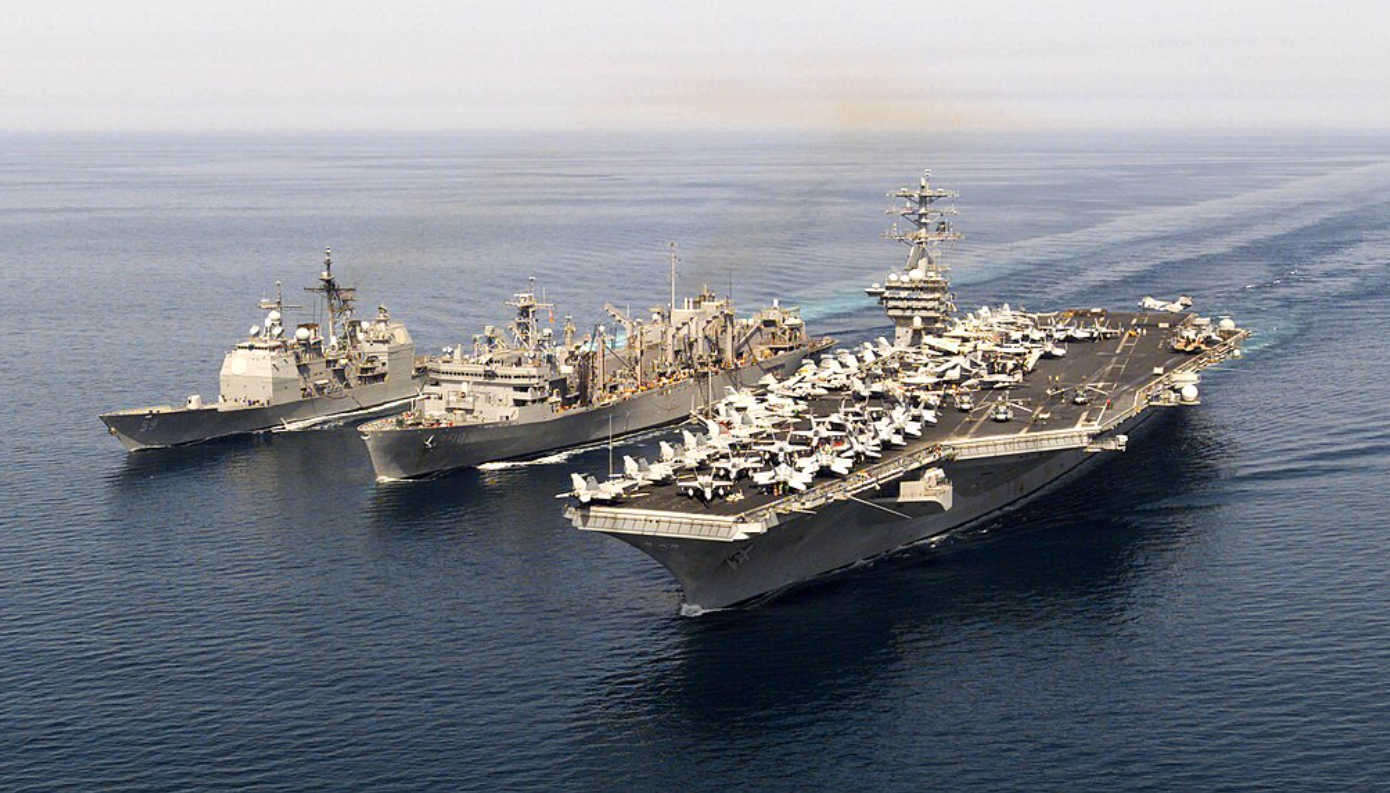
USS Nimitz (CVN 68) alongside Support-class Bridge and Ticonderoga-class missile cruiser Princeton (left) during Operation Iraqi Freedom, 15 April 2003 (Credit: US Navy)
System Over Hero
Perhaps the most important lesson from the Nimitz incident is that no single individual saved the day.
At the helm, Shipp was focused on steering. The deck crews handled breakaway procedures. Engineering teams monitored systems. Aviation halted operations. Communication flowed laterally and vertically.
No one waited for, or had time for, a speech.
Organizations that rely on individual heroics such as a charismatic founder, a star salesperson, a crisis manager, are brittle. Remove the hero, and performance collapses.
Military systems assume rotation. Personnel change. Commands shift. The system must outlast the individual.
“Create systems that work with or without you,” says Shipp.
In business terms, that’s scalability.
From Carrier Deck to Boardroom
Nimitz returned to 200 feet of separation. Fuel lines reconnected. Operations resumed.
What lingers isn’t the near-collision.
It’s the absence of chaos.
In a moment that could have triggered panic, the system absorbed shock.
That’s the difference between organizations that survive disruption and those that fracture.
In an environment defined by AI disruption, cyber threats, regulatory volatility, and workforce turnover, readiness is less about prediction than about resilience.
The distance between stability and disaster is often narrow, sometimes as narrow as 180 feet of ocean.
The question for any company isn’t whether disruption will occur.
It’s whether the human system beneath the strategy is prepared to execute when it does.
Because when the line starts paying out, when tension builds and drift becomes visible, organizations don’t rise to the level of their ambitions.
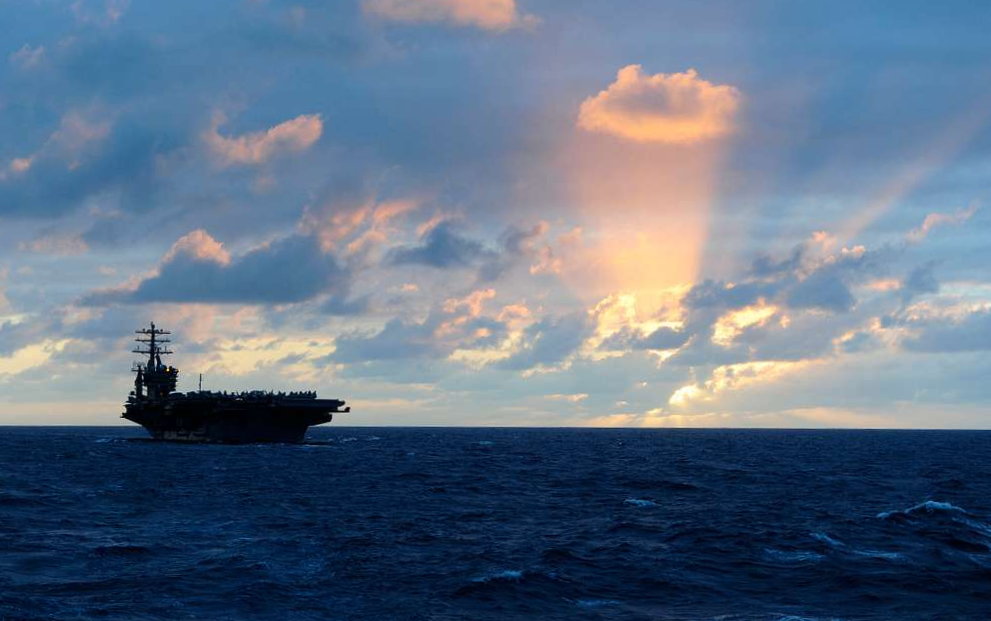
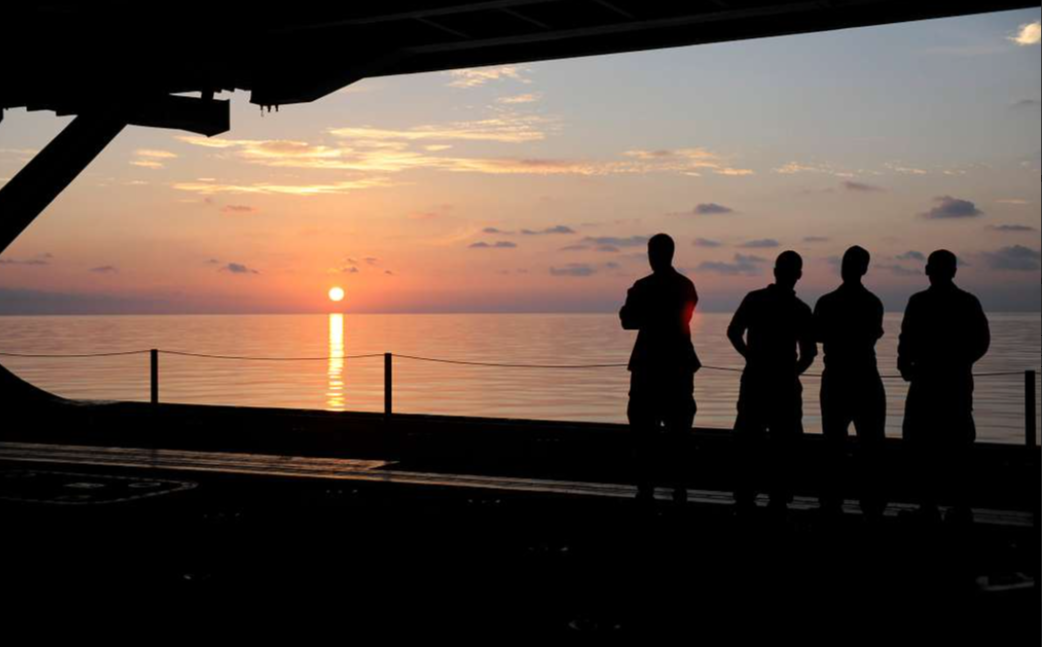
Sailors watch the sunset from the hangar bay of the aircraft carrier USS Nimitz (CVN 68). Nimitz was commissioned in 1975 and is currently the US Navy's oldest aircraft carrier. It will be replaced with the newer Ford-class USS John F. Kennedy (CVN-79). Nimitz, after completing its final deployment and returning to Bremerton in February 2025, will shift homeport to Naval Station Norfolk, Virginia, by April of 2026. There, it will undergo a 12-month equipment offload starting around spring 2027, followed by a 30-month nuclear defueling and deactivation at Newport News Shipbuilding, effectively retiring it from active service. (Credit: U.S. Navy, Mass Communication Specialist Seaman Siobhana R. McEwen)
Share this article
The link has been copied!
Your link has expired. Please request a new one.
Your link has expired. Please request a new one.
Your link has expired. Please request a new one.
Great! You've successfully signed up.
Great! You've successfully signed up.
Welcome back! You've successfully signed in.
Success! You now have access to additional content.