Fortem Demonstrates Autonomous Counter-Swarm Defense in Five-on-Five Drone Intercept
Fortem Technologies (Lindon, UT) has demonstrated what it says is the first fully autonomous five-on-five drone intercept, signaling that counter-UAS defenses may now match the scale and autonomy of modern drone swarms.
As drone warfare shifts toward coordinated, semi-autonomous swarms, a Lindon-based company says defenses are finally catching up.
The war in Ukraine has made one trend unmistakable: drone attacks are no longer about single aircraft flown by remote pilots. Military operators are now deploying coordinated groups of low-cost, semi-autonomous drones designed to overwhelm defenses through speed, redundancy, and real-time adaptation—often under heavy electronic warfare conditions.
What has been less clear is whether counter-drone systems can keep pace.
Fortem Technologies, the Lindon, Utah-based airspace security company with active deployments across the U.S., Europe, the Middle East, and East Asia, says it has crossed that threshold. In a recent live demonstration, Fortem completed what it believes to be the world’s first fully autonomous five-versus-five drone intercept, using AI-coordinated defensive drones to safely capture five incoming autonomous attack drones—without human intervention and without collateral damage.
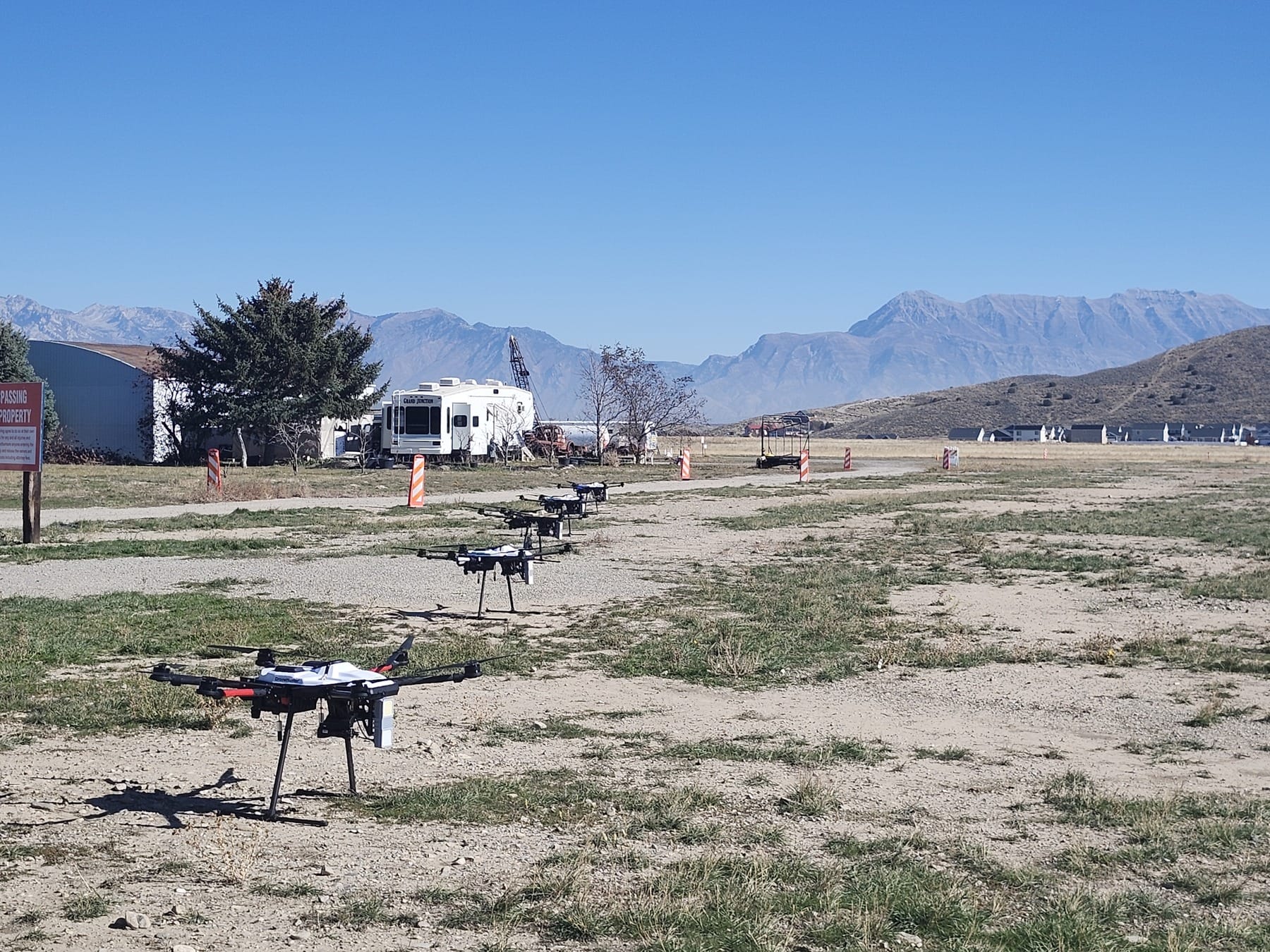
Five DroneHunter® interceptors lined up ahead of Fortem Technologies’ autonomous 5-v-5 drone intercept demonstration at the company’s test range
The test was conducted using Fortem’s SkyDome® system, an AI-driven command-and-control platform, paired with five DroneHunter® F700 interceptor drones. Each attacking drone was flying a pre-programmed autonomous mission. SkyDome detected, tracked, assigned, and dynamically deconflicted intercept paths in real time, directing each DroneHunter to capture its target midair.
According to Fortem, all five threats were neutralized simultaneously.
The test also validated new enhancements to SkyDome’s autonomous path-planning engine, which dynamically deconflicts multiple DroneHunters in constrained airspace, reducing time aloft, preserving battery reserves, and enabling scalable multi-drone defense without sacrificing safety.
Why it matters
In Ukraine and other active theaters, drone swarms are increasingly used to penetrate defenses, force cost-asymmetric responses, and saturate operators who rely on manual control or single-target systems. The same dynamics are now spilling into civilian airspace, with recent drone incursions disrupting major European airports and exposing vulnerabilities in both military and commercial infrastructure.
Fortem’s demonstration points to a different model: autonomous, drone-on-drone interception that scales horizontally as threats increase—without resorting to expensive missiles or human-in-the-loop micromanagement.
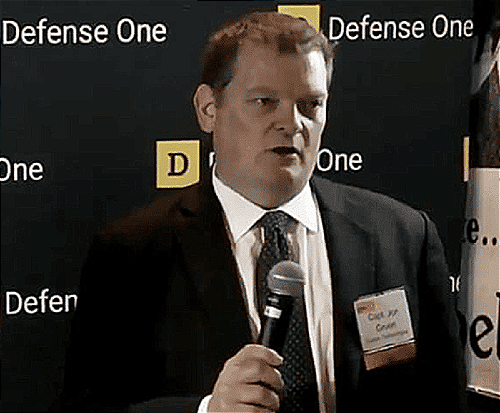
Jon Gruen, CEO, Fortem
“As hostile drone capabilities become more autonomous and scalable, defending against swarms is no longer a theoretical problem,” said Fortem CEO Jon Gruen. “This shows that autonomous defense can match autonomous attack—safely and at scale.”
From field data to autonomous action
Unlike counter-UAS systems tied to fixed signal libraries or scripted responses, Fortem’s SkyDome platform is informed by real-world operational data gathered from live deployments and allied training environments. That data feeds directly into the system’s AI models, allowing it to recognize previously unseen drone behaviors and adapt engagement strategies without manual reprogramming.
That feedback loop helps explain how SkyDome was able to coordinate five interceptors simultaneously—accounting for airspace constraints, timing conflicts, and capture geometry—while minimizing time aloft and preserving interceptor reserves.
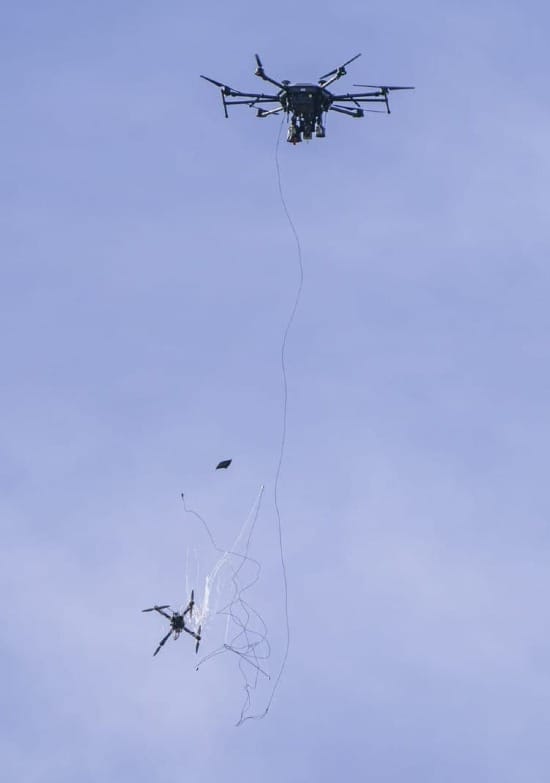
A Fortem DroneHunter® interceptor engages an incoming hostile drone, deploying its net-based capture system under SkyDome® command to safely neutralize the threat with zero collateral damage.
The interceptors used in the test were Fortem’s fifth-generation DroneHunter F700s, which represent a significant redesign over earlier models, with improved onboard autonomy, maneuverability, and operational reliability. The platform’s maturity has already drawn attention from the Pentagon, including selection earlier this year for rapid operational deployment programs focused on field-ready counter-drone capabilities.
Utah’s defense-tech ecosystem comes into focus
Fortem’s milestone also highlights the growing role of Utah as a hub for deployable defense technology—particularly in autonomy, sensing, and aerospace systems. Companies like Fortem are part of a broader state-level push to accelerate defense innovation, supported by organizations such as 47G, Utah’s defense and aerospace industry association.
47G has worked to connect startups, primes, universities, and military stakeholders, helping Utah-based companies move faster from prototype to fielded capability. That emphasis on execution over experimentation has positioned the state as a credible alternative to traditional coastal defense corridors.
Rather than functioning as an isolated startup, Fortem operates within that ecosystem—one increasingly defined by companies delivering systems that are tested, authorized, and already in operational use.
Regulatory and operational barriers—cleared
Fortem says it remains the only company authorized to deploy a drone-on-drone kinetic interceptor in U.S. airspace, a distinction that reflects not just technical capability but regulatory confidence—an often-overlooked hurdle that has slowed adoption of many counter-drone concepts.
That authorization, combined with repeat orders from U.S. allies and operational use in contested environments, places the company in a small category of counter-UAS providers whose systems are no longer experimental.
About Fortem
Headquartered in Lindon, Utah, Fortem Technologies has built its systems around rapid iteration and continuous testing, much of it conducted by engineering teams in Utah before being pushed to deployed systems worldwide. Updates informed by field use can be rolled out across the fleet, allowing deployed customers to benefit immediately from new learnings.
As drone warfare continues its shift from isolated platforms to coordinated, autonomous systems, Fortem’s test suggests that future air defense may depend less on centralized firepower and more on autonomous aerial engagements executed at machine speed—by systems designed to think and react faster than human operators ever could.