UVU to Host AI & the Future of Freedom Conference October 21–22
UVU will host this week a two-day conference exploring AI’s impact on freedom, citizenship and government, followed by hands-on demonstrations of technologies supporting transparency, accountability, decentralization and individual control over data.
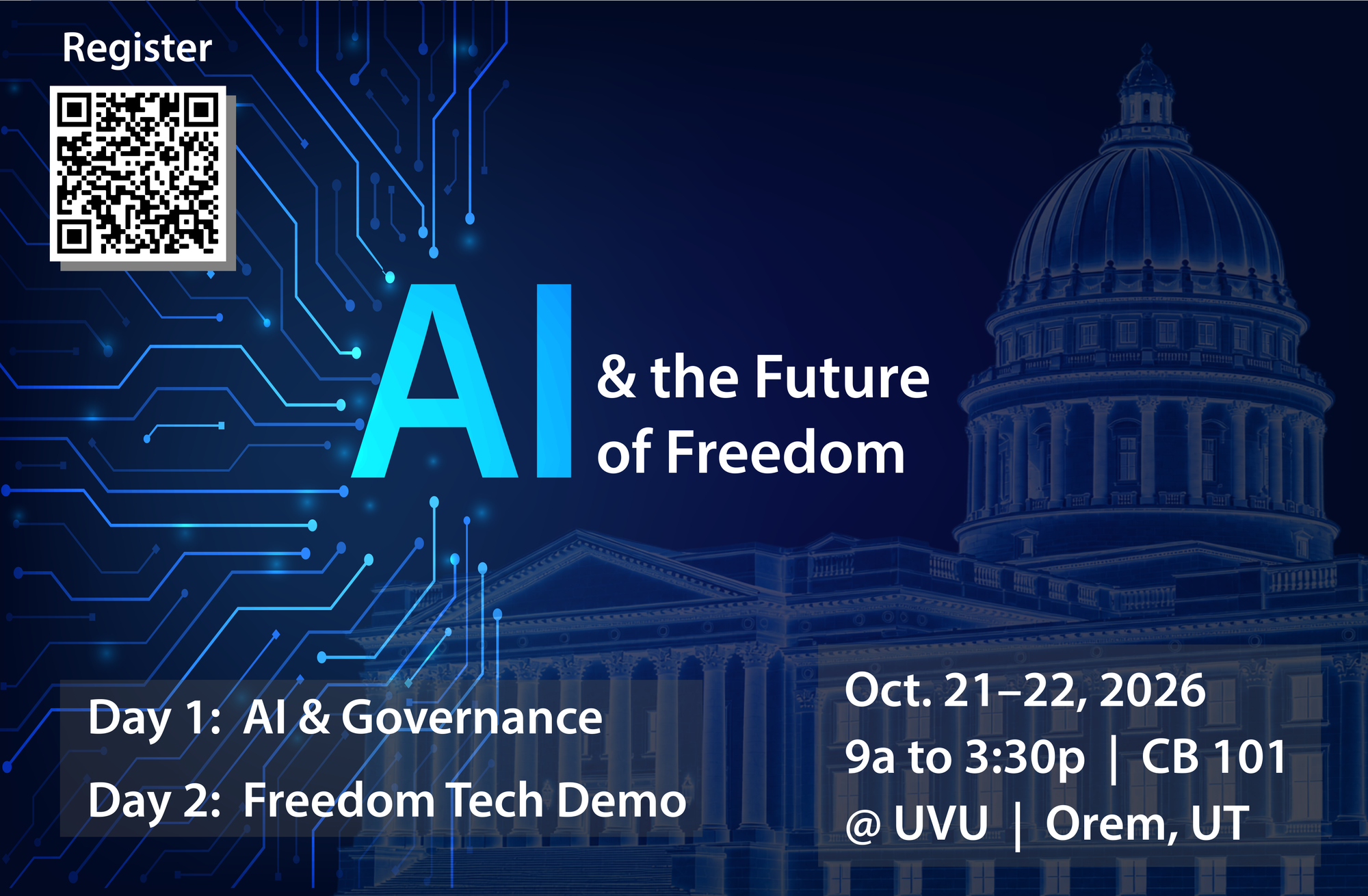
Utah Valley University will host the AI & the Future of Freedom conference October 21–22, bringing together leaders from industry, government and academia to examine a question extending well beyond the technology itself: How will artificial intelligence affect American freedom?
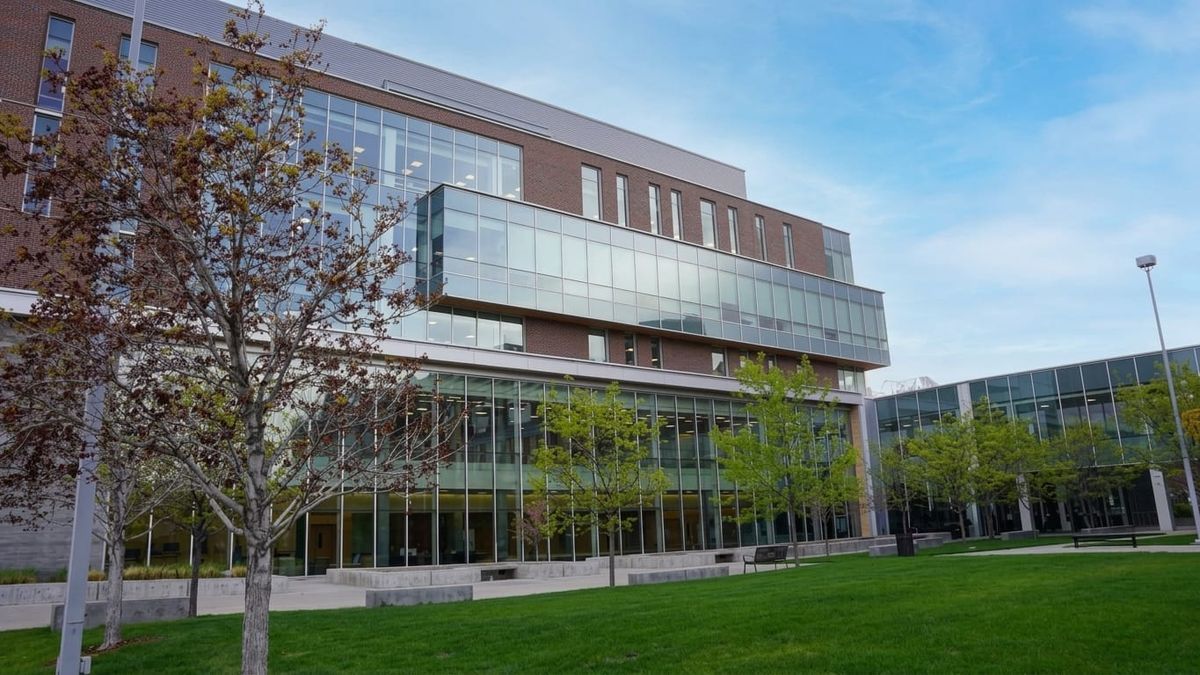
The free conference will take place in room 101 of Holland Hall in UVU’s Clarke Building (CB101C). Its discussions will explore AI’s implications for government transparency, citizenship, safety, energy and human flourishing, with a second day focused on emerging technologies.
For Scott Paul, executive director of UVU’s Center for Constitutional Studies, the nation’s 250th anniversary offers a reason to look forward as well as back.
“What does the future of American freedom look like?” Paul asked in an interview with TechBuzz.
That question, he said, is becoming inseparable from the changes AI is bringing to daily life. Citizenship and governance are no exception.
Conversations About Technology and Civic Life
The program will feature panels and fireside conversations examining how AI could affect civic engagement, government transparency, privacy and data rights. Other discussions will address journalism, education, economics, data-center infrastructure and human flourishing, including concerns about technology’s effects on children.
“No lectures, just conversations,” Scott Paul said, describing a format that brings industry leaders, public officials and scholars into discussion.
The organizers frame the gathering around a distinction between increasingly abundant machine intelligence and the human judgment needed to use it responsibly. Questions of liberty, free speech, pluralism and self-determination will help guide that conversation.
The conference will also examine civic education and participation. Paul sees the event as part of a broader conversation about how Americans understand their constitutional system and engage with public institutions as new technologies change how information is produced and shared.
Speakers listed in the conference invitation include:
David Walker, former comptroller general of the United States
Barclay Burns, UVU Chief AI Officer, Cambridge University Fellow, and Learning.com founder
Margaret Busse, executive director of the Utah Department of Commerce
Paul Allen, founder of Ancestry, founder and CEO of Soar.com, Founder of citizenportal.ai.
Trina Limpert, founder and CEO of RizeNext and co-founder of Tech-Moms
John Hart, identified in the invitation as CEO of OpenTheBooks
Dan Elliott, Indiana state treasurer
Marlo Oaks, Utah state treasurer
The invitation frames the program around questions rather than predetermined answers: Can AI help people become better-informed citizens? Can it improve government? How should it be governed, and what role should human judgment play?
From Public Information to Public Understanding
For Paul Allen, one practical application is helping people understand what their governments are doing.
In a separate October 16 interview with TechBuzz, Allen described his work with Citizen Portal, which uses AI to make government proceedings and public officials’ statements more accessible. His broader ambition is to help citizens find relevant information and help public leaders evaluate decisions using data.
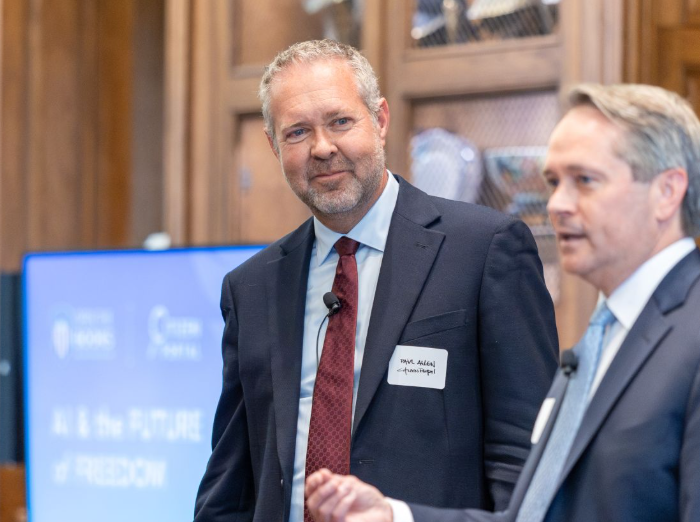
Paul Allen, Serial Entrepreneur: Founder of Ancestry, Soar.com, Citizenportal.ai, with John Hart, CEO of Mars Hill Strategies, attending a discussion on AI and the Future of Freedom in at Old Parkland in Dallas, May 2026. Photo Credit: John Hart's LinkedIn post.
“What if AI can help us have great government outcomes?” Allen asked.
That possibility connects directly to the conference’s civic focus. Making public records available is one challenge. Helping people locate, understand and use them is another.
Allen also described plans to connect government information with community reporting through AI-assisted local publishing. He emphasized a role for human editors who can guide coverage and provide feedback rather than leave the work entirely to automated systems.
Those ambitions connect with two announced conference topics: tools for citizen engagement and AI’s role in journalism. Discussions will explore how the technology could support reporting, investigation and public participation, alongside questions about transparency, privacy and human judgment.
Why Bring the Conversation to UVU?
According to Scott Paul, the idea of hosting the conference at UVU grew from his participation in a gathering in Dallas in May of this year that brought together people interested in AI, citizenship and government.
He saw a natural connection to work already underway at the university.
The aim is to bring those perspectives into direct discussion. AI’s influence on public life will depend not only on technological advances, but also on decisions made by institutions, businesses, public officials and citizens.
Attend the Conference
Hosted by UVU’s Center for Constitutional Studies, AI & the Future of Freedom takes place October 21–22 at Utah Valley University's Clarke Building (CB101C).
The host committee includes John Hart, Paul Allen, Scott Paul and Brian Bourgerie.
The first day features panel discussions and fireside conversations. Freedom Tech Demo Day on Thursday, October 22, will explore technologies discussed at the conference and feature live demonstrations of additional tools and innovations.
The first day will feature conversations about AI and American freedom. The second will examine emerging technologies.
October 22: Freedom Tech Demo Day
The series continues Thursday, October 22, with Freedom Tech Demo Day, a hands-on event featuring demonstrations of open data, AI, blockchain and agentic systems. Organizers say the program will focus on technologies supporting decentralization and individual control, alongside civic platforms designed to strengthen government transparency and accountability.
Attendees are encouraged to bring a laptop to follow along with demonstrations, explore the tools and offer feedback. Q&A and breakout discussions will give participants opportunities to exchange ideas with presenters and one another.