Palladyne AI Expands from Defense to Space and Industrial Platforms
Palladyne AI’s post-Sarcos reinvention is yielding results across defense, space, and industry, with missile, Air Force, and spacecraft contracts—alongside the commercial release of its IQ 2.0 platform—validating its shift to scalable, edge-based autonomy software.
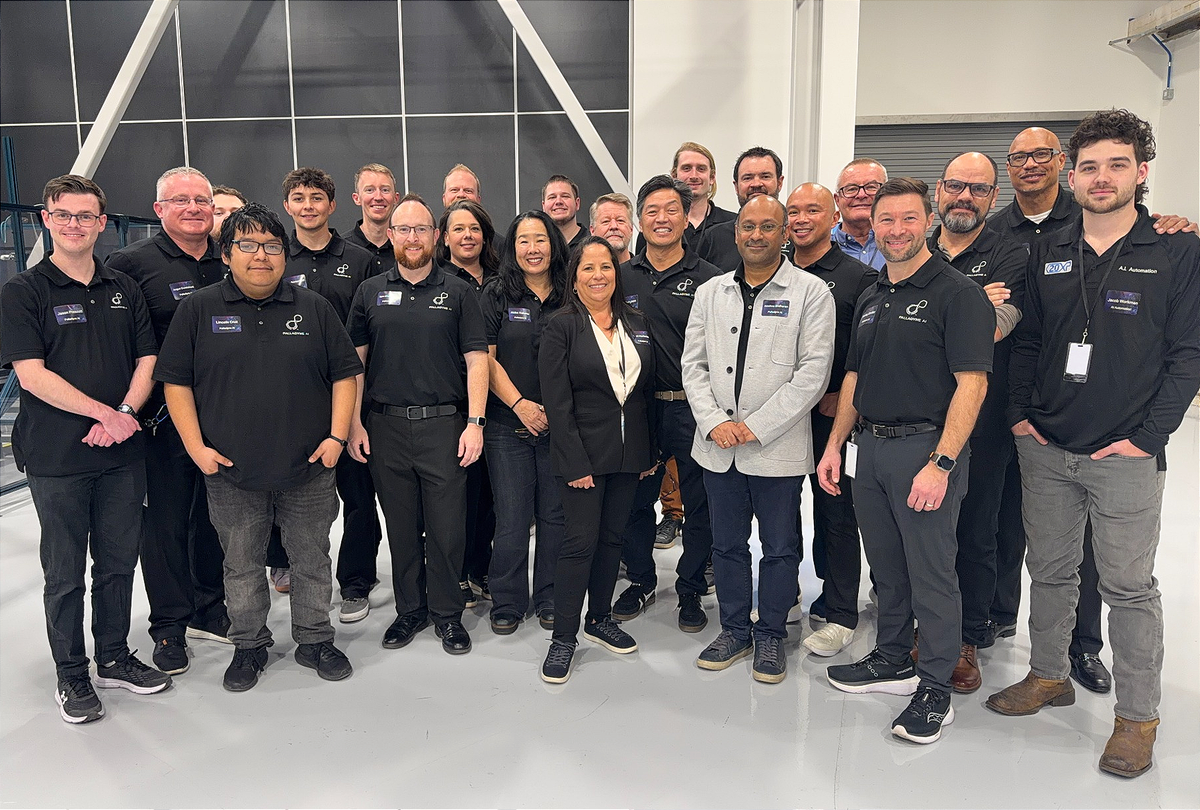
Palladyne AI team members at the company's Salt Lake City headquarters, INDUSTRY, January 2026
Palladyne AI team members at the company's Salt Lake City headquarters, INDUSTRY, January 2026
Salt Lake City, Utah — February 3, 2026
Over the past two years, Palladyne AI has transitioned from its roots as Sarcos Technology and Robotics, a Salt Lake City, Utah-based company known for industrial and military exoskeletons, into a provider of embodied AI software and mission-critical defense systems. In March 2024, the company exited hardware manufacturing and rebranded as Palladyne AI, signaling a strategic shift toward edge-based autonomy that can operate across vehicles, drones, and industrial systems.
This pivot is now producing tangible results. Recent contract awards—including a missile propulsion subsystem with a major U.S. defense prime, a 26-month Air Force Research Laboratory project to migrate Palladyne Pilot software to U.S.-made AI chipsets, and a spacecraft autonomy engagement with Portal Space Systems—demonstrate the company’s expansion into multiple domains. Together, these engagements illustrate a deliberate focus on embedding Palladyne AI technology into long-life-cycle programs spanning defense, aerospace, and industrial operations.
A Strategic Break From Hardware—and Its Limits
For decades, Sarcos was best known for human-worn robotic systems designed to augment strength in industrial and defense environments. The technology drew attention and contracts, but leadership ultimately concluded the market was narrow and capital-intensive.
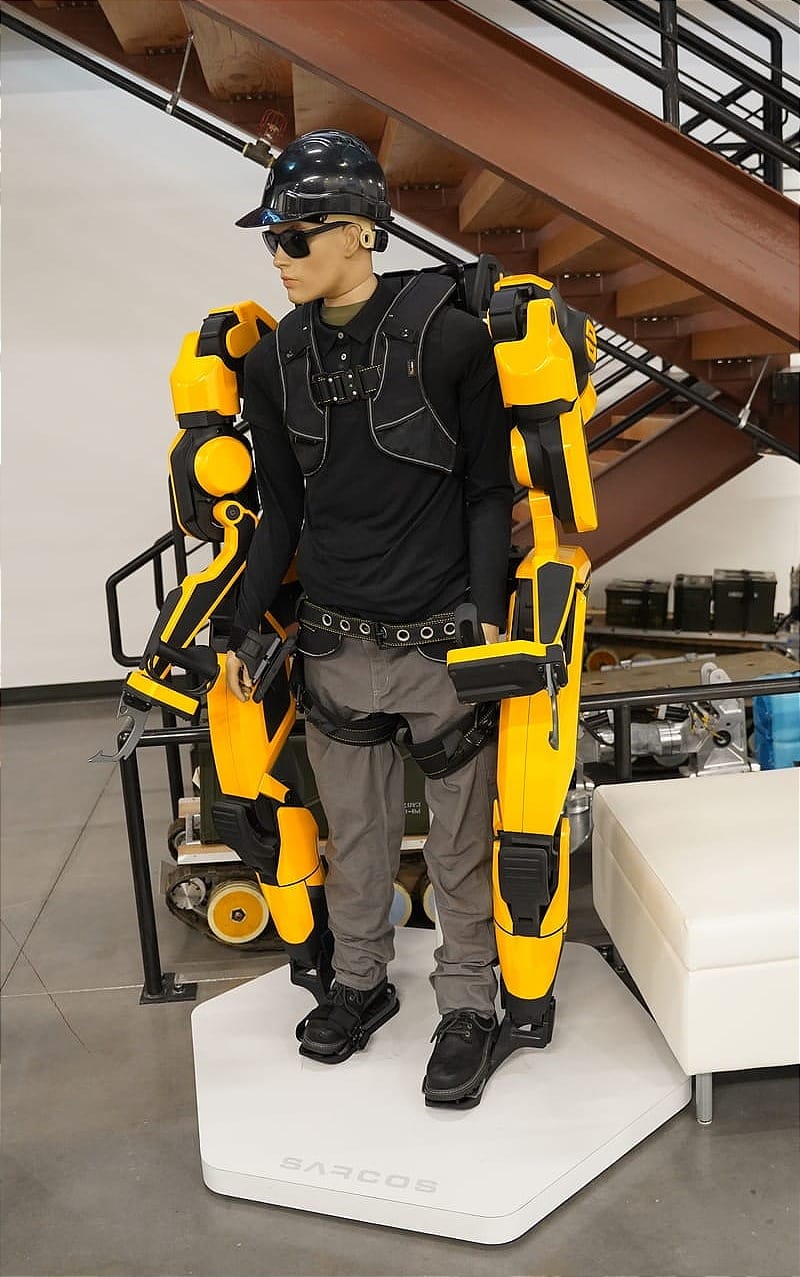
A Sarcos full-body, powered industrial exoskeleton engineered to enhance human strength and endurance while reducing injury risk in industrial and defense environments.
Rather than continue building increasingly complex machines, the company chose to focus on the intelligence that powered them.
The result was Palladyne AI: a software- and systems-focused company building autonomy platforms that allow machines—drones, missiles, spacecraft, robots, and sensors—to perceive, decide, and coordinate in real time, even in degraded or contested environments.
Embedded in Defense: Missile Systems and Long-Life-Cycle Programs
That shift is now translating into deeper integration within the U.S. defense industrial base.
In late 2025, Palladyne AI secured a contract with a major U.S. defense prime contractor to deliver a mission-critical subsystem supporting missile propulsion for an existing U.S. missile system program. The contract is expected to contribute nearly $1 million in revenue in 2026, with deliverables scheduled for completion by the end of the third quarter.
While modest in headline dollar value, the contract’s significance lies elsewhere. Missile programs are long-life-cycle systems with high barriers to entry; once a supplier is embedded, it often remains part of the program for years.
Company executives say the award reflects Palladyne AI’s manufacturing track record, ability to meet accelerated timelines, and growing credibility as a supplier of precision-manufactured, domestically produced components.
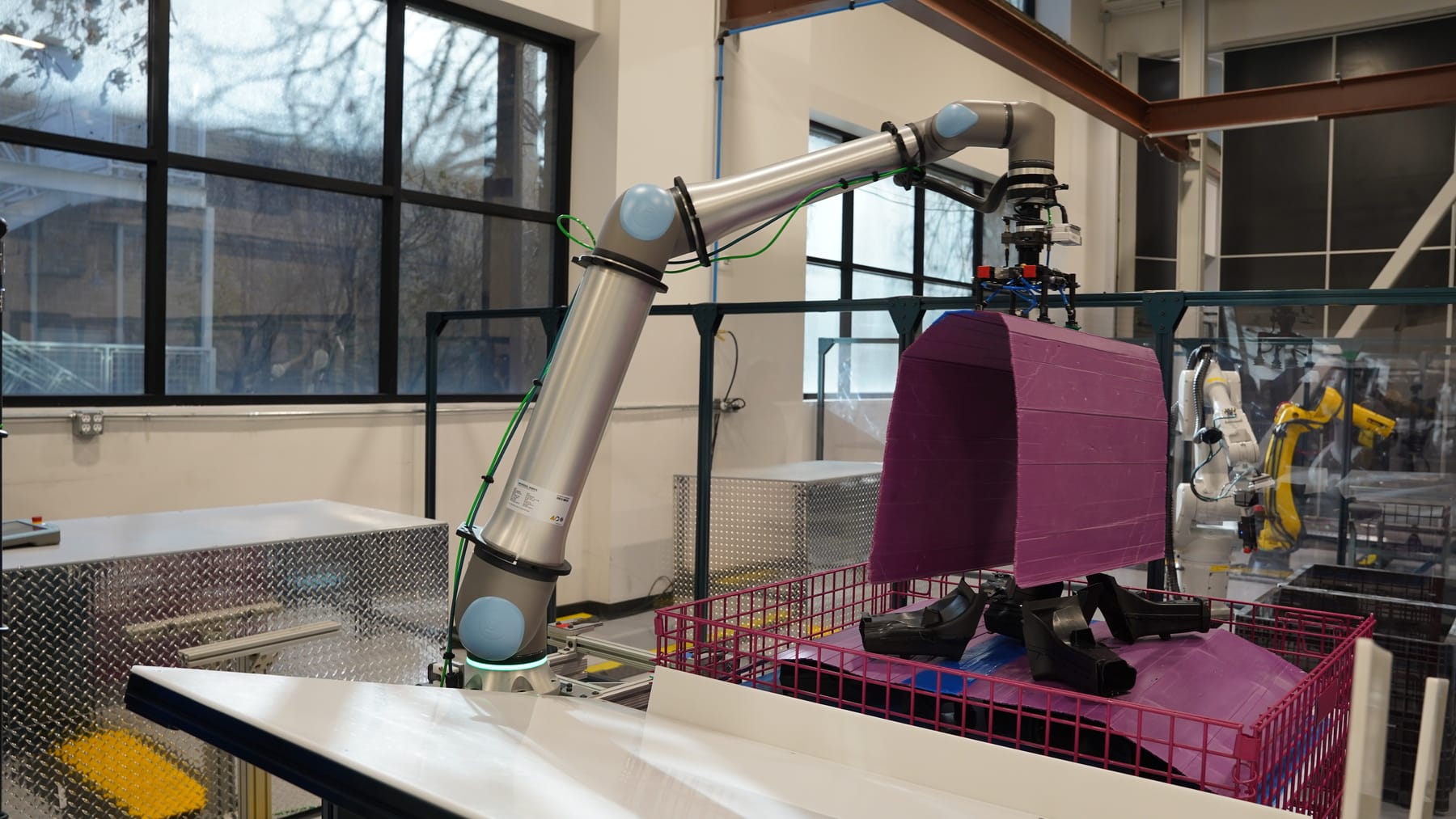
Robot controlled by Palladyne AI’s edge-based autonomy software, exemplifying the company’s shift from exoskeleton hardware to mission-critical, multi-domain autonomous systems, on display at 47G's Manufacturing Committee Meeting, where guests attended a company briefing and toured the Palladyne AI facility.
Autonomy as Infrastructure: AFRL Validation and Patented Architecture
Palladyne AI’s defense positioning is not limited to hardware.
Earlier in 2025, the company secured a 26-month Air Force Research Laboratory (AFRL) contract to migrate its Palladyne Pilot autonomy software to next-generation, U.S.-manufactured AI chipsets. The effort aligns with Department of Defense priorities around supply-chain security and reduced reliance on foreign semiconductors.
Palladyne Pilot is built on the company’s CLUTCHES framework—short for Closed Loop Ubiquitous Tasking and Control of Heterogeneous Exploring Sensors. The architecture allows fleets of autonomous systems to share only the most meaningful data they collect, creating a shared operational picture while operating with limited bandwidth or communications.
In November 2025, Palladyne AI was awarded U.S. Patent No. 12,452,957 B2, securing the core architecture behind CLUTCHES and reinforcing the company’s claims of defensibility in a crowded autonomy market.
The combination of AFRL validation and patent protection positions Palladyne’s software not as experimental R&D, but as autonomy infrastructure the Pentagon expects to use—and reuse.
Expanding Beyond Air and Ground: A Move Into Space
In January 2026, Palladyne AI strengthened its multi-domain footprint through its subsidiary GuideTech, which secured a contract with Portal Space Systems to support next-generation, maneuverable spacecraft platforms. The engagement leverages GuideTech’s expertise in navigation, guidance, spacecraft modeling, embedded software, and avionics, translating Palladyne AI’s edge-based autonomy into the space domain.
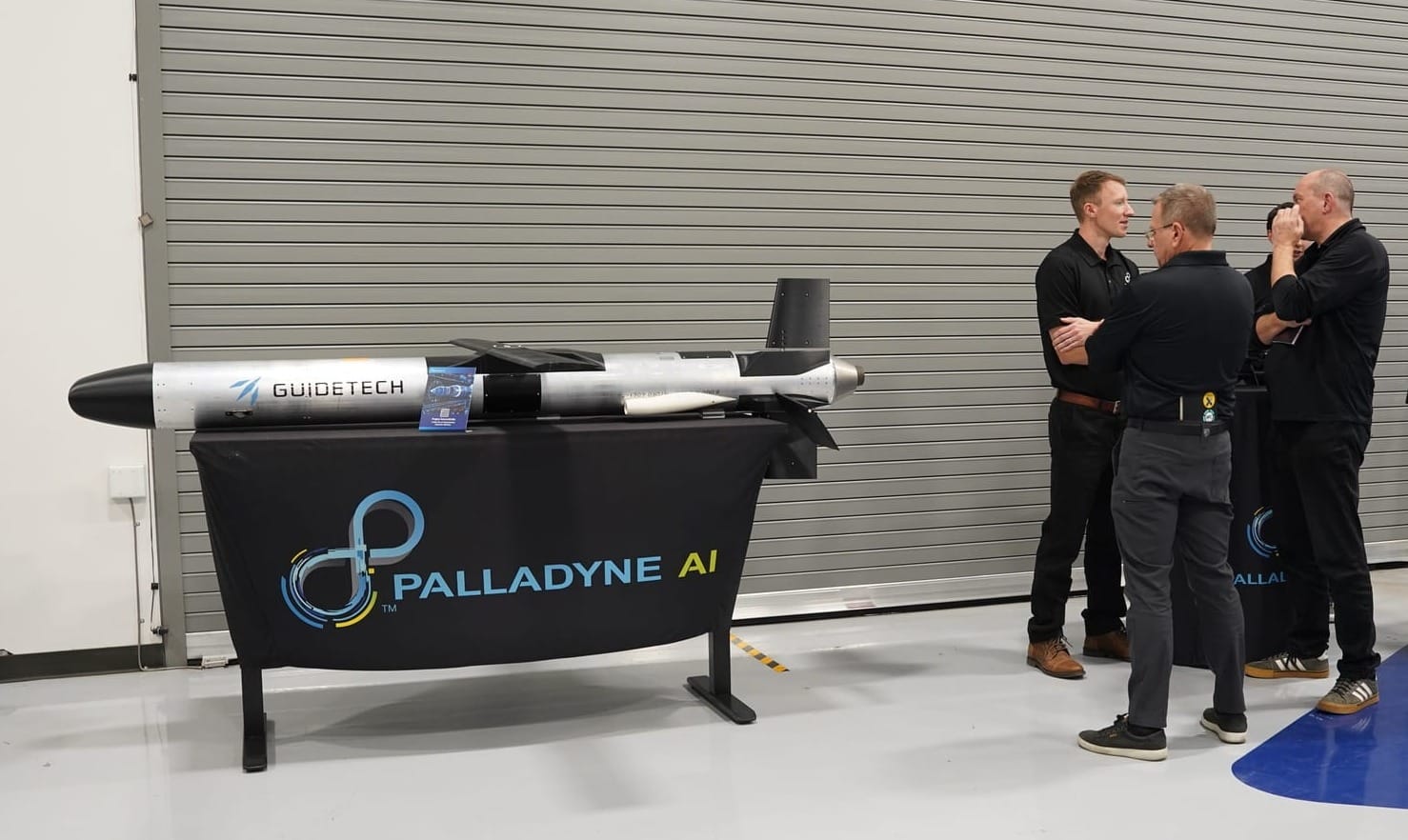
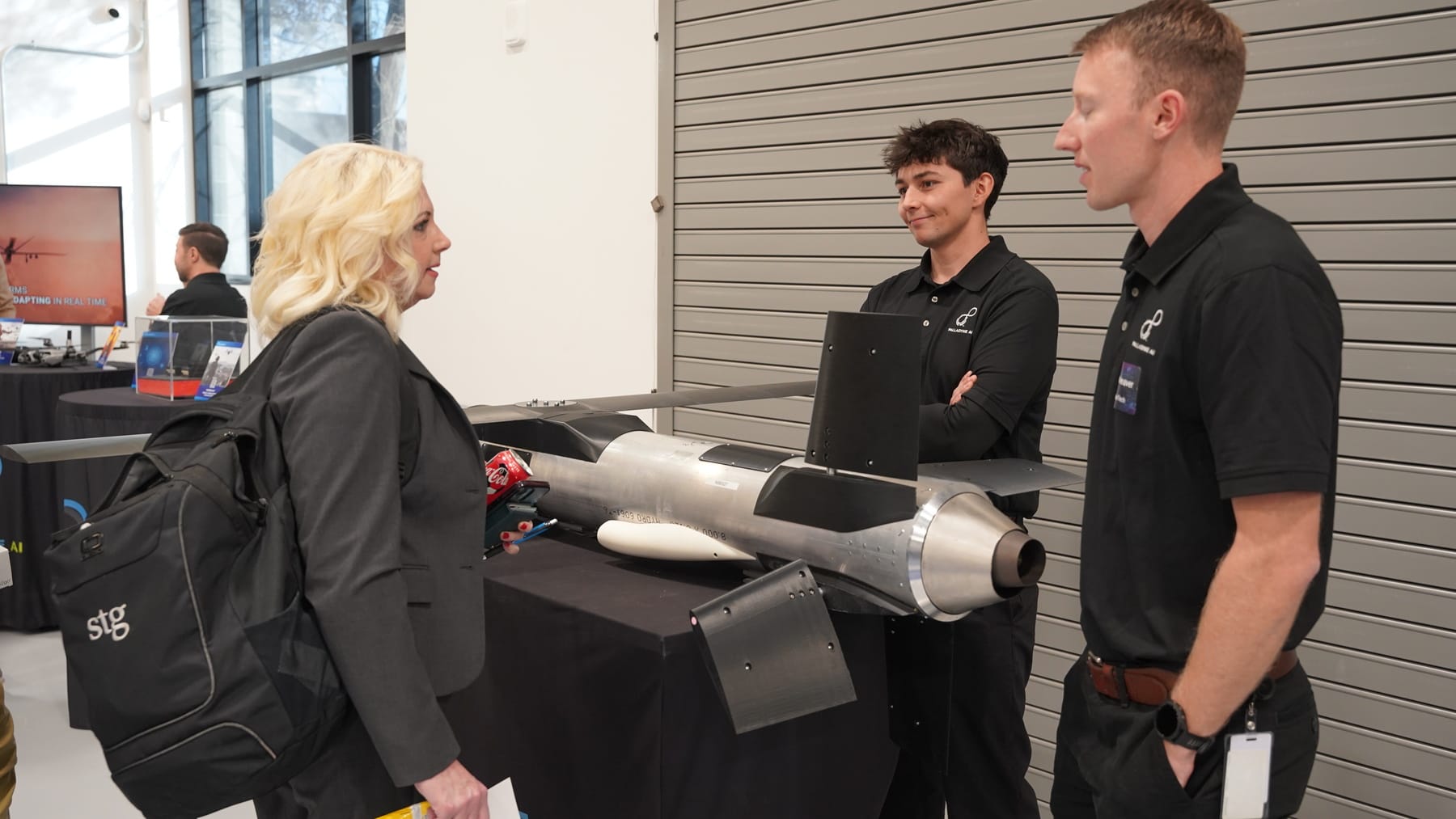
An advanced GuideTech drone on display during the January 21, 2026, 47G Manufacturing Committee Meeting at Palladyne AI’s Salt Lake City headquarters. GuideTech recently expanded into the space domain through a contract with Portal Space Systems.
GuideTech is part of Palladyne Defense, a new operating division formed after Palladyne acquired GuideTech along with Warnke Precision Machining and MKR Fabricators in late 2025. This division integrates patented embodied AI, UAV and loitering-munitions components, advanced engineering, and U.S.-based manufacturing. It provides both revenue-generating programs and scalable production capacity, while supporting modernization priorities that emphasize intelligent autonomy, rapid iteration, and the reshoring of critical defense production.
The combination of GuideTech’s autonomous drone and spacecraft capabilities with Palladyne’s defense-focused SwarmOS software illustrates the company’s strategy of uniting autonomy software with U.S.-based production and engineering expertise to serve defense and aerospace programs across multiple domains.
For Palladyne AI, the Portal contract does not represent a departure from defense, but an expansion of the same autonomy stack into a new domain—space—where edge-based intelligence is becoming essential.
A guest at 47G's Manufacturing Committee Meeting - Palladyne AI tour visiting with members of the recently acquired GuideTech team.
Industrial Autonomy Moves From Trials to Production
Palladyne AI’s autonomy strategy is not limited to defense platforms and aerospace systems. In January 2026, the company announced the commercial availability of Palladyne IQ 2.0, its next-generation industrial autonomy software designed for factories, depots, and logistics environments.
IQ 2.0 provides a secure, hardware-agnostic autonomy layer that allows manufacturers—particularly defense-industrial operators—to automate complex and variable workflows without replacing existing equipment. The software incorporates capabilities refined through customer trials and operational evaluations and is built for environments where uptime, safety, and reliability are critical.
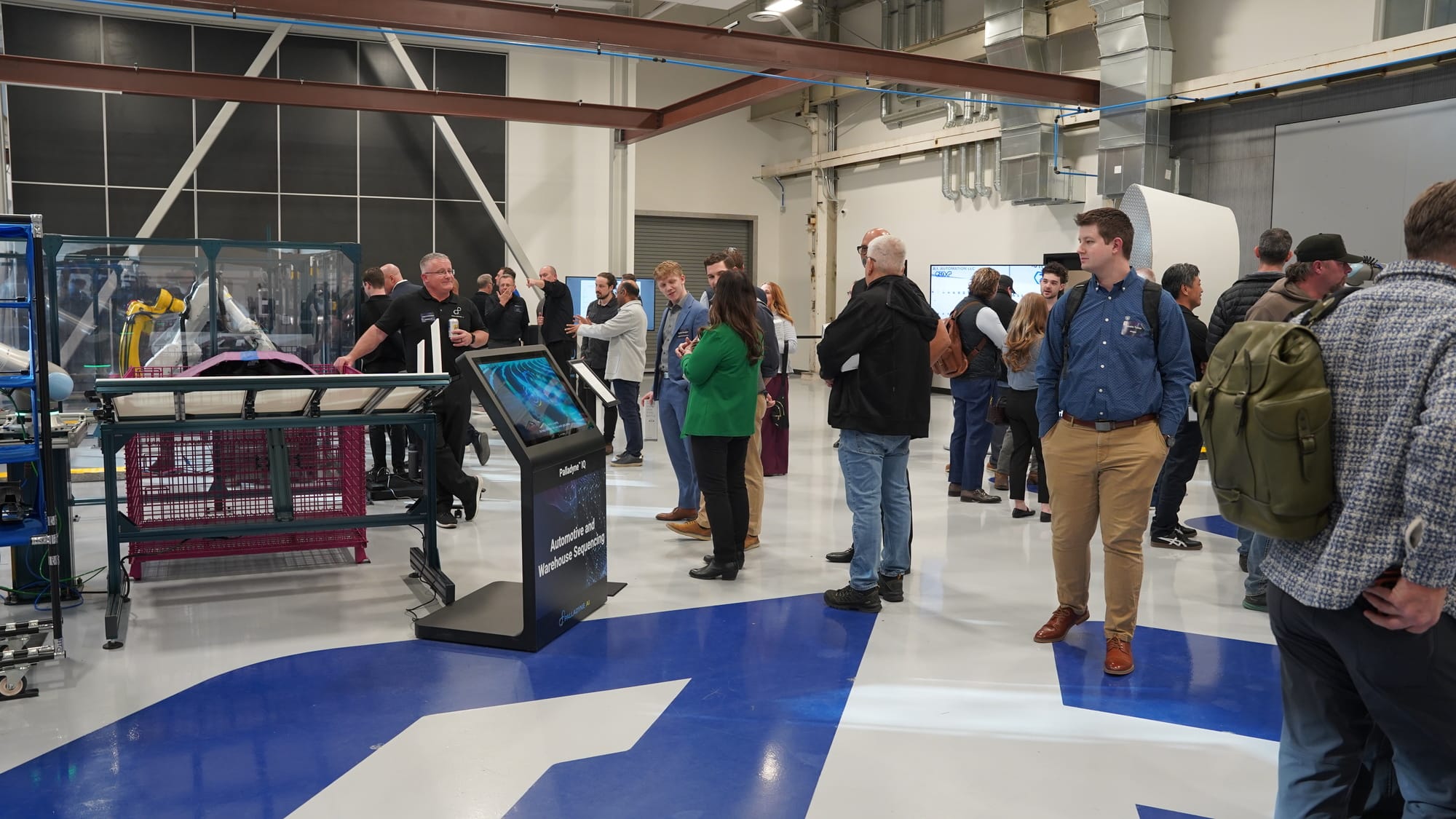
Palladyne AI demonstrated IQ 2.0 across several platforms at 47G's Manufacturing Committee Meeting where guests attended a company briefing and toured Palladyne AI's facility.
A key differentiator is its low-code / no-code framework, which enables technicians and line workers to program and re-task robots without deep software expertise. Palladyne AI positions the product as a way to accelerate throughput, improve quality consistency, and reduce schedule and cost risk—issues that have come under renewed scrutiny as federal policymakers push for faster, more accountable defense procurement.
The release of IQ 2.0 extends Palladyne AI’s autonomy stack beyond platforms and vehicles into the industrial backbone that supports them, reinforcing the company’s broader thesis: autonomy must scale from the factory floor to the field.
A Utah Company, Repositioned
Today, Palladyne AI presents a markedly different profile than its Sarcos-era predecessor. The company now operates at the intersection of defense manufacturing, autonomy software, avionics, and aerospace systems, with growing participation in long-duration programs rather than one-off demonstrations.
Its Salt Lake City headquarters houses teams working across defense, industrial, and space initiatives, reflecting a company that has narrowed its focus while broadening its reach.
Palladyne AI’s Salt Lake City headquarters at INDUSTRY in the Granary District. Palladyne AI hosted 47G's Manufacturing Committee Meeting, where guests attended a company briefing and toured the facility on January 21, 2026
The Bigger Picture
Palladyne AI’s reinvention is no longer theoretical. The company is now embedded in missile programs, validated by the Air Force, protected by core autonomy patents, and expanding into maneuverable spacecraft.
Palladyne AI is betting that the future of defense and space systems belongs to machines that can decide for themselves. So far, the market appears willing to take that bet with them.