"Be Not Replaceable": Ryan Tedder on AI, Walking Out on Big Tech, and Why He Builds What He Can Touch
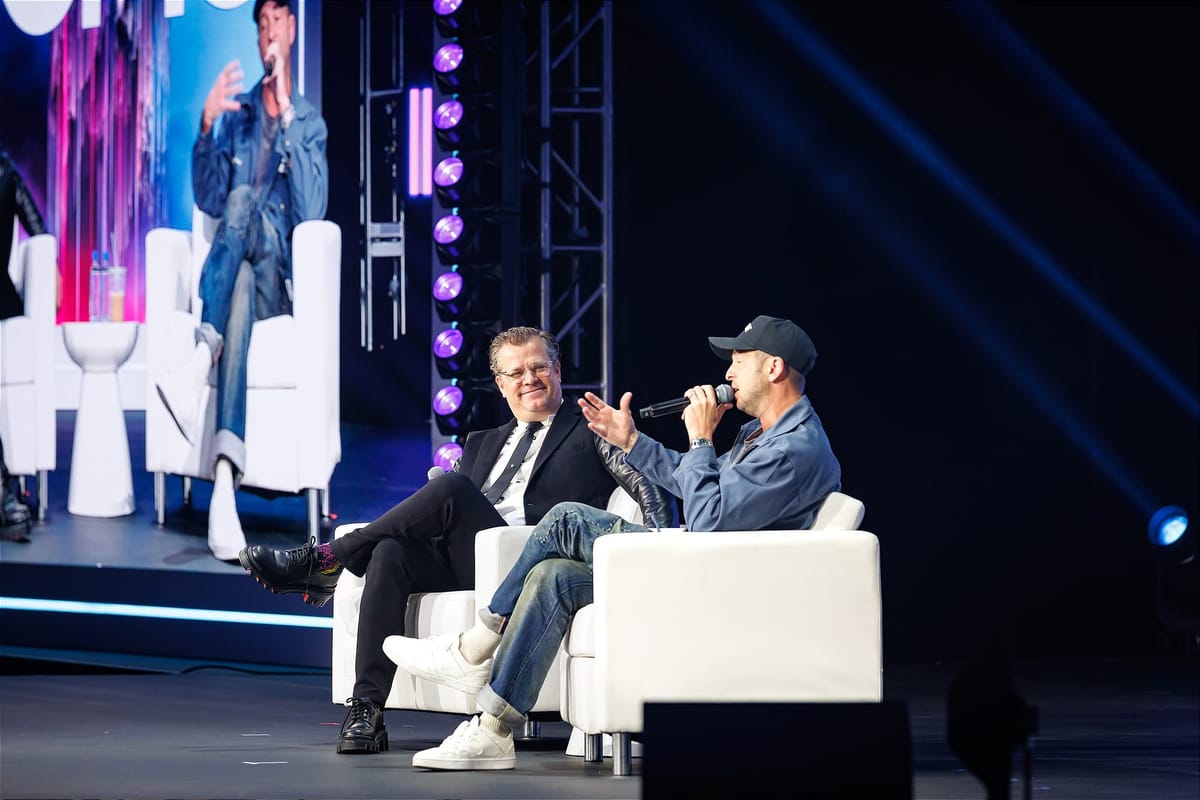
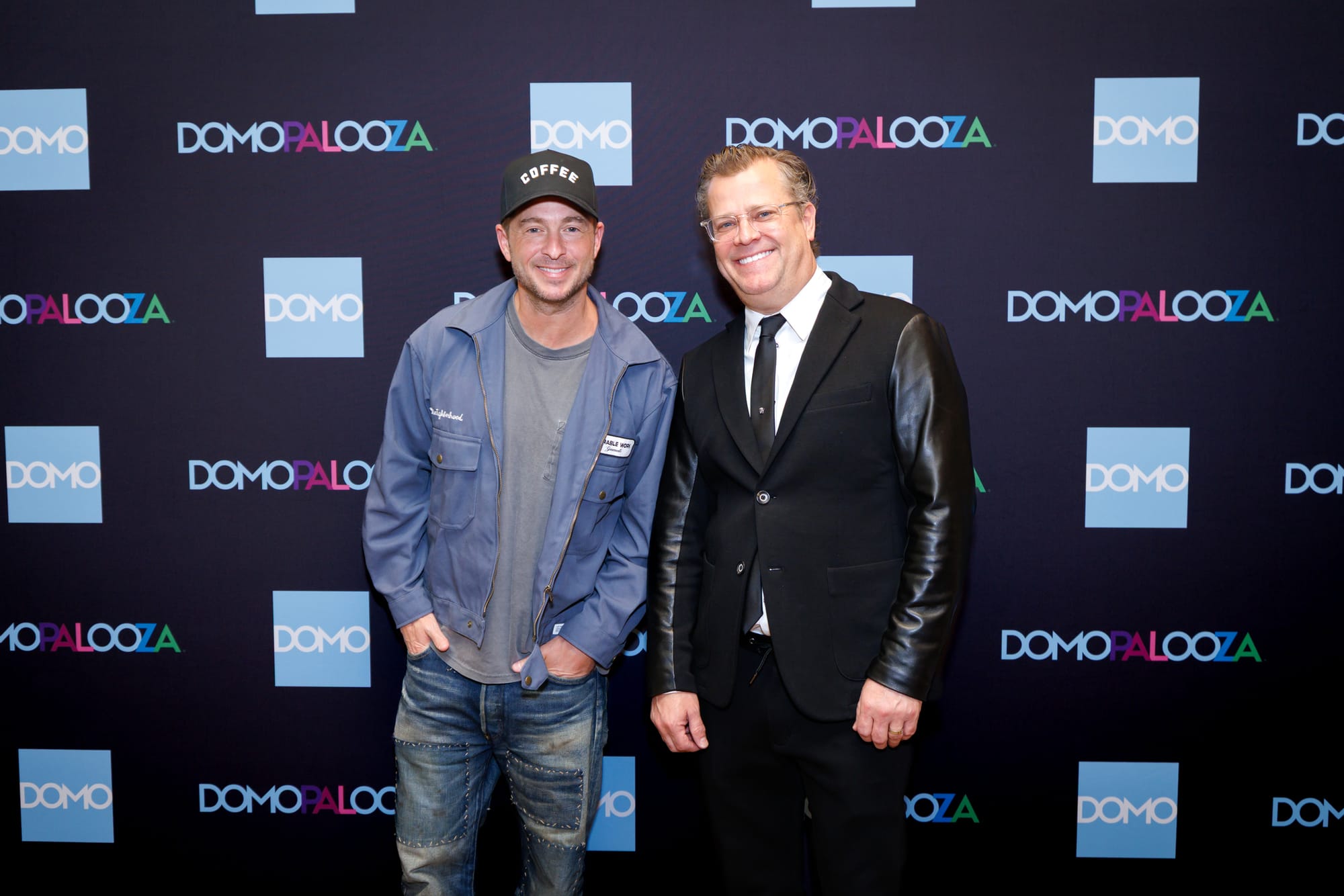
Ryan Tedder, OneRepublic frontman and early investor in Perplexity and SpaceX, sits down with Josh James, Founder and CEO of Domo, a highlight of Domopalooza 2026.
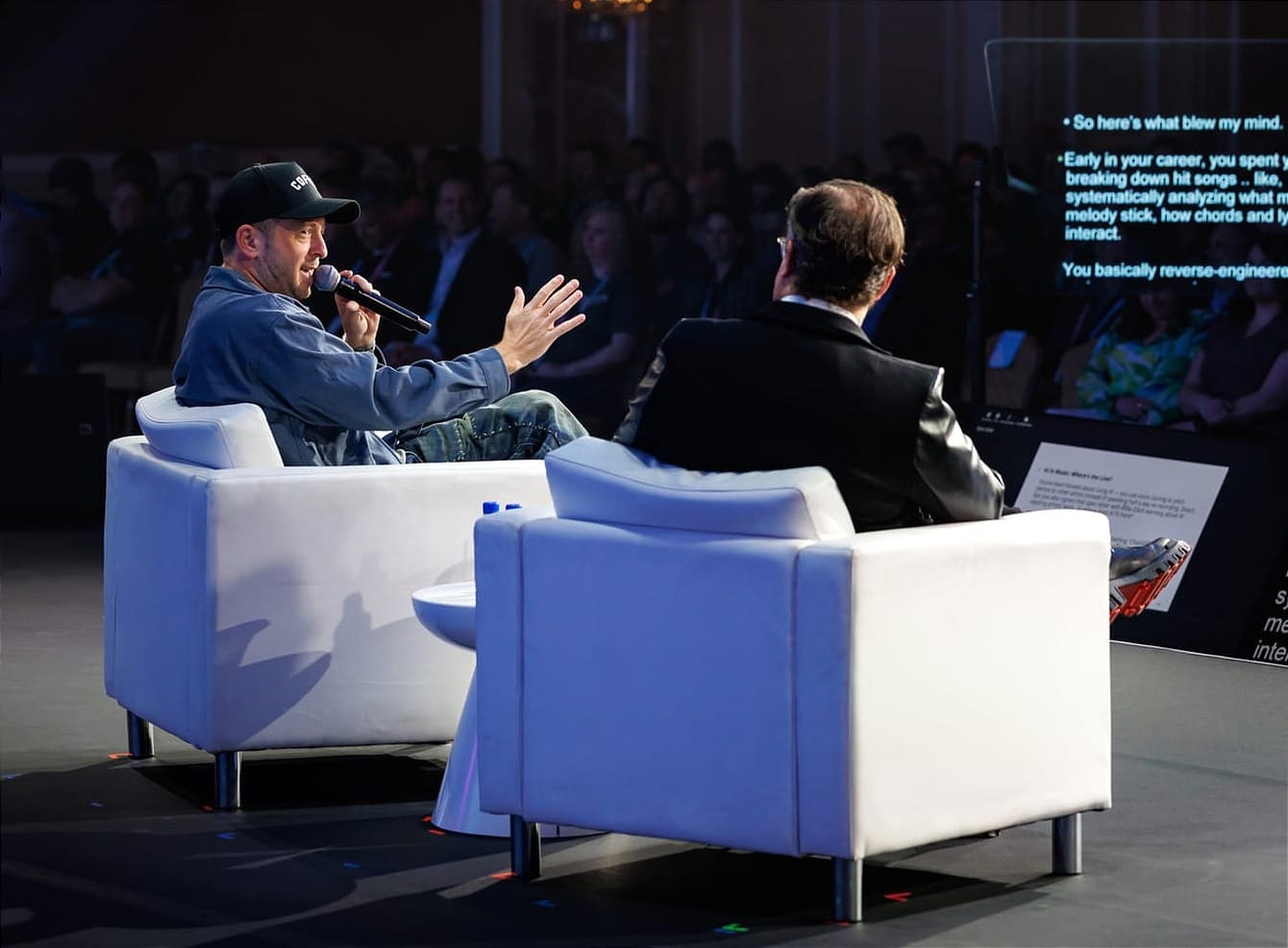
Grammy-winning songwriter and tech investor Ryan Tedder joins Domo founder and CEO Josh James at Domopalooza 2026 in Salt Lake City. Tedder, an early backer of Perplexity and Index.ai who runs publishing company Runner, argued that AI's real power lies in accelerating human creativity — not replacing it. (Credit: Brittany Nielsen)
Grammy-winning songwriter and tech investor Ryan Tedder joins Domo founder and CEO Josh James at Domopalooza 2026 in Salt Lake City. Tedder, an early backer of Perplexity and Index.ai who runs publishing company Runner, argued that AI's real power lies in accelerating human creativity — not replacing it. (Credit: Brittany Nielsen)
The Grammy-winning hitmaker behind 'Bleeding Love' and 'Apologize' is also an early investor in Perplexity, SpaceX, and Index.ai — and he has a warning for every creative who thinks AI is someone else's problem.
Salt Lake City, Utah — March 30, 2026
Somewhere in the middle of his second meeting with one of the world's largest AI companies, Ryan Tedder stopped talking. He looked around the room, did the math, and realized what was actually being asked of him. The company — whose name he declined to share, though he noted with a dry smile that 'it's Cheerios' (meaning: everyone knows it) — wanted his help building the AI that would replace professional songwriters. People like him.
"I just kind of stopped," Tedder recalled on stage at Domopalooza 2026 in Salt Lake City. "I was like, you guys are literally asking me to replace myself. I think this meeting is adjourned." He left. They kept asking for follow-up meetings. He ghosted them. "Change my number," he said.
It is a story that landed with knowing laughter in a packed hotel ballroom of people who also spend a lot of time thinking about what AI is going to do to their industries. But Tedder is not a Luddite telling a cautionary tale from the outside. He is an early investor in Perplexity and Index.ai, a regular user of Claude and ChatGPT, and someone actively building AI agents to run his commercial real estate business. He uses AI inside recording sessions. His critique of how the technology is being applied in the music industry is not a rejection — it is a distinction. And it is one that every industry right now is struggling to draw.
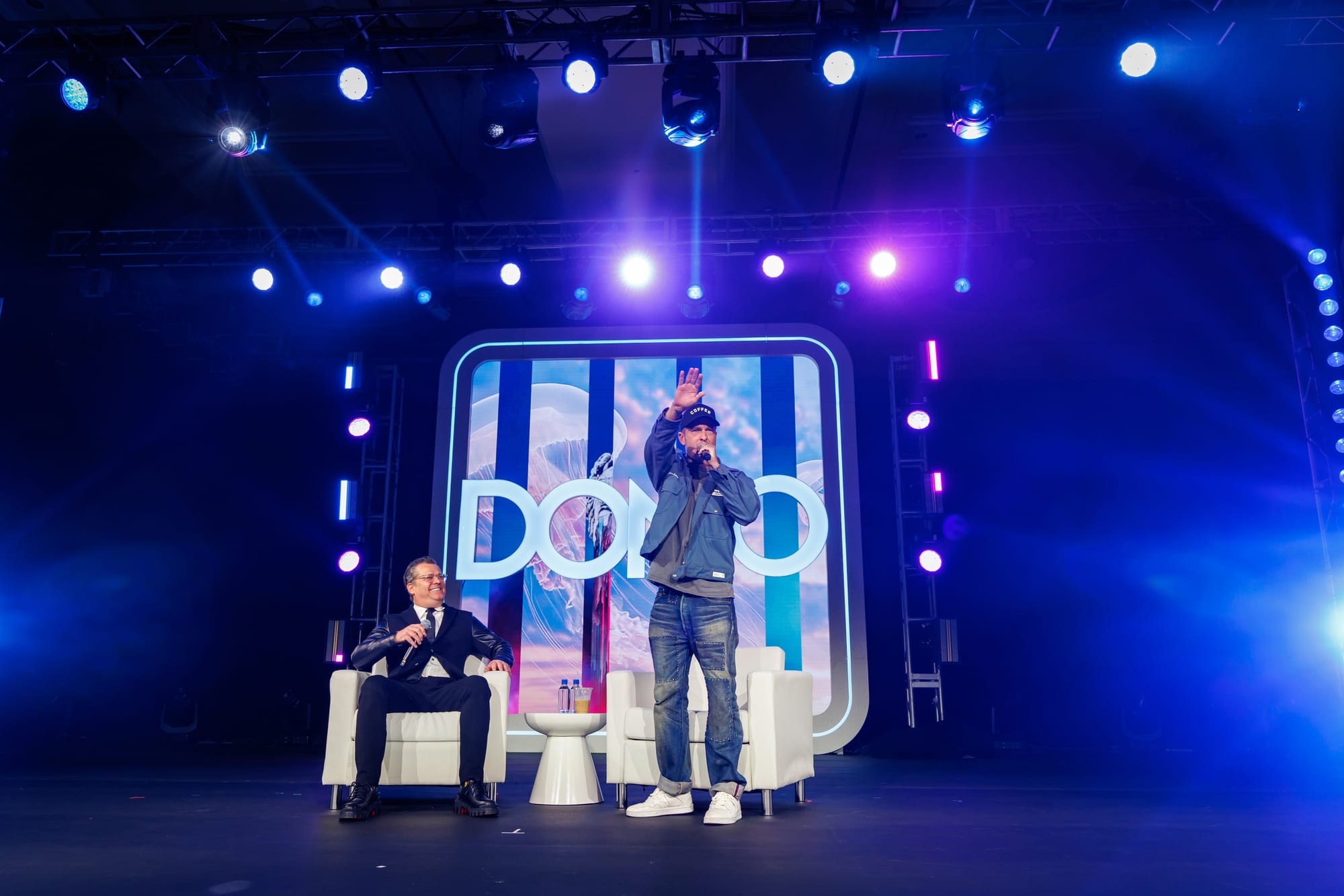
Ryan Tedder waves to the packed house at Domopalooza 2026 in Salt Lake City. He joined Domo founder and CEO Josh James on stage to discuss AI, the music industry, and why he walked out of a meeting when a major tech company asked him to help build the tool that would replace him. (Credit: Brittany Nielsen)
The Hitmaker Who Also Reads Cap Rates
To understand why Tedder's walkout matters, you have to understand who is doing the walking. He is the songwriter behind some of the most-streamed records of the last two decades: Bleeding Love for Leona Lewis, Apologize for Timbaland, Counting Stars for his own band OneRepublic, Sucker for the Jonas Brothers, Do It Well with Ludacris. He runs Runner, an independent music publishing company he describes as the fastest-growing of its kind, with 25 songwriters on its roster. The week of the Domopalooza conversation, Runner published roughly half of the BTS comeback album.
He is also, quietly, a serious technology investor. He got into angel investing around 2016 and 2017, caught the bug early, and has since put money into SpaceX, Perplexity, Index.ai, Oura (the smart ring company), Skinny Dipped snacks, and a Japanese barbecue sauce brand that he said sold just weeks before this conversation. He does not advertise the breadth of his business interests, but by his own admission he probably spends more time now on commercial real estate — he built a separate company around acquisitions — than on music.
This is relevant context. When Tedder says AI companies are making a mistake in how they approach creative industries, he is not speaking from anxiety. He is speaking from the same analytical frame he uses to evaluate a cap rate or a seed round.
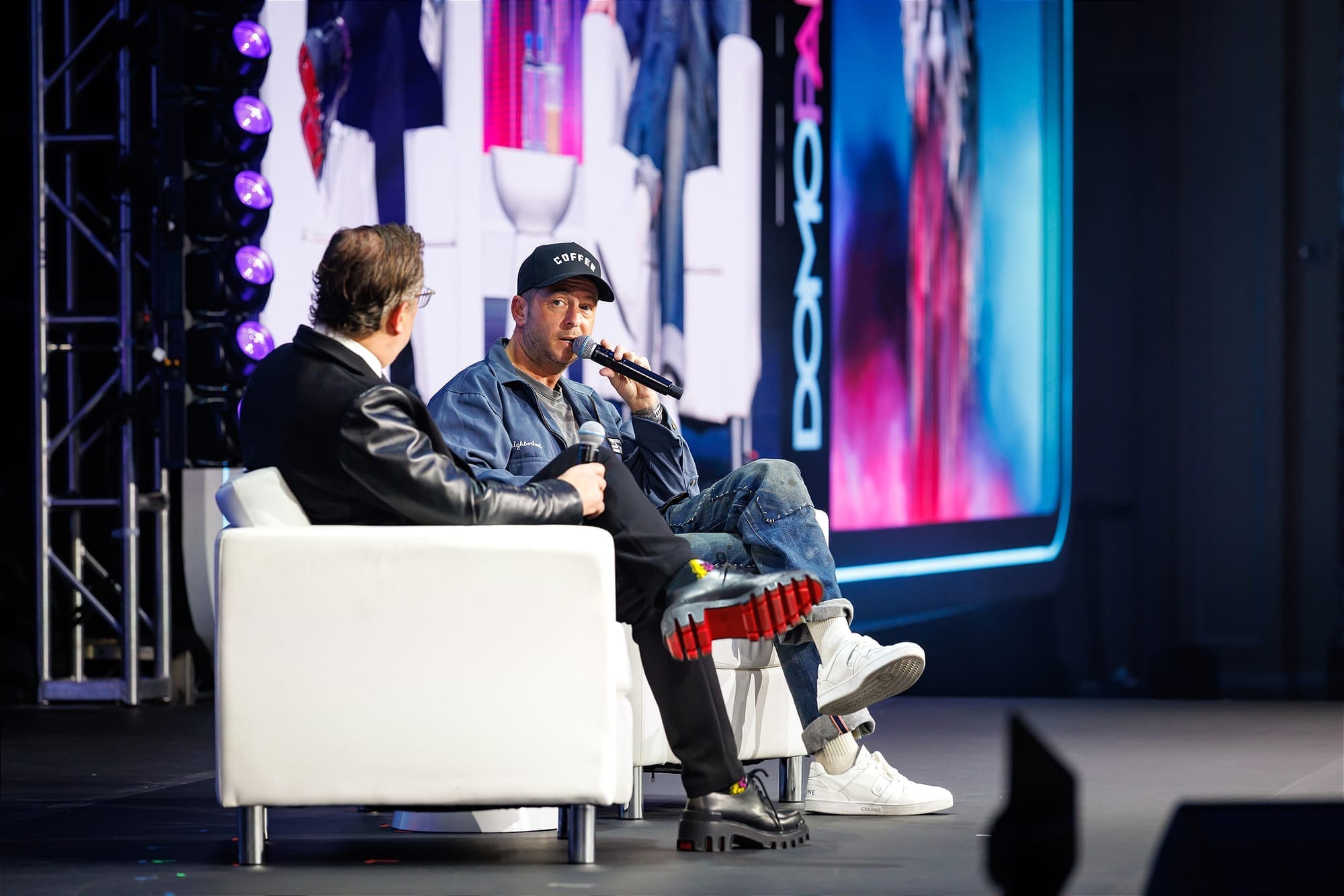
"Be not replaceable," Ryan Tedder told the Domopalooza 2026 crowd — advice he gives his own songwriters as AI reshapes the music industry. The Grammy-winning hitmaker joined Domo CEO Josh James on stage at the Grand America Hotel in Salt Lake City to discuss creativity, venture capital, and the limits of artificial intelligence. (Credit: Brittany Nielsen)
The Wrong Laser, Pointed at the Wrong Thing
Tedder's framework for AI is simple and worth writing down: "AI, when it's operating at its best, takes things that are very complicated and oftentimes boring and makes them fast and simple." The problem, as he sees it, is that the music industry's application of that principle is aimed directly at the creative act itself — at replacing the songwriter — when the far more powerful and less destructive application is as a tool inside the creative process.
He walked through exactly how he uses it in sessions. Say an artist wants a 1960s string section with Motown drums. In the old workflow, that means scheduling musicians, booking a room, coming back in two weeks. In Tedder's current workflow, he opens a generative audio tool, applies what he calls "really good prompting," and has a usable reference track in five minutes. The artist hears it, gets inspired, and the song gets finished. If the track makes the album, Tedder goes back and replaces the AI-generated material with real production. The AI was never the product. It was the scaffold.
"It's no different than using AI to remodel your living room," he said. "You feed in a photo, it spits out three or four iterations, you pick one and hand it to your designer. That's more or less, in a musical sense, how we use it."
The companies building AI music tools, however, are largely chasing a different prize: the ability to generate a finished, commercially viable song from a text prompt, with no human songwriter involved. Suno, which Tedder named as a current leader in that race, was built in Cambridge by technologists, not music industry veterans. Tedder spent a couple of hours with one of those companies' founders last month and noted that they recently struck a deal with Universal Music that is shifting their business model significantly. He is watching, but cautiously.
The distinction he draws is sharp: AI that accelerates the creative human is additive. AI that attempts to replicate the creative human is, in his view, both a worse product and a strategy that eventually comes back around to eat the people who helped build it.
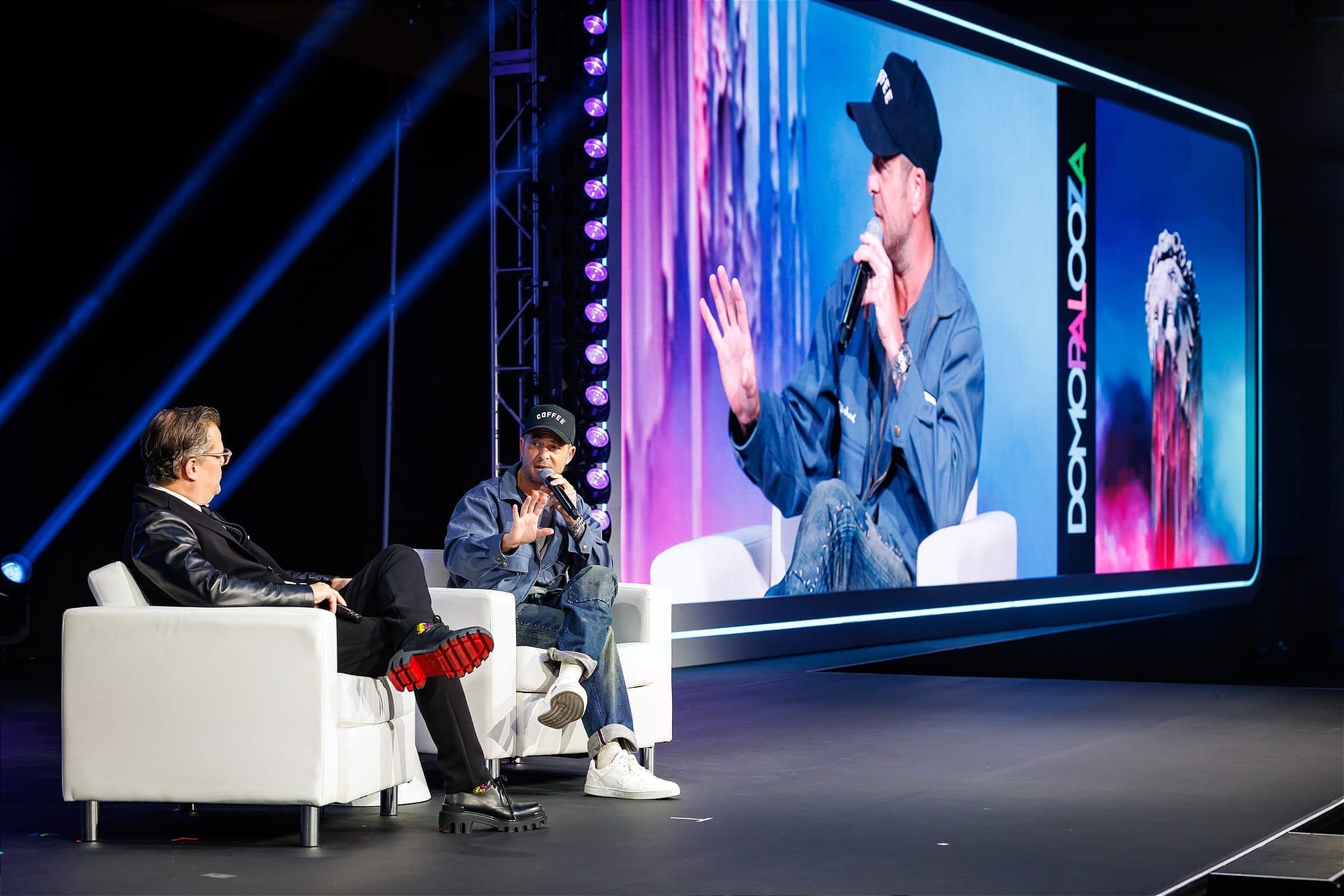
At Domopalooza 2026, Domo CEO Josh James sat down with Ryan Tedder for a wide-ranging conversation about AI, angel investing, and what every industry can learn from a hitmaker who also reads cap rates. (Credit: Brittany Nielsen)
Running the Models in Parallel
For a man who just described walking out of an AI meeting, Tedder is unusually fluent in the competitive landscape of the industry. He keeps Claude, ChatGPT, Perplexity, and Grok open in parallel tabs and pastes the same query into all of them simultaneously, partly to compare speed and reliability, partly to check for what he called the most dangerous habit in AI use: confirmation bias.
He had particular things to say about each. ChatGPT's sycophantic tendencies — its habit of opening responses with affirmations like "Great question!" — drove him and, he said, many high-ranking entertainment executives he knows to Perplexity, which he characterized as reflecting the personality of its founders: just the facts, no editorial lean, no cheerleading. "Give me just the answer I asked for," is how he described the preference of that tool.
On Anthropic and Claude, Tedder noted a shift he has been watching in real time: a substantial migration of Fortune 500 companies and everyday users away from OpenAI over the past 90 days, driven in part by concerns that government contracts with OpenAI mean company data could be accessible to federal agencies. "It's really interesting to see," he said. He expects the race between the two to continue for years and frames it as Coke versus Pepsi — a massive rising tide with multiple winners — while flagging xAI's unlimited resources and Elon Musk's personal vendetta against OpenAI as a variable that makes the outcome genuinely unpredictable.
Ryan Tedder and Domo CEO Josh James on stage at Domopalooza 2026 at the Grand America Hotel in Salt Lake City. Tedder spoke candidly about AI, venture capital, and the future of creative work. (Credit: Brittany Nielsen)
The Room Where It Was Announced
It is worth noting where this conversation took place. Domopalooza is the annual conference of Domo, the American Fork, Utah-based business intelligence platform. This year, the event's headline product announcement described, in enterprise terms, almost exactly what Tedder is building for himself in real estate.
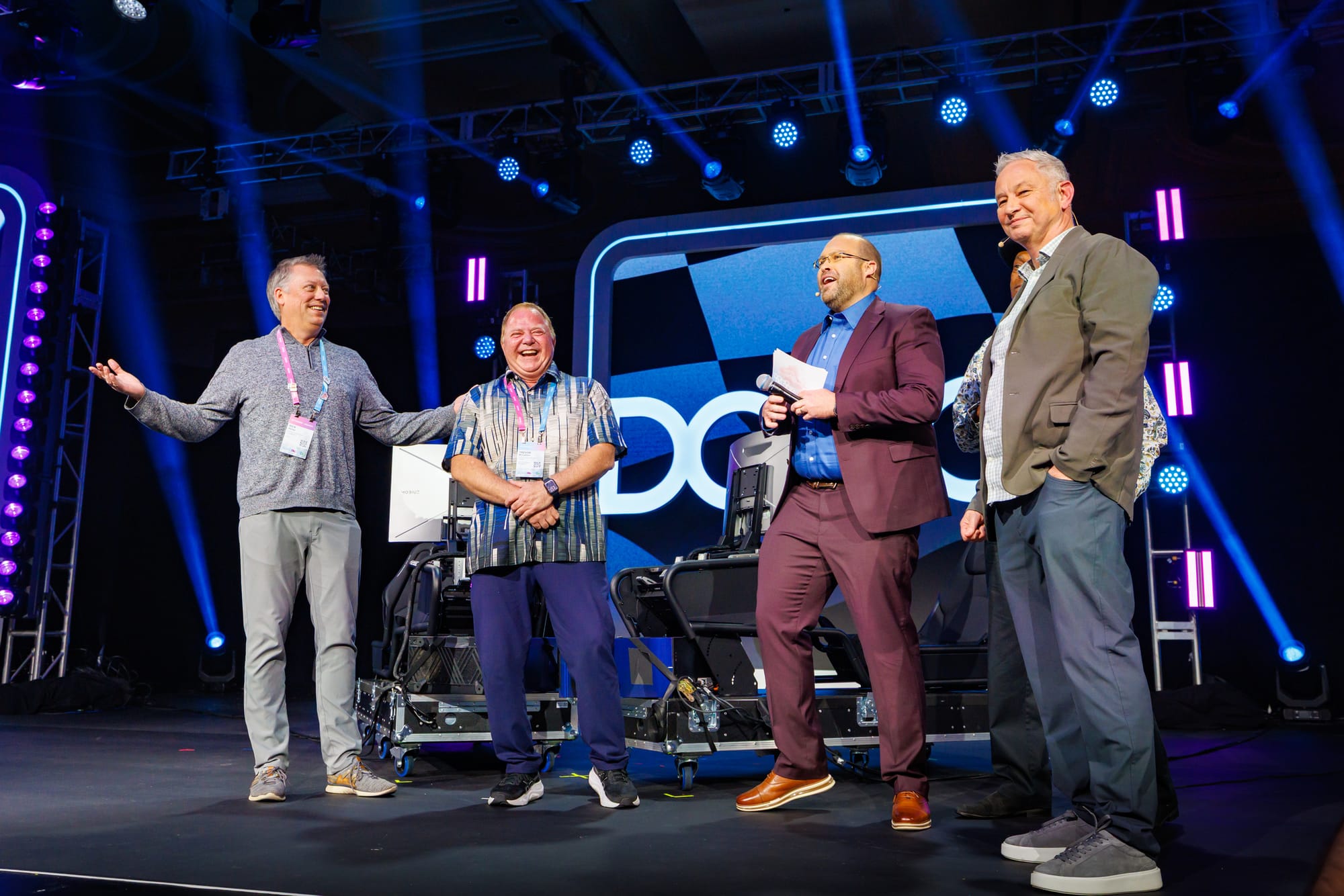
Mark Boothe, Domo's CMO, with Domo clients on stage at Domopalooza 2026 in Salt Lake City
At the conference, Domo CEO Josh James and members of his team unveiled an AI orchestration framework built around four components: an AI Agent Builder, AI Toolkits, a centralized AI Library, and a Domo MCP Server that connects enterprise data directly to external AI platforms including Claude, Gemini, and ChatGPT. The pitch is the same one Tedder made from the stage, just formalized into a product: stop running AI experiments that pile up technical debt and start deploying agents that operate inside real production environments, connected to governed data, taking action on behalf of human decision-makers. "AI doesn't become valuable when a model gets smarter," James said in the announcement. "It becomes valuable when it's connected to your business and becomes a system of action."
The practical example Domo used to illustrate the framework. A sales leader asking an AI assistant to analyze pipeline risk and receiving an interactive dashboard with live filters and drilldowns is structurally identical to what Tedder described building for his acquisition team. One is a product announcement from a Nasdaq-listed company. The other is a songwriter who decided, somewhere between his second and third platinum record, that he needed to understand cap rates. They arrived at the same architecture from opposite directions.
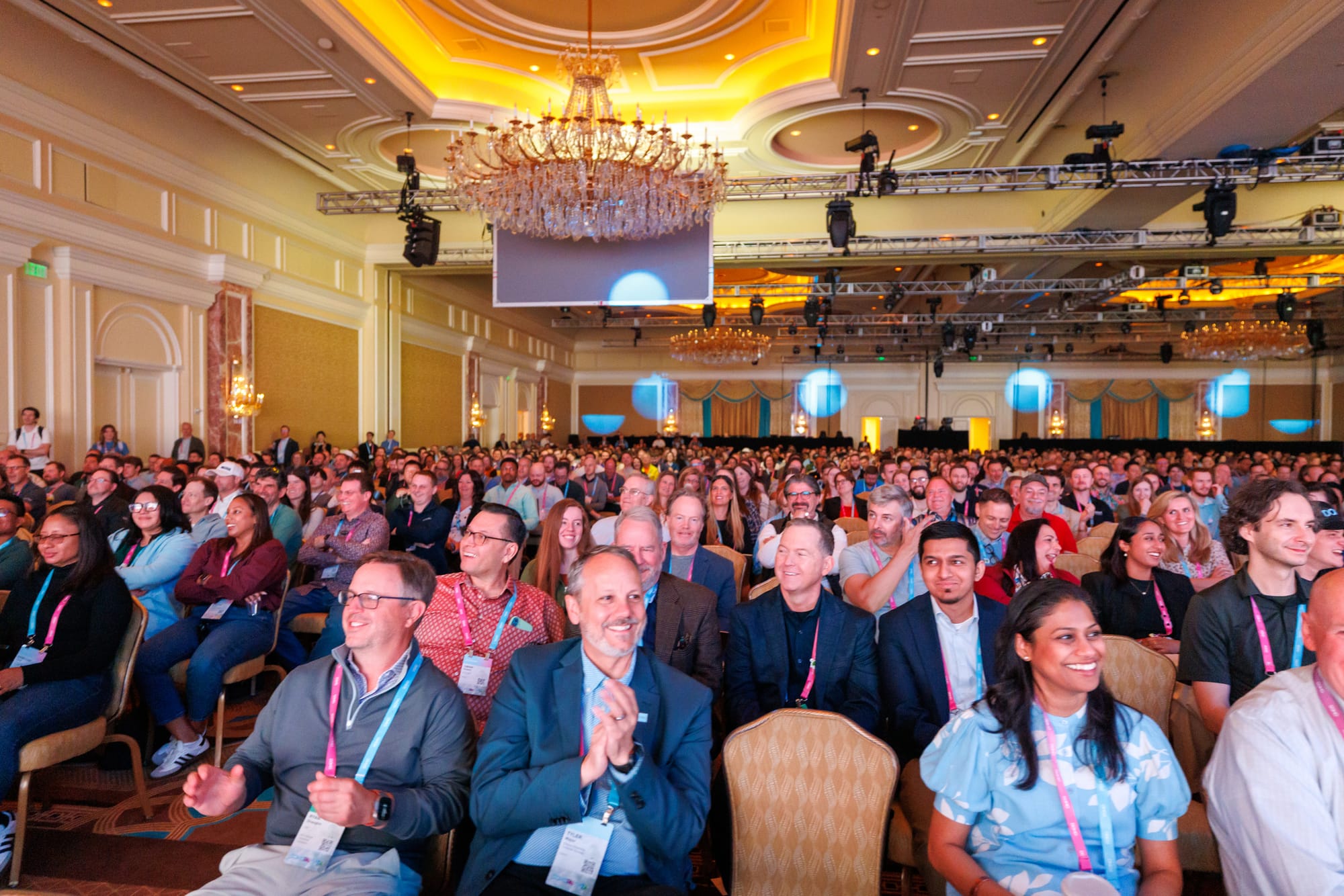
A packed ballroom of data and technology executives at the Grand America Hotel in Salt Lake City takes in a conversation between Domo CEO Josh James and Ryan Tedder — at Domopalooza 2026. (Credit: Brittany Nielsen)
Building What He Can Touch
There is a philosophical thread running through every business decision Tedder described, and it connects the walkout to the real estate company to the AI agent he is building right now. It starts with the nature of intellectual property. Everything he writes, every hit, every publishing catalogue, every lyric, will eventually pass into the public domain. Copyright law puts a hard ceiling on how long a creative work can be owned. Seventy-five years after the creator's death, it belongs to everyone.
"The way the laws are, eventually, everything that I make becomes public domain," he said. "Once I grasped that, I was like, I need to put something somewhere that I know is not just going to be handed out." That realization, that songs are, in a legal sense, temporary, is what drove him to build hard in commercial real estate. He can touch a building. It does not expire.
The AI agent he is developing for his real estate business is the clearest example of the principle in practice. He is building a system that will ingest his full acquisition profile, asset type, target markets, cap rate requirements, size parameters, connect to commercial listing databases, run nightly scans, and deliver a ranked list of the top 20 matching properties in America every morning. Work that would take a team of analysts days to produce manually arrives before he has finished his coffee.
"Humans make mistakes when we do the same repetitive action over and over again," he said. "I'm happy to throw AI at that and save me a ton of time." The human component, in his model, comes in after the filter — to make the call, not to do the scanning.
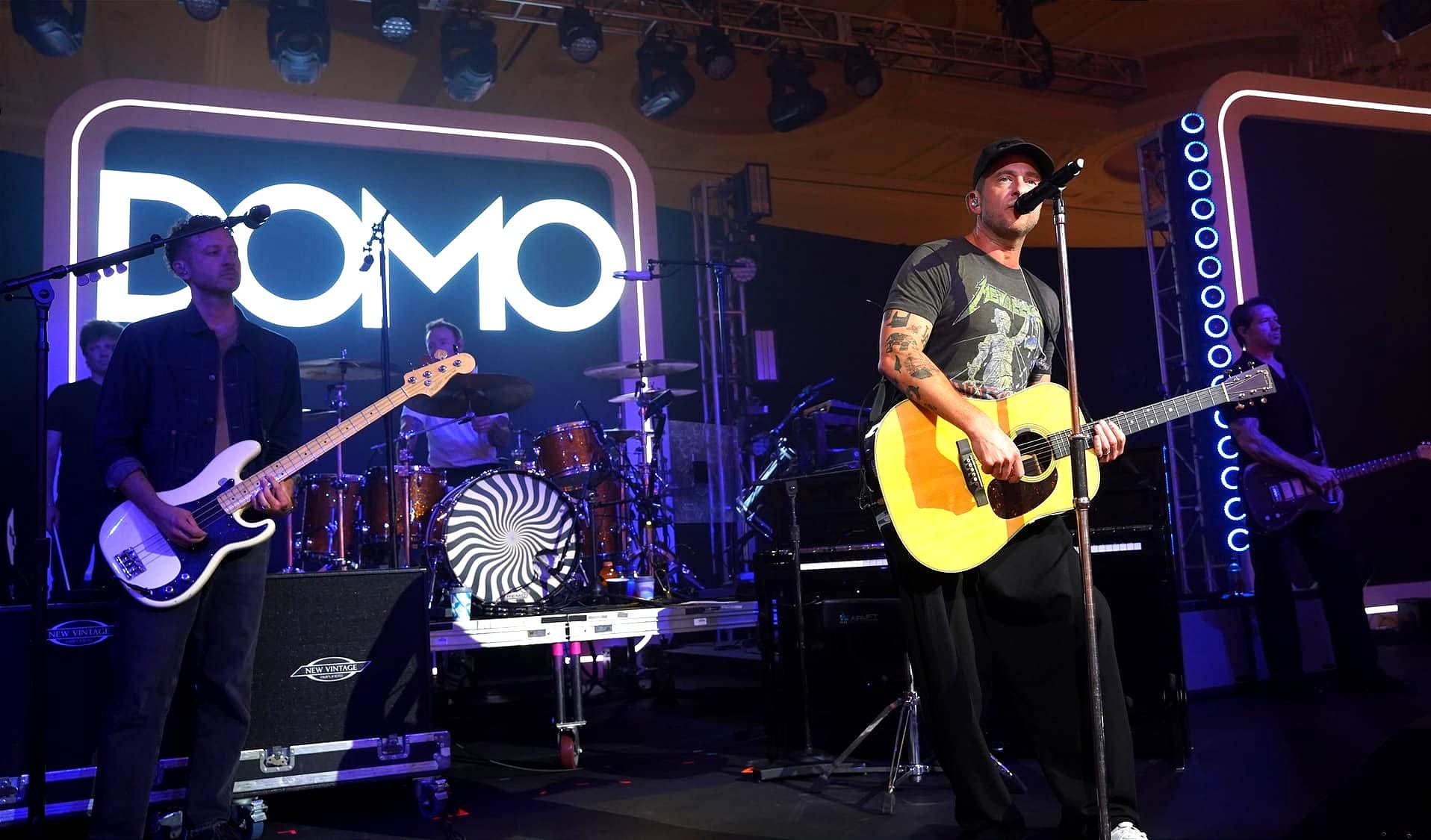
The night before this conversation, Tedder performed an intimate OneRepublic concert for Domopalooza attendees at the Grand America Hotel — the first show, he said, where he felt the entire audience sang along to every song. (Photo: Mark Tullis)
'Be Not Replaceable'
The advice he gives his songwriters — the 25 writers on Runner's roster who are, reasonably, nervous about where this is all going — is three words: be not replaceable. It sounds simple. It is, in practice, the hardest possible instruction to act on, because it requires being honest about which parts of your work actually require you.
Tedder's answer, applied to himself, is the texture of lived experience in a creative room, the ability to read an artist, redirect a session that is losing energy, recognize when a song that started as a Beyoncé record is actually a OneRepublic record. That judgment, he argues, is not in the training data. The 1960s string section it generated in five minutes was not Tedder's contribution. Knowing when to deploy it, how to edit it into the track, and when to replace it — that was.
He offered one more observation that is worth sitting with: "Everybody has access to AI at this point. You can use AI to figure out how to avoid getting killed by AI."
That is not a consolation. It is a challenge. The companies that handed him the meeting agenda and watched him walk out of the room may want to take note.
Ryan Tedder, lead singer of OneRepublic and Grammy-winning songwriter, and Domo founder and CEO Josh James at Domopalooza 2026, Grand America, Salt Lake City, Utah. (Credit: Brittany Nielsen)
Share this article
The link has been copied!
Your link has expired. Please request a new one.
Your link has expired. Please request a new one.
Your link has expired. Please request a new one.
Great! You've successfully signed up.
Great! You've successfully signed up.
Welcome back! You've successfully signed in.
Success! You now have access to additional content.