At Silicon Slopes Summit 2026, Mark Cuban and CMS Administrator Chris Klomp confronted the real drivers of healthcare costs—complexity, consolidation, and hidden incentives—in a candid discussion on transparency, competition, and why meaningful reform remains so hard.
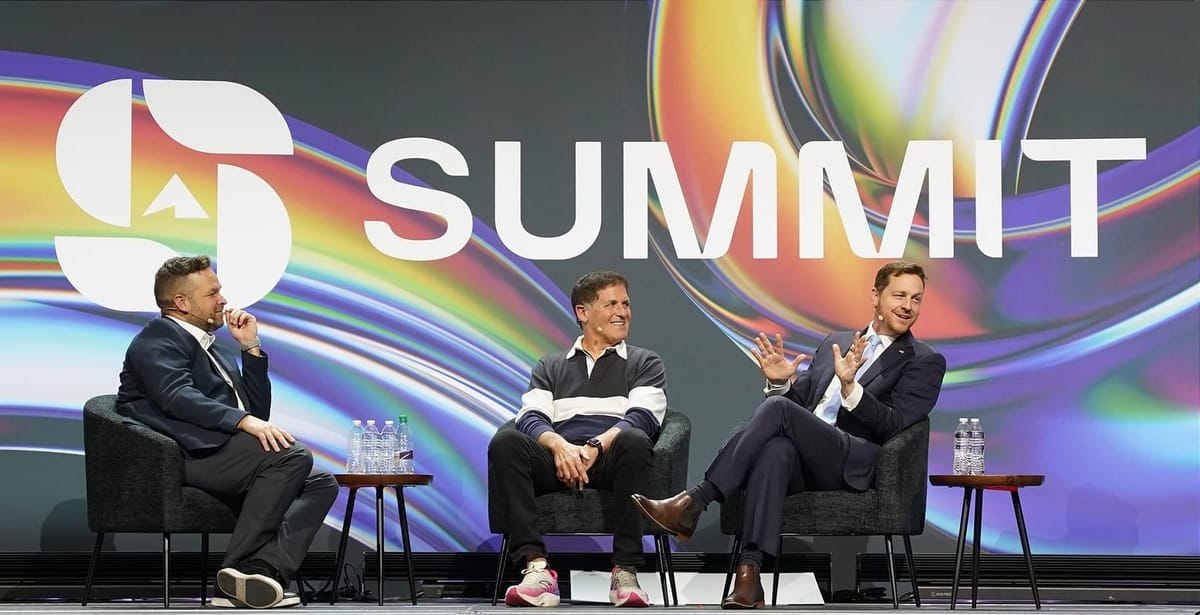
Tyler Jennings (moderator) with Mark Cuban and Chris Klomp on stage at Silicon Slopes Summit 2026, discussing transparency, power, and the true cost of healthcare, Salt Palace, Salt Lake City, February 6, 2026
Tyler Jennings (moderator) with Mark Cuban and Chris Klomp on stage at Silicon Slopes Summit 2026, discussing transparency, power, and the true cost of healthcare, Salt Palace, Salt Lake City, February 6, 2026
Salt Lake City, Utah -— February 6, 2026
Silicon Slopes is usually about startups, funding rounds, and the future of software in the Mountain West. This year, one Summit session cut in a different direction.
Instead of product demos or pitch decks, the room filled for a conversation on healthcare pricing, transparency, and power. On stage were two people who rarely share one: Mark Cuban and the head of Medicare and Medicaid, Chris Klomp. The pairing looked odd on paper—a billionaire entrepreneur who built a pharmacy to expose drug pricing next to a federal official overseeing a $1.1 trillion budget. That tension turned out to be the point.
As Tyler Jennings, the moderator, put it, “These two together, you might not think go together, but I hope over the next hour, you learn why these two have become friends of mine and are on stage together.” Jennings is GOEO's Director of Entrepreneurship and Ecosystem Development.
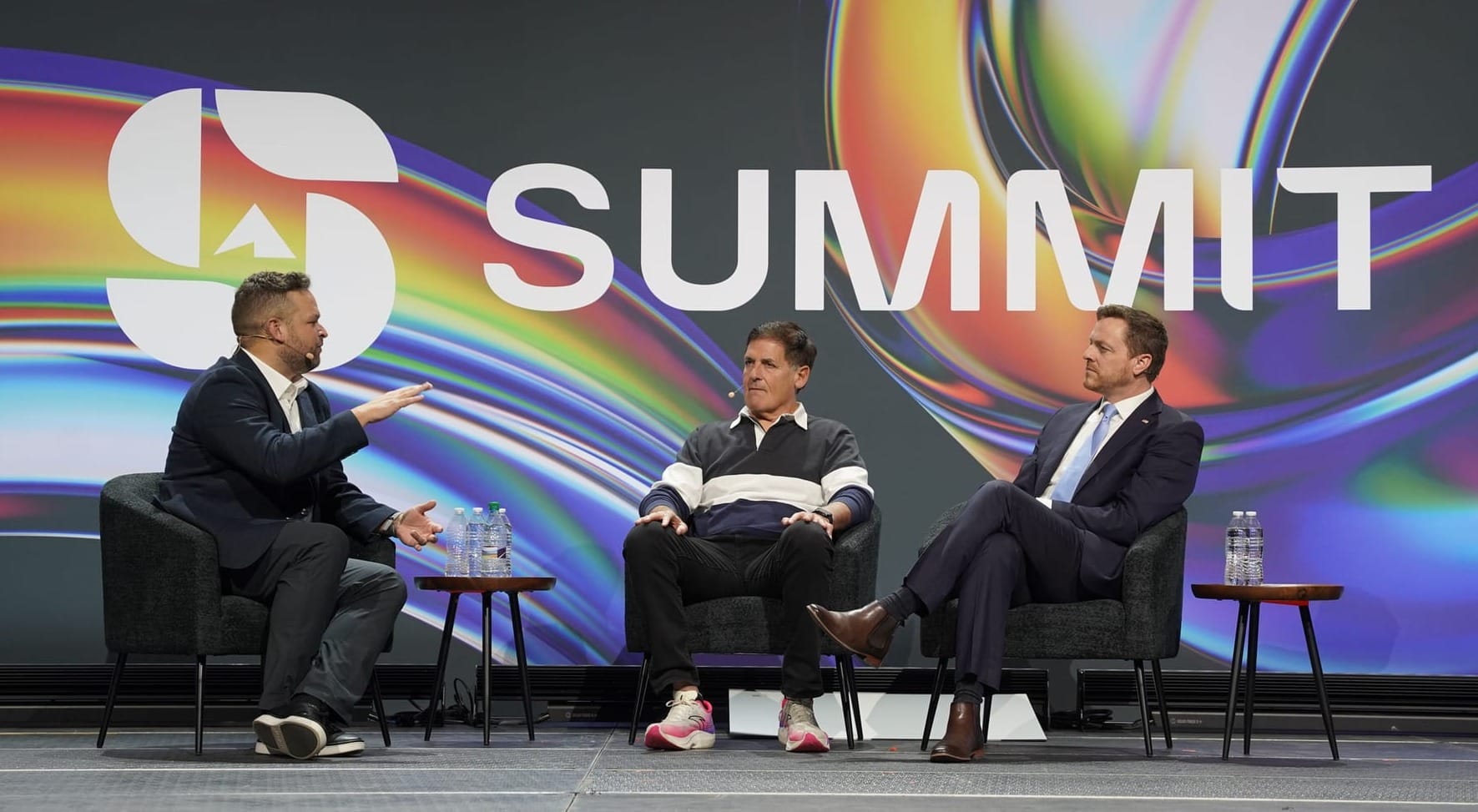
Tyler Jennings, Mark Cuban, and Chris Klomp at Silicon Slopes Summit 2026, Salt Palace, Salt Lake City, February 6, 2026
Cuban needs little introduction. He built Cost Plus Drugs after digging into pharmacy pricing and finding what he called a complete lack of transparency. “The biggest challenge in healthcare, but pharmacy-specific, is that there’s no transparency,” Cuban said. “So we created costplusdrugs.com.” What made the model different wasn’t scale or marketing. It was disclosure. “When you put in the name of the medication, we show you our actual cost, and then we show you our markup, which is only 15 percent,” he said.
That alone pulled in millions of users. Cuban noted they spent zero dollars on advertising and now serve more than three million customers.
Chris Klomp comes from the opposite side of the system. He runs Medicare and Medicaid, the largest health insurance programs in the world. His entry into healthcare was not ideological—it was personal. “I grew up in Idaho, the son of a doc,” Klomp said. “When I was 13, my mom died of cancer… I had a chip on my shoulder over healthcare. I was mad.” That path eventually led him into government, where prescription drug prices quickly became a focus. According to Klomp, the President was fixated on the issue. “Prescription drug prices don’t just bother Mark,” Klomp said. “It turns out they really bother the President.”
Tyler Jennings, Mark Cuban, and Chris Klomp at Silicon Slopes Summit 2026, Salt Palace, Salt Lake City, February 6, 2026
Despite coming from different sides, both men landed on the same diagnosis: the system is confusing by design.
Cuban was blunt about where the power sits. “The biggest insurance companies are so big, they have 2,600 subsidiaries,” he said. “They do $200 billion in intercompany transfers.” In his view, that complexity isn’t accidental. It allows pricing to shift, hide, and reappear elsewhere when pressure is applied. “If they don’t make money from PBMs because Chris cracked down, they just move it somewhere else,” Cuban said. “Fees instead of rebates. Consultants instead of primary cost.”
Klomp echoed the frustration from inside the government. The United States pays dramatically more than other countries for the same drugs. “We spend three times more in the United States than other wealthy countries do on the same drugs,” he said. “Same box, same drug, same manufacturing plant.” The difference, according to both speakers, isn’t innovation. It’s structure.
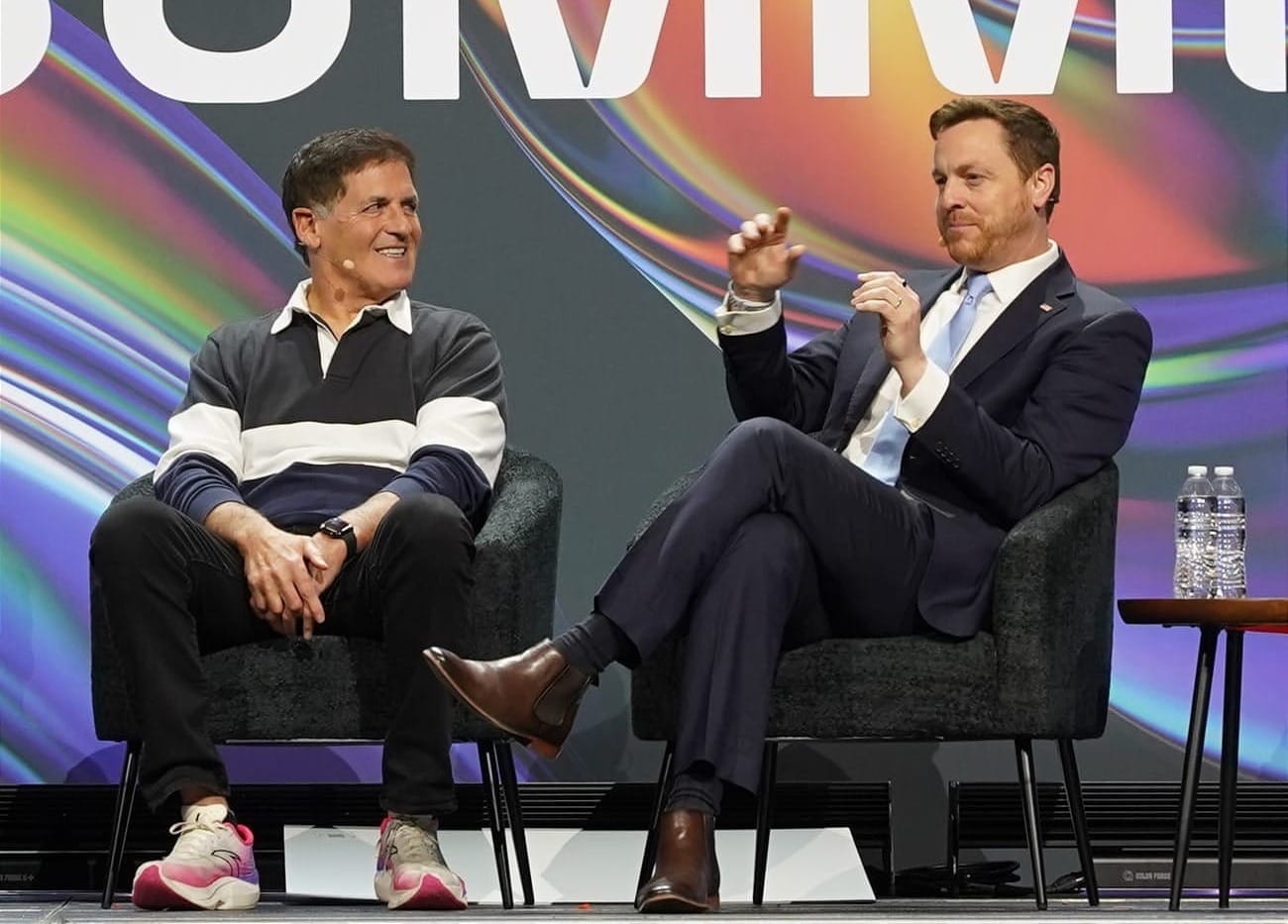
Mark Cuban and Chris Klomp, Silicon Slopes Summit 2026, Salt Palace, Salt Lake City, February 6, 2026
Cuban framed trust as a simple equation. “Trust equals transparency divided by self-interest,” he said. That idea has shaped Cost Plus Drugs and now extends into manufacturing and rare disease treatments. Cuban described a future where custom drugs can be produced in days instead of months. “When there is a baby who has a genetic disease… with our pods we can turn that around in days for $50,000,” he said. “That’s no longer a death sentence.”
Klomp tied that same transparency to policy. He pointed to the launch of TrumpRX.gov as a step toward public pricing. “As of last night, prices went down between 40 and 68 percent per cycle,” he said, referring to IVF drugs. “These are material.”
Both emphasized that transparency alone isn’t enough. Competition has to be real. “A market needs the buyer to know what they’re buying,” Cuban said. “And it needs the buyer to know what they’re going to pay. We don’t have that in healthcare.”
The conversation landed squarely with the Utah startup crowd. This wasn’t abstract policy talk. It was a lesson in power dynamics. “You’re going to have to sell through an incumbent hospital or insurer,” Klomp said. “Which means bastardizing your business model until it’s acceptable to the incumbent.” That reality, he argued, explains why healthcare innovation often stalls. “The only stakeholder in the entire healthcare economy that doesn’t care about incumbency is the U.S. government,” Klomp said.
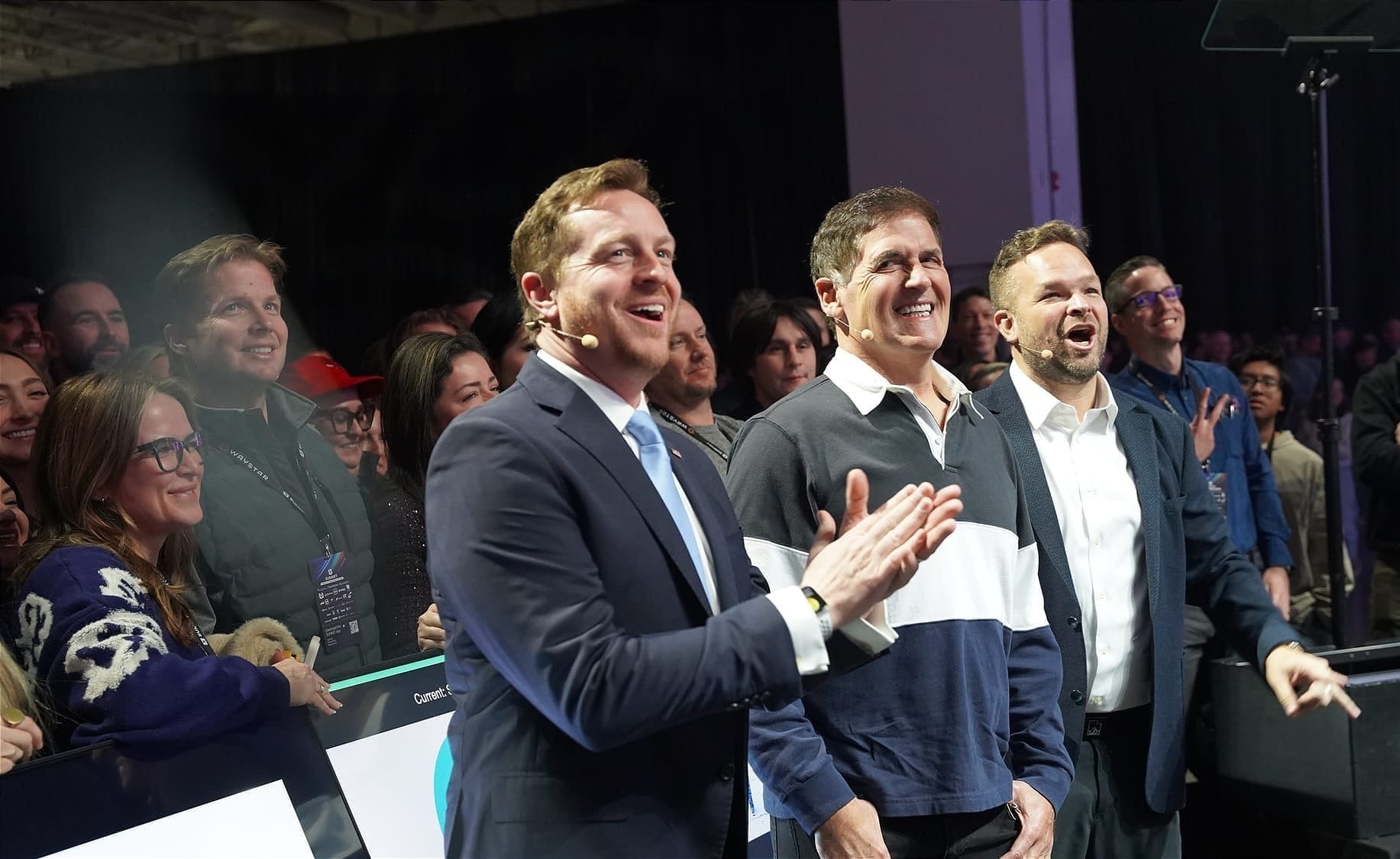
Chris Klomp hatching the idea to jump off the stage and take a photo in front of the massive SUMMIT audience
Cuban was more direct. “The biggest fraud is coming from the biggest insurance companies,” he said. “They are too big to care.”
This wasn’t a polished or performative panel. It felt like two people who see the same problems from very different sides trying to explain what actually breaks—and why. The conversation kept circling back to the same idea: systems get complicated when complexity protects the people inside them. “Transparency drives competition,” Cuban said. “Competition forces change.”
The panel didn’t produce clear answers or a clean path forward. But in the space of an hour, it created space for an unusually honest discussion about how healthcare really operates—and what it looks like when builders and policymakers are willing to talk plainly about it.
Share this article
The link has been copied!
Your link has expired. Please request a new one.
Your link has expired. Please request a new one.
Your link has expired. Please request a new one.
Great! You've successfully signed up.
Great! You've successfully signed up.
Welcome back! You've successfully signed in.
Success! You now have access to additional content.