Shaping Digital Futures: How UVU and Utah’s CIOs Are Transforming Higher Education
UVU’s 2026 Data Summit showcased innovative leadership in higher education, featuring a dynamic set of CIOs: Rene Eborn and Christina Baum. From myth-busting to cross-campus collaboration, the event highlighted data-driven strategies, student-centered solutions, and digital transformation insights.
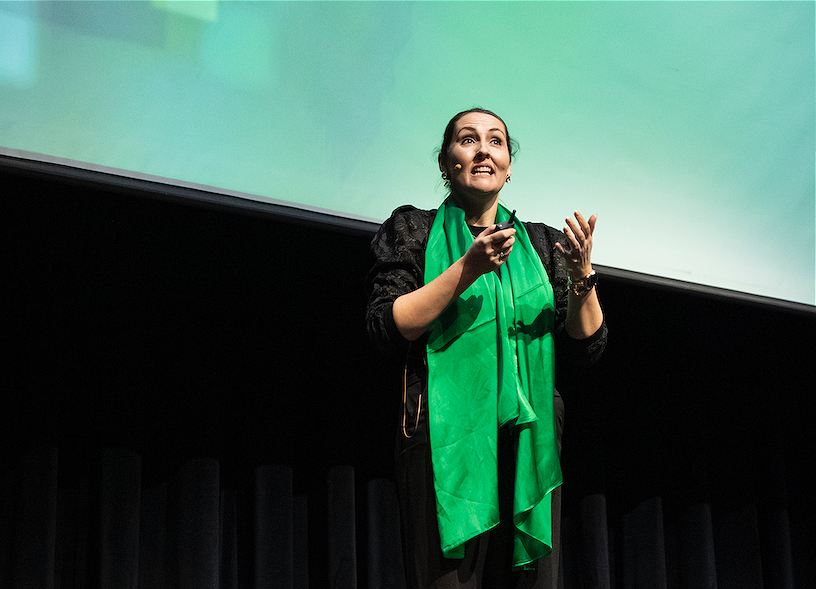
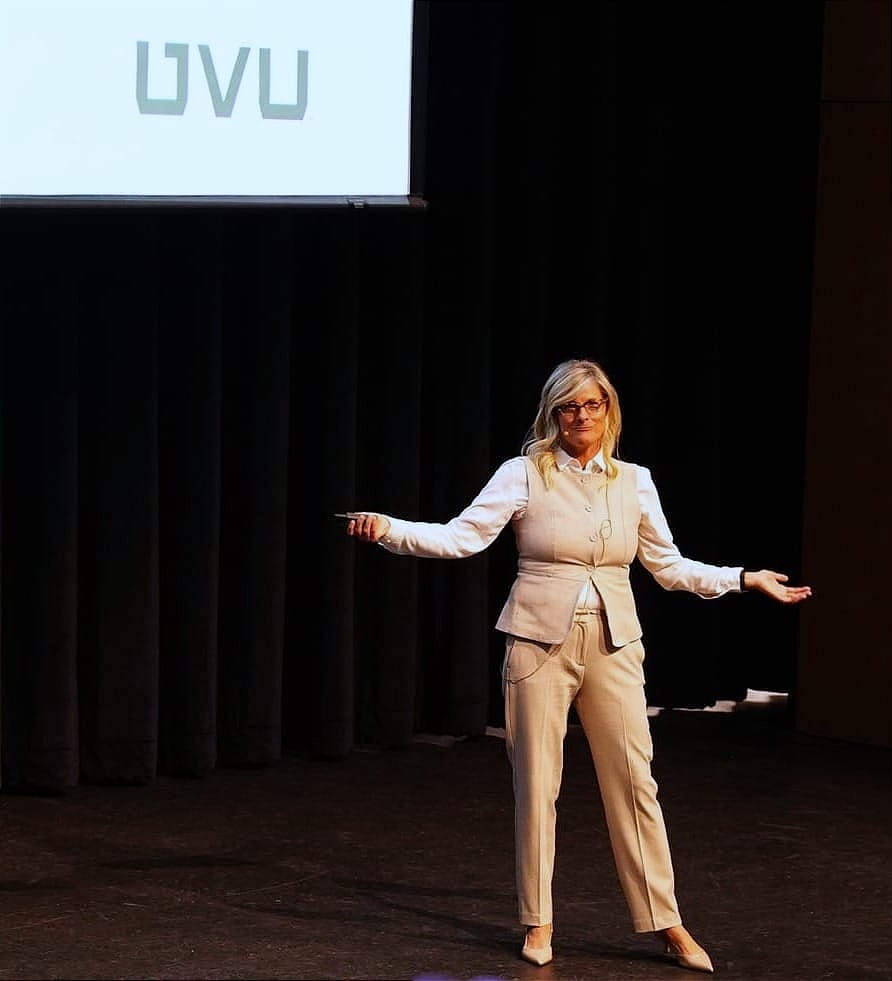
Christina Baum, UVU Chief Information Officer speaking at UVU's Data Summit. Credit: Emily Munoz, UVU
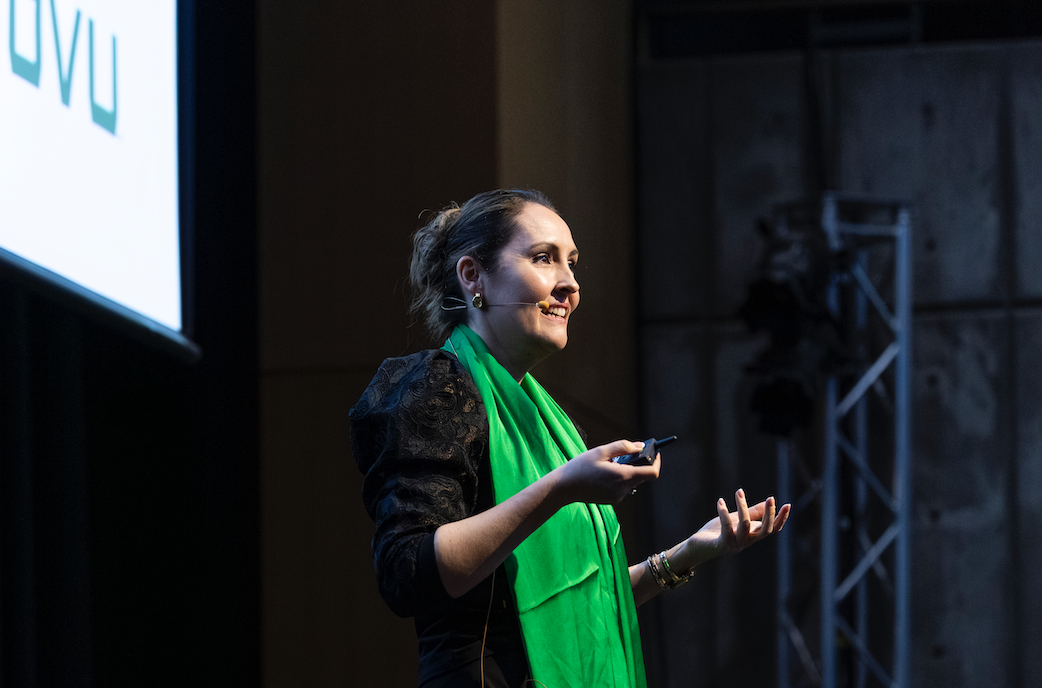
Christina Baum, UVU Chief Information Officer speaking at UVU's Data Summit. Credit: Emily Munoz, UVU
Orem, Utah - February 27, 2026
On February 25–26, Utah Valley University convened its 2026 Data Summit at the Sorenson Student Center, drawing professionals, faculty, students, and industry leaders into two days of sharp debate, practical workshops, and hallway conversations. The theme: Better Questions, Better Data, Better Decisions.
That framing set the tone for the keynotes, panels and interviews that unfolded around the event: conversations with campus leaders who aren’t just talking about digital transformation but building it in real time.
Across two days, attendees wrestled with how to align analytics with mission, how to protect student data without stifling experimentation, and how to build cross-functional trust. The networking sessions were less about business cards and more about shared problem-solving.
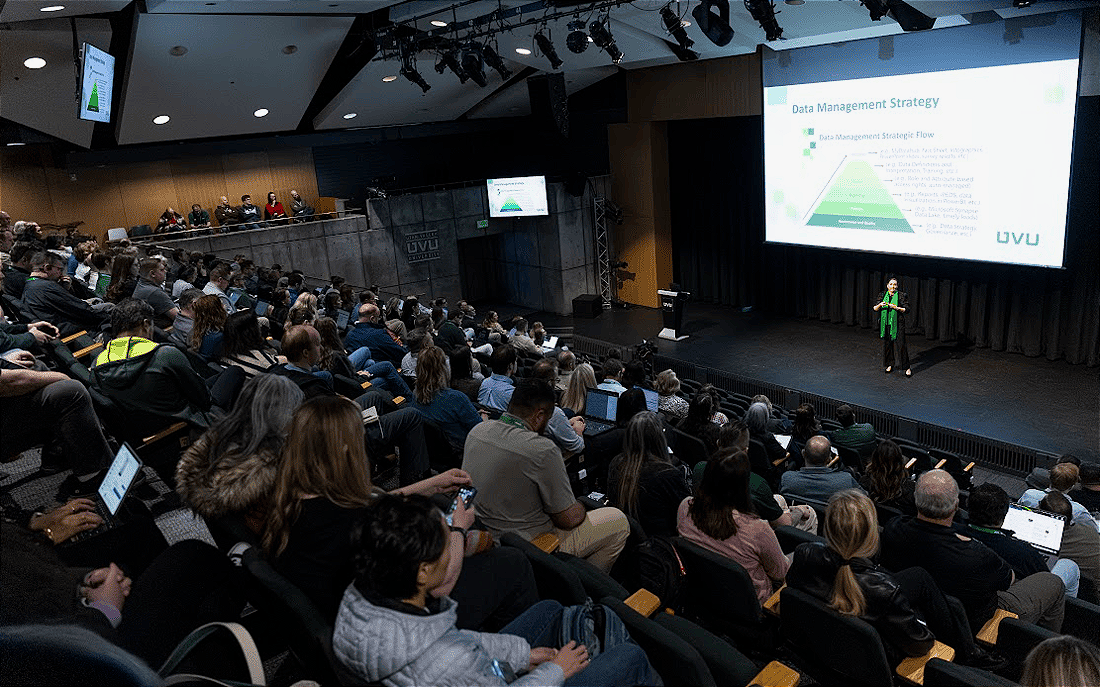
Attendees at the UVU Data Summit, February 26, 2026, Sorenson Student Center auditorium, Utah Valley University Credit: Emily Munoz, UVU
The summit drew representatives from nearly all 16 USHE institutions, along with Mountainland Technical College and private BYU, missing only a single school.
Utah’s public universities are facing the same forces reshaping every industry: AI disruption, cybersecurity threats, enrollment pressure, and rising expectations for digital experience. But inside two of the state’s campuses, Utah Valley University and Weber State University, technology chiefs are challenging something even more entrenched than legacy software: higher education’s culture itself.
At Weber State University and Utah Valley University, CIOs Rene Eborn and Christina Baum, discussed how they are redefining what digital transformation actually means — and who owns it.
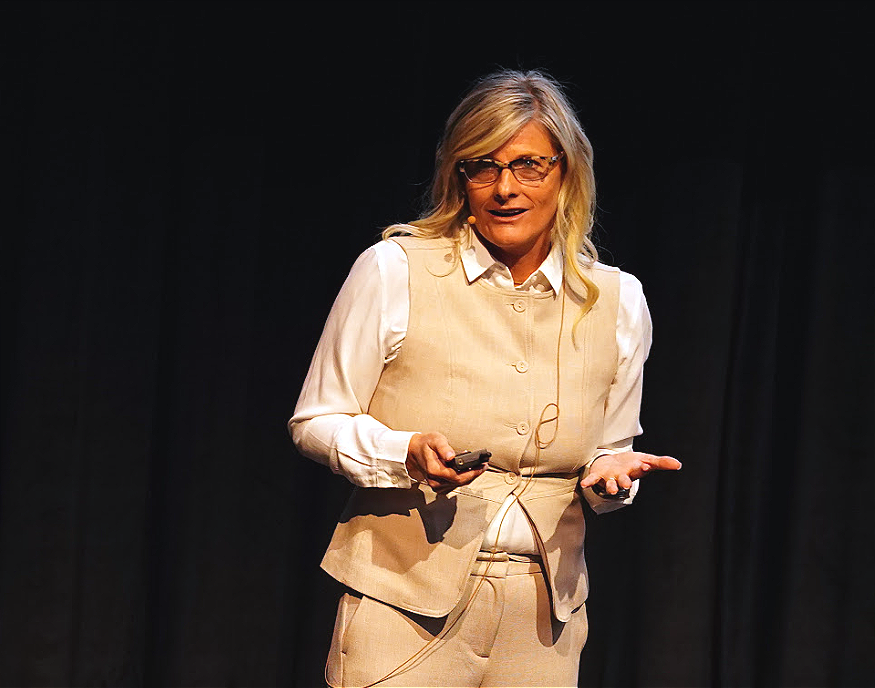
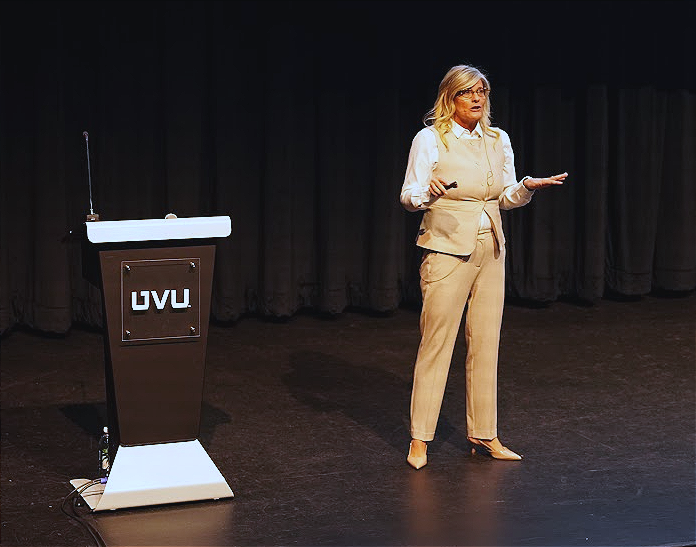
Christina Baum, UVU Chief Information Officer speaking at UVU's Data Summit. Credit: Emily Munoz, UVU
At Utah Valley University (UVU), technology is a strategic driver embedded in the institution’s core decision-making. That shift, according to Christina Baum, UVU’s CIO, didn’t happen overnight. When she joined the university, the CIO role was buried under a VP of Operations, not even part of the president’s cabinet. Baum recalls that prior leadership “elevated the role to a VP cabinet level, gave another AVP position to flesh out the division, and really showed an understanding of how critical technology is.”
Today, Baum is one of the few CIOs in the Utah higher education system reporting directly to the president, representing a structural change that allows technology to influence every major initiative, from academic programs to student services. “Hardly any projects happen that don’t have some technology underpinning them,” Baum shared with TechBuzz.
“Being in the room when those conversations are happening is germane to my success.”
From Firestorms to Foresight
Baum’s first order of business was stabilizing a division that had been in reactive mode. With a staff of 270, she undertook a comprehensive reorganization to clarify roles, establish ownership of products and services, and instill a culture of accountability. Every job description was evaluated and rewritten, a painstaking but necessary effort. “Prior to this, some products and services nobody thought they owned,” she notes. “There was bumping into each other, lack of clarity around responsibilities. The first piece to stabilize was getting that reorg in place.”
UVU's CIO Christina Baum speaking at UVU's Data Summit. Credit: Emily Munoz, UVU Credit: Emily Munoz, UVU
Alongside structural reform, Baum tackled budgeting. For years, technology’s funding had been planned one year at a time, producing “lumpy expenses” that didn’t match ongoing commitments. By developing a five-year forecast, she identified gaps and worked with the university president and executive council to reshape priorities, eliminate redundancies, and ensure financial sustainability. Strategic tuition increases earmarked for technology have since bolstered the division’s resources, allowing long-term planning alongside day-to-day operations.
The Beach Picture: A Vision for Digital Transformation
Once the foundation was secure, Baum introduced a visionary framework for UVU’s digital strategy. Borrowing from a former mentor, she created the “beach picture, ”a set of abstract, future-oriented statements about what success in digital transformation looks like, free from specific technologies or vendors.
The Beach Picture is both a visionary and practical framework for digital transformation at UVU. It starts with a clear, long-term view of success. It looks at what the institution should be able to do that it can’t do today, abstracted from specific technologies or vendors. This aspirational vision is paired with operational rigor: her team first stabilizes structures, clarifies ownership across divisions, and aligns multi-year budgets to ensure resources match commitments. From that foundation, they define measurable completion criteria for each objective, breaking lofty goals into tangible projects with assigned responsibilities and timelines. Progress is celebrated visibly, reinforcing accountability and team ownership. The ultimate payoff—the metaphorical “beach”—is a state where the organization runs efficiently and effectively, systems and people are aligned, and leaders can confidently step back, knowing nothing will break. It’s a tool that balances dreaming big with disciplined execution, keeping the team focused, accountable, and inspired.
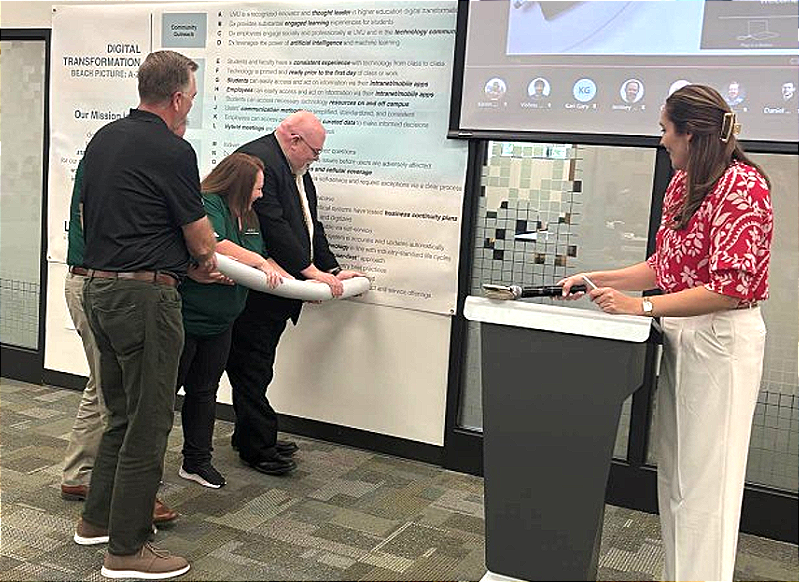
Christina Baum and her members of her team celebrating progress by crossing off completed goals as part of UVU’s digital transformation strategy (Credit: Christina Baum)
“We asked, ‘What can you do as an end user that you can’t do now?’” Baum explained. The process involved listening sessions, retreats with academic and tech leadership, and iterative refinement. The resulting beach picture translates lofty goals into measurable outcomes with completion criteria for each initiative.
To make it tangible, Baum and her team built a process for tracking progress and crossing off completed goals with a huge ceremonial pen. Large copies of the beach picture hang in the division’s space, and teams celebrate milestones with lunches and symbolic cross-offs, music, and recognition. Each letter—A through Z—represents a key initiative. The first, letter Z, marked financial stability; the most recent, letter I, ensured students had access to essential technology resources such as laptops and hotspots, with demonstrable impacts on retention and graduation rates.
Metrics and Accountability
Baum emphasizes both process and outcome metrics. The division tracks request throughput, prioritization, and velocity across teams while measuring the impact of individual initiatives. For example, Fulton Library's laptop and hotspot program’s success is quantified through improved retention rates for underprivileged students. The division also measures usability and data literacy through surveys at events like the annual data summit.
“This is about being priority-driven and transparent,” Baum says. “We’ve reduced siloed decision-making, improved collaboration, and created a culture where everyone sees how their work contributes to broader goals.”
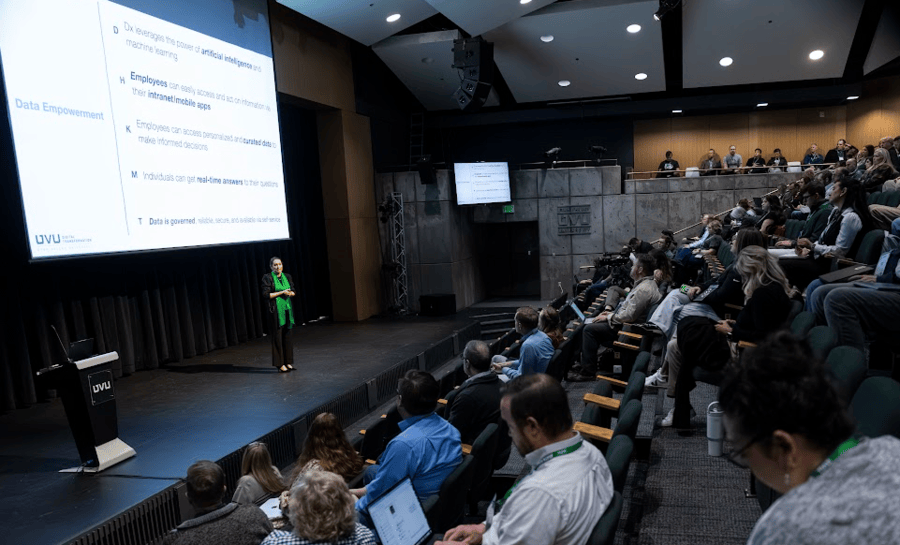
Audience members at UVU's Data Summit. Credit: Emily Munoz, UVU
Collaboration Beyond Campus
UVU’s approach extends into the wider Utah higher education ecosystem through the Utah System of Higher Education (USHE). Baum is helping to establish a culture of collaboration with initiatives such as this data summit where stakeholders can meet and share best practices, coordinate AI strategies, and strengthen cybersecurity readiness. These programs reflect a growing trend: higher education technology leaders working collectively to address common challenges, from data governance to AI integration.
Baum sees collective intelligence as a competitive advantage.
“We’re trying to have it be a consortium," Baum shared. “We all face the same challenges. By learning from each other, we make better decisions for students and for the state.”
Securing the Digital Environment
Cybersecurity remains a constant concern, especially when handling sensitive student data. Baum and her team implement rigorous standards, including pen testing across institutions, spot checks, and reliance on vendor attestations. “In cybersecurity, it’s when, not if,” she notes. “We do everything we can to protect students and the institution.”
The division also pilots innovative approaches, like a private AI platform enabling faculty to leverage large language models without exposing university data. “We’re giving breadth of experience across AI models while keeping data secure,” Baum says, framing it as both a strategic advantage and a safeguard.
Rene Eborn's Myth-Busting
Rene Eborn, the newly appointed CIO at Weber State University, brought a complementary perspective to the discussion of technology and higher education.
Eborn’s journey into the CIO role isn’t the tidy, linear ascent of a technocrat. She grew up in Laketown, on the south shore of Bear Lake, and on a cattle ranch in nearby Randolph, Utah — a town known for some of the coldest winter temperatures in the state. A first-generation college student, she attended BYU on scholarship, balancing academics with cheerleading and the realities of young marriage. Her career path wound through roles in advising, faculty support, educational technology, and product strategy before landing her in executive IT leadership. It followed a non-linear career path that included Blackboard, Utah State, BYU-Idaho, Western Governors University, BYU Pathway Worldwide, and other institutions. Along the way, she was central in negotiating a statewide agreement with LMS platform Canvas and supported digital transformation initiatives at multiple universities.
Rene Eborn, CIO, Weber State University, speaking at UVU's Data Summit 2026
Eborn’s presentation highlighted the importance of challenging assumptions about higher education. She framed students not just as learners, but as customers whose experiences and outcomes must guide institutional decision-making. “We need to stop thinking about processes as what’s convenient for us,” she said. “Start thinking about the student journey. What obstacles are we putting in front of them? Where are we creating friction?”
Eborn thrives on myth-busting. Students aren’t always tech-savvy; faculty aren’t always resistant. “Assumptions get in the way,” she says. Through listening tours and workshops, she uncovers real needs. At Weber State, this means analyzing usage patterns, identifying gaps, and adjusting in real time. “Responsive, evidence-driven decision-making is everything,” she adds.
Rene Eborn, CIO, Weber State University, speaking at UVU's Data Summit 2026
Collaboration defines her approach. No project is siloed. Statewide initiatives, faculty workshops, cross-institution consortia — she’s everywhere. “You can’t do digital transformation alone,” she says. And her leadership style reinforces that: teams see how their work connects to the bigger picture. It’s a living, responsive ecosystem, agile and adaptive.
Cybersecurity and AI ethics also shape her agenda. “It’s when, not if, in cybersecurity,” she notes. Faculty can pilot AI in secure sandboxes without risking student data. “This gives breadth of experience while protecting students. Innovation without responsibility isn’t innovation,” she says.
Rene Eborn: Six Myths About Students, Faculty, and Digital Transformation
1
Students are digital natives who don’t need help
“They know how to use apps, but that doesn’t mean they understand institutional systems.” Eborn emphasizes onboarding and user experience are critical for student success.
2
Faculty resist technology
Faculty resist poorly implemented tools, not technology itself. Early involvement in pilots, especially around AI and analytics, increases adoption and reduces friction.
3
More data equals better decisions
Dashboards are easy; judgment is hard. Start with the decision, define triggers, then identify the smallest dataset needed — clarity beats volume.
4
Students aren’t customers
Recognizing students as paying customers emphasizes accountability and service without undermining the academic mission.
5
Digital transformation is an IT project
Real transformation requires cross-functional alignment — enrollment, academic affairs, finance, and IT all working toward shared outcomes. Otherwise, it stalls.
6
Security and innovation are opposites
The key is guardrails, sandboxes, and structured experimentation — balancing risk and innovation without halting progress.
The Strategic Edge: Thinking Ahead
Eborn framed technology leadership in higher education as simultaneously tactical and visionary. While daily operations require focus and efficiency, strategic thinking anticipates emerging trends like AI adoption, online learning expansion, and cybersecurity threats. Her career demonstrates the value of experience across diverse institutional contexts: she draws from lessons at large universities, smaller regional colleges, and edtech companies to craft flexible, future-oriented strategies.
Rene Eborn, CIO, Weber State University, speaking at UVU's Data Summit 2026
She also advocates for measured experimentation. Rather than committing fully to a single vendor or platform, Eborn encourages institutions to pilot multiple solutions, evaluate outcomes, and scale what works, while maintaining data integrity and student privacy. This approach mitigates risk, fosters innovation, and provides faculty and students with safe, productive digital environments.
Lessons for Utah Higher Education
The combined leadership of Baum and Eborn underscores a simple yet powerful truth: technology is transformative only when it is strategic, accountable, and centered on the people it serves. From UVU’s ceremonial beach picture to Weber State’s customer-focused digital initiatives, these leaders demonstrate the importance of structure, vision, and culture in achieving meaningful outcomes.
Their work illustrates that higher education IT leadership is about far more than infrastructure. It’s about shaping experiences, removing friction, leveraging data for insight, and empowering teams to deliver impact. Whether through statewide collaboration, student-centered digital design, or AI experimentation, the objective remains the same: better outcomes, clearer accountability, and a healthier, more transparent institutional ecosystem.
For institutions across Utah and beyond, the UVU and Weber State examples offer a blueprint: elevate the strategic role of technology, invest in both people and systems, measure outcomes rigorously, and foster cultures that embrace change, collaboration, and innovation. In an era of rapid technological evolution, these principles may define which universities thrive and which merely keep pace.