Vega Apps Takes Aim at Construction’s Most Expensive Bottleneck
Veteran construction estimator Matthew King explains how his startup, Vega Apps LLC (Croyden, UT) uses specialized AI models to automate takeoffs, track material costs, and reduce bidding time from weeks to minutes—bringing speed, accuracy, and transparency to a historically manual process.
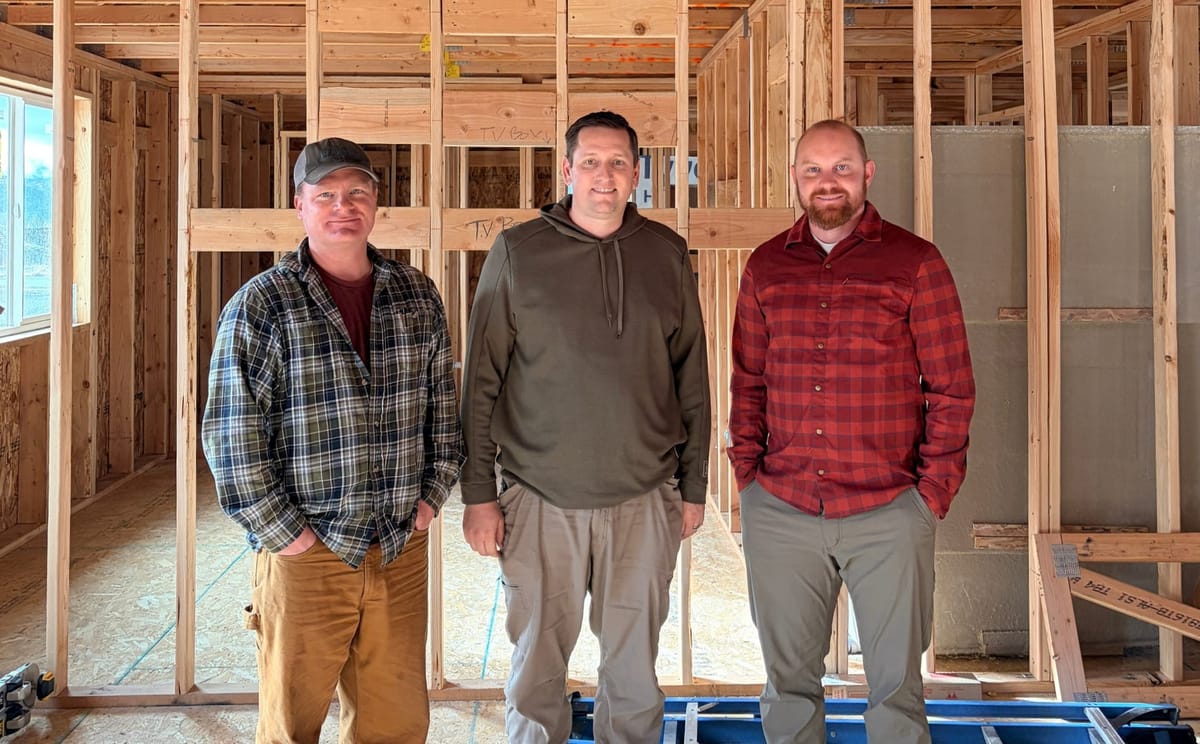
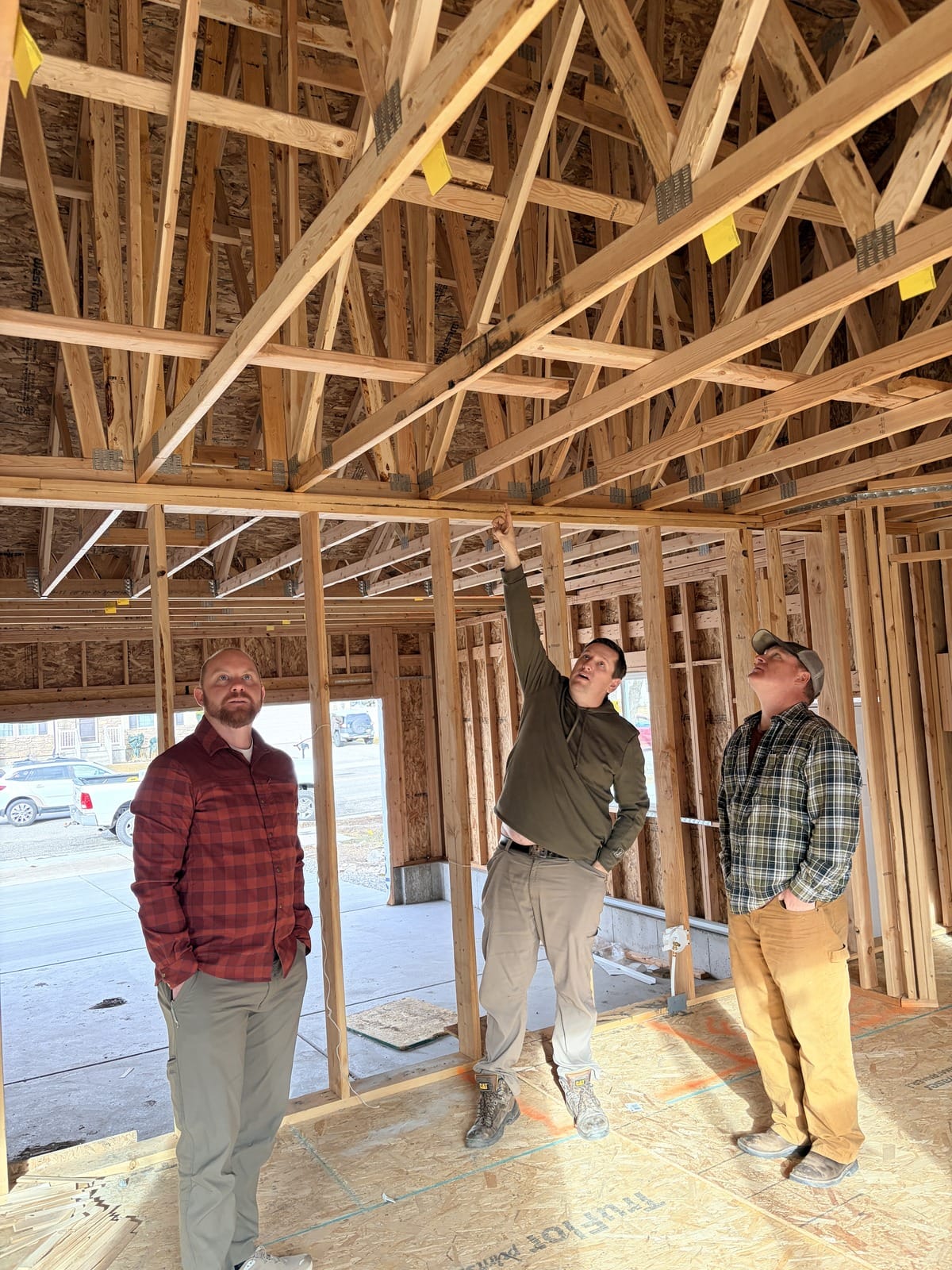
Vega Apps Founding Team: Seth Hopkin, Matthew King (CEO), and Jason Peterson
Vega Apps Founding Team: Seth Hopkin, Matthew King (CEO), and Jason Peterson
Croyden, Utah — January 2, 2025
Construction estimating is one of the most punishing bottlenecks in the building industry. It’s slow, manual, error-prone—and usually done late at night.
After a full day on job sites managing crews and solving problems, general contractors and subcontractors often go home, open a laptop, and spend hours clicking through PDF plans: measuring walls, calculating square footage, counting fixtures, and trying not to miss anything expensive. The work is tedious, repetitive, and high-risk. A single oversight can wipe out a project’s profit.
Matthew King knows this pain firsthand. For more than 20 years, King worked in construction, much of it as an estimator. He has lived through the late nights, the rushed bids, and the mistakes that keep contractors awake long after a project is underway.
“I spent so many hours just clicking through plans,” King shared with TechBuzz. “Click, click, click—for hours. And I knew every subcontractor and every general contractor was doing the exact same thing.”
Matthew King, CEO and Co-Founder, Vega Apps
That frustration eventually became the foundation for Vega Apps LLC, a Park City– and Croyden-based startup that launched this week. Vega Apps uses artificial intelligence to automate large portions of the construction estimating process. The goal: reduce estimating time from weeks to minutes, while improving accuracy and lowering risk.
From Job Site to Startup
Matthew King co-founded Vega Apps with his brother-in-law, Jason Peterson, a civil engineer, and longtime business partner Seth Hopkin, a construction operator who manages projects in the field. The trio brings complementary experience—estimating, engineering, and hands-on building—shaping a product designed by people who have lived the problems it aims to solve.
King started in construction as a teenager doing concrete work before deciding the physical grind wasn’t his long-term future. He earned a degree in construction management from Weber State University and went to work for Kier Construction in Ogden, where he gravitated toward estimating.
After approaching the company’s estimating manager, King spent years learning the discipline inside and out—how bids are assembled, where errors creep in, and how much time the process consumes.
Over the next 15 years, King estimated projects across Utah, eventually helping start his own construction company with his brother-in-law, civil engineer Jason Peterson, and business partner Seth Hopkin. The trio built homes along the Wasatch Back and managed projects firsthand.
The idea for Vega Apps initially wasn’t about AI at all. King envisioned a platform that could help homeowners better understand the building process—what things should cost, which subcontractors to hire, and how to sequence work. But as the partners revisited the concept, they realized the most painful problem sat earlier in the process.
“Estimating was the choke point,” King said. “If we could fix that, everything else gets easier.”
The Limits of Existing Software
Construction software is not new. Many tools already allow users to upload plans and perform digital takeoffs. But most still rely heavily on human labor—requiring estimators to manually measure and annotate drawings.
“You drop in a PDF and you still sit there clicking for hours,” King said. “That’s not solving the real problem.”
In mid-2023, King approached a software developer with a straightforward question: could AI automate the tedious parts of estimating? The answer was yes—but not in the way King initially imagined.
The team assumed a single model could read construction plans, extract text, understand scale, and calculate quantities. Instead, they discovered the task was far more complex.
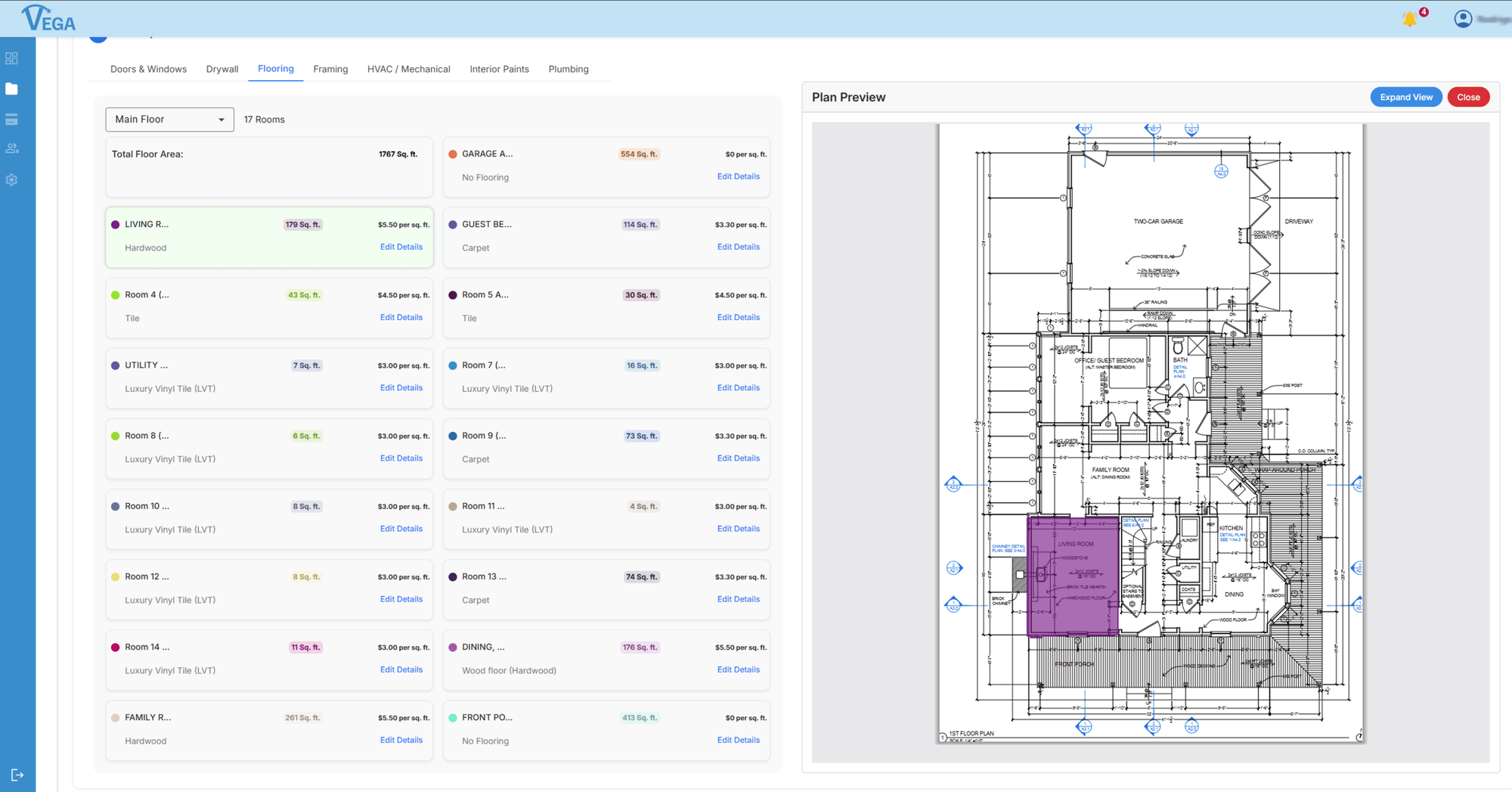
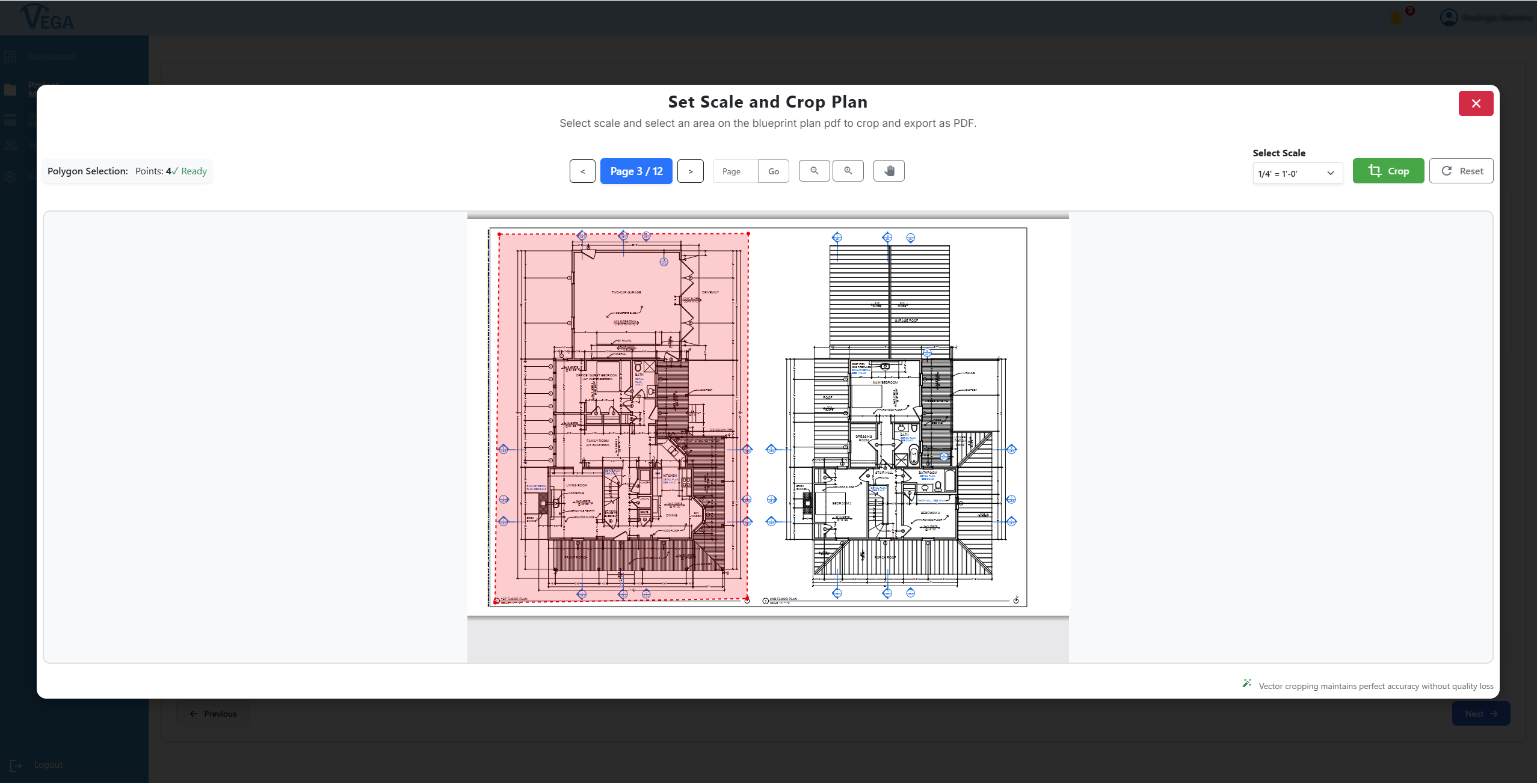
Vega AI UI - Living Room: Users can review and confirm each room's measurements for accuracy
Their first AI model could reliably read text from plans. Measuring drawings, however, required entirely different capabilities. Over time, Vega’s architecture expanded into a suite of specialized models—each trained for a specific function.
“There isn’t one model doing everything,” King explained. “We had to build separate models for reading floor area, building height, scale, OCR for electrical plans, plumbing plans, mechanical plans, excavation plans—each one trained independently.”
By late 2024, Vega Apps had developed roughly ten models, with more in progress.
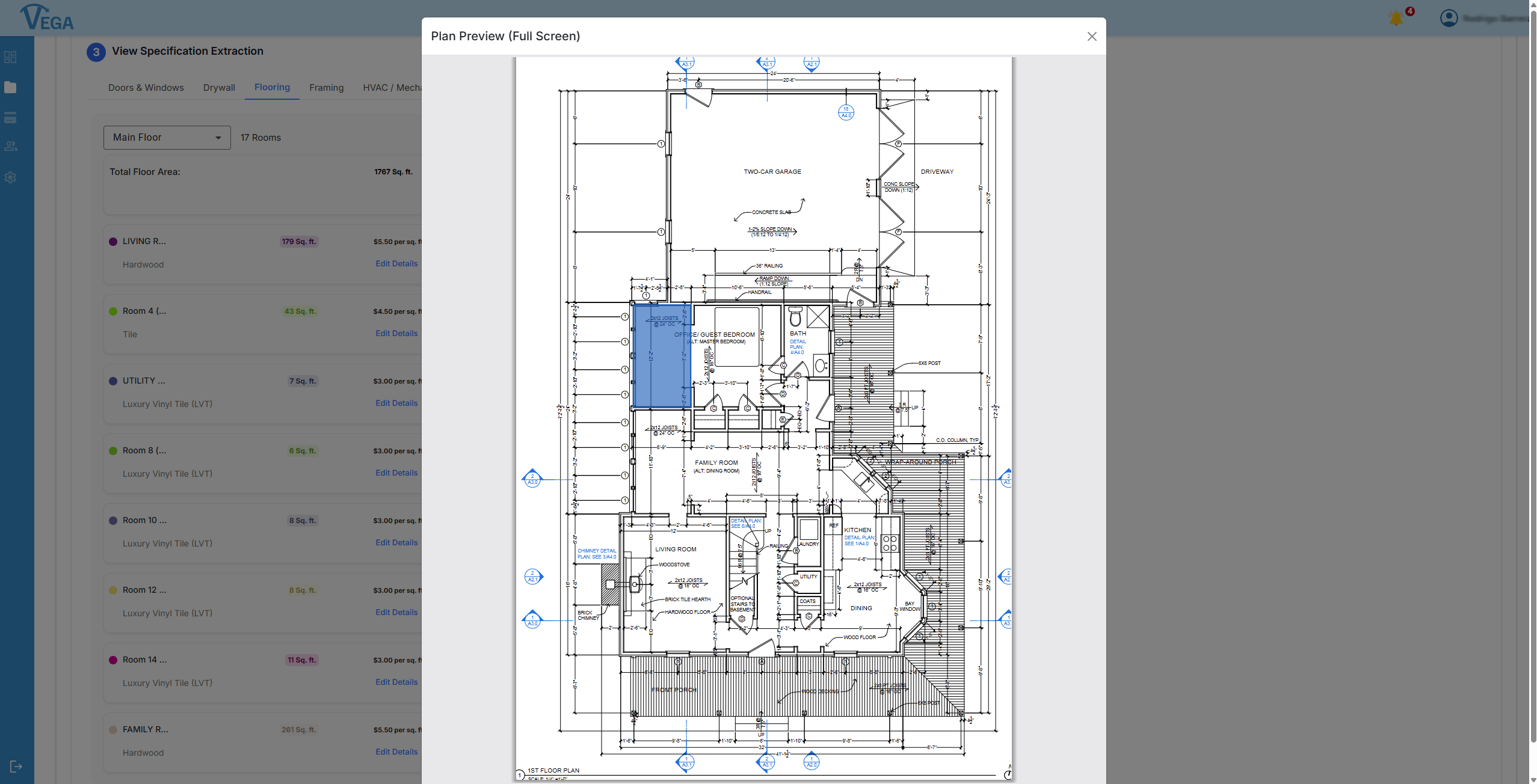
Vega AI UI Plan Preview: Users can review and edit measurements for any specific room
What Vega Apps Does Today
Vega Apps launched January 1, 2026, with support for 13 core construction trades, including flooring, drywall, framing, interior paint, HVAC/mechanical, plumbing, and electrical, with concrete, rebar, and excavation noted as coming soon. The system allows users to upload construction plans and receive detailed quantity takeoffs in minutes.
For general contractors, Vega Apps aggregates data across all supported trades. Subcontractors can access trade-specific outputs, saving time and reducing duplication of effort across the industry.
The pricing follows a SaaS model. General contractors pay $3,600 per year for full access—roughly equivalent to a few days of a full-time estimator’s labor. Subcontractors can subscribe at lower tiers. Homeowners, a secondary market, can upload plans for a one-time fee of about $150 to receive a realistic cost estimate.
“That’s information homeowners have never had access to,” King said. “It changes the conversation completely.”
More Than Speed: Reducing Risk
Speed alone is not the most important benefit. Accuracy—and risk reduction—matter more.
Every estimator has a horror story. King still remembers missing a $600,000 steel package on a project early in his career. During the COVID-era lumber crisis, he watched material costs skyrocket almost overnight.
“In one project, the lumber package went from $2.5 million to $14 million in four weeks,” he said. “If you weren’t checking prices constantly, your estimate was obsolete before you finished it.”
Vega Apps integrates material pricing from national retailers, adjusted by zip code. The system generates purchase lists alongside quantity takeoffs, giving contractors a baseline they can adjust based on labor, markup, supplier relationships, or material preferences.
The AI does not eliminate human judgment—and King is careful to say it shouldn’t.
“This isn’t about replacing estimators,” he said. “It’s about removing the monotony so people can focus on judgment and decision-making.”
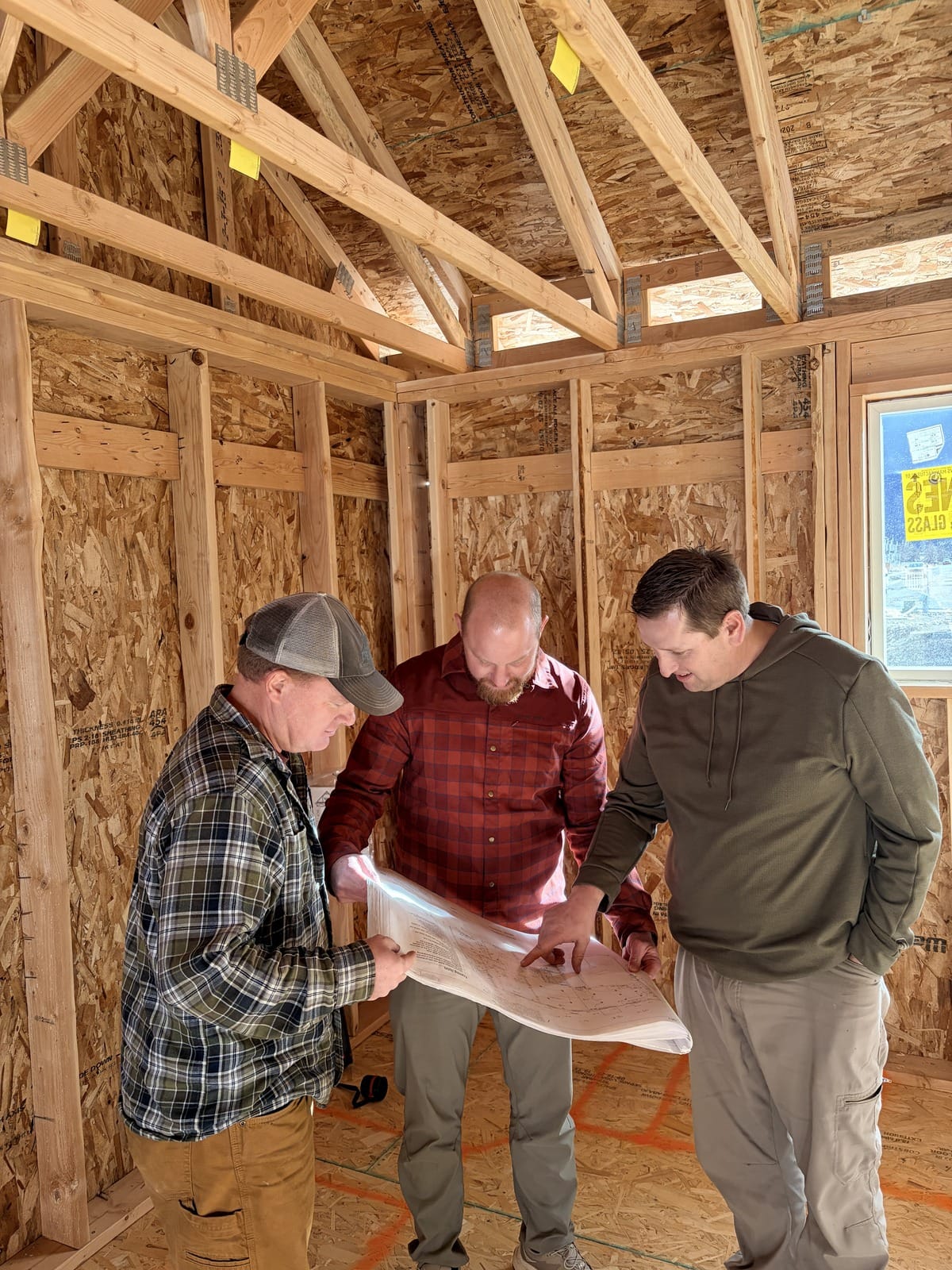
Seth Hopkin, Jason Peterson, and Matthew King, co-founders of Vega Apps, LLC
Honest Limits of AI
King is unusually candid about what Vega Apps cannot yet do.
The system can make mistakes. It cannot resolve conflicting plan documents or automatically interpret ambiguous design intent. Tile pricing, for example, can range from less than a dollar per square foot to luxury materials costing $30 or more.
“The AI gives you a starting point,” King said. “You still have to do a sanity check.”
Over time, the system improves as more plans are processed. User feedback will play a role in refining accuracy, but King estimates it will take months—not years—to reach a high level of reliability.
“I don’t think we’re anywhere close to a world where you just trust AI blindly,” he said. “That’s true in construction and everywhere else.”
Vega AI scans and measures all rooms in the selected area based on the chosen category (e.g., flooring)
VegaConnect
Vega Apps is the flagship product, but it sits on a broader technical foundation. VegaConnect is the company's supporting API, mainly used for measurements and takeoffs, which plays a behind-the-scenes role in the platform. VegaConnect allows architects, developers, or other platforms to integrate Vega’s models into their own software.
This opens the door to use cases beyond estimating. One future application: automating building permit reviews.
King envisions AI models that can apply state and local building codes directly to submitted plans, flagging issues in minutes rather than weeks. The company plans to start in Utah, where regulatory frameworks are more manageable, before expanding.
“That’s a longer-term effort,” King acknowledged. “But the potential impact is enormous.”
Who Wins—and Who Doesn’t
Tools like Vega inevitably raise questions about transparency. If cost information becomes widely available, does it hurt contractors, wondered TechBuzz?
King argues the opposite. Contractors who rely on inflated estimates or vague pricing may struggle, but those who operate professionally stand to benefit.
“This protects the good contractors,” he said. “It helps people avoid underbidding and losing their shirt—or overbidding and losing the job.”
For homeowners, the value is leverage and clarity. While Vega cannot assess subcontractor quality or craftsmanship, it gives owners a realistic cost baseline—something historically unavailable outside the industry.
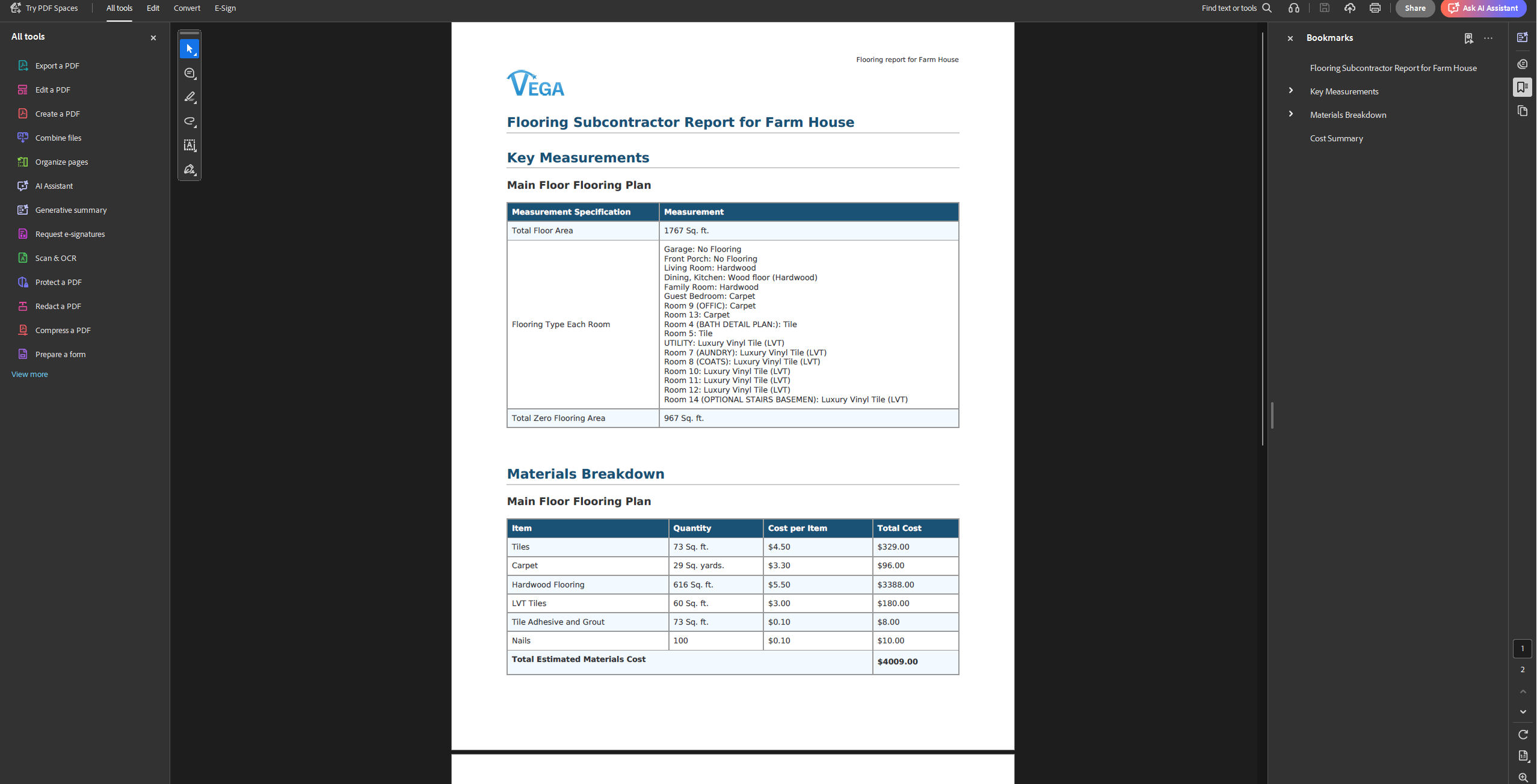
Flooring Category Sample Report details total floor areas by room and breaks down material costs and quantities
Bootstrapped and Focused
Vega Apps is currently bootstrapped, funded by the founders’ construction business rather than outside investors. That approach has slowed development but preserved focus.
“It’s been expensive,” King said. “But we’re building this for people we know and work with every day.”
The team is small, the ambition is large, and the problem is deeply rooted. If Vega succeeds, it won’t be because of AI hype—but because it eliminates one of construction’s most universally hated tasks.
For King, the payoff is personal.
“If this gives people back their evenings and weekends,” he said, “that alone makes it worth building.”