Salt Lake City, Utah — January 22, 2026
When Utah Governor Spencer Cox takes the podium for his State of the State address, he will do so amid mounting pressure around a single, unavoidable issue: housing affordability. Recent polling and reporting show housing costs have risen to the top of voter concerns statewide, particularly along the Wasatch Front, where prices and rents have outpaced wage growth for years.
Cox has repeatedly framed housing not as a niche social problem, but as a workforce and economic competitiveness issue. His administration has set aggressive goals around increasing housing supply—particularly starter homes—and has pushed initiatives like Utah First Homes to link infrastructure funding, planning capacity, and affordability outcomes.
That framing matters. It signals a recognition at the highest level of state government that housing has become economic infrastructure—something that directly determines whether Utah can sustain growth in technology, entrepreneurship, and high-value services.
The Economic Cost of Scarcity
Utah’s tech ecosystem has grown, in part, on a culture of innovation and the promise of opportunity at a lower cost. That promise is now under strain. Housing shortages ripple through the economy in predictable ways:
- Early-career workers struggle to live near job centers
- Mid-income professionals face longer commutes or relocation
- Startups absorb wage pressure they are least equipped to handle
The result is friction in talent markets and a slow erosion of the state’s cost advantage. These are not abstract risks; they show up in hiring timelines, employee churn, and the viability of early-stage companies.
The 2026 legislative session reflects this urgency. Lawmakers have introduced bills aimed at structural reform, not cosmetic change. Among them:
- HB 68, proposing a new Division of Housing within the Governor’s Office of Economic Opportunity to consolidate policy and execution.
- HCR 006, calling for a statewide housing strategy to align state and local action.
- A slate of zoning, density, and starter-home measures intended to loosen supply constraints.
- Continued use of Affordable Housing Infrastructure Grants that explicitly tie infrastructure dollars to housing production.
These efforts suggest alignment between the executive branch and legislature. But policy alone does not build units. Capital does.
Where Capital Steps In: The KeyBank Case Study
That gap between policy intent and housing delivery is where private capital becomes decisive.
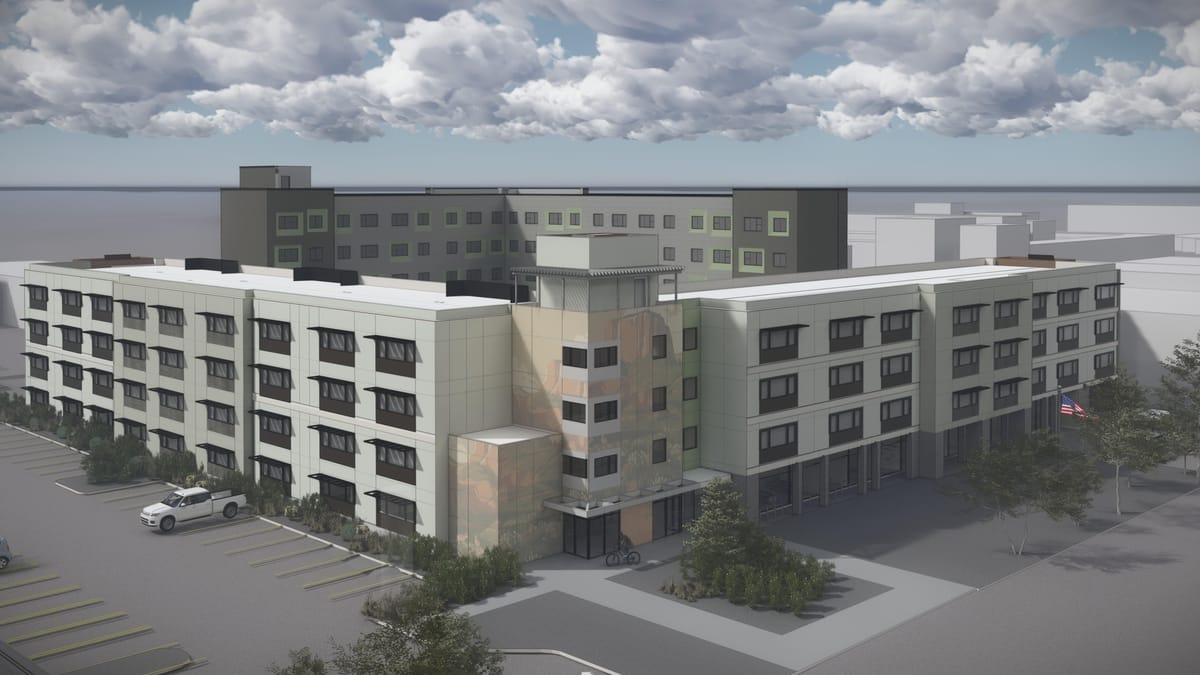
In Salt Lake City, KeyBank Community Development Lending and Investment recently arranged $43.4 million in financing for a permanent supportive housing project in partnership with the Housing Authority of Salt Lake City.
The financing includes $27.3 million in construction lending, which covers the costs of building and renovating the units, and $16 million in Freddie Mac forward commitments for Low-Income Housing Tax Credits (LIHTC). The LIHTC funding provides equity from investors who buy the tax credits, reducing the overall financing burden and allowing rents to remain affordable for households earning 25–35% of the area median income.
The project supports 218 units across two developments: Sunrise Metro and Atkinson Stacks. On-site services will be provided by Sacred Circle, including substance abuse counseling, employment and financial support, case management, and a medical clinic and pharmacy.
“We sincerely thank KeyBank for supporting this transformative project,” said Daniel Nackerman, executive director, Housing Authority of Salt Lake City. “The new and renovated housing will offer safe, affordable homes along with essential services that uplift residents. By promoting community and stability, we are making notable progress toward improving lives and strengthening neighborhoods in Salt Lake City.”
Remaining Challenges
Even with legislative reforms and private capital stepping in, three key challenges remain unresolved:
Accountability: The new Division of Housing consolidates programs that were previously scattered across multiple agencies. This raises a critical question: how will the state measure success? Without clear metrics — like units delivered, affordability preserved, or residents stabilized — it’s difficult to know if these structural changes are effective. For the tech ecosystem, this matters because predictable, measurable policy signals are essential for developers, investors, and companies planning workforce housing solutions.
Throughput: Zoning, density, and infrastructure reforms aim to speed up housing production, but passing a law does not guarantee units will be built. Permitting delays, local resistance, and construction bottlenecks can all reduce the actual “throughput” of new housing. If new units do not materialize quickly, shortages persist, and tech employers continue to struggle to place workers near job centers.
Workforce housing: Much of Utah’s tech labor force earns 60–120% of the Area Median Income, a bracket that often falls outside the scope of deeply subsidized housing programs. This middle-income segment still faces affordability pressures, making it difficult for startups and established companies to attract and retain critical staff. Addressing this gap is crucial for sustaining the growth of the innovation ecosystem.
The Bottom Line
Utah’s housing crisis now sits squarely at the intersection of policy, capital, and economic growth.
Governor Cox’s State of the State address is expected to reinforce that reality, framing housing as central to affordability, opportunity, and long-term competitiveness. Legislative reforms are underway. Capital is responding where it can.
The risk is not that Utah lacks ideas. It is that the scale and speed of response fail to match the magnitude of the problem. Housing has become economic infrastructure. And infrastructure, once constrained, limits everything built on top of it.
Share this article
The link has been copied!