AbilityArc Targets the Soft Skills Gap in Tech Education
Founded in 2025, AbilityArc (Orem, UT) embeds durable skills training into technical education, and uses AI-driven simulations to strengthen communication, critical thinking, and workplace readiness as employers increasingly prioritize human capabilities alongside tech training and certifications.
AbilityArc, a bootstrapped Utah startup founded in 2025, aims to embed skills like communication and critical thinking directly into technical education.
Orem, Utah — February 20, 2026
Dave Alexander remembers graduating into the 2008 recession and struggling to find work. Nearly two decades later, he believes entry-level tech workers are facing a different but equally disruptive force: artificial intelligence.
“The market is shifting again,” he said. “Technical knowledge alone isn’t enough.”
That conviction led Alexander to launch AbilityArc in 2025, a bootstrapped startup based in Orem that focuses on what are now called “durable skills” — communication, critical thinking, collaboration, adaptability, and professional presence — embedded directly into technical training programs.
From Recruiting to Revenue Leadership to Founder
Alexander’s perspective is shaped by more than personal experience.
He spent nearly a decade at TestOut Corporation, a Pleasant Grove-based provider of IT certification training used by colleges nationwide. He began as the executive assistant to the CEO where he was introduced to an industry he fell in love with.
As a corporate and technical recruiter for TestOut, he saw a consistent pattern: technical skills and certifications got candidates interviews, but it was the human skills that determined who was hired.
Dave later moved into business development and marketing leadership roles, ultimately serving as Director of Marketing. There, he helped drive the company to its acquisition, overseeing brand, lead generation, product launches, and digital marketing transformation efforts.
From 2023 to 2025, Alexander served as Senior Director of Academic Marketing at CompTIA, a Chicago-area company that acquired TestOut in 2024.
Across recruiting, hiring, and leading teams, Alexander says the same lesson kept resurfacing: career success depended less on technical mastery and more on how people think, communicate, and adapt.
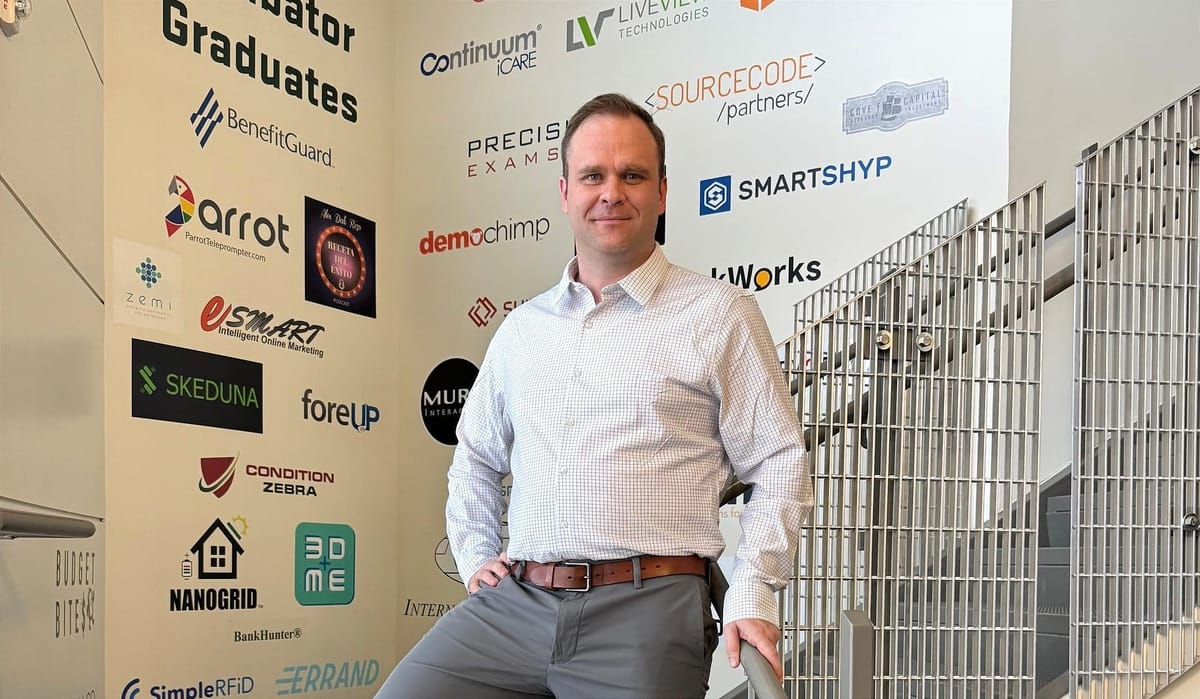
Dave Alexander, founder and CEO of AbilityArc, pictured beside a wall honoring Utah startups that have “graduated” from the business incubator program at the Orem Small Business Development Center
“My career consistently highlighted that the most impactful skills aren’t just technical, they’re inherently human,” he said. “Critical thinking, communication, collaboration, adaptability. That’s what determines long-term success.”
The Gap in Technical Education
Employers consistently rank interpersonal capabilities as essential in hiring. A 2024 LinkedIn Global Talent Trends report found that roughly 92 percent of talent professionals say soft skills matter as much or more than hard technical skills. Workforce analyses similarly show managers expect new hires to demonstrate communication and problem-solving alongside certifications.
While a long-circulated claim suggests that as much as 85 percent of career success stems from interpersonal skills, that figure traces back to older research and is often oversimplified. Still, contemporary data reinforces the broader point: human capabilities remain central to employability.
Yet many technical programs remain tightly packed with certification requirements and lab work, leaving little room for deliberate instruction in professional communication or workplace judgment.
“It was always the elephant in the room,” Alexander said of advisory board conversations with industry partners. “Everyone agreed it mattered. No one knew how to build it into the curriculum.”
What AbilityArc Does
AbilityArc does not teach students how to configure networks or write code. Instead, it embeds durable-skills training into existing technical programs through structured modules that mirror real IT job roles.
The platform is designed as a supplemental layer alongside certification coursework.
One of its core features is the Reactor Simulation, an AI-powered scenario tool that places students in simulated job situations, such as handling a frustrated help desk client or responding to a cybersecurity incident. Students interact with an AI persona, receive performance feedback, and generate instructor-visible assessments focused on communication, professionalism, and decision-making rather than technical accuracy.
The goal, Alexander said, is not to test technical skill but to build confidence and situational awareness before students encounter those dynamics in a real workplace.
“It gives students a chance to practice high-pressure interactions in a safe environment,” he said. “It’s about self-awareness and readiness.”
Each module also includes instruction from working industry professionals, aiming to ground the material in current workplace expectations.
Why AI Raises the Stakes
Alexander argues that AI makes durable skills more urgent, not less.
“AI will increasingly handle technical tasks,” he said. “The differentiator will be judgment, communication, and how you work with others.”
As automation reshapes entry-level work, he believes higher education’s long-standing promise, that a technical degree alone guarantees employment, is weakening.
“The old equation doesn’t hold the same way,” he said.
AbilityArc’s long-term vision extends beyond IT. The company has researched potential applications in nursing, hospitality, and retail. These are industries where interpersonal skills are directly tied to performance outcomes. A future roadmap includes AI-powered interview preparation tools and career readiness modules for high school students.
For now, the company remains early-stage and bootstrapped, focused on integrating its modules into tech education programs.
Alexander frames the mission in practical rather than inspirational terms: helping students reduce avoidable friction when entering the workforce.
“Anyone can improve these skills,” he said. “They’re not fixed traits. They can be developed.”