St. George-Based Curant.ai Secures $3.1 Million Seed Round to Transform Insurance Claims with AI
St. George startup Curant.ai secured a $3.1M seed round led by Diagram Ventures. Founded by AI veteran John Haller, the company provides an enterprise-grade AI intelligence layer streamlining complex insurance claims workflows safely and accurately.
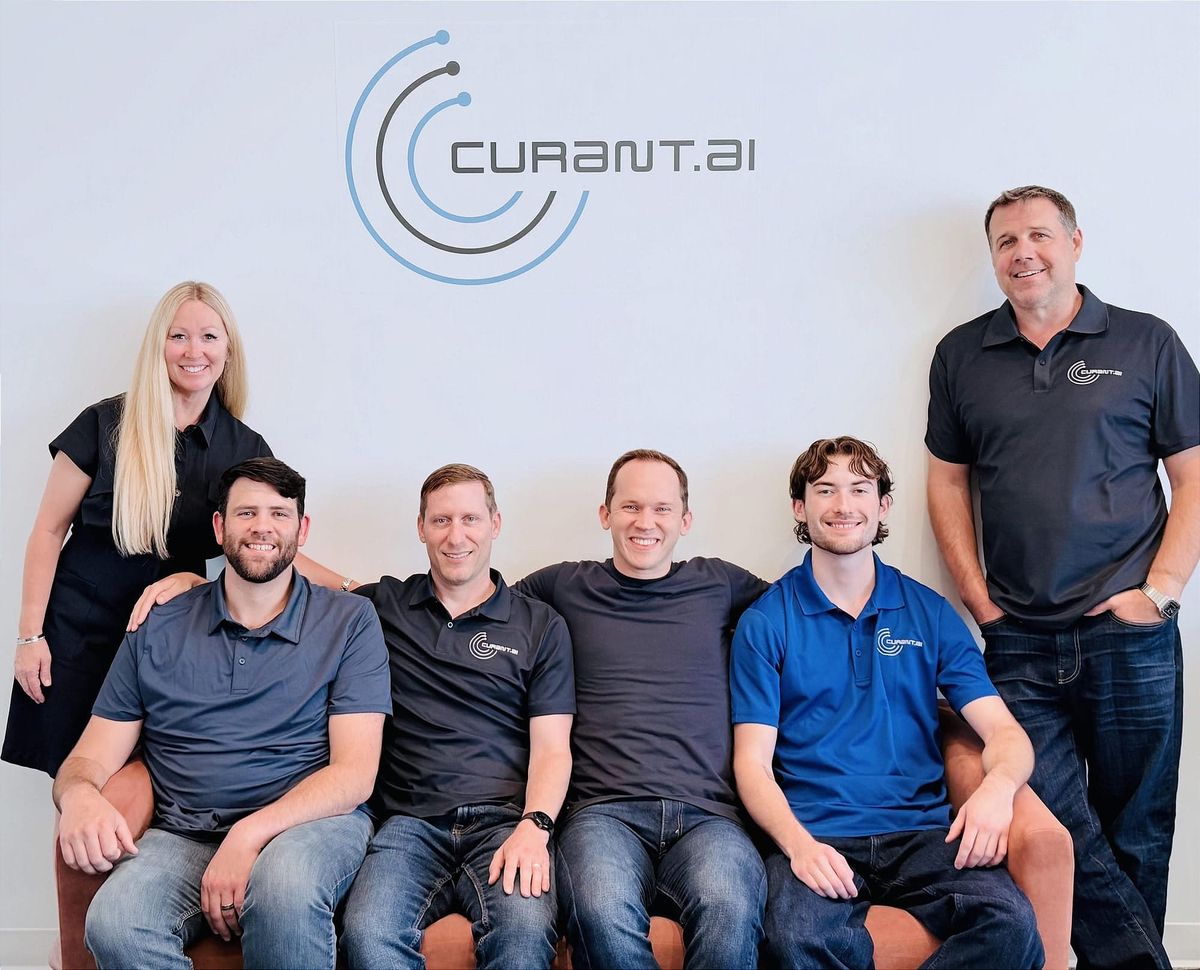
The Curant.ai team: Jodi Porter, Konnor Young, Chris Segesman, Ben Parker, Tyler Rogel, and John Haller. Photo: Curanti.ai
The Curant.ai team: Jodi Porter, Konnor Young, Chris Segesman, Ben Parker, Tyler Rogel, and John Haller. Photo: Curanti.ai
St. George, Utah — August 27, 2026
Insurance claims processing isn't facing a technology problem; it’s facing a complexity problem. That was the primary message from John Haller, Founder and CEO of Curant.ai, during a recent sit-down interview at the TechBuzz offices in South Jordan.
The capital will accelerate the expansion of Curant.ai’s enterprise-grade platform, deepen partner integrations, and help move the insurance industry from isolated automation projects to carrier-wide AI transformations.
Taming the 10,000-Page Problem
Speaking in South Jordan while visiting northern Utah to drop his son off at the University of Utah's Master of Business Creation (MBC) program at Lassonde Entrepreneur Institute, Haller outlined the acute burden facing insurance professionals today.
John Haller, Founder and CEO, Curant.ai. Photo: John Haller
"In disability, every associate is responsible for about 10,000 pages of documents at any given time," Haller explained. "They have to read the documents, extract data, check for preexisting conditions, and identify conflicts between what the employer says and what the employee says. Then they write a long summary. We flip that. The AI does all the bottoms-up work, summarizing and synthesizing that information so the associate comes in and, on one clean page, sees the summary, key fields, and recommended next steps. They're starting at the top versus starting at the bottom."
By delivering source-backed context directly to claims specialists, early production deployments have yielded dramatic results:
~90% reduction in document reading time.
~50% reduction in manual analysis time.
Shrunk outcome variability, directly cutting claims losses from overpayment errors, which typically average 4% to 6% in traditional case reviews.
Strictly Guardrailed: "The Opposite of Vibe Coding"
Unlike consumer AI tools or ad-hoc scripting, Haller emphasized that enterprise insurance requires strict architectural safety. Curant.ai operates directly atop carrier systems of record behind strict firewalls, ensuring sensitive personally identifiable information (PII) is never exposed to public models or web searches.
"It's enterprise grade, so safety and security is paramount," Haller noted during the interview. "We're not vibe coding. We're putting on really strict guardrails—like the opposite of vibe coding. Your associates can use the AI without fearing, 'What if the AI puts proprietary or personal information into a web search?'"
Haller pointed out that general-purpose frontier models alone cannot solve specialized enterprise needs. "If you look at the architectural diagram, the frontier models are just one out of eight different levels of software you have to build to put these guardrails in place, ensure compliance, and format the input so it doesn't overwhelm context windows and format the output so it is easily accessible," he said.
Investor and Customer Validation
Curant.ai's initial commercial proof point came via leading Canadian carrier Humania Insurance, which invested in the round and served as the initial deployment partner.
"Our team got excited last year with the potential of continuing Humania's legacy of technology innovation with an investment into Curant.ai," Humania leadership stated in a press release. "Curant.ai has exceeded original expectations with their safe and secure intelligence layer... The final decision always rests with our experts, who retain full control and accountability over every claim outcome."
The internal response at Humania was so overwhelming that key operational executives asked to write personal angel checks to participate in the seed round after seeing the software in action, according to Haller.
Note: Humania Assurance is a Canadian mutual life and health insurance company operating out of Saint-Hyacinthe, Quebec, Canada, just east of Montreal, for over 150 years. It is distinct from the U.S.-based health insurance provider Humana Inc., which is headquartered in Louisville, Kentucky.
Lean Team, High Velocity in St. George
Haller brings nearly two decades of machine learning and data science leadership to Curant.ai. He previously served as Chief Data Scientist at collision tech giant based in Chicago CCC Intelligent Solutions (leading data initiatives through its growth and public launch) and co-founded music finance startup beatBread, covered by TechBuzz in February 2022, and is still in operation.
Operating out of the Kiln St. George, Curant.ai maintains a lean core team of five employees along with strategic advisors.
"When John started his previous company, he had to hire ten engineers just to get things off the ground," added Jodi Porter, who provides admin, marketing, and communications support for Curant.ai. "With how AI tools have evolved, a lean five-person team can accomplish what used to take a massive engineering department, especially with our founding team."
With its seed capital finalized and product modules expanding from disability into life insurance and beyond, Curant.ai is preparing for broad commercial expansion across North American insurance carriers.