Album's Evolving Venture Strategy as AI, Reindustrialization Reshape Startup Investing
Album partners Sid Krommenhoek, Cash Allred, and Ty Boswell discuss adapting early-stage venture capital to AI disruption, capital-intensive markets, and reindustrialization while maintaining an unwavering, founder-first investment philosophy beyond traditional geographic boundaries.
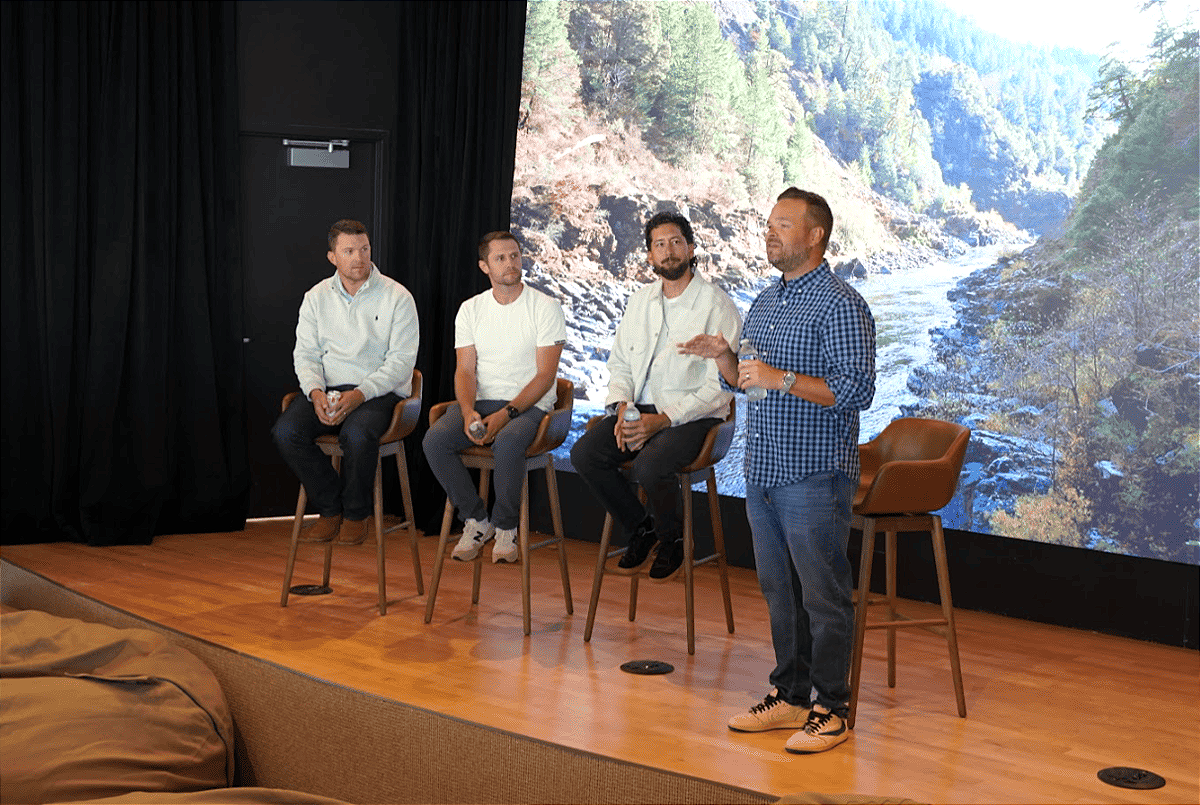
Tyler Jennings of GOED moderates adiscussion with Album partners Ty Boswell, Cash Allred, and Sid Krommenhoek, Old and New Perspectives on VC. Sanctuary Lehi, October 6, 2026. Photo: Mark Tullis, TechBuzz
Tyler Jennings of GOED moderates adiscussion with Album partners Ty Boswell, Cash Allred, and Sid Krommenhoek, Old and New Perspectives on VC. Sanctuary Lehi, October 6, 2026. Photo: Mark Tullis, TechBuzz
Lehi, Utah — October 8, 2026
For more than a decade, Album has built its reputation as a Utah seed investor by looking for ambitious founders early, often before other institutional capital was willing to make a bet. That basic approach hasn't changed. But the world those founders are building in has.
At a small gathering in the Club House atSanctuary Lehi, Album's three partners—original partner Sid Krommenhoek and newer partners Cash Allred and Ty Boswell—offered a look at how the firm is adapting to a venture market being reshaped by artificial intelligence, increasingly capital-intensive businesses and renewed interest in industries such as manufacturing, energy, mining and healthcare.
Theevent, titled “Old and New Perspectives on VC,” was moderated by Tyler Jennings of the Utah Governor's Office of Economic Development. Rather than a conventional panel, it was designed as an informal conversation about what has changed in venture capital, and what hasn't.
For Krommenhoek, the distinction between the old and new was particularly personal. “I am, in venture terms, old,” he told the group. Krommenhoek, who turns 47 in December, joined the venture business after selling a company, Zinch, in 2011. When Album was formed, the firm's thesis was relatively straightforward: become the institutional seed investor for the next generation of Utah technology companies.
At the time, Krommenhoek said, there were few operator-led venture firms in Utah. Album's early thesis was built around companies such as Domo and Pluralsight and the opportunity to provide institutional capital earlier in their development. “We're going to be the first institutional check in the next unicorns of Utah,” Krommenhoek recalled of Album's original pitch.
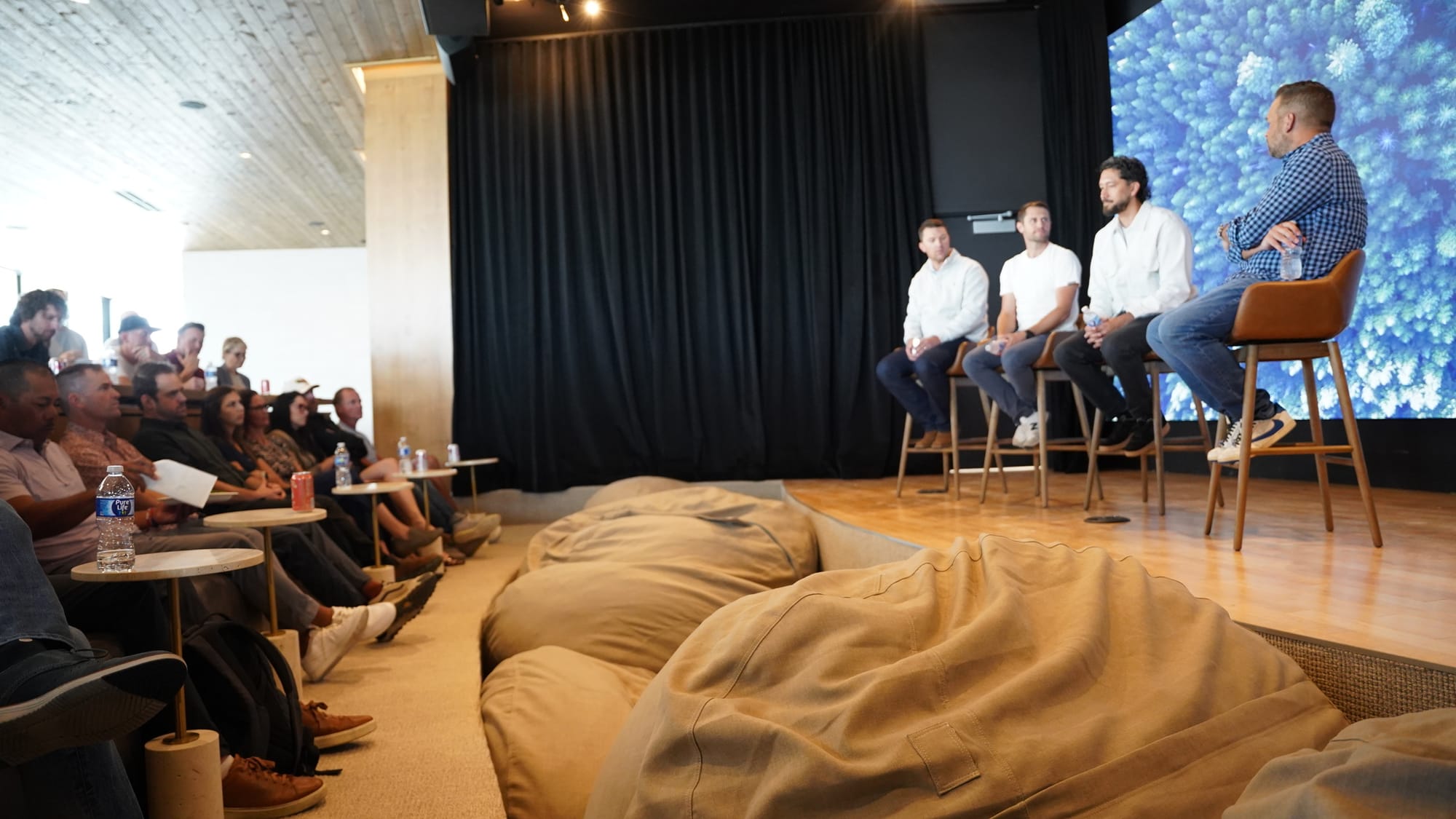
Album partners Ty Boswell, Cash Allred, and Sid Krommenhoek, discuss adapting early-stage venture capital to AI disruption, capital-intensive markets, and reindustrialization at the “Old and New Perspectives on VC” event, moderated by Tyler Jennings of GOED. Sanctuary Lehi, October 6, 2026. Photo: Mark Tullis, TechBuzz
The firm also took a deliberately high-risk approach to seed investing. Rather than emphasizing downside protection, Album believed early-stage investors should give founders room to take big swings. “I would tell founders like, if it goes to zero, that's my downside. I'm okay with that,” he said. “I want you to swing hard.”
More than a decade later, the size of the opportunity set—and the forces reshaping it—look very different.
A different kind of venture market
Cash Allred brings a distinct path into venture. Before joining Album as a partner in May 2026, he spent nearly three years at Antler, a global venture capital firm focused on inception-stage companies. There he co-led Antler’s Criticality fund, an Antler effort focused on technical complexity and American reindustrialization. His investment history spans software, manufacturing, healthcare, and consumer companies, including Hoonify, American Housing Corporation, Cyrus Health, and Orion Sleep.
“This is the most exciting time to build, and it's also the scariest time to build,” Allred said. “I want to be a part of that build process.”
Ty Boswell brings another complementary trajectory to the team. Raised in Goshen, Utah, Boswell spent over a decade in Bay Area investment banking and technology finance—including roles at BMO Capital Markets and Centerview Partners—before joining Snowflake 18 months prior to its historic IPO. During his five years at Snowflake, Boswell served in corporate finance leadership alongside CEO Frank Slootman and CFO Mike Scarpelli. He later served as Senior Vice President at AXOM Partners, where he advised high-growth tech startups on strategic acquisitions to acquirers such as OpenAI, NVIDIA, Meta, and Google DeepMind.
Reflecting on the velocity of modern tech M&A and AI development, Boswell pointed to recent dealmaking, including a company, Moltbook, that built a new product in three days and was acquired by Meta only weeks after launch. The point, he noted, was not simply the size of the transaction, but the remarkable velocity at which value is being created and acquired.
His experience is particularly relevant to the types of capital-intensive and AI-driven companies increasingly attracting venture capital.
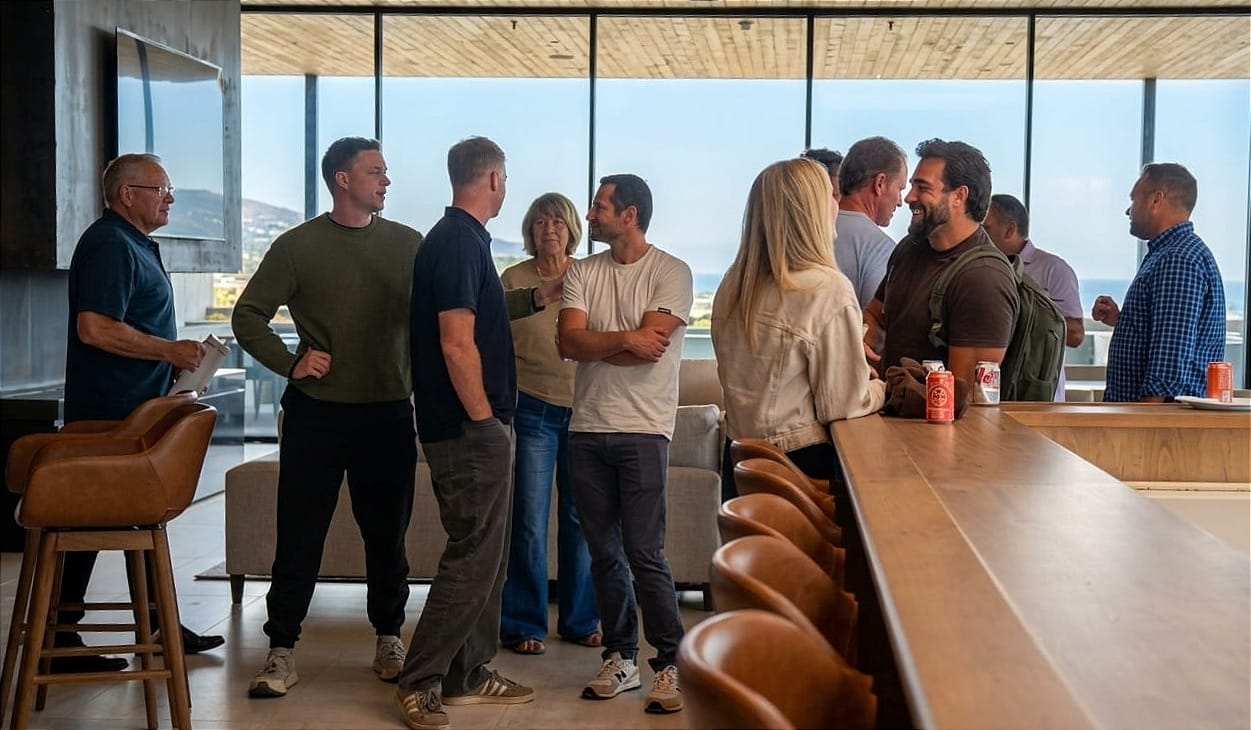
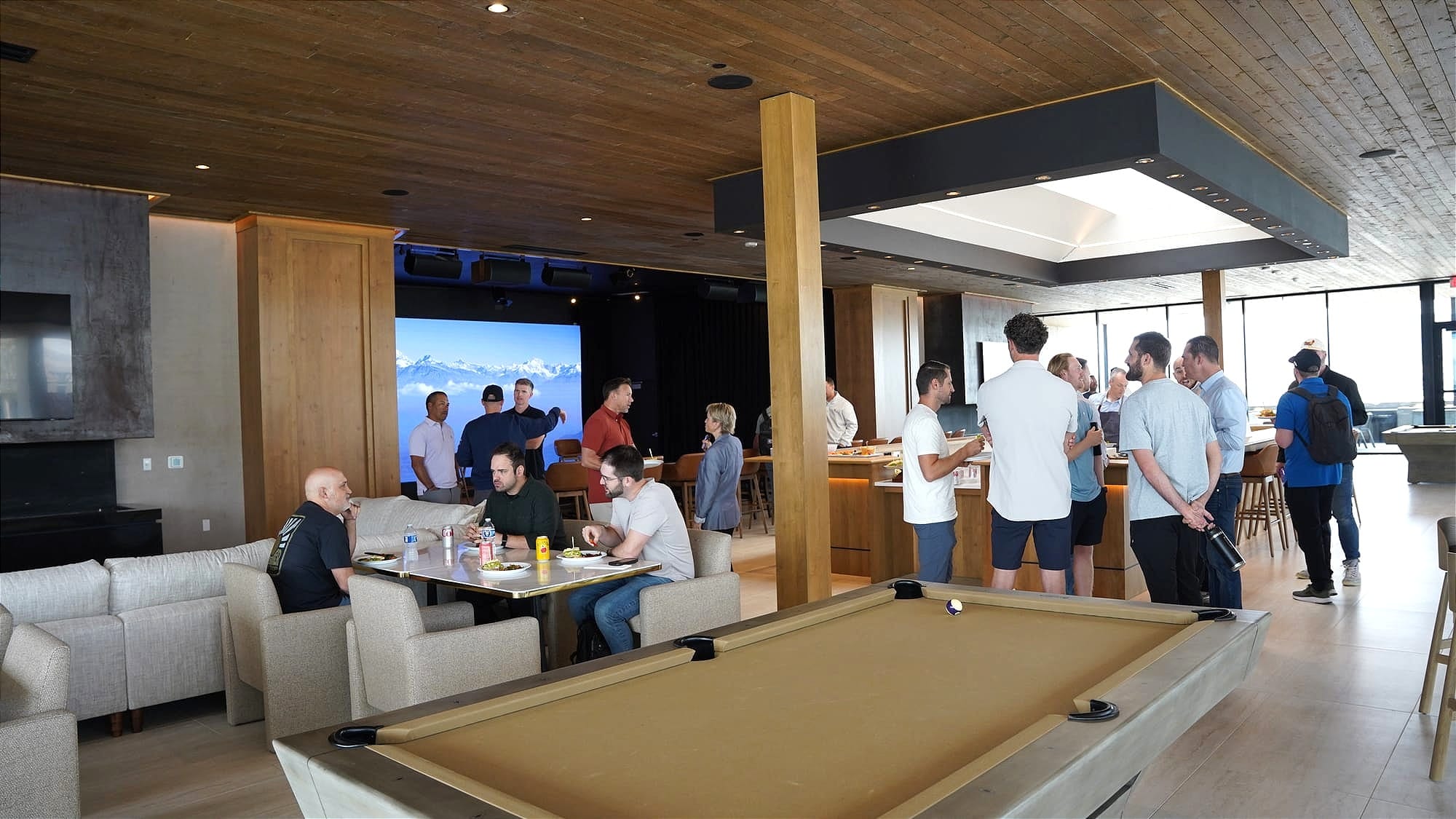
Attendees and panelists of the Old and New Perspectives on VC event, Sanctuary Club House, Lehi Utah. Photo: Mark Tullis, TechBuzz
The founder still comes first
Despite the changes in technology and investment markets, the partners said one part of Album's approach remains remarkably consistent: the importance of the founder.
Krommenhoek described it as a question of whether an investor wants to go on a long journey with the person sitting across the table.
His own experience with Podium, one of Album's first investments, illustrated that approach. He described developing a close personal relationship with the founders, including scuba diving and playing basketball with them and watching their families grow.
But personal chemistry alone isn't enough.
Krommenhoek looks for founders who are unusually focused on the details of their businesses—what he called “maniacal” founders. He argued that qualities sometimes viewed negatively in larger companies, such as being intensely involved in every detail, can be valuable at the earliest stages, when a company is still trying to establish whether its idea can become a real business.
He also cautioned founders against approaching venture capitalists as though the investor is expected to supply the company's strategy. “You should be coming in like, here is exactly how I think we're going to do it,” he said. The founder should be willing to listen and take counsel, he added, but should not expect the venture firm to create the company's go-to-market strategy.
Allred described the common characteristics somewhat differently: character, intelligence, vision and execution. Character, he said, isn't simply a matter of whether someone is trustworthy. It is about understanding what a founder cannot help but do, and their intensity, work ethic, and tenacity. Vision is also becoming more important, as the best founders are attracted to the best problems, with those problems evolving faster than ever.
Following founders into new territory
For years, venture capital in Utah was heavily associated with software and business-to-business SaaS. That isn't disappearing. But the partners see a much broader opportunity emerging.
Allred's experience with American reindustrialization has made manufacturing, mining, energy and healthcare particularly interesting. He sees opportunities where technology can address labor shortages, improve logistics and distribution, or change how traditional industries operate.
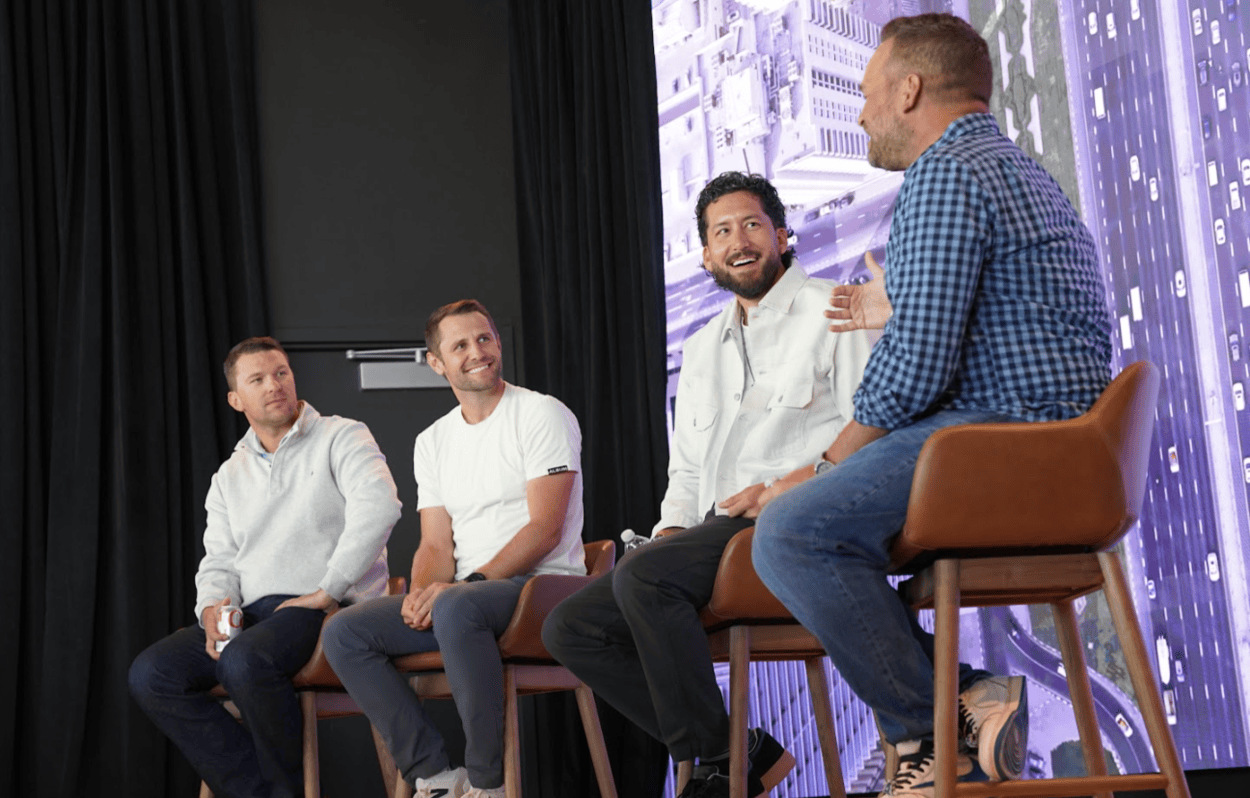
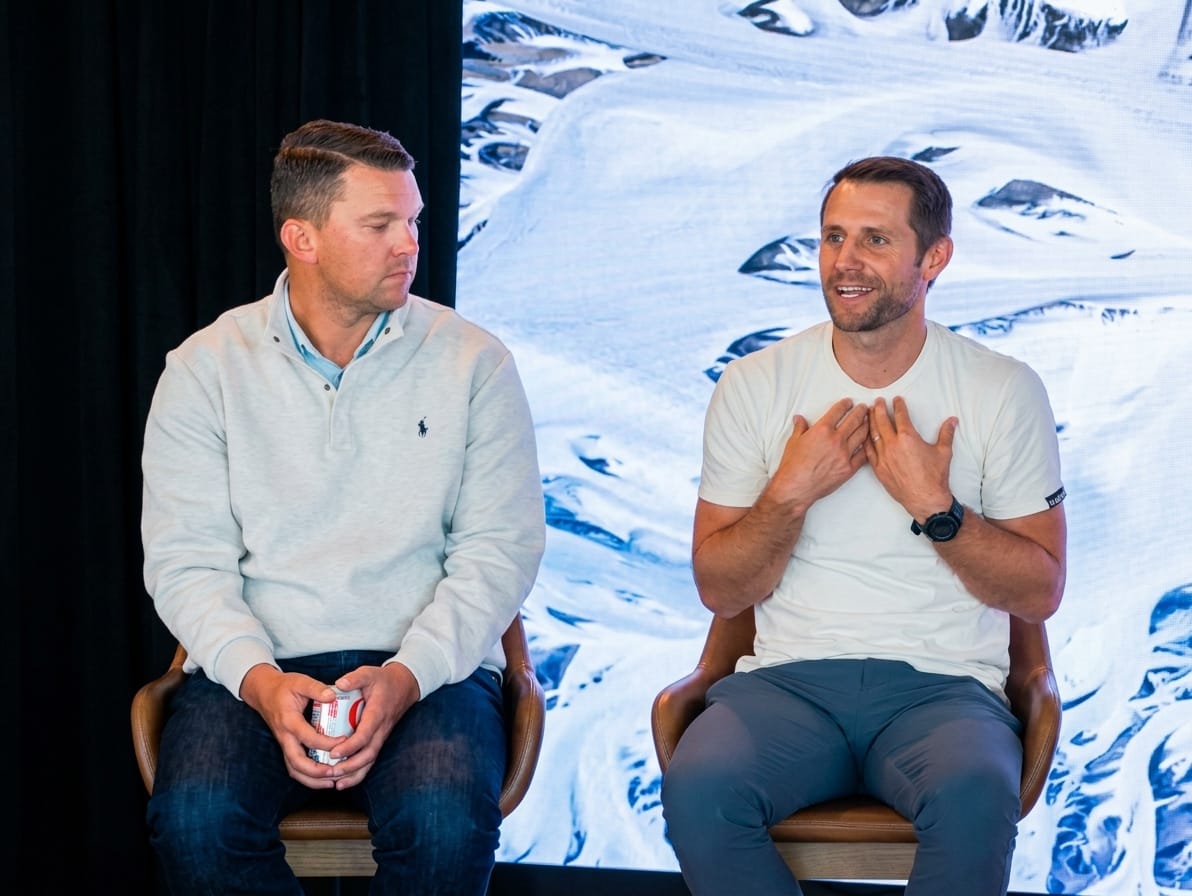
Album partners Ty Boswell, Cash Allred, discuss adapting early-stage venture capital to AI disruption, capital-intensive markets, and reindustrialization at the “Old and New Perspectives on VC” event, moderated by Tyler Jennings of GOED. Sanctuary Lehi, October 6, 2026. Photo: Mark Tullis, TechBuzz
Boswell sees a similar shift, particularly in AI infrastructure and core technology architectures. “The best founders are absolutely doing different things now,” Boswell said.
That shift matters because venture capital tends to follow the strongest founders. If those founders begin pursuing problems in AI, mining, manufacturing, energy or specialized healthcare, capital eventually follows them.
Krommenhoek sees an opportunity for Utah in that transition. He argued that Utah's historical strengths may become more valuable as technology moves beyond the familiar software categories. The state has developed expertise in specific industries and niche markets, and those industries may now be candidates for technological transformation. He compared the potential to the way Utah developed a strong B2B SaaS ecosystem after local entrepreneurs helped establish a playbook for building those companies.
“There are all the picks and shovels,” he said, suggesting that Utah could benefit from the specialized opportunities created by AI and other technological shifts.
That does not mean Album has abandoned Utah. It means the firm's geographic definition of opportunity has expanded.
Attendees gather to listen to Old and New Perspectives on VC. Sanctuary Club House, Lehi Utah. Photo: Mark Tullis, TechBuzz
Geography matters less
Album's first fund was essentially Utah-only. Because of that geographic constraint, the firm could afford to be broad thematically. As the firm expanded, it began looking outside Utah in areas where its individual partners had particular expertise.
Boswell's first investment with the firm was an AI security company in the United Kingdom. The company had a team of 22 PhDs that had spent years researching its particular problem. For Boswell, the quality of the team and its technical breakthrough mattered more than where the company was located.
The ability to evaluate such companies also depends on the networks each partner brings to the partnership. That is one of the reasons Krommenhoek sees the addition of Allred and Boswell as more than simply an expansion of the team. A company investing at the seed stage needs people who can understand unfamiliar technologies, identify the right experts and help founders navigate the next layers of capital.
“The entire portfolio will benefit from connectivity into those firms and how they think and how they operate,” Krommenhoek said of the networks the new partners bring.
Album partners Ty Boswell, Cash Allred, and Sid Krommenhoek, discuss adapting early-stage venture capital to AI disruption, capital-intensive markets, and reindustrialization at the “Old and New Perspectives on VC” event, moderated by Tyler Jennings of GOED. The stage of Lehi Sanctuary's Club House, October 6, 2026. Photo: Mark Tullis, TechBuzz
The capital equation is changing
A member of the audience asked how Album thinks about companies that may require $40 million, $50 million or $100 million to build. Krommenhoek argued that founders should not automatically assume that bigger ideas require enormous amounts of capital. Today's technology can allow very small teams to accomplish things that previously required much larger organizations.
At the same time, the partners acknowledged that some businesses simply cannot avoid significant capital requirements. That changes the role of the venture investor.
For Album, the job is not necessarily to provide every dollar a company will ever need. Instead, the firm wants to establish its position at the early stage, help the company grow and serve as a bridge to the next layers of capital. “There are tranches of capital that businesses need at different stages,” Krommenhoek said.
Attendees of the Old and New Perspectives on VC event, Sanctuary Club House, Lehi Utah. Photo: Mark Tullis, TechBuzz
What Album wants to see next
The three partners don't have identical investment interests, and that appears to be intentional. Krommenhoek described himself as particularly interested in unusual ideas and founders who see opportunities others may overlook. He also emphasized the role he plays as an advocate for founders once Album invests.
Allred identified two broad areas of interest. One is American reindustrialization: tools for manufacturers, computing, mining, healthcare, medicine, biotechnology, distribution and logistics. The other is simply exceptional teams with significant domain knowledge. “I like meeting people that know surprisingly large industries others have rarely heard of,” he said.
Boswell is particularly interested in AI infrastructure and new approaches to artificial intelligence, especially those that take an alternative approach to transformer-based large language models. He also sees significant long-term potential in healthcare, where AI could change how clinical data and established processes are used.
The common thread across all three partners isn't necessarily a particular industry. It is the combination of an exceptional team, a difficult problem and a technological or business insight that gives that team a chance to do something substantially different.
The firm is still looking for founders willing to take big swings. It is still comfortable investing early. It still puts significant weight on relationships and founder character. But the boundaries around where those founders can be found have widened considerably.
For Krommenhoek, that evolution is part of the point. Album, he said, was built to adapt as technology, markets and generations of investors changed. Bringing Allred and Boswell into the partnership is one expression of that philosophy: preserving the firm's core investment principles while giving new perspectives a larger role in deciding what comes next.
The old Album was built around a relatively simple question: Which Utah company could become the next great technology business?
The new version is asking a broader question: Where are the exceptional founders—and what problems are they now brave enough to tackle?
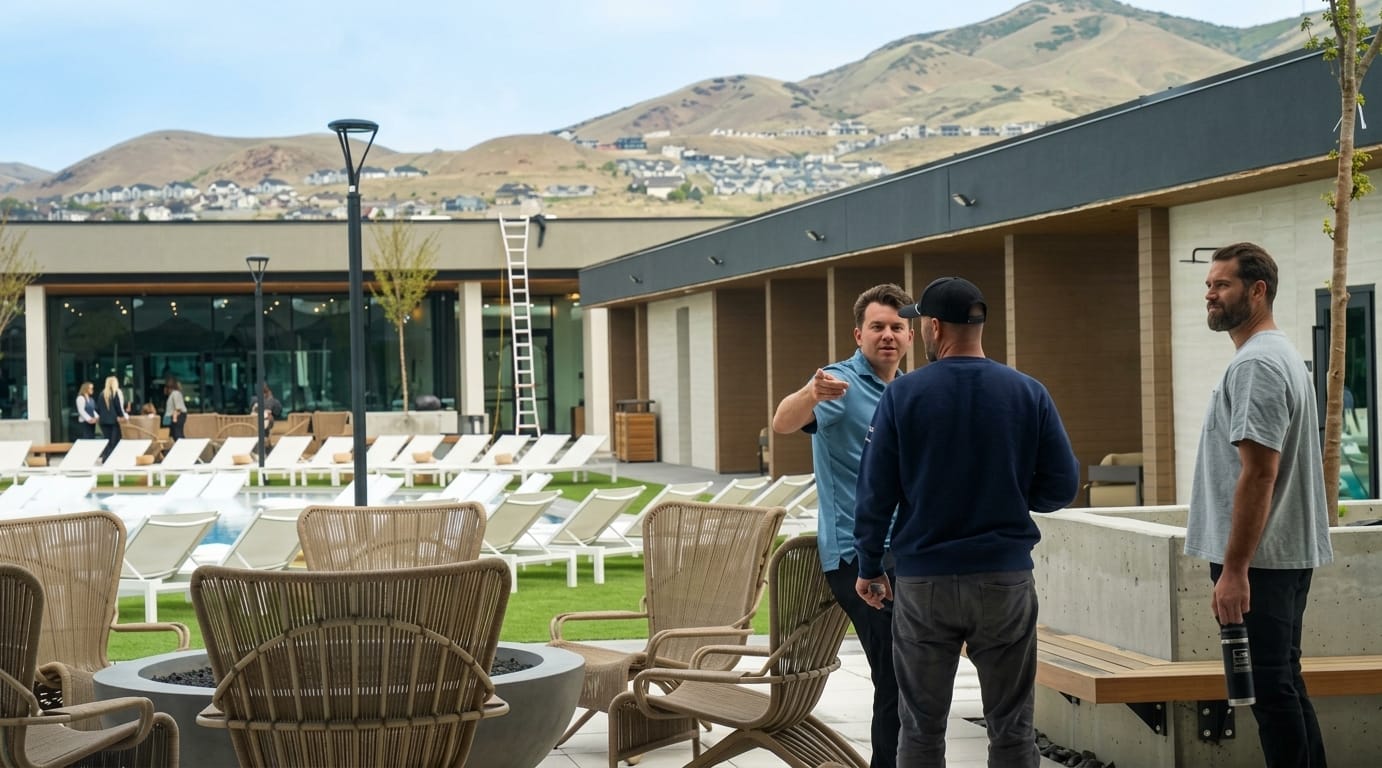
Sanctuary Lehi is a European-inspired living, coworking, and event space designed to contrast Old World styling with modern amenities. The interior incorporates dark-stained oak, limestone (including 300+ year-old fireplace mantles imported from Europe), chandeliers, and classic paintings across monastic-themed workspaces, a meditation chapel, and wood-paneled reading rooms. On October 6, the venue’s modern rooftop clubhouse, pool and lounge hosted its inaugural event, Old and New Perspectives on VC. Photo: Mark Tullis, TechBuzz
Share this article
The link has been copied!
Your link has expired. Please request a new one.
Your link has expired. Please request a new one.
Your link has expired. Please request a new one.
Great! You've successfully signed up.
Great! You've successfully signed up.
Welcome back! You've successfully signed in.
Success! You now have access to additional content.