Utah’s Redtail AI Factory Puts Statewide AI Ambitions on a Supercomputing Foundation
The University of Utah launched its Redtail AI Factory at the One-U Responsible AI Initiative Annual Symposium, bringing a $50 million statewide computing resource to researchers, students, government and industry across Utah.
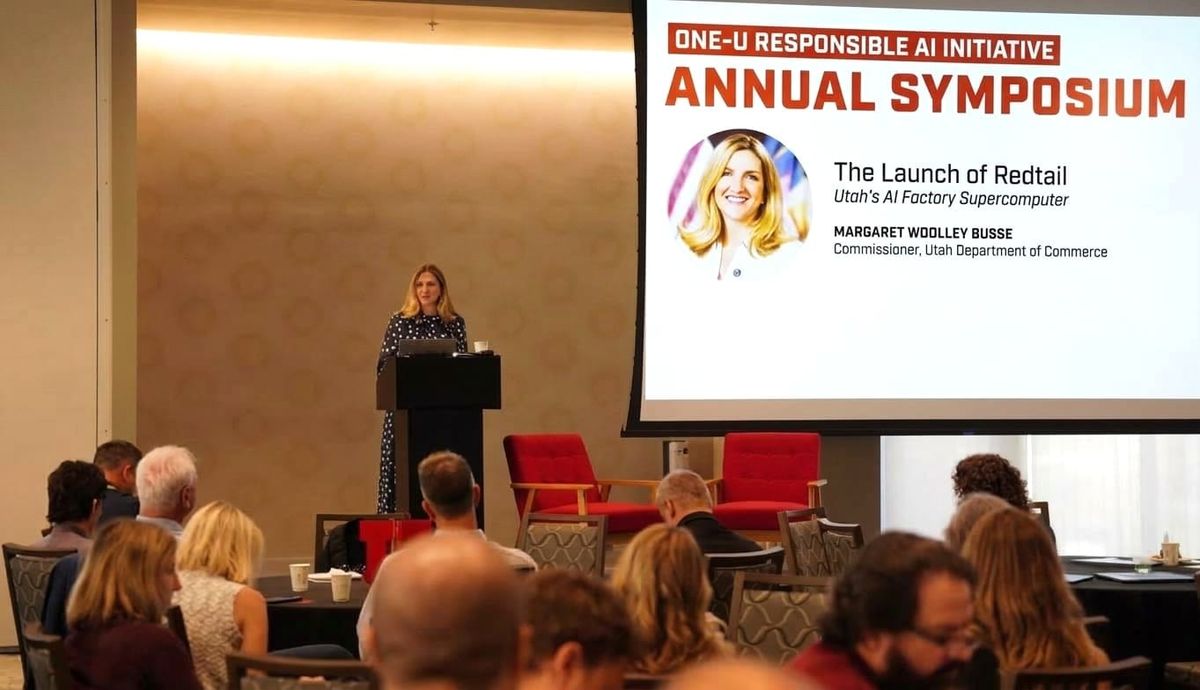
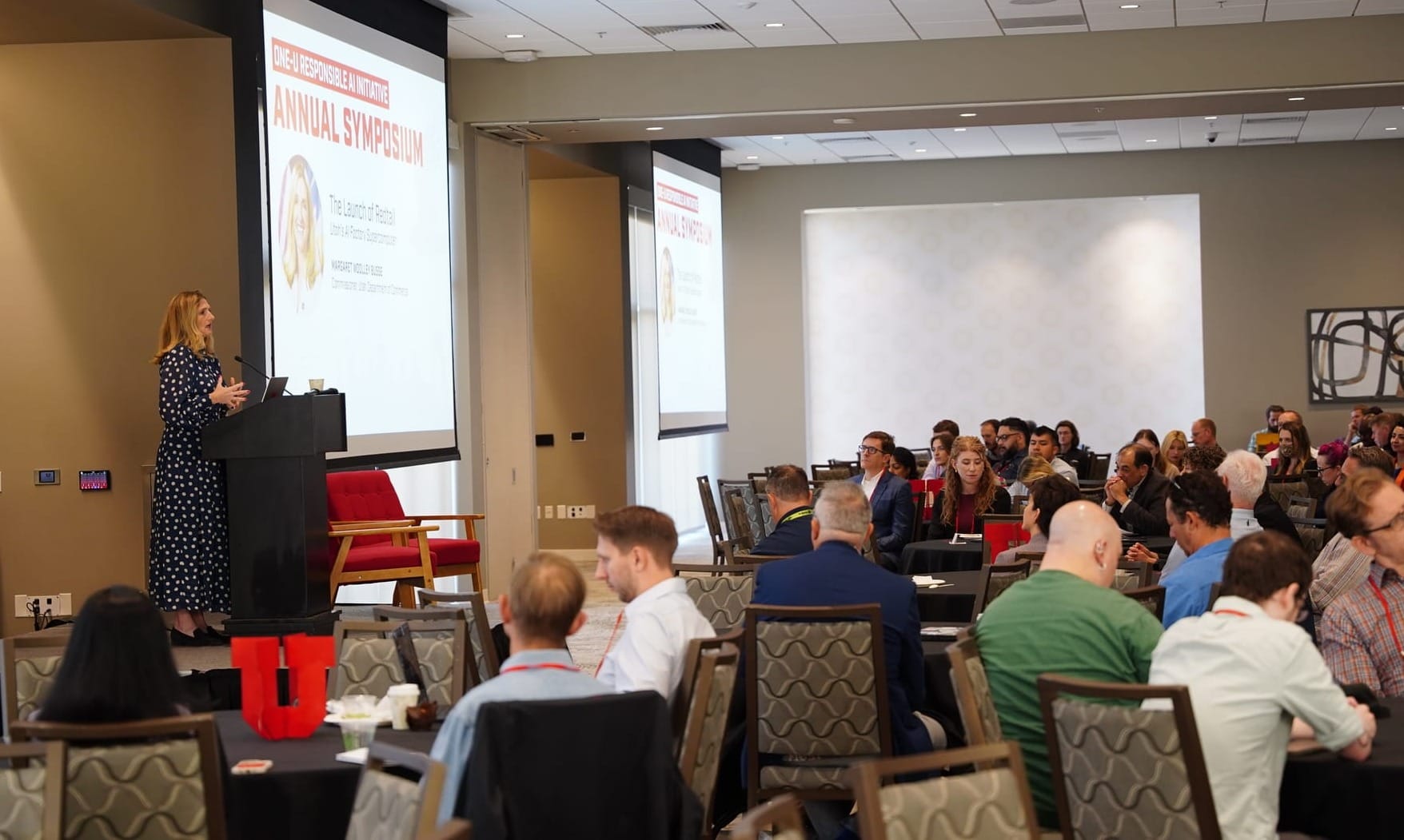
Margaret Woolley Busse, Commissioner of the Utah Department of Commerce, addressing the audience at the University of Utah's One-U Responsible AI Initiative Annual Symposium and the announcement of the supercomputer, Redtail. U of U Alumni House, October 6, 2026. Photo: Mark Tullis, TechBuzz
Margaret Woolley Busse, Commissioner of the Utah Department of Commerce, addressing the audience at the University of Utah's One-U Responsible AI Initiative Annual Symposium and the announcement of the supercomputer, Redtail. U of U Alumni House, October 6, 2026. Photo: Mark Tullis, TechBuzz
Salt Lake City, Utah — October 6, 2026
Today the University of Utah launched its Redtail AI Factory Tuesday at the One-U Responsible AI Initiative Annual Symposium, returning the university to the world’s supercomputing rankings with a system designed not simply to run large computations, but to make large-scale artificial intelligence computing available to researchers, students, government and industry across Utah.
Redtail ranks No. 159 on the TOP500 list of the world’s fastest supercomputers and No. 76 on the Green500, which measures computing performance relative to energy consumption. Among U.S. public universities, it ranks fifth.
But the rankings are only part of the story.
The $50 million public-private effort involving the University of Utah, the state of Utah and the Huntsman Family Foundation is an attempt to build something larger than a powerful computer: a statewide AI infrastructure that can support research, education, healthcare, workforce development, government and industry.
“The machine is the cheap part. The machine is the catalyst,” said Chris Malachowsky, NVIDIA co-founder, whose experience helping launch a similar effort in Florida helped inspire Utah’s project.
That distinction is important. Redtail is an AI factory, a term used to describe the specialized computing infrastructure needed to build and operate modern AI systems. Its architecture is similar to systems used by companies such as OpenAI and Anthropic, according to University of Utah officials.
Redtail is designed for distributed AI training, large language models, multi-node GPU computing and tightly coupled high-performance computing workloads. Its network allows GPUs across the system to work together on large AI workloads, while high-speed connections link Redtail to the Utah Education and Telehealth Network and the University of Utah's Downtown Data Center.
The system is built around hundreds of GPUs designed to work together on large AI workloads. Its architecture is optimized for distributed AI training, large language models and other computing-intensive applications.
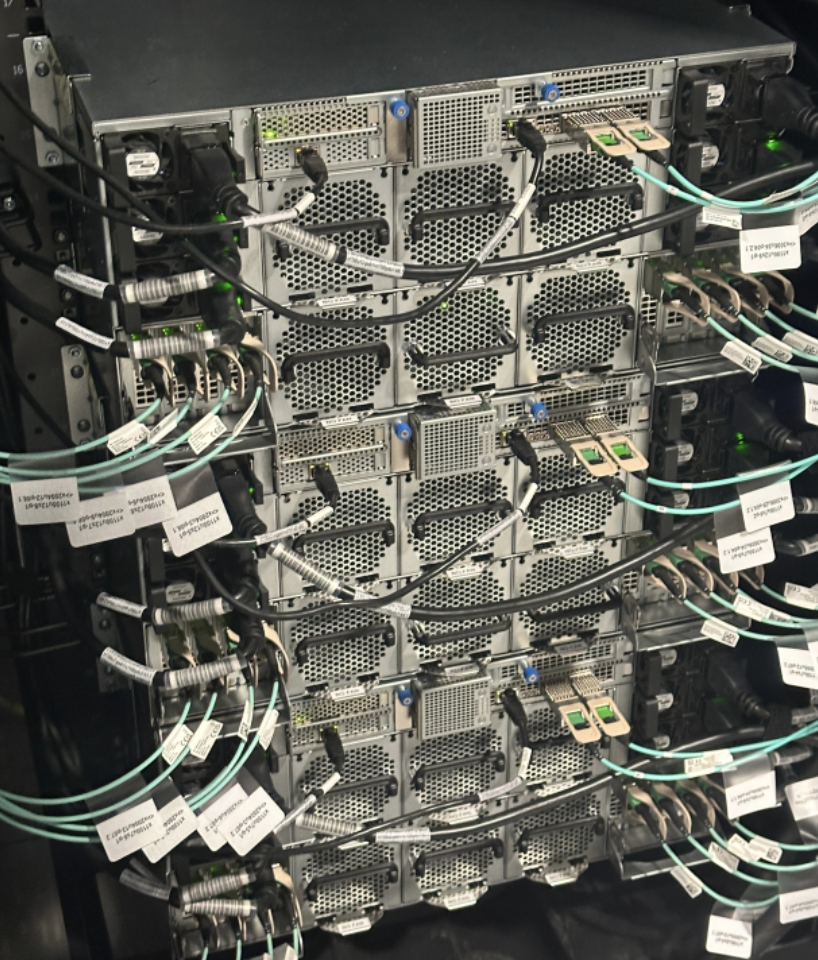
Redtail is a system is built around hundreds of GPUs designed to work together on large AI workloads. Its architecture is optimized for distributed AI training, large language models and other computing-intensive applications. Photo: CHPC — Research Computing and Data Support, University of Utah
So what is actually inside Redtail?
33 HPE Cray XD670 compute nodes 264 NVIDIA H200 GPUs 3,696 CPU cores 66 TB system RAM ~1 PB high-performance scratch storage 141 GB high-speed VRAM per GPU 900 GB/sec. maximum GPU-to-GPU bandwidth 400 Gbps inter-node connectivity
But the hardware is only one part of what Utah is building. The university is pairing Redtail with training, technical support, AI ambassadors and an allocation process intended to give researchers and other users access to the system.
The University of Utah has appeared on the TOP500 list 18 times, but Redtail marks its first appearance since 2009. It is also the university’s first appearance on the Green500. For the university, however, the significance of Redtail is less about returning to a ranking than about what happens after the rankings are published.
“Our aim is to lower barriers to entry so that Utah researchers, educators, students, businesses and public servants can easily use AI at scale to accelerate their projects,” said Bill Miller, director of the University of Utah’s Center for High Performance Computing, which operates Redtail.
That access is being built into the project from the beginning. Redtail’s initial rollout is focused on the Utah System of Higher Education, with plans to expand access to additional users across the state. The university is also building an ecosystem around the machine that includes AI engineers and ambassadors, training programs, innovation labs and industry partnerships.
The goal is to make Redtail useful beyond the University of Utah itself.
The system is already being positioned for applications ranging from biomedical research and disease diagnosis to environmental forecasting, materials science, engineering simulation and generative AI. A Redtail Challenge launched in July is intended to accelerate early projects and demonstrate what the new infrastructure can do.
At Utah Valley University, another piece of that access strategy is taking shape. In July the Orem-based university launched an LLM gateway intended to give students across the state access to open-source versions of AI tools without requiring each student to purchase individual commercial subscriptions.
For Margaret Woolley Busse, Commissioner of the Utah Department of Commerce, those efforts connect Redtail to a much broader state strategy.
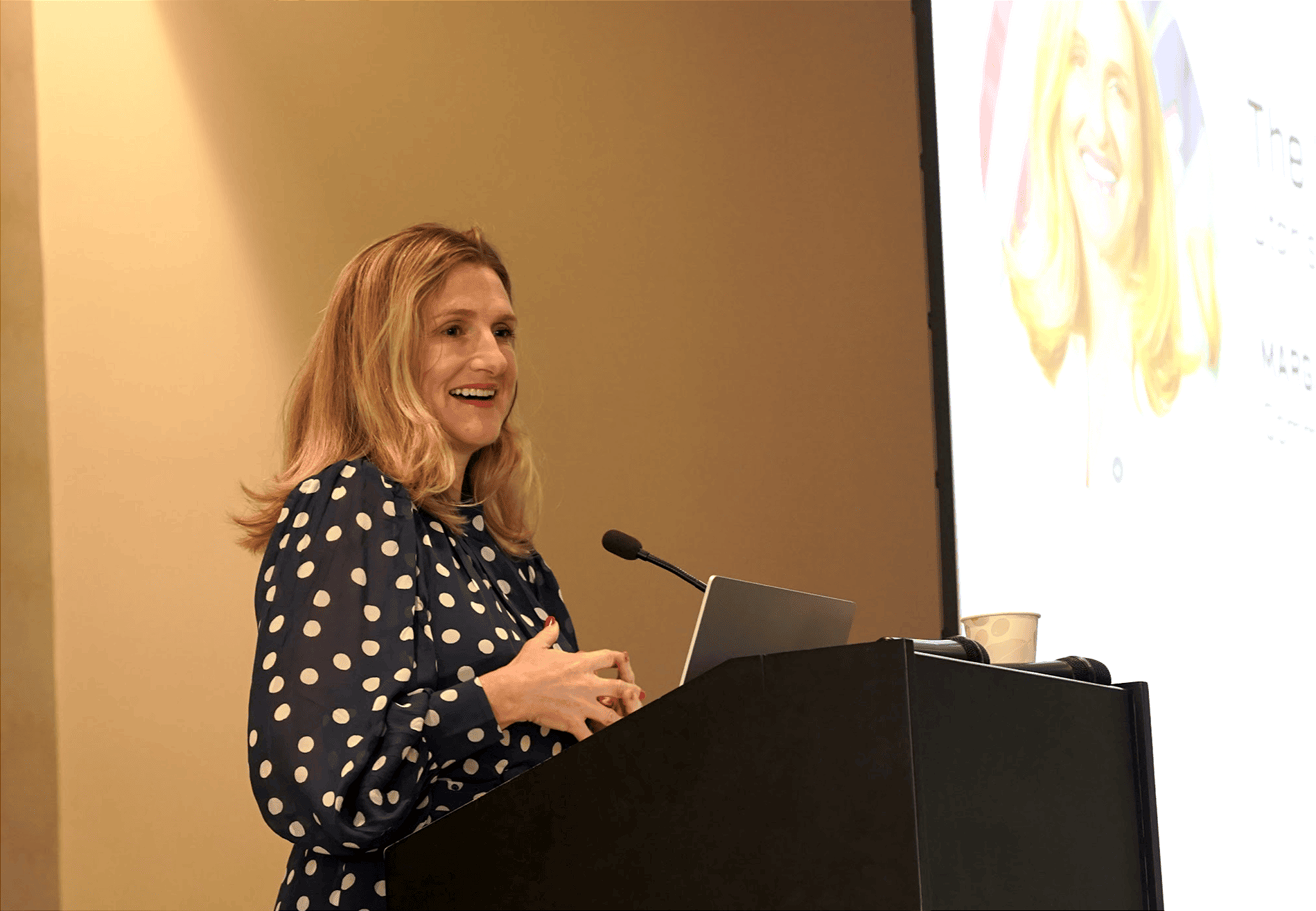
Margaret Woolley Busse, Commissioner of the Utah Department of Commerce, speaking at the launch of the University of Utah’s Redtail AI Factory. Busse connected the new computing resource to Utah’s Pro-Human AI strategy and its goal of using AI to enhance human capabilities. Photo: Mark Tullis, TechBuzz
Utah’s Pro-Human AI Initiative is built around the idea that artificial intelligence should be human-guided and human-enhancing rather than simply adopted for its own sake. The state’s framework identifies seven areas of focus: academic research and development, healthcare, industry innovation, learning and education, public protection, state government deployment and workforce empowerment.
Redtail gives that strategy a physical foundation.
From AI policy to AI infrastructure
Busse's role is significant because Utah's AI strategy did not begin with Redtail.
As Commerce commissioner, she has overseen the state's Office of Artificial Intelligence Policy, which was created to help Utah study how AI is being used, protect the public and foster innovation. The office operates an AI sandbox that allows companies to test certain AI products under supervised conditions while the state learns from those deployments.
In February, Busse and Jefferson Moss, executive director of the Governor's Office of Economic Development, were named co-chairs of Utah's Pro-Human AI Task Force. The initiative's premise is straightforward: AI should remain human-guided and human-enhancing, preserving human agency while expanding what people can accomplish. The state's framework focuses on academic research and development, industry innovation, learning and education, public protection, state government deployment and workforce empowerment.
Redtail adds computing power to that policy framework.
Busse described seven areas of state activity at the launch, including workforce, healthcare, academic research, state government deployment, education, public protection and industry innovation.
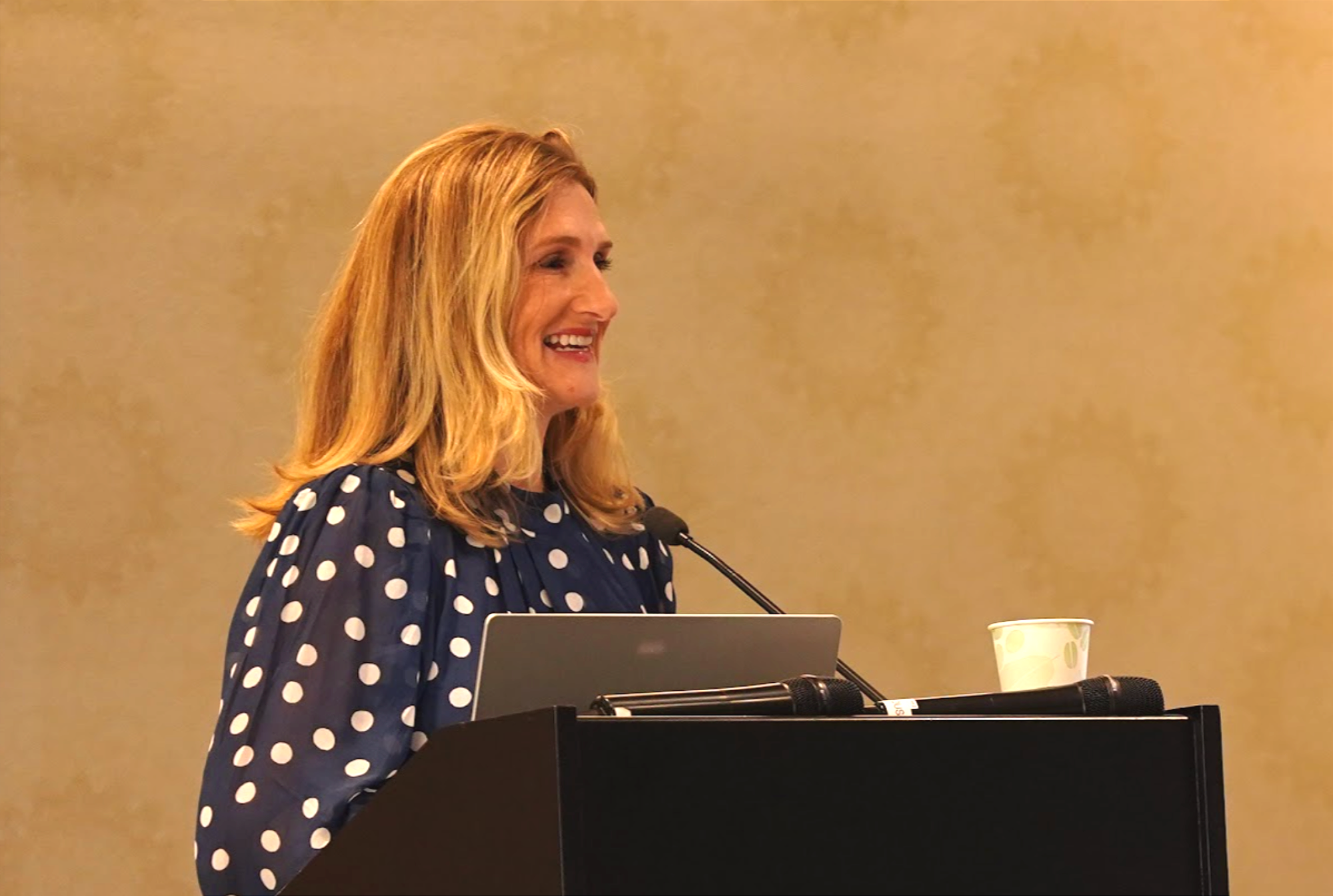
Margaret Woolley Busse, Commissioner of the Utah Department of Commerce, at the launch of the University of Utah’s Redtail AI Factory. Photo: Mark Tullis, TechBuzz
She pointed to problems such as air pollution, the Great Salt Lake and homelessness as examples of areas where advanced computing could help Utah researchers and policymakers tackle difficult problems.
That is a different proposition from simply making a faster university research computer. The state is trying to create an environment in which AI capability is available to more people and institutions. It is where the state's policy approach and physical infrastructure reinforce one another.
“We are so thrilled that this connects so well with the state's efforts here in Pro-Human AI,” Busse said at the announcement that took place at the Cleone Peterson Eccles Alumni House U of U today.
She sees the combination as an advantage for Utah: the state is not only developing policies around AI, but also building the computing capacity to do things with it.
A supercomputer designed for the state
The idea for Redtail emerged from a visit by Utah academic and government leaders to NVIDIA roughly a year and a half ago. That conversation eventually brought together the University of Utah, state government, NVIDIA, HPE and the Huntsman family.
Greg Jones, the University of Utah's director of corporate engagement in scientific computing, technology and AI, said the state's ability to move quickly was central to the project.
The University of Utah is taking a stewardship role, he said, housing and operating Redtail while building capacity and expertise that can extend throughout the state. Jones described the university as a “servant leader” for Utah. He also expects the machine to be oversubscribed.
That may eventually mean additional computing infrastructure. “We're going to oversubscribe this machine,” Jones said, predicting that Utah will need more machines as demand grows.
Bill Miller, the university's senior director for research computing and data, has been leading the technical effort. Miller joined the university from the National Science Foundation in September 2025. The HPE contract was signed in September, the project kicked off in November, and the university formally accepted the system at the end of August.
Initial operations are now beginning. Miller said the broader vision is for Utah to be “awash in computing power” and to develop a scalable AI ecosystem around Redtail. The system uses NVIDIA technology and tightly interconnected processors designed for large-scale parallel computing. Miller said its architecture is similar to infrastructure used by companies including OpenAI and Anthropic to build large AI models.
But the machine is only one part of the project.
Margaret Woolley Busse, Commissioner of the Utah Department of Commerce, addressing the attendees of the University of the 2026 Utah's One-U Responsible AI Initiative Annual Symposium. Photo: Mark Tullis, TechBuzz
Margaret Busse's seven-part view of what Redtail can change
For Commissioner Busse, the value of Redtail can be seen by looking beyond the university.
Workforce. Utah needs workers who can function in an economy increasingly shaped by AI. Redtail can provide computing resources for education and workforce development.
Healthcare. Huntsman Cancer Institute sees applications ranging from cancer discovery and therapeutics to patient-to-clinical-trial matching and earlier detection.
Academic research. Researchers can apply advanced computing to fields ranging from biomedical science to environmental forecasting, materials science and engineering.
Government. Utah is developing a broader strategy for responsible use of AI inside state government. Gov. Spencer Cox issued an executive order on state AI use the same day as the Redtail launch, according to Busse.
Learning and education. Utah's universities and colleges can use the infrastructure to expose students to AI systems and computing resources that otherwise could be difficult to access.
Public protection. Utah's AI policy work is explicitly concerned with protecting people as the technology develops.
Industry innovation. Redtail gives companies another reason to build and conduct AI-related research in Utah.
That final point is particularly relevant to Busse's role at Commerce. Utah's technology sector is already a significant part (17%) of the state's economy, and Busse sees AI infrastructure as another potential competitive advantage.
“Industry innovation” is one of the state's official Pro-Human AI pillars, alongside academic research, education, public protection, state government deployment and workforce empowerment. Redtail, in that sense, is not separate from Utah's economic-development strategy.
It is becoming part of it.
The first projects are already taking shape
The university launched its first Redtail Challenge in July to identify projects that could both demonstrate the system's usefulness and help the university and HPE understand how researchers will use the infrastructure. Initial projects include work in biomedical research, disease diagnosis and treatment, environmental forecasting and other areas. Miller said the projects were selected partly for their readiness to move quickly.
The challenge is intended to do more than fill Redtail's computing queue. It gives the university a way to begin learning what a statewide AI infrastructure actually requires. Around the machine, the university is building an enablement program involving AI ambassadors, technical liaisons and training. The objective is to ensure that researchers and other users know not only that Redtail exists, but how to use it.
The Huntsman connection
Cancer research is one of the most immediate applications envisioned for Redtail. The system is being positioned for applications ranging from biomedical research and disease diagnosis to environmental forecasting, materials science, engineering simulation and generative AI. A Redtail Challenge launched in July is intended to accelerate early projects and demonstrate what the new infrastructure can do.
Healthcare is one of the areas where the potential is particularly immediate. Bradley Cairns, CEO of Huntsman Cancer Institute, said Redtail could accelerate cancer discovery and therapeutics, improve matching of patients to clinical trials and help researchers detect and treat cancer earlier. Dr. Cairns stated that Huntsman has discovered “more genes that cause inherited cancers ... than any other university in the world.”
He added:
“We are so excited about Redtail, what it will do in terms of enabling cancer discovery, cancer therapeutics, the better matching of patients to clinical trials, and the ability to detect and treat cancer earlier.”
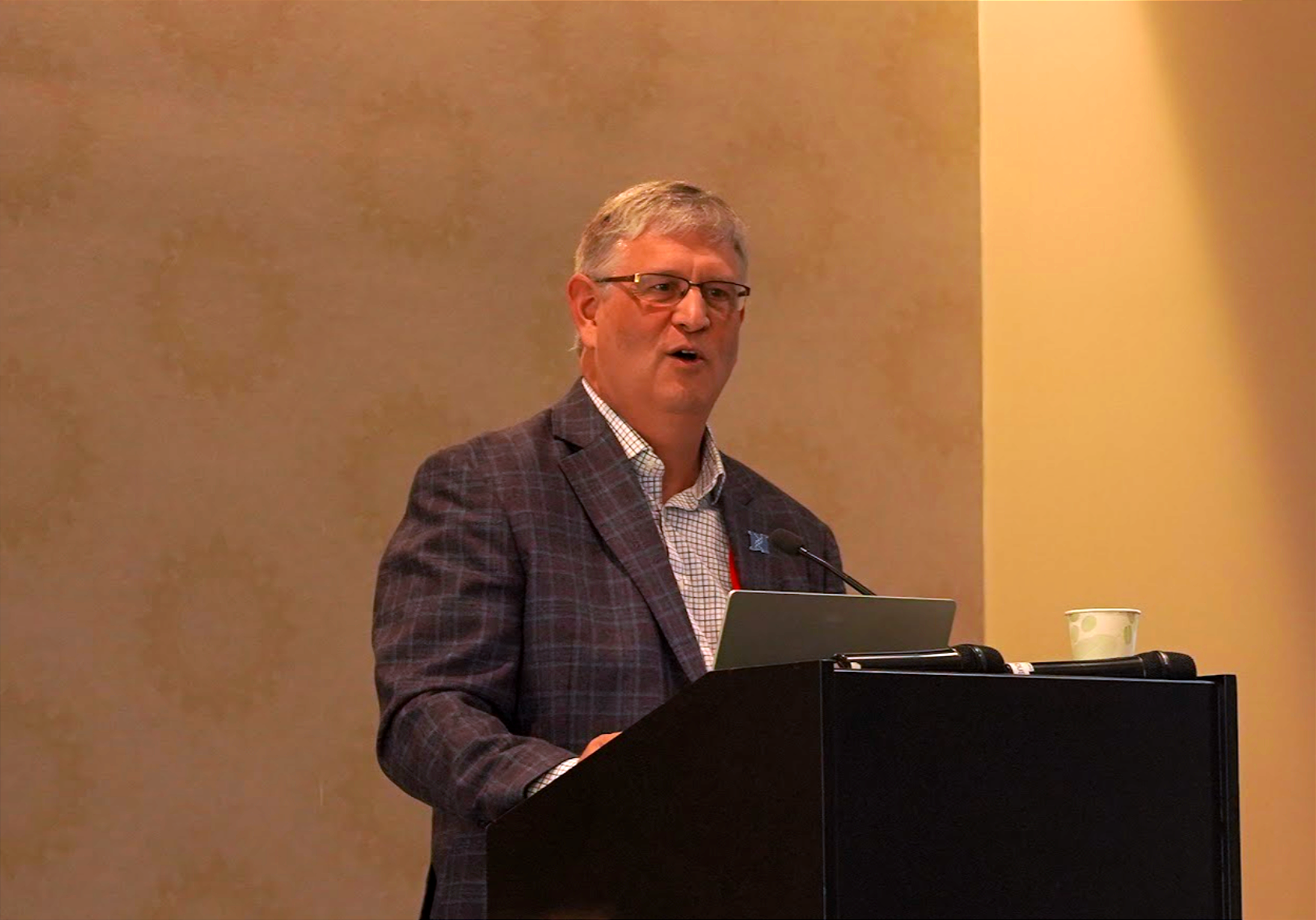
Bradley Cairns, PhD, CEO of Huntsman Cancer Institute, speaks at the launch of Redtail, the University of Utah’s new AI factory. Cairns said the system could accelerate cancer discovery and therapeutics, improve matching of patients to clinical trials and help researchers detect and treat cancer earlier. Photo: Mark Tullis, TechBuzz
The institute's longstanding work in cancer genetics could also benefit from the ability to examine enormous datasets and explore interactions between genes and environmental factors.
The potential extends beyond cancer to areas including mental health, neurology and digital health for rural and frontier communities.
But the Huntsman family's interest in Redtail goes beyond cancer.
Cairns said he had previously heard Chris Malachowsky, NVIDIA's co-founder, along with Jensen Huang and Curtis Priem, describe the effect an AI supercomputer had at the University of Florida. Malachowsky had helped support an AI computing initiative at his alma mater. Rather than remaining confined to one department, the effort expanded into AI education, research, workforce development and outreach.
That story caught Peter Huntsman's attention. According to Dr. Cairns, Huntsman contacted Malachowsky and flew to San Francisco to meet him. The goal was to explore whether Utah could achieve a similar multiplier effect. That conversation eventually became part of the broader vision behind Redtail.
The Florida lesson: the machine is the catalyst
Malachowsky, who spoke at the announcement today, now describes the physical computer as the beginning rather than the payoff. At Florida, he said the computing investment helped trigger changes throughout the university. AI became part of the curriculum. Faculty received support to incorporate AI into their disciplines. Students outside traditional computer science programs gained exposure to the technology. Researchers began applying AI in unexpected fields.
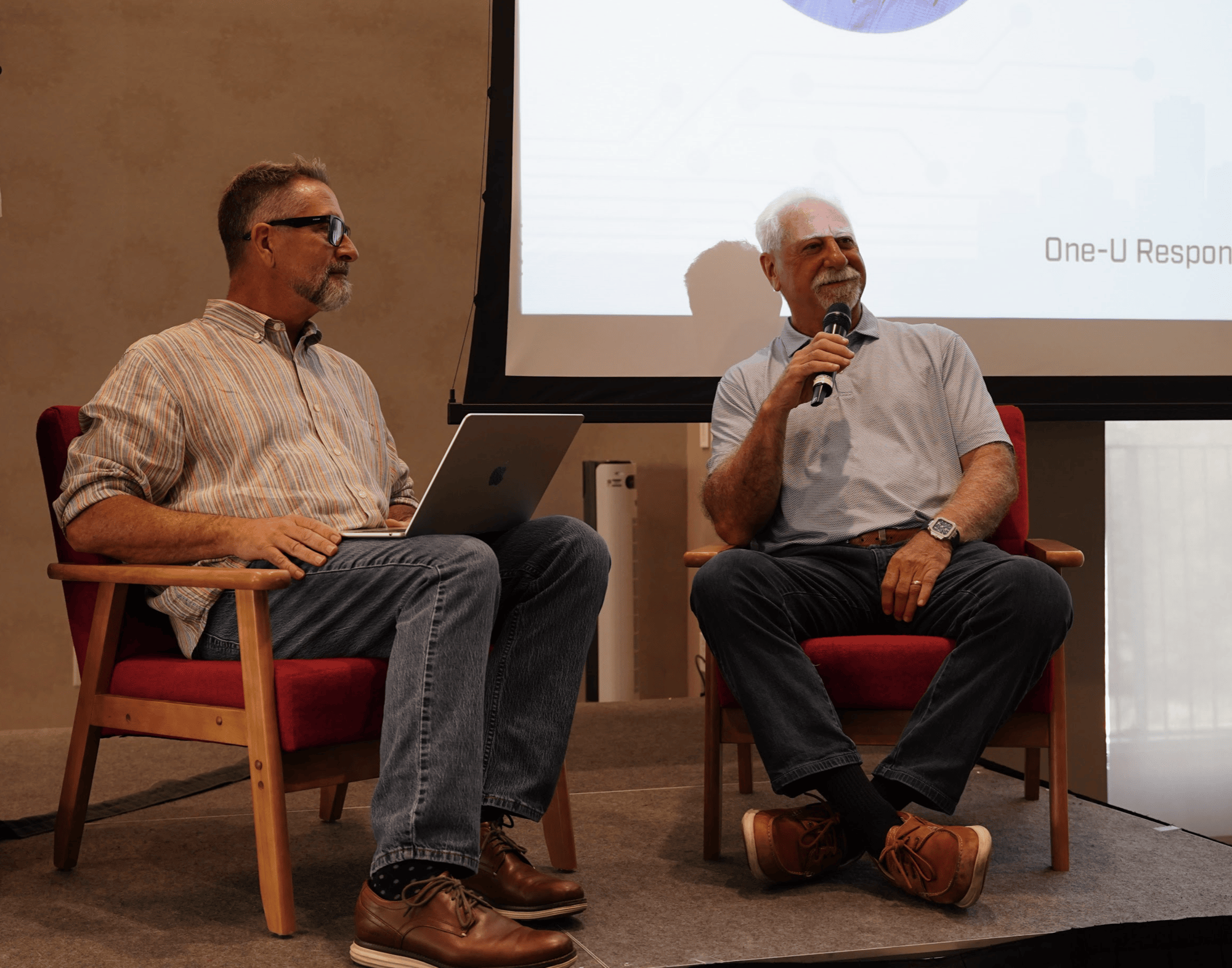
Greg Jones, the University of Utah's Director of Corporate Engagement in Scientific Computing, Technology and AI sitting down with Chris Malachowsky, NVIDIA's co-founder, at the launch of Redtail, the University of Utah’s new AI factory, UofU Alumni House, October 6, 2026. Photo: Mark Tullis, TechBuzz
The lesson, Malachowsky said, was that an AI machine could become a catalyst for institutional and economic transformation. “The machine is the cheap part,” he said. “The machine is the catalyst.” The continuing investment, he argued, is in people: educators, researchers, students, engineers and institutions capable of turning computing capacity into useful outcomes.
He also sees advanced computing increasingly as basic infrastructure. “The computation is no longer an academic thing, a research thing, a scientific thing,” Malachowsky said. “It's infrastructure. It's water and sewage, electricity…”
That is essentially the bet Utah is making.
A statewide AI ecosystem
HPE VP and Chief Tech Officer Thierry Pienaar said Redtail is unusual because it moved directly toward a mature operational deployment rather than progressing through the typical stages of a supercomputer installation. The system incorporates automation, multi-tenancy and security protocols designed to support multiple users and workloads.
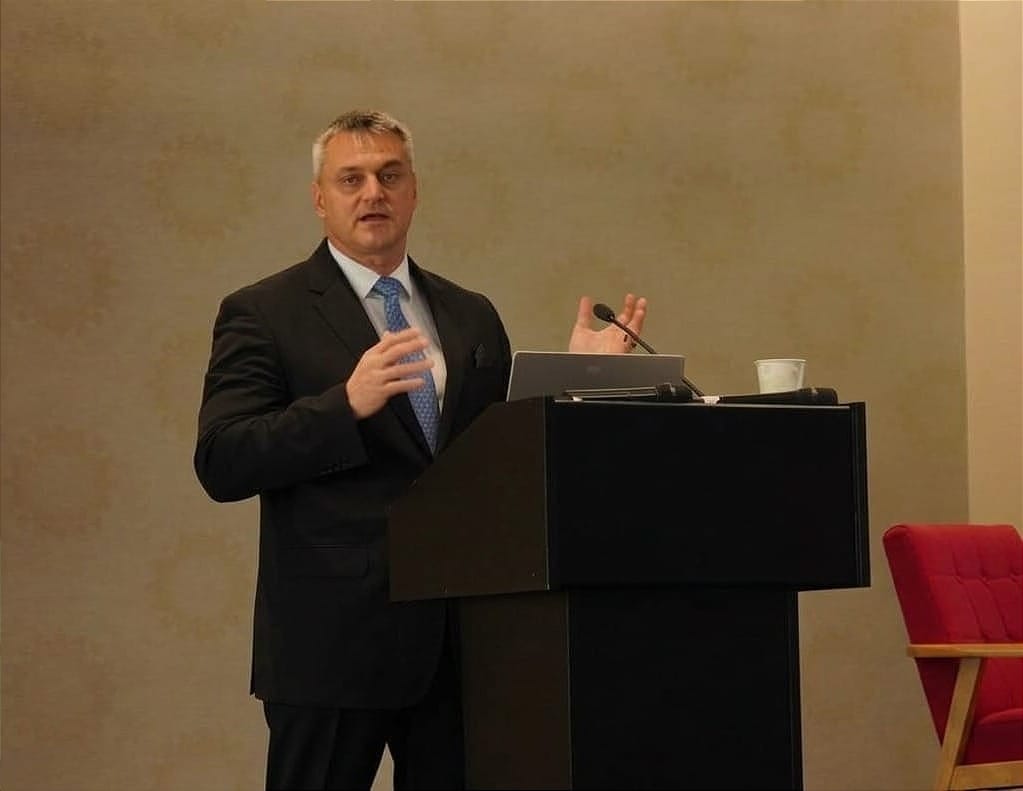
Thierry Pienaar, VP and Chief Tech Officer, HPE, speaking at the launch of Redtail, the University of Utah’s new AI factory, University of Utah Alumni House, October 6, 2026. Photo: Mark Tullis, TechBuzz
Pienaar said today's applications can include machine learning, generative AI, multimodal AI and agentic systems. Over time, the infrastructure is intended to support convergence between traditional high-performance computing and AI and emerging areas such as quantum and confidential computing.
HPE has developed the Utah project as an internal case study for how technology companies can collaborate with public institutions around what Pienaar describes as a “force for good.”
That public orientation is central to Redtail. The University of Utah is operating the system, but the stated goal is to make the resource useful across Utah. The university is working with the Utah Education and Telehealth Network and the Center for High Performance Computing to connect Redtail to the university and broader state network.
The initial research teams already extend across the state, with some projects connecting to partners outside Utah. For Busse, that statewide reach is precisely what makes Redtail significant. Utah has spent the past several years asking how AI can be developed in a way that protects people while encouraging innovation.
Now it has a physical resource capable of putting that philosophy to work. The question is no longer simply whether Utah has an AI strategy. It is what Utahns will build with it.
Redtail is now one of the world's fastest and most energy-efficient supercomputers. But the larger experiment is whether Utah can turn that computing power into a statewide advantage—in research, education, healthcare, government, workforce development and industry.
The machine itself is impressive. What Utah builds around it may matter more.