Women Tech Awards 2026 Put Visibility, Leadership and AI at the Center of Utah’s Technology Community
The 2026 Women Tech Awards recognized 43 Utah women advancing technology, AI, healthcare, cybersecurity, aerospace and more, highlighting leadership, innovation, career pathways and measurable impact across industries.
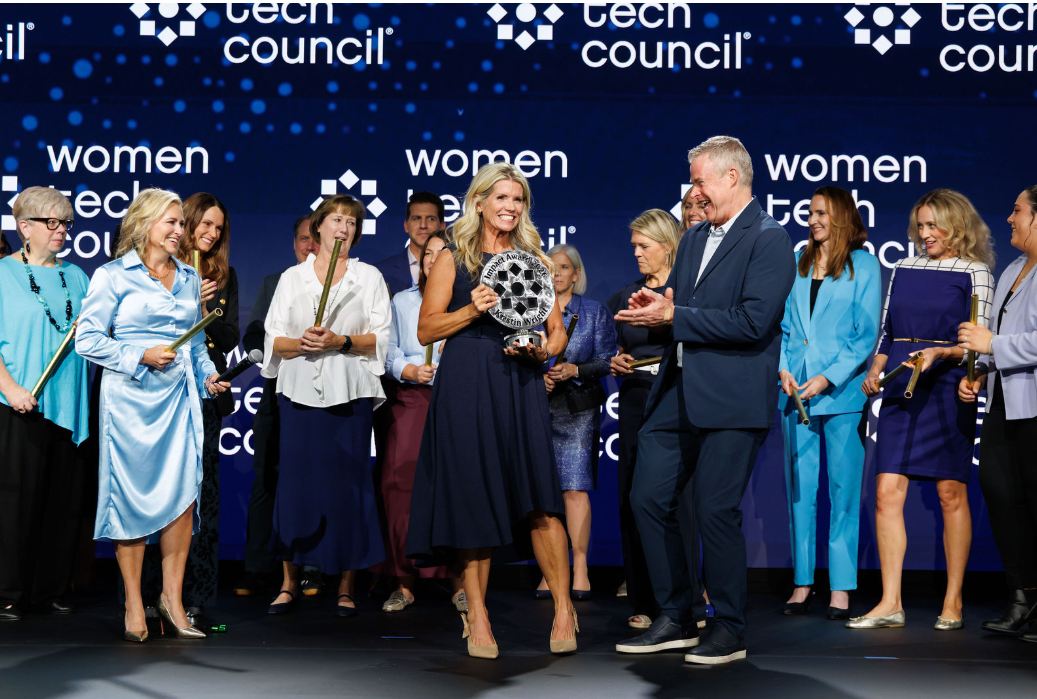
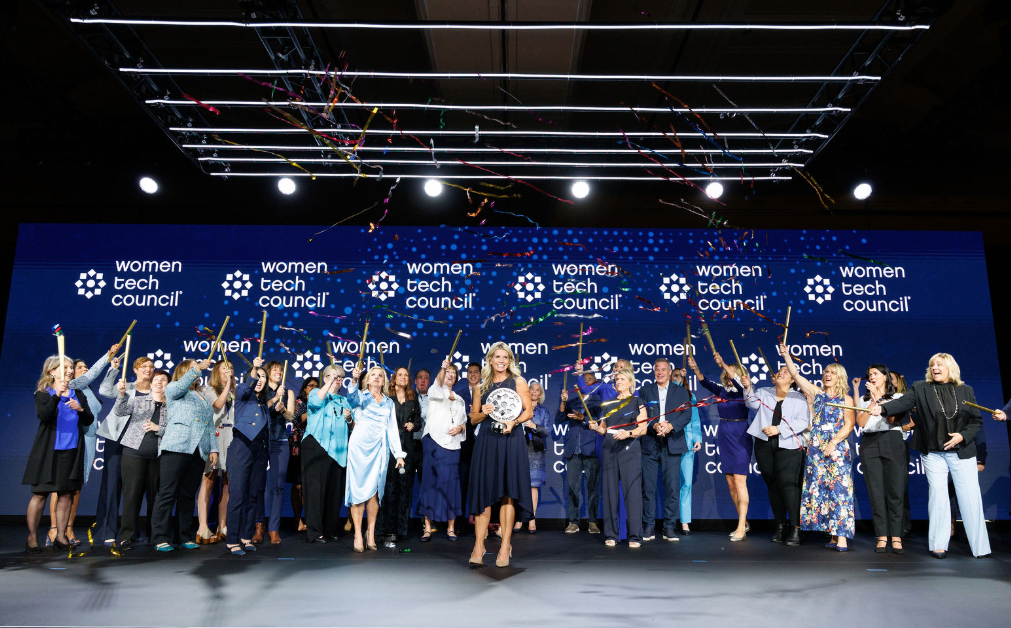
Kristin Wright receives the 2026 Impact Award during the Women Tech Awards at The Grand America Hotel on Sept. 17, 2026. Photo: Laura Kinser
Kristin Wright receives the 2026 Impact Award during the Women Tech Awards at The Grand America Hotel on Sept. 17, 2026. Photo: Laura Kinser
Salt Lake City, Utah — September 18, 2026
The 43 women recognized at the 2026 Women Tech Awards collectively hold more than 12 patents and 78 peer-reviewed publications. Their work has generated billions of dollars in business, financial and economic impact, led thousands of people through transformation, and spans more than 15 industries—from artificial intelligence and cybersecurity to healthcare, aerospace and Mars exploration.
Their work also includes technology supporting 55,000 healthcare workers across 24 hospitals and a new enterprise AI platform that was used 60,000 times in its first 90 days.
Those numbers provided the backdrop for the 2026 Women Tech Awards, where the Women Tech Council recognized Women Tech Award Honorees, Rising Stars, Career Transformation Honorees and Student Pathway Honorees.
But the event was about more than recognizing individual accomplishments. Again and again, speakers returned to the importance of visibility, connection, leadership and creating pathways for the women who will build Utah's technology community next.
Blue was the visual theme tying those ideas together.
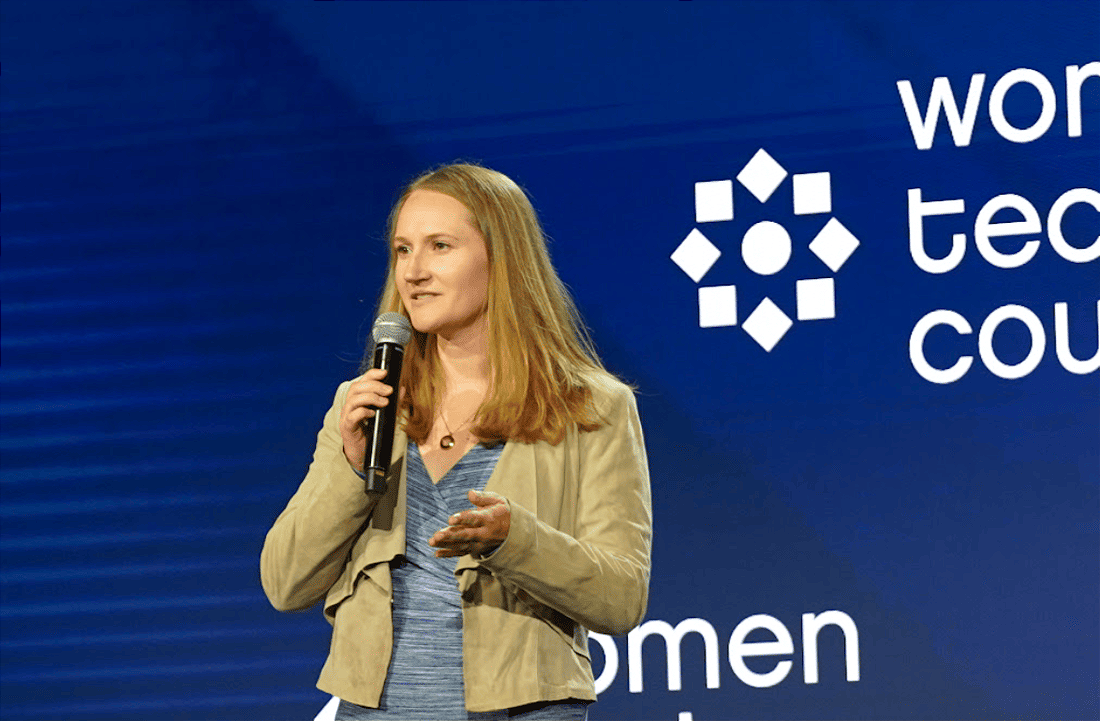
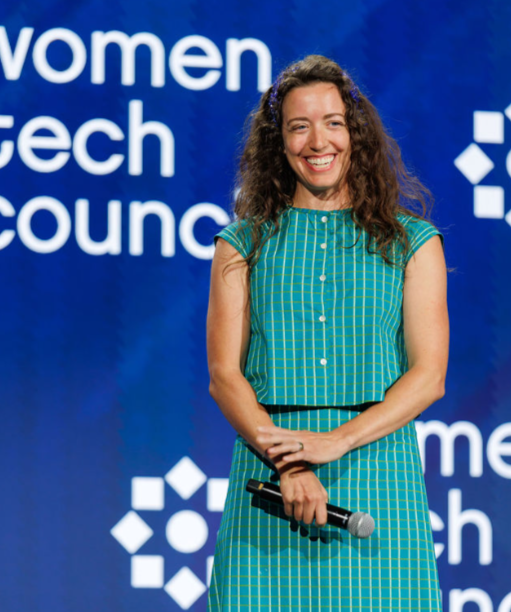
2026 Women Tech Award Honoree Kristin Wihera, Director of Fund Operations, The Nucleus Institute, speaking onstage at Women Tech Awards 2026, Grand America. Photo: Mark Tullis, TechBuzz
Blue as a symbol of collective impact
Attendees were encouraged to incorporate blue into their clothing, while blue lanyards identified the women being recognized. Cydni Tetro, president and co-founder of the Women Tech Council and president of Mountain Talk, said the organization chose blue because of its symbolism around innovation, leadership and collective impact.
“Every person in this room arrived carrying something that can help build the future—a problem you're trying to solve, an idea that you're working to move forward, or even a decision that you need to make,” Tetro told attendees.
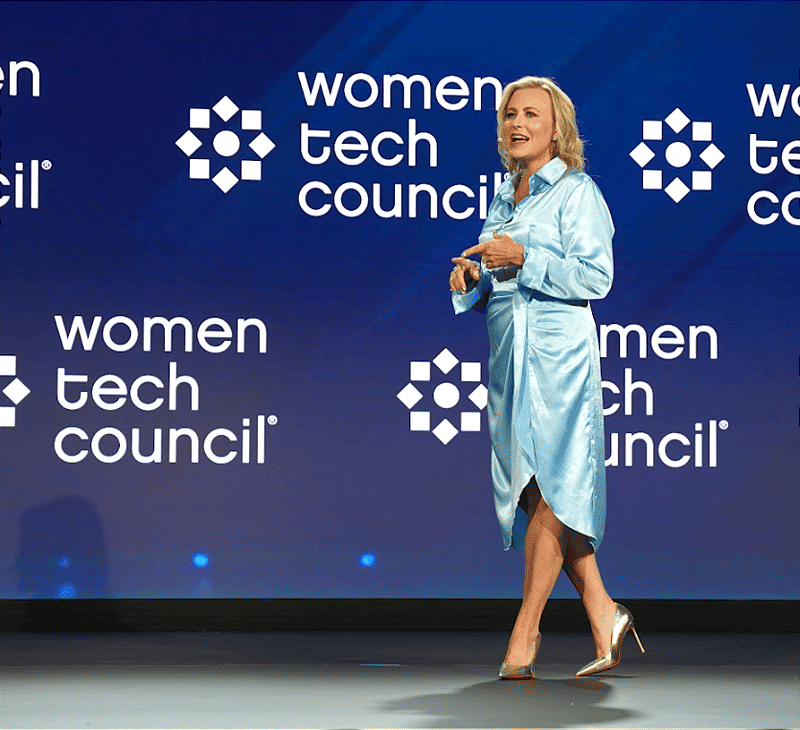
Cydni Tetro welcoming the attendees to the 2026 Women Tech Awards, Grand America, September 17, 2026. Photo: Mark Tullis, TechBuzz
She challenged participants to consider what challenge or opportunity they wanted to see differently by the end of the event—and who they might need to meet or what perspective they might need to hear to move it forward.
That emphasis on connection was central to the afternoon.
Tetro said the Women Tech Council created its platform to recognize leadership, reveal innovation happening across the community, create visibility and opportunities that accelerate careers and companies, and strengthen the technology talent pipeline.
The 43 women recognized at the event represented different points along that leadership journey, from students and emerging professionals to executives, technical leaders and women who had transformed their careers.
Making technology careers visible
For Michele Hollist, senior chemical engineer analyst at OxEon Energy, one of the most important aspects of the Women Tech Council's work is giving young women examples of people pursuing technology careers in their own communities.
“It is important for young women to see other women succeeding and doing things that they may not have realized someone like them could do,” Hollist said. “It opens their eyes to options they may not have considered otherwise.”
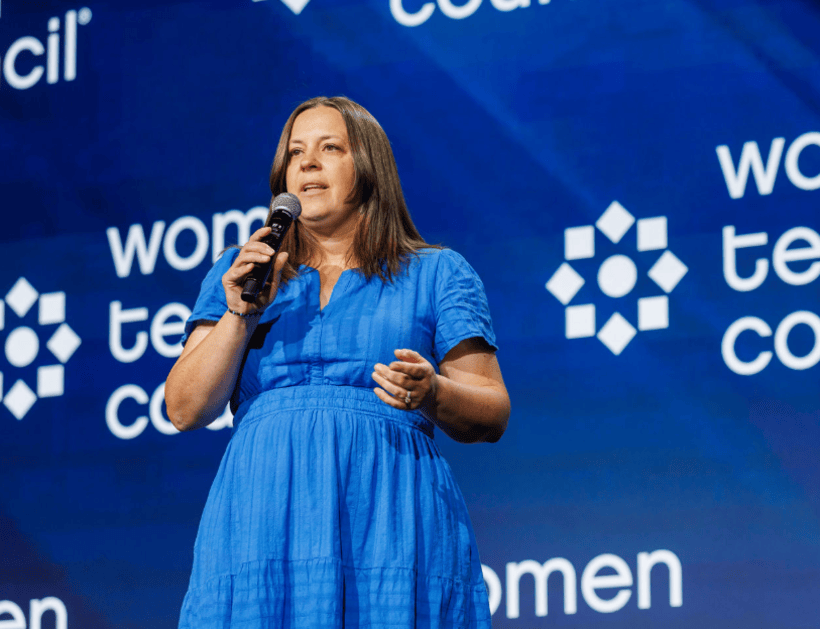
Michele Hollist, Senior Chemical Engineer Analyst, OxEon Energy, onstage at Women Tech Awards 2026, Grand America, September 17, 2026. Photo: Laura Kinser
Hollist said being recognized also gave her an opportunity to meet other women working throughout the technology community.
“For me personally, being recognized by the Women Tech Council was such a treat because it put me in the same room with other honorees and participants and I was blown away by the caliber of the community,” she said. “Every single person I spoke with was fascinating and I wanted more time to speak with everyone I met.”
That visibility can be particularly important for students and early-career professionals who are still deciding where they fit in the technology workforce.
Kjerstianna Crowther, a civil engineering student at Snow College and a Student Pathway Honoree, said the event gave her a chance to see women working in STEM and consider what she might accomplish herself.
“It was such a wonderful opportunity to be surrounded by so many inspirational women,” Crowther said. “It felt so empowering to see what women are doing in the STEM workforce now and what I could hope to accomplish some day.”
The 2026 Student Pathway group included students studying computer science, engineering, information systems, mathematics, physics and other technical disciplines at universities and colleges throughout Utah.
Katherina “Katrina” Holzhauser, founder and strategic advisor at Argosia Consulting, similarly described the significance of being part of a group of women working in technology and science.
Katherina “Katrina” Holzhauser, Founder and Strategic Advisor, Argosia Consulting, speaking to the audience at the 2026 Women Tech Awards in Salt Lake City, 9/17/26 Photo: Laura Kinser
“It is such an honor to be part of a cohort of so many young women at the forefront of new technology and science,” Holzhauser said. “I look forward to seeing how they help us explore new frontiers.”
The effect, Tetro said, extends beyond the individual honorees.
The women recognized at the event have created apprenticeships, trained future technologists, mentored students and professionals, and expanded access to technology careers.
“Individually, their careers are exceptional,” Tetro said, “and collectively, they show us what happens when technical expertise is matched with leadership, curiosity, courage and meaningful impact.”
Leadership without a playbook
The emphasis on leadership came at a time when technology is changing faster than many organizations can adapt.
Tetro pointed to artificial intelligence as a particularly significant example. Organizations are experimenting with AI while simultaneously confronting questions about security, responsibility, workforce changes and how to create meaningful value from the technology.
“Technology is advancing far faster than our organizations can even adapt,” she said. “Leaders are getting forced to ask and make consequential decisions before there's even a clear playbook, because there's no script for the world that we're in today.”
Cydni Tetro onstage at the 2026 Women Tech Awards, Grand America, September 17, 2026. Photo: Laura Kinser
That makes leadership more than simply having an innovative idea, Tetro said.
“Innovation is not simply having an idea,” she said. “We have lots of those. It's actually having the leadership to move it forward, to bring people with you, and to turn possibility into impact.”
The Women Tech Council's own AI Ready program provided an example.
Tetro said approximately 185 people participated in the program's cohort. During one session, participants learned how to build an AI application and demonstrated what they had created in roughly 30 minutes.
A month later, Tetro encountered one of the participants and asked how the project was going.
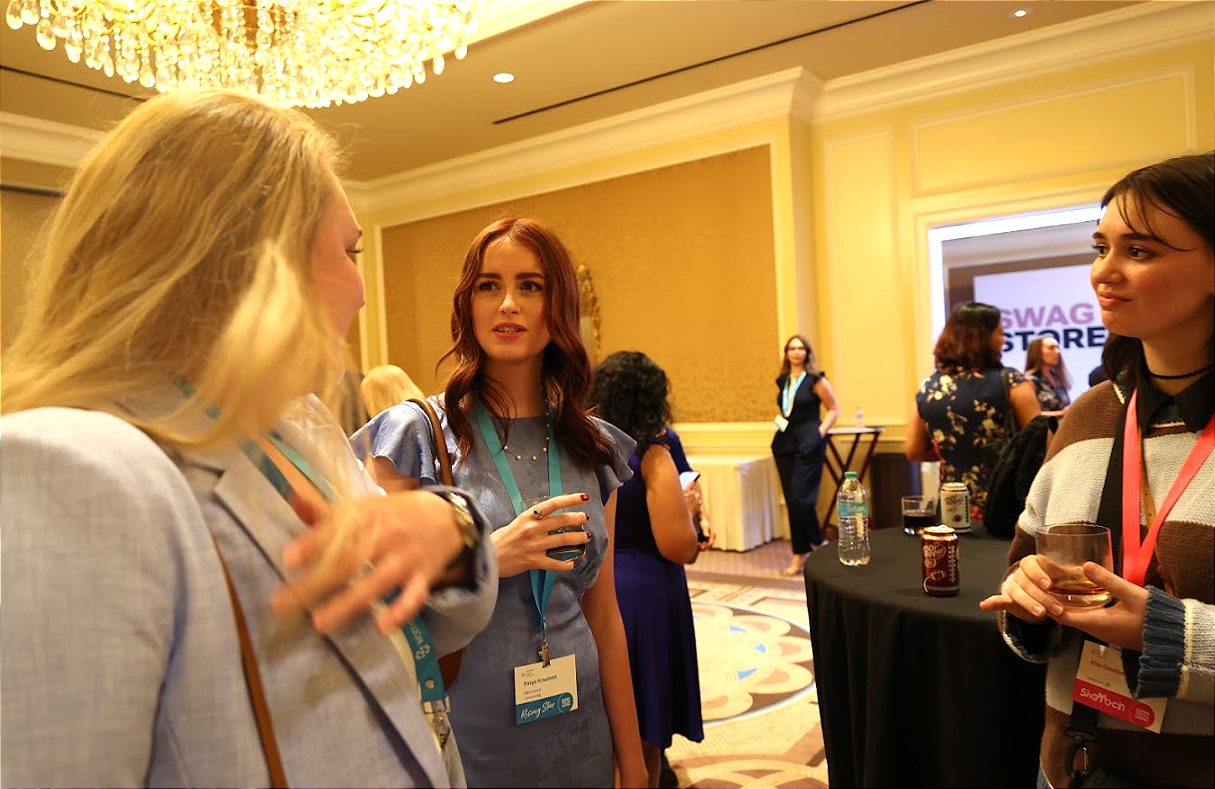
Rising Star Honoree Paige Knudsen, CEO of ReVroom, center, mingling with Women Tech Awards attendees and SheTech - TechBuzz intern Ella Goebel before the 2026 Women Tech Awards, Grand America, September 17, 2026. Photo: Alex Hamby, SheTech - TechBuzz Media Intern
The participant pulled up the application and showed Tetro the iterations she had made since the session—and that she had already found real customers for it.
For Tetro, the example illustrated why impact should not be measured only by scale.
“When I think about impact, I don't think about just how broad it can be,” she said. “I think about how it impacts the one.”
AI adoption depends on trust
Artificial intelligence was also the focus of the event's first leadership discussion, framed around how organizations can move from experimentation to AI systems that people can trust.
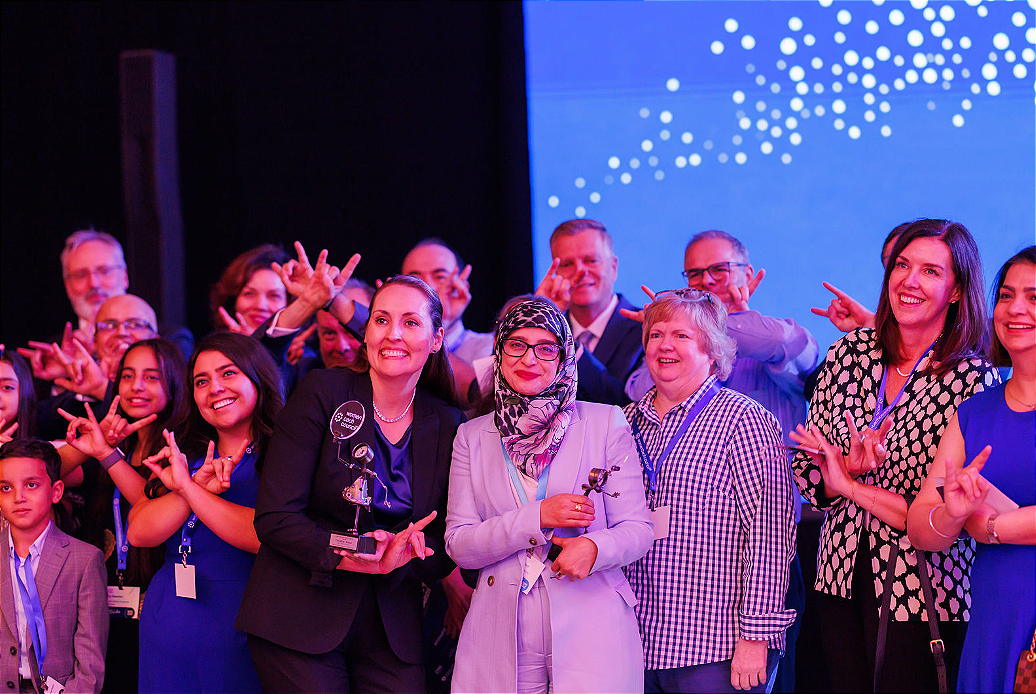
2026 Awardees from UVU: Christina Baum VP of Digital Transformation and CIO, and Rasha Qudisat Chief Engagement and Effectiveness Officer, onstage with supportive colleagues, Women Tech Awards, Grand America, September 17, 2026. Photo: Laura Kinser
The 2026 awardees include leaders working directly in AI and related fields, including Alice Schwarze, head of research at the Utah Department of Commerce's Office of AI Policy; Carmen Kivisild, CEO and founder of Elnora AI; Mattie Langford, director of data science at Entrata; Murium IqBal, staff machine learning engineer at Shopify; and Nancy Fulda, associate professor of computer science at Brigham Young University. Rising Star honorees included founders, AI experts, and machine-learning professionals at ReVroom, Pattern and NiCE Systems.
Tamara Moores Todd, chief health informatics officer and vice president of digital technology services at Intermountain Health, addressed AI from the healthcare perspective, where the consequences of technology decisions can be particularly significant.
Moores Todd discussed how technology and AI can remove barriers in healthcare by taking on tedious work, allowing healthcare workers to spend more time with patients.
Tamara Moores Todd, Chief Health Informatics Officer and VP of Digital Technology Services at Intermountain Health, at the 2026 Women Tech Awards, September 17, 2026. Photo: Laura Kinser
The potential benefit is not simply efficiency. It is the possibility of changing how healthcare workers spend their time.
Ishpreet Kaur, senior machine learning engineer at NiCE Systems Inc. and a 2026 Rising Star Honoree, said Moores Todd's keynote was her favorite part of the event because of the challenge of deploying AI in an environment where there is little room for error.
“She spoke about deploying AI where there's almost no room for error—where a wrong answer can cost a life—and argued that trust, not capability, is what determines whether healthcare AI succeeds,” Kaur said.
That distinction—between what AI can do and whether people are willing to trust it—reflects a broader question facing organizations adopting the technology.
The Women Tech Awards discussion placed that question alongside leadership, rather than treating AI as a purely technical problem.
A community built for what comes next
The breadth of the 2026 honorees illustrates the range of Utah's technology ecosystem.
The Women Tech Award Honorees include leaders in artificial intelligence, cybersecurity, healthcare, transportation, aerospace, financial services, higher education, software and other fields. The Rising Star group recognizes women with fewer than 10 years in the technology workforce, while the Career Transformation Honorees represent women who have returned to the workforce, changed careers or moved into technology from other fields.
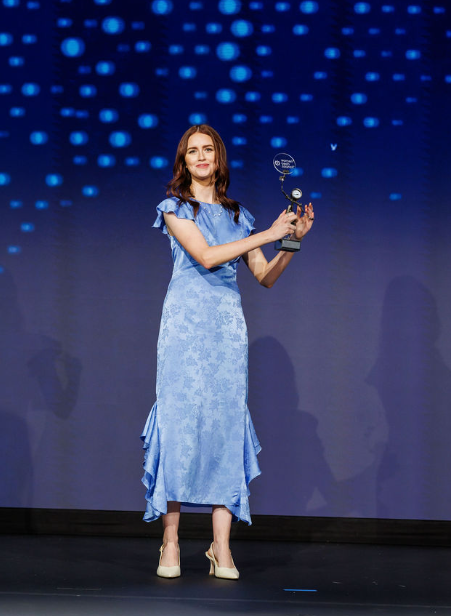
Paige Knudsen, CEO of ReVroom, receiving a Rising Star award at the 2026 Women Tech Awards, Grand America, September 17, 2026. Photo: Laura Kinser
The Student Pathway Honorees represent the next stage of that pipeline.
Together, the groups reflect the Women Tech Council's emphasis on creating connections across different stages of a technology career.
The event also recognized Distinguished Honorees for achievements across technology, science, healthcare, leadership, marketing and artificial intelligence, as well as Kristin Wright as the 2026 Impact Award recipient. Wright was recognized for 15 years of work with the Women Tech Council and SheTech, including helping create opportunities for more than 45,000 students and tens of thousands of women across Utah.
Kristin Wright receiving the 2026 Impact Award, 2026 Women Tech Awards, Grand America, Sept. 17, 2026. Photo: Laura Kinser
For the women being recognized, the value of the awards extended beyond the names on stage.
Crowther said seeing women working in STEM gave her a clearer picture of what she might accomplish herself. Hollist emphasized the importance of young women seeing people like themselves succeed. Holzhauser described the value of being part of a cohort working at the forefront of science and technology.
Those observations point to the larger purpose behind the awards: not simply recognizing today's technology leaders, but making their work visible to the people who will build what comes next.
“We think you can find a connection and some answers to things that you're trying to solve in both your work and all of the other things that you're trying to do,” Tetro told attendees.
The blue worn throughout the room provided a visual shorthand for that idea. The awards recognized individual accomplishments, but the afternoon repeatedly returned to what can happen when those individuals connect—sharing knowledge, finding collaborators, mentoring others and helping the next generation see possibilities that might otherwise remain out of view.