Deload Secures Early Investment as UVU Founders Build AI-Powered Personal Training Platform
Deload is building an AI-powered platform for independent personal trainers. Its UVU-connected founders are combining early investment, entrepreneurial programs and AI-assisted development to pursue an established market.
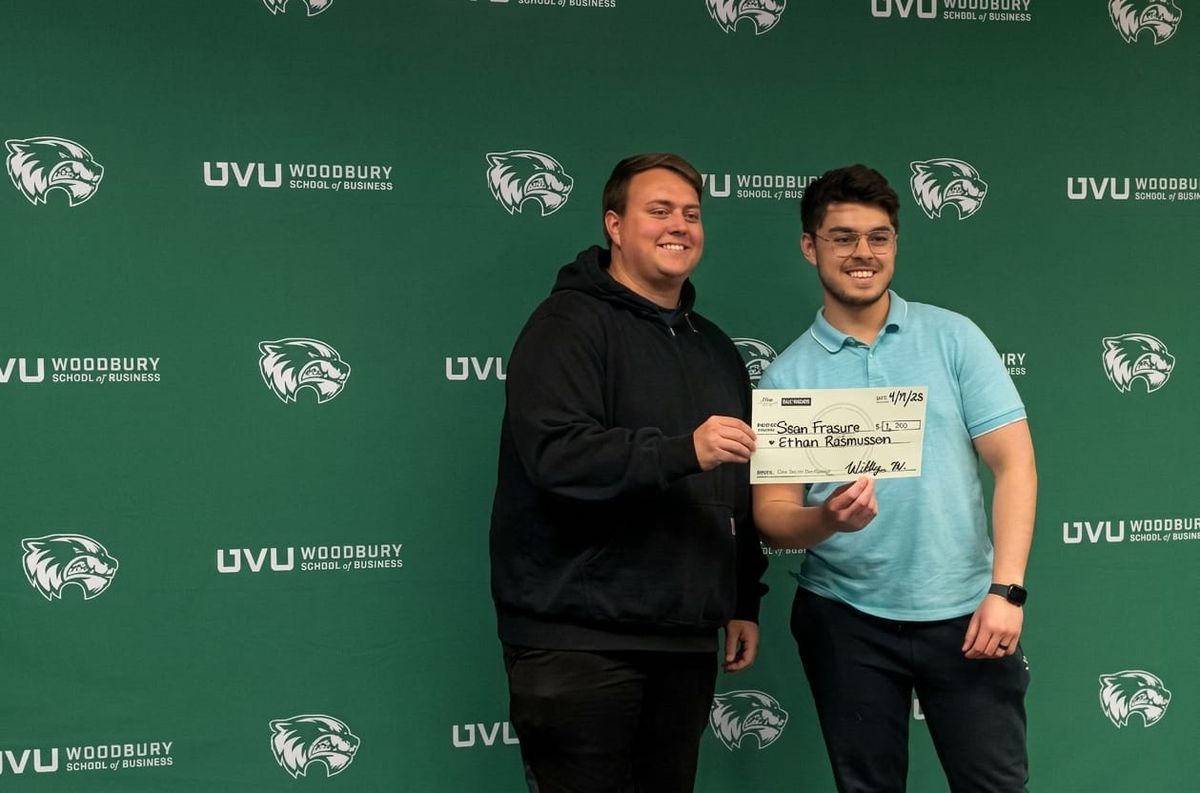
Ethan Rasmussen and Sean Frasure, at UVU's ZinnStarter Pitch Competition on April 9, 2026. Deload placed 3rd overall for $1,200. Photo: Deload
Ethan Rasmussen and Sean Frasure, at UVU's ZinnStarter Pitch Competition on April 9, 2026. Deload placed 3rd overall for $1,200. Photo: Deload
Orem, Utah — October 23, 2026
Deload is building an AI-powered platform designed to help personal trainers spend less time on administrative work and more time with clients. The company brings training-plan generation, workout management, client check-ins and payments into one platform, with the trainer retaining control over the plans created by its AI.
Startup Ignition Ventures has invested in the company, which the founders launched after developing and testing the product with personal trainers. Both founders participated in Utah Valley University’s Sandbox entrepreneurship program, and they credit that experience—along with Startup Ignition Bootcamp, entrepreneurial training designed to help them move from an idea toward a functioning business.
Their approach illustrates two developments relevant to Utah’s startup ecosystem: how entrepreneurial programs can help founders move from an idea to a business, and how AI coding tools may reduce the resources needed to build an initial software product.
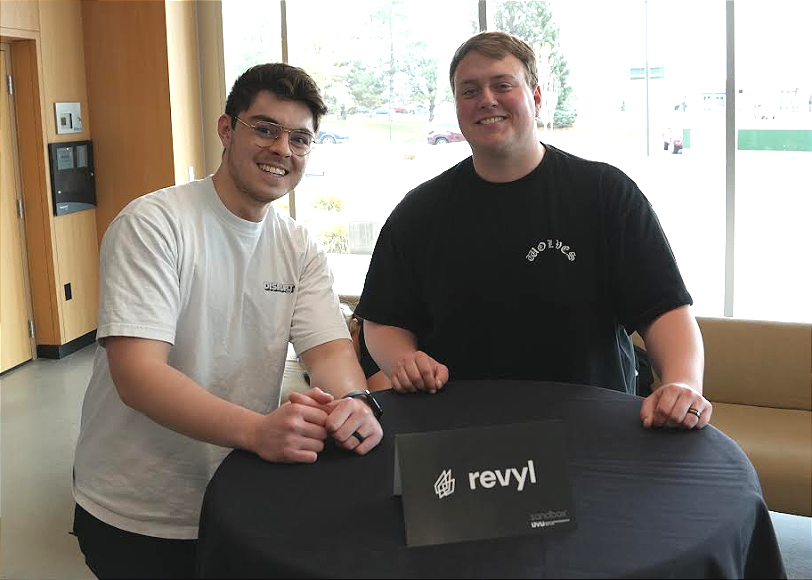
Sean Frasure and Ethan Rasmussen, Deload (rebranded from Revyl) co-founders tabling at the Sandbox's UVU Demo Day on March 30, 2026. Photo: Deload
An AI assistant for the trainer’s business
Deload’s workflow begins with a trainer’s approach and the client’s intake information. The platform drafts a training plan that the trainer can review, approve and customize.
The company summarizes its approach this way: “Your approach. Their intake. Deload drafts the plan. You approve it.”
According to the founders, the platform can generate complete training programs spanning 12 to 16 weeks, rather than simply producing individual workouts or responding to fitness questions through a general-purpose chatbot. Once a plan is approved, trainers can use Deload to manage workouts, client check-ins and payments in one place.
The distinction is important to the company’s positioning. Deload is not just an AI workout generator; it aims to integrate AI-assisted programming into the broader workflow of operating a personal training business. The trainer remains responsible for reviewing the proposed plan and deciding how it should be tailored to the client.
Independent trainers often manage their businesses through a collection of applications for workout programming, nutrition tracking, messaging and payments. Deload aims to consolidate more of those tasks, reducing the administrative work associated with managing multiple clients.
The company is targeting independent and contracted trainers rather than consumers seeking a general fitness application. That puts it in a market with established competitors, including Trainerize, Everfit and TrueCoach.
Sean Frasure and Ethan Rasmussen believe Deload can differentiate itself by making AI part of the underlying workflow rather than treating it as an isolated feature. But convincing trainers to switch platforms may be difficult. Existing customers can have years of client information and established routines tied to their current software.
The founders are developing a tool to help migrate information into Deload. Its effectiveness at scale remains to be demonstrated, and the company will need to show that its product is dependable enough to justify changing established workflows.
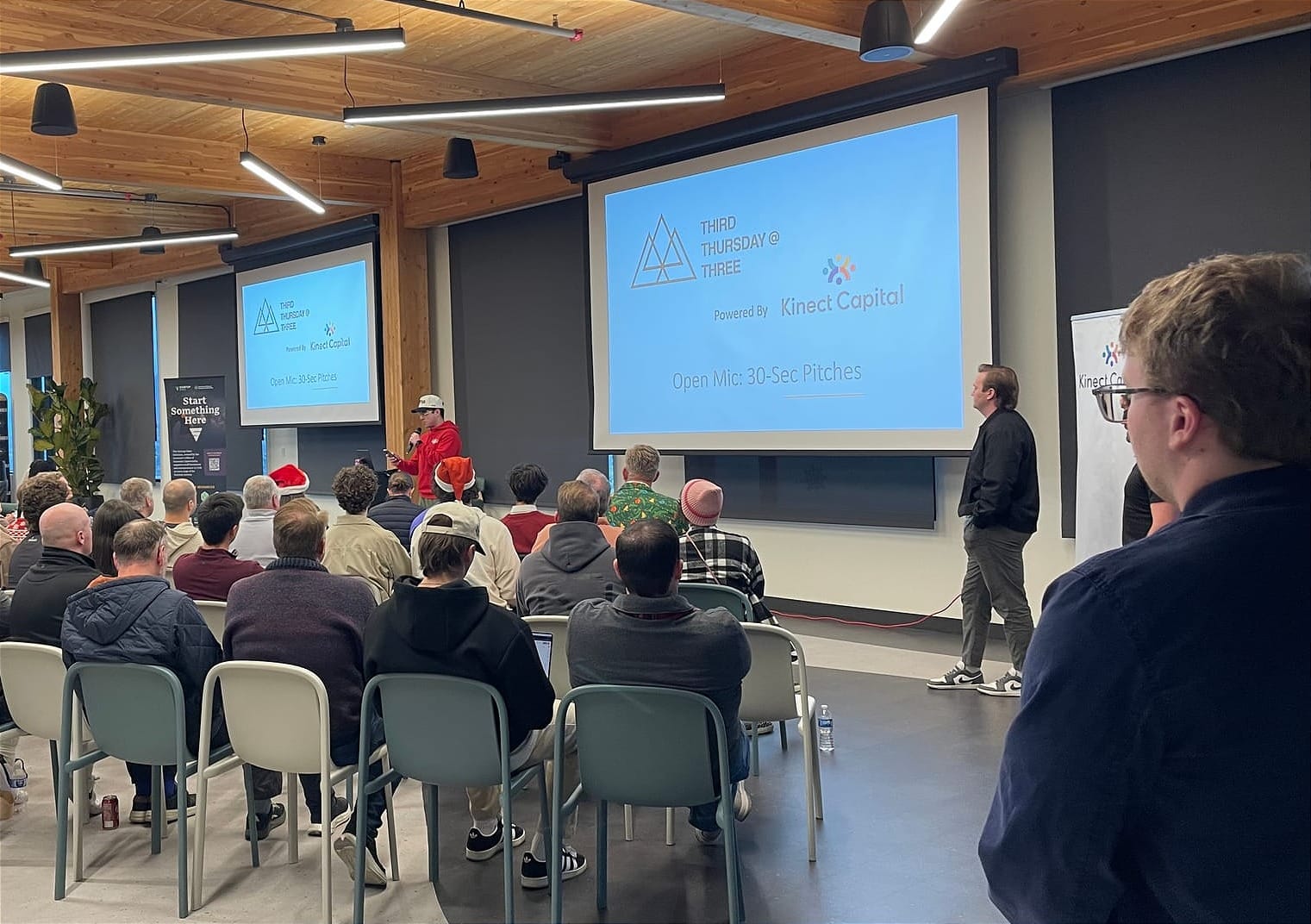
Sean pitching on December 15, 2025 at Third Thursday @ 3 at Pelion. Photo: TechBuzz News
From an idea to paying customers
Frasure began exploring the problem in late 2022 while studying web design and development at UVU. After trying to help friends and family with their fitness goals, he found that existing tools did not fully address the workflow he wanted.
He obtained a personal training certification in late 2025 and experimented with using general-purpose AI to generate workout programs. That process helped him identify gaps between producing a plausible workout and developing a structured program that a trainer could use with a client.
Frasure and Rasmussen joined forces in early 2026 and built an initial version of the product. They then began approaching trainers directly to test whether the idea addressed a problem customers would pay to solve.
The founders visited gyms and spoke with potential users, openly acknowledging that the software was still buggy and asking trainers to try it anyway.
One early adopter was Kaden, a personal trainer who had previously served as a personal training manager at a gym in Orem. He had about ten clients when he began using Deload and had managed as many as 30.
At the time of the founders’ interview, Deload had 14 paying trainers serving approximately 200 clients. Rasmussen also reported 100% customer retention since February of this year.
The company has relied largely on direct outreach and social media to find early users. Its paying customers give the founders an opportunity to refine the platform around real training businesses, although the current numbers represent early traction rather than proof of product-market fit.
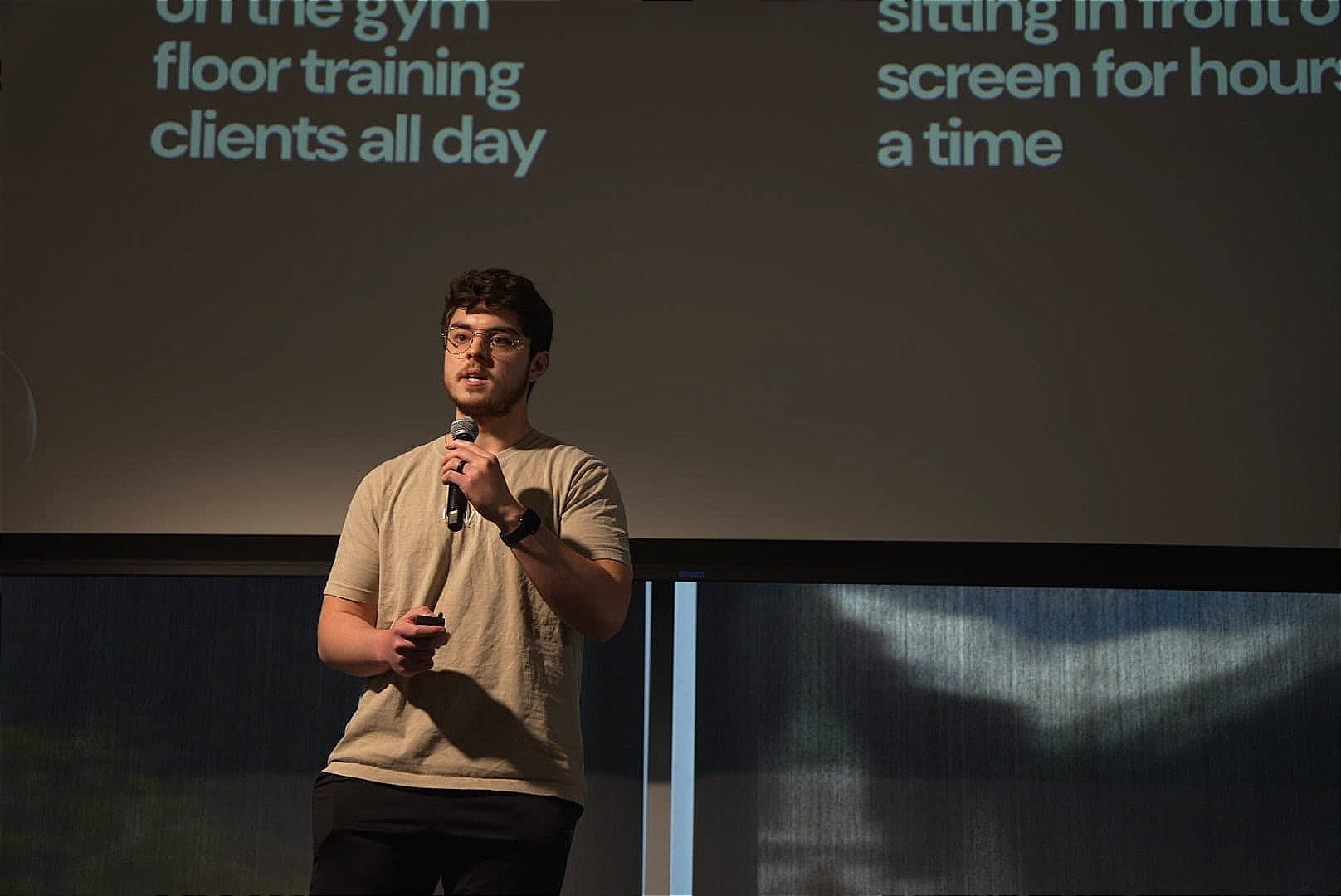
Sean Frasure pitching at Sandbox Global Demo Day, April 28, 2026, Provo, UT. Photo: Deload
AI changes the cost of building software
AI has helped shape both Deload’s product and the way the founders are building the company.
Frasure, whose studies focused on web design and development rather than a traditional computer science curriculum, relies heavily on AI coding agents to generate and modify software. He described a development process in which AI tools do much of the coding, allowing the founders to build the initial platform without assembling a conventional engineering team.
Frasure estimates that developing a comparable product through traditional methods could cost well into six figures. That is his estimate, not the result of a formal cost comparison; actual development costs depend on the product’s scope, quality requirements and team structure.
Deload began with the founders’ personal funds and modest early support, including a pitch competition award of about $1,200 and UVU grants totaling approximately $400. The founders kept their own salaries low while developing the product and testing demand.
AI has not eliminated the cost of building and operating the platform. The company still pays for model usage and subscriptions, infrastructure and continued development. Improving reliability will become increasingly important as the customer base grows.
The investment from Startup Ignition Ventures provides additional resources for infrastructure improvements, product development and customer acquisition. For the founders, the opportunity is to use AI-assisted development to get a focused product into the market with relatively limited initial capital, then direct additional resources toward the work required to turn it into a sustainable business.
Their experience does not establish that AI makes software development inexpensive for every startup. It does offer an example of how a small team can use these tools to build and test a software product before hiring a large development staff.
Sean Frasure pitching on December 15, 2025 at Third Thursday @ 3 at Pelion. Photo: TechBuzz News
Two startup programs, different roles
Both founders participated in UVU’s Sandbox entrepreneurship program, which gave them an environment in which to develop the idea, build the product and begin reaching customers.
For Frasure, Sandbox provided time to work on the startup without dividing his attention as heavily between coursework and a part-time job. It also gave him an opportunity to continue progressing toward his degree while developing the business.
He emphasized that the experience depends in part on what participants put into it. The program can provide time and opportunity, but founders still have to use those resources to build something and test it with customers.
Rasmussen described Startup Ignition Bootcamp as addressing a different set of needs. While Sandbox helped provide an initial foothold, Bootcamp focused on company structure, product-market fit and the practical decisions involved in moving from an early idea toward a viable business.
The founders view the programs as complementary rather than interchangeable. Sandbox helped them establish and develop the idea; Startup Ignition’s training provided additional perspective on the business decisions needed to advance it.
That progression highlights a challenge for early-stage founders. Building a prototype is one milestone, but creating a durable company also requires customer acquisition, a sustainable business model, reliable infrastructure and a clear understanding of the market.
Investment and the next stage
Startup Ignition Ventures’ investment gives Deload additional capital to improve the product and pursue more customers. The relationship developed over time rather than through an immediate commitment.
The founders said their initial conversations with Startup Ignition included a rejection, partly reflecting the investor’s caution after a disappointing experience with a previous startup. The relationship evolved as the investors got to know the founders and their work.
Deload’s immediate priorities include improving platform stability, continuing development and finding more trainers willing to adopt it. Making migration from incumbent services easier will also matter as the company tries to overcome the switching costs associated with existing client histories and workflows.
Deload’s website advertises an annual subscription discounted from a listed price of $500 and includes a mailed thank-you gift as part of the offer. The subscription is its current pricing approach, although the founders have discussed a longer-term strategy that could rely more heavily on payment-processing revenue and less on recurring software subscriptions.
That shift remains a future ambition, not an implemented business model. It would require additional infrastructure and changes to how payments are handled.
For Frasure and Rasmussen, the next challenge is to turn an AI-assisted development process into a dependable product that trainers will continue to pay for. That means improving stability, acquiring customers and making it easier for trainers to move from established platforms.
Their experience also offers a practical example of how AI tools and Utah’s entrepreneurial programs can help young founders move from an idea to a product with paying customers, without eliminating the hard work of building a sustainable business.