From an Accidentally Ruined Lab to a $900 Million Pallet Deal: Inside Terraphene and Its Bet on Hemp
Nucleus Fund invests in Provo's Terraphene, a hemp-based materials startup with a nine-figure pallet supply deal, fire- and strength-tested building materials, and a pitch to help refill the Great Salt Lake by replacing thirsty alfalfa acreage with hemp.
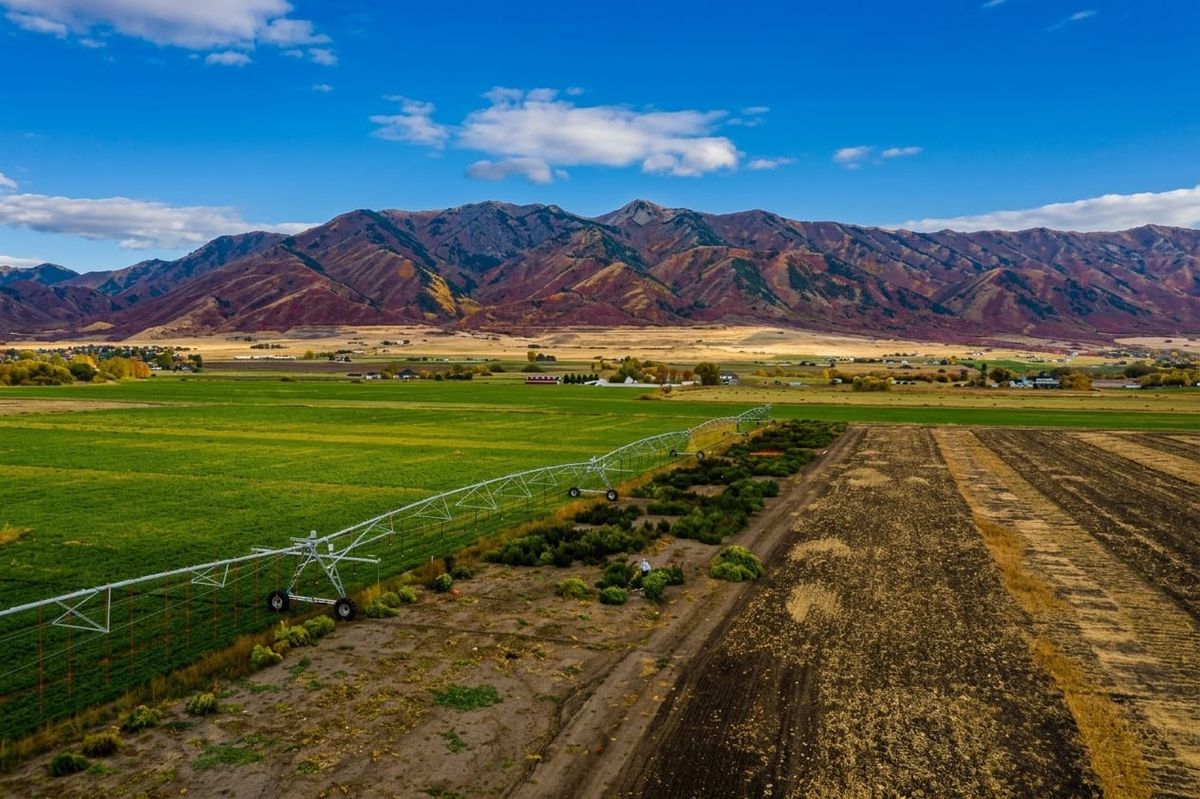
Aerial shot of hemp harvesting in Utah: Photo: Matt Yost, USU
Aerial shot of hemp harvesting in Utah: Photo: Matt Yost, USU
Provo, Utah — September 3, 2026
The Nucleus Fund, the early-stage venture arm of the Nucleus Institute, announced today an investment in Terraphene, a Provo-based material technology company developing hemp-based alternatives to plastic, wood, metal, and concrete. On paper, it's a funding round. In practice, it's the latest step in a company that stumbled into a materials breakthrough almost by accident — and now has a nine-figure supply contract, a plan to help refill the Great Salt Lake, and ambitions that stretch to spaceships.
An Accident in a Pleasant Grove Warehouse
Terraphene's origin story doesn't start with materials science. It starts with CBD.
Co-founder and CEO Daniel Webster and his brother, Jarrett Webster — Director of Finance and Co-founder — had already built and sold a Utah digital marketing agency, Revity, together before hemp legalized nationwide under the 2018 Farm Bill. Daniel, who had an agriculture background and had run a wholesale produce company, set out to be a consultant and liaison between farmers and the newly legal hemp industry through their company, SkyRev, that they operated until 2025.
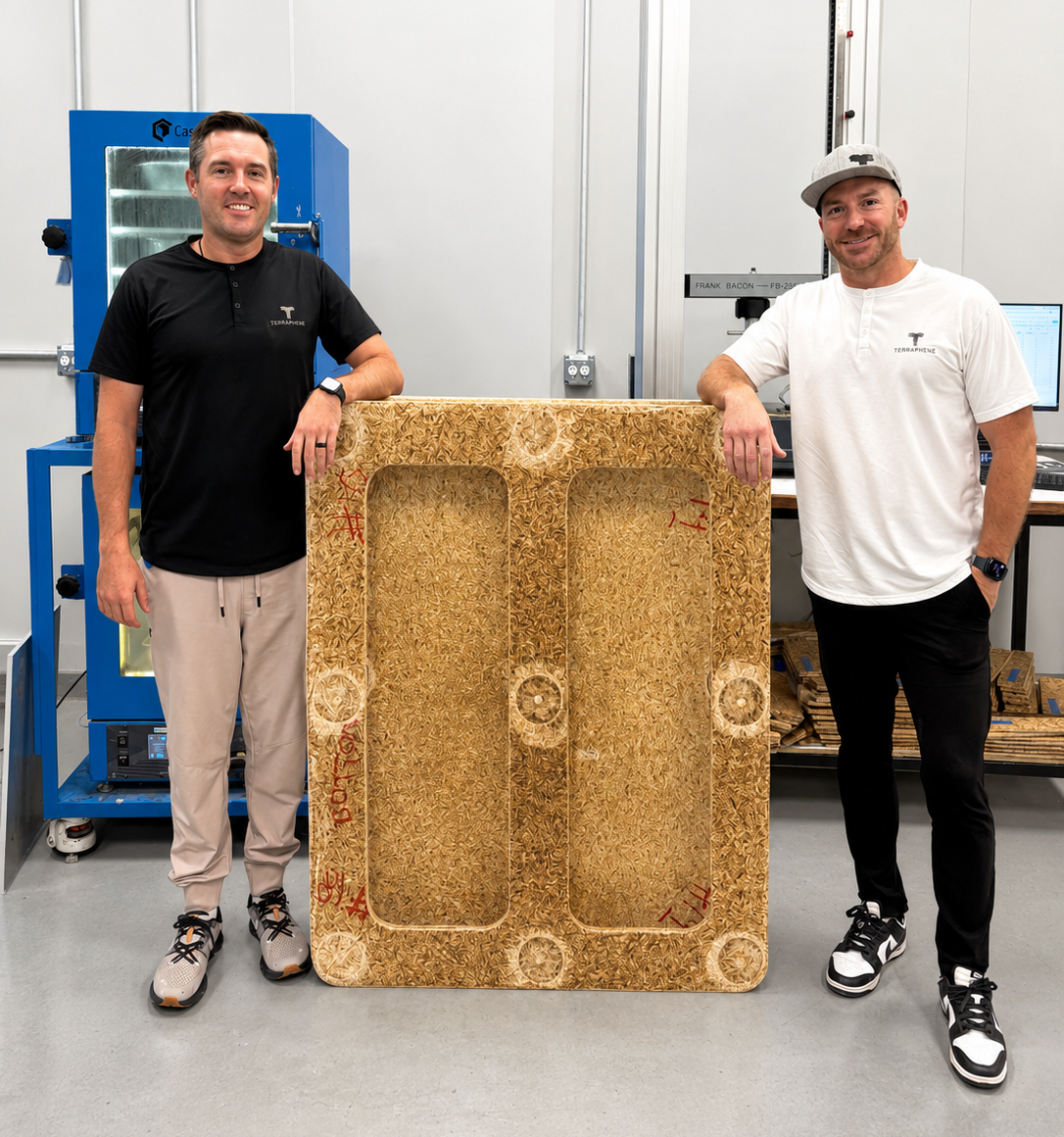
From left to right, brothers Jarrett and Daniel Webster stand alongside a prototype pallet made from Terraphene’s proprietary hemp-based construction material at the company’s facility. Photo: Terraphene
That work led the Websters into CBD extraction — and eventually into a mess nobody had planned for.
"We had created something no one had seen," Daniel Webster said. Processing labs kept returning material they couldn't handle: a distillation facility in West Valley called to say their equipment was ruined, gummed up by something they couldn't identify or remove. Some of the material spilled onto the floor of the company's old Pleasant Grove building and, left untouched in a corner, hardened into what Webster describes as a black, epoxy-like substance — one that a utility knife couldn't scratch. A commercial flooring contractor brought in to remove it with heavy grinders and chemicals eventually gave up.
"What is this stuff?" Webster recalled asking. By then the CBD market had collapsed, and Terraphene's founders had their answer to what came next. Daniel later connected with Jacob Mazon, an Israel-based materials researcher who had spent years independently developing 100%-hemp materials at bench scale. "I always say that Terraphene is the combination of accidental discovery and mad science," Webster said. "We're the accidental discovery side. Jacob Mazon… he's the mad science part of that."
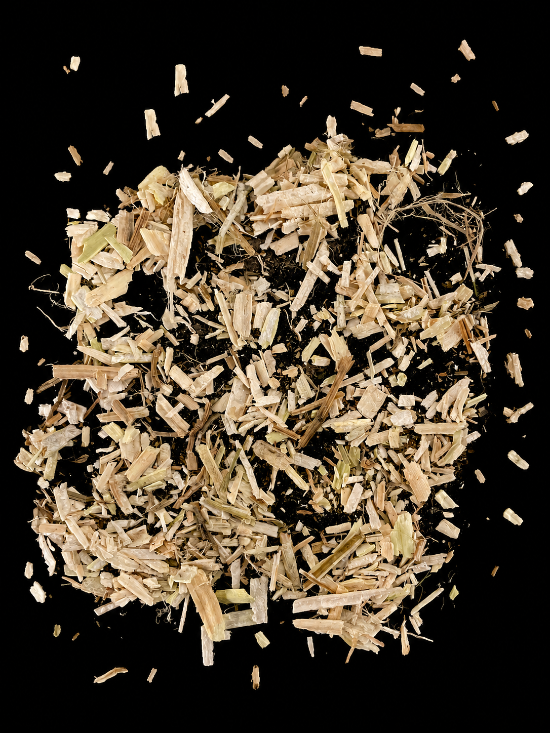
Raw hemp fiber used by Terraphene as the foundational material in its proprietary manufacturing process. Photo: Terraphene
The Business Model: "The Intel Inside"
Terraphene doesn't intend to manufacture finished products itself. "We want to be kind of the Intel inside," Webster said, supplying a proprietary core material to manufacturers who build the end product, rather than competing with them directly.
The company's first commercial application is pallets. It was a deliberate choice, Webster said, because pallets face a low regulatory bar compared with building materials, while still touching nearly every supply chain in the country.
Terraphene has signed a supply agreement with two of the largest pallet manufacturers in the U.S. — Cole Palette (DeKalb, Il) and Commercial Lumber & Pallet Company (CLC) based in City of Industry, CA — which have partnered under a joint venture called Durapal to bring the material to market. Between them, the two companies currently manufacture and distribute roughly 50,000 pallets a day, and Webster said the plan is to gradually convert that volume away from wood over the next five years.
Terraphene prototype showcasing one of the ways the company’s proprietary hemp-based materials can be used. Photo: Terraphene
The bigger technical story, though, is what got those manufacturers' attention in the first place. Terraphene initially planned a conventional slat-and-nail pallet design. Market research with major retail clients — Webster named Costco, Coca-Cola, and Nestlé — turned up a different priority.
"Get rid of the nails," Webster said a Costco executive who runs the company's depots told them. "Nail pops or nail heads create about a billion dollars a year of product damage for Costco throughout their network worldwide." In response, Terraphene engineered a fastener-free, molded pallet design — no nails, no joints, made entirely from hemp and Terraphene's binder. Webster said internal mechanical testing, along with third-party testing at Virginia Tech, showed the molded design exceeding the mechanical performance of both wood and plastic pallets. Production and beta testing with real-world partners is planned to begin next year.
Beyond Pallets: Fire, Strength, and an Unfinished Medical Detour
Pallets are the near-term revenue driver, but Terraphene's founders describe the material as a platform, not a product. Webster listed potential applications including OSB and plywood replacements, cabinetry, concrete and drywall alternatives, and structural wall systems. He said the company has tested a concrete substitute that is fully hemp-based.
Some of the performance claims are striking. They are based on Terraphene's own testing, according to Webster:
In fire testing, a 5/8-inch panel of the material was exposed to a roughly 2,000°C torch for multiple hours without heat transferring through the panel — a result Webster said made standard R-value calculations "irrelevant" at that thickness.
The same 5/8-inch panel, Webster said, matched the compressive strength (PSI) of three feet of steel-reinforced concrete.
In one exploratory application, Terraphene tested the material against titanium for a potential medical-implant use with a partner in the medical device space; Webster said it outperformed titanium on mechanical strength. The company paused that line of work before biocompatibility testing, given the long and expensive regulatory path, to focus resources on pallets.
Webster said the company is protecting its position through patents on both process and composition, using provisional filings to delay public disclosure while it builds out its IP portfolio, an approach he described as central to Terraphene's long-term identity as "a material tech company," not a manufacturer.
The Great Salt Lake Pitch
The water angle is central to why Nucleus invested, according to Webster, and it's the piece of the story most directly tied to a problem on the mind of nearly every Utahn: the shrinking Great Salt Lake.
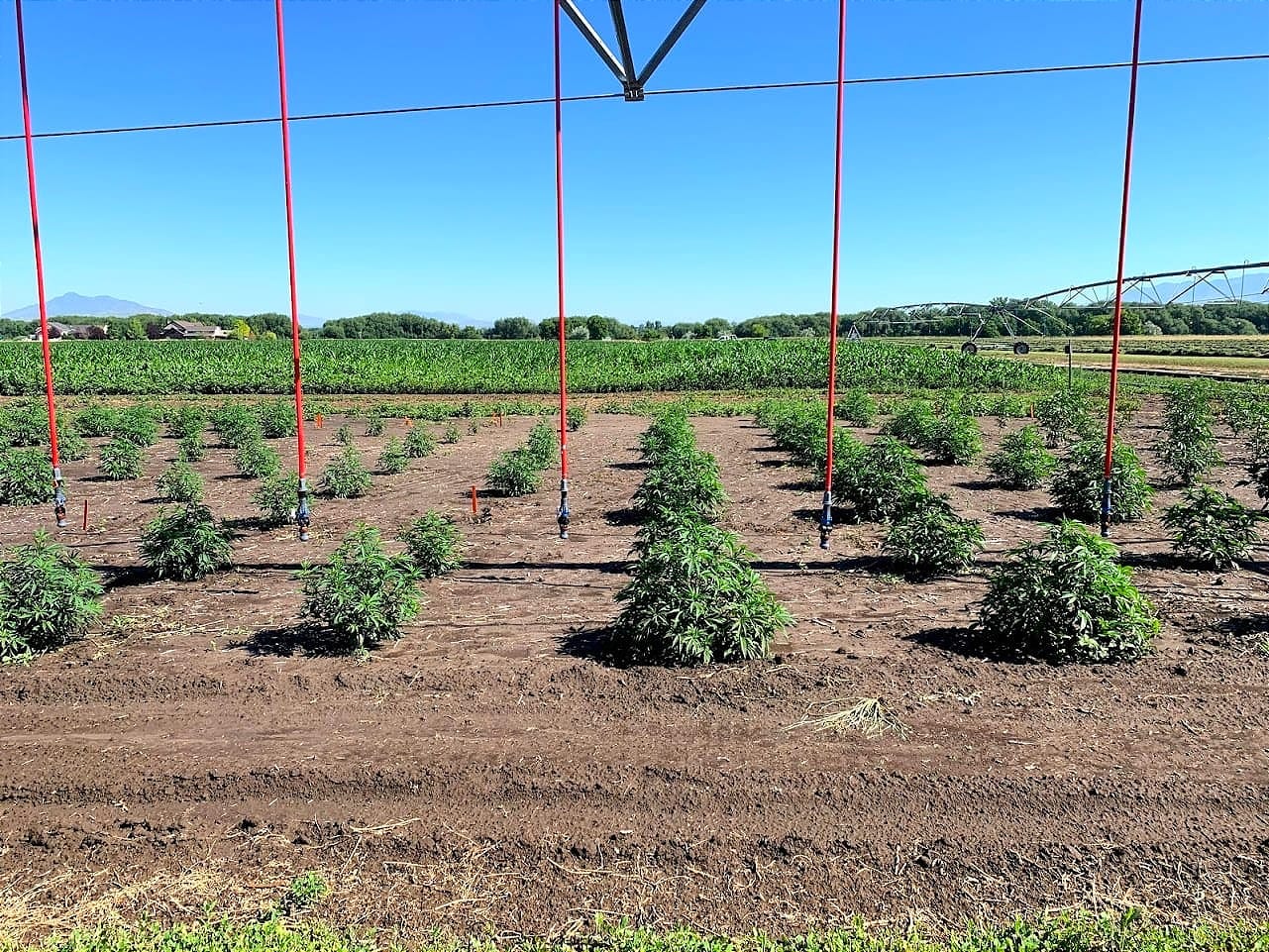
Hemp requires dramatically less water than alfalfa, one of Utah's most water-intensive crops. Webster cited one grower's real-world tracked data this year: on ground where the same farmer had previously grown alfalfa requiring 30 to 36 inches of water (three to six acre-feet), Terraphene's hemp crop needed only about four inches.
Webster's broader estimate: converting "a few hundred thousand acres" of Utah alfalfa to hemp could send an additional 500,000 to 600,000 acre-feet of water toward the Great Salt Lake each year, while paying farmers more than alfalfa typically does. He said four out of five years, Utah alfalfa growers lose money on the crop.
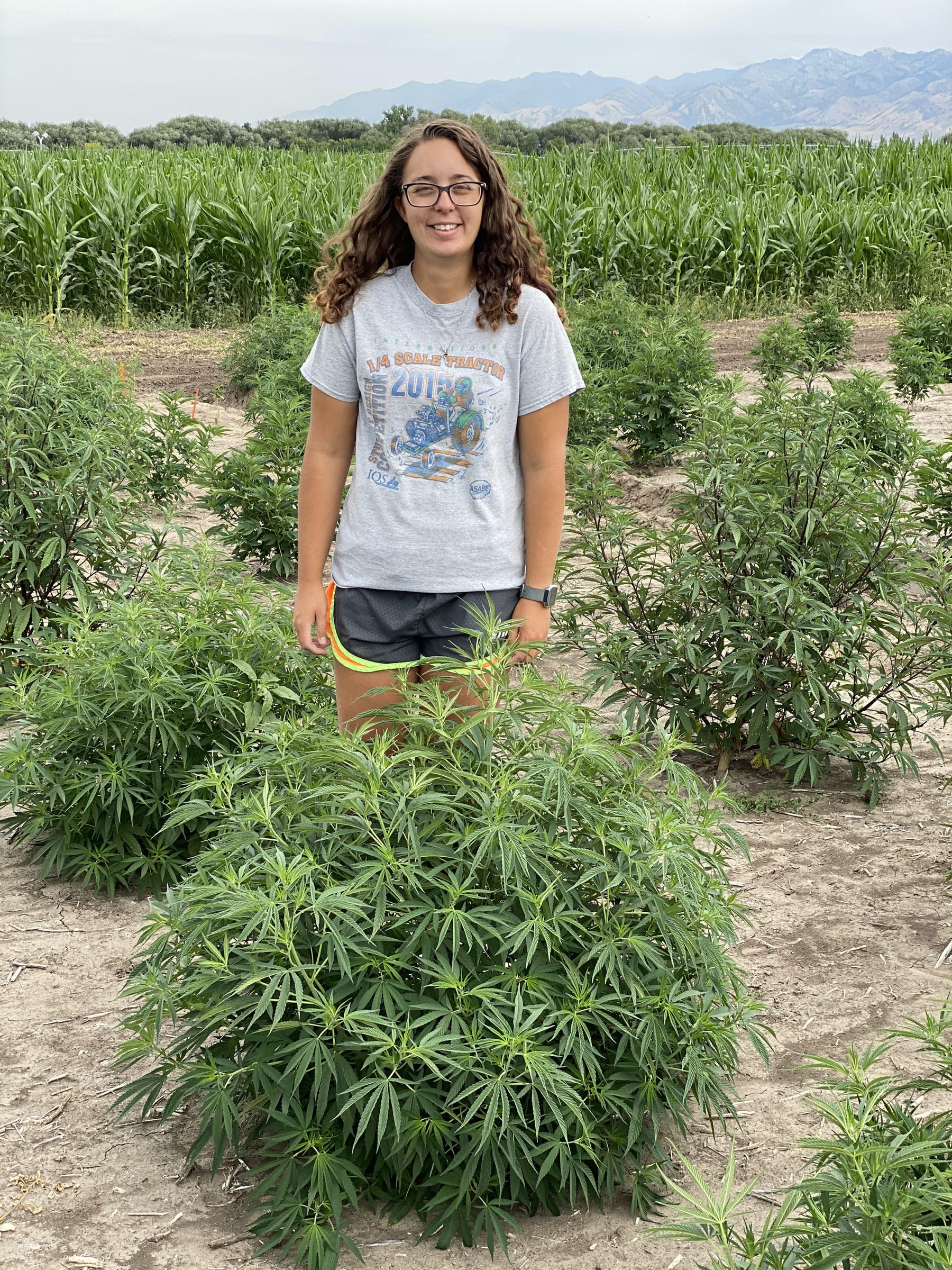
Tina Sullivan, PhD, Certification Manager at Alliance of Crop, Soil and Environmental Science Societies (ACSESS) and a former USU graduate student, standing with hemp plants in Utah. Photo: Matt Yost, USU
Matt Yost, Department Head at the S.J. & Jessie E. Quinney College of Agriculture & Natural Resources at Utah State University, shared with TechBuzz published irrigation trials on floral hemp varieties showing they used roughly half the water of corn at equivalent yield.
Yost cautions that fiber hemp, which grows denser and produces more biomass, likely uses more water than the floral hemp studied so far. He said no formal water-consumption data yet exists for the fiber varieties Terraphene is growing. To that end, Terraphene is exploring research partnerships with Utah State University to formally measure evapotranspiration and water delivery from its hemp crops next year, when the company plans to grow between 500 and 2,500 acres in Utah for seed production and further studies.
TechBuzz will monitor these research efforts and will publish findings when they become available.
Beyond water savings, Webster pointed to hemp's history as a regenerative crop that can replenish soil nitrogen.
Irrigating young hemp plants. Photo: Matt Yost, USU
The Nucleus Round
Nucleus did not disclose the size of its investment, and Webster said the company deliberately kept the figure private. He said Terraphene was the highest-valuation company Nucleus had backed to date, reflecting how far along the company already was — driven in part by the mammoth pallet contract — and said Terraphene is now raising a Series A at a higher valuation, having given Nucleus a discounted entry point because of the strategic fit with the state's water and economic priorities.
Nucleus framed the investment around its mandate to back deep-tech ventures capable of creating high-value jobs in Utah.
"This is exactly the kind of investment the Nucleus Fund was built to make," said Angela Smith, COO of Nucleus and Managing Director of the Nucleus Fund. "Terraphene's materials platform has the potential to create a new manufacturing ecosystem in Utah, and we are proud to support the company as it scales its technology and creates jobs across the state."
"What excites us about Terraphene is how many parts of Utah's economy this touches at once," said Kristin Wihera, Director of Fund Operations at the Nucleus Fund. "It's rural manufacturing jobs, it's a new source of stable income for farmers, and it's a real opportunity to reduce the water use that's putting pressure on the Great Salt Lake."
Kristin Wihera, Director of Fund Operations, Nucleus Fund
Webster also pointed to a workforce argument that resonated with the state: unlike much of Silicon Slopes' software economy, Terraphene's rural manufacturing and agricultural jobs are, in his words, more resistant to AI-driven disruption. "It's gonna be a lot of rural jobs… but they're also a lot more AI resilient," he said.
What's Next
Webster said Terraphene expects to keep finding new applications as it scales, comparing the pallet business to SpaceX's early launch contracts — a way to fund the harder, longer-term goal of remaking building materials more broadly. "In time we will replace everything," he said. "From foundation to roof tiles… airplanes, cars, medical devices… boats."