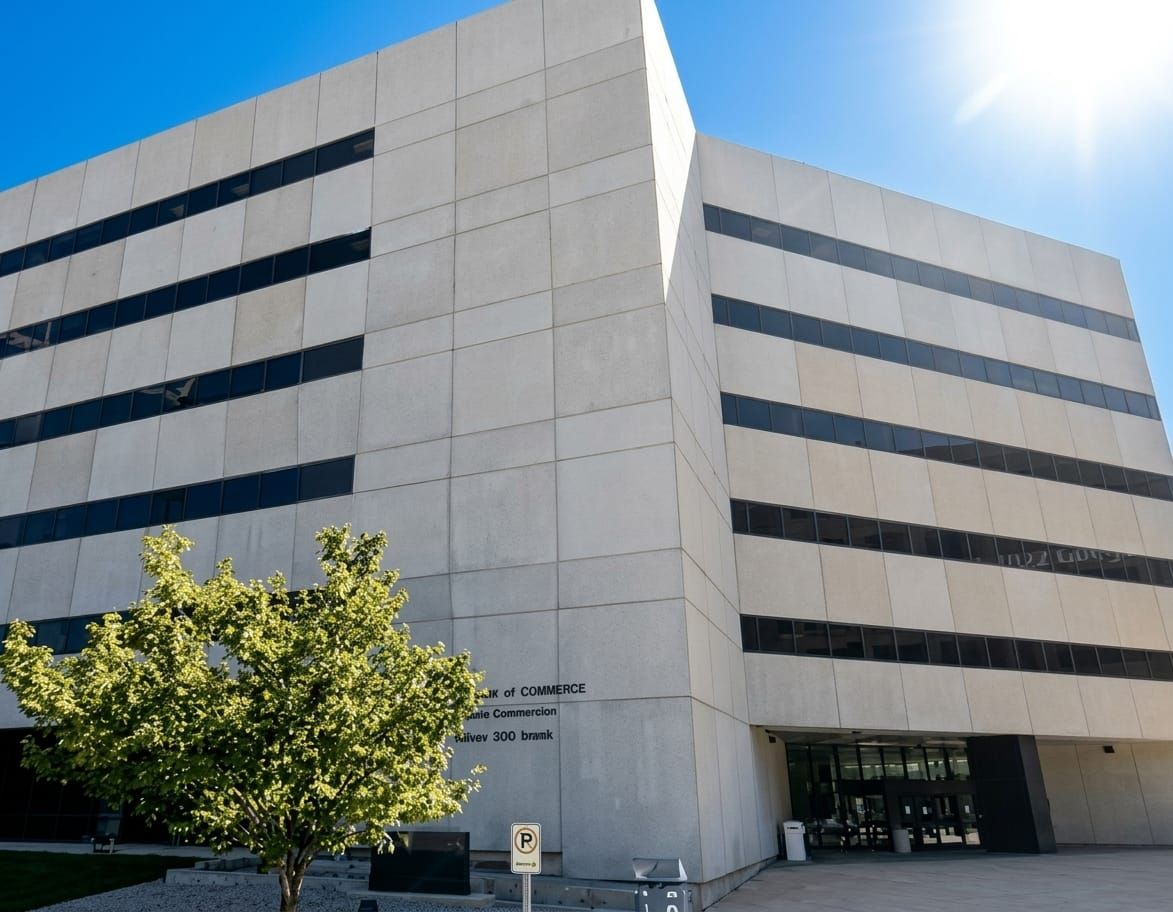
Salt Lake City, Utah — October 30, 2026
The Utah Department of Commerce's Division of Consumer Protection is pursuing a broad range of consumer protection matters, joining multistate investigations and litigation involving automotive data privacy, retail pricing, consumer financing and online safety.
The developments include a $220 million settlement with General Motors over allegations that it sold drivers' personal data without adequate consent, a $665 million settlement with Snap Finance that cancels millions of dollars in Utah consumer obligations, and a lawsuit against Dollar General over alleged widespread register overcharges. Separately, the division is preparing to begin enforcing Utah's age-verification requirements for commercial adult websites on November 2.
Together, the actions illustrate the range of issues confronting consumer protection regulators as businesses increasingly collect and monetize personal information, offer alternative financing arrangements, and conduct transactions through both physical and digital marketplaces.
GM Settlement Addresses Unauthorized Use of Driver Data
Utah joined 35 other states in a $220 million settlement with General Motors over allegations that the automaker collected and sold drivers' driving behavior and location data without their consent. Utah will receive $6,938,619 from the settlement.
The states alleged that GM's Smart Driver program, which operated from 2016 through 2024, tracked enrolled drivers' habits and sold information to data brokers. Those brokers subsequently sold the information to insurance companies, which used it in part to establish insurance rates.
The data included trip start and end times, driving frequency, hard braking, acceleration, speeding and specific geolocation information.
According to the states, GM represented that Smart Driver would help customers drive more safely and would not share their information with insurers without consent. However, the states alleged that GM sold the data under agreements specifying that it would be used for insurance products.
The enrollment process also raised concerns. Most drivers were enrolled at dealerships through a sign-up process that included OnStar services. The states alleged that dealership employees sometimes accepted terms on customers' behalf without their consent and that GM paid sales staff bonuses tied partly to enrollment numbers.
In one instance, the OnStar app incorrectly told more than 370,000 drivers they were not enrolled in Smart Driver when their data was actually being collected and sold. GM later unenrolled those drivers without informing them of the mistake, while their previously collected data remained with data brokers and insurance companies.
The settlement requires GM to obtain affirmative express consent before collecting or sharing covered driving and location data. It also requires the company to limit the data it collects, maintain a privacy program with internal and external assessments, and train and oversee dealership personnel responsible for obtaining consent.
Utah Department of Commerce Commissioner Margaret Woolley Busse said consumers should have clear information about how their personal data will be used.
"Utahns deserve clear information about how their sensitive data will be used before they sign, and the ability to opt out," Busse said. "Misrepresenting this data use is a significant breach of trust that cannot be overlooked. It's wrong to obscure this or bypass their consent for profit or personal gain."
Dollar General Faces Multistate Lawsuit Over Register Prices
Utah, the Federal Trade Commission and 19 other states filed a lawsuit against Dollar General Corporation on October 22, alleging that the retailer repeatedly charged customers more at checkout than the prices displayed on shelves, price tags and advertisements.
The complaint, filed in the U.S. District Court for the Middle District of Tennessee, alleges that thousands of Dollar General stores have overcharged customers, resulting in millions of dollars in unlawful charges.
The states and FTC contend that the company received tens of thousands of consumer complaints about pricing discrepancies but failed to implement adequate safeguards to address the problem.
Utah Attorney General Derek Brown said consumers should be able to rely on the prices businesses advertise.
"A price tag is a promise. The Complaint alleges Dollar General broke that promise thousands of times, leaving consumers to pay more than they were told at the shelf," Brown said. "Utah is standing up for shoppers and sending a clear message: businesses cannot advertise one price and charge another."
Daniel Larsen of the Division of Consumer Protection said the case reflects a distinction between occasional pricing errors and repeated practices that allegedly undermine consumer trust.
"The Division recognizes that pricing mistakes can happen and works with well-meaning businesses that retract and correct those errors. This case is not about mistakes; it's about repeated violations of consumers' trust," Larsen said.
The complaint alleges violations of the Federal Trade Commission Act, the Gramm-Leach-Bliley Act and the Utah Consumer Sales Practices Act. The plaintiffs are seeking injunctive relief, consumer restitution, disgorgement, civil fines, penalties and other monetary remedies.
The lawsuit remains pending, and its allegations have not been proven in court.
Snap Finance Settlement Cancels $16.76 Million in Utah Consumer Obligations
Utah and 16 other states reached a $665 million settlement with Snap Finance, a consumer financial services company that provides lease-to-own financing through retail partners.
The agreement cancels $16,758,262 in lease payments owed by Utah consumers who entered into Snap lease-to-own agreements between 2017 and 2022. Those consumers will keep their merchandise and will not owe additional payments.
The states alleged that Snap used misleading disclosures and confusing payment terms that left customers unclear about the actual cost and duration of their agreements. Some consumers allegedly believed they were agreeing to pay off purchases within 100 days or fewer, only to find themselves in longer and more expensive contracts.
The investigation also examined claims that Snap told customers making timely payments could improve their credit scores, as well as complaints involving product returns, debt collection and the process for ending leases.
Under the settlement, Snap must provide customers with complete lease terms and costs before they sign, use accurate advertising, and stop making claims that its products or applications will improve credit scores.
The company must also provide practical ways for customers to terminate leases and return merchandise, stop charging payments while termination requests are being processed, and repair or replace leased property under specified circumstances.
Snap will also implement training requirements for retail partners and submit annual compliance reports for three years.
Utah Attorney General Derek Brown said the agreement provides direct relief to consumers who may have been left with unexpected financial obligations.
"Utahns shouldn't get trapped in confusing leases when they buy everyday items," Brown said. "This settlement clears what Utahns still owed and lets them keep what they leased."
In addition to canceling approximately $662.1 million in lease payments across the 17 states, Snap agreed to pay $2.75 million to participating states, including $150,000 to Utah.
Utah Prepares to Enforce Online Age-Verification Requirements
A separate enforcement initiative will begin November 2, when the Division of Consumer Protection starts enforcing Utah's age-verification requirements for covered commercial websites distributing material harmful to minors.
The requirements were established under Senate Bill 73, the Online Age Verification Amendments. The law requires qualifying commercial entities to implement reasonable age-verification methods to ensure users accessing covered sexually explicit material are at least 18 years old.
The announcement follows a federal court injunction affecting a separate provision of the law concerning location tracking and users who obscure their physical location through virtual private networks (VPNs).
The department emphasizes that the injunction did not suspend the underlying age-verification requirement, which remains in effect and subject to state enforcement.
To support the effort, the department has implemented specialized computing and auditing infrastructure developed with enterprise technology partners. State investigators are preparing to use the infrastructure to audit covered websites, document whether reasonable age-verification methods are in place, and initiate enforcement actions when necessary.
"Ensuring the safety of our kids in the digital age is crucial. By enforcing age verification on adult websites, we are making a significant move to protect our youth from harmful content," Busse said. "We will take action against any adult platform that fails to put up proper safeguards to keep children out. Utah will hold them accountable."
The requirements apply to commercial entities that knowingly and intentionally publish or distribute material harmful to minors through websites containing a substantial portion of such material. Businesses that fail to implement reasonable age-verification methods may face enforcement action.
Consumer Protection Across an Evolving Marketplace
The four developments address different aspects of the relationship between businesses and consumers, from the collection of personal information to the accuracy of retail prices and the terms of financial transactions.
Three involve multistate enforcement efforts in which Utah is working alongside other states and federal regulators. The fourth establishes a new enforcement initiative under Utah law, supported by specialized technical capabilities.
For Utah consumers, the outcomes include millions of dollars in canceled financial obligations, a share of a major multistate settlement, and new protections governing how businesses collect and use personal information. The Dollar General lawsuit adds another area of scrutiny, with regulators seeking remedies for alleged pricing practices affecting shoppers.
The Division of Consumer Protection administers more than 25 Utah laws designed to protect consumers through education and enforcement. Its work is supported by, and often conducted in coordination with, the Utah Attorney General's Office.
As commercial transactions increasingly involve interconnected technology, complex financing arrangements and online platforms, the division's enforcement responsibilities extend across a growing range of consumer experiences.
The Utah Division of Consumer Protection is one of ten agencies within the Utah Department of Commerce. Its mission is to strengthen trust in Utah's commercial activities by protecting consumers through education and impartial enforcement. The Division administers more than 25 Utah state laws designed to protect consumers, including those related to telephone solicitations. The Division's enforcement actions are supported and often represented by the Utah Attorney General's Office, ensuring comprehensive measures to safeguard the rights and safety of consumers throughout Utah.
For additional details or to file a complaint, please visit https://dcp.utah.gov/.
Share this article
The link has been copied!