Utah Spaceport Committee Recommends $2.5 Million to Advance Delta and Green River Sites
After completing a yearlong feasibility study, Utah's Spaceport Exploration Committee unanimously recommends moving both sites, Delta and Green River, into FAA licensing and environmental review. The Legislature will decide whether to fund the next phase.
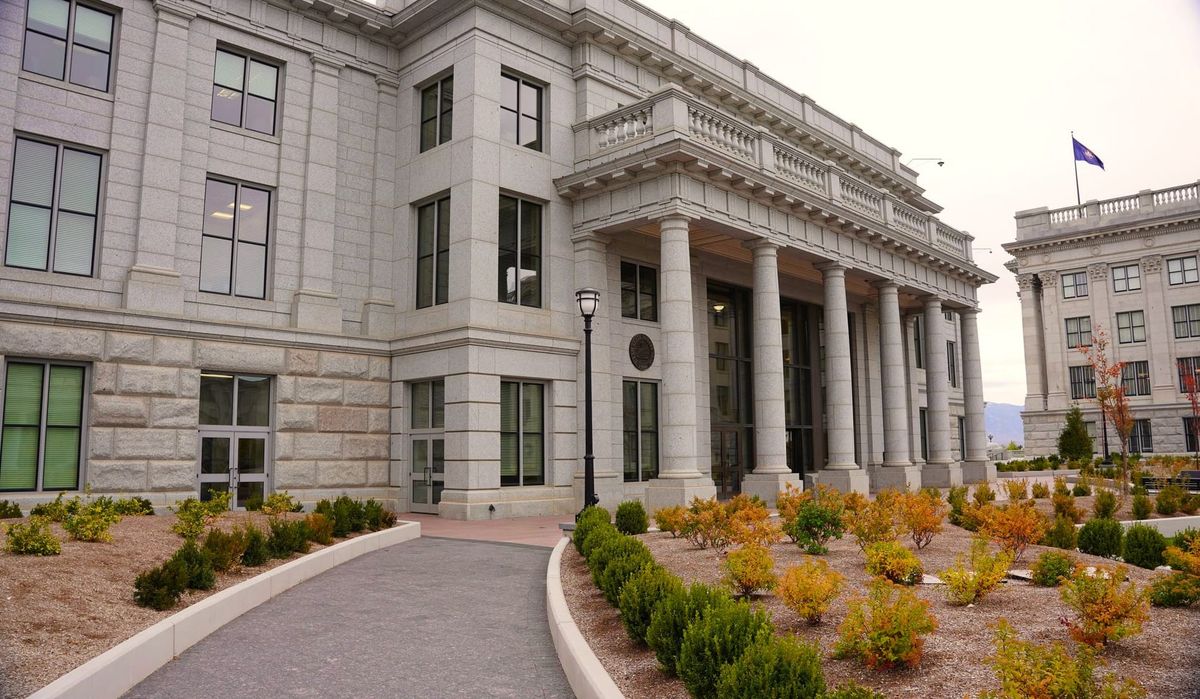
The Senate Building at the Utah State Capitol complex in Salt Lake City was the location of the October 30 Utah Spaceport Exploration Committee meeting. Photo: Isabella Pedroza, Nucleus - TechBuzz
The Senate Building at the Utah State Capitol complex in Salt Lake City was the location of the October 30 Utah Spaceport Exploration Committee meeting. Photo: Isabella Pedroza, Nucleus - TechBuzz
Salt Lake City, Utah — October 30, 2026
Utah’s Spaceport Exploration Committee has completed its feasibility study and is recommending that the state take the next steps toward developing an inland launch and reentry spaceport, with potential sites near Delta and Green River.
At its October 30 meeting, the committee unanimously approved a final report recommending that the Legislature appropriate $2.5 million to advance both locations through coordinated Federal Aviation Administration (FAA) licensing and National Environmental Policy Act (NEPA) review. The report also recommends funding at least two dedicated full-time positions within the Utah Department of Transportation (UDOT), at an estimated annual cost of approximately $500,000.
The recommendations represent the transition from site exploration to regulatory review and more detailed planning. They do not authorize construction, establish a final site selection or commit the state to the full cost of developing a spaceport.
The Legislature retains final authority over whether Utah proceeds and how the next phase is funded.
The committee’s work began in 2025 under Senate Bill 62. Over more than a year, it evaluated seven potential locations, narrowed the field to Delta and Green River West, and commissioned technical, operational, environmental and economic assessments. The committee accepted the final site assessment and economic analysis prepared by RS&H, as well as an initial feasibility study from The Aerospace Corporation, before voting on its recommendations.
A two-site strategy, not a final selection
The committee is recommending that both Delta and Green River West remain under consideration as potential locations for Utah’s first spaceport. Each offers different advantages, and the report calls for additional analysis before determining the best path forward.
The distinction between the sites is also reflected in Utah’s recent response to an FAA request for information on potential new spaceports and priority airspace for launch corridors. That submission identifies Delta as the state’s near-term development focus and Green River West as a complementary strategic location.
Delta, in Millard County, scored strongly on market demand and technical and operational factors. Its advantages include proximity to the Utah Test and Training Range, extensive special-use airspace, highway and rail access, utility capacity, water resources and available federal and state land. Its proximity to the Wasatch Front and Salt Lake City International Airport also offers potential market advantages.
Green River West, in Emery County, offers a different set of attributes. The site has access to Interstate 70 and an active rail corridor, as well as a restricted airspace corridor with a historical connection to long-range point-to-point rocket testing between Green River and White Sands Missile Range in New Mexico. The committee’s analysis also identified potential advantages for reentry operations and other specialized missions.
The two-site recommendation is not a proposal to build two fully developed spaceports. Rather, the committee wants both locations to proceed through the next stage of licensing and environmental review, preserving the ability to compare them as more detailed information becomes available.
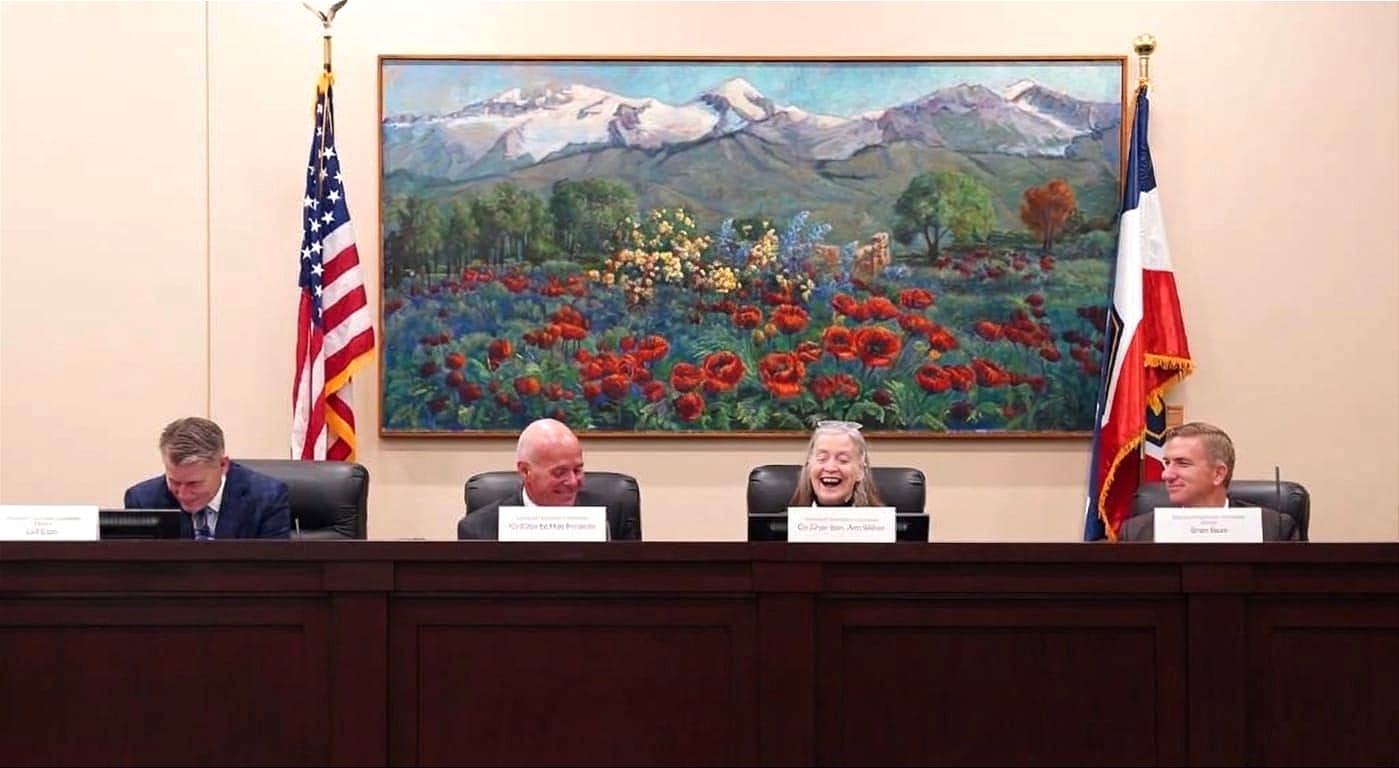
Utah Spaceport Exploration Committee Co-Chairs Carlos Braceras, UDOT executive director, and Sen. Ann Millner at the committee's final meeting. Leif Elder, left, Director of Policy and Legislative Services and Brian Bean, right, Senior Policy Advisor, Utah State Senate. Final Spaceport Exploration Committee meeting, Utah State Capitol Senate Office Building, October 30, 2026. Photo: Isabella Pedroza, Nucleus - TechBuzz
The financial case
The committee’s economic analysis estimates that, at steady state, spaceport operations and tourism could generate annual economic output of $69 million to $117 million at Delta, supporting an estimated 260 to 590 jobs. At Green River West, the estimates range from $70 million to $124 million in annual economic output and 440 to 610 jobs.
Those figures are projections, not guaranteed outcomes. The report says the estimates depend on market demand, the mix of operations and the ability to attract private investment and federal participation. The committee anticipates that funding would come from a combination of private, federal and state sources.
The report estimates initial infrastructure costs of $35 million to $50 million at Delta and $40 million to $65 million at Green River West over the first several years. It also concludes that the project could produce a return on investment over a 40-year time horizon under its modeled assumptions.
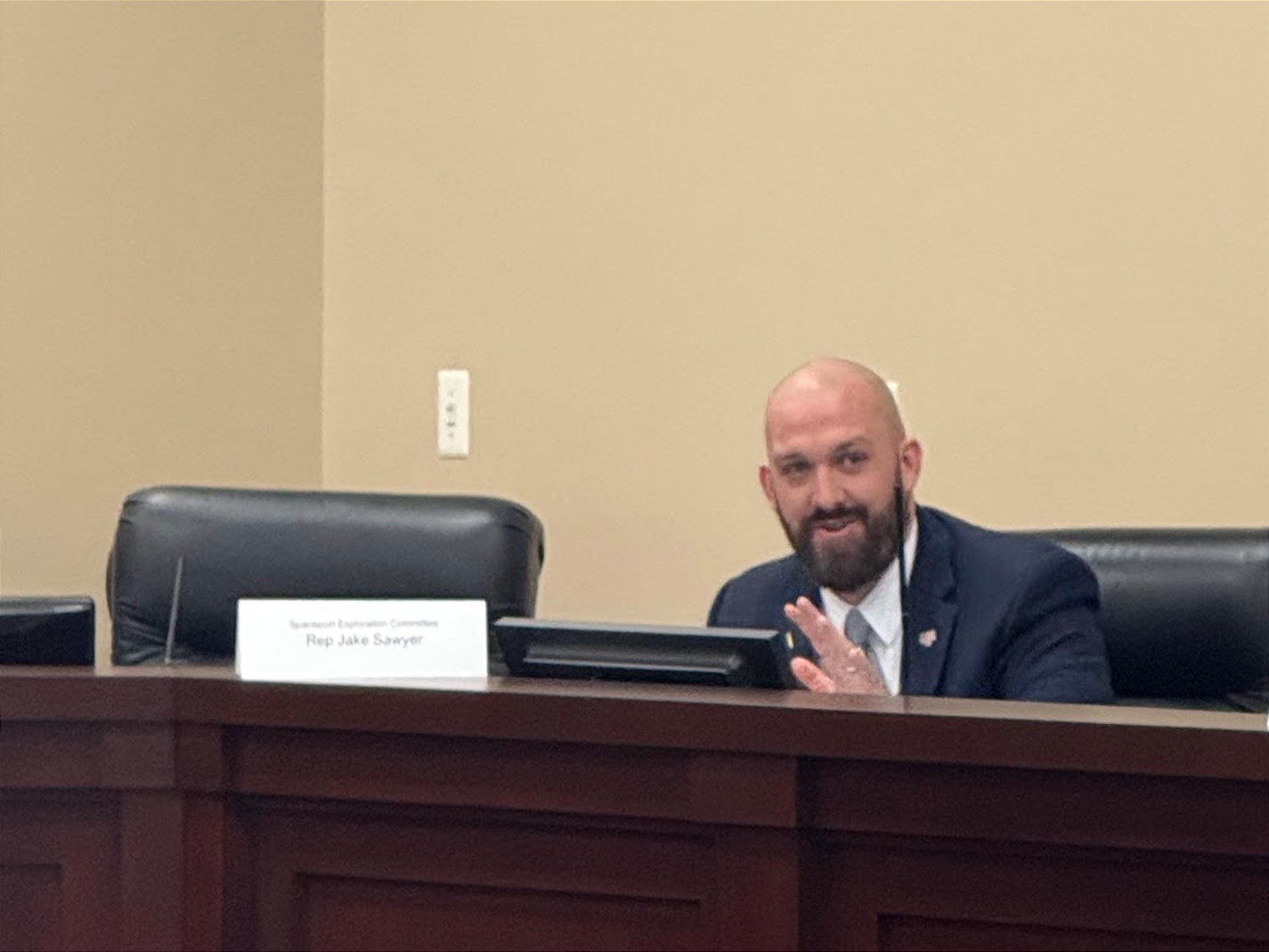
Rep. Jake Sawyer of Weber County, (Utah's Ninth District), speaking at the final Spaceport Exploration Committee meeting, October 30, 2026. Photo: Isabella Pedroza, Nucleus - TechBuzz
Those longer-term projections were a point of discussion at the meeting, particularly for Rep. Jake Sawyer, who questioned the scale of the potential investment relative to the projected direct employment. Sawyer raised concerns about a figure of approximately $260 million associated with the broader development scenario and questioned whether the potential economic return justified the commitment.
Aaron Starks, a committee member and president and CEO of 47G – Utah Aerospace and Defense, pushed back on the characterization of the project as a $260 million taxpayer-funded spaceport, saying that figure does not represent the committee’s funding recommendation or its intended approach.
“I think it's very important we clarify that we are not proposing we spend $260 million on a spaceport," said Starks. "That is not the purpose of this committee, and that is ultimately not what should happen, period. … Should we determine at a future date that launch is important for the economy here, for the incumbent companies and for the universities, then at that point, private financing can become a tool that we leverage, and so can federal investment. But the intent here is not to have taxpayers pay $260 million."
Andy Bruce, a committee member, said the state’s role should be to establish the infrastructure, regulatory framework and land arrangements that could attract private-sector investment. The intent, he said, is not for taxpayers to carry the full cost of the project.
The formal report specifies $2.5 million for advancing both sites through the FAA licensing process, including NEPA review and related technical work. It explicitly excludes land acquisition and construction. A separate recommendation calls for at least two dedicated UDOT positions, estimated to cost approximately $500,000 annually.
The proposed appropriation would pay for the next stage of evaluation and licensing, not the construction of a launch facility. The Legislature would have additional decisions to make before any development proceeds.
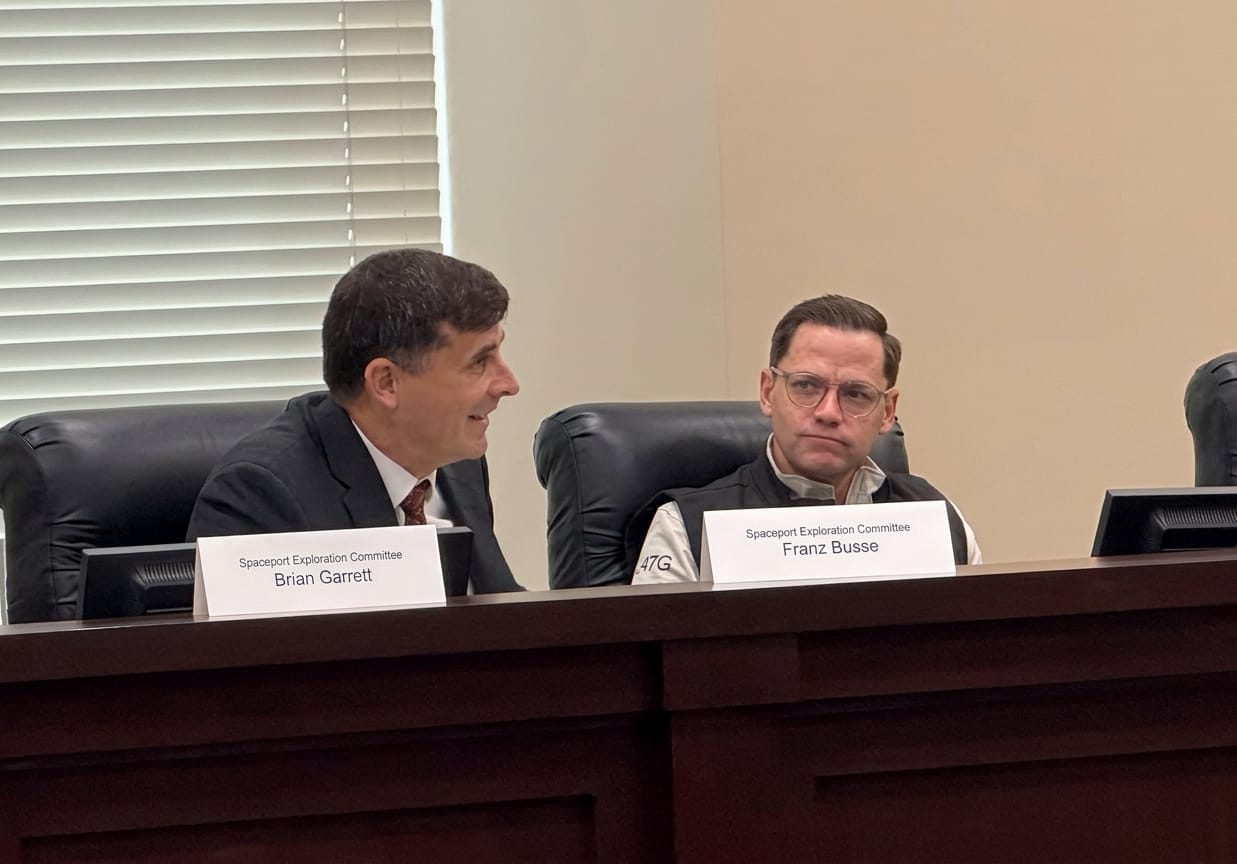
Committee members also pointed to potential uses beyond traditional vertical rocket launches. Committee member, and Director of Engineering at Vector, Franz Busse noted that infrastructure and facilities could support adjacent markets such as unmanned aerial vehicle testing. He said the potential value of the sites should not be measured solely by whether Utah ultimately establishes a vertical orbital launch capability. He argued that other aerospace markets could make use of the infrastructure, reducing the risk of investing in a facility that never becomes a conventional spaceport.
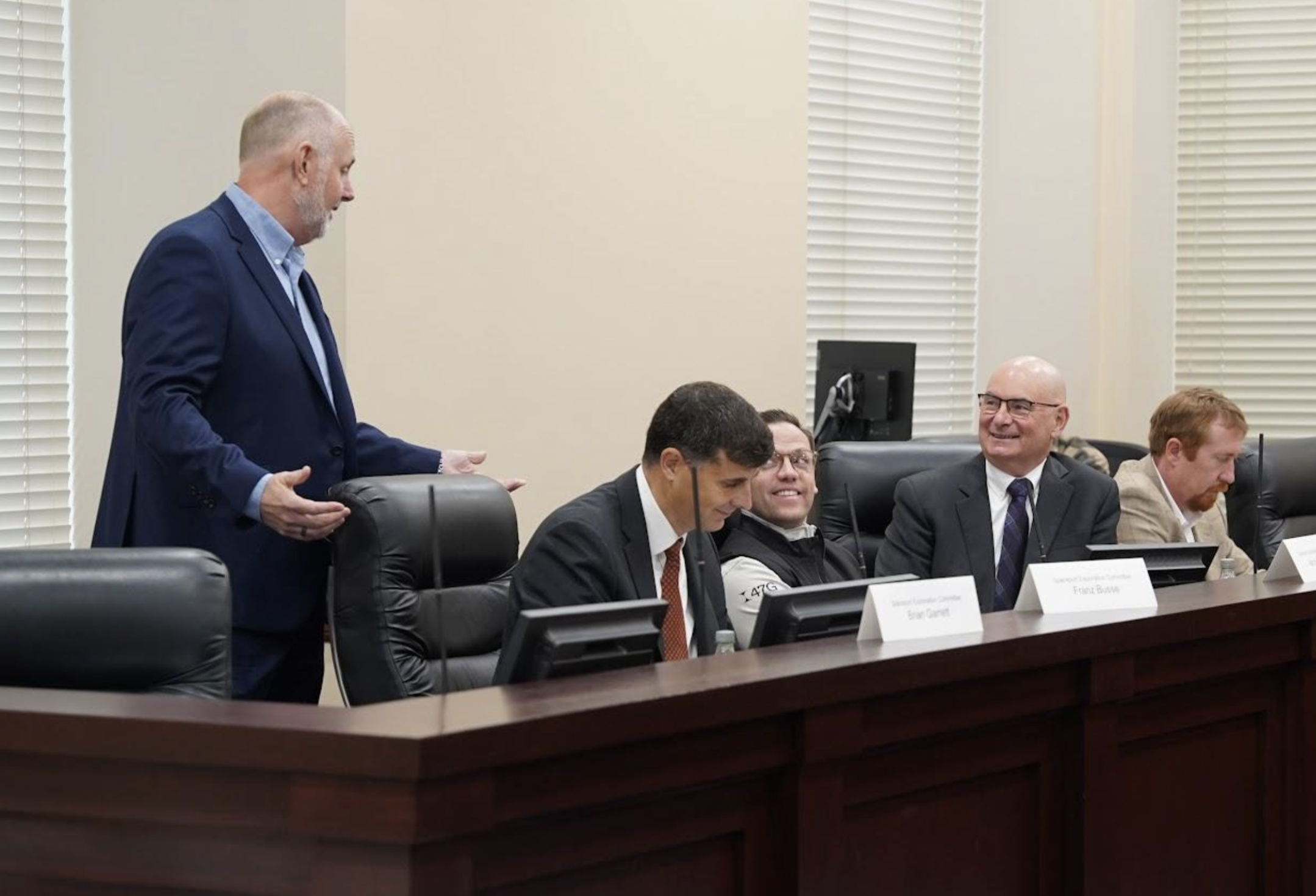
Utah Spaceport Committee members Franz Busse and Aaron Starks at the October 30 final committee meeting, Senate Office Building, Utah State Capitol, October 30, 2026, Photo: Isabella Pedroza, Nucleus Institute - TechBuzz
“There are viable alternative paths. If vertical launch to orbit, which is what I really want to do, never happens, the state investment will still be valuable for other adjacent markets. I’m very familiar with the UAV market, for example, which can absolutely utilize this space. So, there are a lot of ways of minimizing the risk of Utah ever regretting this because there will be so many uses for this space," said Busse.
The report also identifies autonomous aviation, rocket-engine testing, amateur rocketry, research and workforce development as possible complementary activities.
These uses could broaden the potential customer base and reduce dependence on any single type of space operation. They remain opportunities to evaluate, however, rather than established sources of revenue or confirmed business commitments.
Feasibility is not FAA approval
The technical studies provide a basis for continued consideration of the two Utah sites, but they do not establish that either location is ready or approved for commercial launch operations.
The Aerospace Corporation’s initial study evaluated public-safety risks associated with representative launch trajectories at seven candidate sites. Its findings indicated that Utah locations could support trajectories meeting preliminary FAA public-risk criteria under the study’s assumptions.
The report includes an important qualification: it is a feasibility assessment, not a licensing determination. The study does not guarantee that a particular launch vehicle, operator or mission will receive FAA approval. Specific operations would require additional analysis and review under applicable FAA regulations.
The committee’s final report also identifies work that remains on environmental and cultural resources. Green River West is near the Green River, a designated Wild and Scenic River, and has more listed species in its impact area than Delta. Sonic-boom exposure presents different considerations at the two sites: the analysis identifies potential effects on more populated communities around Delta and on recreational and natural areas around Green River West, including Arches National Park.
Cultural-resource assessments also remain incomplete. More than 95% of each site will require on-the-ground survey, according to the report. Although the desktop review identified no known cemeteries, burials or rock art at either location, additional fieldwork will be necessary before the state can reach final conclusions.
The report calls for broader public involvement if the project advances, including engagement with residents, landowners, Tribal Nations, businesses, emergency-service providers and other affected stakeholders.
The committee’s response to the FAA’s request for information makes a broader case for Utah’s potential role in the national space transportation system. It points to the state’s defense and aerospace infrastructure, available land, transportation connections, research institutions and history of supporting space-related missions. Utah has hosted reentry activities, including NASA sample-return missions and Varda Space Industries’ W-Series 1 capsule recovery at the Utah Test and Training Range. Green River also has a history of nearly 200 Pershing and Athena point-to-point rocket tests connecting the area with White Sands Missile Range.
The FAA submission argues that an inland Utah location could complement existing coastal launch facilities by adding geographic diversity and capacity for government and commercial users. Whether that potential translates into demand for a Utah facility will be tested in the next phase.
Utah Spaceport Exploration Committee members at the committee's final meeting, October 30, 2026, Senate Office Building, Utah State Capitol, Salt Lake City. Photo: Isabella Pedroza, Nucleus Insitute - TechBuzz
Oversight moves to the Legislature
The committee’s recommendations also address who would lead the work if the state proceeds.
The report recommends that UDOT be authorized to coordinate FAA licensing and environmental review for both finalist sites, as well as future planning, financing analysis, land acquisition, partnership development, procurement, design and construction for whichever site is ultimately selected. Any development would remain subject to favorable federal reviews, legislative appropriations and other required approvals.
The committee also recommends that the Legislature reauthorize it for three years in an advisory role. Under the proposed arrangement, the committee would not have decision-making authority.
That recommendation prompted a governance discussion. Rep. Sawyer raised concerns about language in the report stating that the committee’s future work should not delay or impair expedited development. The issue is consequential: the state would be moving from an exploratory process into a phase involving public funding, land arrangements, environmental review and potentially substantial infrastructure decisions.
The report suggests that the Legislature could eventually establish a Division of Astronautics or another permanent governance structure, such as an independent state agency, as the project matures. It does not recommend that a new entity be created before UDOT begins the next phase.
The committee voted unanimously to approve its recommendations. It also unanimously accepted the RS&H final report and The Aerospace Corporation’s initial feasibility study.
The next step is a presentation to the Legislature’s interim committees in November. The committee’s leadership expects legislation to be prepared for the upcoming session, where lawmakers will determine whether to proceed and whether to provide the recommended funding.
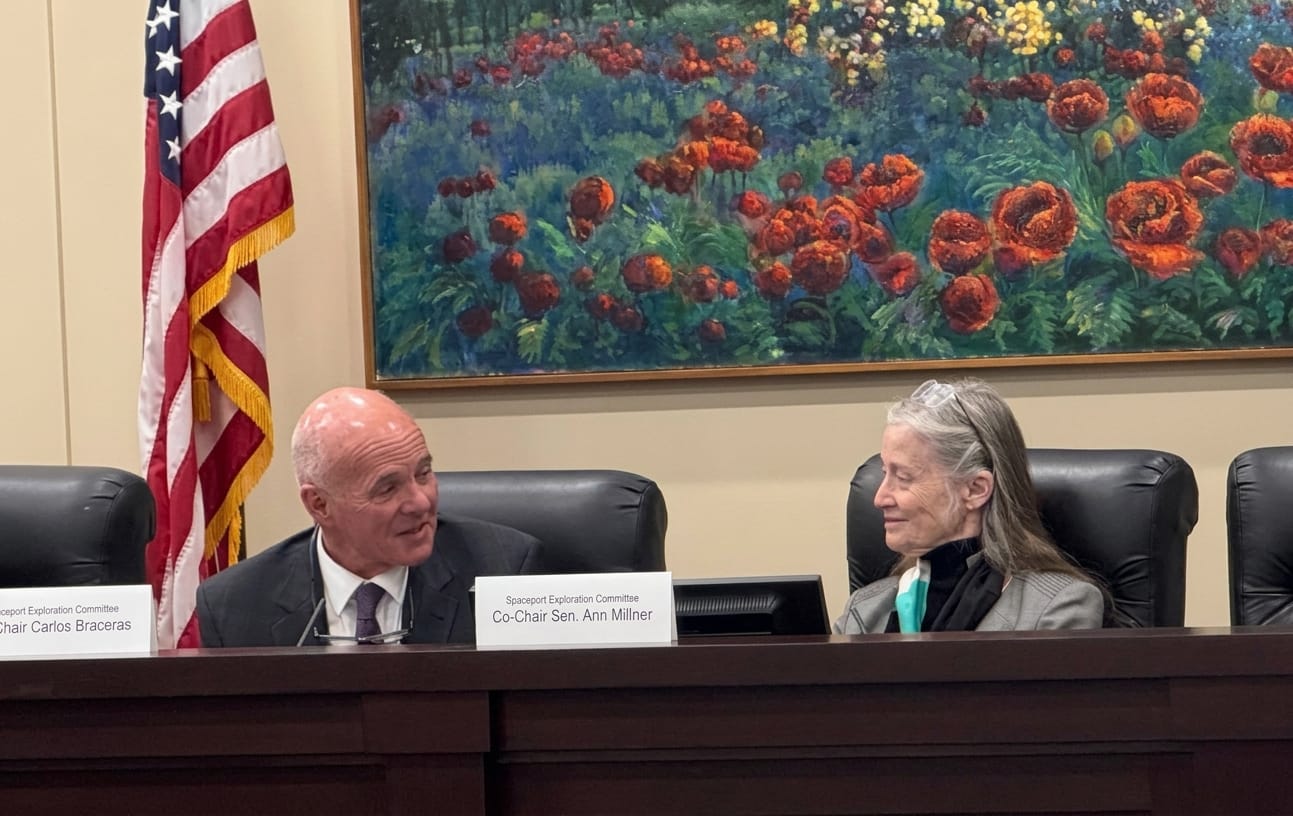
Utah Spaceport Exploration Committee Co-Chairs Carlos Braceras, UDOT executive director, and Sen. Ann Millner closing the committee's final meeting, October 30, 2026, Senate Office Building, Utah State Capitol, Salt Lake City. Photo: Isabella Pedroza, Nucleus Insitute - TechBuzz
The October 30 vote closes the committee’s initial feasibility and site-assessment work. It does not settle the larger questions of site selection, market demand, financing, environmental approval or long-term oversight.
For now, Utah has identified two potential locations and a proposed path for testing whether either can become a viable spaceport. The next decision belongs to the Legislature.
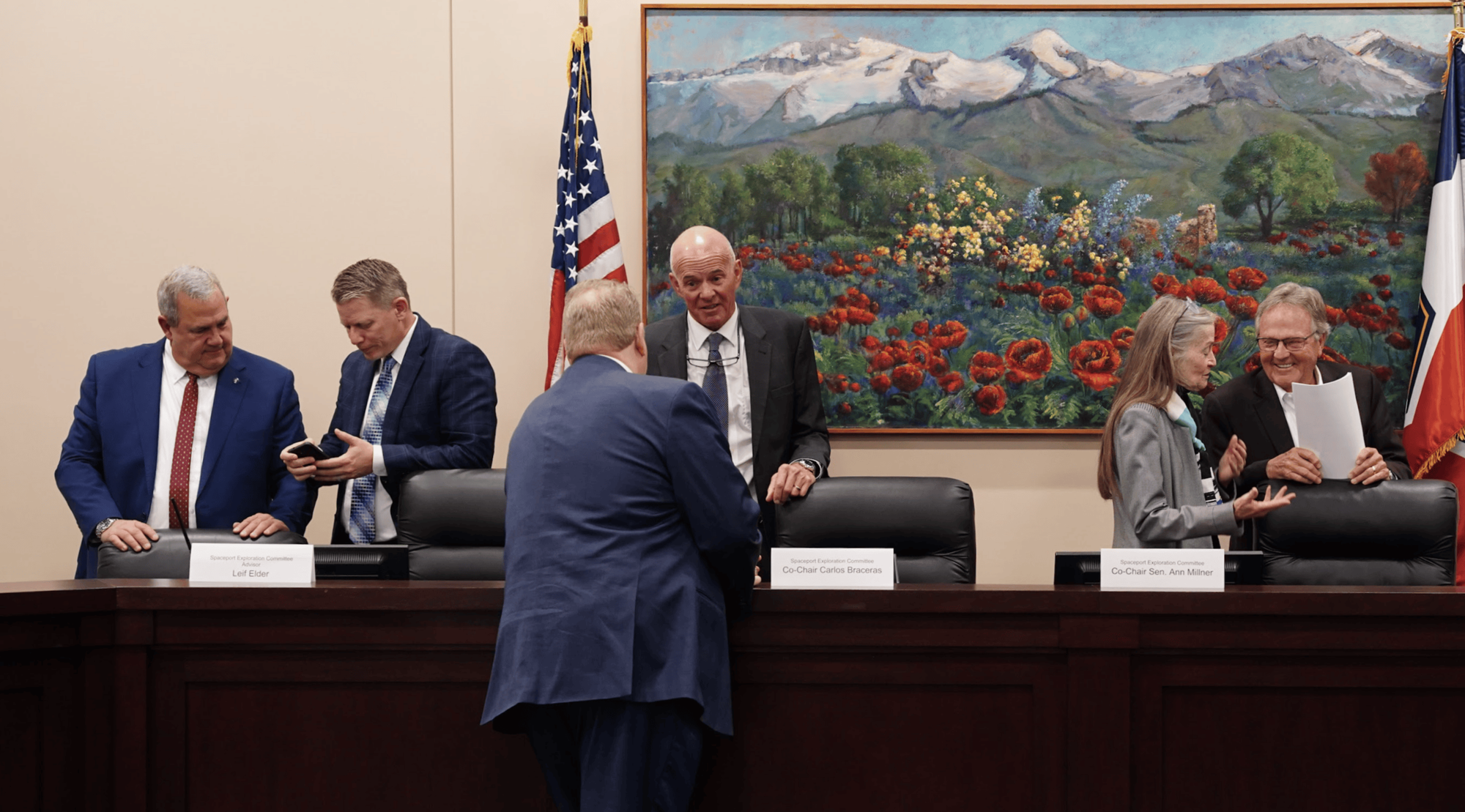
Utah Spaceport Exploration Committee Co-Chair, Carlos Braceras, talking with Andrew Nelson, VP and National Discipline Leader for Aerospace at RS&H, a consultant to the committee, alongside members of the committee and co-chair Ann Millner, following the closing of the committee's final meeting, October 30, 2026, Senate Office Building, Utah State Capitol, Salt Lake City. Photo: Isabella Pedroza, Nucleus Insitute - TechBuzz
Share this article
The link has been copied!
Your link has expired. Please request a new one.
Your link has expired. Please request a new one.
Your link has expired. Please request a new one.
Great! You've successfully signed up.
Great! You've successfully signed up.
Welcome back! You've successfully signed in.
Success! You now have access to additional content.