Organized Intelligence 2026 to Bring Faith, Technology and Policy Leaders to Utah State Capitol
Organized Intelligence returns November 10 with a multifaith conference at the Utah State Capitol examining AI’s effects on families, education, work and public policy.
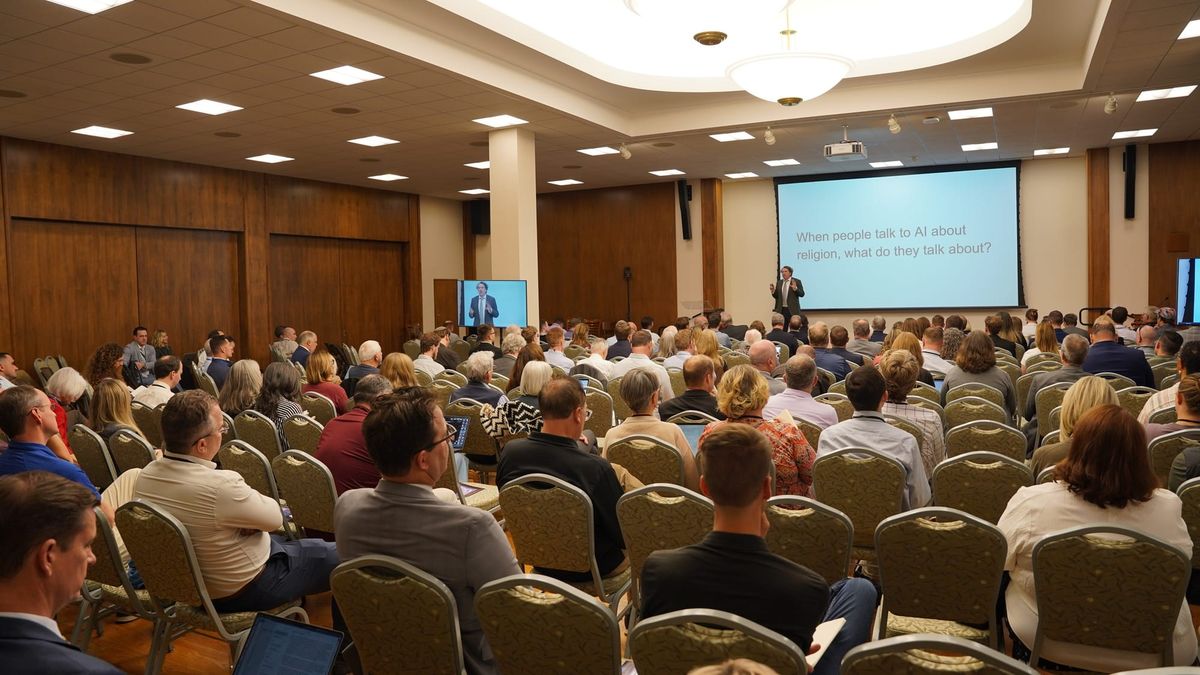
Josh Coates speaking at the 2025 Organized Intelligence conference, Church Office Building, downtown Salt Lake City, Utah. Photo: Mark Tullis, TechBuzz
Josh Coates speaking at the 2025 Organized Intelligence conference, Church Office Building, downtown Salt Lake City, Utah. Photo: Mark Tullis, TechBuzz
Salt Lake City, Utah — November 5, 2026
Organized Intelligence will bring faith leaders, technologists, scholars and policymakers to the Utah State Capitol on Tuesday, November 10, 2026, for a conference examining how artificial intelligence can support human flourishing. The program begins at 9 a.m.
Titled “OI26: Human Flourishing in an Age of AI,” the gathering will explore AI’s effects on families, education, work, privacy, mental health and public institutions. Its focus is not simply what increasingly capable systems can do, but how their development and use affect human dignity, agency and relationships.
The event is hosted by Medlir Mema and Zachary Davis. Mema is executive director of Organized Intelligence, while Davis leads Faith Matters. The program combines religious and ethical perspectives with discussions of technology, public policy and everyday life.
Building on the 2025 Conversation
Last year’s Organized Intelligence conference focused on Latter-day Saint perspectives on AI. As TechBuzz reported ahead of the 2025 gathering, the initiative sought to bring faith communities into conversations about technology’s moral and social consequences.
“We want to create spaces where technologists, theologians, and policymakers can think together before problems become crises,” Davis told TechBuzz in its October 31, 2025 article.
This year’s conference explicitly adopts a multifaith approach. Organizers describe religious and wisdom traditions as sources of insight into questions that technical expertise alone cannot resolve, including meaning, responsibility, community and the common good.
That emphasis runs through a program that moves between broad questions about human flourishing and specific concerns about how AI is used in homes, schools, workplaces and government.
Faith, Human Dignity and Everyday Life
Bishop Oscar Solis of the Diocese of Salt Lake City is scheduled to deliver the opening keynote, “What Does Human Flourishing Look Like in an Age of AI?” His address will consider human dignity, agency, relationships and the common good as AI becomes more embedded in daily life.
Terryl Givens will offer a plenary address exploring a theology of flourishing, including relational capacity and sacred play. Davis will moderate a multifaith dialogue titled “Faith, Wisdom, and the Moral Architecture of AI,” with Marian Edmonds-Allen, DZ Kalman, Father Gregory Telemachus-Stamkopoulos and Julie Park.
Two sessions on where AI meets human flourishing will examine its implications for family relationships, education, meaningful work, privacy and mental well-being. Listed speakers across those sessions include Michael Toscano, Erika Anderson, Melissa McKay, Matt Miles and John C. Havens.
The program also includes a discussion of building a pro-human AI coalition, with participants considering practical ways for faith, policy, technology and civil society leaders to continue collaborating beyond the conference.
Public Policy and the Human Future
Valerie Hudson will deliver a featured address titled “A New Magna Carta for an Age of AI.” According to the agenda, the session will connect moral principles with the practical challenges posed by increasingly capable and autonomous AI systems.
Margaret Busse, commissioner of the Utah Department of Commerce, will address innovation, trust and the public interest. Drawing on Utah’s approach to AI policy, her session will explore how government can allow technological experimentation while establishing safeguards that protect people.
A separate discussion of public institutions will examine the roles of states, legislatures and educational institutions in ensuring that technological innovation serves families, communities and the public good. Together, the sessions connect the conference’s ethical questions with institutions responsible for setting rules and responding to AI’s effects.
Brian J. A. Boyd, U.S. faith liaison at the Future of Life Institute, is scheduled to deliver the final plenary address on advanced AI systems, long-term risks and human agency. The agenda also includes a screening of Moloch, a dramatic short written and directed by Thomas Paul Cozens that explores how competitive pressures can produce harmful outcomes without a single villain.
How to Attend
Date: Tuesday, November 10, 2026
Start: 9 a.m. Mountain Time
Location: Utah State Capitol, 350 N. State St., Salt Lake City
Tickets: Currently listed at $95 on the registration page