UVU First in Utah to Unify Frontier AI Models in One Gateway, as Active Users Jump 31% in Week One
Utah Valley University (Orem, UT) launched a centralized AI Gateway giving all employees secure access to ChatGPT, Claude, and Gemini, following a 360-user pilot.
Utah Valley University'sDigital Transformation division launched the UVU AI Gateway on July 1, a centralized platform giving every UVU employee secure access toChatGPT,Claude,Gemini, and locally hosted open-source models in one place. The gateway followed a pilot involving 360 early adopters and saw a 24% increase in registered users and a 31% increase in active users in its first week.
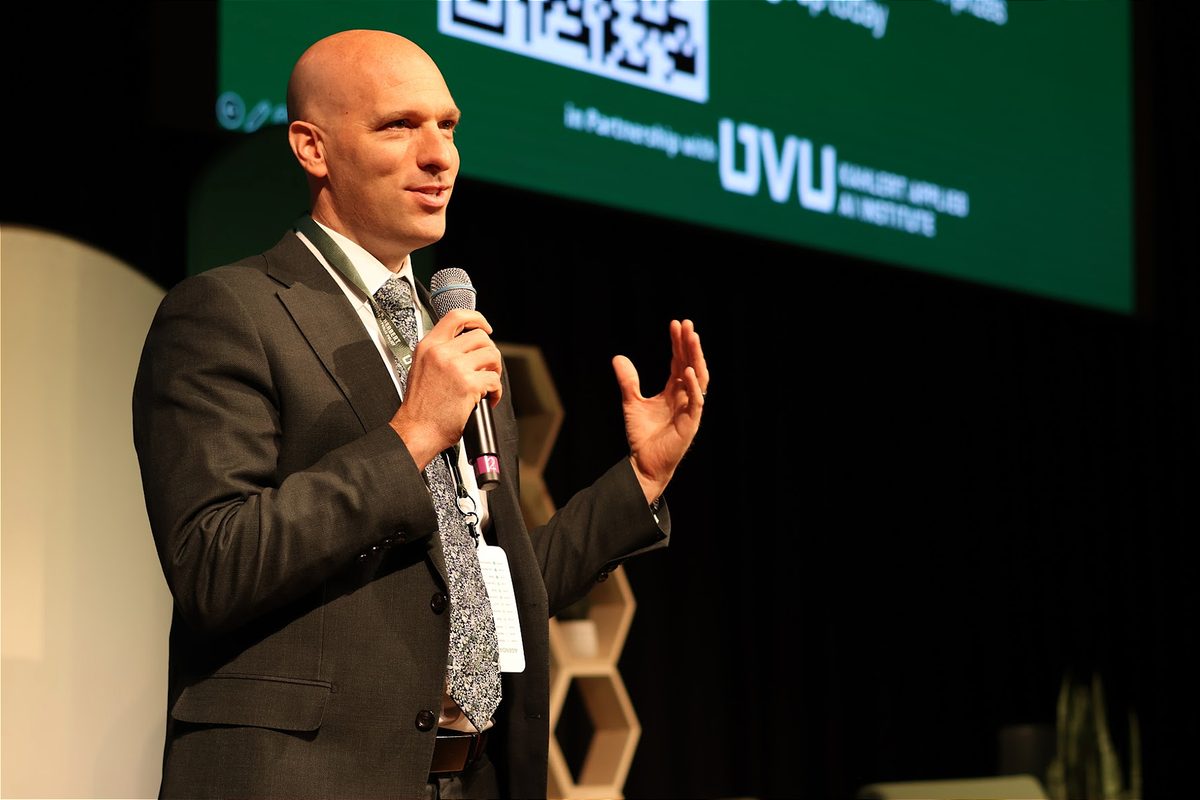
"Here's the caution though: Some people think: 'If we build it, they will come!' But the truth is, people don't really come," said Tyler Small, Senior Director of theKahlert Applied AI Institute at UVU. "You have to go to them, and you have to give them really hands-on, practical training in their context."
That philosophy shows up in how UVU staffed the rollout. Beyond the software itself, the university built training programs and "AI Coaches" to give one-on-one attention where needed — what Small calls "last mile" training, the difference between someone leaving a workshop feeling stuck and someone actually using the tool to solve a real problem.
Small said he saw that gap close in real time during a recent group training. He asked a department leader, new to AI, what she thought might be a good use case for her job after less than an hour of exposure to the tools.
"She thought really hard for a minute — sweated a few bullets — and then said: 'Could I use it to help me build an updated compliance training?'" Small said. "And she was dead on. We talked about how exactly she would do that. Next time we meet, she's going to have gathered all the data for that course and we'll demo for the group how to build an AI agent in her context. Beyond great tools, it often takes that type of personal conversation, a little positive peer pressure, and a lot of follow-up to help people get started. And that's what we're doing at UVU."
What the Gateway actually does
The Gateway isn't just a chatbot login. It offers multi-model comparisons, chat history organized into folders and project workspaces, a personal knowledge base, prompt chaining, and the ability to build and export custom AI agents. Basic use is free for all UVU employees, with a weekly usage allowance equivalent to $5 in AI tokens that resets every Monday; employees with heavier needs can move to a paid tenant option that still falls within UVU's security standards.
"The ideal user is the beginner who has no idea how to use AI," Small said. "They're taking a class, a workshop, or just playing around. And probably intermediate users as well. Advanced users who want to access various systems outside of a chatbot or basic AI agent will want to use more advanced tools. We have those too, and we're introducing more all the time. The nice thing about the AI Gateway, though, is that departments don't have to pay anything for it, so it's really a great starting point."
UVU built the platform in-house rather than buying an off-the-shelf product.
"Our technical team built this tool withFERPA-secure APIs at a fraction of the cost of any comparable standalone solution," Small said. "They also leveraged off-the-shelf templates to further cut costs on the platform, and they're offering this build to all otherUSHE schools. I can't think of a better way of being a team player within the USHE system."
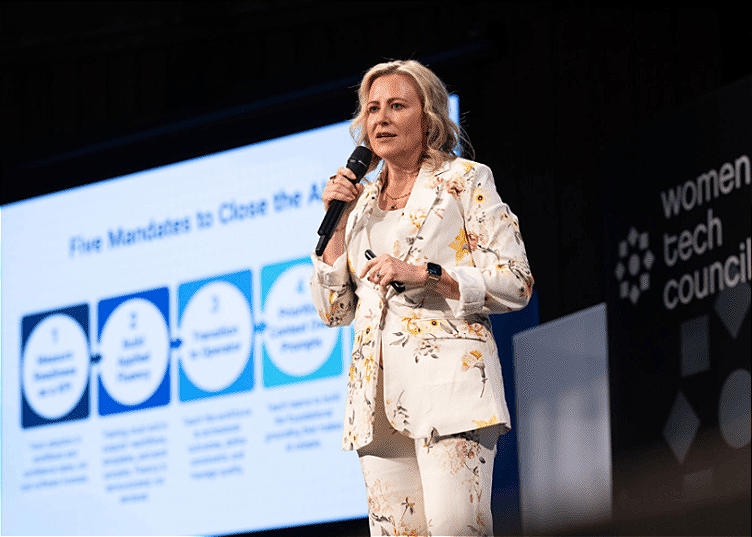
Caption: Women Tech Council Founder Cydni Tetro on stage at the WTC Innovation Summit, Thanksgiving Point's Show Barn in Lehi. June 4, 2026. Photo: Laura Kinser, Kinser Studios
That offer lands at a moment when Utah's public higher-education system is already moving on AI collectively: theUtah Board of Higher Education has launched its own AI task force and begun a statewide push to expand an AI Workforce Credential across USHE's institutions. "The Utah Board of Higher Education recognizes that artificial intelligence is reshaping the world, and the board is leading efforts to ensure our students are prepared for an AI-driven economy by building on the innovative work already underway at Utah's colleges and universities," said Cydni Tetro, chair of the task force.
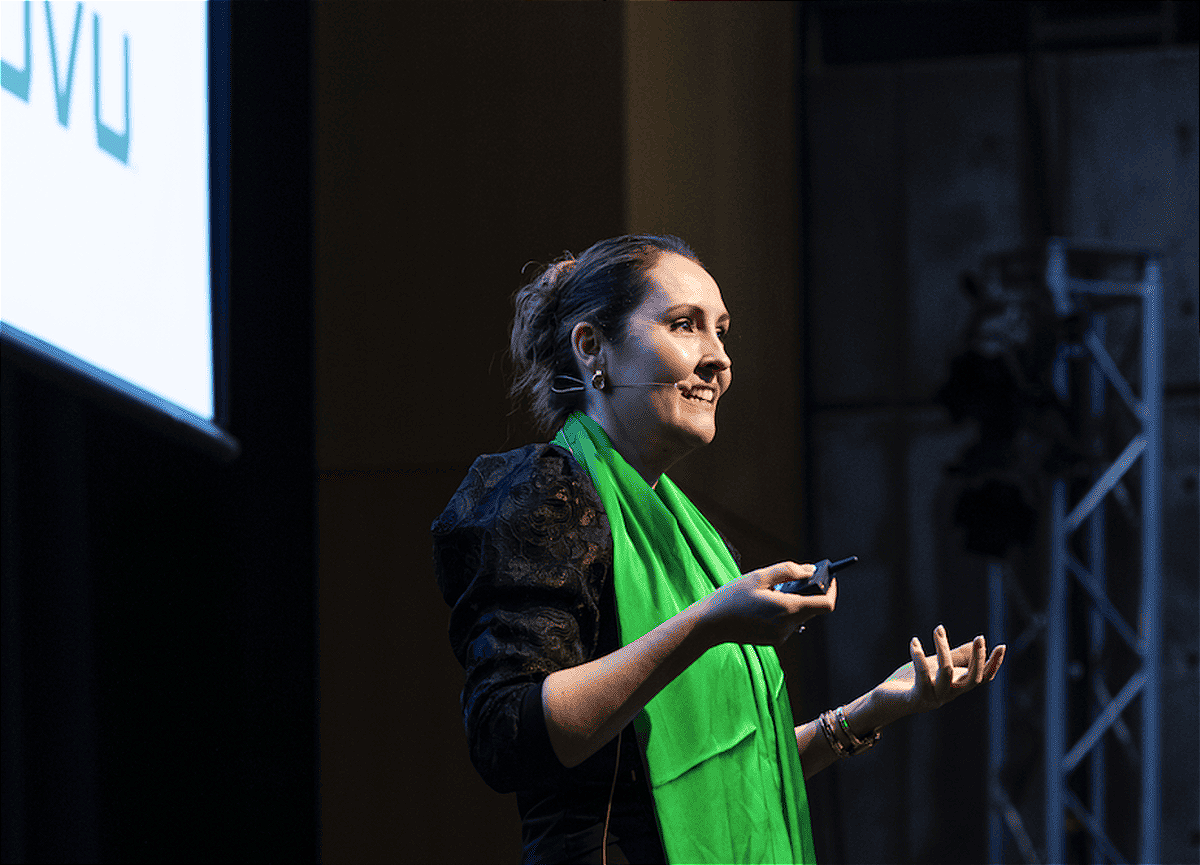
"The UVU AI Gateway makes it easy and safe for our faculty and staff to use multiple AI options within our standards and guidelines," said Christinia Baum, vice president of Digital Transformation at UVU. "Faculty and staff can utilize AI to maximize their workflows without compromising data security and private or proprietary information."
Caption: Christina Baum, UVU’s Vice President of Digital Transformation/CIO speaking at UVU's Data Summit. Photo: Emily Munoz, UVU
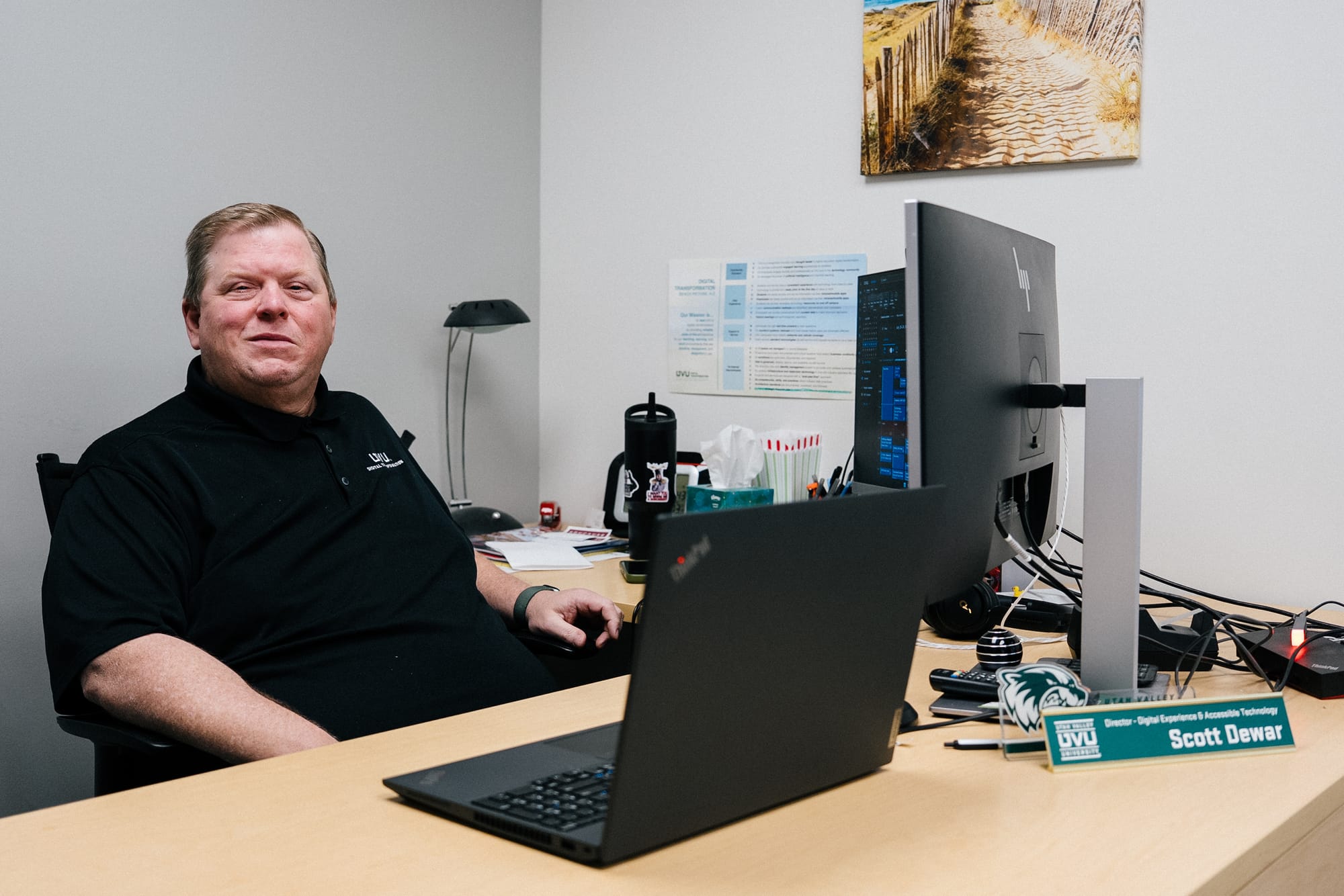
Scott Dewar, Director of Digital Experiences & Accessible Technology at UVU, said the centralized approach was about building consistent guardrails rather than leaving employees to sort out AI tools on their own.
"One of the more interesting outcomes so far has been how quickly people have adopted the tool for everyday work, from drafting messages to supporting student services, all while still staying within a framework that aligns with institutional values," Dewar said. On why UVU is sharing details of the rollout publicly, Dewar added: "We see this as an opportunity to contribute to the broader higher education conversation. Institutions everywhere are trying to balance innovation with responsibility, and we've learned that being transparent about our approach helps others move forward more confidently."
Scott Dewar, Director of Digital Experiences & Accessible Technology, UVU
Is it really first of its kind?
"UVU is one of the first in the world and the first in Utah to build a single centralized gateway unifying multiple frontier AI models in one platform," Small said.
A "frontier model" refers to the most advanced, general-purpose AI systems available at a given time — a term coined by theFrontier Model Forum, the industry body founded by Anthropic, Google, Microsoft, and OpenAI. These are systems that outperform what came before and stay ahead of the curve. UVU joins a small but growing number of universities building this kind of infrastructure in-house.Harvard offers similar unified access to several leading AI models, including OpenAI's, Anthropic's, and Google's flagship offerings. TheUniversity of British Columbia andFontys in the Netherlands have each built comparable gateway-style platforms for their campus communities. In Utah, the Gateway's single-login, multi-model design distinguishes it from tools other in-state schools have rolled out separately.
Faculty first, students next
The Gateway currently serves faculty and staff only. Small said that was a deliberate sequencing decision rather than an oversight.
"Faculty are learning how to use AI well, how to integrate it into their courses, and how to help students be AI work-ready," Small said. "Some people might wonder: why did we start with faculty? Why not just teach all the students AI directly? It turns out that our faculty are pretty good at teaching, and AI really has to be embedded into an area of expertise in order to be valuable. The faculty are the best instrument to do that. Our next stop is students."
Small said the ceiling on what AI could do for higher education remains far off.
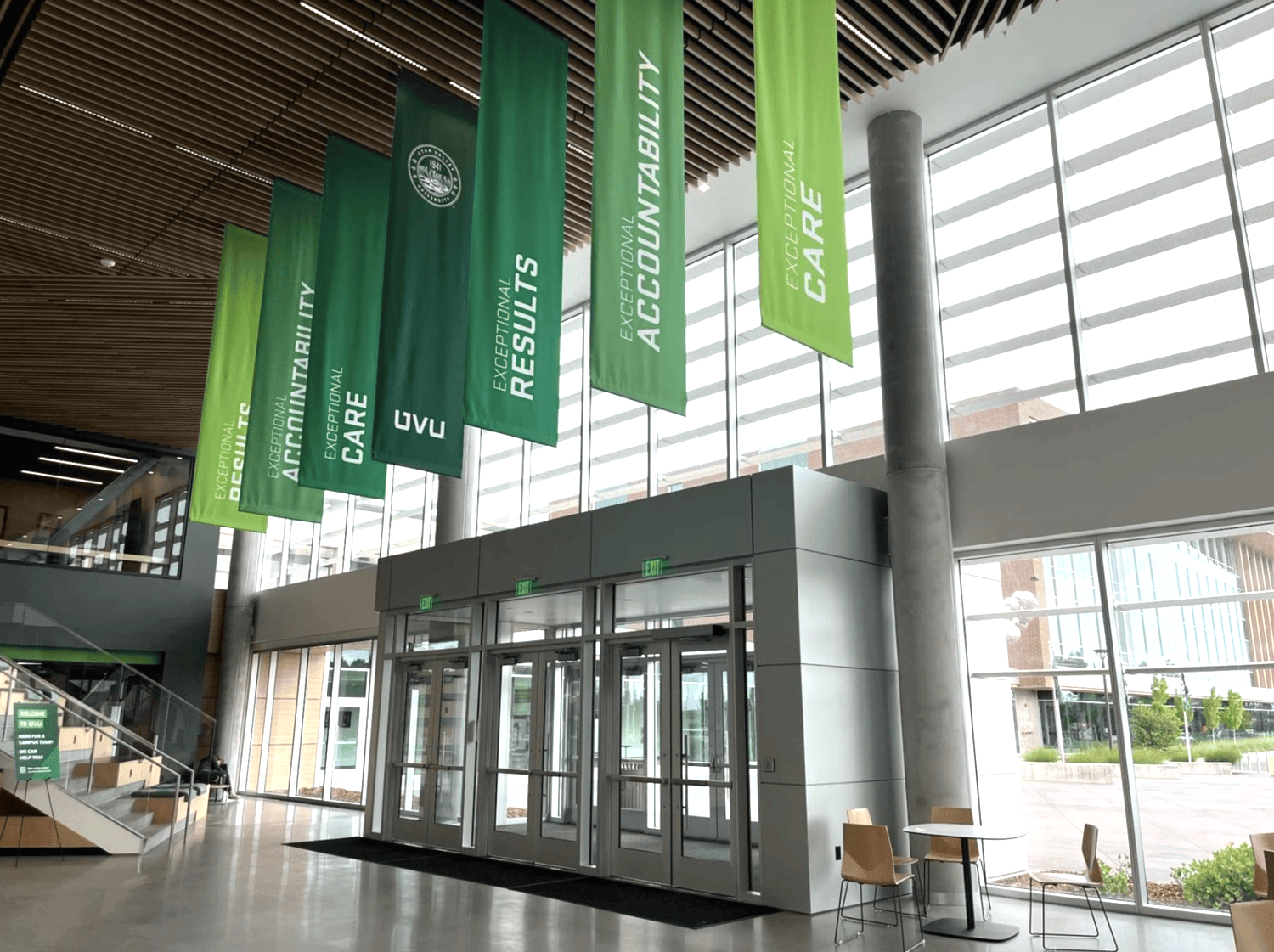
Utah Valley University’s front entrance through the Fugal Gateway, named after Utah business leader and UVU alumnusBrandon Fugal. Photo: Mason Butler, Kahlert Applied AI Institute, UVU
The open question: how do you measure it?
UVU says it's still working out how to quantify the Gateway's payoff — a challenge shared across higher education. The Digital Education Council'sTen Dimension AI Readiness Framework, built with input from 27 universities across 17 countries, and the U.S.Department of Labor's AI literacy guidance, published in February, both attempt to give institutions and employers a shared way to evaluate AI competency — evidence that the measurement gap Small describes is an industry-wide problem, not a UVU-specific one.
"It's not enough to know, for example, that students are learning or using AI," Small said. "So what? We want to know if they're capable of using it in ways that employers need. Can they do job tasks effectively with AI? Can they evaluate the outputs and judge quality, and iterate until it meets a standard? At present, no one has a great way of measuring that, especially across all areas of expertise. So, this is the kind of measurement we're working on."
Editor's note: UVU plans to release a series of videos on its Instagram detailing how AI is being used across campus. As AI adoption accelerates across Utah's public university system, TechBuzz will continue following how UVU and its peer institutions measure success, and who gets access next.
Share this article
The link has been copied!
Your link has expired. Please request a new one.
Your link has expired. Please request a new one.
Your link has expired. Please request a new one.
Great! You've successfully signed up.
Great! You've successfully signed up.
Welcome back! You've successfully signed in.
Success! You now have access to additional content.