UVU's New Engineering Dean Arrived on Day One to Find the Future Already Under Construction
Spencer Magleby spent 30+ years at BYU applying folding paper techniques into spacecraft. Now he leads UVU's Smith College of Engineering and Technology.


Spencer Magleby spent 30+ years at BYU applying folding paper techniques into spacecraft. Now he leads UVU's Smith College of Engineering and Technology.
Orem, Utah — June 29, 2026
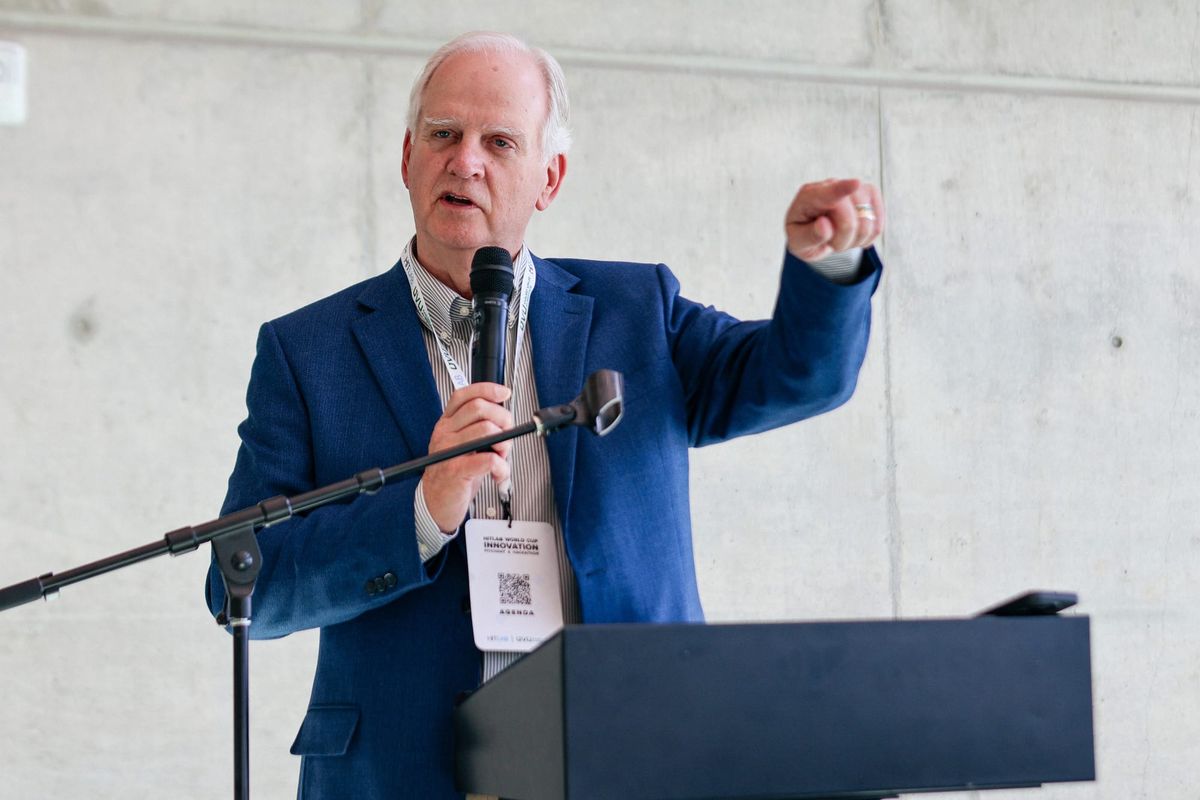
Spencer Magleby had been dean of the Smith College of Engineering and Technology at Utah Valley University for thirteen hours when he walked into a live AI and digital identity hackathon he had nothing to do with.
He did not seem to mind.
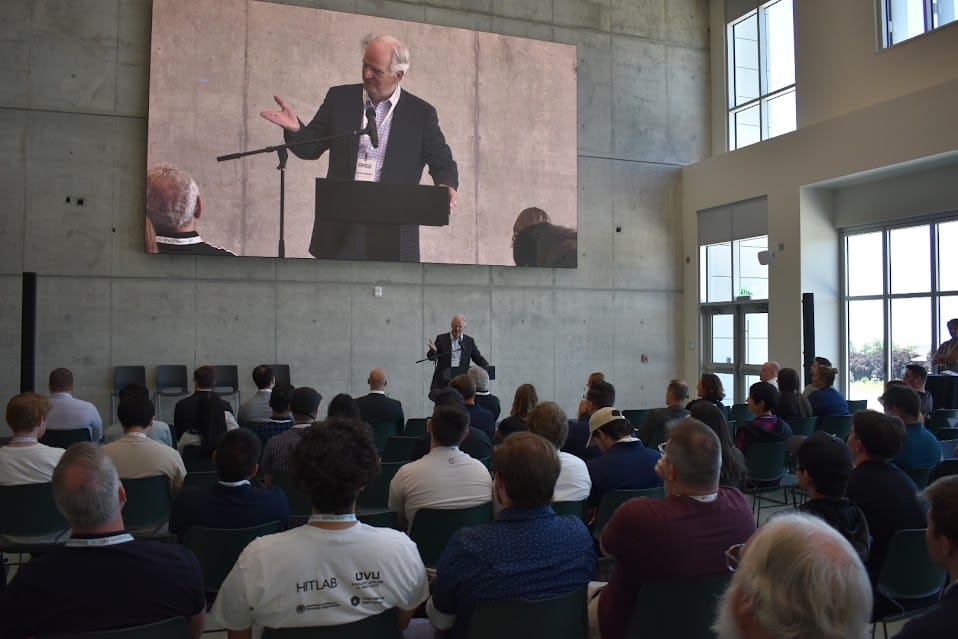
"I came in yesterday, and there is already super cool stuff happening in the college, and I hadn't done that," Magleby told the crowd gathered in the new Smith Engineering Building on June 18. "As a new dean, that is great."
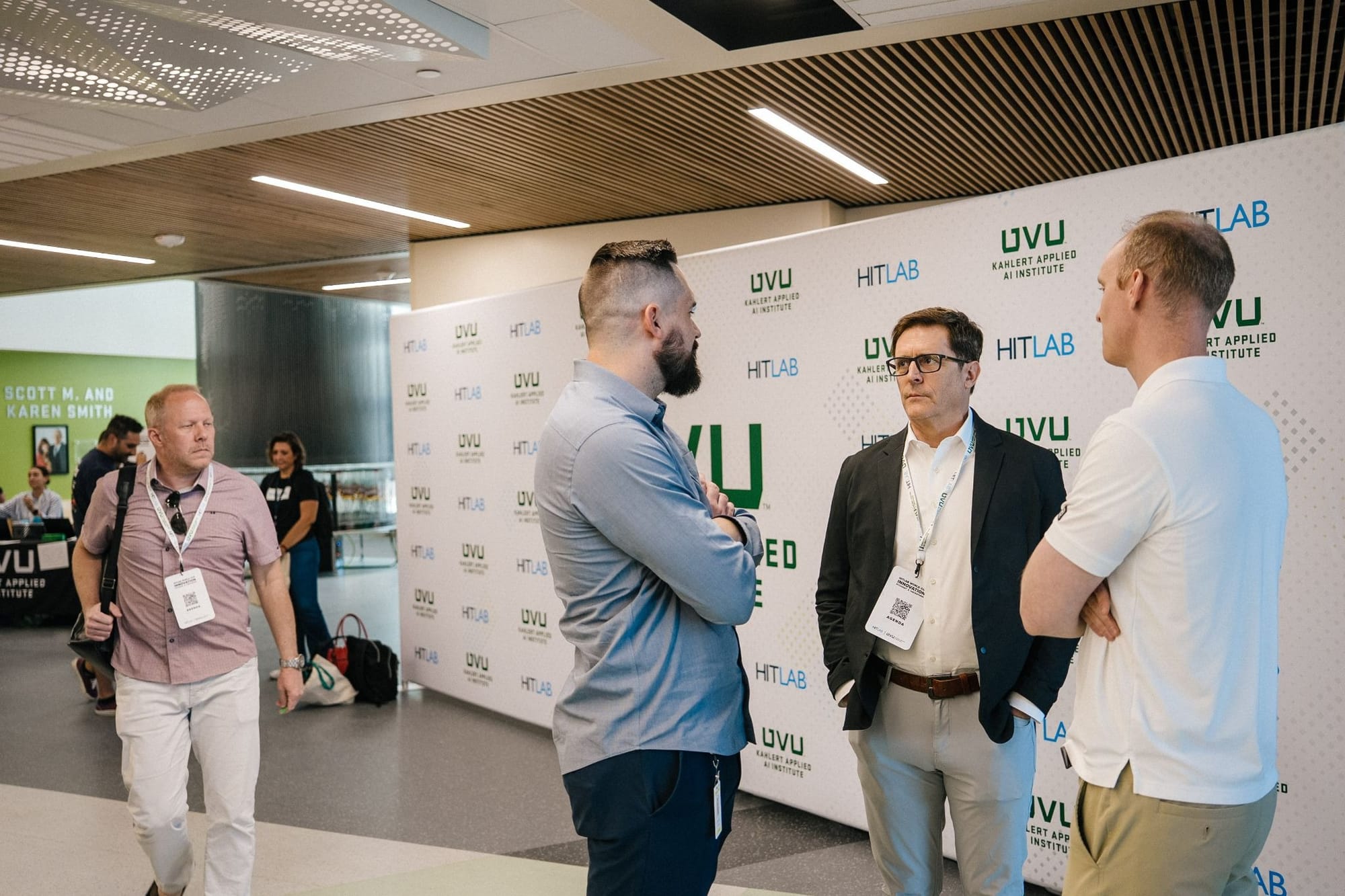
The HITLAB x UVU World Cup Innovation Pitchday & Hackathon had drawn more than 200 people to campus. Industry representatives from Dell, Salesforce, Google, and Goldman Sachs were in attendance. So was Utah's chief privacy officer, who stayed until 9:30 p.m. watching teams build, and giving mentorship and advice.
"Here you're sitting inside a brand new building," Magleby said. "I think it represents the idea for UVU and with the Smith College being a hub where industry and education and others can come together to solve problems."
From BYU to Outer Space — and Back
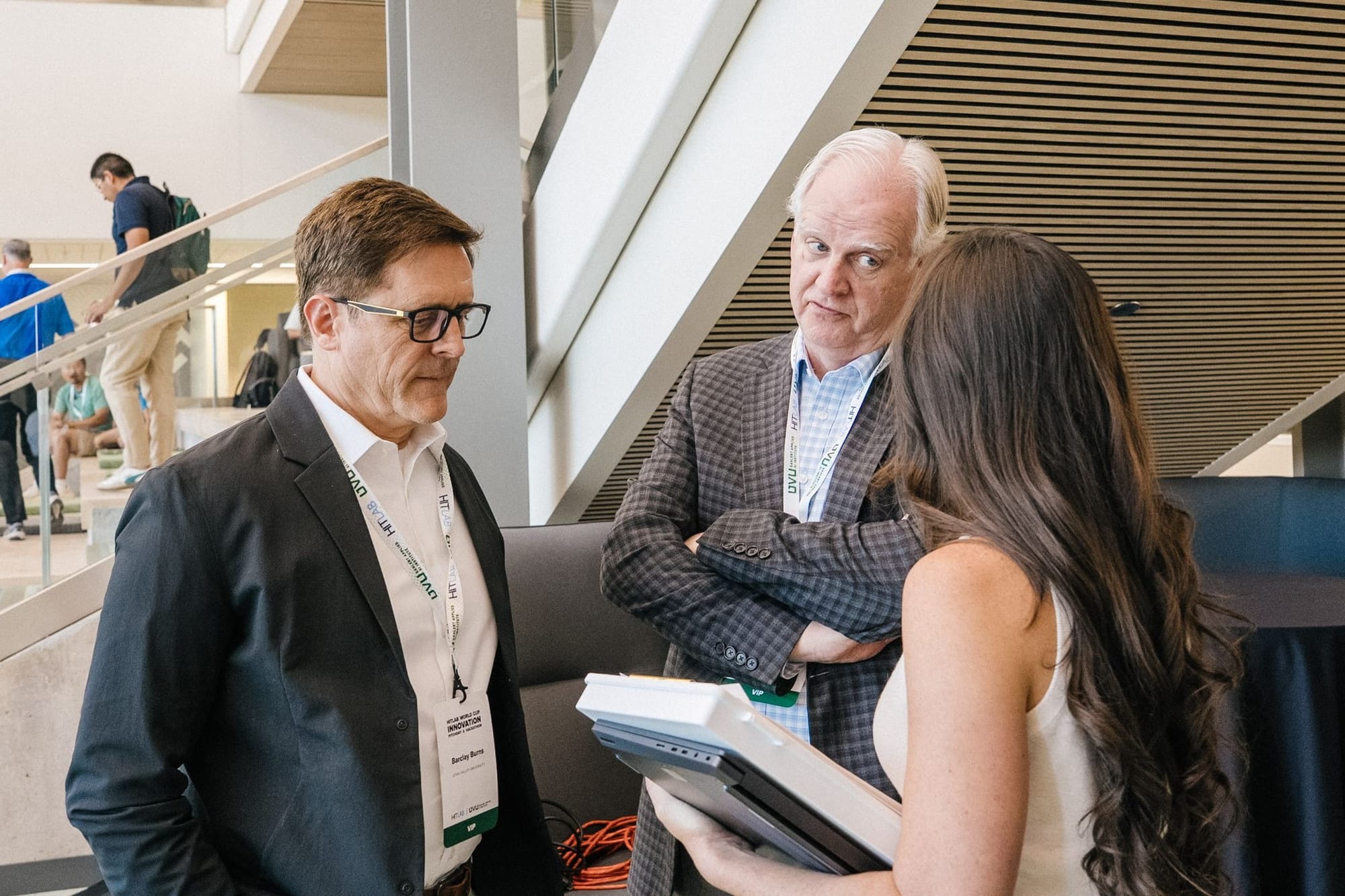
Magleby is not a new name in engineering. He spent 25 years leading BYU's Compliant Mechanisms Research Group, and held key leadership roles at BYU including associate dean and director of the Honors Program. The lab attracted funding from NASA, the National Science Foundation, and the U.S. Air Force. He advised hundreds of graduate students and his work produced more than 40 patents and 250 publications.
The lab's signature project was origami — the engineering kind. His team built foldable antenna and telescope systems designed to launch compactly inside a rocket and deploy permanently once in orbit. The challenge is not folding something small, but in building something that unfolds exactly right, once, in a vacuum, with no room for error.
"These systems represent a whole sequence of small inspirations that led to innovations," Magleby said of that work.
After retiring from BYU, he launched a consulting company around deployable space structures — a highly specialized field where the challenge is designing mechanisms that can fold tightly enough to fit inside a rocket, then deploy reliably once in orbit. Few engineers work in this area. The transition was not about walking away from the work. It was about finding the right hands for it. He handed the company to a former graduate student he trusted to carry it forward. Then UVU called.
"One of the wonderful things that attracted me to come to UVU is the fact that it is new, it's emerging, it's finding its direction, it's setting the course," he said. He described the college as open space, a place where direction has not yet been fixed, and where partners can still help shape what it becomes. "We're looking for partners," Magleby said.
AI as Augmentation, Not Threat
To explain where he stands on artificial intelligence, Magleby told the hackathon audience three dates.
The first was 1957, the year he was born, and the year the Soviet Union launched Sputnik. "A little thing went over the heads of Americans, and we panicked," he said. "Just like AI, people were worried, 'Oh my gosh, where's this gonna be used?'"
The second was 1969. He was 12 years old when humans landed on the moon. "That seems like old history to me," he said. "It was a technological marvel. It was going to lead to unbelievable changes in society. Instead, it was kind of gradual — but I learned from that even as a kid. Wow, because we have a goal, it makes changes."
The third date was 1983. He paused and asked the crowd what happened that year.
Someone called out: Michael Jackson.
"Now, that was the year I graduated with my master's degree," Magleby said, drawing a laugh from the crowd. He had finished with what he called a "hot-shot degree in computer design" — three-dimensional CAD at a moment when that was genuinely new. A company hired him to automate the manufacturing floor for F-16s and F-22s.
"I thought I was so cool," he said. "We automated a bunch of processes. I thought I was so awesome."
Then the company’s lawyer called him in. He walked through a door and found himself sitting across from 20 union representatives from the manufacturing floor — the workers whose jobs his automation project had displaced.
"These were all the people that were going to be displaced by the automation that I led a team to create," Magleby said. "I suddenly realized, hey, this isn't just me thinking about stuff. These people in this room, they just want to know: what does this mean? What's the future of this kind of thing?"
As Joseph Jorgensen reported for TechBuzz, Magleby drew the lesson directly for the room: "Somehow in this company I did not visit with those people, and it really made me think about how technology affects people. And you are going to have the same chance; don't get shoved in the room by the lawyer, right?"
"You have a chance to take technology, just like it was for me, these advances, and make sure that it's not just cool, but that it locks in with people," he said. "Make sure that you understand who the people are that are affected."
HITLAB, the New York City-based digital health research organization that co-hosted the June 18 event, is the kind of partner Magleby has in mind. He brought up the organization's infant babbling research specifically — HITLAB has published work producing an algorithm that identified babbling patterns linked to early developmental issues with 91% accuracy. The application matters to him because it is not a product looking for a problem. It starts with a child who might otherwise go undiagnosed and works backward toward the technology.
"If you want something that's even cooler than just technology, but technology that helps people — you got an institution that's publicly funded, it's trying to do good in the world," he said. "That is a bonus."
Stan Kachnowski, chair and co-founder of HITLAB, has visited hundreds of campuses over a 34-year academic career. He said UVU stood out. "This facility is elite, the staff and faculty are elite, and the students are elite," Kachnowski said.
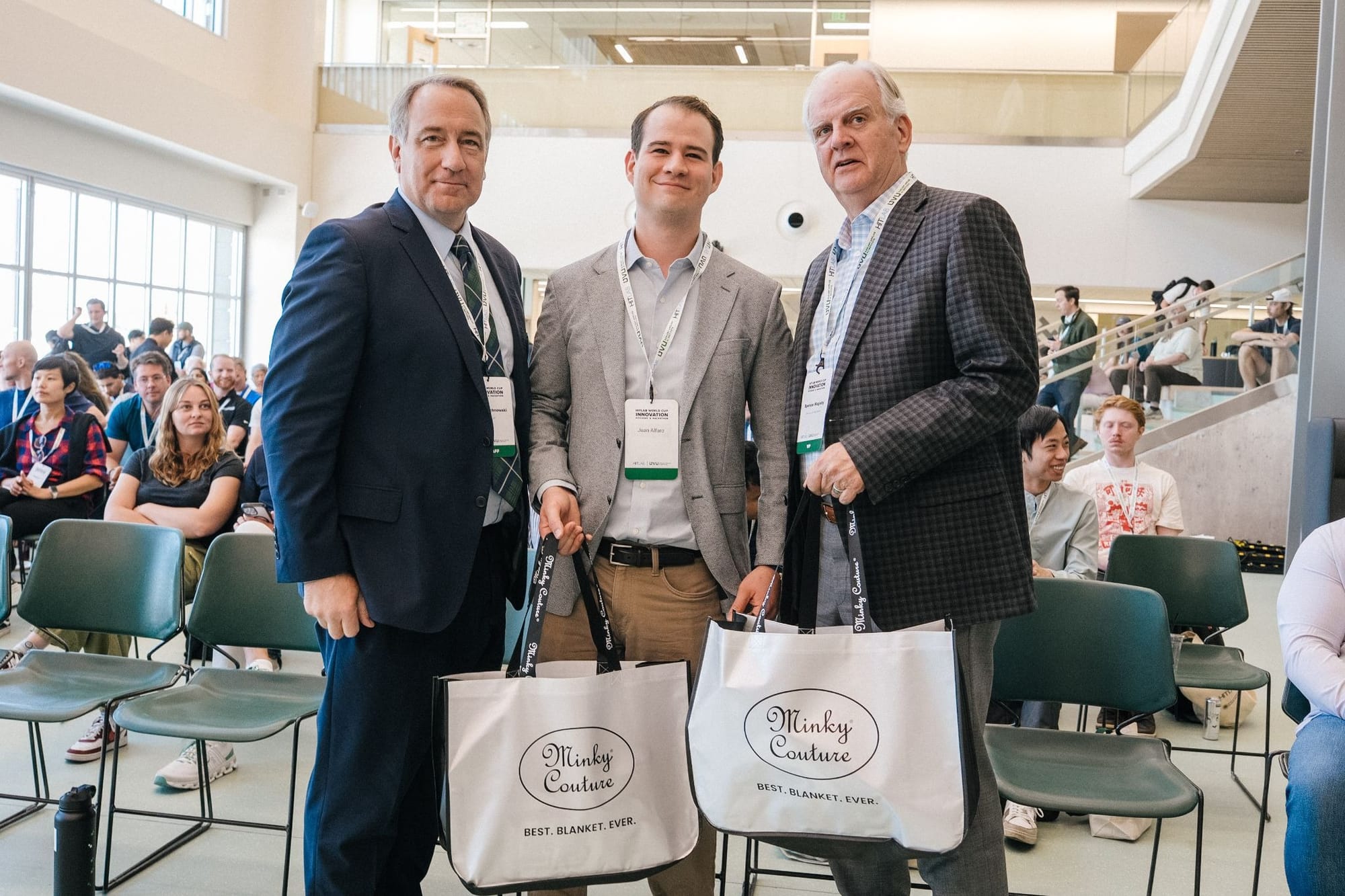
He described events like this one as the mechanism by which innovation spreads. "The key thing about innovation is that it doesn't happen in a vacuum," Kachnowski said. "It requires connectivity to make sure that breakthrough gets funding, gets the best staffing. And then it needs communications channels and pathways and convenings to make sure that the rest of the world hears about it." He called the UVU partnership "a completely aligned mission to help humanity through technology."
The Building as a Statement
The new Smith Engineering Building had its ribbon cutting January 22, 2026, less than a year before Magleby walked through its doors as dean. Physical space, in his view, is institutional intent made concrete. It was also, he said in a private conversation, part of what drew him to UVU in the first place. A new building signals investment. It signals that leadership is serious. It gives collaborators a place to land.
"This is just such a terrific space," he said. The building embodies UVU's goal to function as a hub where industry, government, and education work together rather than separately.
That vision was visible in the room. Utah's chief privacy officer, Christopher Bramwell, was not there as a spectator. He had been embedded with teams the night before, working on policy problems his office had written into the hackathon's bounty structure. As TechBuzz reported, the best ideas from the event would go directly to state officials as legislative recommendations.
Tyler Jennings, Director of Entrepreneurship and Ecosystem Development at the Utah Governor's Office of Economic Opportunity, put the stakes plainly. "Something that used to take years to accomplish and a team of 100 engineers can now be done by a team of two in 24 hours," Jennings said. "We can either be scared of AI and what's happening, or it can be, what can I do quicker because of it?" He called the event proof of what is possible. "This sort of thing really shows everyone who participates in the hackathon inspiration around what you can accomplish quickly."

Magleby closed his remarks with an open door. He was new, he said, the college was still finding its direction, and he wanted people in the room to help shape it. While on stage at the hackathon, he said: "If you want to go see that dean and say, 'I want to be a partner,' you can come right up here."
What UVU Is Building
The hackathon was one event in a larger picture. UVU's student entrepreneurship pipeline runs through Sandbox, a program that has produced companies now collectively valued above $262 million, with six accepted to Y Combinator. Twenty-five student startups pitched at this year's Demo Day in April, ranging from AI-powered tax preparation to mesh networking for stadiums. As TechBuzz covered, one team crossed $100,000 in monthly recurring revenue before taking the stage.
Jonny Hicken, co-founder of Sandbox, and Seth Jenson, director of UVU's Chelsea and Casey Baugh Entrepreneurship Institute, were both at the event. Jenson described what makes UVU a natural fit for the program. "UVU has a unique drive and mission to have students have real outcomes," Jenson said. "It's not just about learning how to do it. It's about building real things that have value in the marketplace." Hicken echoed it from the partner side. "One of the reasons we love UVU is that they are willing to be innovative and commit to giving their students experiential learning type experiences that really transform their students," he said.
The Smith College student expo earlier this spring showcased more than 50 projects across the college's departments. Among them: an electric hydrofoil, a CNC pancake printer, and a haptic walking aid for the visually impaired. Students were building things, not studying them.
Magleby's advice to graduate students applies just as well to undergraduates. He said the mistake most people make is treating advanced education as more of the same: more coursework, more credentials, more information absorbed. The better question, he said, is what you are going to contribute that did not exist before you arrived. That means finding a problem that is not yet well-defined, which means finding a mentor who will push you toward one, and then pushing yourself to produce something new rather than summarize what others have already built.
"Seek less well-defined areas," he said. "Find good mentors and push yourself to generate new knowledge."
"Make graduate school about generating knowledge," he said, "rather than just learning more."
The hackathon participants who stayed up through the night to build working software had already figured that out. Magleby walked in on his first day and recognized it.
"I don't have to come in and do something cool," he said. "Things are cool already."