Cleansing Utah Lake: How UVU Scientists Are Harvesting Algal Blooms into Renewable Resources
Utah Valley University students and faculty are developing innovative technologies to combat harmful algal blooms in Utah Lake, combining patented filtration systems and synthetic biology to improve water quality while providing transformative research experiences.
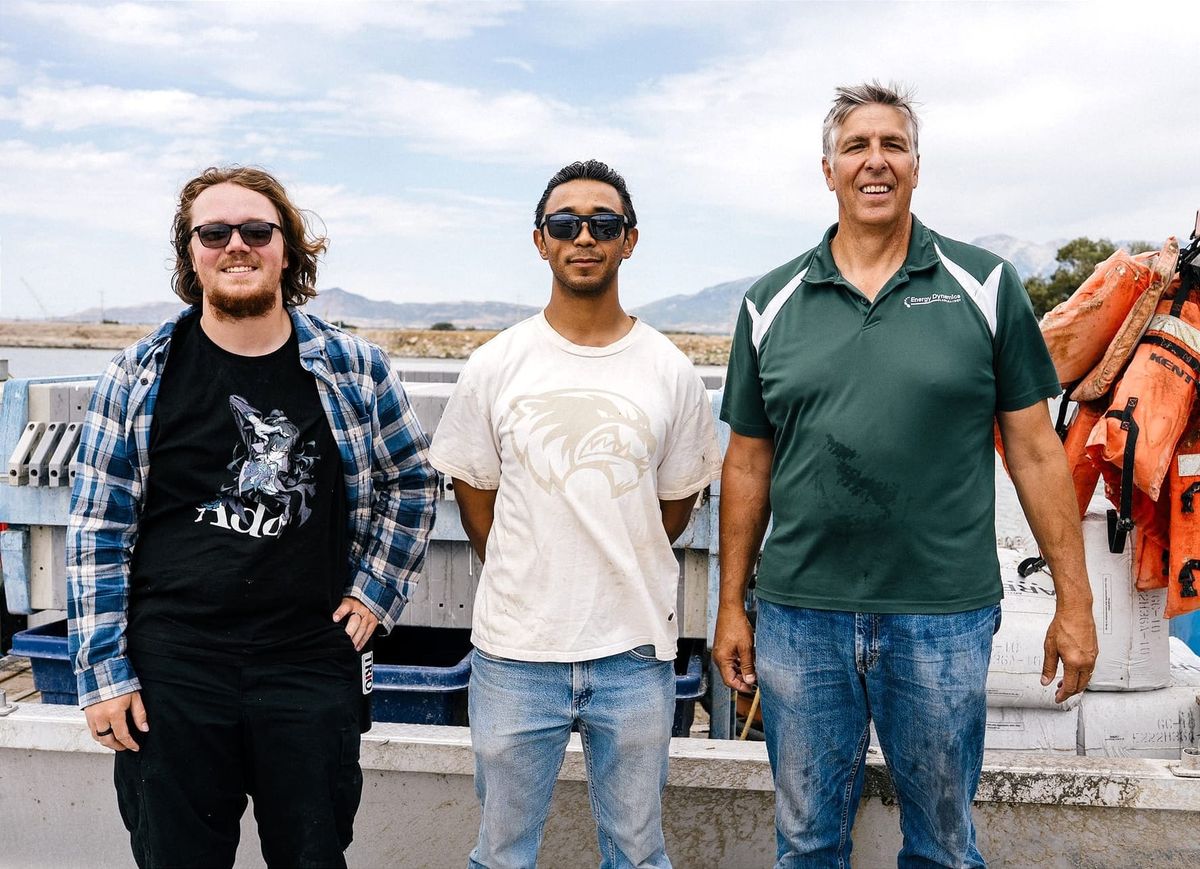
UVU student Brian Weaver, Pedro Rodriguez, and Dr. Kevin Shurtleff, Associate Professor of Chemistry on UVU's Multipress Filtration Barge on Lindon Harbor. Photo: Juan Escudero, Kahlert Applied AI Story Lab, UVU
UVU student Brian Weaver, Pedro Rodriguez, and Dr. Kevin Shurtleff, Associate Professor of Chemistry on UVU's Multipress Filtration Barge on Lindon Harbor. Photo: Juan Escudero, Kahlert Applied AI Story Lab, UVU
Lindon, Utah — July and 30, 2026
Every summer, harmful algal blooms threaten recreation, wildlife, and public health on Utah Lake. But at Utah Valley University (UVU), Associate Professor of Chemistry Dr. Kevin Shurtleff and a dedicated team of student researchers are fighting back with patented filtration technology and synthetic biology.
Their goal isn't just to clean the water—it's to transform an ecological hazard into a sustainable resource.
The Microscopic Marvel: Understanding Cyanobacteria
Utah Lake is home to a vast ecosystem of microorganisms, including cyanobacteria, commonly known as blue-green algae. Despite their popular label, these organisms are actually a unique form of bacteria capable of photosynthesis, producing their own food using sunlight.
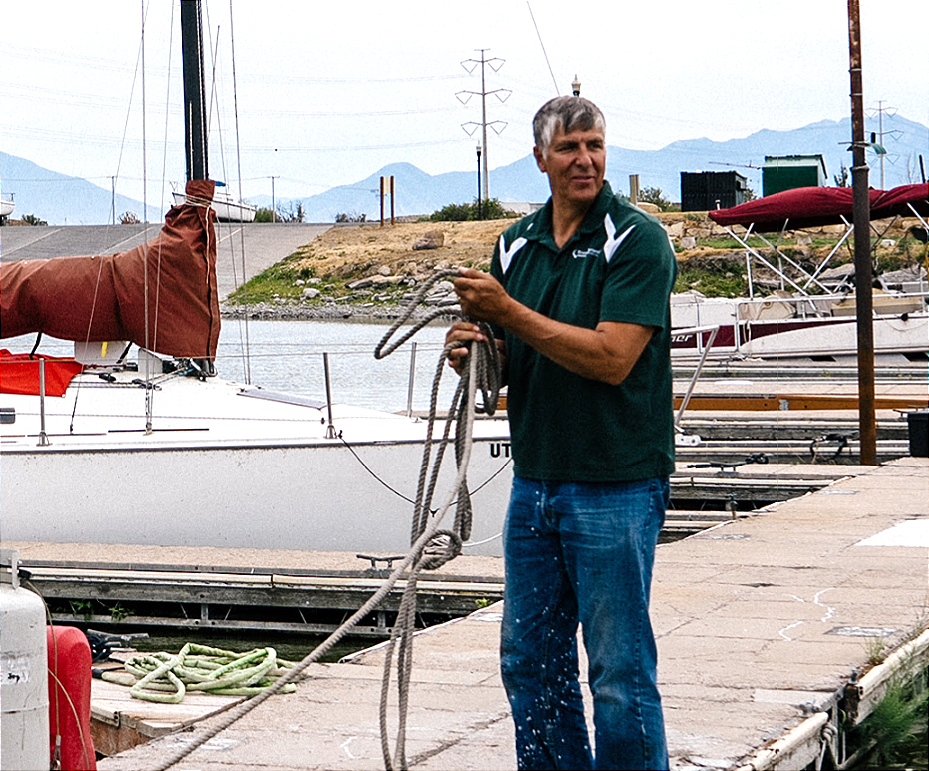
Dr. Kevin Shurtleff, Associate Professor of Chemistry, UVU, prepares for another day on Utah Lake, where he and UVU students operate the university's Multipress Filtration Barge designed to remove harmful algae from bloom-prone areas and improve water quality. Photo: Juan Escudero, Kahlert Applied AI Story Lab, UVU
Cyanobacteria are remarkably adaptable, found in environments ranging from desert soil and Antarctic ice to sloth fur. In normal quantities, they play a crucial role in the environment:
Oxygen Producers: They act like a massive field of oxygen-producing grass for the valley, contributing heavily to the natural oxygen cycle.
Global Residents: Cyanobacteria thrive in warm, still lakes across the globe; Utah Lake is far from unique in hosting them.
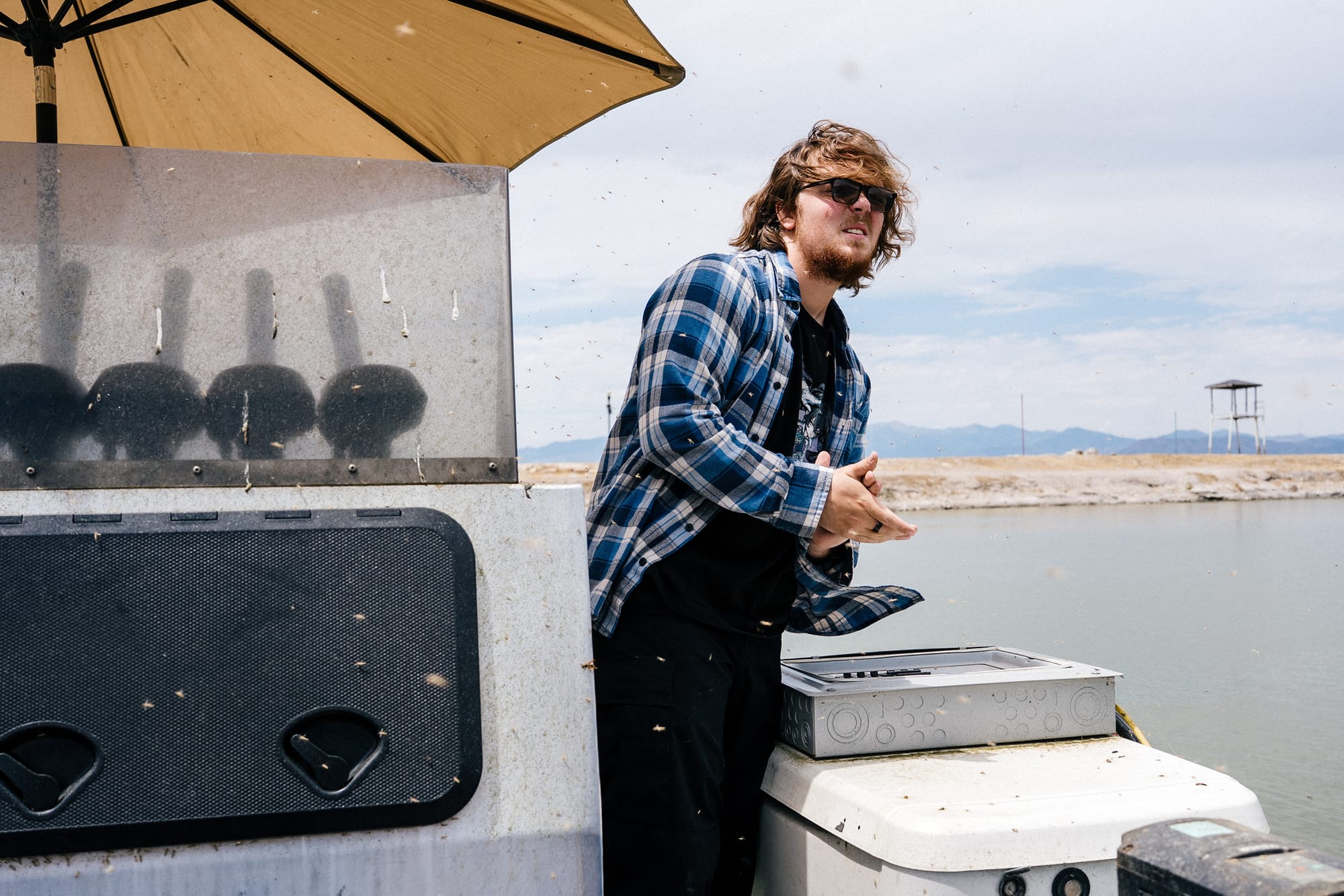
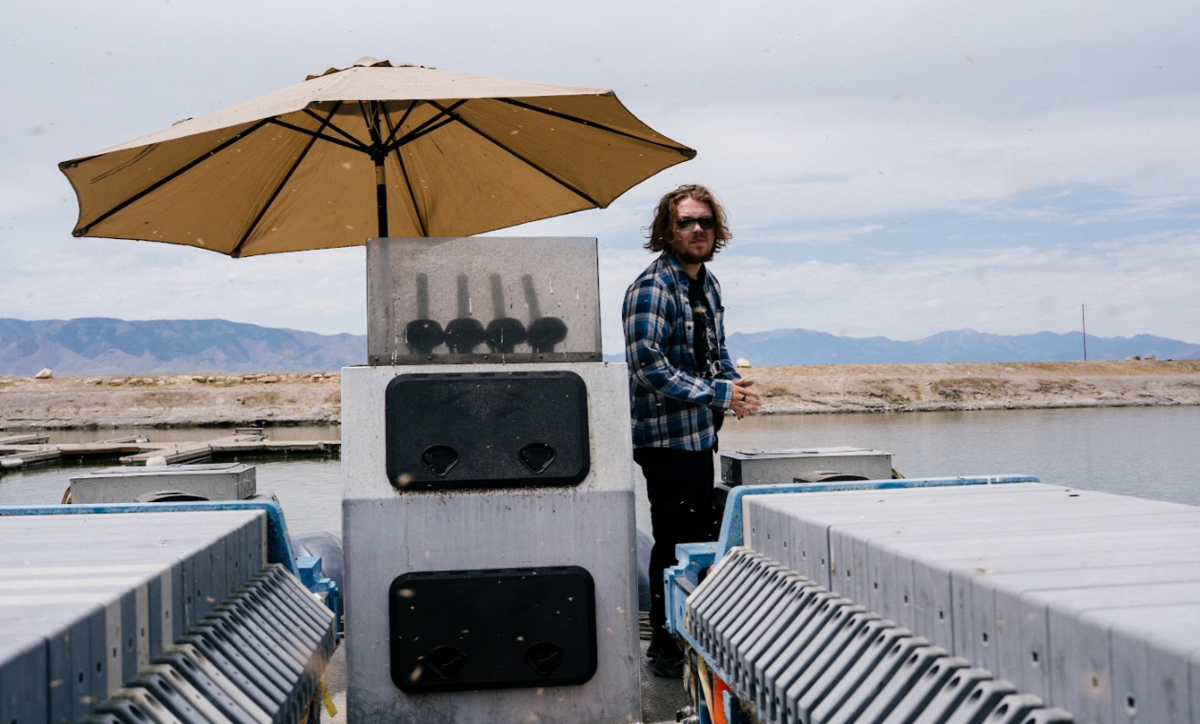
UVU student Brian Weaver on Utah Lake, part of the team working on the university's patented Multipress Filtration Barge. The student-led project removes harmful algae from bloom-prone areas, helping improve water quality while providing hands-on scientific research experience. Photo: Juan Escudero, Kahlert Applied AI Story Lab, UVU,
What Triggers a Bloom?
Blooms occur when cyanobacteria multiply rapidly at unchecked rates. While scientists cannot pinpoint a single isolated trigger, four environmental factors interact to create optimal bloom conditions:
Nutrients (Hypereutrophic Conditions): Runoff carrying lawn and farm fertilizers, combined with river inputs, loads Utah Lake with excess nitrogen and phosphorus, feeding rapid bacterial growth.
Warm Temperatures: With an average depth of just 10 feet, shallow waters warm quickly in the summer sun. Cyanobacteria thrive in temperatures above 75°F, outcompeting native algae.
Light Intensity: Sunlight is essential for growth, requiring a "Goldilocks zone"—neither too much high-intensity light nor total darkness.
Turbidity & Wind: Suspended sediment blocks sunlight, while strong winds churn the shallow lake, creating wave action that can temporarily suppress bloom expansion.
When these conditions align, dense, floating green mats accumulate near shorelines. In high concentrations, cyanobacteria produce cyanotoxins—most commonly microcystin (a liver toxin), neurotoxins, and protein-synthesis blockers. While these toxins are generally not absorbed through the skin, ingestion poses severe health risks to humans, pets, and wildlife.
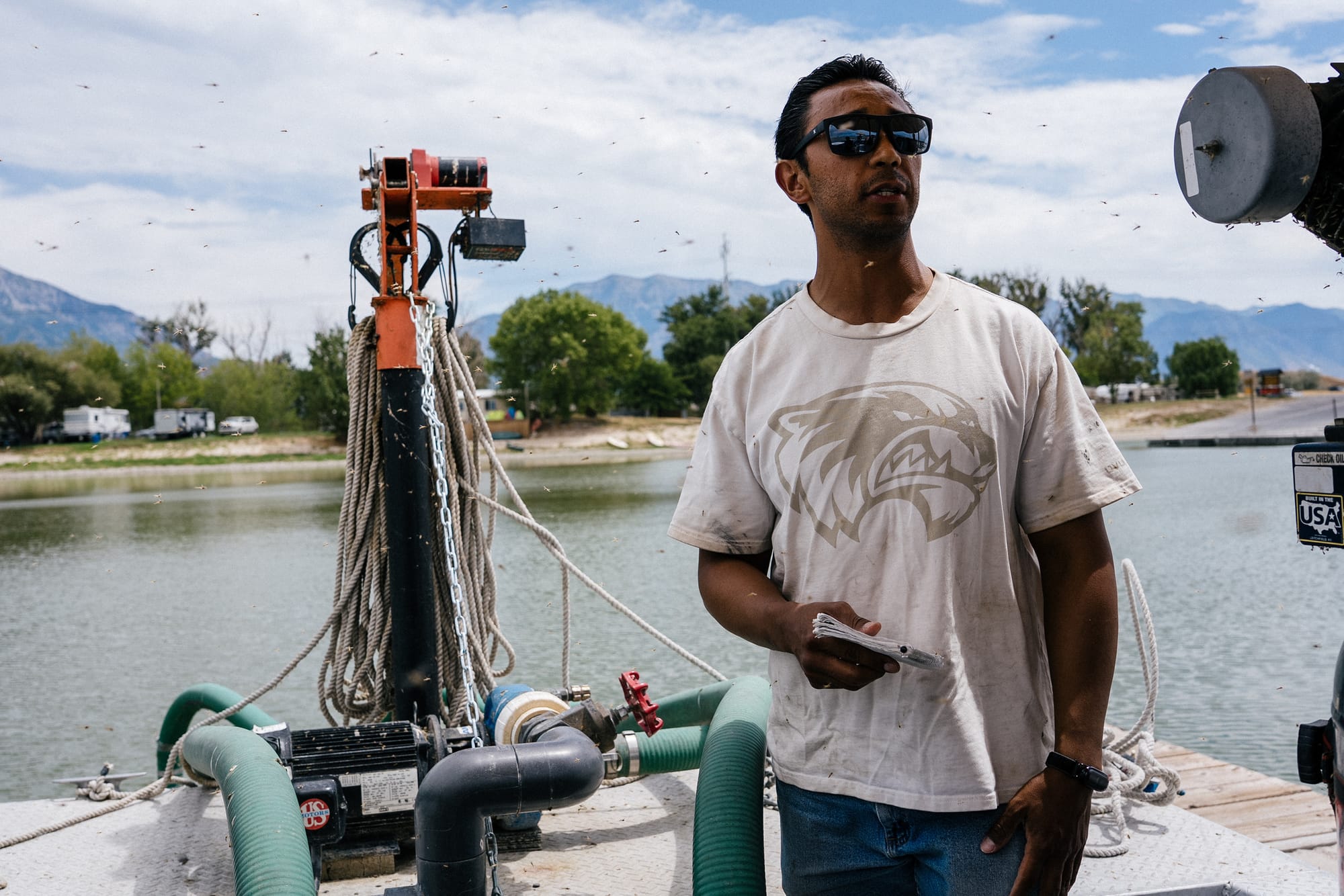
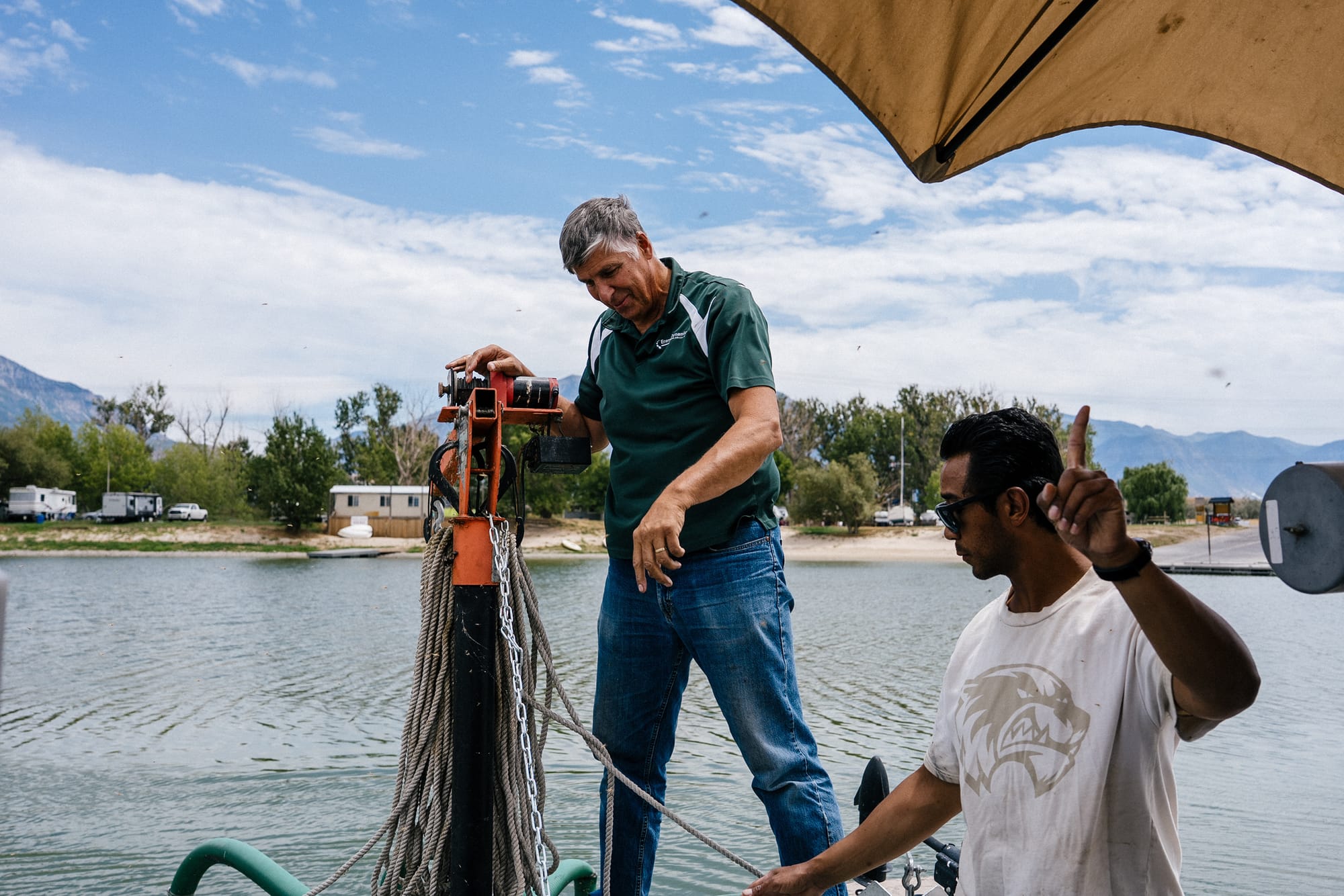
UVU student Pedro Rodriguez on Utah Lake operating the floating boom of the university's innovative Multipress Filtration Barge. Photo: Juan Escudero, Kahlert Applied AI Story Lab, UVU,
UVU's Innovation: The Multipress Filtration Barge
Rather than relying on chemical treatments that could disrupt the lake's delicate biological balance, Dr. Shurtleff took a mechanical approach following a severe outbreak nearly a decade ago.
"When we had the big algae bloom in 2016, I started researching different methods for separating algae from water," said Dr. Kevin Shurtleff. "It's difficult because the algae are microscopic. In 2017, I tried seven different filtration methods. This filter press was the one that worked best."
The resulting technology is a custom 30+ foot algae-filtration barge equipped with a specialized system called the Multipress.
Instead of roaming open waters, the barge targets high-density zones where wind packs the algae against the shoreline:
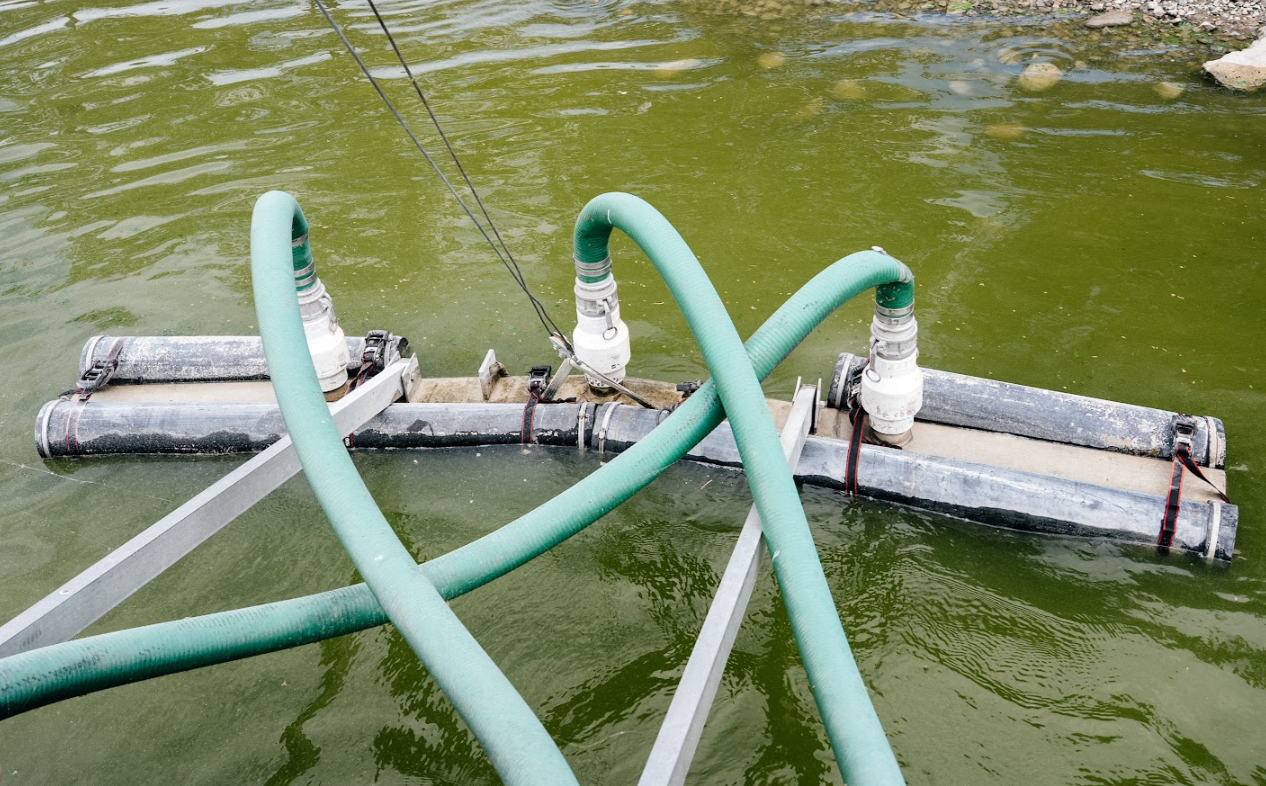
UVU’s customized floating boom skims surface algae and feeds it directly into the multipress filtration system of UVU's Multipress Filtration Barge, Lindon Harbor. Photo: Juan Escudero, Kahlert Applied AI Story Lab, UVU
"We only collect what's floating on the surface. They tend to get trapped here because the wind blows in this direction. It collects along that shore, so that's where we harvest... We suck it in through that floating boom," explained Dr. Shurtleff.
Daily Operations on the Water
Operating the barge is a rigorous summer routine led directly by UVU students gaining real-world field experience. Running five hours a day, five days a week, a two-student crew manages navigation and equipment operation. Students from diverse scientific fields—including biotechnology, physics, and chemistry—run the daily operations from May through August.
From Nuisance to Nutrient: Biofuel & Fertilizer
What sets UVU's approach apart is what happens after the algae is extracted. The filtration process yields dense blocks of material known as filter cakes—a mixture of cellulose and extracted biomass.
Instead of sending this waste to a landfill, the team closes the ecological loop:
Shurtleff explained, "We open the filter press, discharge the algae and cellulose, then take it to UVU's compost pile. The algae naturally contain nitrogen, phosphorus, and carbon, making it an excellent soil amendment."
Looking ahead, Dr. Shurtleff sees an even bigger opportunity: energy production. Since the algae is mixed with cellulose, it could eventually become a biomass fuel. "Actually, most petroleum came from algae, not dinosaurs. Massive algae blooms settled to the bottom over millions of years and became oil and natural gas. That's how nature stores carbon."
UVU Associate Professor of Chemistry, Dr. Kevin Shurtleff and UVU student Pedro Rodriguez operating the floating boom of UVU's Multipress Filtration Barge. Photo: Juan Escudero, Kahlert Applied AI Story Lab, UVU,
A Multi-Pronged Attack and The Path Forward
Alongside the barge project, UVU students are also using synthetic biology through the international iGEM program to engineer beneficial algae that reduce excess nutrients feeding harmful blooms—effectively starving harmful cyanobacteria before massive blooms can start.
This experiential learning initiative delivers real scientific impact, but expanding its scope requires community investment.
UVU student Brian Weaver on Utah Lake on the university's Multipress Filtration Barge. The student-led project removes harmful algae from bloom-prone areas, helping improve water quality while providing hands-on scientific research experience. Photo: Juan Escudero, Kahlert Applied AI Story Lab, UVU,
The work continues each summer, but it depends on ongoing financial support. Operating the filtration program costs approximately $40,000 annually, and each barge costs more than $260,000 to build. UVU is seeking donors and partners to help expand these efforts and protect more of Utah Lake.
Continued financial support allows UVU to deploy additional barges, refine its synthetic biology solutions, and protect broader stretches of Utah Lake's public beaches and marinas.
To learn more about UVU’s lake restoration technology, view student research updates, or contribute directly to the filtration program fund, visit the Utah Valley University College of Science project hub:
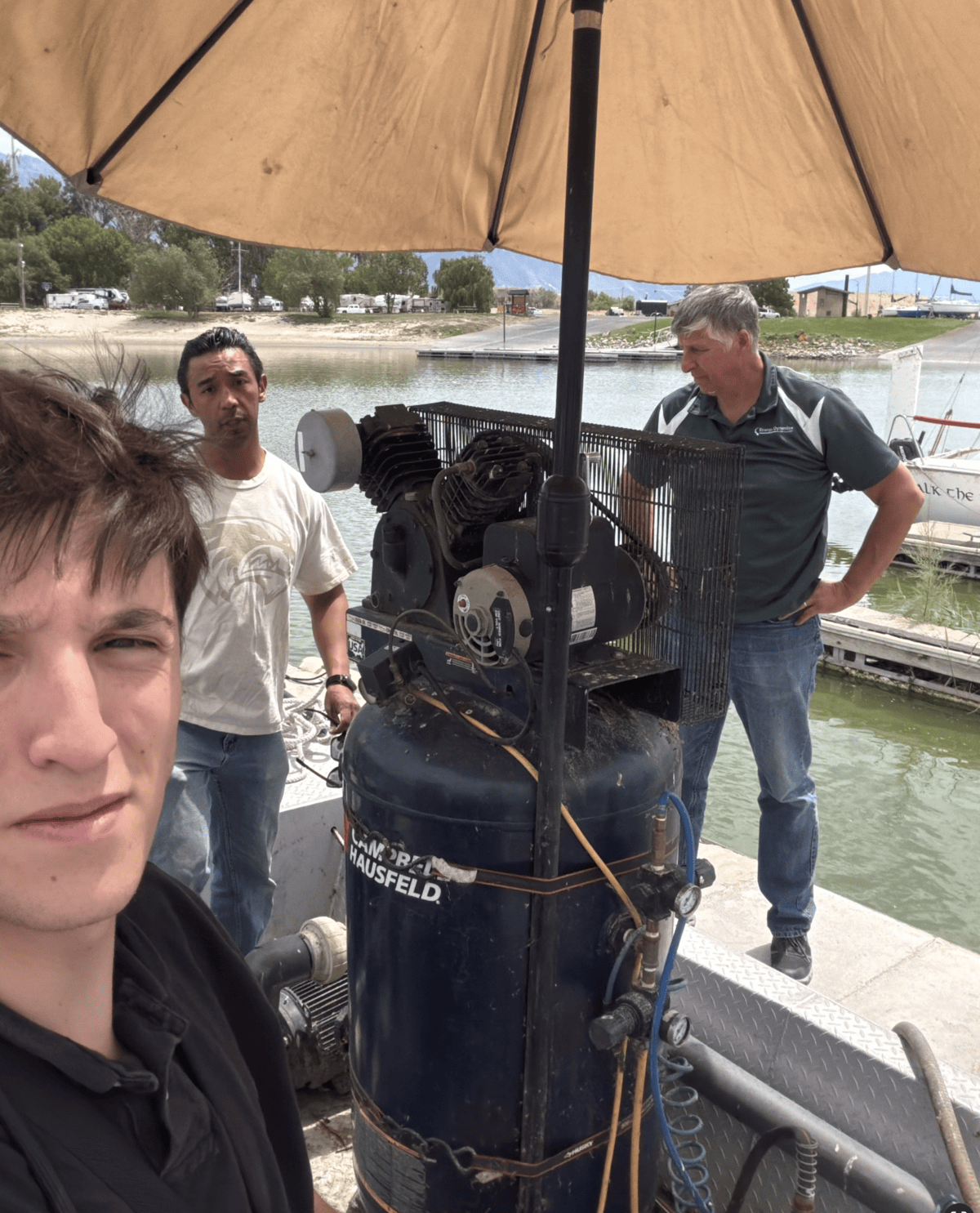
UVU student and author, Juan Escudero, taking a selfie with UVU student Pedro Rodriguez and Associate Professor of Chemistry, Dr. Kevin Shurtleff getting ready to embark on an algae-processing session aboard UVU's Multipress Filtration Barge, Lindon Harbor, July 29, 2026. Photo: Juan Escudero, Kahlert Applied AI Story Lab, UVU
Share this article
The link has been copied!
Your link has expired. Please request a new one.
Your link has expired. Please request a new one.
Your link has expired. Please request a new one.
Great! You've successfully signed up.
Great! You've successfully signed up.
Welcome back! You've successfully signed in.
Success! You now have access to additional content.