At UVU, Hackers Built AI Tools for Utah's Hardest Problems. The State Plans to Use Them.
Students and startups competed for $96,000 at UVU's two-day HITLAB World Cup Innovation Pitchday & Hackathon, producing working AI prototypes in digital identity, data governance, and maternal health that Utah's chief privacy officer says will directly inform state legislation.
A 24-hour hackathon and two-day pitch competition at UVU produced working prototypes in digital identity, data governance, and maternal health — and Utah's chief privacy officer stayed until 9:30 p.m. to watch.
Orem, Utah — June 19, 2026
The teams had 24 hours. By the time the judges gathered Wednesday afternoon in the new Smith Engineering Building at Utah Valley University, they had built working software — tools to manage government data rules, verify identity without exposing personal information, and reach new mothers struggling with postpartum depression.
The HITLAB x UVU World Cup Innovation Pitchday & Hackathon ran June 17–18, 2026, drawing more than 200 people to UVU's campus over two days. Teams competed for a share of $96,000 in prizes. Industry representatives from Dell, Salesforce, Google, Motorola, and Goldman Sachs were in the room. So was Utah's Chief Privacy Officer — and he didn't leave early.
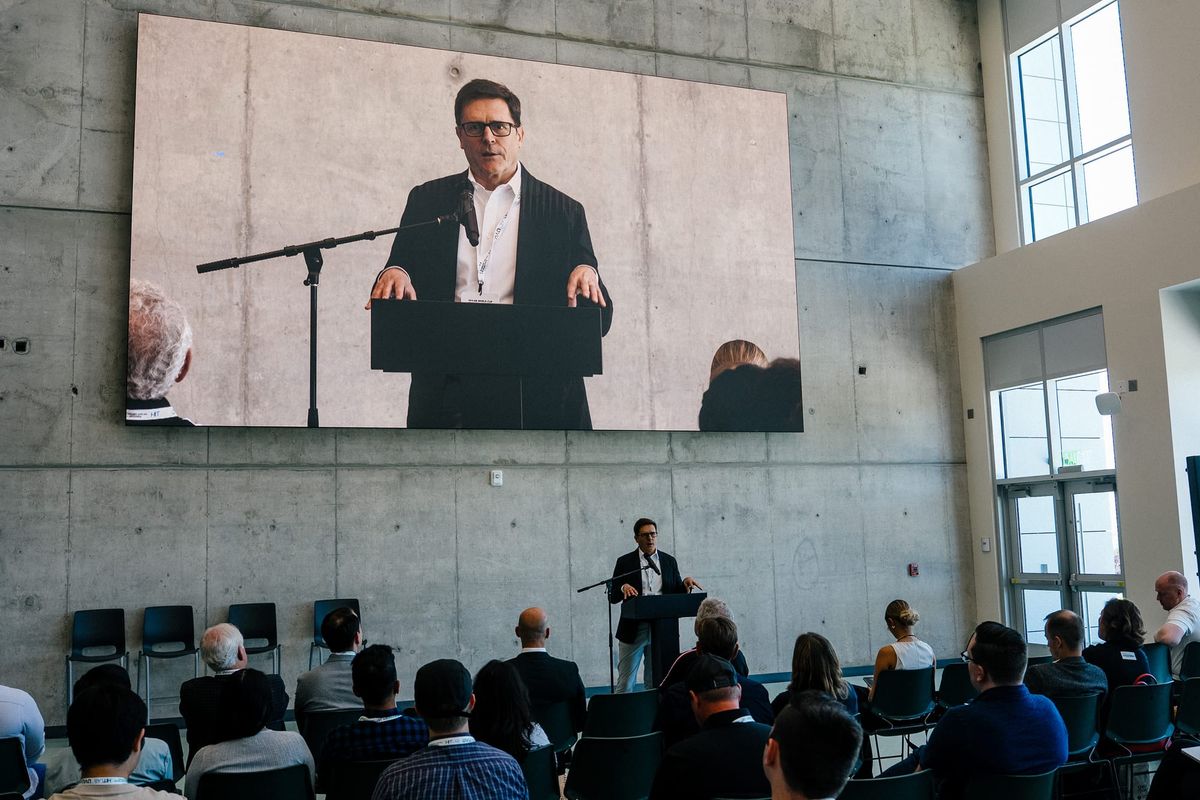
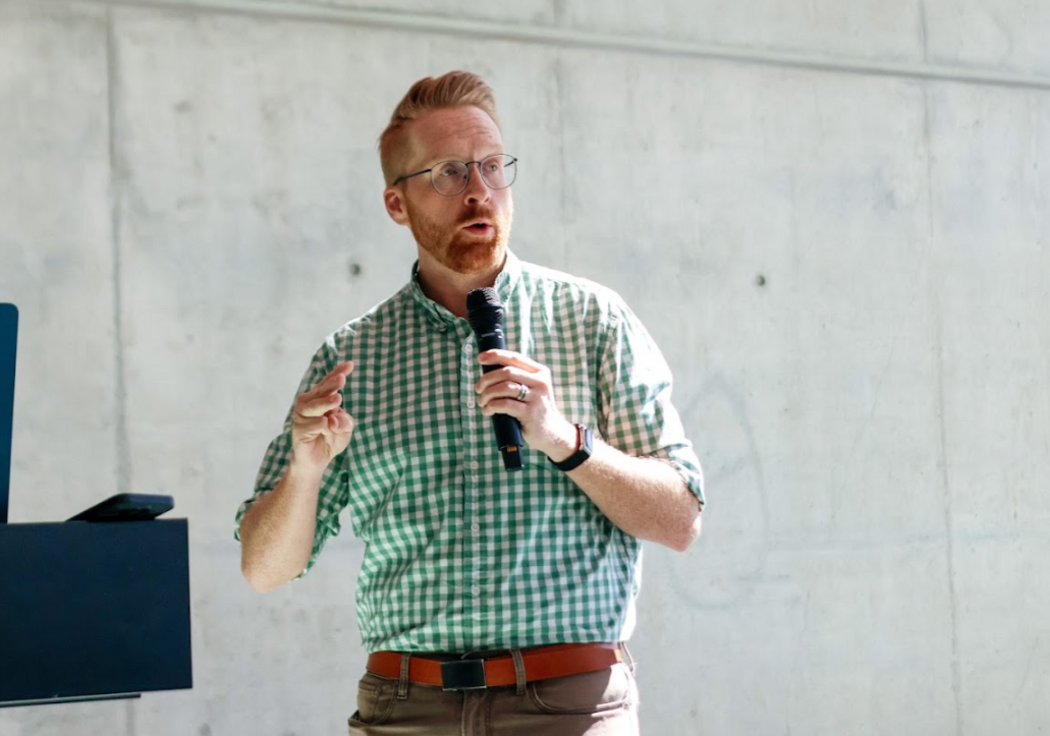
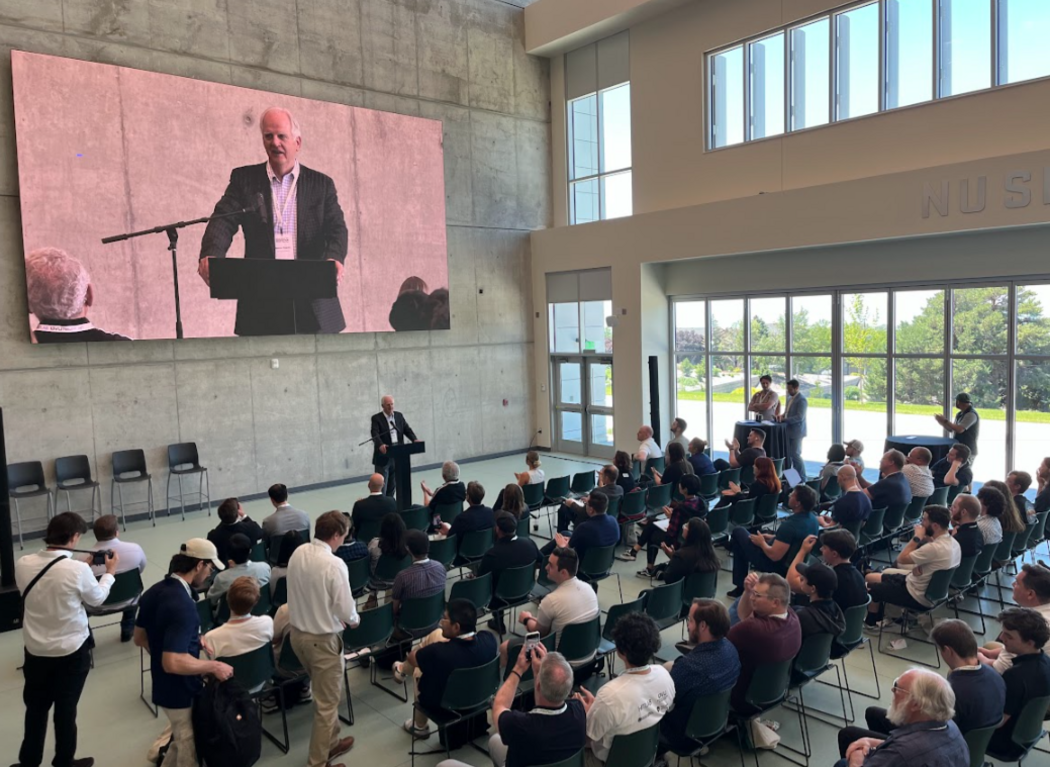
Tyler Small, Senior Director, Kahlert Applied AI Institute, welcoming the attendees of the HITLAB x UVU World Cup Innovation Pitchday & Hackathon, June 17, 2026, Smith Engineering Building, Utah Valley University Photo: Mason Butler
"I am very impressed with what I saw today," said Christopher Bramwell, Director of the Utah Office of Data Privacy, after the awards. He had stayed with one team until 9:30 p.m. the night before. The work, he said, would feed directly into the state's next round of policy research. "We're hoping the work here today will inform some of our next white papers with UVU," he said. Papers that he hinted would "come out before next legislative session."
The Winners
Judges named winners across seven categories:
Healthcare Innovation World Cup Pitch Day: Dave Esra, Co-Founder and CEO, for his maternal-health app, BobiHealth
Halda Bounty, first place (tie): Calahan Larson, Jens Shumway, Josh Gimenes, and Jonathan Wagstaff; and Nathan Longhurst, Yirang Lim, Eddy Kim, and McKay Snell
Utah Data Governance Bounty: Valarie Adams and Craig Cossairt
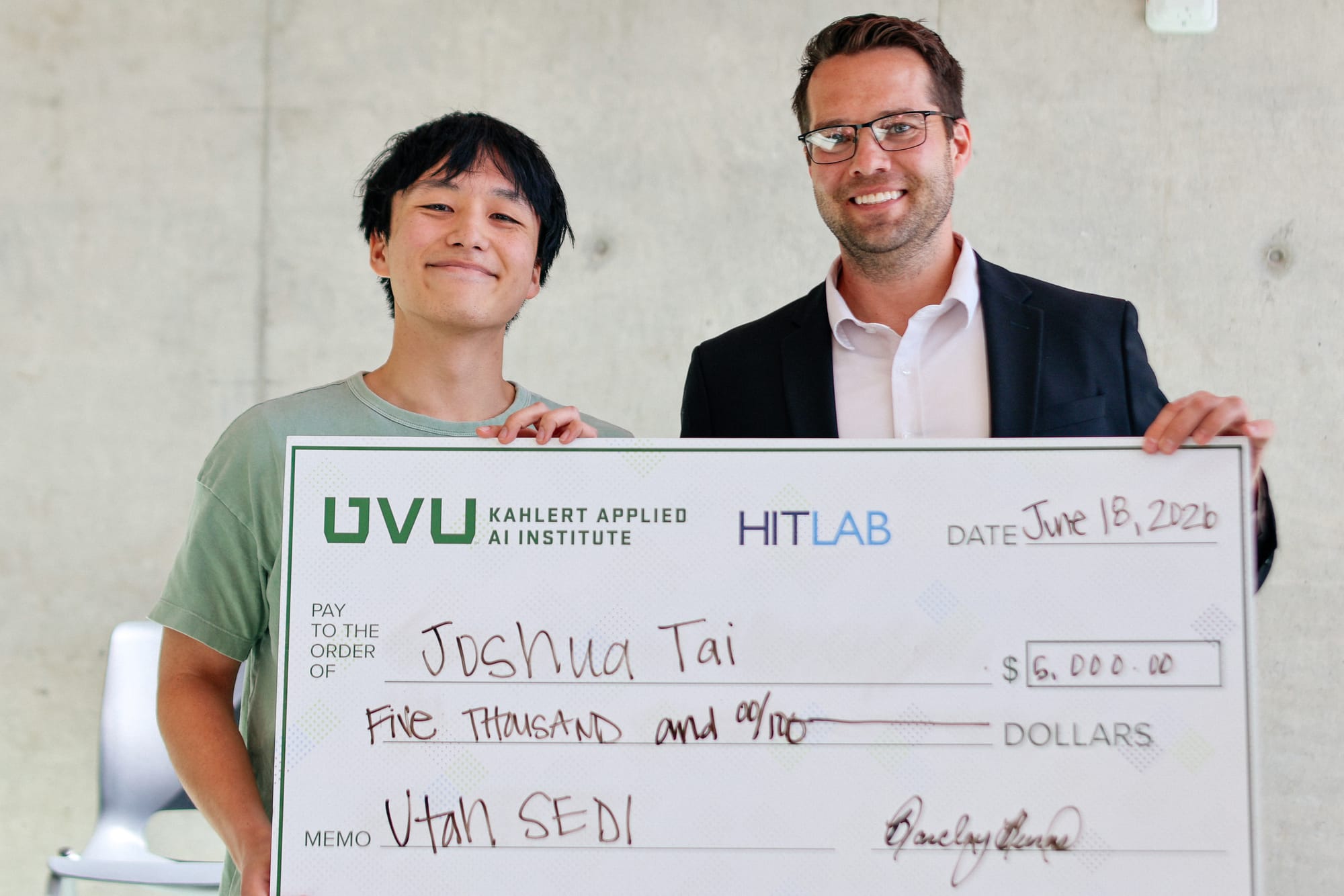
Utah SEDI Bounty: Joshua Tai
David AI Bounty: Anurup Kumar and Sanjay Bhatia
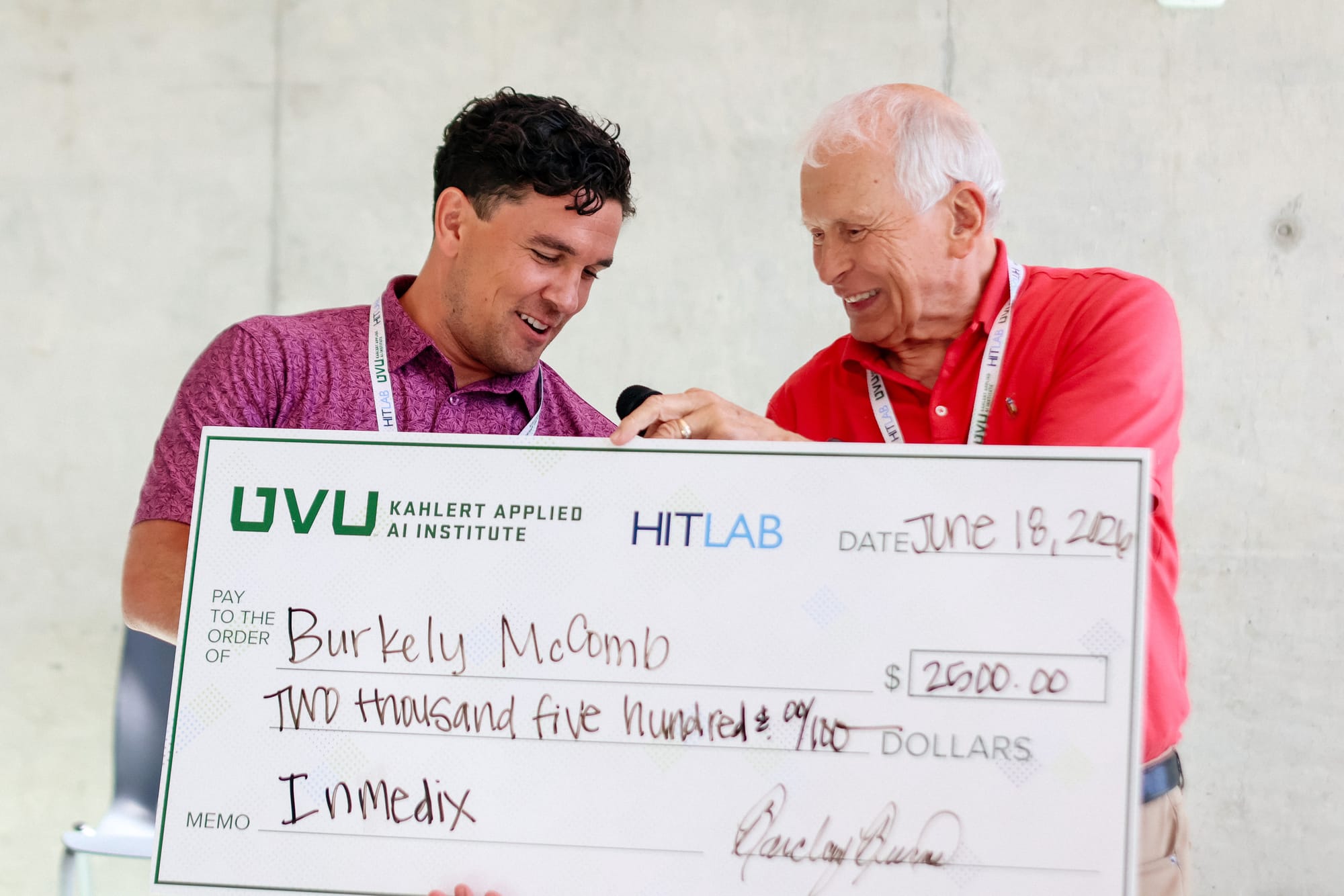
Inmedix Bounty: Burkely McComb
Salesforce Prize: David Ariza and Vlad Kashchuk
One prize came with something extra. Loren Krieger, a Salesforce account executive, told Ariza and Kashchuk their win included a personal employee referral. "This award is a commitment to give them an employee referral to a job of their choice," Krieger said. "I'm going to help mentor them through the process."
Burkely McComb receiving the Inmedix Bounty Photo: Joseph Jorgensen
Two Events, One Stage
The competition paired two programs. The hackathon gave teams 24 hours to build working software around state-defined problems. The Healthcare Innovation World Cup Pitch Day was open to startups, academic teams, and graduate students with working prototypes. It spanned three categories: Applied AI in Healthcare and Life Sciences; Digital Identity and Data Infrastructure; and Life Sciences and MedTech.
UVU's Kahlert Applied AI Institute hosted the event alongside HITLAB, a New York City–based digital health research organization founded in 1998. Partners included the Smith College of Engineering and Technology, the Gary R. Herbert Institute for Public Policy, and the Governor's Office of Economic Development.
Stan Kachnowski, chair and co-founder of HITLAB, said he has visited hundreds of campuses over a 34-year academic career. This one stood out. "This facility is elite, the staff and faculty are elite, and the students are elite," he said. He called the UVU partnership a natural fit, pointing to "this completely aligned mission to help humanity through technology."
The State Wrote the Problems
The cash prizes called "bounties" weren't random — each one was tied to a problem Utah's government faces now. Bramwell's office posted two of them.
The first asked teams to show how AI could help an agency organize its internal data rules. The second was harder: demonstrate how a person could safely hand a task to an AI agent while keeping their data private and under control.
That second bounty centered on SEDI — the State-Endorsed Digital Identity created by Senate Bill 275, which passed both chambers of the Utah Legislature unanimously and took effect May 6. Bramwell, who has shepherded the law through two years of legislative work, said the system lets people prove who they are without handing over everything about themselves.
"When you go to engage in services, you don't even have to release all your data anymore," Bramwell said. "You can just say 'I am me' and it proves it."
The design also shuts out impostors. Even if someone steals a person's data, he explained, the system can detect the fake, rotate to a new secure key, and render the stolen identity worthless. "You now have a form of identity that people cannot impersonate you with," he said.
He called Utah's approach "pro-human," and pointed out that no other state has both a comprehensive government data privacy law and a digital identity law. "We spent two years on it, and then they passed it unanimously with support from both sides of the aisle," he said.
Utah SEDI Bounty Winner, Joshua Tai, presented by Chris Bramwell, Chief Privacy Officer, State of Utah Photo: Joseph Jorgensen
The data governance bounty addressed a more immediate problem. Bramwell offered an example: two Utah counties handle jail records differently, one making them public, the other keeping them private. That inconsistency, he said, can expose sensitive information — like the fact that someone is a blind veteran — in ways that have already enabled crimes in other states. Shared, standard models could close gaps like that.
Bramwell said other states are watching. Utah has already hosted two multi-state summits on digital identity, with a third planned for November. "I'm at UVU every Friday," he said. "We work on white papers, research to inform legislation." The best ideas from the hackathon, he added, would go to the state's "highest elected officials as we present the recommendations."
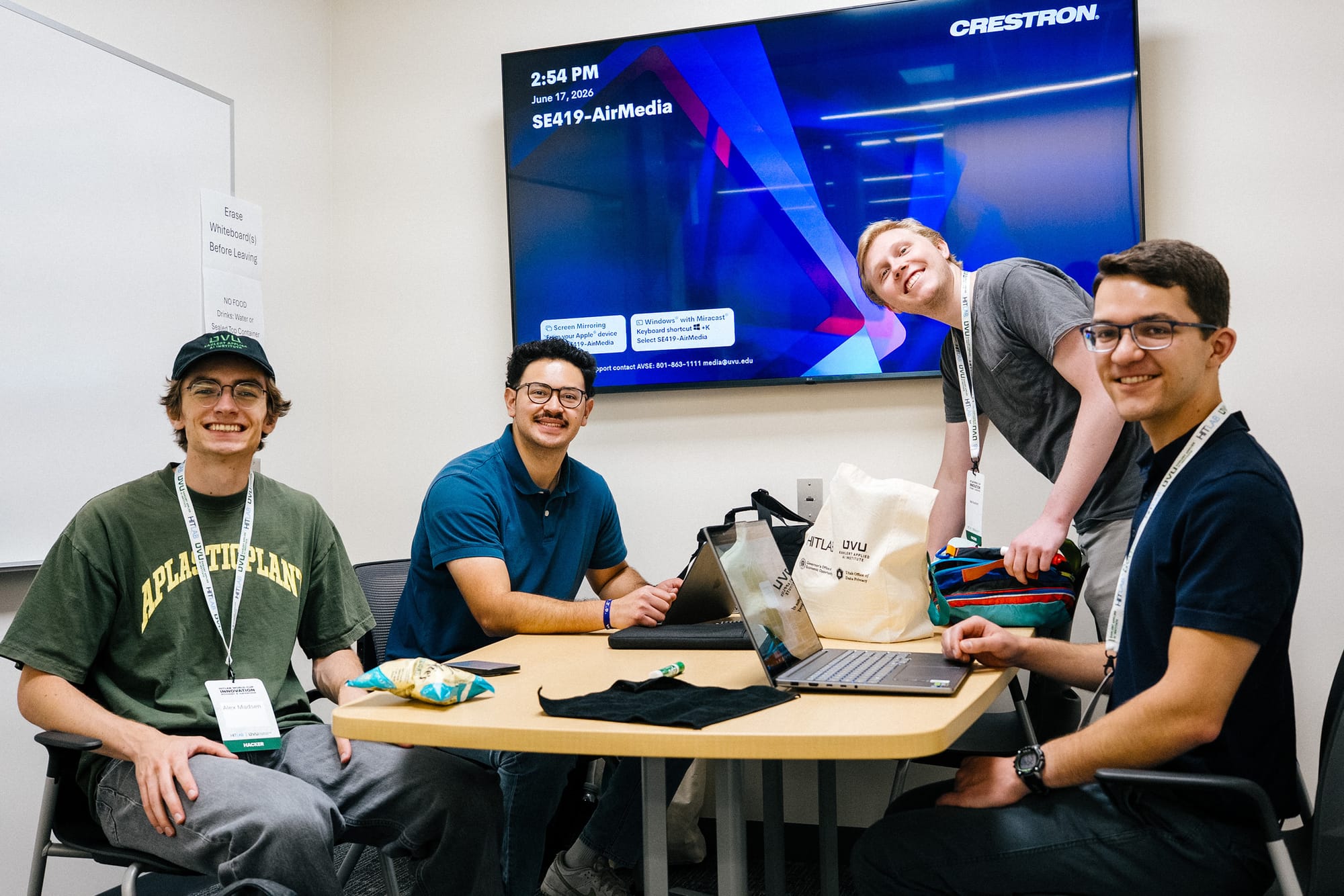
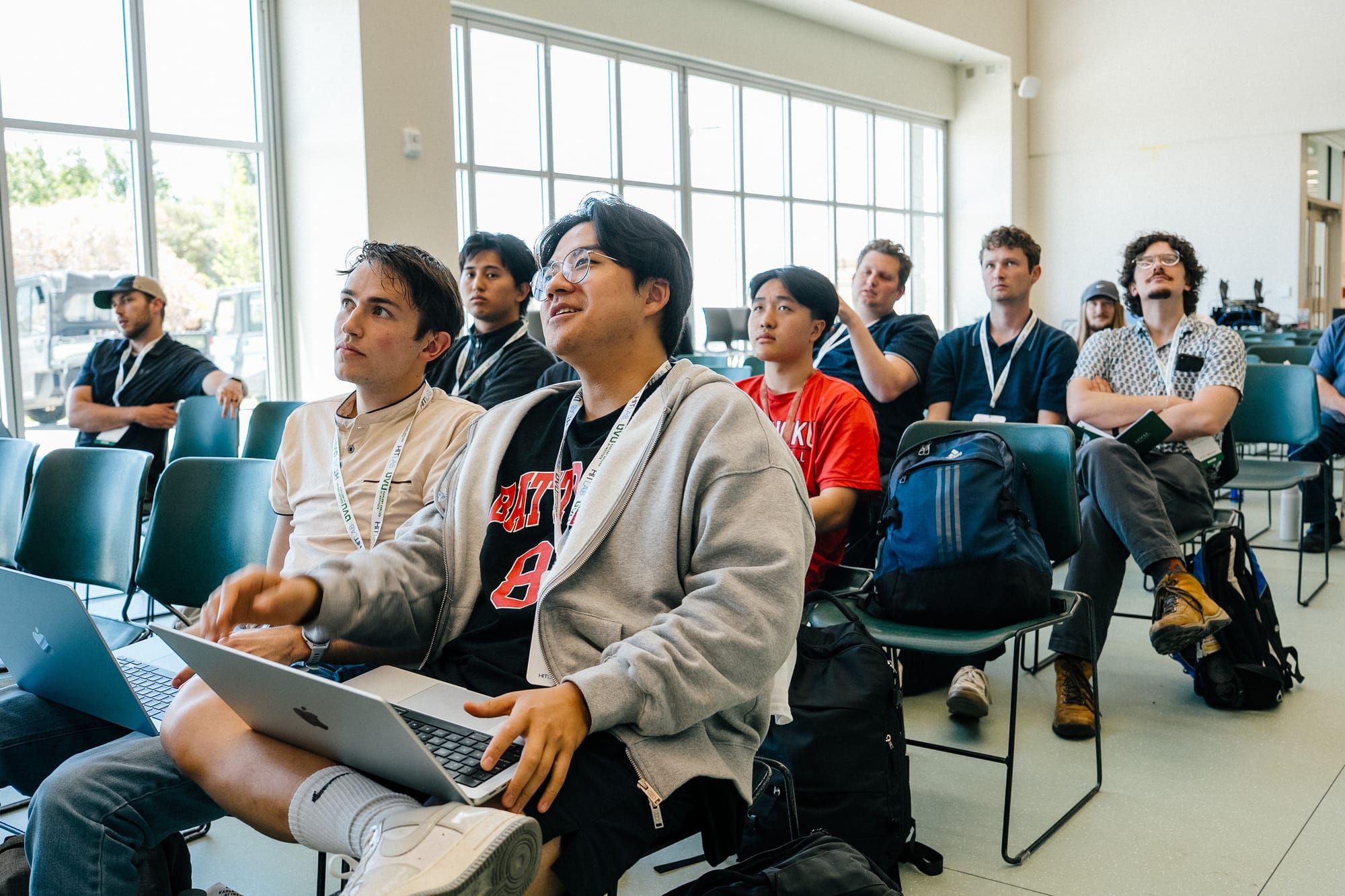
Hackathon participants, Alex Madsen (left), Stevie Ibarra, Tony Adair, and Matt Rushforth (back right) busy building during the 24-hour hackathon at the HITLAB x UVU World Cup Innovation Pitchday & Hackathon, June 17, 2026, Smith Engineering Building, Utah Valley University. Photo: Juan Escudero
The Case for Trust in Health Data
Healthcare ran through the event alongside digital identity. Jared Jeffrey, a UVU alumnus and co-founder and CEO of health-data company HealthKERI, told competitors that the question the industry needs to answer has fundamentally changed.
"The question is not anymore … how do we connect?" Jeffrey said. "The question now is, how do we create connections that drive trust."
He cited a sobering number: 57 million patient records were compromised in the United States last year. Jeffrey, who survived brain cancer, said his own medical records — and his infant son's heart-condition data — helped save both their lives. But he didn't stop at inspiration. He laid out exactly why medical records are so dangerous when stolen.
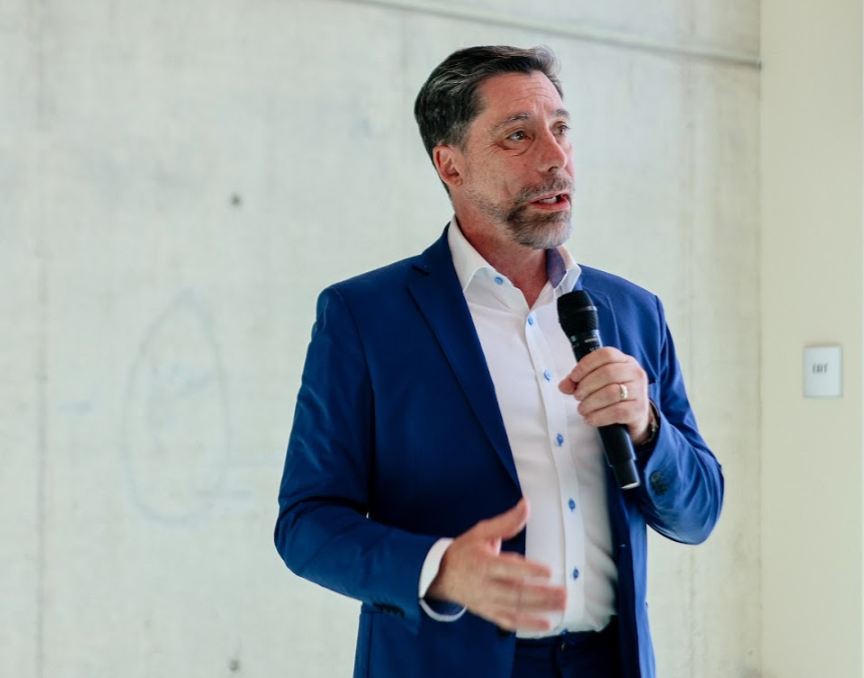
Jared Jeffrey, UVU alumnus and co-founder and CEO, HealthKERI Photo: Joseph Jorgensen
Unlike a credit card number, which can be rotated in a matter of days, a medical record is immutable. It follows a person for life. And a compromised record doesn't just contain health information; it typically includes a Social Security number and two to three payment methods as well. That makes it enormously valuable to bad actors who can use it to extort patients, submit fraudulent claims to Medicaid from fake clinics, or hold hospital systems hostage. "When hospital systems go down, they have to divert all of their ambulances to nearby hospitals, which will overwhelm those hospitals, which will cause them to close down as well," Jeffrey said. He noted that a report from NPR roughly two years ago argued cyber attacks on healthcare infrastructure should be treated as seriously as natural disasters.
To address the problem, Jeffrey introduced what he called the "five rights" of secure health data, modeled on the well-known five rights of medication administration that hospitals adopted after a landmark 1999 study estimated that medication errors caused between 50,000 and 100,000 preventable deaths per year in the United States. Just as nurses check the right patient, right medication, right dose, right time, and right route before administering any drug, Jeffrey argued that any system handling patient data should verify five things on every transaction: the right data, from the right source, accessed by the right role, for the right purpose, and delivered by the right route.
"If your system is not built to account for those five things, you need to build better systems," he challenged.
He pointed to an active effort called the Vital Initiative, an open pilot in healthcare aimed at getting payers to build a shared root of trust that can anchor genuinely secure data exchanges. And he singled out Utah specifically, noting that SEDI's self-sovereign identity model puts the state in a rare position. "You're sitting in the only state in the entire world that has the capacity to actually execute on the vision of you becoming your own root of trust," he told the room.
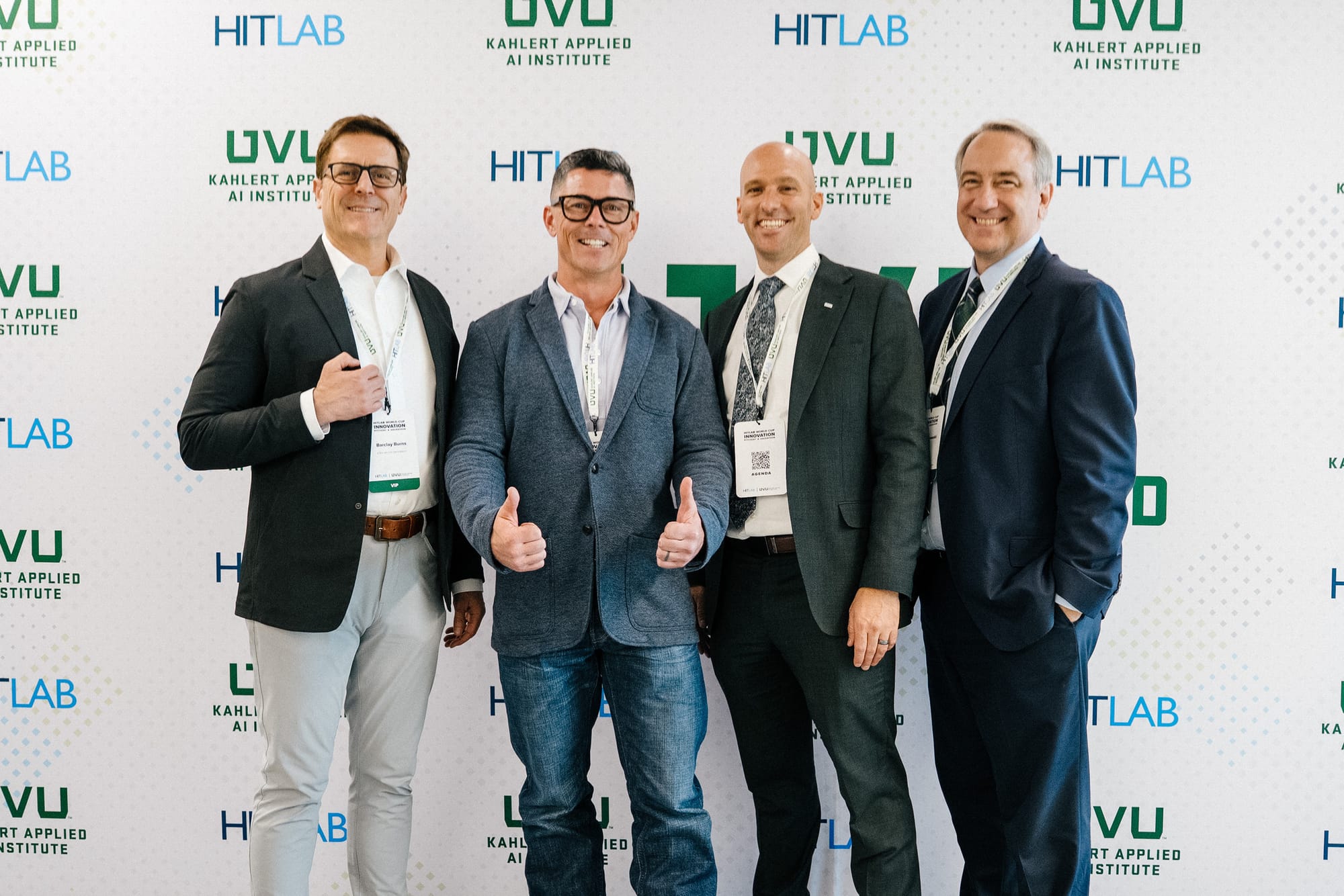
From left: Barclay Burns, Chief AI Officer and Assistant Dean, UVU Smith College of Engineering and Technology; Dave Esra, President, CEO, and Board Chairman, BobiHealthAI (and winner of Day One Healthcare Innovation World Cup Pitch); Tyler Small, Senior Director, Kahlert Applied AI Institute; and Stan Kachnowski, chair and co-founder, HITLAB — at the HITLAB x UVU World Cup Innovation Pitchday & Hackathon, June 18, 2026, Smith Engineering Building, Utah Valley University. Photo: Juan Escudero
The Pitch Day's top prize went to BobiHealthAI, a maternal-health app built to reach new mothers in underserved areas. Its San Antonio-based founder, Dave Esra, President, CEO, and Board Chairman, said it uses an AI chatbot available in English and Spanish to help normalize conversations about postpartum depression.
"I think that we can really move the needle on the mental health by normalizing talking about postpartum depression," Esra stated. He reported that the app reached 30,000 downloads within six weeks of its January launch.
Speakers: Lessons From the People in the Room
Several speakers pushed teams past the technical work and toward the humans it affects.
Three days into his new job as Dean of the Smith College of Engineering and Technology, Spencer Magleby addressed the audience with a story from his own career. Fresh out of BYU with a master's degree in computer-aided design in 1983, he was hired by General Dynamics to automate manufacturing processes for F-16 and F-22 production. He thought he'd done something great, until a company lawyer walked him into a room full of union workers who were about to lose their jobs because of the system he built.
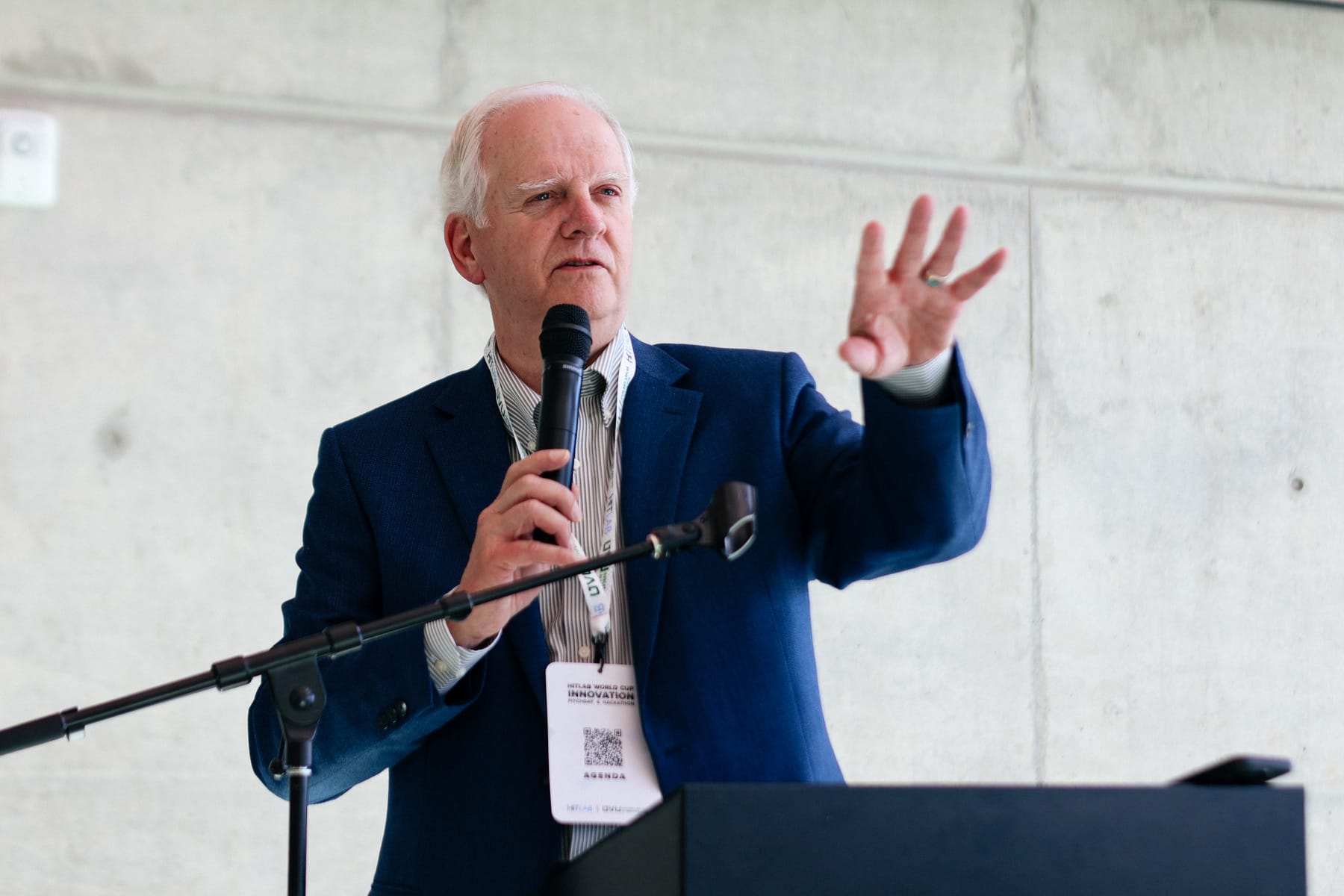
Spencer Magleby, Dean of the Smith College of Engineering and Technology, Utah Valley University Photo: Joseph Jorgensen
"I suddenly realized, this isn't just me thinking about stuff," Magleby said. "It's these people in this room, and they just wanted to know, what does this mean?"
He told the audience that he has since had two titanium knees, titanium hardware in his back for spondylolisthesis, acrylic lens implants for cataracts and a displaced retina, and a titanium implant to anchor a tooth he neglected in grad school. His point: the technology he helped create has also kept him walking and seeing.
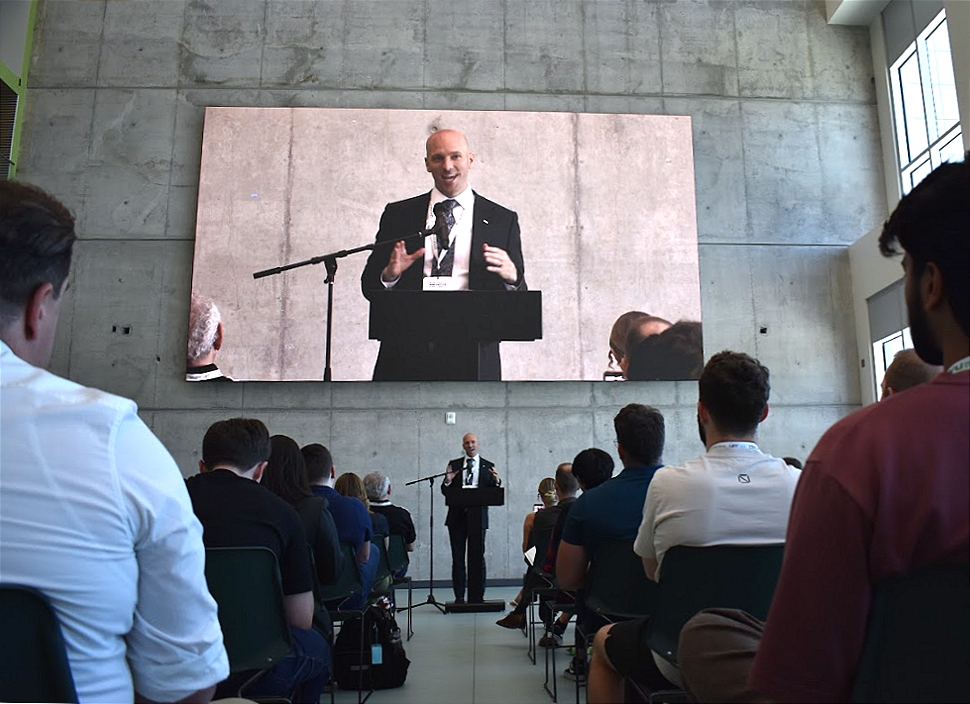
Spencer Magleby, Dean of the Smith College of Engineering and Technology, Utah Valley University, addressing the HITLAB x UVU World Cup Innovation Pitchday & Hackathon audience, Smith Engineering Building, Utah Valley University Photo: Mason Butler
"You have a chance to take technology, just like it was for me, these advances, and make sure that it's not just cool, but that it locks in with people," Magleby said. "Make sure that you understand who are the people that are affected."
Robert "Bo" Wood, who runs the Regulatory Sandbox Program within the Governor's Office of Regulatory Relief, offered teams something practical: a way out of the legal gray zones that often stop good ideas cold.
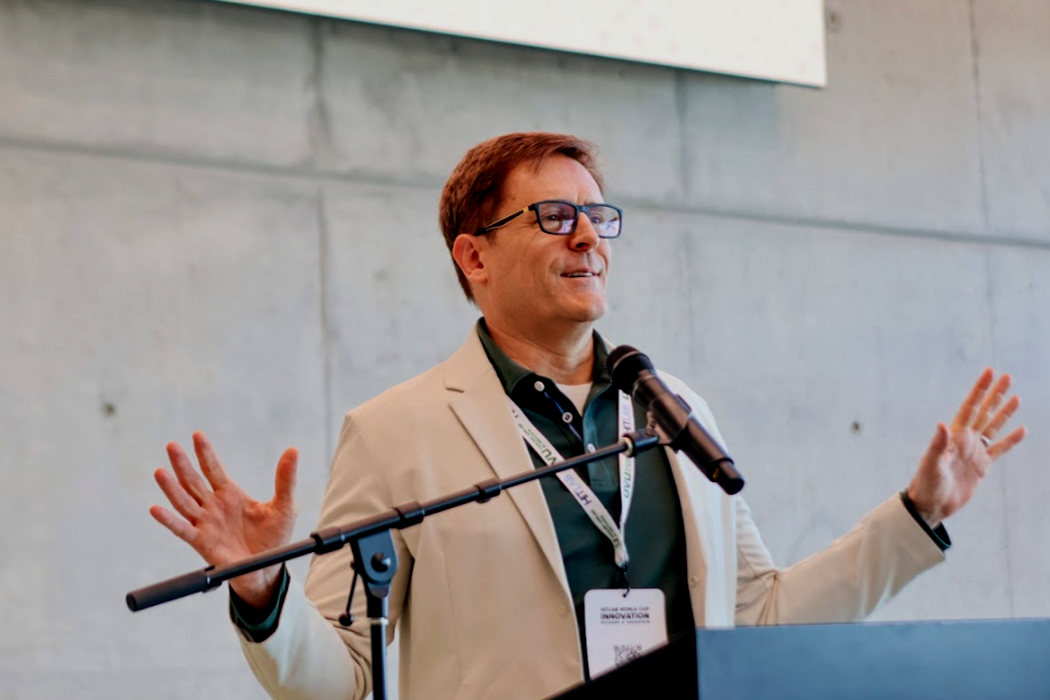
Robert "Bo" Wood, Director, Utah Office of Regulatory Relief, State of Utah Photo: Joseph Jorgensen
Wood opened with a Ronald Reagan quip — "the most dangerous nine words in the English language are 'I am from the government and I'm here to help'" — then turned it on its head. "I am from the government and I am here to help," he said.
His message was aimed at the moment many builders in the room will eventually face: a promising investor who says they're not sure the product is legal. Utah regulates 181 occupations through the Department of Commerce's Division of Occupational Licensing, and apps or platforms that automate work in those fields can land in murky regulatory territory. Wood's office exists to navigate exactly that.
The Regulatory Sandbox grants qualifying companies a temporary waiver from a specific regulation, typically for 12 months, so they can test a new model under controlled conditions. At the end of the period, the state takes the data to the legislature. If the idea holds up, the law changes for everyone. If it doesn't, the sandbox closes and the experiment ends cleanly.
Wood cited a real example: a real estate startup that advertised deeply discounted home buying and selling ran into licensing requirements from the Division of Real Estate. It applied to the sandbox, received a waiver, and ran its pilot. The company ultimately didn't survive. Wood attributed that to rising interest rates cratering home sales, not the model itself, but the process worked as designed.
"You should remember that this thing exists," Wood told the room, "and that you can reach out to us." He described the entire Governor's Office of Economic Development as having a singular purpose: to grow Utah's economy and support the next generation of entrepreneurs and startups.
Participants of this week's HITLAB x UVU World Cup Innovation Pitchday & Hackathon, Smith Engineering Building, Utah Valley University. Photo: Juan Escudero
Tyler Jennings, Director of Entrepreneurship and Ecosystem Development at the Governor's Office of Economic Development, closed the ceremony by challenging the room on what they'd actually accomplished. He invoked Elon Musk's reported practice of asking one question above all others: "What did you accomplish this week?" Jennings said every person in the building could answer it.
"When you feel empowered, the way you look at the world changes," Jennings stated. He told teams that the reason GOED supports events like this is because innovation backed by the right incentives can solve problems that seem too hard to touch. "All of you within right incentives are the innovators who can solve today's problems."
Tyler Jennings, Director of Entrepreneurship and Ecosystem Development at the Governor's Office of Economic Development, addressing the audience at the HITLAB x UVU World Cup Innovation Pitchday & Hackathon, June 18, 2026, Smith Engineering Building, Utah Valley University. Photo: Joseph Jorgensen
He closed with Teddy Roosevelt's "Man in the Arena." Jennings read the full passage aloud, under a display of it on the Smith Engineering building's massive high-resolution screen — the critic who counts for nothing, the doer whose face is marred by dust and sweat and blood, who errs and falls short again and again but keeps striving, and who at worst "fails while daring greatly." The person who never tries, Roosevelt wrote, will never know victory or defeat. Jennings told the room that the distinction mattered more than the scoreboard. "Whether you win or not, you are in the arena," he said. "And for that I congratulate you. Continue to live a life in the arena, because that is where true joy exists."
What Comes Next
Barclay Burns, Chief AI Officer and Assistant Dean of the Smith College of Engineering and Technology, said this week's event reflects what UVU is trying to build over the long term. "These collaborations create the ecosystem our students need, connecting academic innovation directly to industry networks, and the resources that turn classroom potential into real-world impact."
He added, "if you look around the room right now, listen to the conversations that are happening. See the connections. In a world of AI, the heart of the story is still the human experience, and that's what you're seeing here. You're seeing people making friendships, connections, business associations that will last for a long time, and I think that's what I'm most excited about. It's not an AI story as much as it is a human story.”
Barclay Burns, Chief AI Officer and Assistant Dean of the Smith College of Engineering and Technology, Utah Valley University, thanking the attendees and organizers of the HITLAB x UVU World Cup Innovation Pitchday & Hackathon, June 18, 2026, Smith Engineering Building, Utah Valley University. Photo: Joseph Jorgensen
Burns didn't just speak to the vision. He assessed the results. "The winners worked hard," he said. "They conceptualized the problem set, got their heads around digital identity, around complex medical problems, and they delivered." Every bounty sponsor walked away satisfied, he said: "Real challenges were presented, and real solutions were created in 24 hours. Everybody who had a bounty was incredibly pleased with the outcomes. They feel like whatever the value offered was well earned." The event's success, Burns added, was already drawing interest from beyond the original partners. "Other companies now saw the success of this — the energy and vibrancy of Utah. We'll keep them coming back."
Kachnowski looked further ahead. His goal, he said, is "to make sure that over the next ten years innovation has a home in Utah" — the way Silicon Valley and New York City have defined innovation for decades. "That's the vision."
Organizers said the competition will return, with events planned for August and November. Jennings left the crowd with a challenge: remember the phrase "there's always a better way." Say it to him at the next event, and he'll hand you a free Swig.
The HITLAB x UVU World Cup Innovation Pitchday & Hackathon was organized by UVU's Kahlert Applied AI Institute in partnership with HITLAB, the Smith College of Engineering and Technology, the Gary R. Herbert Institute for Public Policy, and the Governor's Office of Economic Development. A follow-on event is planned for this November, with details to be announced.
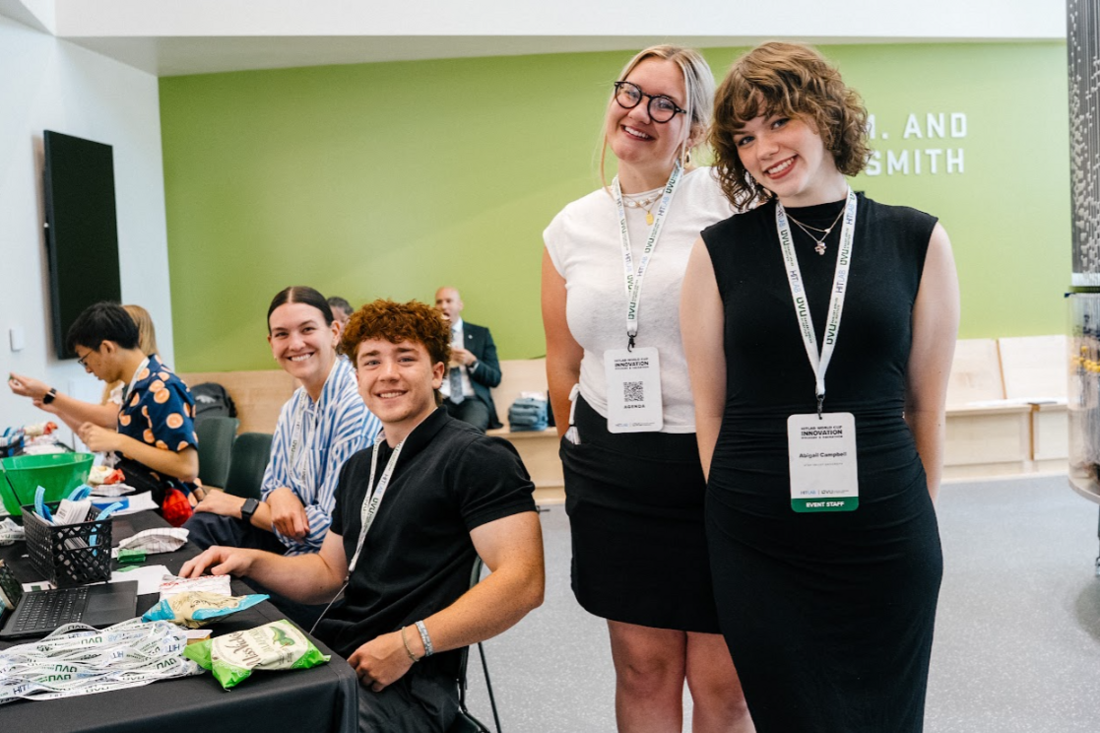
Team members of the Kahlert Applied AI Institute who, along with HITLAB, GOED, and the Gary Herbert Institute, organized the HITLAB x UVU World Cup Innovation Pitchday & Hackathon, June 18, 2026, Smith Engineering Building, Utah Valley University. Photo: Juan Escudero
Share this article
The link has been copied!
Your link has expired. Please request a new one.
Your link has expired. Please request a new one.
Your link has expired. Please request a new one.
Great! You've successfully signed up.
Great! You've successfully signed up.
Welcome back! You've successfully signed in.
Success! You now have access to additional content.