UVU Research Finds Deepfakes Shift Voter Opinion as Effectively as Real Media
UVU's Emerging Tech Policy Lab and Gary R. Herbert Institute for Public Policy released research showing AI-generated deepfakes influence voter opinion as effectively as real media, with no demographic group able to reliably detect synthetic content.
A video surfaces on your social media feed the day before an election. A candidate appears to confess something damning. It looks real. It sounds real. According to new research from Utah Valley University, there is roughly an 84% chance you would believe it, even if you consider yourself well-informed about artificial intelligence.
With Utah's competitive primary election set for June 23, UVU's Emerging Tech Policy Lab (EMTECH) and the Gary R. Herbert Institute for Public Policy released findings Thursday from a follow-up study on AI-generated deepfakes and their potential to influence elections. The conclusions were stark: deepfakes change voter opinion just as effectively as authentic media, no demographic group can reliably detect them, and — perhaps most unsettling — people who believe they can spot a deepfake are the most likely to be fooled.
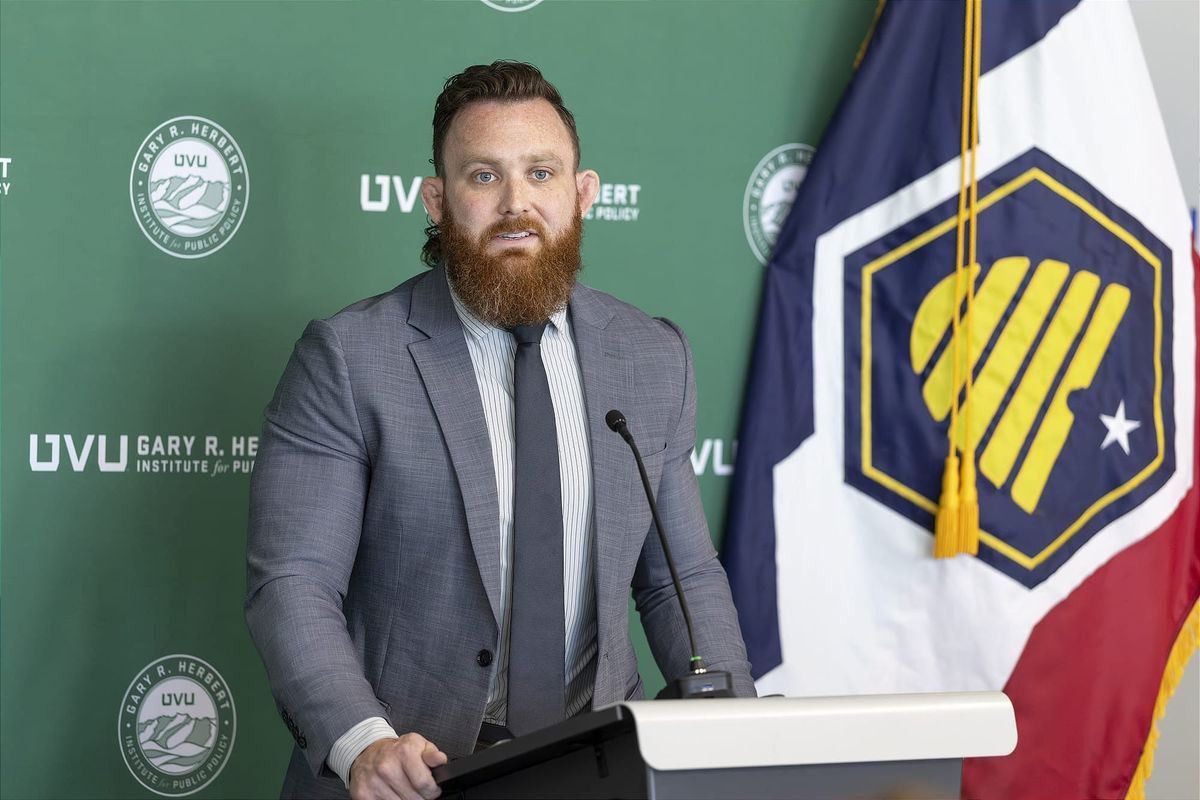
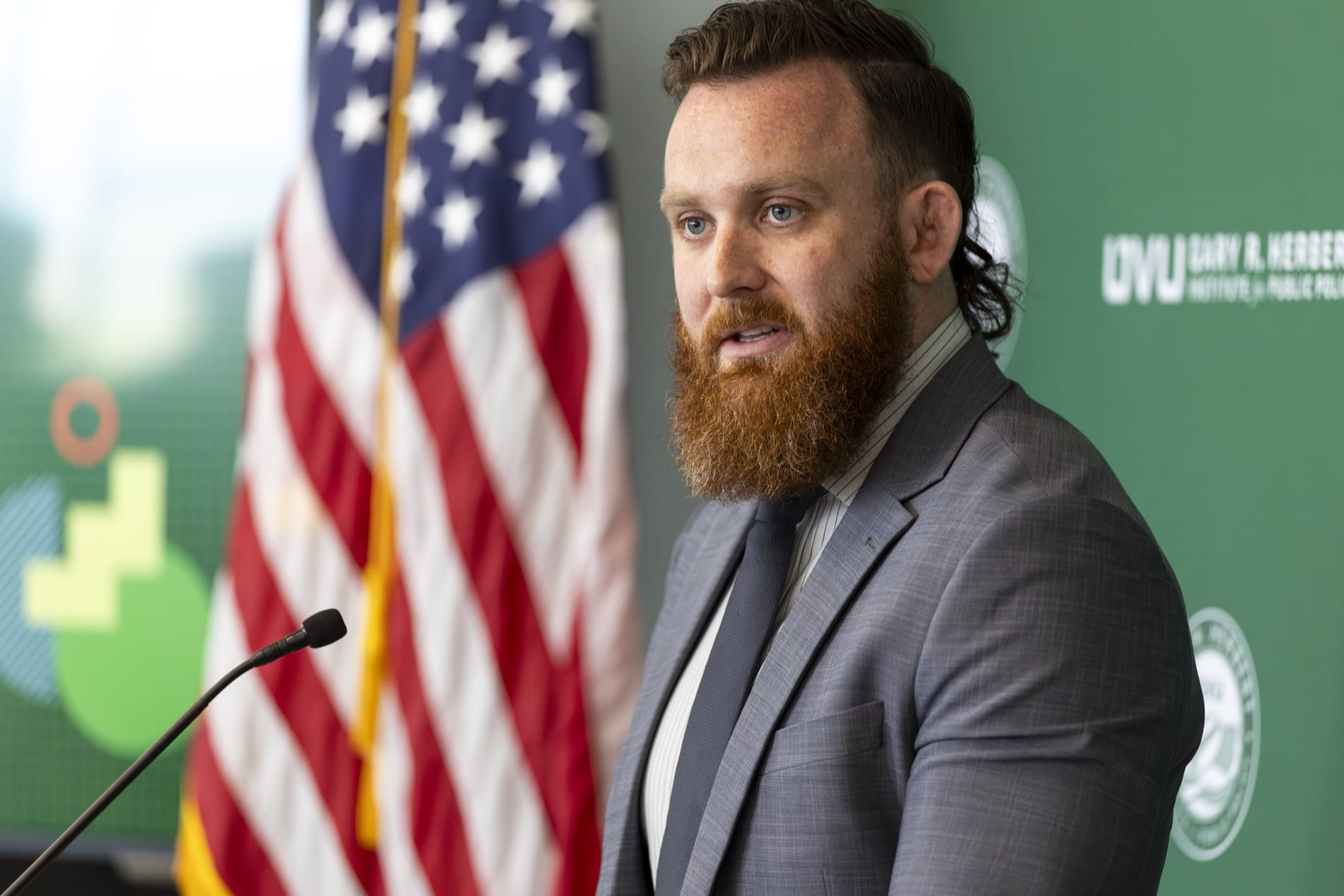
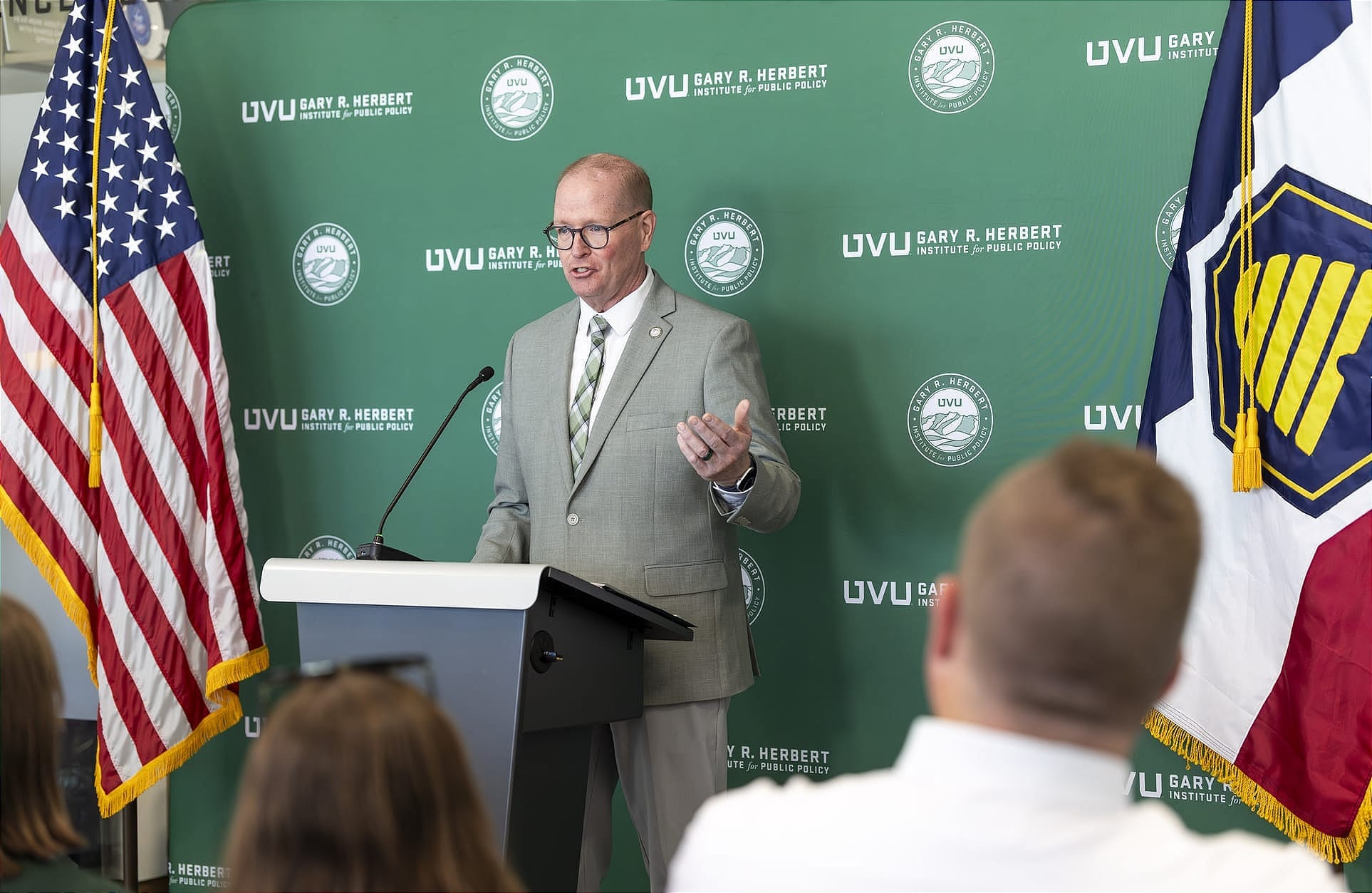
Brandon Amacher, Director of UVU's Emerging Tech Policy Lab (EMTECH), addresses the audience at the Gary R. Herbert Institute for Public Policy event on June 18, 2026, regarding policy implications of the lab's recent deepfake voter influence study. Photo: Jay Drowns, UVU Marketing and Communications
"Awareness is not the same as the ability to detect," said Brandon Amacher, Director of UVU's Emerging Tech Policy Laboratory, at a press conference held at UVU's Fugal Gateway. "Awareness does not give your eyes and ears the tools necessary to identify synthetic disinformation mid-scroll."
The Study
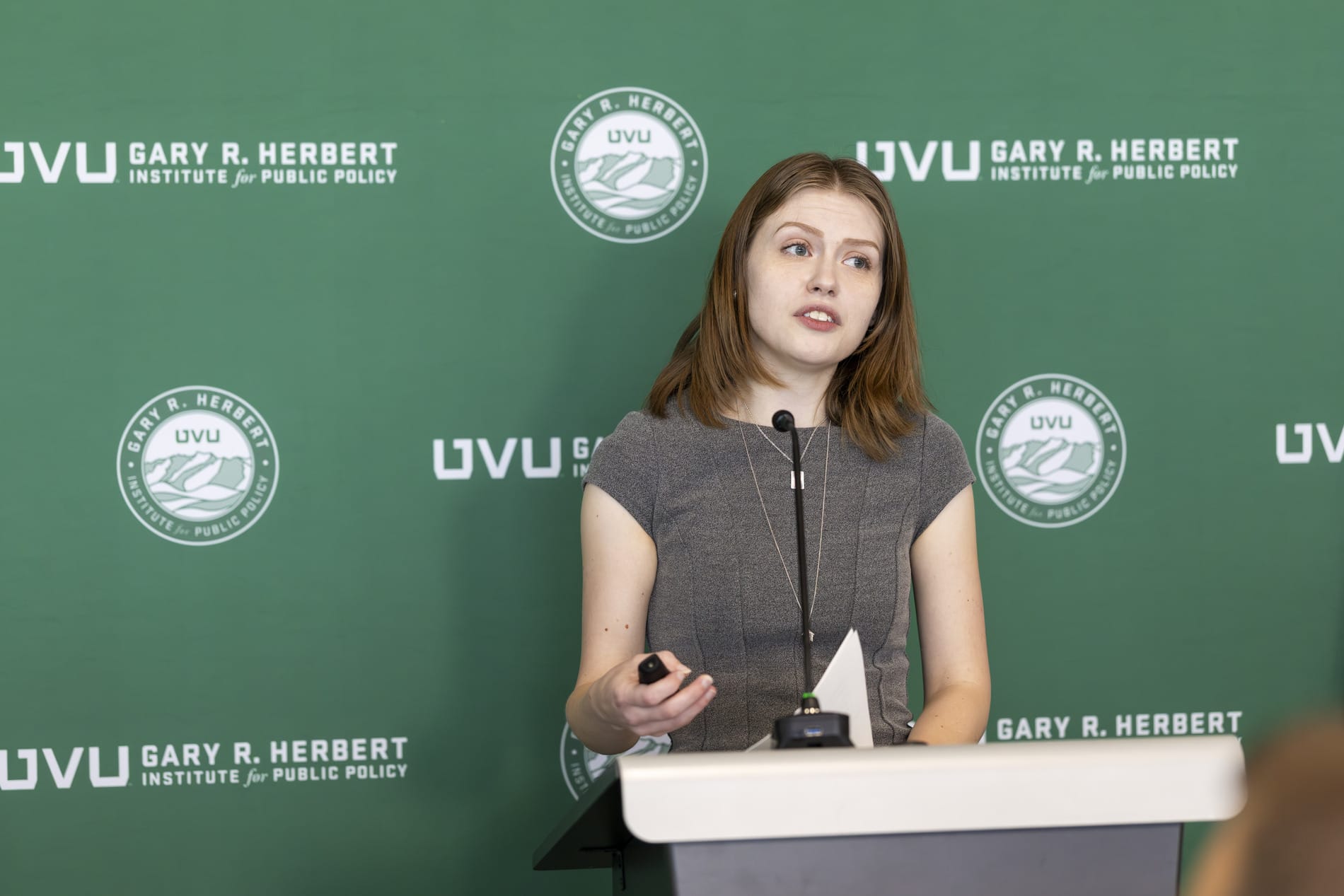
The research, led by Hope Fager, Strategic Research Team Lead for EMTECH, is a follow-up to an initial deepfake study EMTECH launched in October 2024. Where the original study examined whether deepfakes could be accurately detected — finding it was essentially a coin flip — this follow-up asked a more consequential question: can deepfakes actually change minds?
Hope Fager, Strategic Research Team Lead for UVU's Emerging Tech Policy Lab, presents findings from the lab's follow-up deepfake study at a press conference hosted by the Gary R. Herbert Institute for Public Policy at Utah Valley University on June 18, 2026. Photo: Jay Drowns, UVU Marketing and Communications
To find out, the team created their own deepfakes, using open-source and low-cost software on a vintage, student-owned laptop over a single weekend. They took video of two researchers reciting the same script, then used AI to replace one researcher's face and voice with the other's. The results were convincing enough to use in a formal study.
"If a small university lab can do that," Amacher said, "this is no longer a capability that is constrained to highly sophisticated malicious actors. It's available to anyone."
The team then tested those videos on 632 participants in an online survey using a representative sample of the United States. Participants were shown a fictional ballot initiative and asked how they would vote. They then watched one of four videos — real or deepfake, arguing either for or against the initiative — before being asked how they would vote again. Afterward, they were asked to identify whether what they had just watched was real or synthetic.
The Findings
The study produced three major findings, each with significant implications for election security.
Deepfakes shift opinion as effectively as real media. Researchers found no statistically significant difference in opinion changes between participants who watched authentic video versus AI-generated deepfakes. Deepfake videos also received equal or higher credibility scores than their real counterparts across three measures: trustworthiness, knowledgeability, and persuasiveness of the speaker.
No one can reliably detect a deepfake. Nearly 60% of participants who watched a deepfake video identified it as real. Only 16% of those shown a deepfake correctly identified it as fake, a rate Fager noted was significantly lower than their 2024 study, suggesting the technology is outpacing the public's ability to recognize it. Detection rates were nearly identical across all demographics tested. Democrats, Republicans, and independents each correctly identified deepfakes at rates of only 15 to 19%.
Familiarity with deepfakes provides no protective advantage. Participants who reported being unfamiliar with deepfakes detected them at roughly the same rate as those who described themselves as extremely familiar. More troubling: participants who expressed the most confidence in their ability to detect deepfakes were three times more likely to be wrong.
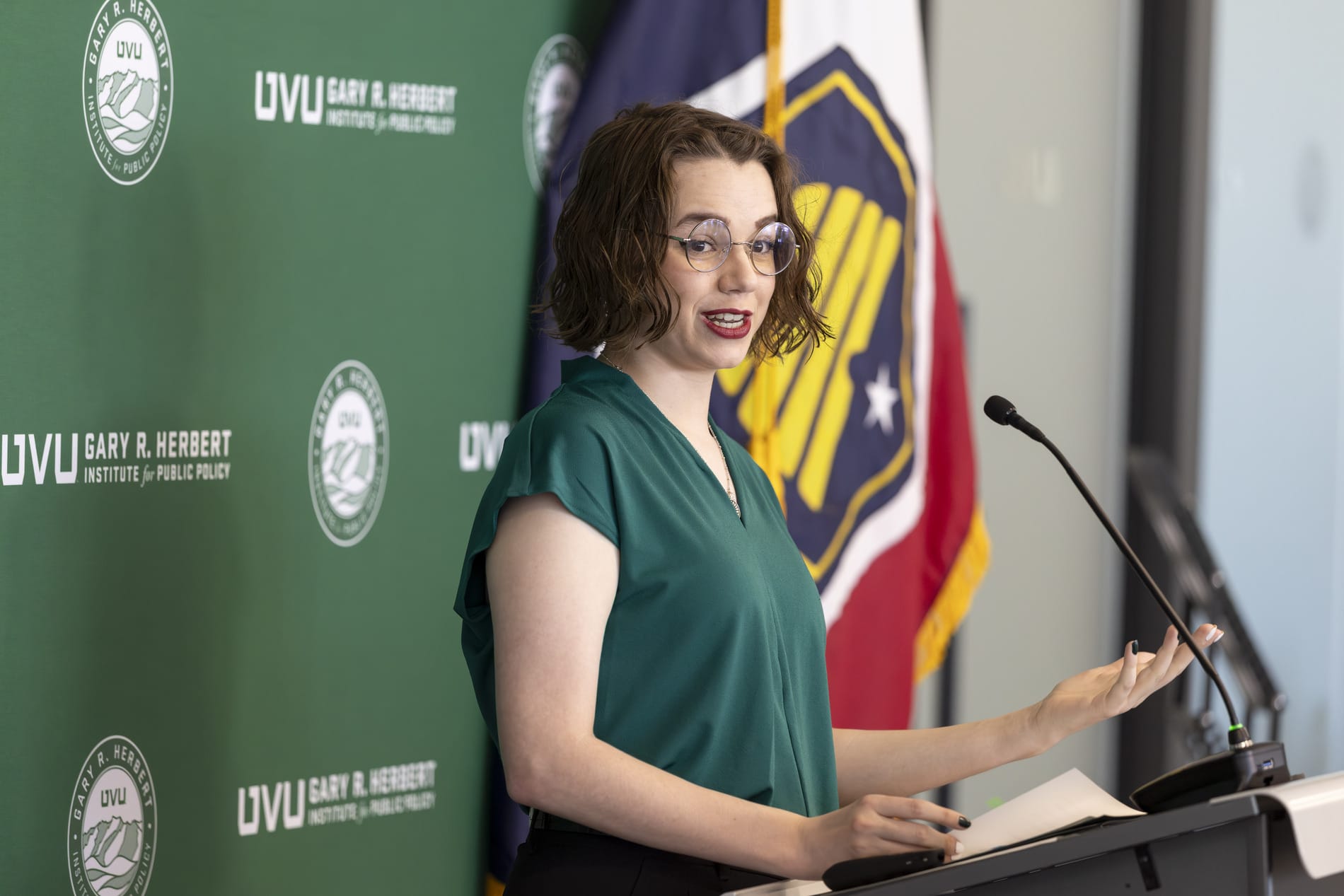
Perhaps no moment in the press conference illustrated the study's findings more viscerally than the introduction of Kaye Banner, a Senior Analyst at EMTECH who served as one of the human subjects in the deepfake videos used in the study. Banner's face and voice were among those replicated using AI software, making her, in a sense, both researcher and research subject. When she stepped to the podium to present the results, she acknowledged the moment with understated humor.
"You might recognize me from that video just a few minutes ago," Banner told the audience, "and if you thought I was AI-generated, there are no hard feelings. I won't totally hold it against you."
Kaye Banner, Senior Researcher, UVU and contributor the Deepfake Study, Impact of AI-Generated Media on Election Security Phase II Photo: Jay Drowns, UVU Marketing and Communications
The irony was clear: Banner had just been shown on screen in a deepfake that a significant portion of the audience may have believed was real.
Amacher, who noted afterward in a brief interview with TechBuzz that the finding implicates everyone, including himself, framed it as the study's most uncomfortable conclusion. "Those who think they are too smart to be deceived are the perfect marks."
A Distributed Problem
The press conference was opened by Justin Jones, Executive Director of UVU's Gary R. Herbert Institute for Public Policy, who framed the research release as both timely and urgent. With Utah's primary election days away and ballots already in the hands of voters, Jones underscored the real-world stakes of the findings his colleagues were about to present.
"With primary ballots out and voters selecting those who they want to represent them, it is an important and timely reminder that not all we see is real," stated Jones. He noted that the research was being released specifically so the public could be aware of the potential impact of synthetic media, particularly in local elections where, as he put it, "fact-checking is often minimal."
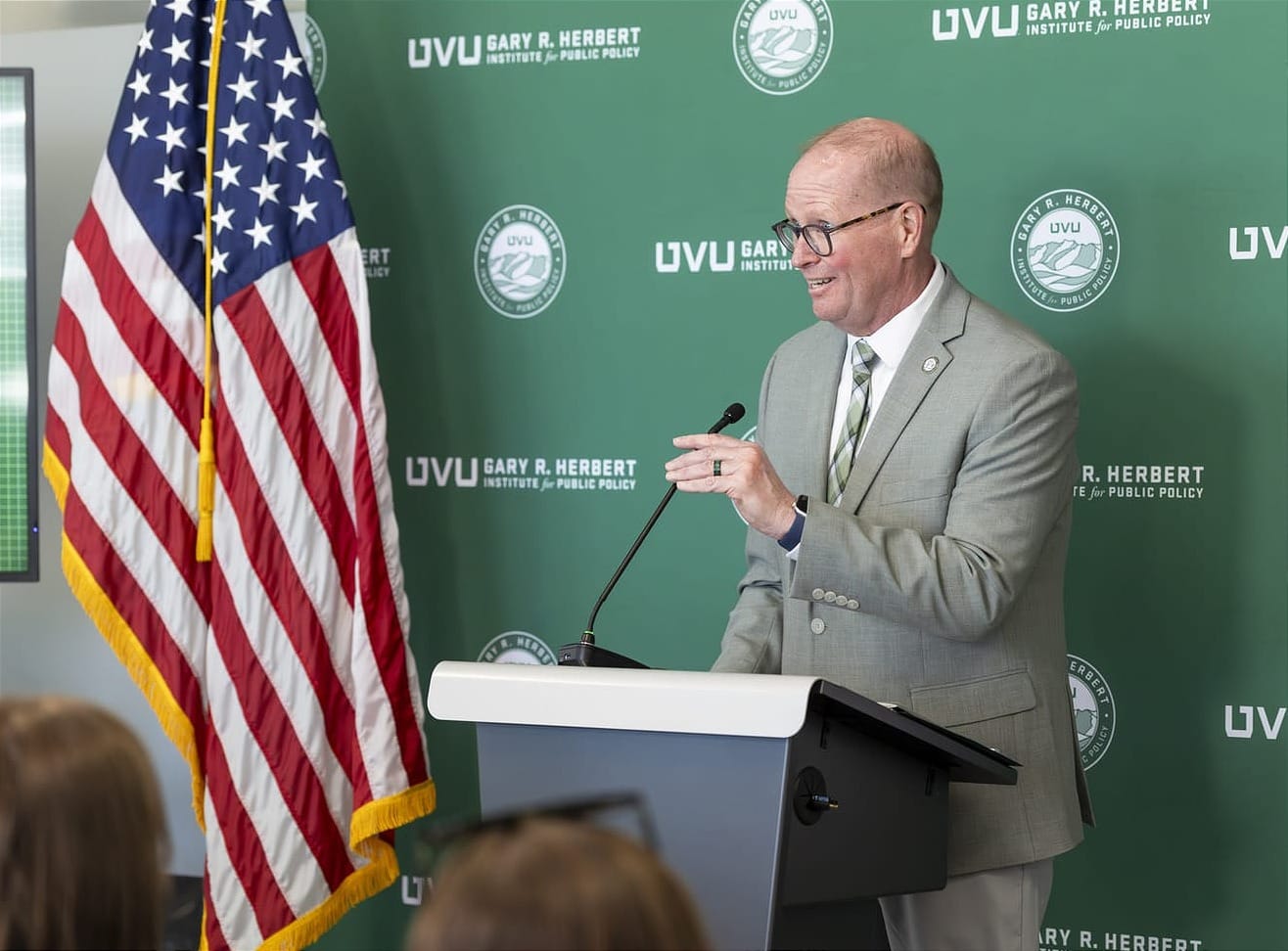
Justin Jones, Executive Director of UVU's Gary R. Herbert Institute for Public Policy, opens the EMTECH deepfake research press conference at Utah Valley University's Fugal Gateway in Orem on June 18, 2026. Photo: Jay Drowns, UVU Marketing and Communications
Amacher was direct that no single actor can solve the problem alone. In conversation after the formal presentation, he described deepfake disinformation as "a very distributed problem" requiring action from multiple sectors simultaneously, such as generation platforms, social media companies, campaigns, policymakers, and individual viewers alike.
"I think that there's responsibility with the social media platforms to have good detection, good remediation for taking down disinformation as quickly as possible," Amacher said, "but there's a lot of flaws with that too. That's not foolproof either."
He pushed back on the prevailing model, such as public awareness campaigns that coach individuals to spot telltale signs of synthetic media, arguing that the approach has not only failed but may be actively counterproductive by breeding overconfidence. "We're asking people to do something that the data shows almost nobody can actually do, even when they're aware of this threat and consider themselves well informed."
Instead, Amacher called for a multi-layered policy response: provenance labeling, watermarking, digital identity verification, faster detection and takedown infrastructure, and legal frameworks specifically targeting the deliberate use of synthetic media to influence elections.
When asked whether any institution currently exists that could serve as a rapid-response authority, an entity publicly flagging deepfakes in real time during an election cycle, Amacher acknowledged the gap. "Currently not right now," he stated. "I don't think we have a clear leader in that field yet." He described EMTECH's current role as focused on enabling other actors with more direct standing to respond, including through trainings with officials who have jurisdictional authority over election integrity issues.
A Local Warning
The findings arrive with particular relevance for Utah. The study's presenters cited a local example among their real-world cases: a video that circulated online purportedly showing Governor Spencer Cox admitting to fraudulently gathering signatures in a gubernatorial race — a video that election officials and state leaders quickly flagged as fabricated.
International examples were equally sobering: a fabricated audio clip attributed to a Chicago mayoral candidate days before that city's 2023 election, deepfake campaigns targeting a South Korean gubernatorial race, and — at the national security level — a synthetic video of Ukrainian President Volodymyr Zelensky appearing to order his soldiers to surrender.
"Something like that could very reasonably create an international incident that could have major implications," Amacher said.
Justin Jones, Executive Director of UVU's Gary R. Herbert Institute for Public Policy, closing the EMTECH deepfake research press conference, June 18, 2026. Photo: Jay Drowns, UVU Marketing and Communications
Jones closed the formal presentation with a grounding analogy: vetting a candidate, he argued, should be treated like hiring for a job. Meeting candidates in person, consulting trusted references, and talking to neighbors remained the most reliable tools available — even as the media environment grows less trustworthy. "One thing we learned today," he said, "is the media that we digest on social media platforms and others may not all be exactly what we're believing that it is."
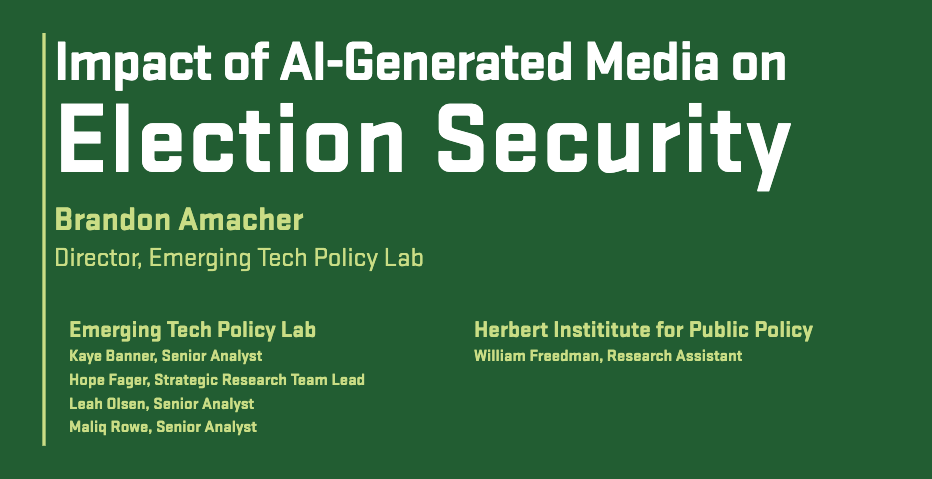
Impact of AI-Generated Media on Election Security Phase II was produced by a cross-disciplinary team at Utah Valley University. The study was led by Brandon Amacher, Director of the Emerging Tech Policy Lab, with contributions from EMTECH Senior Analysts Kaye Banner, Leah Olsen, and Maliq Rowe, and Strategic Research Team Lead Hope Fager. William Freedman, Research Assistant at the Gary R. Herbert Institute for Public Policy, also contributed.
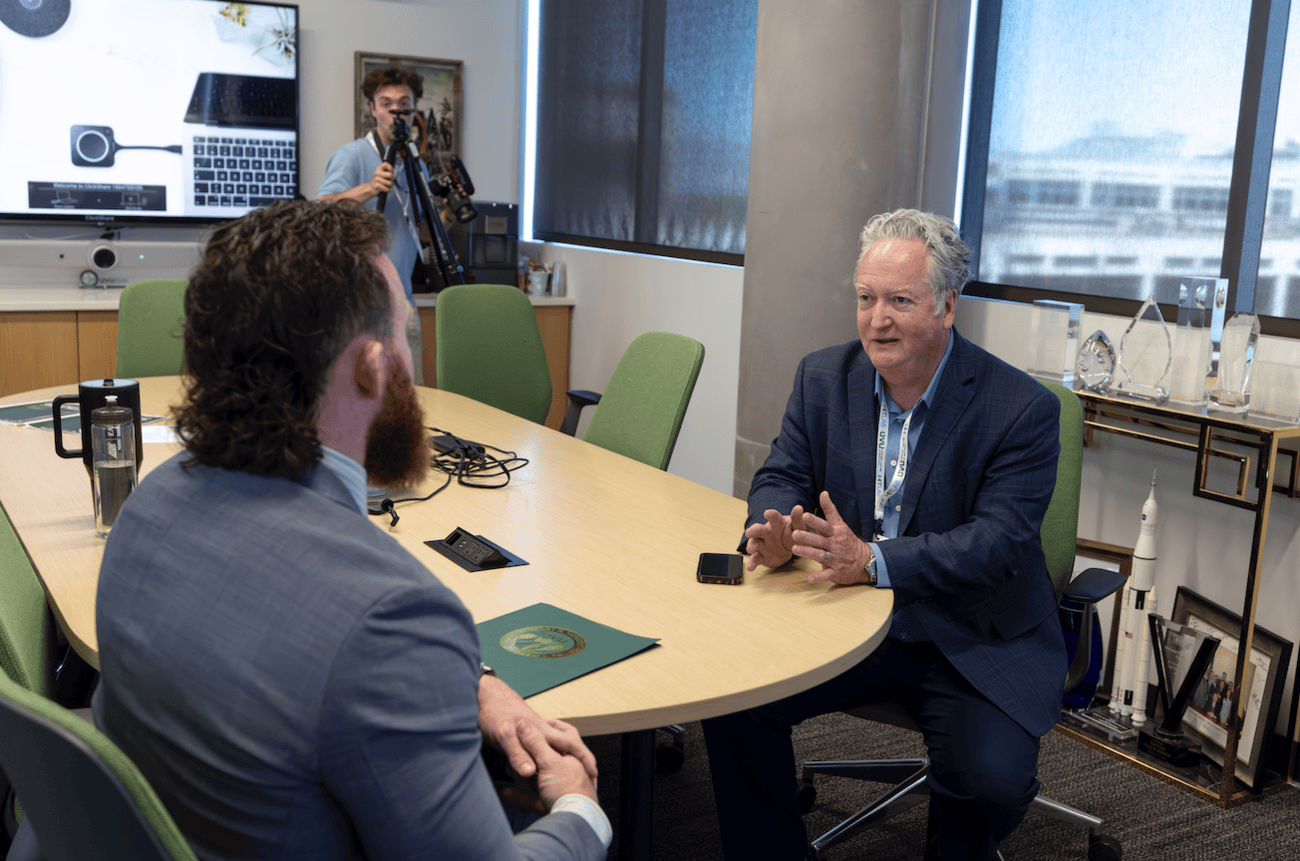
Brandon Amacher, Director of UVU's Emerging Tech Policy Lab (EMTECH), discussing with TechBuzz the policy implications of the lab's recent deepfake voter influence study. UVU, Orem, Utah, June 18, 2026 Photo: Jay Drowns, UVU Marketing and Communications
Utah's primary election takes place Tuesday, June 23, 2026. Ballots must be received or dropped off at an authorized ballot drop box by 8:00 p.m. Voters can find their nearest drop box location and additional voting information at vote.utah.gov or, for Utah County residents, through the Utah County Elections interactive map, below:
Share this article
The link has been copied!
Your link has expired. Please request a new one.
Your link has expired. Please request a new one.
Your link has expired. Please request a new one.
Great! You've successfully signed up.
Great! You've successfully signed up.
Welcome back! You've successfully signed in.
Success! You now have access to additional content.