47G Brings Defense, Capital, and Startups Together to Close America's Critical Minerals Gap
Utah's 47G Institute convened 195 investors, defense researchers, and startup founders at the University of Utah for Critical Ventures 2026, addressing rare earth supply chain vulnerability through the DARPA-backed SMART testbed, AI sourcing tools, and federal permitting reform.
Utah sits on40 of the 50 minerals the federal government classifies as critical to national security. On June 17, the people working to pull them out of the ground — and fund that work — gathered at the University of Utah.
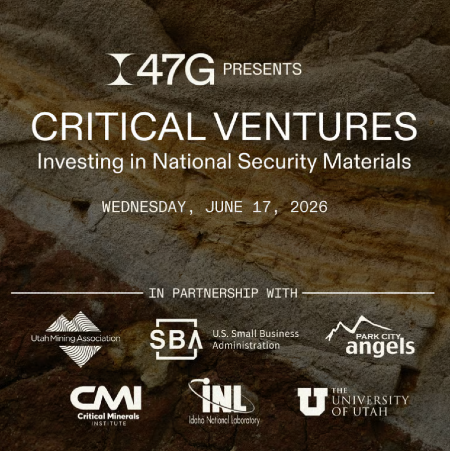
On June 17, 2026, the 47G Institute hosted Critical Ventures: Investing in National Security Materials at the Robert H. and Katharine B. Garff Building at the University of Utah. The full-day event drew 195 attendees and brought together investors, defense researchers, startup founders, and policy leaders from organizations including DARPA, JPMorgan, the World Resources Institute, the Utah Mining Association, Idaho National Laboratory, Park City Angels, and the University of Utah. Five companies presented at the event: Universal Technical Resource Services, Quantum Critical Metals, Grid Metals, Critical Minerals Americas, and Defense Metals — a cross-section of the domestic critical minerals sector ranging from processing technology to junior exploration.
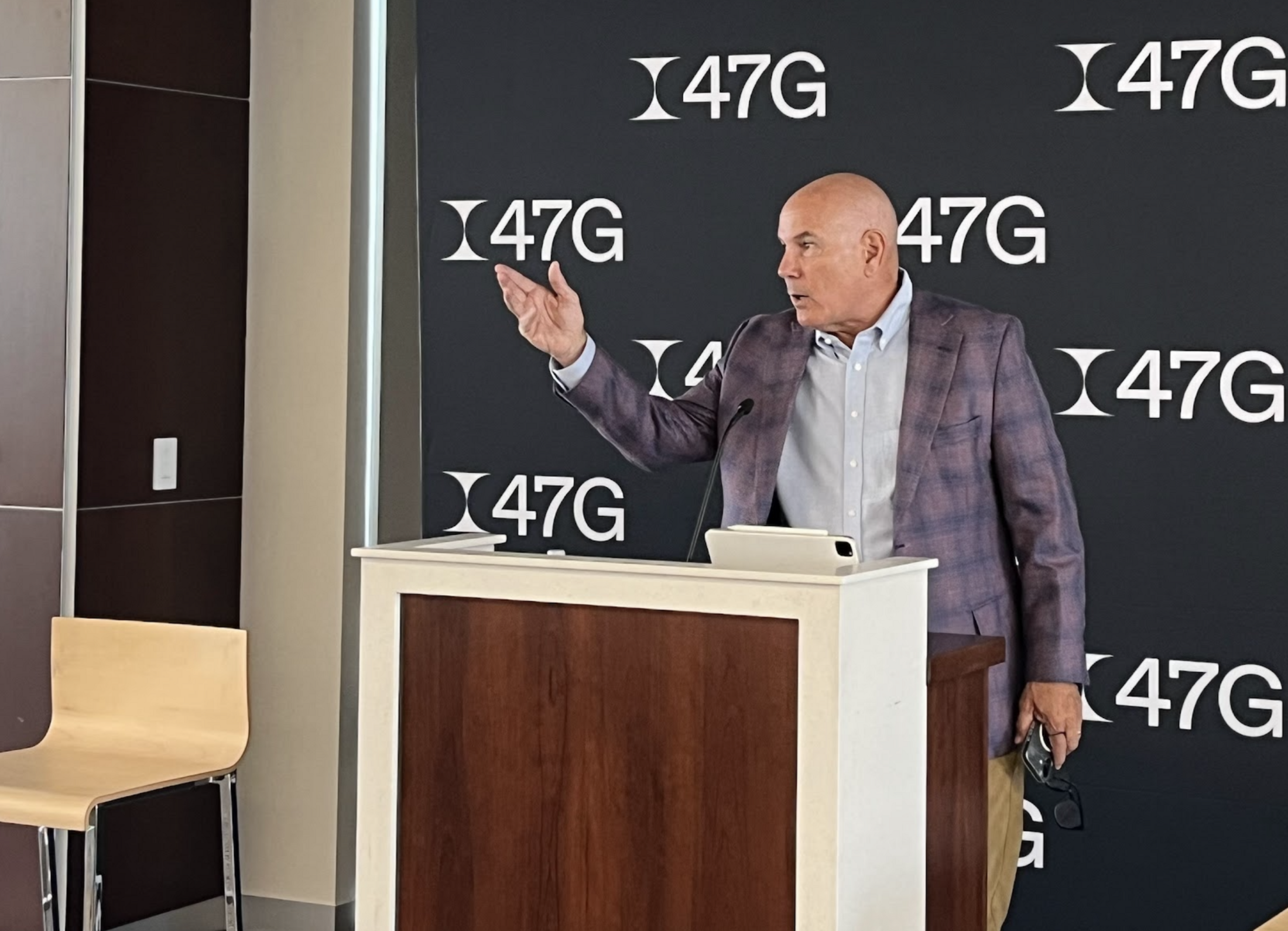
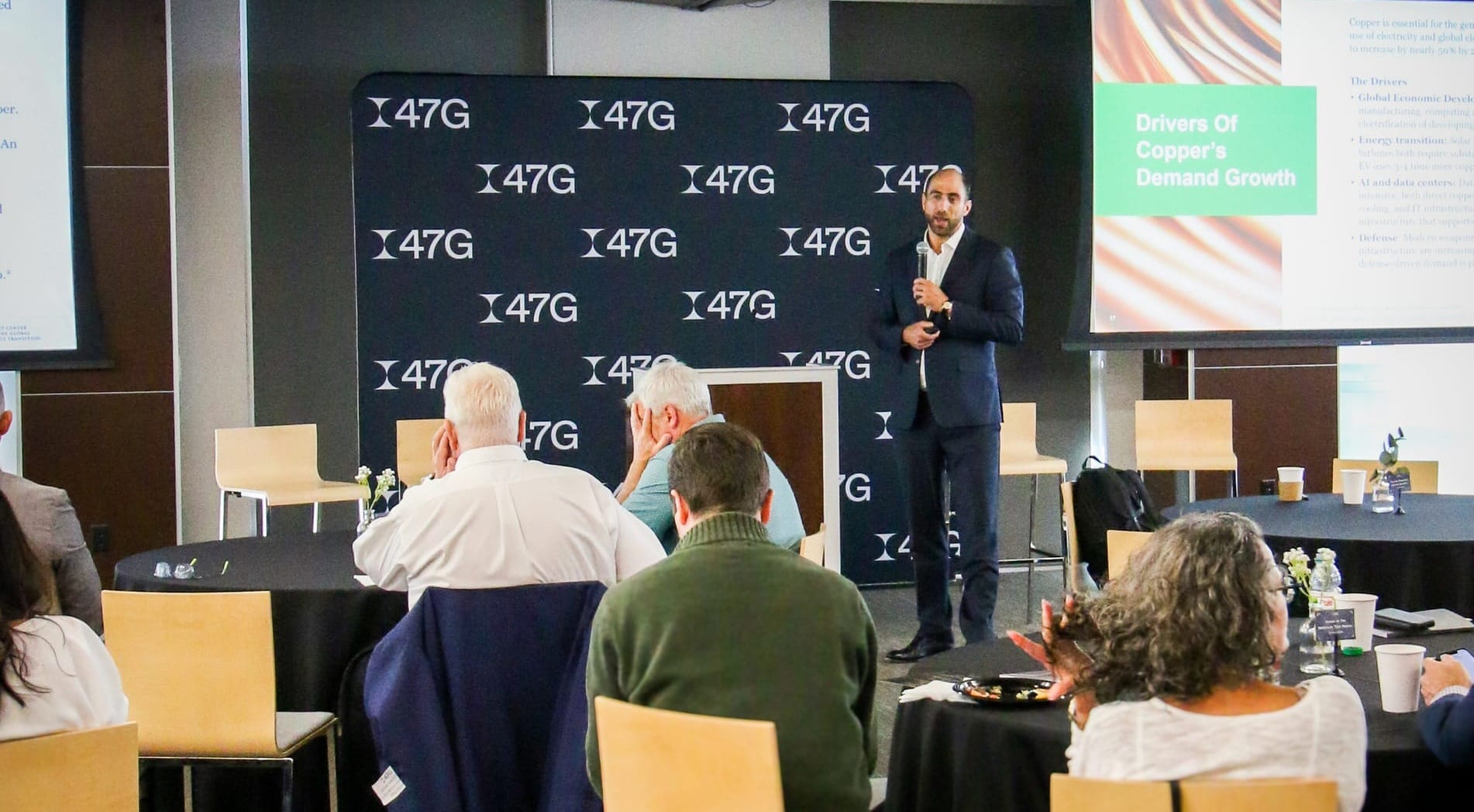
Guy Letendre, VP of Manufacturing and Materials at 47G, framed the stakes before the first session began.
Guy Letendre, VP of Manufacturing and Materials at 47G, speaks at Critical Ventures on June 17, 2026, University of Utah
"Critical minerals are no longer just a mining issue, they are a national security issue. The technologies that power our defense systems, energy infrastructure and advanced manufacturing all depend on secure access to these materials. Utah has the resources, expertise and collaborative ecosystem needed to help strengthen America's supply chains, but continued innovation and investment will be essential to turning that potential into long-term capability."
A New National Testbed, Built in Utah
The event arrived weeks after one of the most significant announcements in Utah's critical minerals history. On May 20, the University of Utah and DARPA announced the Strategic Materials Accelerator and Research Testbed, known as SMART — a first-of-its-kind national platform designed to help researchers validate and scale breakthrough technologies for rare earth elements and critical minerals. 47G brokered the partnerships that made it possible, working alongside the Utah Mining Association and World Trade Center Utah.
Aaron Starks, CEO and President of 47G, described what the organization contributed.
"47G is proud to have played a key role in forging the relationships that made SMART possible. This initiative is more than a research platform — it's a testbed that will serve our local industry here in Utah while also advancing innovation and supply chain resilience nationwide. Our mission is to connect partners, align priorities and create collaborations that drive real impact."
Phase I of SMART supports DARPA's EMBER program (Environmental Microbes as a BioEngineering Resource), which uses bioengineered microbes to separate and purify rare earth elements without the toxic chemicals that conventional processing requires. Benchmarking infrastructure of this kind is notoriously difficult to fund, but essential for determining whether a laboratory discovery can actually scale.
Sha-Chelle Manning, Chief of DARPA's Commercial Strategy Office, explained why that gap matters.
"One of the biggest challenges in this space is not invention, but translation. SMART is designed to reduce the risk of scaling new technologies by giving innovators a place to validate performance at meaningful scale, helping accelerate the transition from breakthrough science to actual capability."
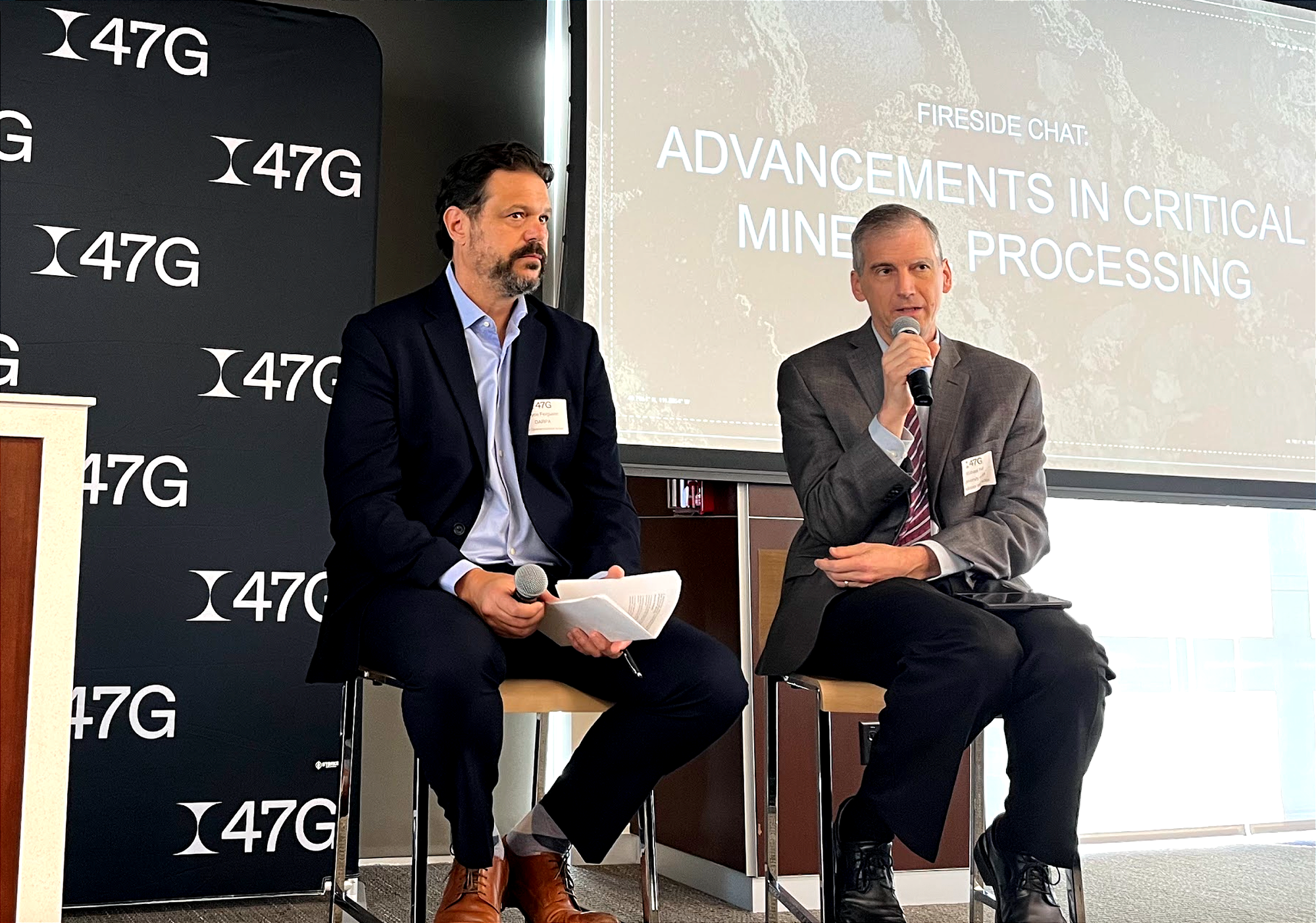
Royce Ferguson, Senior Commercial Advisor of DARPA (left), and Dr. Mike Free, Director of the University of Utah Institute for Critical and Strategic Minerals led the Fireside Chat on Advancements in Critical Mineral Processing at 47G's Critical Ventures event, June 17, 2026.
Critical Ventures included a fireside chat on Advancements in Critical Mineral Processing featuring Royce Ferguson of DARPA and Dr. Mike Free, Director of the University of Utah's Institute for Critical and Strategic Minerals. They focused on the SMART testbed's role in connecting foundational science to scalable defense applications.
"Necessity is the core driver of innovation. The U.S. desperately needs a testbed to accelerate our strategic material supply chain. SMART is a state-of-the-art testing ecosystem that addresses a pressing need."
Trent Staggs, a former Riverton mayor now serving as Regional Advocate for the U.S. Small Business Administration covering Utah, Colorado, Wyoming, Montana, North Dakota, and South Dakota, addressed the regulatory bottleneck directly. TheStandardizing Permitting and Expediting Economic Development Act, known as the SPEED Act, passed the House on December 18, 2025, by a vote of 221-196, with bipartisan support from sponsors Chairman Bruce Westerman (R-AR) and Rep. Jared Golden (D-ME). The bill would shorten the window for legal challenges to mining and energy projects from six years to 150 days, impose firm timelines on agency reviews, and limit the scope of National Environmental Policy Act reviews. It is currently awaiting Senate action, where at least seven Democratic votes would be needed to overcome a filibuster.
Luke Balleny, Manager, Energy Minerals and Circularity, World Resources Institute, delivered the keynote: The Coming Minerals Wave: Are We Ready to Ride It
Staggs described the practical effect of the current system on businesses.
"The Speed Act would literally speed up and eliminate much of the red tape surrounding major energy and development projects. Impose shorter timelines for agencies to process applications and shorter timeframes for filing legal challenges. As you heard in the presentation, some mining sites are taking 29 years for approval. That's just not something a business can realistically afford, and adds a substantial increase in costs that ultimately would get passed onto consumers."
On the question of whether faster permitting conflicts with environmental responsibility, Staggs did not see a contradiction.
"Fast tracking mineral development while taking into account legitimate concerns is not mutually exclusive. With the current process of decade-plus permitting and application approvals, I think many reasonable folks agree that is entirely unreasonable. And look at technologies like DISA, that actually remediate abandoned mine sites while delivering critical mineral resources. There are several technologies that can responsibly develop."
DISA Technologies, a Casper, Wyoming-based company, uses its patented High-Pressure Slurry Ablation process to recover critical minerals from abandoned uranium mine waste, addressing both a supply chain gap and an environmental liability simultaneously.
AI Solving the Supply Chain Problem
Sariah Flores, Director of Operations and Outreach forNexGen Materials, a Sandy, Utah company founded in 2021, represents one of the event's clearest examples of artificial intelligence applied to a hard industrial problem. NexGen builds AI-driven tools to identify and develop domestic critical mineral supply chains, with a focus on battery materials for electric vehicles and grid storage. The company has active partnerships with Idaho National Laboratory, Oak Ridge National Laboratory, and the National Energy Technology Laboratory.
Flores described how the company's AI approach replaced a plan that would have cost half a million dollars before it processed a single brine sample.
"We appreciate your interest in what we are doing at NexGen Materials, where we believe we will be the pioneer in using AI to solve critical materials supply chain gaps for domestic economies competing with China's dominance in this area. When considering how to validate our lithium extraction methodology, our original intention was to follow industry standards and build a physical device that would have needed to be hauled onsite in order to test brines live. We realized that this was fundamentally flawed, given significant coordination issues, cost and logistics, the ability to only handle one brine at a time, and a $500,000 upfront cost to build. Instead, we built a cloud-hosted AI toolkit that will prove to be a fraction of the cost, and can provide insight into dozens of brines simultaneously, from anywhere in the world. It's basically Tinder for lithium brine matching."
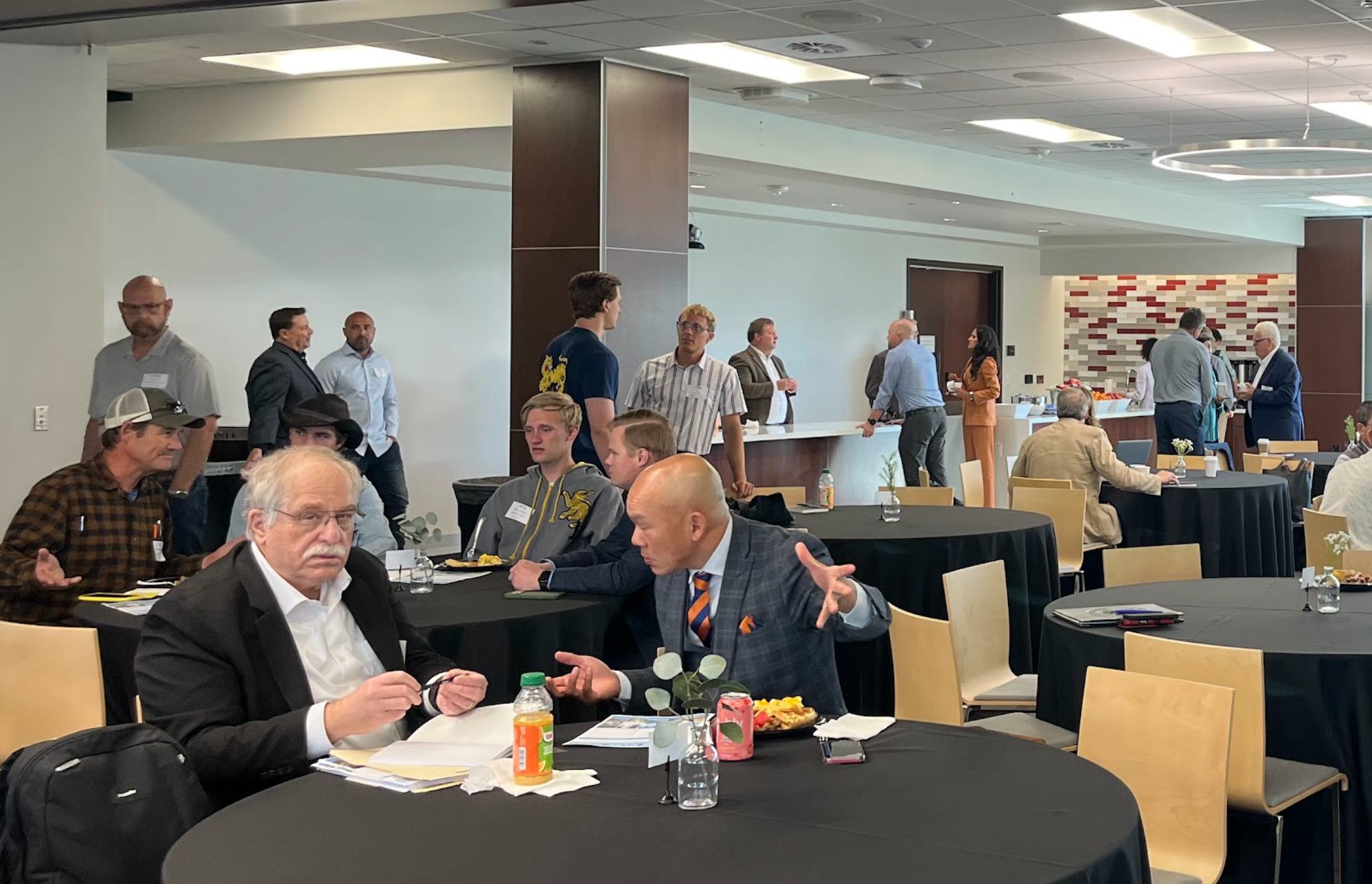
Attendees network and socialize at the 47G Critical Ventures event on June 17th.
A Student Pays Attention
Isaac Hansen, a BYU student attending through an internship, offered a ground-level view of where critical minerals education stands for his generation. "Important topics like critical minerals often get swept under the rug," he said. "The University of Utah seems to do really well with their institute and their SMART program, but outside of them I haven't heard or seen anything from any other university on this topic. As governments shift and some of the older generations in the field begin to retire, it'll be up to the rising generation to take on securing our nation's supply chains."
Grid Metals is advancing a near-surface cesium discovery at its Falcon West property in southeastern Manitoba, roughly an hour east of Winnipeg.
"Cesium is a metal that not a lot of people have common market knowledge about. But it's very rare and very critical, so it's a good metal to be looking for."
On the supply side, Dunbar was equally direct.
"There's a real shortage of feedstock. We want to bring a new deposit of cesium to market in the next couple of years."
Feedstock refers to the raw ore or concentrate that processing facilities need to actually produce usable cesium. Without a reliable domestic source of it, manufacturers dependent on the metal have nowhere to turn but foreign suppliers.
What Came Next
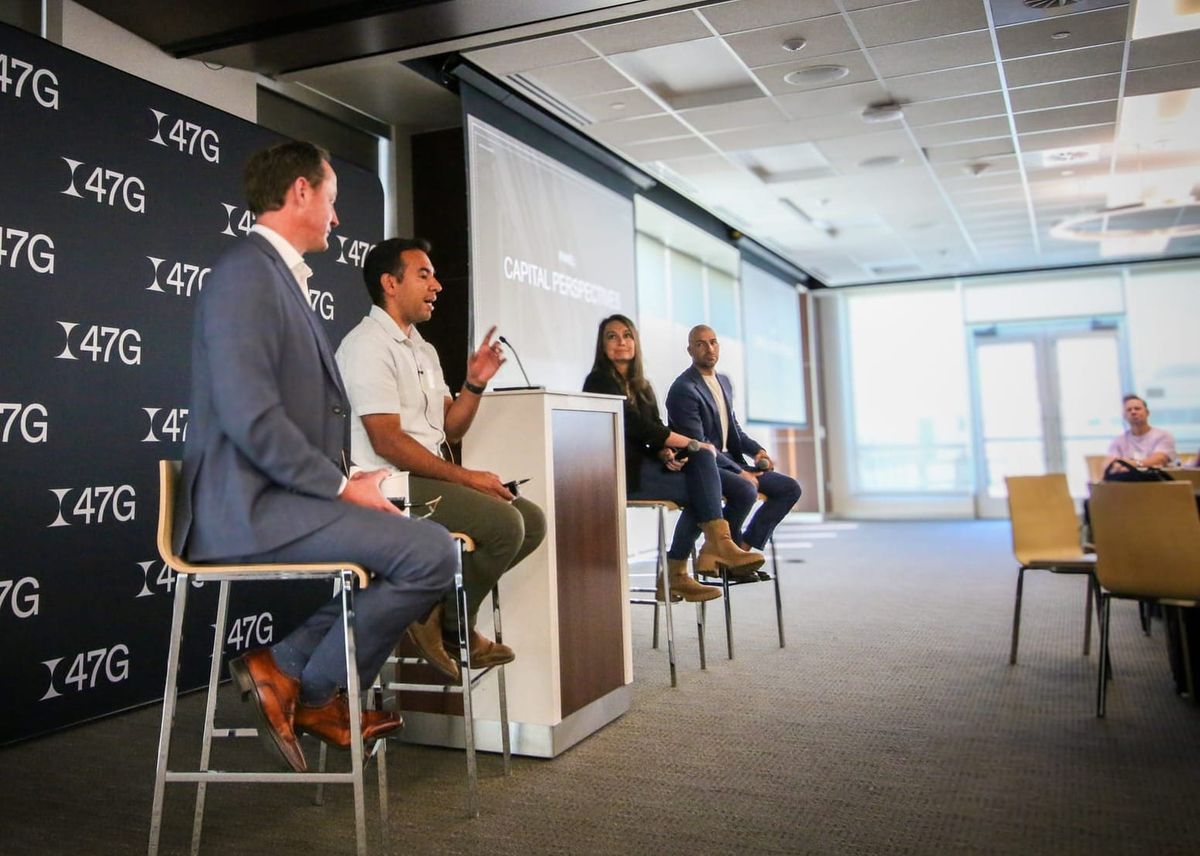
A Capital Perspectives panel brought together Shawn Olsen of s20 Capital, Robert Keepers of JPMorgan, and Elle Gahl of 1864 Capital alongside DARPA researchers and startup founders, a lineup that made the event's core argument without needing to state it: critical minerals have moved from geology to geopolitics, and the capital is following.
The SPEED Act is still in the Senate. SMART is moving into Phase I. NexGen is matching lithium brines from the cloud. And somewhere in southeastern Manitoba, a drill is working its way toward one of the rarest minerals on earth.
TechBuzz News has covered 47G's critical minerals convenings since the inaugural Critical Ventures event in December 2024. UofU International Studies major and TechBuzz intern Sonia Covrig reported on both that event and the follow-on Critical Materials Summit in March 2025. Read her previous coverage here and here.
Share this article
The link has been copied!
Your link has expired. Please request a new one.
Your link has expired. Please request a new one.
Your link has expired. Please request a new one.
Great! You've successfully signed up.
Great! You've successfully signed up.
Welcome back! You've successfully signed in.
Success! You now have access to additional content.