Utah's Spaceport Exploration Committee has formally advanced two candidate sites — Delta and Green River — into detailed feasibility study, marking the most significant step yet toward a licensed commercial spaceport in the Intermountain West.
Delta and Green River emerge as frontrunners as state leaders begin planning what a Utah space economy could look like
Salt Lake City, Utah — June 19, 2026
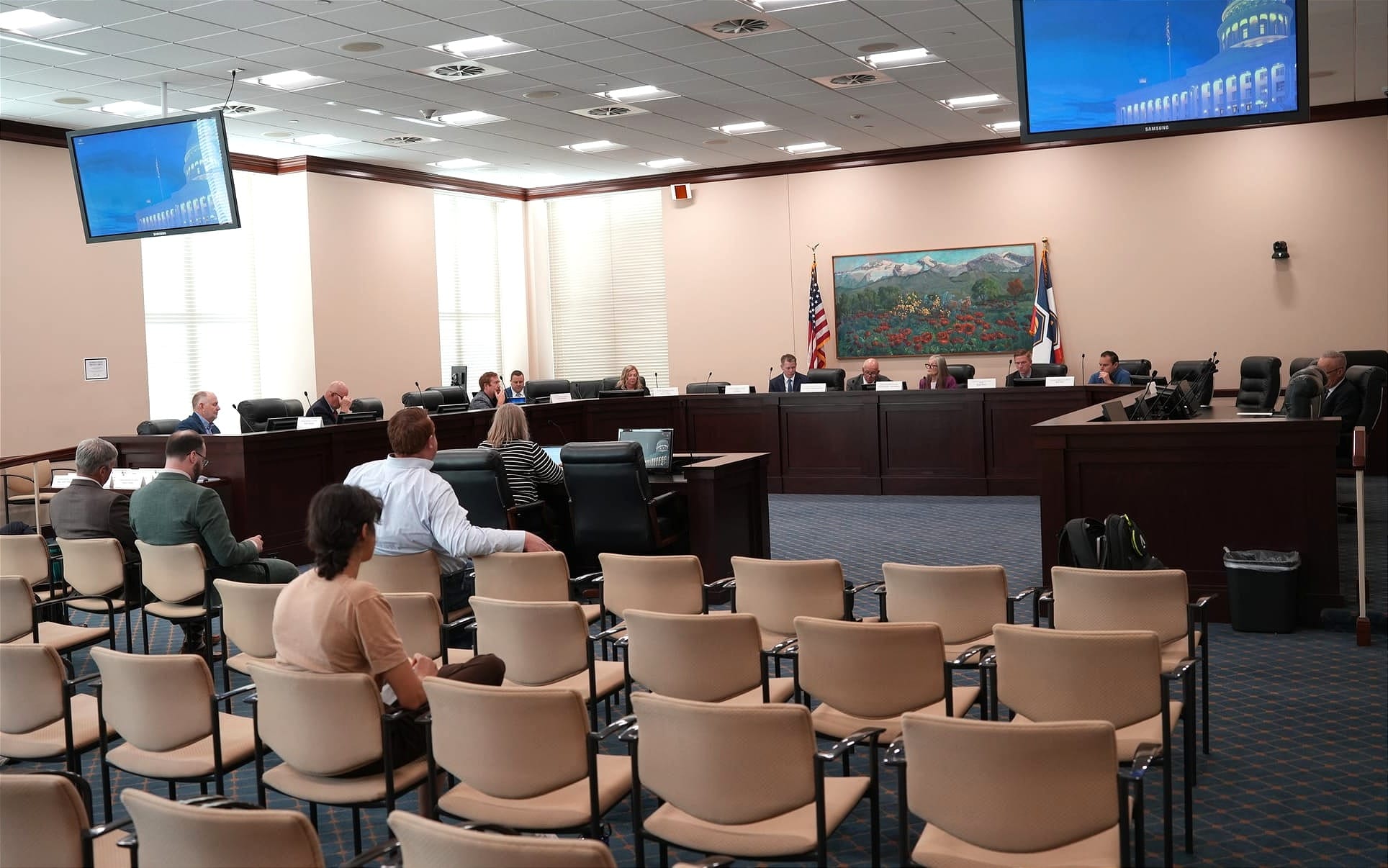
On a quiet Friday morning in Senate Building at the State Capitol, a committee of policymakers, aerospace experts, transportation leaders, and economic development officials took a step that could reshape the state’s economic and aerospace future. The Utah Spaceport Exploration Committee, meeting for the ninth time since its creation under SB 62 in the 2025 legislative session, formally advanced into Phase Two of a state-commissioned study to identify where — and how — Utah might build a commercial spaceport. The answer, at least for now, comes down to two places: Delta and Green River.
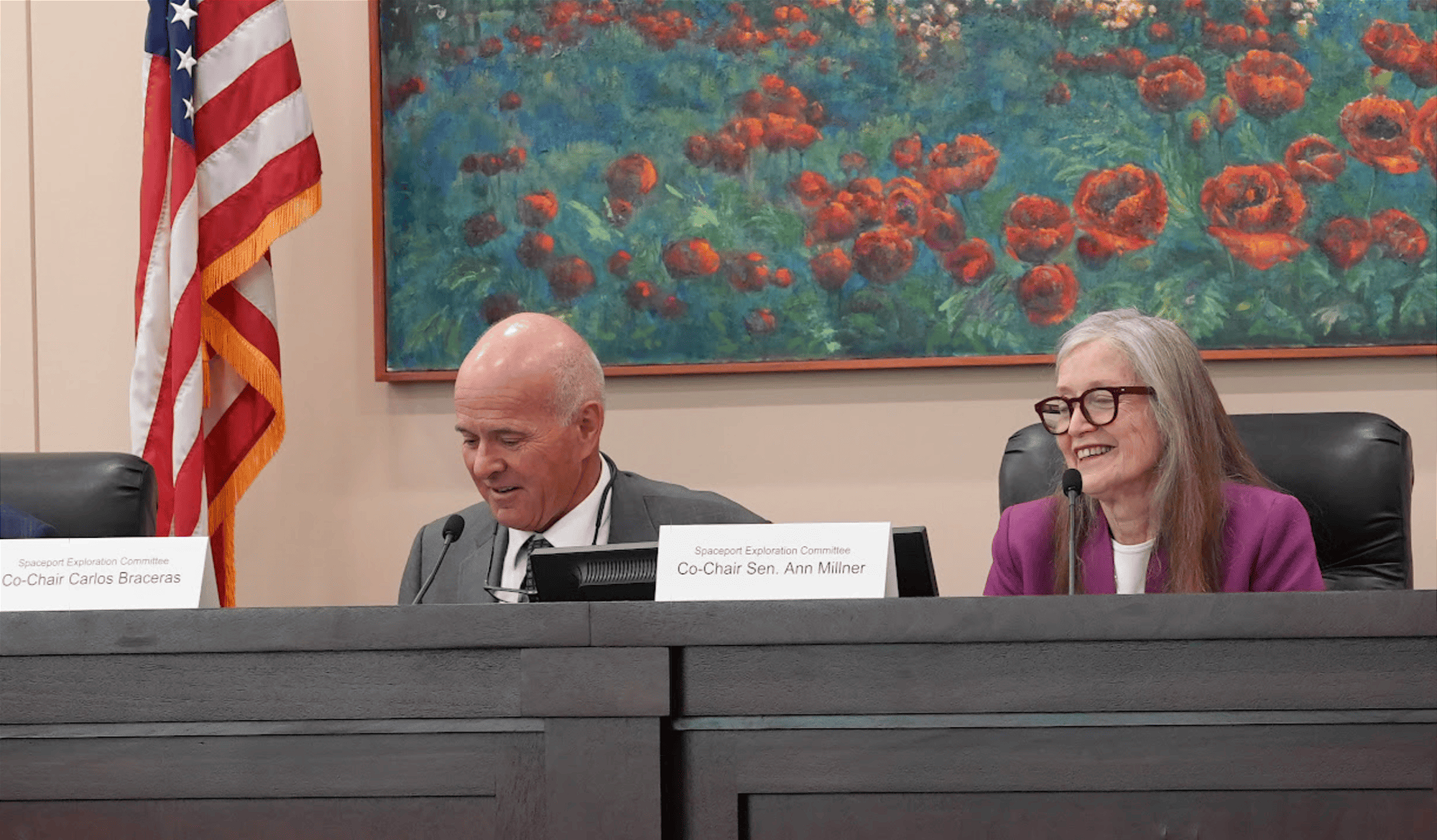
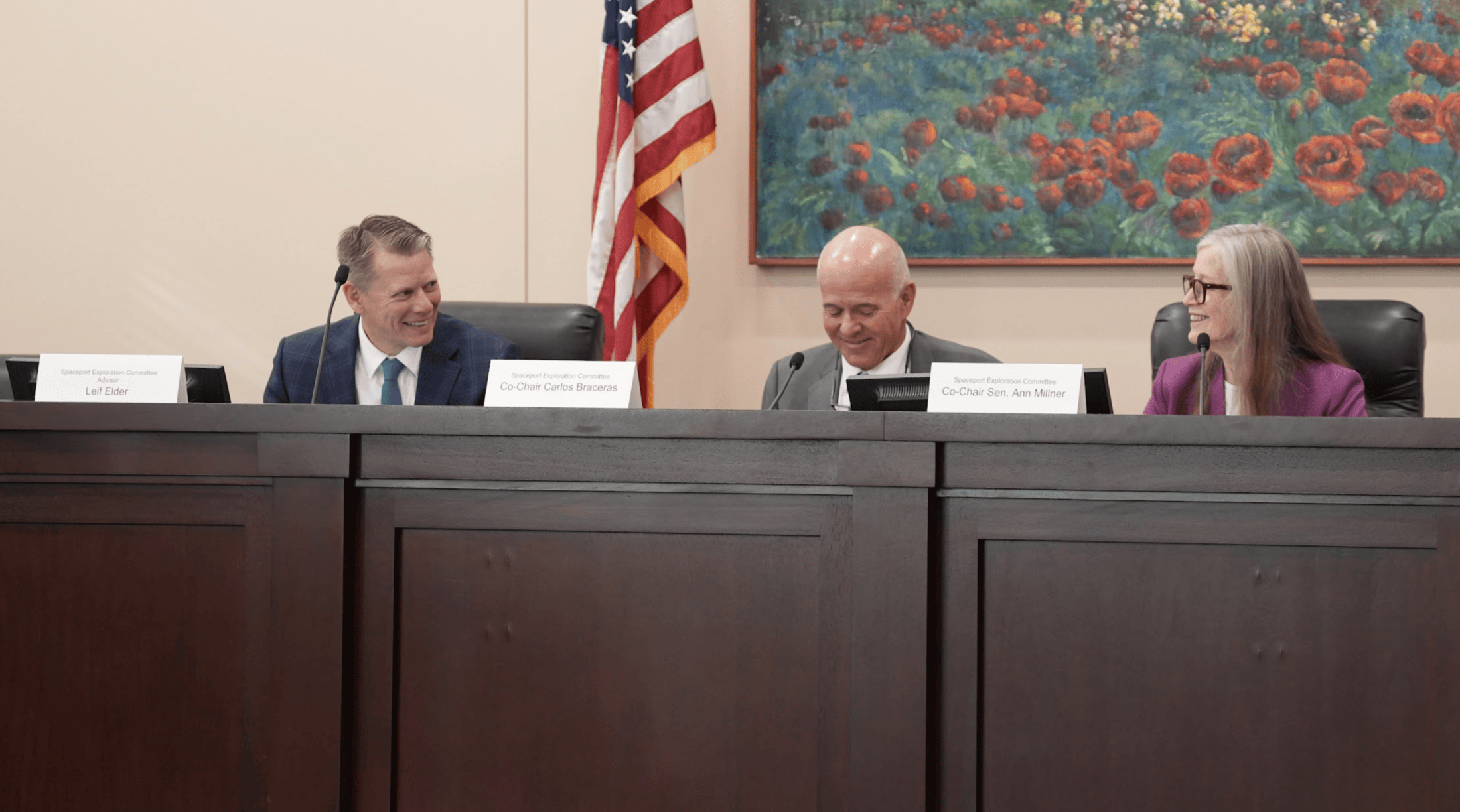
Utah Spaceport Exploration Committee Co-Chairs Carlos Braceras, Utah Department of Transportation executive director, and Sen. Ann Millner share a moment during the committee's June 19 meeting in Salt Lake City, where members formally advanced Delta and Green River into Phase Two site assessment. Photo: Mark Tullis/TechBuzz
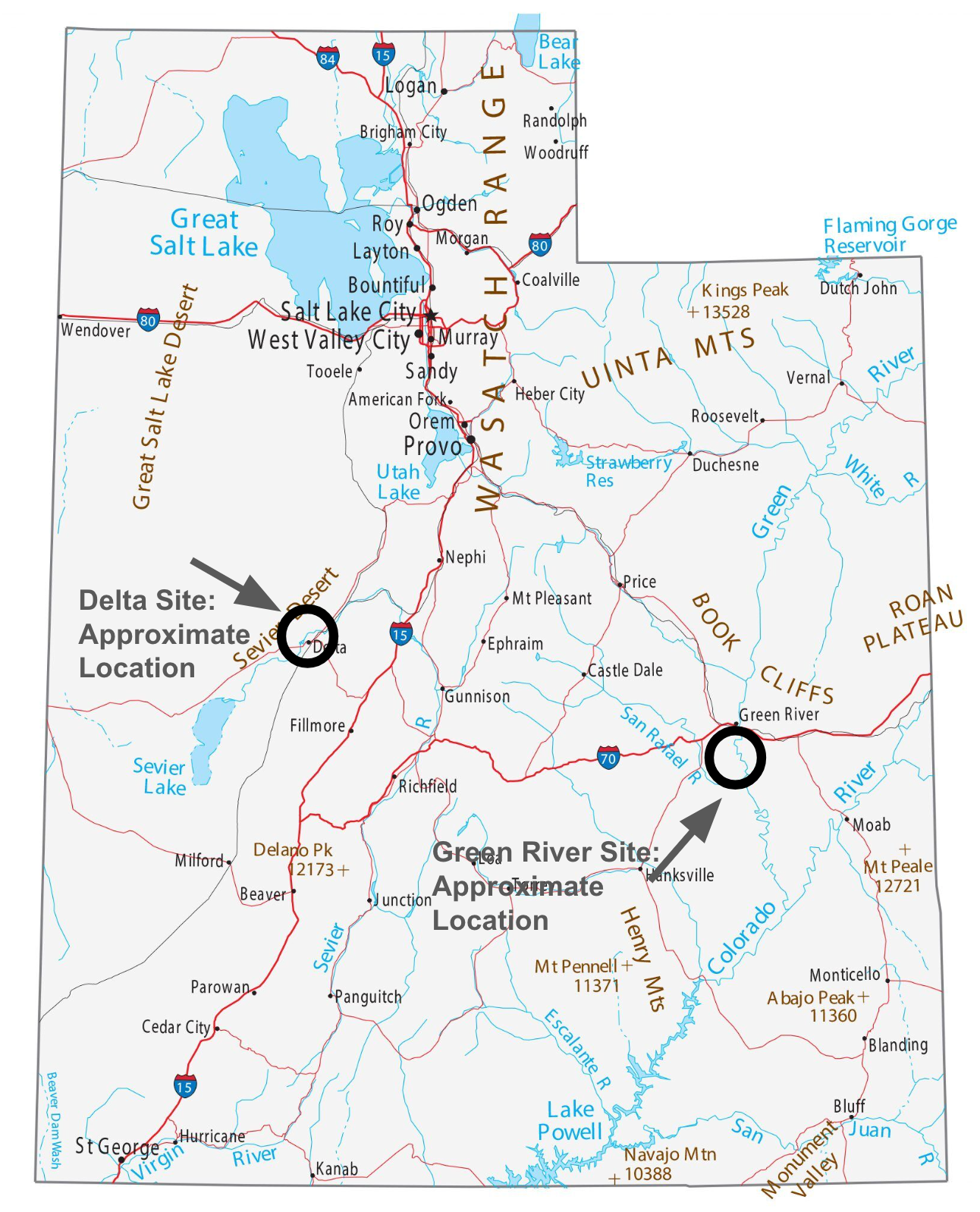
Those two small, rural communities, separated by roughly 140 miles of high desert, survived a rigorous multi-criteria screening of seven candidate sites conducted by the committee’s consulting team, RS&H, a national aerospace infrastructure firm with six decades of spaceport work in its portfolio.
Founded in Jacksonville, Florida, in 1941, RS&H initially built its reputation designing military aviation facilities. By the 1960s, the firm had been selected to support NASA's piloted spaceflight infrastructure and U.S. Air Force missile programs. Over the decades, RS&H expanded into one of the country's leading aerospace infrastructure consultancies, working across airports, launch facilities, military installations, and commercial space projects.
Today the company provides end-to-end spaceport consulting services, helping public agencies, private companies, and communities navigate everything from site selection and infrastructure planning to regulatory approvals, FAA licensing, engineering design, and long-term economic development strategies.
That experience is particularly relevant because Utah is not merely evaluating locations for rocket launches. The state is attempting to determine whether it can build a sustainable aerospace ecosystem capable of attracting investment, companies, workforce development, testing operations, advanced manufacturing, and future launch activity.
After months of analysis that weighed market demand, capital costs, regulatory and environmental factors, flight safety, airspace, economic potential, and proximity to essential resources, Delta and Green River tied for the highest scores in the field — 60 points each out of a possible maximum — well ahead of five other sites under consideration.
A Year in the Making
The committee's work began in earnest on July 28, 2025, when it convened for the first time. Over the following months, it issued a request for information, then a formal request for proposals, ultimately awarding a contract in March 2026 to RS&H, one of the nation's most experienced aerospace infrastructure consulting firms.
The state did not begin the process with site rankings. Before the current study was launched, Utah commissioned a basic public safety analysis, a risk assessment from The Aerospace Corporation, a neutral, well-established, federally-funded research and development center that provides technical expertise to government and industry space programs. The assessment examined whether launches from Utah could be technically feasible under current and emerging technologies and became an important foundation for the committee's subsequent work.
Building on that analysis, RS&H assembled a team of specialized subcontractors: KPMG for economic impact and financial structure analysis, SEARCH for cultural resources assessment, Blue Ridge Research and Consulting for sonic boom and noise modeling, and ARCTOS for flight safety and reentry analysis.
The scope was deliberately broad. At the committee's May meeting, RS&H's Todd Lindner outlined a screening methodology that evaluated seven geographically diverse Utah sites against a matrix of criteria including market demand, capital and operating costs, regulatory and environmental conditions, economic potential, proximity to population centers and resources, and technical and operational feasibility.
The initial screening was described as largely qualitative, supplemented by quantitative data where available — an approach designed to compare locations that differ dramatically in geography, infrastructure, airspace, and development potential.
The seven sites evaluated were Delta, Wendover, Green River, Promontory, Bluff, Kanab, and Vernal. Each was scored across six major criteria categories. When the numbers were tallied, the result was decisive.
The process has also benefited from continued legislative engagement. During the 2026 session, lawmakers updated the committee's enabling legislation, refining elements of the framework established under SB 62 and helping position the state for consideration of the committee's final recommendations during the 2027 legislative session.
When the scores were finalized, Delta and Green River emerged at the top of the field, advancing Utah's spaceport discussion from a statewide search to a focused evaluation of two finalists.
Why Delta and Green River
Both sites finished with a combined score of 60, the highest in the field. But the reasons they won are as important as the numbers themselves.
Delta’s strongest performance came in technical and operational assessment, where it scored 14 out of a possible category maximum, the highest single-category score of any site across all criteria. A key driver is geography. Delta sits within and adjacent to Military Operating Areas that create clear, available airspace along northern trajectories, a critical factor for both launch and reentry operations. The site also benefits from the the proposed Black Hills Range complex that, if established, would further open northern trajectories from the Delta site. It is served by major highways and a rail line, sits on abundant BLM and state-owned lands that reduce land acquisition costs and complexity, is close to energy resources, including geothermal (although spaceports themselves are not especially known to require vast amounts of electricity), has a local general aviation airport, and presents manageable environmental and cultural resource challenges.
Approximate locations of the Delta and Green River sites, which tied for the highest scores in RS&H's multi-criteria assessment of potential Utah spaceport locations. Actual locations may vary. The next phase of the study will focus on site layouts, economic impacts, operational feasibility, and governance options. Adapted by TechBuzz from RS&H presentation.
Green River earned its position through a strong combination of regulatory and environmental performance (10), proximity scores (12), and technical operations (12). It features a restricted launch corridor already designated for use, with documented historical operational use for launch and point-to-point missions into White Sands Missile Range in New Mexico — meaning demonstrated demand for the kind of activity a spaceport would support. The RS&H team also flagged Green River’s potential for what they termed a “straddle strategy,” in which infrastructure and operations are distributed across multiple locations rather than concentrated at a single site, an approach that has worked well at established spaceports elsewhere.
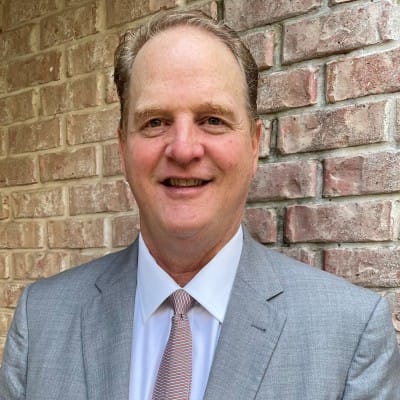
Andrew Nelson, Vice President and Discipline Leader - Aerospace, RS&H, led the Utah Spaceport Exploration Committee through a discussion on siting considerations and next steps, Senate Building, State Capitol, June 19, 2026
Andrew Nelson, RS&H’s Vice President and National Discipline Leader for Aerospace, who joined the June 19 meeting by Zoom, confirmed at the meeting that post-May refinements to the analysis had adjusted some individual numbers but left the outcome unchanged. “It changed some of the numbers, but it didn’t change the outcome,” Nelson told the committee.
Why the Others Didn’t Advance
The five sites that were screened out each carried specific disqualifying challenges. Wendover, despite strong proximity scores, is dominated by Utah Test and Training Range operations that would create serious conflicts with commercial launch cadence. The Bonneville Salt Flats International Raceway, a National Register of Historic Places-listed property, sits less than a mile from the proposed site, adding a cultural resources complication on top of the operational ones.
Promontory, despite workforce advantages tied to its proximity to solid rocket motor research and production facilities, is effectively boxed in by Interstate 84, Interstate 15, and Utah Highway 30, creating unavoidable overflight of major highways within 10 to 15 miles of the launch site. Flight trajectories to the north run into national park Section 4(f)* concerns; to the south sits a new nuclear plant; to the east and southeast lie Ogden and Salt Lake City.
Bluff was eliminated primarily on remoteness grounds. The nearest commercial air service is in Colorado.
Kanab contends with three FAR Part 139** commercial airports in close proximity, extensive national park boundaries on multiple sides, and state-line jurisdictional complications with Arizona and Nevada.
Vernal has no usable rail access, a too-distant airport, US-40 overflight challenges, and cultural resource concerns including potential burial sites near the candidate location.
*Section 4(f) is a provision of the U.S. Department of Transportation Act of 1966 that prohibits the use of federal transportation funds for projects that require the "use" of publicly owned parks, recreation areas, wildlife and waterfowl refuges, or historic sites — unless there is no feasible and prudent alternative, and the project includes all possible planning to minimize harm.
**FAR Part 139 is a Federal Aviation Regulation that governs the certification and operation of commercial service airports in the United States, meaning airports that serve scheduled or unscheduled air carrier operations with aircraft seating more than nine passengers
The Harder Question: How to Govern It
Selecting a site, it turns out, may be the more straightforward part of the committee’s task. The governance question, meaning what kind of entity would own, operate, and fund a Utah spaceport, generated the most substantive and wide-ranging discussion at the June 19 meeting.
RS&H presented governance not as a menu of four discrete options but as a spectrum, running from a fully public service port at one end to a fully private service port at the other, with most real-world spaceports occupying somewhere in between. The practical question for Utah is where on that arc to position itself, and whether the governing body, operations, and financing decisions need to land in the same place.
Four reference models anchored the discussion. The state authority model, used by Virginia Space Authority at the Mid-Atlantic Regional Spaceport and by the New Mexico Spaceport Authority at Spaceport America, creates an independent public enterprise with bonding authority that owns, builds, and operates the facility as landlord and leasing agent to aerospace tenants, governed by a board appointed by state and local officials. The state ownership model, exemplified by Oklahoma, whose spaceport recently rebranded as Infinity One Oklahoma Spaceport, places land and infrastructure under state ownership while allowing public-private partnerships for operations and facilities buildout. The municipality model, used at Houston Spaceport, Midland International Air and Space Port, and Mojave Air & Space Port, ties the facility to a local airport authority, a model the committee largely dismissed as unsuitable for Utah’s rural, dispersed geography. And the hybrid model, exemplified by Space Florida, operates as a government entity with delegated regulatory authorities and land-holding powers, securing FAA site licenses, providing land leases to commercial companies, and exercising bonding authority, while functioning with the agility of a private enterprise: acting as developer, managing day-to-day operations, co-investing in specialized infrastructure, and executing public-private partnerships. Strategic direction comes from a blended government and private sector board. Space Florida also leads initiatives across statewide “Spaceport Territories,” a distributed model that resonated with several committee members as a potential template for Utah.
Todd Lindner, attending the meeting via Zoom, is an RS&H Program Manager and a former operator of Cape Canaveral Space Force Station, Vandenberg Space Force Station, and Mojave Air & Space Port. He developed the committee’s governance analysis. Lindner was direct when asked by Sen. Millner which model he’d prefer from an operator’s perspective. Rather than choosing a single model, he suggested creating a Utah-focused commission or "Space Utah" organization while allowing actual spaceport operations to be managed through an independent authority structure. He described it as "a hybrid of the hybrid."
The comment drew laughs, but it also captured the complexity of the challenge.
“At the end of the day, you want a facility that will allow you to access state and federal funding while reducing as much of the effort associated with procurement as possible and shifting responsibility from the state to the launch service provider,” Lindner stated.
Ben Hart, representing the Utah Inland Port Authority on the committee, offered a counterpoint that resonated in the room: the governance model matters less than the people running it. “Finding the right person is going to be more important than the governance model, quite frankly,” Hart said, noting that both the Inland Port Authority and the Military Installation Development Authority had required several years of iteration before finding their footing. “We shouldn’t be afraid to say, yeah, we probably didn’t hit the bullseye the first time.”
Jim Sutton, the committee’s newest non-voting member, and a former Air Force and Northrop Grumman executive for 33 years, raised a model that hadn’t yet appeared in the committee’s formal analysis: the Texas Space Commission. Texas has invested more than $700 million through that body to build an aerospace ecosystem, including funding research institutes, grant programs, and an industry advisory group, with operations and launch sites distributed across the state rather than consolidated in one location. Sutton suggested that a similar high-level integrating commission for Utah could coordinate distributed activities, with existing entities like the Inland Port Authority potentially taking on specific roles such as supply chain management, while a separate authority manages launch operations.
Nelson confirmed the Texas Space Commission would be added to the formal governance analysis for the August meeting.
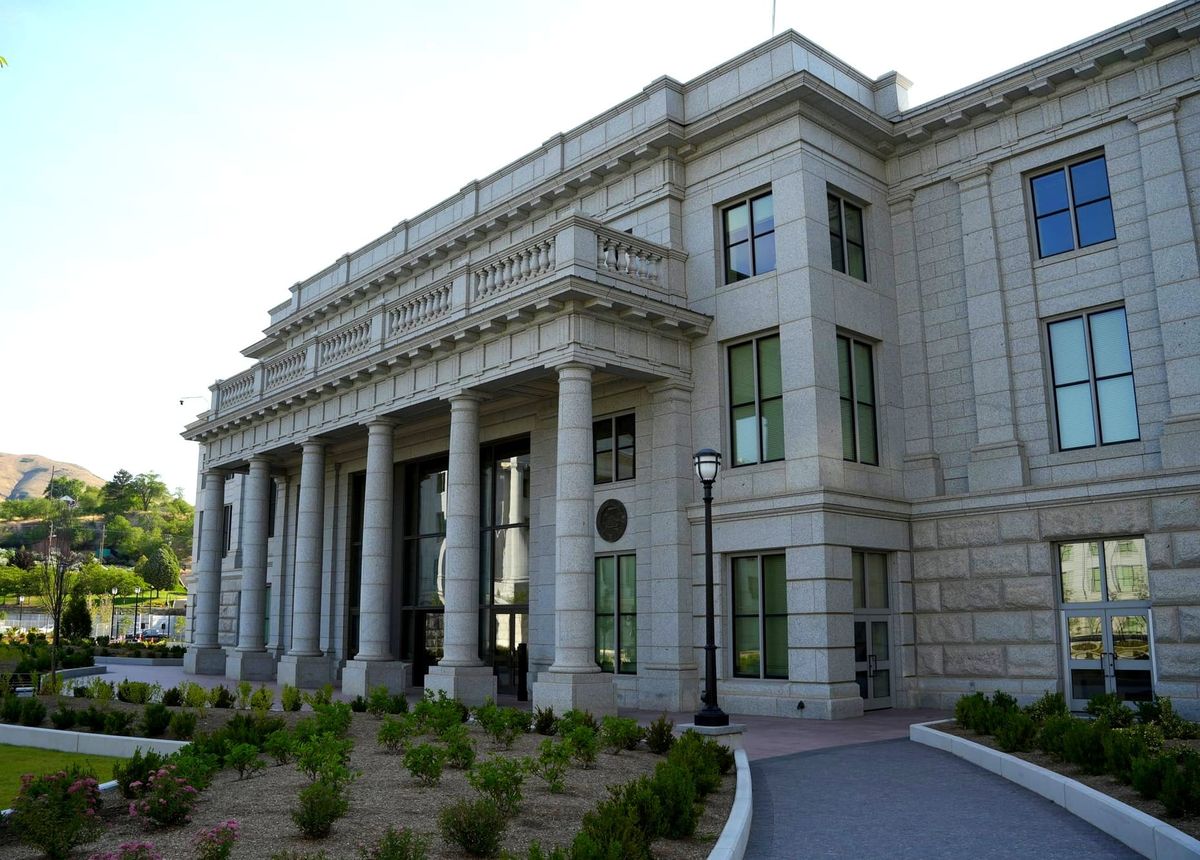
The Utah Spaceport Exploration Committee June 19 meeting took place in the Senate Building at the State Capitol
The Road Ahead
The committee's next major milestone comes August 21, when RS&H is expected to return with substantially more detailed findings.
The consultants will present preliminary site layouts and minimum viable architectures for both Delta and Green River, updated staffing models, flight safety and environmental assessments, market forecasts under multiple growth scenarios, a competitiveness analysis, economic impact findings from KPMG, financial structure options, and early recommendations on governance models for what the consultants continue to describe as a "hypothetical Utah spaceport."
Andrew Nelson characterized the August session as a "rich information meeting" that will move the discussion beyond site selection and into questions of implementation.
A comprehensive final report and supporting technical appendices are scheduled for delivery by September 30, with a formal presentation of the completed study expected in October.
From there, the committee plans to brief the Legislature's Transportation Interim Committee in November as lawmakers begin preparing for the 2027 legislative session.
The path toward a licensed spaceport remains considerably longer.
While the committee has discussed engaging with the FAA's Office of Commercial Space Transportation, committee member Jim Sutton emphasized that conversations with the agency's pre-application team are designed to help prospective applicants understand requirements, identify gaps, and develop a roadmap before any formal license application is submitted.
Sutton recommended that committee leadership meet with the FAA pre-application team later this year, assuming the committee ultimately recommends moving forward. Such discussions would not constitute an application for a spaceport license but would provide Utah officials with a clearer understanding of regulatory requirements, timelines, and potential state investments before the Legislature convenes in early 2027.
Risk analysis is also becoming a larger part of the study's second phase. RS&H is developing mitigation strategies covering site development challenges, environmental and regulatory concerns, potential federal policy changes, public acceptance, and the possibility that projected market demand may not materialize as expected.
At the same time, committee members are working to raise Utah's profile within the commercial space industry. Sutton confirmed that Utah has been submitted for a speaking opportunity at the Spaceport Summit during Space Week in Orlando in January 2027, where spaceport operators, launch providers, FAA officials, and economic development leaders from around the country gather to discuss the future of commercial space transportation.
The FAA Commercial Space Transportation Conference, now expected in May 2027 after weather-related disruptions to previous events in Washington, D.C., is also viewed as an important venue for introducing Utah's emerging spaceport strategy to national stakeholders.
Leif Elder, Carlos Braceras, and Sen. Ann Millner participate in the June 19th Utah Spaceport Exploration Committee meeting to evaluate the feasibility of developing a commercial spaceport and broader aerospace ecosystem in Utah. Photo: Mark Tullis/TechBuzz
Utah’s Moment
Utah is not starting this conversation from zero. The state’s aerospace and defense sector, anchored by Hill Air Force Base, ATK/Northrop Grumman’s solid rocket motor operations at Promontory, and a growing cluster of space-adjacent companies across the Wasatch Front, already represents one of the densest concentrations of aerospace capability in the American West. The USU Space Dynamics Laboratory, represented on the committee by Neil Holt, gives Utah a direct pipeline from research to application. The state’s geography — vast desert terrain, high elevation, sparse population in the western half, and existing military airspace infrastructure — turns out to be a structural advantage for launch operations that the 1971 University of Utah spaceport study commissioned under Governor Calvin Rampton first identified and that RS&H’s 2026 analysis independently confirmed.
What is different now is the market. The commercial launch industry has grown from a handful of providers to a competitive, maturing sector. The FAA licensed and permitted more than 180 launch and reentry operations in fiscal year 2024, and forecasts project continued growth. Inland launch sites that are capable of serving polar, sun-synchronous, and point-to-point missions that coastal sites handle less efficiently, represent an underdeveloped segment of national launch infrastructure. That is the gap Utah is positioning itself to fill.
Whether Utah ultimately builds a spaceport in Delta, Green River, or nowhere at all, the committee's work reflects a broader reality about the modern space economy.
Commercial space is no longer defined solely by rockets and launches. It increasingly depends on sophisticated infrastructure, regulatory frameworks, workforce development, environmental stewardship, risk management, and long-term operational planning. As satellite constellations multiply, launch activity accelerates, and new space-based industries emerge, the demands placed on the underlying ecosystem continue to grow.
That reality was evident throughout the committee's discussions. Members spent as much time examining governance structures, licensing pathways, economic sustainability, and public investment models as they did debating geography. The question before Utah is no longer simply where a spaceport could be located. It is whether the state wants to build the institutional capacity required to participate in an increasingly competitive and technically complex space economy.
The next several months will determine whether Delta or Green River advances as Utah's preferred site. The larger question may take years to answer.
If the committee's work ultimately succeeds, the most important outcome may not be a launch pad in the desert. It may be the creation of a framework that allows Utah to compete for aerospace investment, advanced manufacturing, research, testing, and future space-related industries that have yet to emerge.
For now, the state remains in the study phase. But after a year of technical analysis, legislative engagement, and increasingly detailed planning, Utah's leaders appear to be preparing for the possibility that the next chapter of the state's aerospace story will extend beyond the atmosphere.
The committee’s next public meeting is August 21, 2026, from 9:00 to 11:00 a.m.
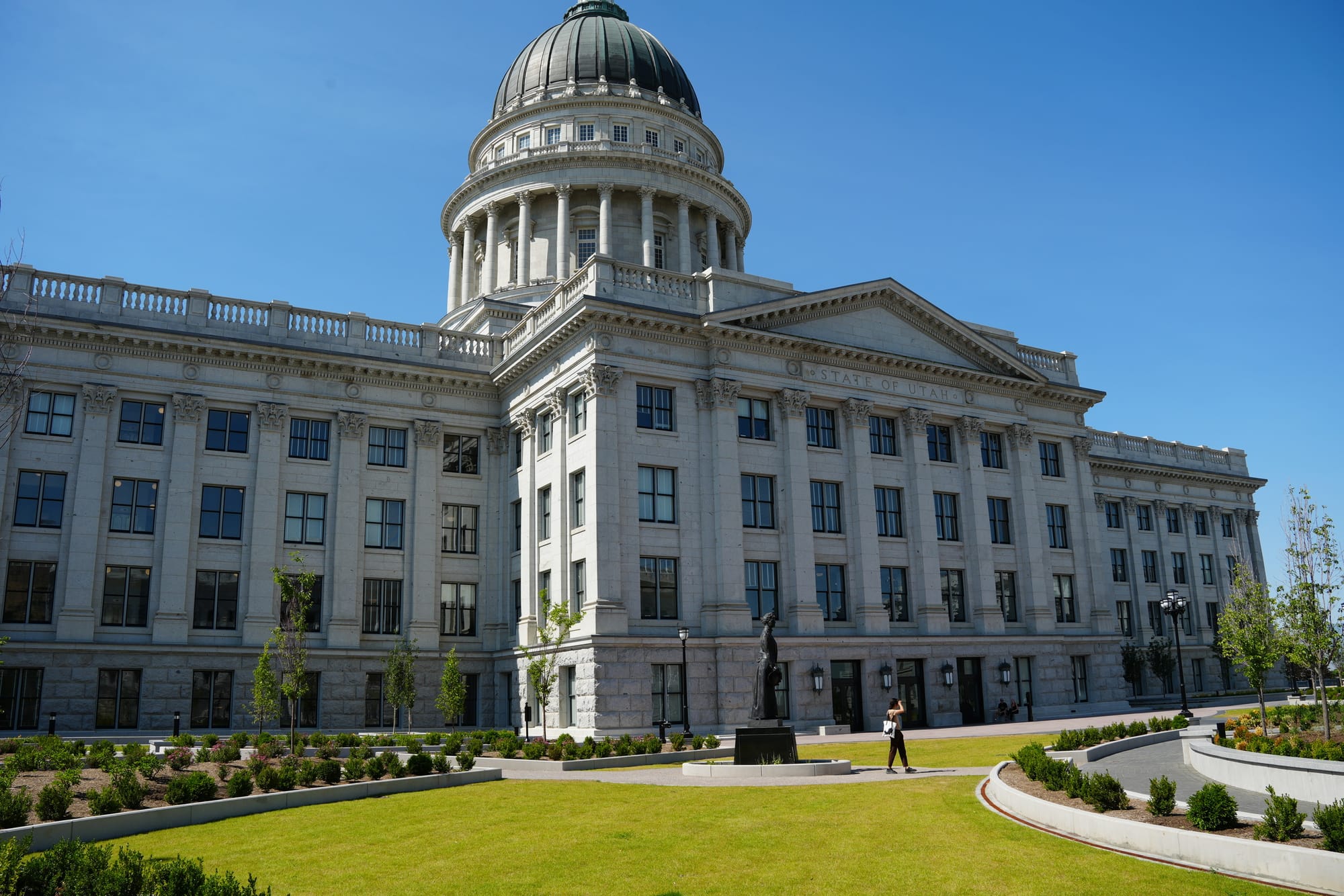
View of the north side of the Utah State Capitol from the Senate Building, where the Utah Spaceport Exploration Committee met to review RS&H findings narrowing potential spaceport locations to from seven sites to two: Delta and Green River. Photo: Mark Tullis/TechBuzz
Share this article
The link has been copied!
Your link has expired. Please request a new one.
Your link has expired. Please request a new one.
Your link has expired. Please request a new one.
Great! You've successfully signed up.
Great! You've successfully signed up.
Welcome back! You've successfully signed in.
Success! You now have access to additional content.