Utah Adds Healthcare Pillar to Pro-Human AI Initiative, Names Six Independent Evaluators
Utah added a Healthcare pillar to its Pro-Human AI Initiative, signed six independent third-party evaluators, and approved five healthcare sandbox pilots, including University of Utah Health, Intermountain Health, Nolla Health, Expect Fitness, and August AI.
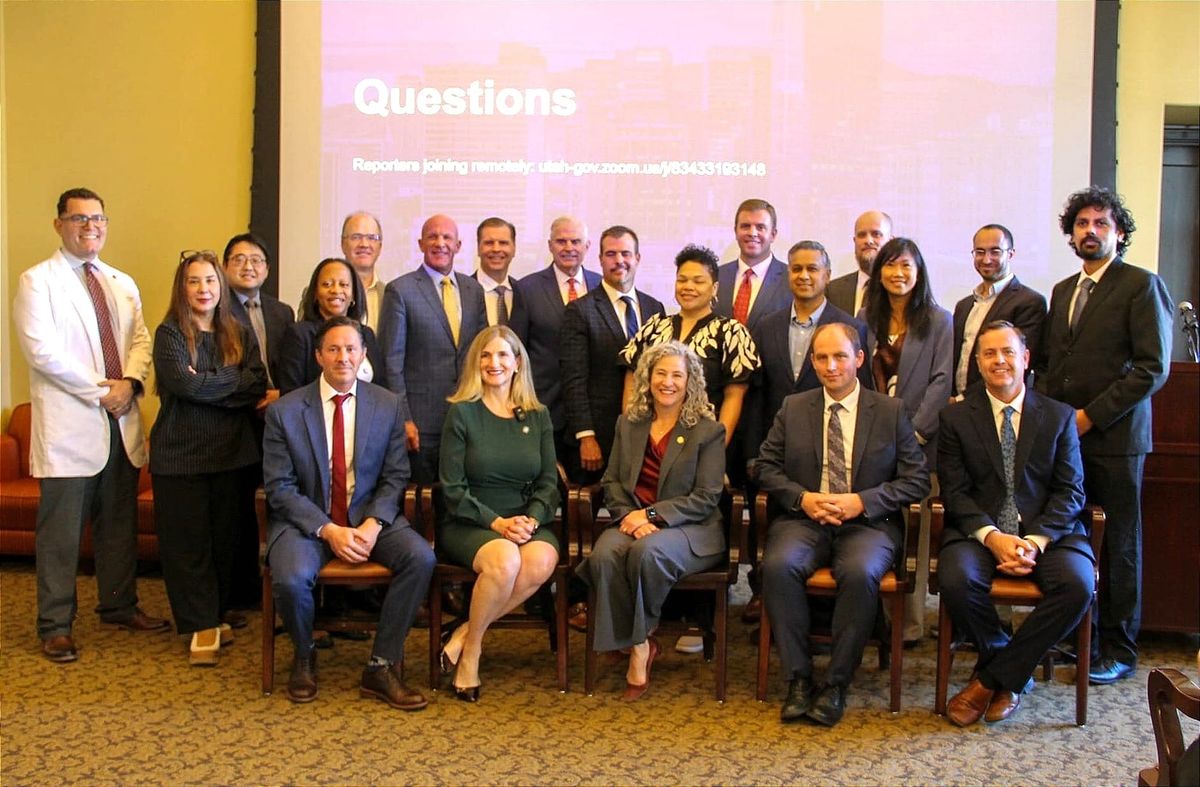
Participants gather for a group photo following the Pro-Human AI Initiative healthcare announcement at the Utah State Capitol, October 5, 2026. Photo; Utah Department of Commerce
Participants gather for a group photo following the Pro-Human AI Initiative healthcare announcement at the Utah State Capitol, October 5, 2026. Photo; Utah Department of Commerce
Salt Lake City, Utah — October 5, 2026
Utah is extending its Pro-Human AI Initiative into healthcare, adding a dedicated Healthcare pillar, a new Taskforce member, and an independent evaluation network meant to check the claims of companies testing clinical AI in the state.
The announcement, made at the State Capitol today by the Pro-Human AI Taskforce and the Utah Department of Commerce's Office of Artificial Intelligence Policy (OAIP), also brings five new regulatory mitigation agreements into the state's regulatory sandbox.
Tracy Gruber, Commissioner of the Utah Department of Health and Human Services, joins the Taskforce as part of the expansion.
"Technical innovation will never supersede patient safety"
Taskforce co-chair and Commerce Commissioner Margaret Woolley Busse said the Healthcare pillar is "pivotal" as the state navigates AI in healthcare, and described OAIP as building a model framework that pairs better outcomes with oversight and accountability.
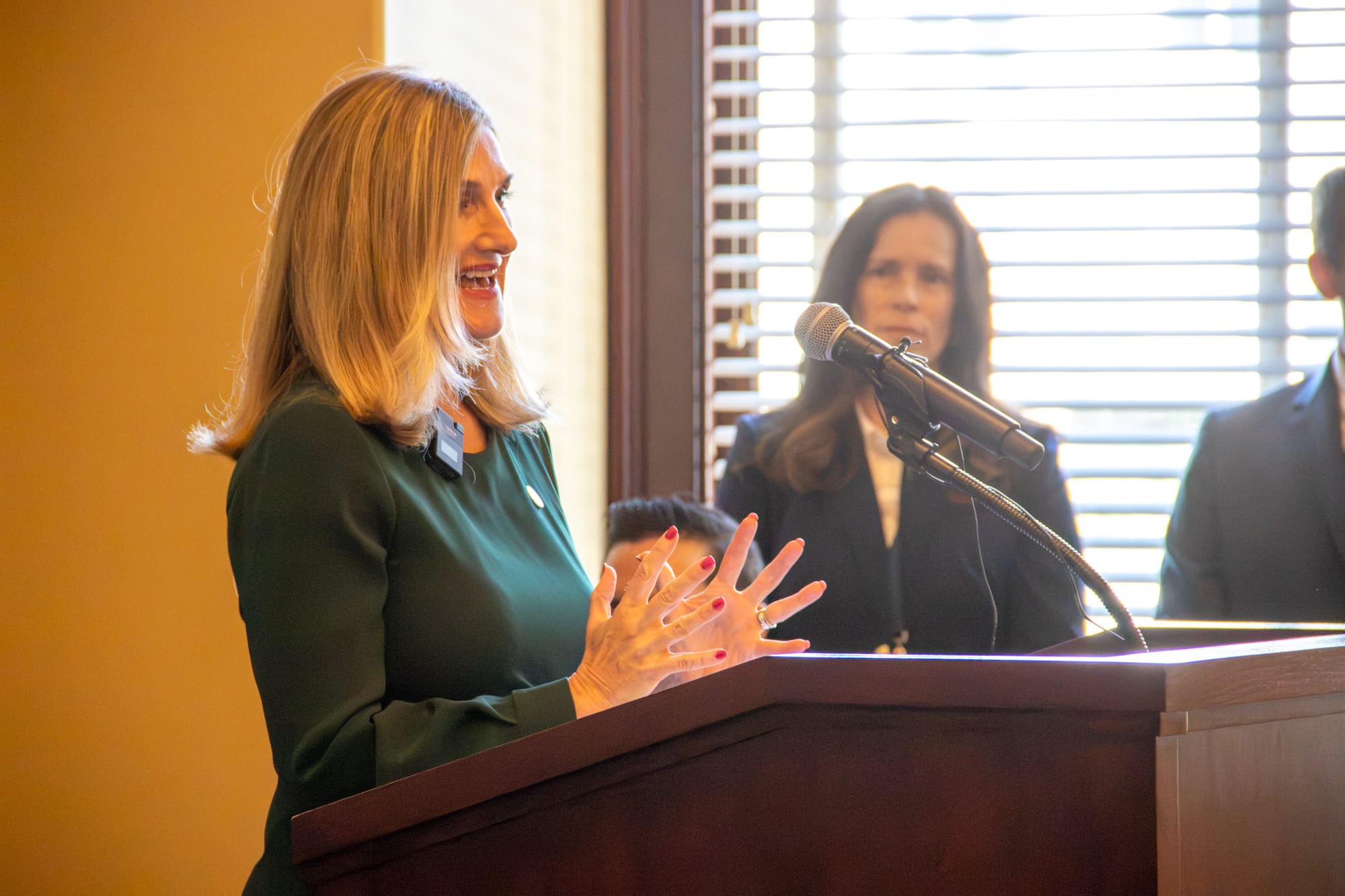
Margaret Woolley Busse, Commissioner of the Utah Department of Commerce and co-chair of the Pro-Human AI Taskforce, speaks at the Pro-Human AI Initiative press conference at the Utah State Capitol, October 5, 2026. Photo; Utah Department of Commerce
OAIP Director Zach Boyd said the office's foundational approach is that technical innovation will never supersede patient safety. Bringing independent clinical evaluators into the process, he said, means every claim made by AI developers is independently verified.
The state is positioning the approach as a contrast to relying on companies' self-reported claims, embedding independent technical and health system evaluators directly into the oversight framework.
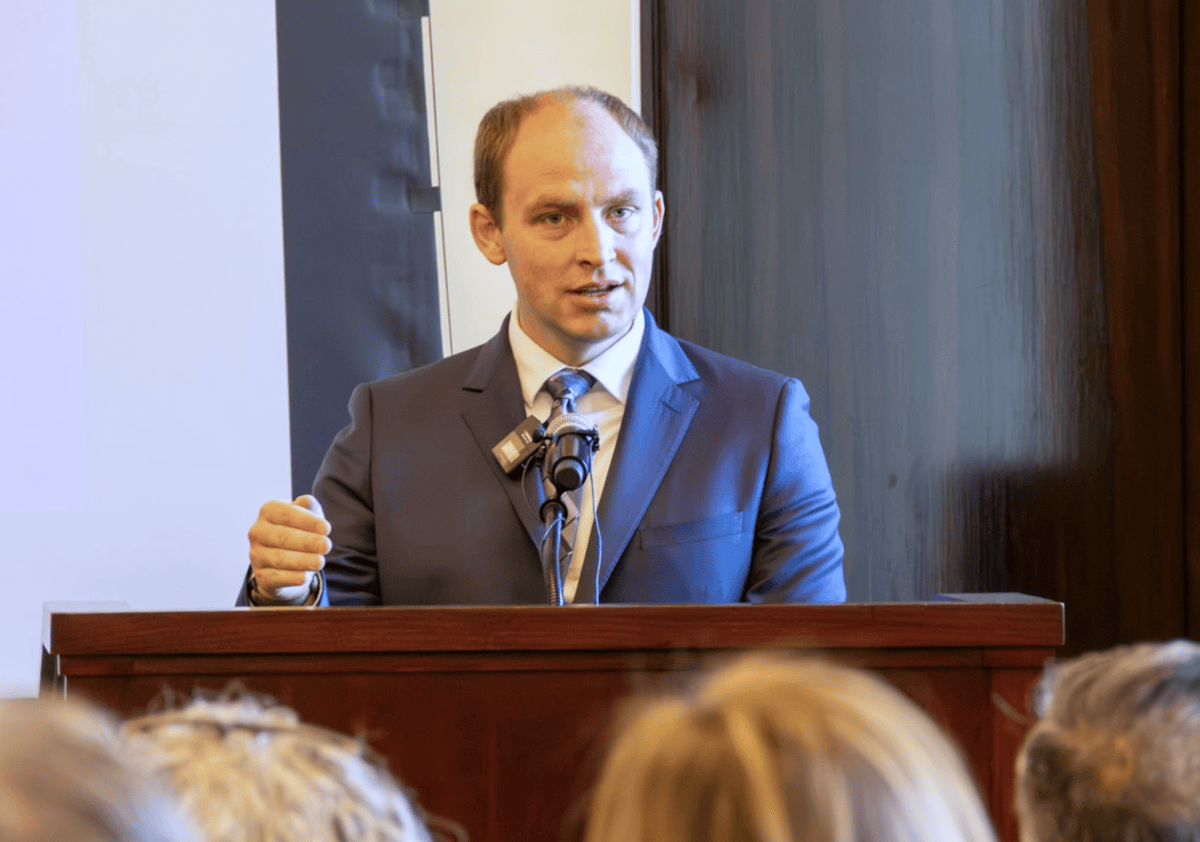
Zach Boyd, Director of the Office of Artificial Intelligence Policy: "Our foundational approach is that technical innovation will never supersede patient safety." Pro-Human AI Taskforce, State Capitol, October 5, 2026. Photo; Utah Department of Commerce
Six third-party evaluators
OAIP has signed agreements with six independent organizations that will validate technical attestations from sandbox participants, audit accuracy in AI decision reporting, and provide independent clinical evaluations against established medical standards:
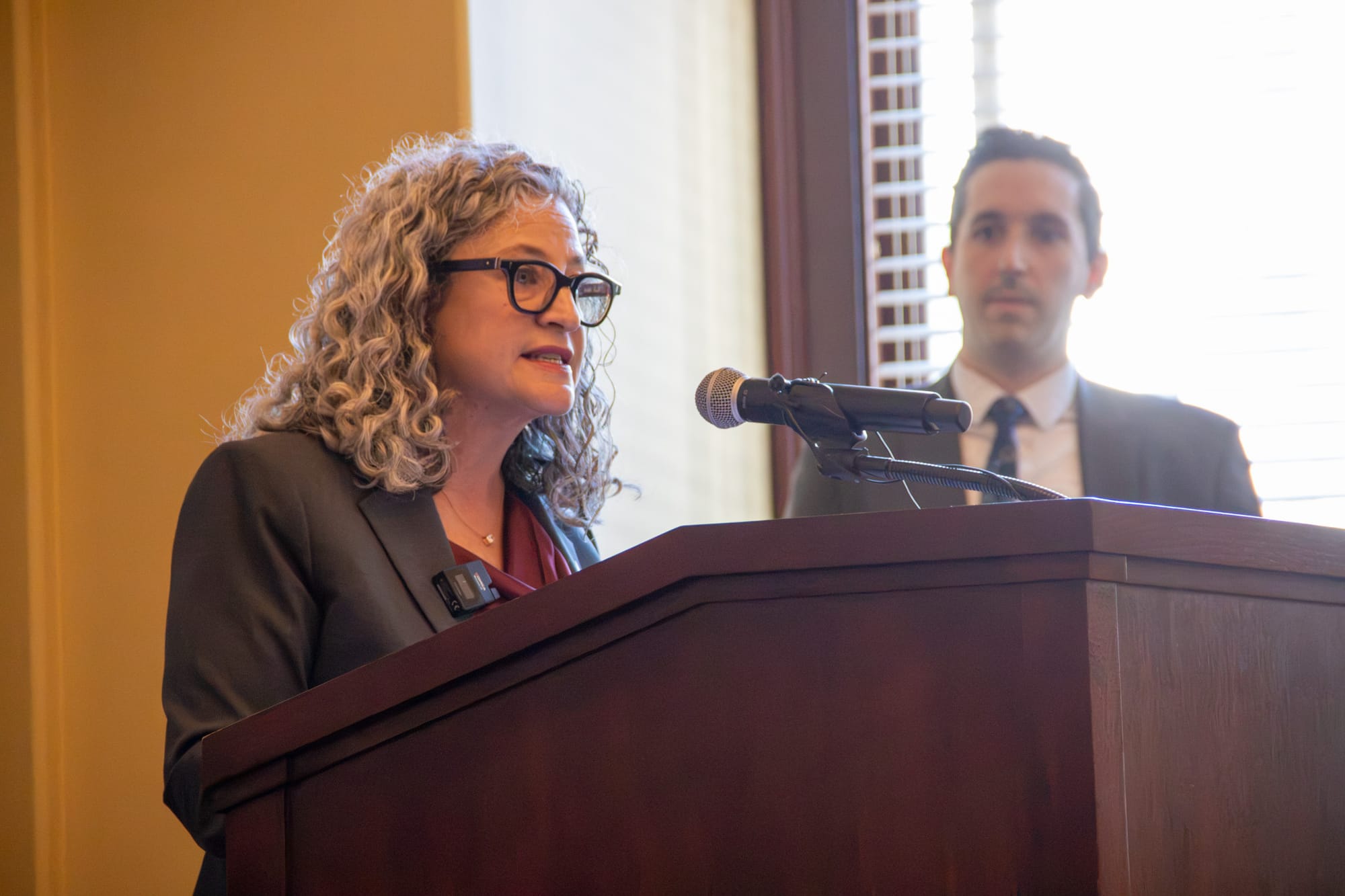
Tracy Gruber, Commissioner of the Utah Department of Health and Human Services and the newest member of the Pro-Human AI Taskforce, October 5, 2026. Photo; Utah Department of Commerce
Five new pilot agreements
The regulatory mitigation agreements are one-to-three-year pilots that let organizations gather real-world safety and efficacy data for clinical AI tools in controlled settings:
University of Utah Health and Intermountain Health received umbrella agreements that create expedited review pathways for future pilots, each of which will still be individually vetted.
Nolla Health will pilot AI-assisted visual evaluation and treatment pathways for mild-to-moderate acne, under specialist oversight. Based in New York City, Nolla Health is an AI-powered healthcare company that uses AI and clinician oversight to provide personalized diagnosis, treatment and prescriptions, starting with skin health and acne care.
Expect Fitness will offer an AI-enabled physical therapy pathway for women dealing with postpartum recovery, urinary incontinence, and pelvic health issues. Expect Fitness is a New York-based digital health and fitness company offering OB/GYN-approved prenatal and postnatal workouts, including strength, cardio, yoga, Pilates and pelvic-floor training through its app
August AI received a stage-gated pilot for refills of routine, non-controlled chronic disease medications, with required human physician review before any prescription is authorized. August AI is a Bengaluru-based health-tech company building an AI health companion that helps users understand symptoms, interpret lab reports and prescriptions, and navigate health information between doctor visits.
Dan Liljenquist, Chief Strategy Officer at Intermountain Health, speaks at the Pro-Human AI Initiative press conference at the Utah State Capitol, October 5, 2026. Intermountain Health was approved for an umbrella agreement that creates expedited review pathways for future healthcare AI pilots. Photo; Utah Department of Commerce
Safeguards
The pilots fall under multi-layered oversight in coordination with the Division of Professional Licensing (DOPL). Participants must give patients clear AI disclosures, carry specialty medical malpractice insurance, run under 24-hour incident response plans, and preserve patients' traditional legal remedies.
Data from the pilots will be shared with the Utah Legislature and the public to inform future permanent, evidence-based healthcare regulations.Third-Party Evaluator Network.
Federal oversight and liability
In a separate statement, OAIP said the agreements apply only to Utah's state professional practice laws and administrative rules. The office said the pilots are designed to "complement, rather than disrupt, federal authority" and do not interfere with the U.S. Food and Drug Administration's jurisdiction over medical products, software, and devices. OAIP said it will keep coordinating with federal partners.
The office also said the agreements do not waive, reduce, or shield participating companies or supervising clinicians from civil, criminal, or medical malpractice liability. Patient protections, standard-of-care expectations, and legal remedies remain intact for every authorized pilot.
For further reading see pdf below: Evidentiary Expectations for Healthcare AI Sandbox. Published by the Utah Department of Commerce Office of Artificial Intelligence Policy (OAIP), outlining clinical safety, evaluation staging, and public health benefit requirements for healthcare AI applicants. August 2026. Authors: Alice Schwarze and Zach Boyd.