Do Courtroom Cameras Change Judicial Behavior? New BYU-NYU Study Suggests They May
A new BYU-NYU study uses AI to study what happens when federal appellate courts go on video — and finds that courtroom behavior does change.


A new BYU-NYU study uses AI to study what happens when federal appellate courts go on video — and finds that courtroom behavior does change.
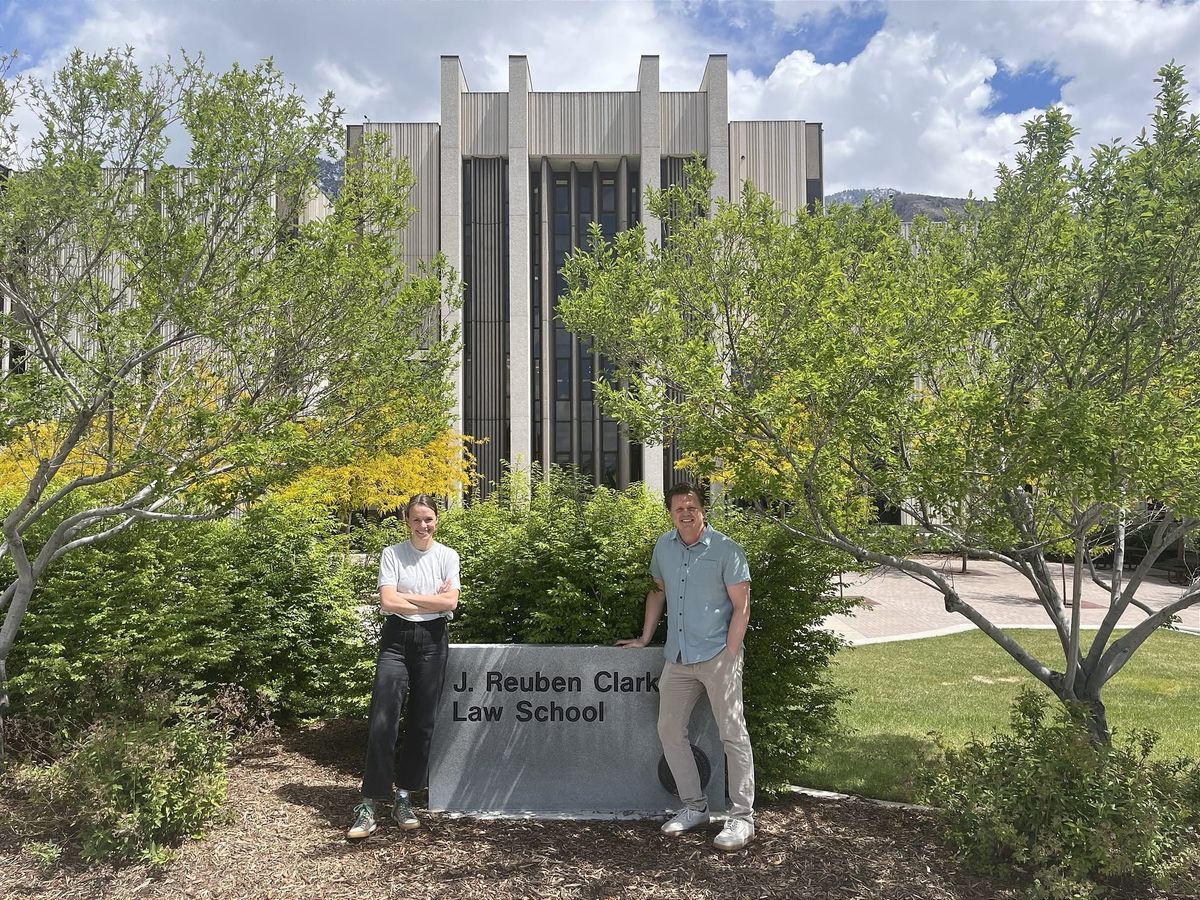
Provo, Utah — May 11, 2026
There is a moment every public speaker knows. The moment the red light on a camera blinks on. Something shifts: posture straightens, sentences get a little more deliberate, the voice finds a slightly different register. It happens to politicians, professors, and pundits. A new study from researchers at BYU Law and NYU now raises a pointed question: does it happen to federal judges, too?
The answer, according to a new paper published in The Journal of Law & Empirical Analysis, is not a clean yes — but it may be closer to yes than the federal judiciary has long assumed.
The study examines what happened inside the U.S. Court of Appeals for the Ninth Circuit, one of the nation’s most prominent federal appellate courts, when it gradually rolled out video recording for oral arguments. Using AI-assisted speaker identification to analyze hundreds of courtroom exchanges across a hand-built dataset of Ninth Circuit proceedings, the research team found preliminary evidence that cameras can alter the dynamics of oral argument. In some analyses, judges spoke more and appeared more likely to interrupt attorneys when proceedings were video recorded rather than audio only. Attorneys, too, seemed to adjust.
But the paper is notably careful in how it presents those findings. Some statistical models found no significant camera effect at all. The stronger evidence emerged in narrower specifications, especially when the researchers compared judges who appeared in both audio-only and video-recorded hearings, and when they allowed the effects of cameras to vary by judicial characteristics. The result is not a definitive verdict that judges perform for cameras. It is something both more modest and more important: the first serious empirical evidence that cameras may change how federal judges behave in court.
For a country still debating whether to put cameras in its highest courts, that is a consequential finding.
The team and the technology
The study is a collaboration between Aaron Kaufman of NYU (Abu Dhabi campus), who conceived the project and developed the underlying AI methodology, and BYU Law professors Dane Thorley and Lucy Williams.
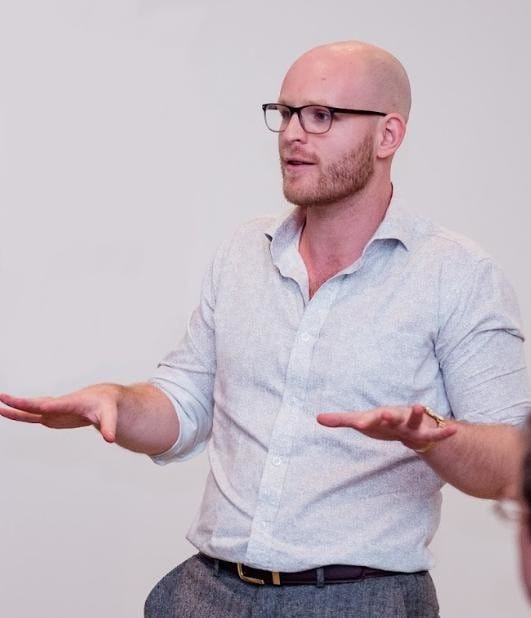
Thorley is an empiricist who has studied judicial behavior for years. Williams is a legal theorist whose work explores rhetoric and judicial action. Together, they brought complementary lenses to a question at the intersection of law, political science, and artificial intelligence.
The technical backbone of the study is a process known as diarization: the automated identification of who is speaking, and for how long, in an audio or video recording. Kaufman had been refining machine-learning methods to apply diarization to court proceedings, where the raw materials are often messy, speaker labels are absent, and large-scale hand coding is prohibitively labor-intensive.
“He jumped on the AI bandwagon pretty early,” Thorley said of Kaufman in a recent interview with TechBuzz News. “He’s done a good deal of work on the use of AI in a number of areas, but particularly in the area of diarization.”
In this study, the researchers used a method called Reference-Dependent Speaker Verification to distinguish judges from non-judge speakers and to identify which judge on a panel was speaking at a given moment. That allowed them to measure how much of each hearing was occupied by judges, how frequently judges spoke, how long their speaking turns lasted, and how attorney speech changed in response.
The AI did not determine whether a judge was fair, theatrical, or persuasive. It served primarily as a measurement tool, helping the researchers identify speaker turns at a scale that would have been difficult to achieve manually. Even so, the process remained labor-intensive. The final dataset included 156 Ninth Circuit cases — 86 audio-only and 70 video-recorded — involving 17 judges and more than 17,000 distinct utterances.
That is substantial for a hand-built empirical legal dataset, but it is still only a slice of the court’s full docket. The sample was also limited in part by the practical demands of the diarization method, which required sufficiently clean reference audio to train the model on particular judges’ voices.
The Ninth Circuit experiment
The Ninth Circuit drew the researchers’ attention for a specific reason: it offered something rare in legal empirics, a real-world policy transition that approximated a natural experiment.
The court did not switch to video all at once. Beginning in 2014, it gradually installed camera equipment in courtrooms across its courthouses, recording arguments on video as those rooms came online. By 2015, video recording had become standard throughout the circuit. During that transition period, some arguments were captured only in audio, while others were recorded and streamed on video.
According to court administrators, cases were assigned to courtrooms in the ordinary course of scheduling, rather than selected for cameras based on subject matter or panel composition. That gave the researchers an opportunity to compare arguments held in camera-equipped courtrooms to those held in rooms without cameras.
The paper describes this rollout as quasi-random rather than truly randomized, and it is careful not to oversell the design. The authors report that the treatment and control groups were not perfectly balanced on all observable characteristics, including some differences in panel composition. Those imbalances matter, and they help explain why the paper’s results are more nuanced than a simple headline might suggest. Still, the court’s staggered transition gave the researchers an unusually strong setting in which to ask whether visibility itself changes courtroom behavior.
What they found
The study’s most attention-grabbing finding is also the one it presents most cautiously: in some analyses, judges on camera appeared to speak more and to interrupt attorneys more frequently than judges in audio-only proceedings.
That conclusion rests on more than one measure. The researchers looked at how much total speaking time judges occupied relative to attorneys, how often judges spoke, and how long individual speaking turns lasted. To approximate interruption, they examined the pattern of attorney speech. In appellate oral argument, attorneys are generally interrupted only by judges, so shorter and more fragmented attorney speaking turns can function as a proxy for greater judicial interjection.
The descriptive trendlines were suggestive. Around the point at which cameras began appearing in Ninth Circuit courtrooms, the researchers observed shifts consistent with judges taking up more of the argument and attorneys receiving less uninterrupted time to speak. In some charts, the change appeared as a clear discontinuity; in others, as a reversal in the existing trend.
But when the researchers applied broader statistical models that pooled all judges together and controlled for judicial characteristics, those effects often disappeared. The stronger findings emerged in more targeted specifications, particularly when the analysis was limited to judges who appeared in both audio-only and video hearings, which allowed for more apples-to-apples comparison. In those narrower models, the camera effect reappeared.
That makes the paper more tentative than many study summaries will likely be. It does not show that cameras always make judges speak more or interrupt more. It shows that there is preliminary, model-sensitive evidence that cameras may do so under certain conditions, and that the effect is strong enough to warrant serious attention.
That nuance matters. It is one thing to say that a camera changes what happens in a courtroom. It is another to say that the evidence is emerging, uneven, and still dependent on how the comparison is drawn. The paper says the latter.
Performance, caution, or both?
The authors situate their work within a broader debate that has long divided judges, lawyers, and scholars. One camp has argued that courtroom cameras promote transparency and public understanding. Another has worried that cameras distort proceedings by making participants self-conscious or performative. The new study speaks most directly to that second claim, what the authors call the “performative judging hypothesis.”
Still, the paper does not and cannot establish motive. A judge who speaks more on camera may be grandstanding. But that same judge may also be trying to clarify the legal issues for a broader public audience, or behaving more carefully because the proceeding is now preserved and viewable. More speech is not necessarily worse speech; more interruption is not necessarily incivility.
Williams emphasized that ambiguity in the TechBuzz interview. Increased talking and interrupting, she noted, is not the same thing as bad behavior. Cameras may induce a kind of disciplined self-consciousness as much as showmanship.
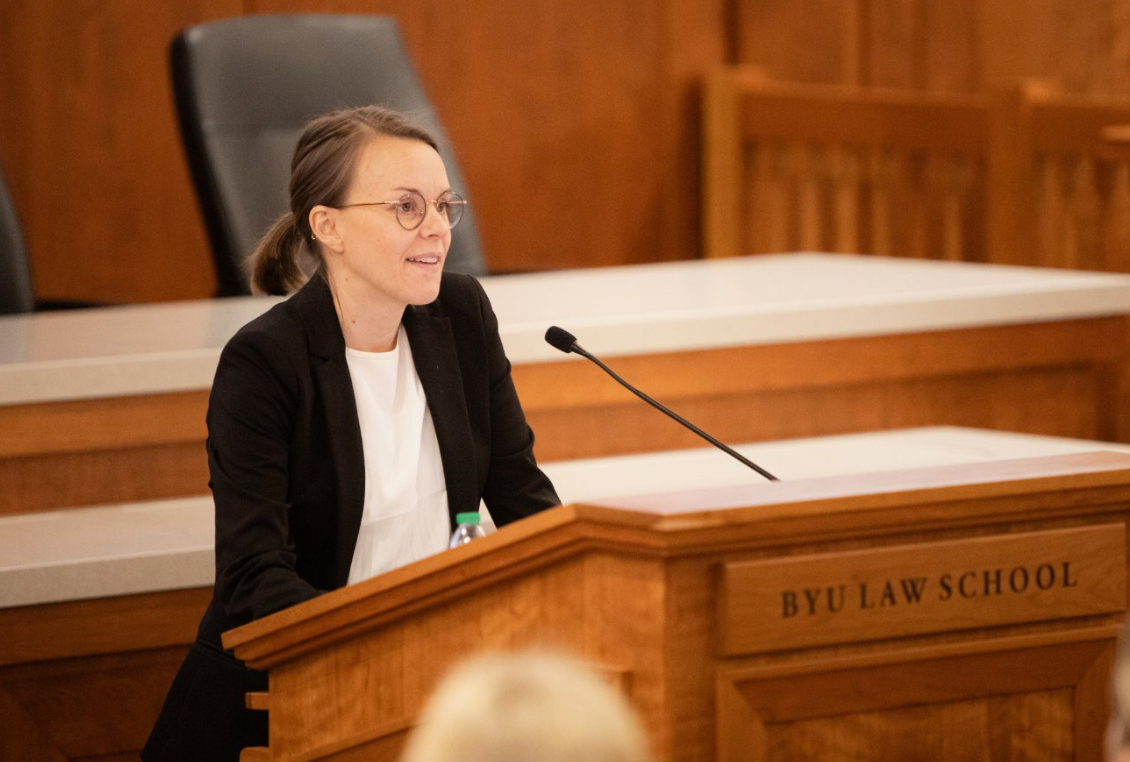
“On the flip side,” she said, “there’s also the possibility that if they know they’re being observed, they behave very cautiously and circumspectly.”
That possibility shadows the entire paper. A courtroom camera is not merely a passive window into judicial behavior. It may also be an intervention that subtly changes the behavior being observed.
Uneven effects across judges
The study also explored whether the effects of cameras varied across different kinds of judges. Here, too, the results are intriguing but tentative.
In interactive models, the authors found evidence that white and male judges became more likely to interrupt when cameras were present, while speaking for shorter durations. Non-white judges, by contrast, appeared to speak for longer and interrupt less in video-recorded proceedings. The paper also suggests that camera effects may interact with the racial, ethnic, and gender composition of attorneys and panels.
These findings are exploratory rather than definitive, and the authors treat them that way. With only 156 cases and 17 primary judges in the dataset, it is difficult to disentangle the independent effects of race, gender, ideology, seniority, and panel role with high confidence. Still, the subgroup patterns are important enough to flag, particularly because recent scholarship has focused on how gender and race shape the back-and-forth rhythm of appellate oral arguments even without cameras.
If cameras do change behavior, the paper suggests, they may not change everyone’s behavior in the same way.
Attorneys changed, too
The effect of cameras did not stop at the bench. Attorneys also appeared to adjust their behavior when arguments were video recorded.
Because the diarization system grouped lawyers together acoustically as non-judge speakers, the attorney-side measures are less granular than the judicial ones. Even so, the researchers found changes in the amount and segmentation of lawyer speech consistent with judges taking up more of the conversational space. That does not necessarily mean attorneys became less effective or less prepared. But it does suggest that cameras may alter the full interactional ecology of oral argument, not merely judicial self-presentation.
That point may prove especially important for future research. If video changes both how judges ask questions and how lawyers answer them, then the courtroom camera is not just documenting a legal exchange. It may be reshaping the exchange itself.
What the study cannot tell us
The researchers are candid about what their paper does not establish.
Most importantly, the study does not tell us whether cameras affect case outcomes. It tracks changes in the conduct of oral arguments, not changes in votes, opinions, or legal doctrine. A judge who speaks more on camera may still decide cases exactly the same way off camera. For some readers, that will limit the force of the findings.
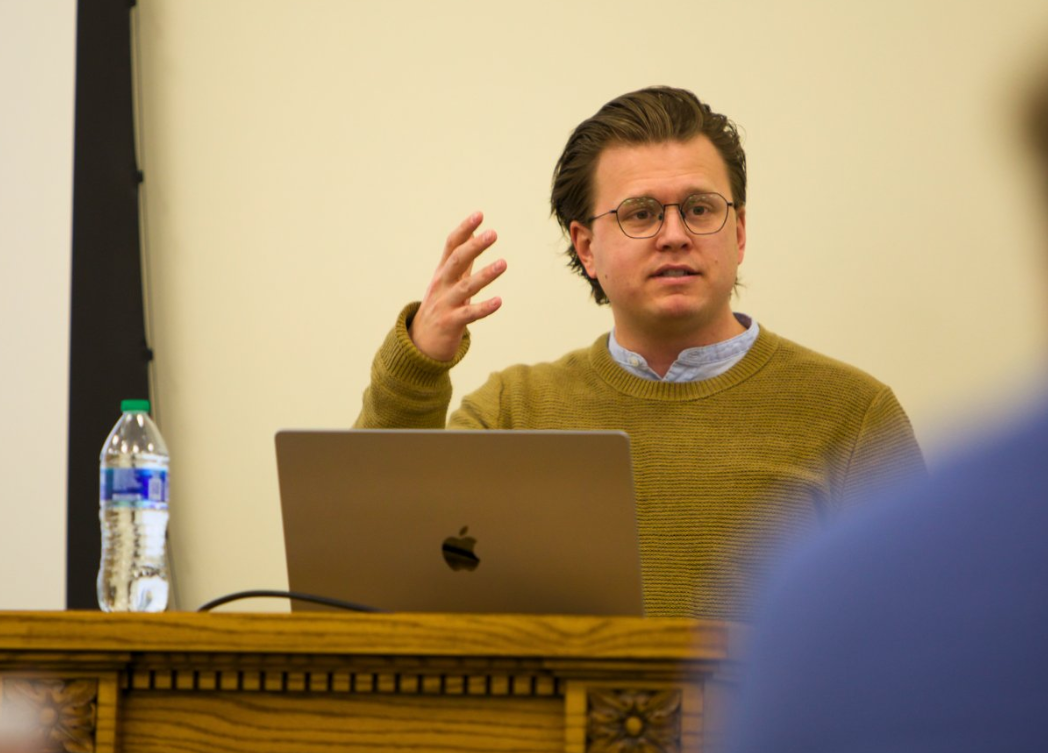
“You could argue, who cares if the judges are taking up more of the airtime during oral arguments if it isn’t making a difference on the back end of the case,” Thorley said. “And I think that argument resonates with me a little bit.”
The paper also does not prove that cameras cause “grandstanding” in the colloquial sense. It identifies changes in speaking patterns, not inner motivations. Nor does it show that the Ninth Circuit’s experience will necessarily generalize to the Supreme Court, to lower-profile federal circuits, to district courts, or to fully remote hearings. The Ninth Circuit is unusually large, visible, and geographically sprawling, covering a huge swath of the US, including the entire west coast, Hawaii, Guam, and Alaska, as well as Montana and Nevada. Its institutional culture may not be representative.
And then there is the question of scale. The authors worked with 156 cases because high-quality diarization at this level of detail still requires substantial front-end labor. The sample is meaningful, but not comprehensive. The paper is best understood as an opening empirical intervention rather than a final word.
A field long ruled by intuition
Even with those limits, the paper marks a real advance in a debate that has often run on assumption more than evidence.
For decades, much of the empirical work on courtroom cameras has relied on surveys: judges, lawyers, and court staff reporting whether they believe cameras changed anything. Those studies generally found that participants perceived little effect. This paper takes a different approach. Rather than ask judges how cameras affect them, it examines what they actually did in arguments recorded under different conditions.
Williams described the project in those terms: less a final answer than a first serious attempt to observe, rather than simply ask, whether cameras alter real judicial behavior.
Thorley recalled that at least one judge he encountered off the record had no trouble believing the premise. “This judge laughed and said, ‘Oh yeah, I totally ham it up when there’s a camera in the room,’” Thorley reported. “This judge was insistent that it didn’t change anything important ... but yeah, I’m probably more performative.”
That anecdote is not the study’s evidence. But it does capture the tension at the center of the paper. Behavioral changes can feel minor to the person making them and still matter in the aggregate, especially when the people involved are federal judges.
The broader stakes
The question of cameras in federal courtrooms has been debated for decades, and it remains unresolved. Most federal district courts still prohibit them. Most federal appellate courts still do not provide routine video of ordinary oral arguments. The Supreme Court remains especially resistant.
That caution sits uneasily with the modern expectation of public visibility. The pandemic forced courts, like nearly every other institution, to become more comfortable with remote participation and digital access. Public demand for greater courtroom transparency has only intensified in the years since.
The issue is not theoretical. In Utah, a judge ruled just days ago that cameras will remain in the courtroom during hearings for Tyler J. Robinson, who is charged in the fatal shooting of conservative activist Charlie Kirk that occurred on UVU's campus last year. Robinson’s lawyers argued that televised proceedings risk turning the case into “entertainment or sensationalism” and could prejudice future jurors. Media organizations and prosecutors pushed back, arguing that open coverage serves transparency and that responsible courtroom reporting is preferable to rumor and commentary outside the courtroom. The dispute arises in a starkly different setting from the Ninth Circuit study — a state criminal trial rather than a federal appellate argument — but it reflects the same underlying tension: whether cameras primarily enhance public access, or whether they also change the proceeding they are meant to reveal.
If anything, the stakes are often higher in trial courts, where cameras may affect not just judges and lawyers but witnesses, victims’ families, and the jury pool itself.
Proponents of cameras argue that they widen access, improve public understanding, and bring the judiciary closer to the democratic values of openness that surround other branches of government. Critics worry that transparency can come at the cost of distortion, that once proceedings are recorded, streamed, clipped, and circulated, participants may begin responding not just to one another but to an imagined audience beyond the room.
This study does not resolve that tension. But it sharpens it. It suggests that camera policy should be understood not merely as a question of public access, but as a question of institutional design. Cameras may make courts more visible while also subtly changing how judges and lawyers behave within them.
That is not necessarily an argument against cameras. It may, however, be an argument for thinking more carefully about how they are introduced: whether proceedings are livestreamed or posted later, whether camera setups are unobtrusive and standardized, and whether rollouts are structured in ways that can be studied rather than simply assumed harmless.
What comes next
The researchers already see several avenues for expanding the work. Newer diarization tools are faster and more scalable than the methods available when this project began, which could allow much larger sets of Ninth Circuit arguments to be processed in the future. Thorley has suggested that expanding the sample could substantially improve statistical precision and help determine whether the apparent camera effects hold up or fade as the data grows.
The authors are also watching other courts. If another federal circuit moves toward video recording, they hope to be involved before the rollout begins, when a cleaner study design might be possible.
“We would love to be involved in figuring out a way to roll it out so that we can study it systematically,” Thorley said.
That ambition points to something larger than a single paper. Courts considering expanded video access now have, at minimum, an empirical warning label. The question is no longer whether cameras in court might affect behavior in theory. There is now evidence — preliminary, mixed, carefully qualified, but real — that they may.
For decades, the cameras debate in federal courts has been sustained by intuition, anecdote, and constitutional principle. This study does not end that debate. But it does begin to move it onto firmer empirical ground. And in a legal culture that asks everyone else to follow the evidence, that is no small thing.
To read the full study by Aaron Kaufman, Dane Thorley, and Lucy Williams, published on February 14, 2026, click here: journals.sagepub.com.