State of Innovation 2026: Speed, Trust, and the Human Cost of Getting Innovation Wrong
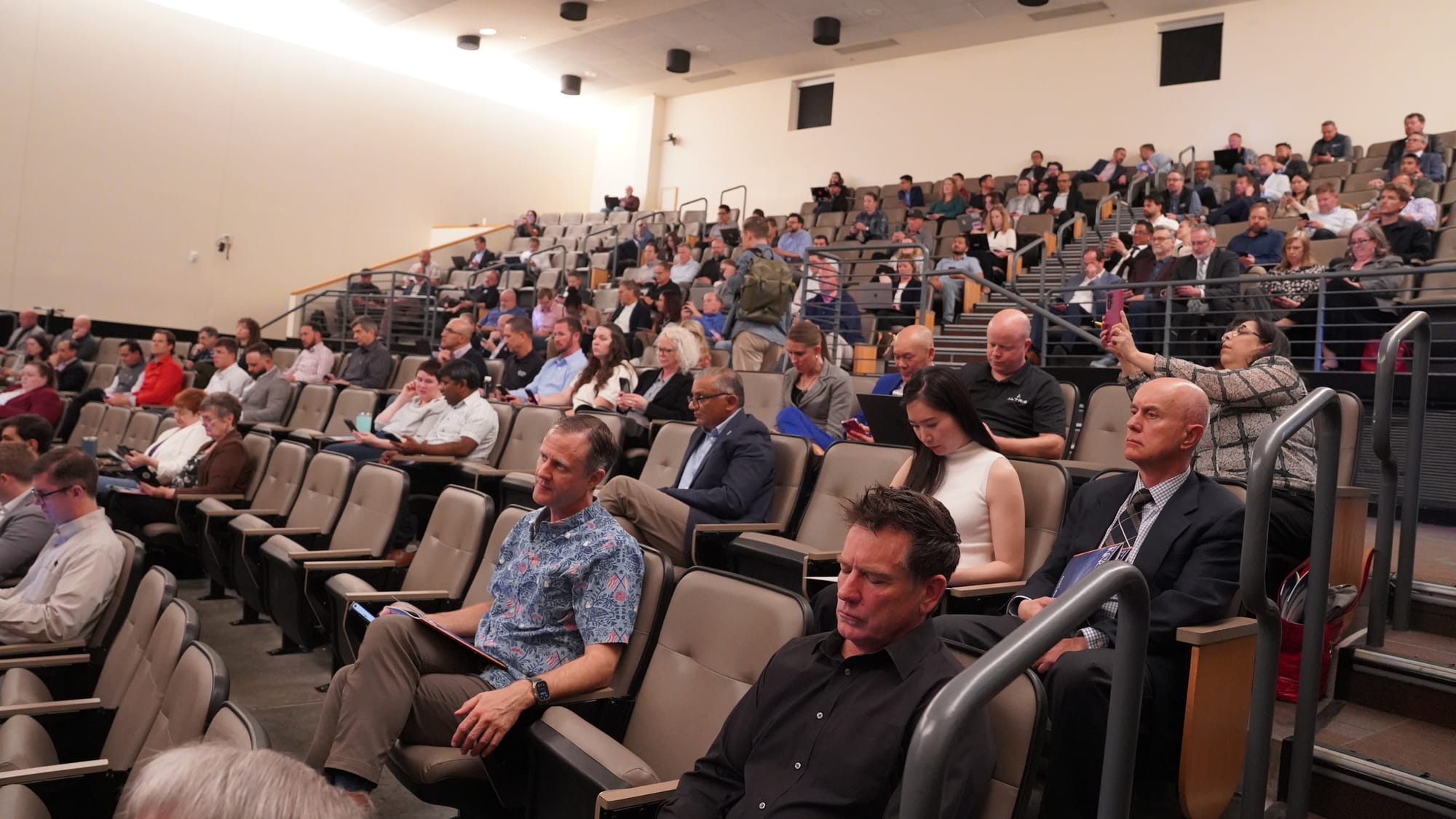
At Salt Lake Community College's Miller Campus, Utah's innovators, policymakers, and educators spent a day wrestling with a deceptively simple question: can the state that leads the nation in economic growth also lead in human flourishing?
Utah has been ranked number one in economic outlook for nineteen consecutive years. The question the 2026 State of Innovation summit set out to answer was harder: whether the state that leads the nation in growth is also building a place worth living in. Hosted by the Nucleus Institute at Salt Lake Community College's Miller Campus, home to one of the largest entrepreneurship centers in the state, the day brought together an unlikely cross-section of Utah: venture capitalists and community college presidents, state senators and quantum researchers, a retired Epic Games executive who helped build Fortnite, and a drug developer personally trying to eliminate animal testing from pharmaceutical development.
By the time the closing keynote ended, the day had produced something rarer than a conference typically delivers: a coherent argument. Not just about what Utah is building, but about why it matters, and what could go wrong.
"We Are in the Matrix"
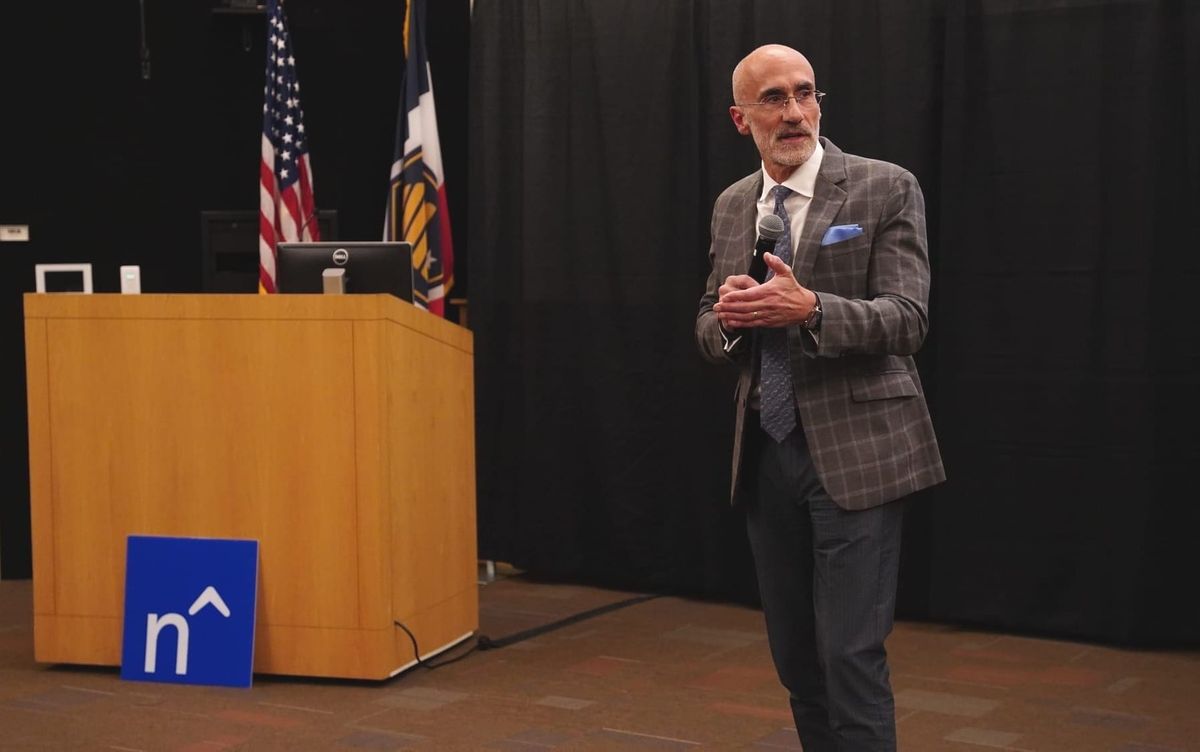
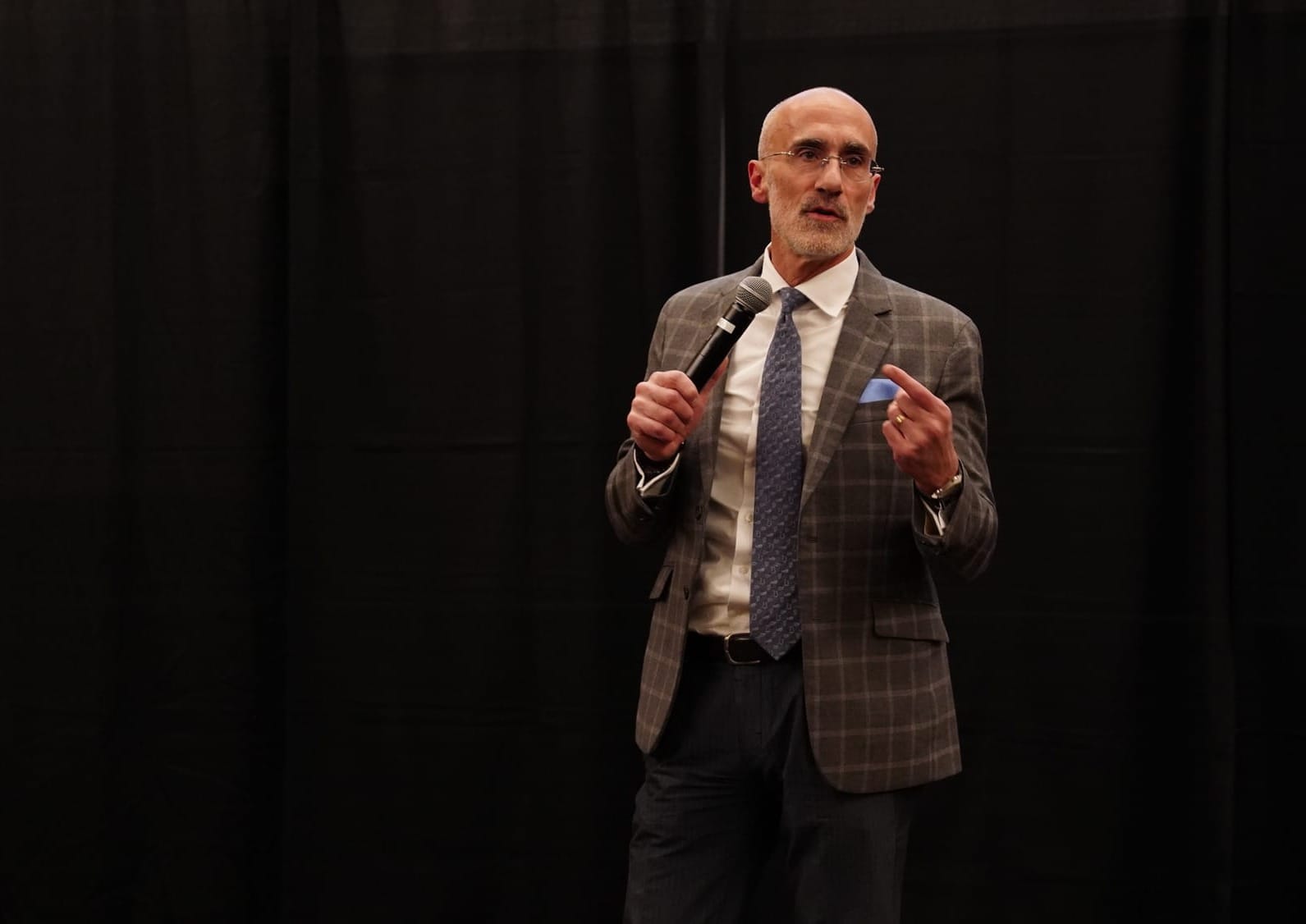
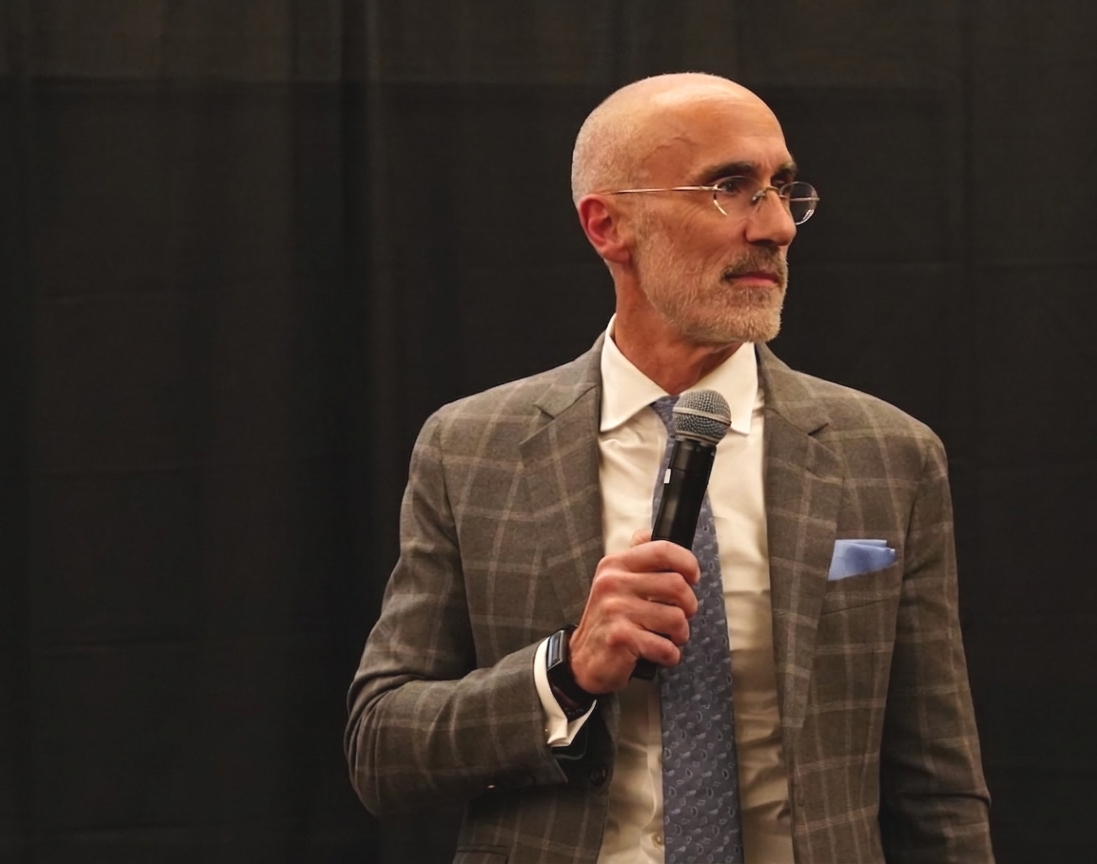
The closing keynote belonged to Dr. Arthur Brooks, Harvard Business School professor, bestselling author, and one of the more unusual figures in American public intellectual life. He is a behavioral scientist with a background in neuroscience who spent years running a think tank in Washington before returning to academia in 2019 and finding, to his alarm, that something had fundamentally changed.
"I came back and academia had changed," Brooks told the room. "Depression is very high. Anxiety is very high. Loneliness and addiction are very high." Before 2008, he noted, higher education had been measurably happier than the rest of the country. Students fell in love, argued about ideas, experimented with ideology. That had reversed — and reversed sharply. Fifty-five percent of his graduate students, average age 28, were seeking psychiatric treatment when he returned. "That's a problem," he said. "And for me, as a behavioral scientist, that's an opportunity."
What he found when he started investigating was a pattern. Student after student described the same shape of a day: scrolling at breakfast, Zoom calls in a bedroom doubling as an office, dating apps, YouTube, gaming. And underneath it all, a strange and consistent feeling: that life lacked meaning. That it felt fake. "A lot of young people told me life feels like I'm in a simulation," he said. "Like it's a copy of some sort of real life."
He paused. "My friends, we are in the matrix."
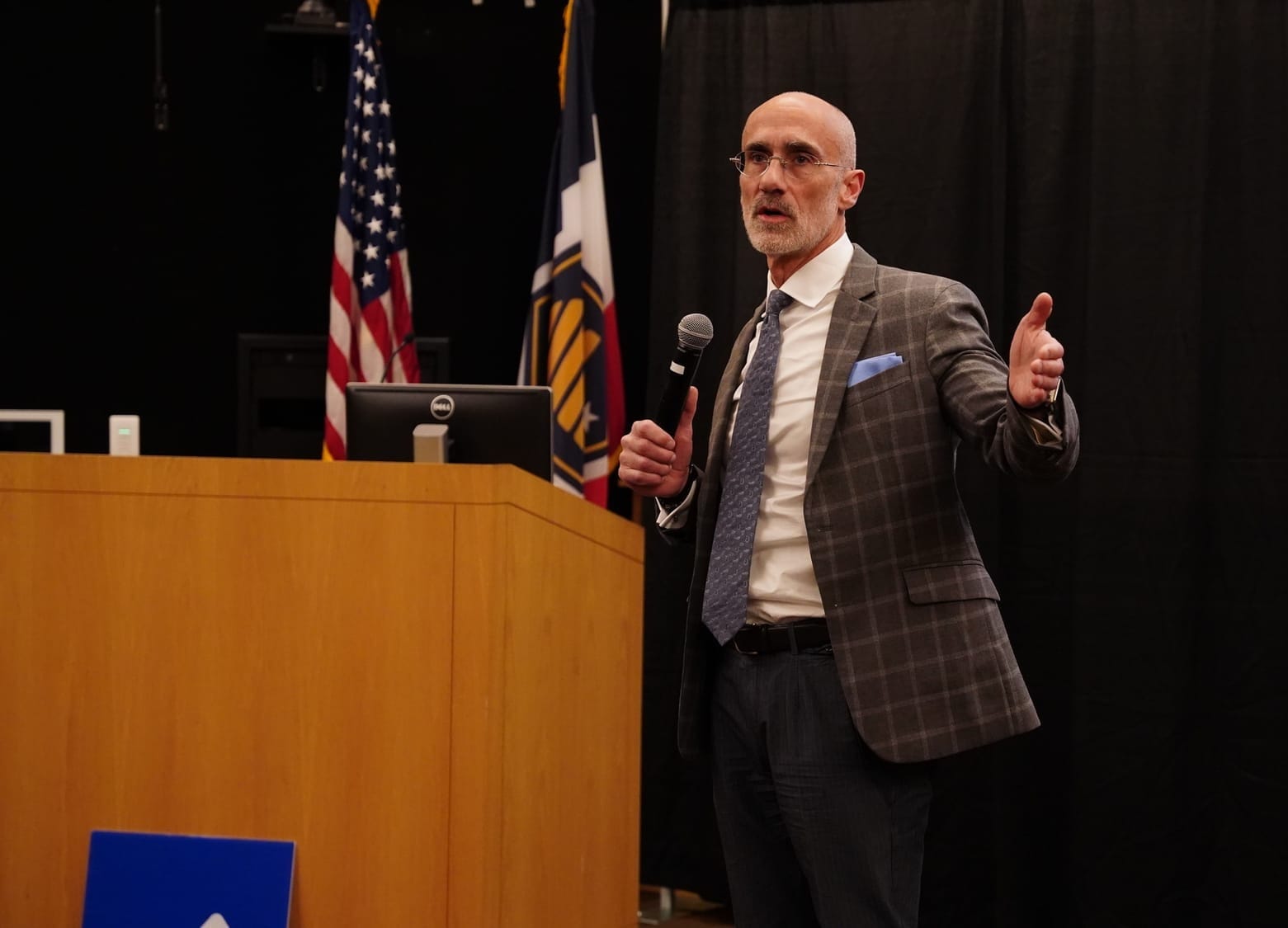
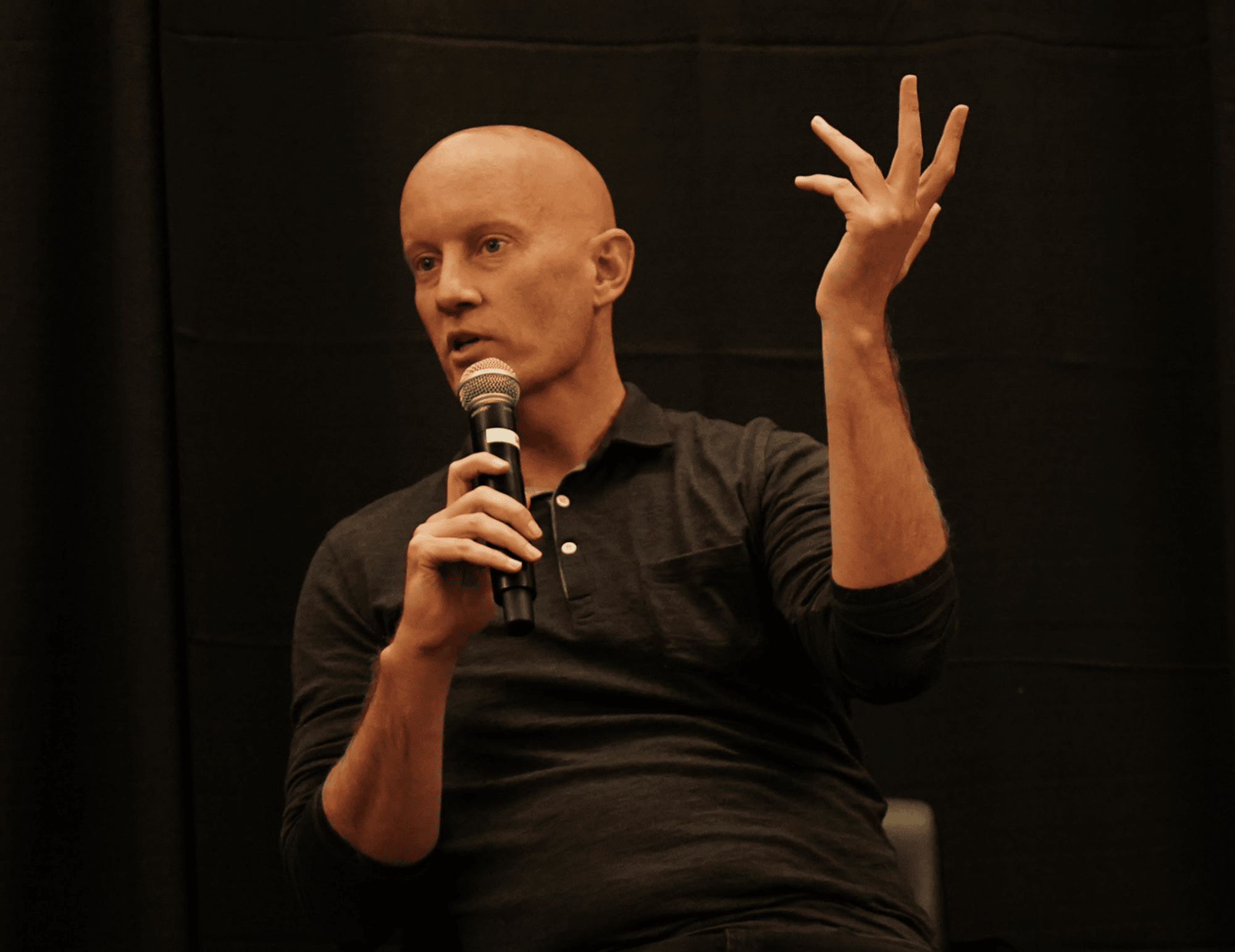
Dr. Arthur Brooks speaking at State of Innovation 2026
The comparison, he was quick to clarify, is not about machines harvesting human energy. It's about attention. The modern tech economy, particularly its entertainment architecture, is fueled by human attention, and that attention is being systematically captured in ways that are producing measurable psychological harm. The data, Brooks said, points unambiguously to 2008 as the inflection point. The year the smartphone arrived at scale. The year everything changed.
To explain why, Brooks turned to the work of Oxford neuroscientist and philosopher Iain McGilchrist and his theory of hemisphericalization, the idea that the two hemispheres of the brain are not simply right-brain-creative and left-brain-analytical, as 1970s pop psychology had it, but serve fundamentally different purposes. The right hemisphere, Brooks explained, is the "why" side: the seat of meaning, mystery, love, and the large unanswerable questions that make life worth living. The left hemisphere is the "how" side: analytical, efficient, data-driven, the part that solves complicated problems.
The distinction matters because complicated problems and complex problems are categorically different things. A complicated problem such as designing software, navigating with GPS, opening a new computer can be solved. Once you have the answer, you have it. A complex problem — a marriage, a friendship, a question of purpose — cannot be solved. It can only be lived, and it changes constantly. "A toaster is complicated," Brooks said. "The cat is complex."
Dr. Arthur Brooks provided the keynote at State of Innovation 2026
The tragedy of the modern attention economy, in his telling, is that it has attempted to solve complex problems with complicated solutions, and failed predictably every time. When social media launched with the promise of eradicating loneliness by connecting people, loneliness got worse. When dating apps promised to optimize romance, the probability of someone in their 20s reporting that they are in love dropped 30% compared to previous generations. "When you take the complex need for love and connection and you try to meet it with a complicated algorithm," Brooks said, "it's not going to work. And your brain knows the difference."
What the attention economy has succeeded in doing, he argued, is something more insidious: it has eliminated boredom. And boredom, it turns out, is not a problem to be solved. It is a feature. When the mind is undistracted and has nothing to capture its attention, a set of structures in the brain called the default mode network activates. The mind wanders. It considers the future. It asks questions of meaning. It does, in neurological terms, the maintenance work of a life. "You literally need to be bored," Brooks said. "And guess what we did? We eliminated boredom."
Dr. Arthur Brooks, final keynote, State of Innovation 2026
His prescriptions were practical and research-backed, and he delivered them without the moralistic tone that usually accompanies this kind of argument. He is not a Luddite. He loves his boarding pass on his phone. What he recommends is a set of structured interventions: tech-free first and last hours of the day; phone-free zones, starting with the bedroom and extending to every classroom from kindergarten through graduate school; and periodic tech fasts of at least 96 hours. Harvard Business School, he noted, bans devices in classrooms entirely. "Pieces of paper and pencils. It's crazy. And they learn more, and they're happier."
He was pointed about AI specifically. As a massive expansion of the left hemisphere's capabilities, he said, AI is genuinely miraculous. It is a tool that can save time, solve complicated problems at scale, and create enormous wealth. But using it as a substitute for right-hemisphere experience, as a therapist, a romantic partner, a best friend, will make people worse, not better. "It'll pass the Turing test, kind of, at the outset. But your brain will know the difference. And you'll get depressed and anxious and lonely, because you will be undernourished in the things that actually matter most."
The path back, he argued, runs through the things that have always opened the right hemisphere: big philosophical questions, beauty in its three forms (artistic, natural, and moral), romantic love and the willingness to risk heartbreak, and some form of transcendence, whether through religious practice, meditation, service to others, or simply walking before dawn without a phone. "What used to be ordinary," he said, "is now extraordinary."
He closed with a challenge to the technologists in the room. "This, ultimately, is the success that we will all have in our lives and in our economy. The products can be developed, here, us, together, or they won't be. And that's a real human cost that none of us wants to bear."
"That's Not a Trend. That's Culture."
If Brooks provided the philosophical frame, Governor Spencer Cox provided the evidence. Speaking at midday in what became one of the more energetic sessions of the day, Cox made the case that Utah's sustained economic dominance: number one in economic outlook for 19 consecutive years, number one overall in US News & World Report's state rankings for three years running, leading the nation in GDP growth over the past decade. This is not the product of tax policy or geography. It is the product of something harder to replicate and easier to destroy.
He called it the Speed of Trust.
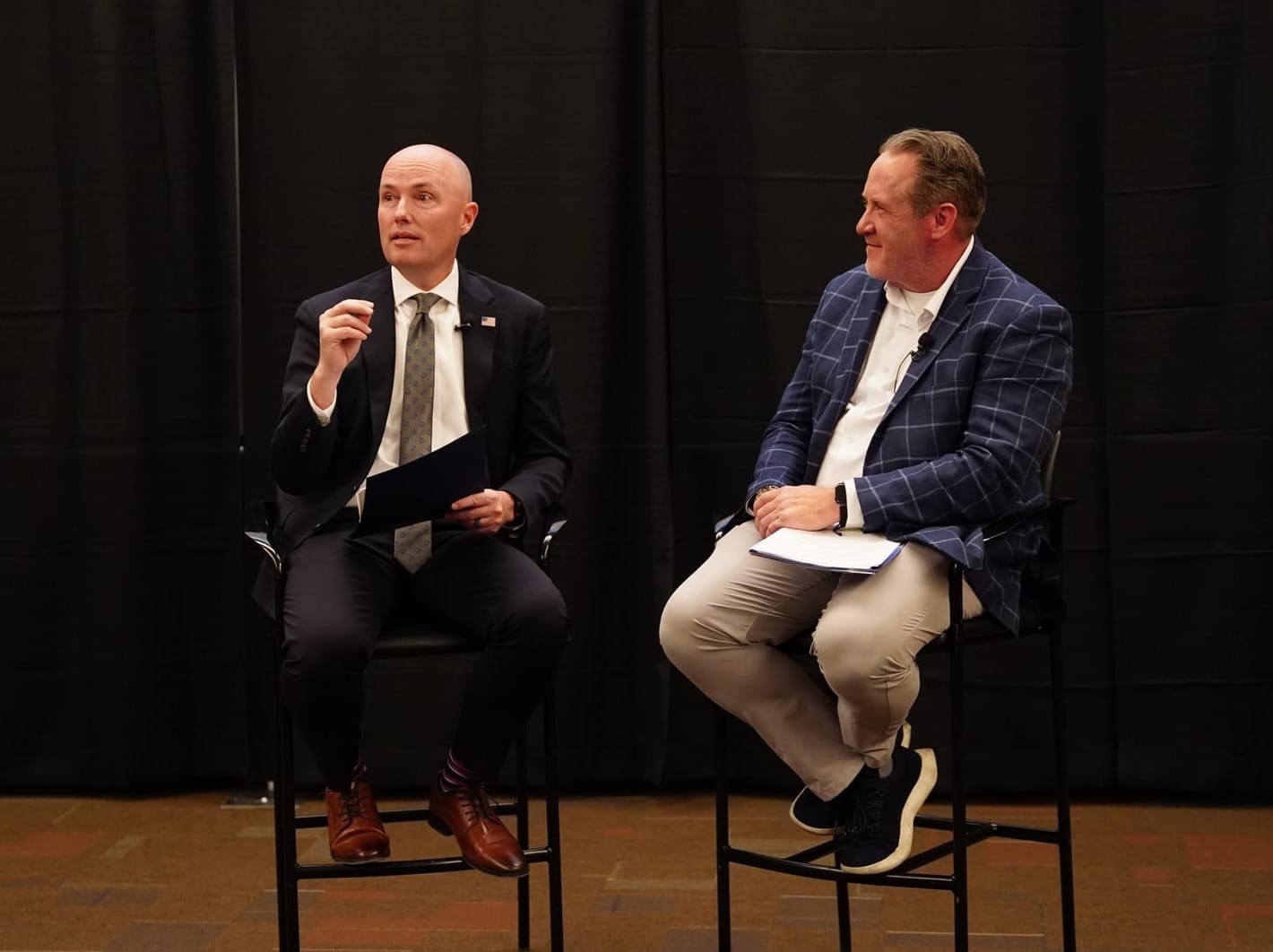
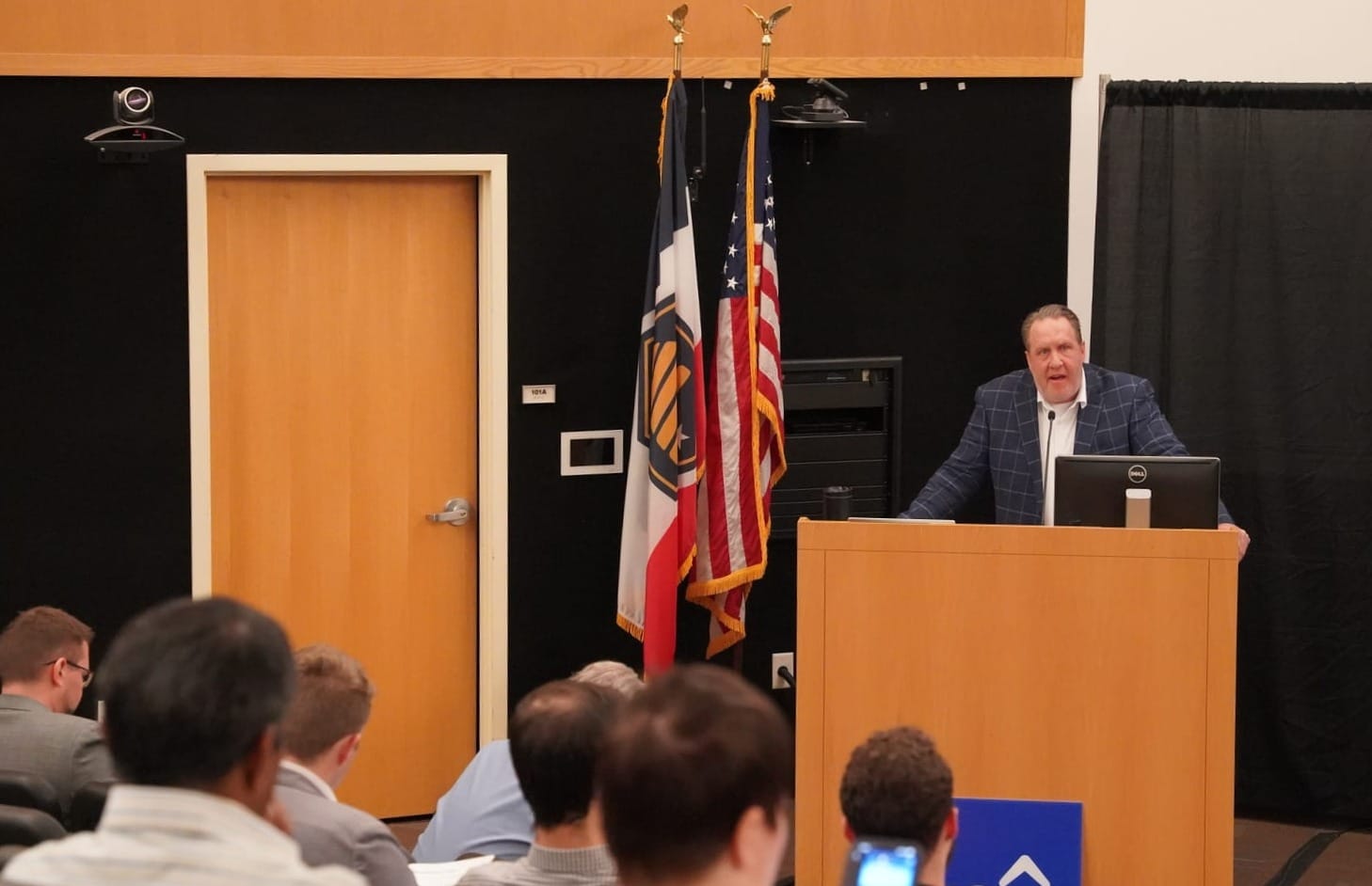
Governor Spencer Cox and Jefferson Moss
Citing Harvard researcher Robert Putnam's definition of social capital — the networks, norms of reciprocity, and social trust that enable people to act together more effectively to pursue shared objectives — Governor Cox argued that Utah leads the nation not in monetary capital but in this harder-to-measure resource. "When companies come here, they don't just get incentives. They get partners. They get people who will pick up the phone, solve problems, and move with urgency."
The concrete illustration was permitting. When Cox became governor, the average permit took 250 days — already among the fastest in the country. It now takes 40 days. Not because any safety steps were eliminated, but because the people who used to review sequentially now review simultaneously. "Put all those same people in the room and they can do their piece at the same time, and you're done in 40 days. That's the type of innovation in policymaking that makes a difference." A new unified permitting office, passed by the legislature this year, extends that principle further. It is one front door for federal, state, and local permits simultaneously.
Governor Cox also addressed the Mariana Minerals Copper One mine restart in San Juan County, which he had attended just three days earlier — an event this publication covered in depth. He used it to illustrate what he called Utah's non-zero-sum philosophy. Autonomous haul trucks, drone inspection, and AI-driven operations were not replacing jobs at the mine, he said: they were making it possible to triple the workforce over the next three years, in one of the poorest counties in the state. "We don't believe in a zero-sum mindset. We do believe that technology can lift others, but we also want to do it in the right way."
Convergence Hall Rendering by FFKR Architects and Gensler.
One of the day's most significant announcements was the update about Convergence Hall, the new innovation campus to be built at The Point in Draper, designed by local firm FFKR in partnership with Gensler of San Francisco, targeting an opening in early 2029.
Nucleus COO Angela Smith walked the room through the building's components: a water lab focused on Utah's urgent Great Salt Lake and Colorado River challenges, an AI learning lab, an AI film lab, entrepreneurial hubs for deep tech commercialization, dorms to bring students from across the state for semester-long residencies ("study abroad, but in Draper," as Smith put it; the audience laughed), co-located government resources from the Governor's Office, the Utah System of Higher Education, the World Trade Center, and the Regulatory Sandbox, and a global work-abroad program that would send Utah startups to partner innovation campuses in Paris, Abu Dhabi, and India — and bring international companies here as a soft landing for their US market entry.
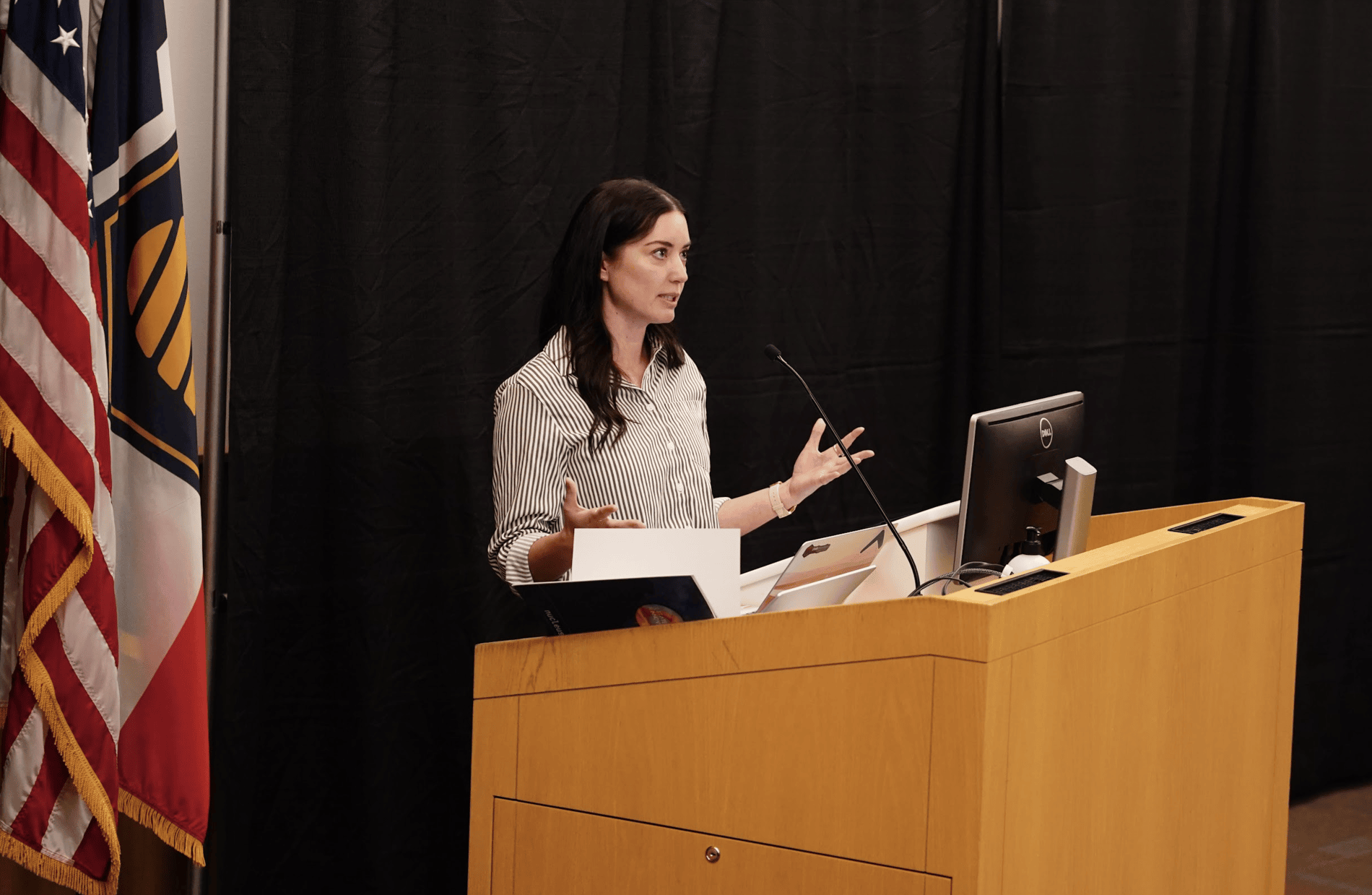
Nucleus COO Angela Smith describing Convergence Hall to the audience at State of Innovation 2026
The goal, as Nucleus CEO Jefferson Moss described it, is to dissolve the parallel tracks that currently prevent Utah's three sectors from moving together. "Researchers think in terms of grants, which usually means years. Policymakers think in terms of election cycles. Entrepreneurs run like students," Moss said. "Getting those people together is really a challenge. This is a way to physically bring them together."
Also announced: the UTAHEXCHANGE, a new platform designed to match Utah's later-stage companies with the institutional capital that has been harder to attract domestically. It is a joint initiative between the Nucleus Institute and the Utah Governor’s Office of Economic Opportunity. It serves as a centralized investment portal designed to connect Utah-based projects with global institutional and foreign capital. Developed in partnership with Enhanced Ai, the platform specifically facilitates deal flows of $10 million or more across diverse sectors, including biotech, AI, oil and gas, real estate, and agriculture. UTAHEXCHANGE serves as a vetted marketplace for both limited partner investments and direct deal opportunities, streamlining the connection between local founders and high-net-worth allocators seeking to participate in the state’s economic growth.
"Where we're struggling a little bit in the state is in that Series B, C, D ramp gap," Moss acknowledged. "So we've created an exchange focused on those later-stage businesses, where our whole job is to help match-make with capital partners we're meeting with all over the country."
Learn more about and apply to the UTAHEXCHANGE here.
Governor Cox closed his remarks with something that landed differently given everything Brooks would say three hours later: a plea not to turn Utah into Silicon Valley.
"Please don't change us into where you just came from," he said, looking at the room. "This needs to continue to be a place where families are at the forefront. Where you have a life outside of the lab or your office. Where you get to go up and enjoy nature's beauty and the soul-inspiring vistas that are here. That we are not slaves to technology; that technology should be working for us."
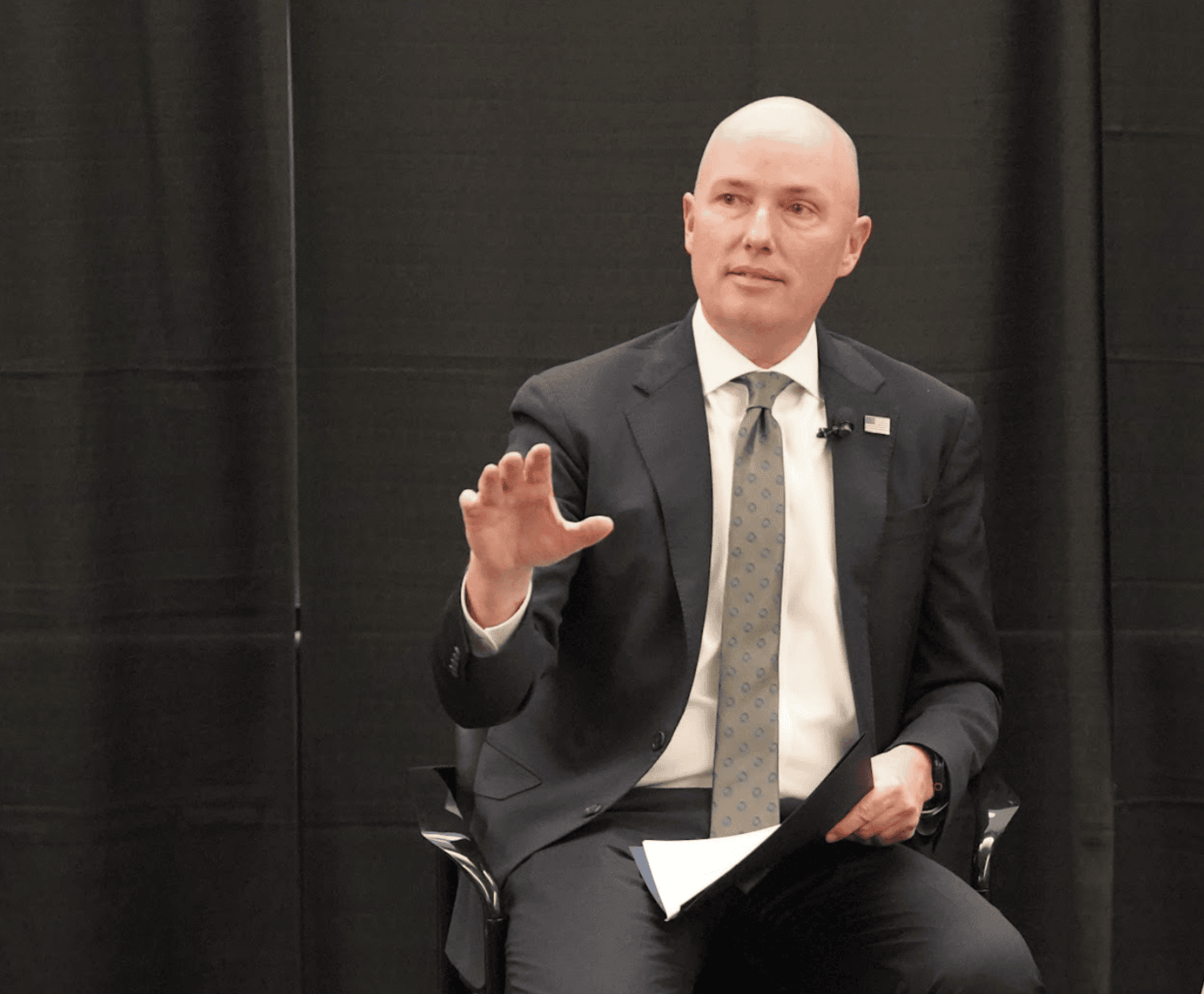
Governor Spencer Cox
"AI Is Commoditizing Intelligence"
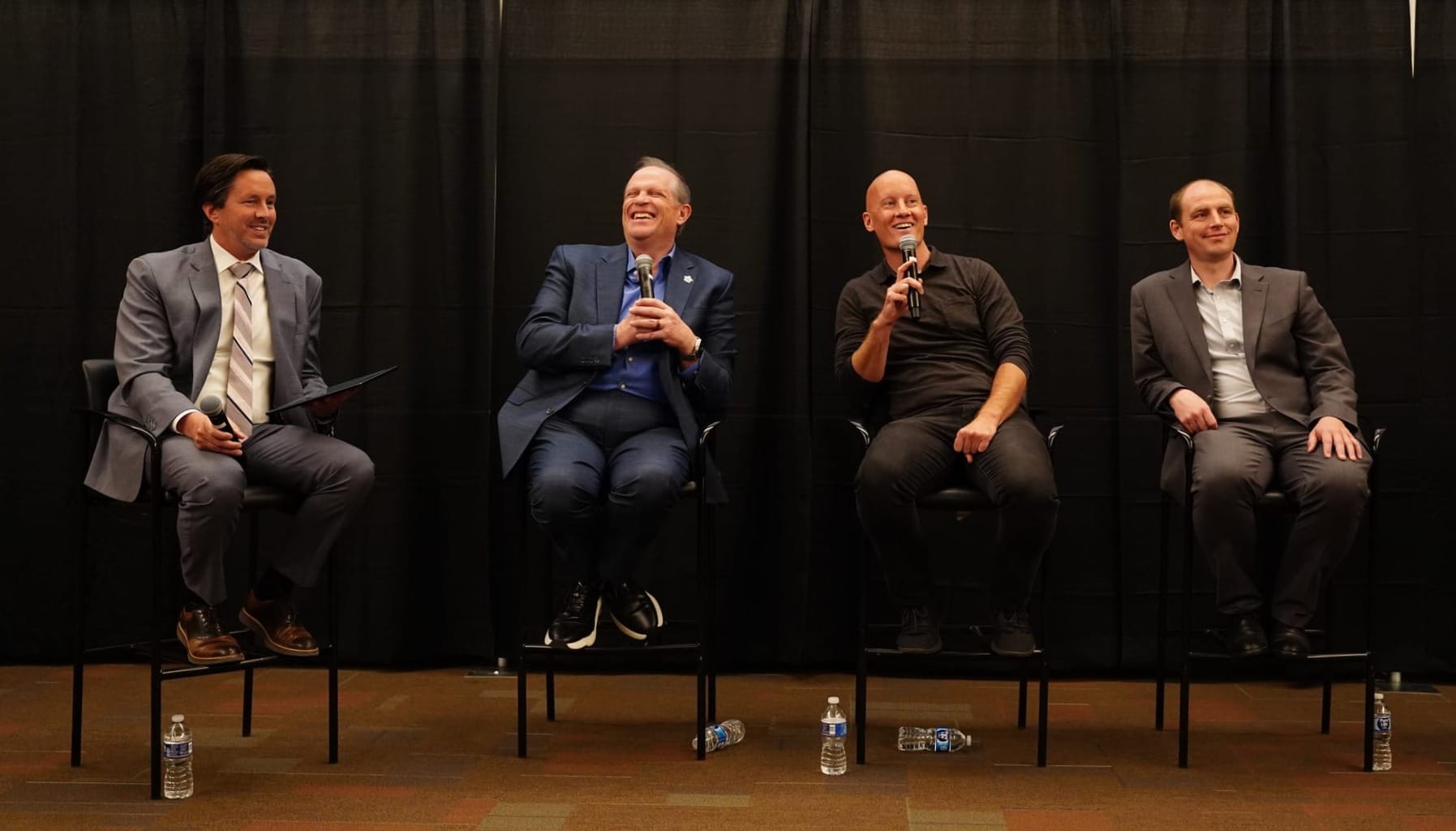
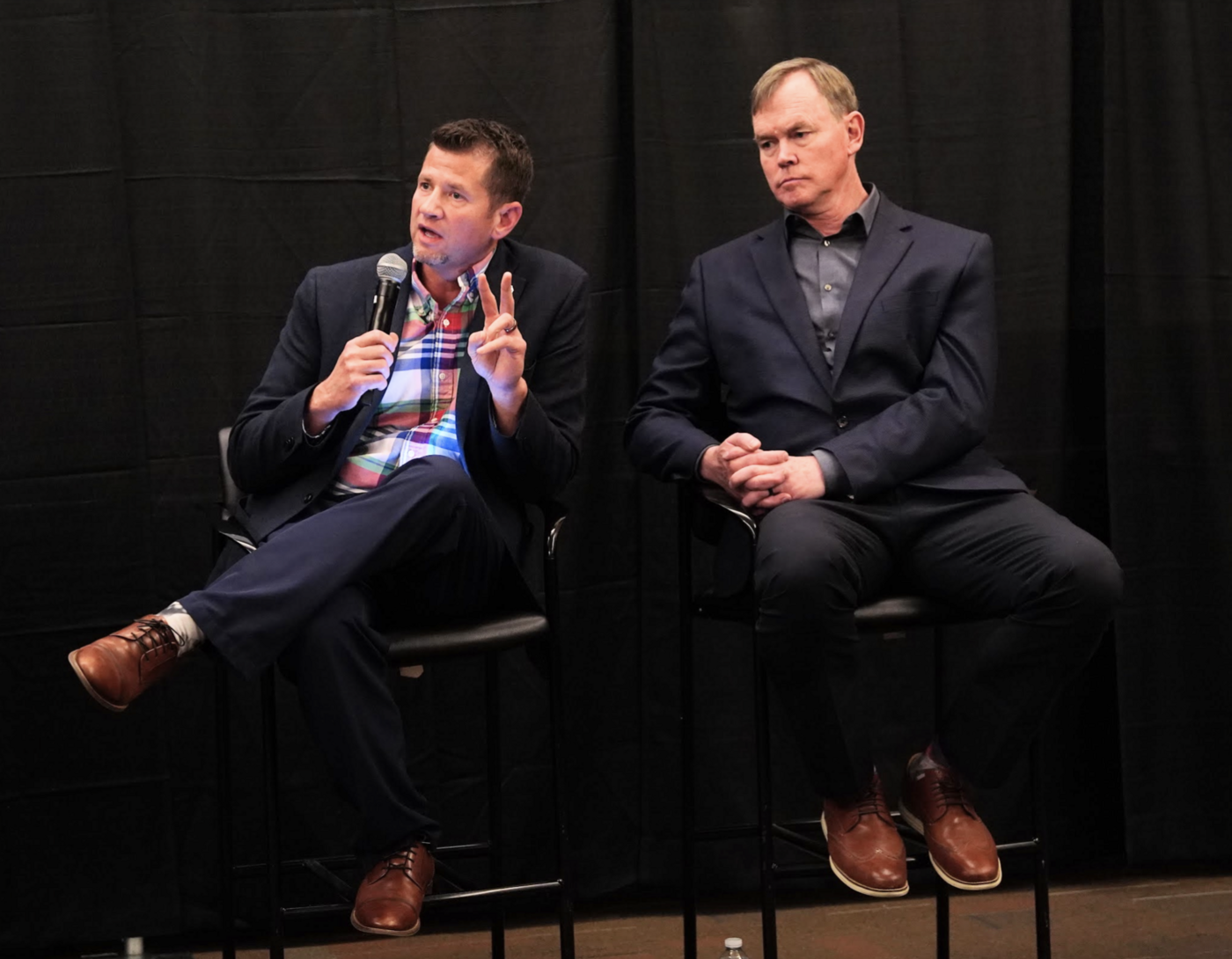
The afternoon AI panel, moderated by State Senator Kirk Cullimore and featuring Geremy Mustard of Epic Games, Zach Boyd of Utah's Office of AI Policy, and Dr. David Bearss of Halia Therapeutics, was the most technically wide-ranging conversation of the day, and in Mustard, it had some of the most compelling insights of the event.
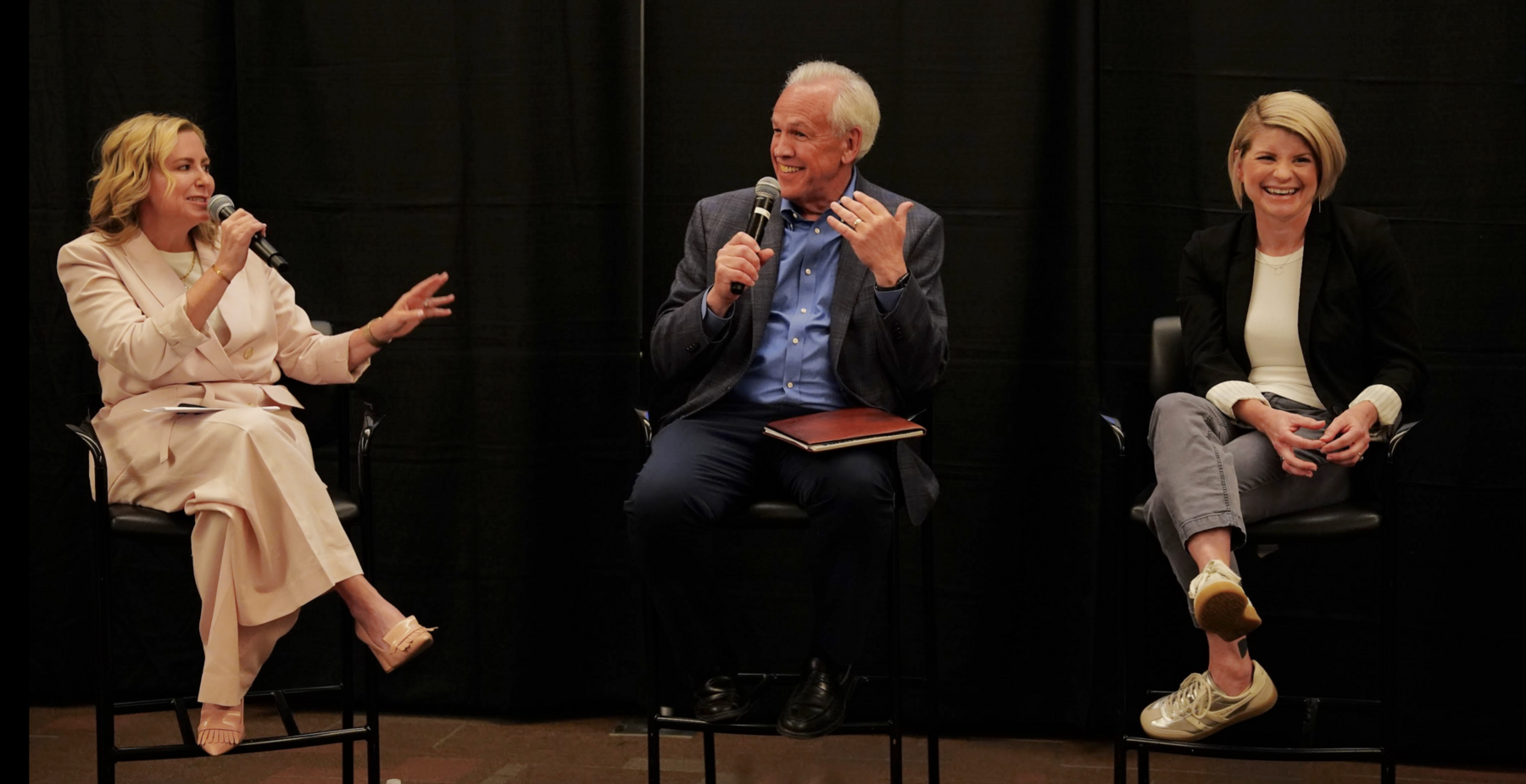
State Senator Kirk Cullimore in a light-hearted moment with Dr. David Bearss of Halia Therapeutica, Geremy Mustard of Epic Games and the creator of wildly popular cross-platform video game Fortnite, and Zach Boyd of Utah's Office of AI Policy
Mustard spent 25 years at the cutting edge of video game development, culminating in Fortnite, before retiring four years ago due to health issues. He is not, as he made clear, a techno-pessimist. But he was candid in ways that a still-active executive might not be. His prediction: the large SaaS companies that make up a substantial portion of Silicon Slopes' current workforce will shrink by 90% over the next decade. "Which is very scary," he said. "That's not pro human." But he was equally direct about what comes next. "I think there's going to be thousands upon thousands of opportunities to build and create new things. The opportunity spaces can be amazing."
His most resonant contribution was an analogy drawn from photography. When digital cameras arrived in the early 2000s, professional photographers panicked. Instead, something unexpected happened: as everyone acquired a camera and began taking thousands of photos, the general public developed a more sophisticated eye. They could now tell the difference between good and great — and they were willing to pay for great. Wedding photographers thrived. "The photography industry boomed," Mustard said. "Rather than disappearing, it actually grew and became more widespread." AI, he argued, will follow the same arc. The gap between good and great will remain. Those who can perceive it and articulate it — who can direct, not just prompt — will define the era.
Geremy Mustard, Founder, Epic Games
He called this the skill set of a director. "A director has a vision, and they're able to articulate that vision very clearly and frequently. Vision-telling, clear communication, core logical skills, and critically, the ability to tell the difference between good and great, and then articulate and critique how to get from good to great. Those are going to be the people that make all the difference in this coming era."
His framing for AI's deepest significance was blunt: "The internet commoditized knowledge. AI is commoditizing intelligence. And that's why it's more scary, because intelligence is something we've always treasured as uniquely human." What remains non-commoditizable, in his view: vision, innovation, and insight.
Bearss brought a different kind of urgency. As co-founder, CEO, and president of Halia Therapeutics, he is building AI systems to predict drug behavior in humans, and is preparing to submit a drug to the FDA that has never been tested in an animal. The current standard, he noted with evident frustration, is approximately 30% accurate at predicting human outcomes. He has told the FDA commissioner personally that he intends to be the first to show up with an alternative. "I don't think there's a huge hurdle for us to jump over. It's a pretty low bar."
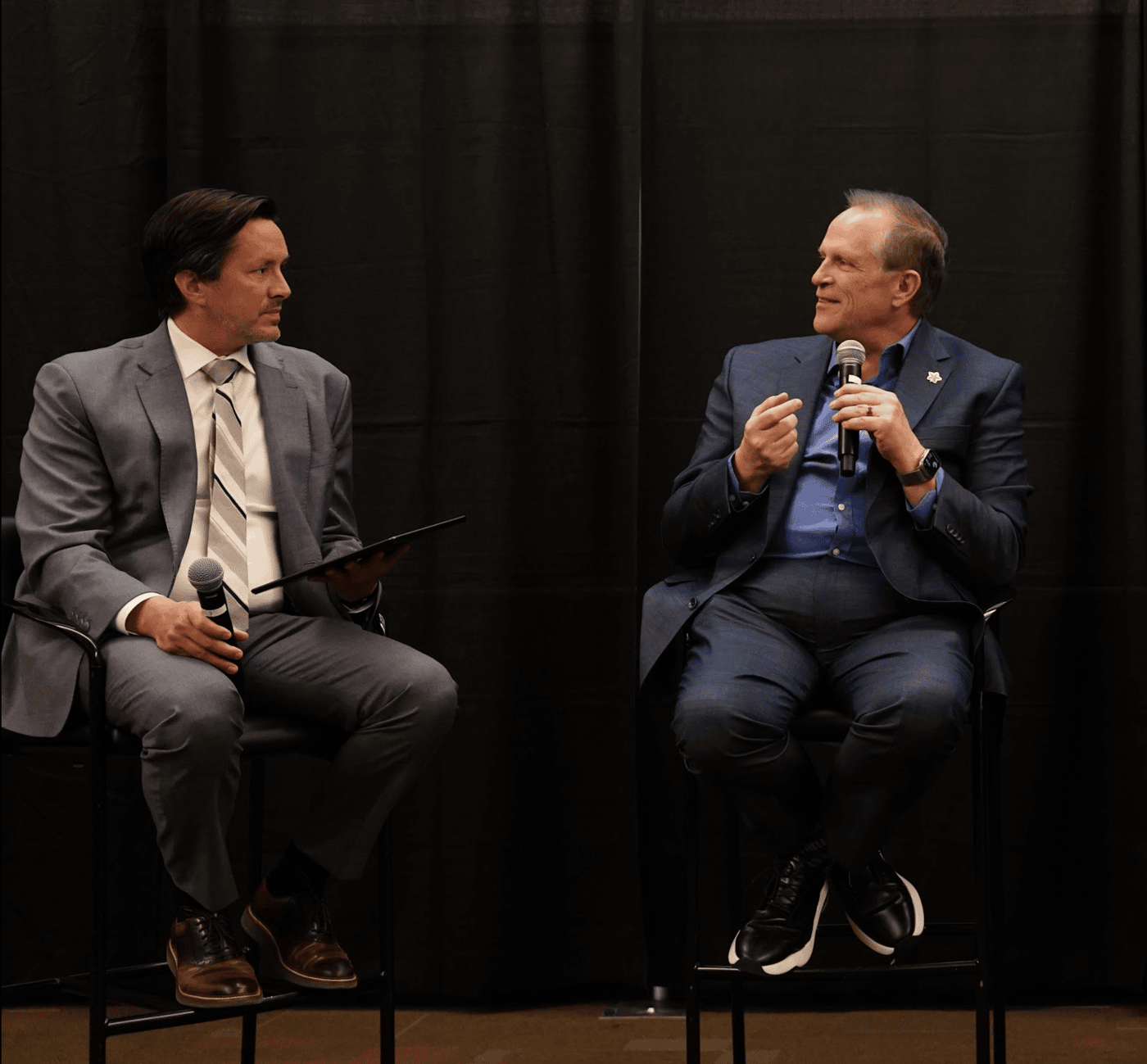
Utah State Senator Kirk Cullimore (19th District) and David Bearss, Co-founder, CEO, and president of Halia Therapeutics
More broadly, Bearss described a future in which individuals become stewards of their own health, equipped with AI tools to understand their genetic risks, their options, and their interventions, while a new ecosystem of supporting professionals grows around them. His company is currently using AI to examine why 40% of people who carry the BRCA1 and BRCA2 breast cancer susceptibility genes never develop the disease. "What's different about people that are resilient to their risk versus people that succumb to it? We've built an AI algorithm that we're turning loose on genomic data right now to ask that question. And I think it's going to change dramatically how we think about medicine."
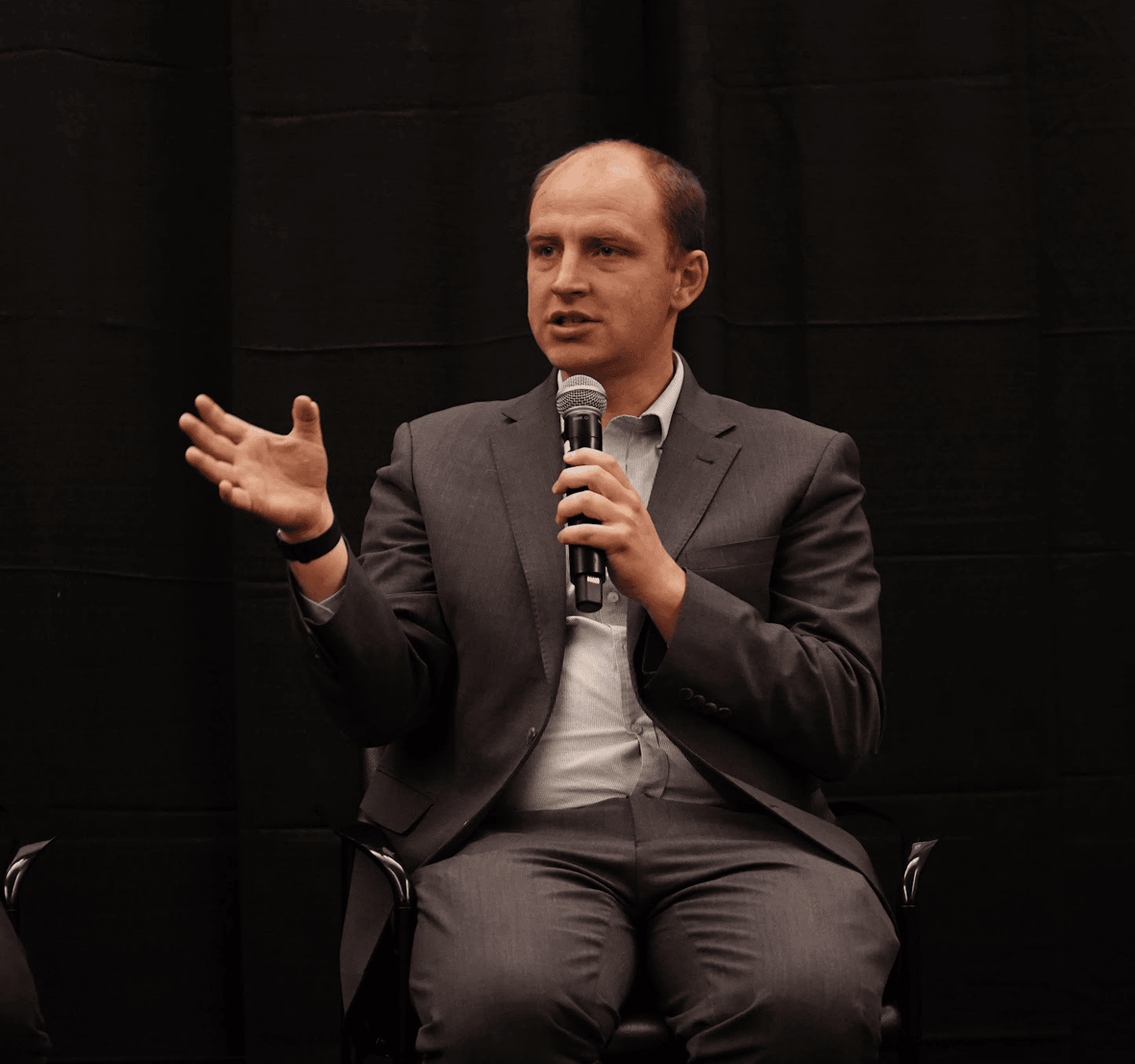
Zach Boyd of Utah's Office of AI Policy
Boyd left a mathematics and machine learning faculty position at BYU to run Utah's Office of AI Policy, the first such office in any U.S. jurisdiction. He offered the most nuanced take on the regulatory challenge. The traditional framework, he explained, divides the world into tools and actors. A hammer manufacturer isn't liable when someone uses a hammer as a weapon. But AI is designed to be autonomous, or semi-autonomous, with an enhanced decision-making role, which breaks that framework. "We're in a challenging situation where there are harms we can see and benefits we can see, and harms and benefits we don't see. We've seen like 1% of each right now."
His office, he said, is being looked to by federal officials as a model. "We've had conversations at the federal level saying we need a relationship with a similar entity there, because there are going to be opportunities, whether it's healthcare and the FDA process, where we've got to be able to move fast."
"No Segment Gets to Win Alone"
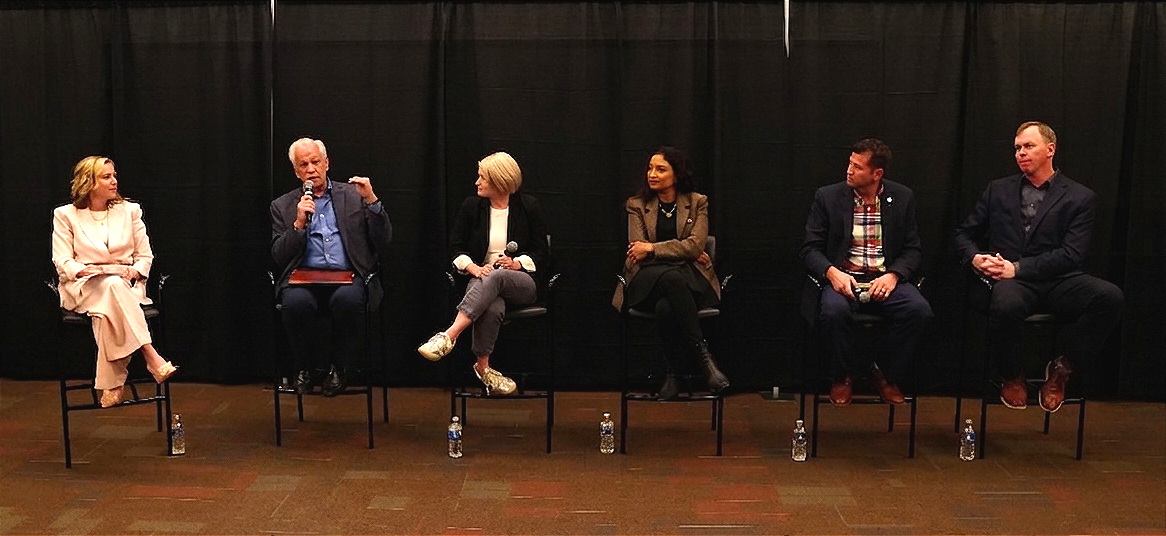
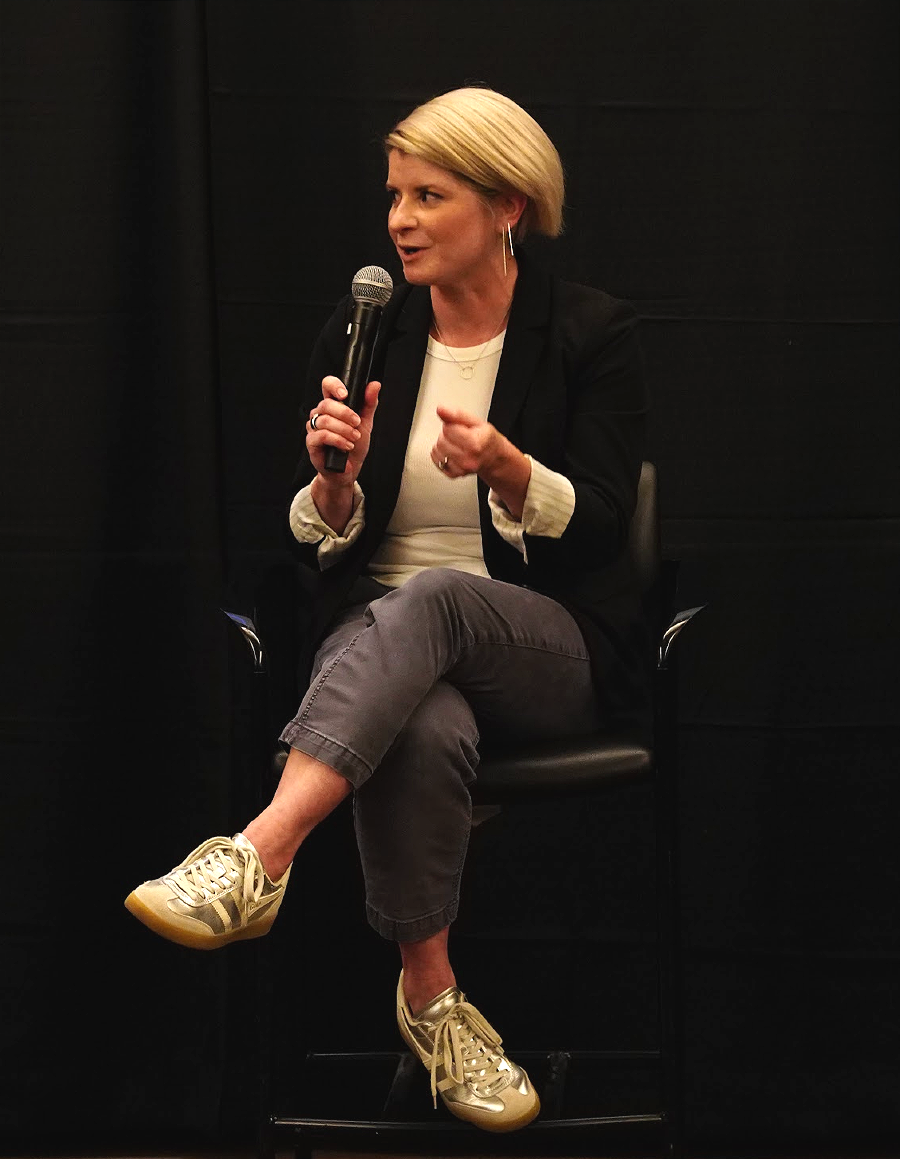
If the AI panel was the day's most technically wide-ranging conversation, the ecosystem integration panel, moderated by Cydni Tetro, President of MNTP and Women Tech Council, was its most honest. Tetro framed the stakes plainly at the outset: "We've learned how to win in segments. But the challenges we're facing are so integrated, so cross-functional and so ecosystem-dependent that no segment gets to win alone."
Cydni Tetro moderating a panel with Kelvyn Cullimore, Lindsie Smith, Dr. Dolly Chitta, Vic Hockett, and Steve Waldrip
The panelists represented domains that rarely share a stage: Vic Hockett of Talent Ready Utah on workforce development; Dr. Dolly Chitta on quantum technology and national security; Kelvyn Cullimore of BioUtah on life sciences; Lindsie Smith, Executive Director, Love the Lake, on water and environmental sustainability; and Steve Waldrip, Senior Advisor to the Governor on Housing Strategy and Innovation on housing and development policy.
Hockett broke the skills gap into three distinct problems that are often conflated. The first is alignment — whether education is teaching what employers actually need. The second is access, whether a qualified workforce exists in the right geographies for the companies that need them. The third, and the one he called most worrying, is what he termed the bench gap. "We're hearing more and more from the tech and software sector that they're holding off hiring graduates," he said. "If you don't develop your farm system, who fills the roles when people retire or leave?" He used the LA Dodgers as his frame: winning championships while neglecting the draft is a strategy that eventually collapses. His proposed solution is building talent pipelines while students are still in college, through employer partnerships and applied learning, thereby connecting directly to what SLCC's Greg Peterson described earlier in the day as the institution's core mission.
Vic Hockett and Steve Waldrip, Interactive Strategy Session, State of Innovation 2026
Citing Microsoft research, Hockett noted that roughly three in four knowledge workers are already using some form of generative AI at work. The number trained to use it: single digits.
Last summer, the University of Utah and Open AI offered a free AI training — 200 seats, 1,400 people tried to register. They opened it to 600. "We have over half a million jobs in Utah with substantial AI saturation," Hockett said. "How do we prevent a light-collar recession? We've got to train our incumbent workforce."
Waldrip made the day's most arresting claim about housing: any Utah graduate entering the workforce should have a clear five-year path to home ownership. Currently, that path takes closer to 15 years. "We're losing people to Alabama," he said, with a candor that got a laugh and a wince simultaneously. "Seriously. That's what's going on." His argument is that housing is the least innovative major sector in the American economy. "If you went back to 1802 and built a house, you'd be using almost the same tools,” he said. His case for applying AI to permitting, plan review, and development finance landed as a practical near-term opportunity rather than a distant aspiration.
Lindsie Smith, Executive Director, Love the Lake
Lindsie Smith described herself as "the resident Debbie Downer" and then proceeded to make the panel's most urgent argument. Only about 20% of the room, responding to a live poll, had identified environmental issues as their top concern, a number she found alarming. "Our businesses, our lives, are wholly tied to water and our natural resources," she said. "Our kids are looking at what's happening and saying, can I live here when I grow up? Can I have clean air? Can I have water?" She noted that Utah's asthma rate runs at 10%, above the national average of 7%, a figure that will worsen as the Great Salt Lake continues to shrink and expose its lakebed to wind erosion, she says. Her sharpest observation: the biggest barrier to solving the lake crisis isn't technology or policy. It's human behavior. "We really love our lawns here," she said. "What is that about? That is one of the single most important things we as a community need to change."
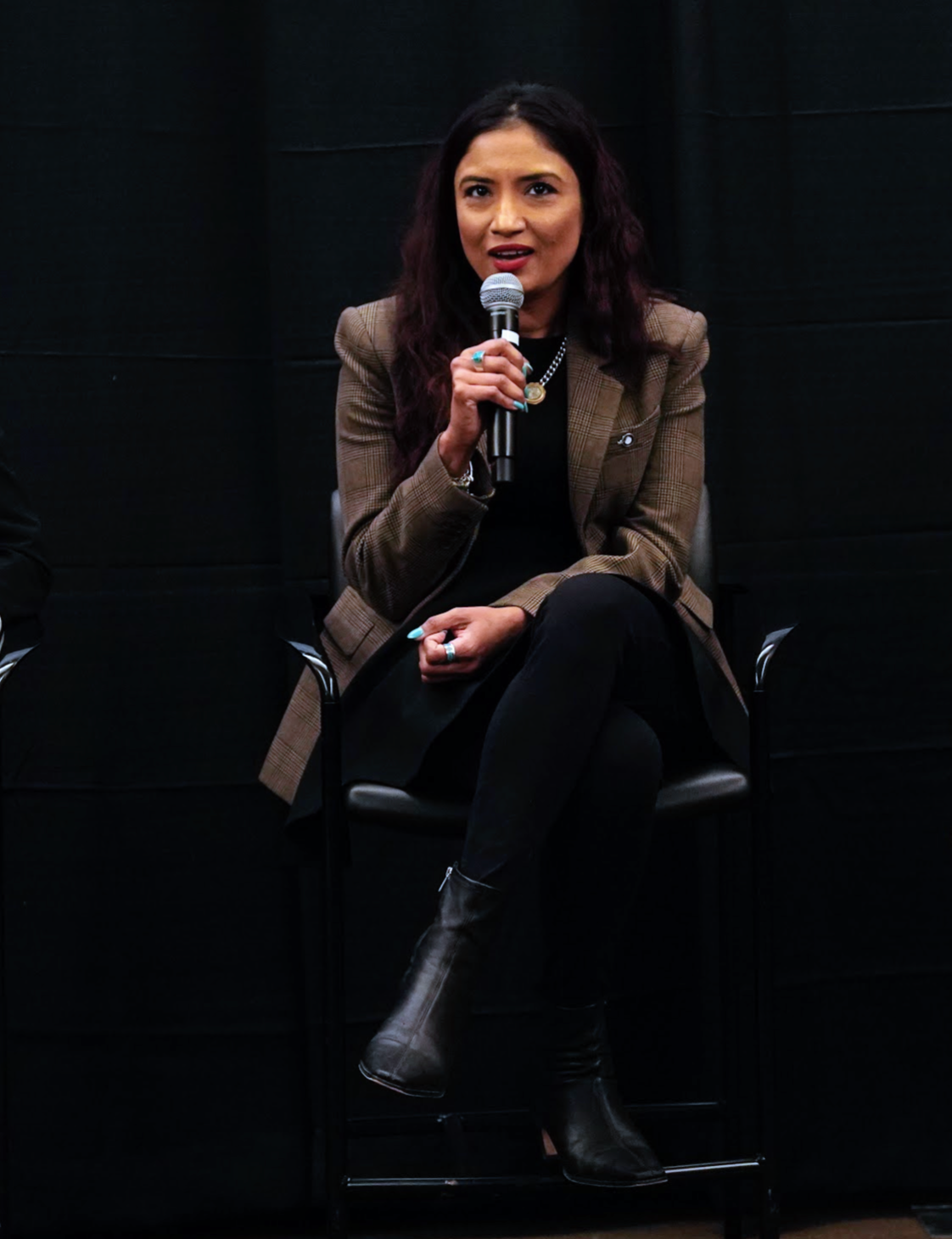
Dr. Dolly Chitta made the case for quantum with a sense of urgency that the field's abstractness can sometimes obscure. Utah, she argued, has assets: NSA, a robust space and defense sector, significant data flows. These make quantum readiness not merely an economic opportunity but a national security imperative. "Any state or country that leads in quantum is going to be dictating the national security agenda," she said. "And everything else follows." Her warning about brain drain was pointed: without a visible career pathway in quantum in Utah, the state will train talent it cannot keep. Her personal commitment: pilot programs, and Convergence Hall as the logical launchpad.
Dolly Chitta, PhD, Founder at Curie Quantum and Science & Innovation Advisor at Nucleus
Kelvyn Cullimore of BioUtah offered something of a field report from someone who spends considerable time answering the question other states keep asking. "I head up a national association of state life sciences associations," he said. "I am constantly amazed at how many questions I get about what is Utah's secret sauce — and I don't know that it can be replicated." His answer, offered without hesitation: collaborative spirit. Not as a platitude, but as a structural reality he observes by contrast everywhere else. "In Utah, the one thing we do in addressing all of these problems is we work together. We don't see it in any other state."
Cydni Tetro with Kelvyn Cullimore and Lindsie Smith
Tetro closed the panel with a call to action that felt less like conference boilerplate and more like a genuine charge. "How do we all lean in, in whatever our individual responsibilities are, to change the world and make it better because of the work we do here? That's the call to action. And it's our collaboration that sets the tone and the difference for what we can do."
The Longer Arc
The summit opened with Jefferson Moss reminding the room of something easy to forget: Utah's innovation story did not begin with Silicon Slopes. It began with being one of four original nodes on ARPANET. With Ivan Sutherland, considered the father of computer graphics, getting his start at the University of Utah. With Ed Catmull, U of U graduate and Pixar co-founder. With John Warnock, another U of U PhD, embedding PostScript in Adobe. With Nolan Bushnell of Utah State University creating Atari. With Alan Ashton creating WordPerfect. With William Kolff building the world's first permanent artificial heart, right here in Utah.
"We have this incredible legacy of pioneers doing amazing things," Moss said. "And I think we're actually just getting started."
Jefferson Moss, CEO and Founder, Nucleus, opening the summit
That phrase — just getting started — echoed through the day in different registers. Governor Cox said it about Utah's competitive position globally. Mustard said it about AI's creative potential. Bearss said it about the transformation of medicine. Brooks, in his own way, said it about the human capacity for meaning — arguing that the current crisis is not a permanent condition but a lag, a moment in which the technology has outrun the wisdom to use it well, and that wisdom is coming.
What unified every conversation across a long day was something Cyd Tetro named, Kelvyn Cullimore confirmed, and Arthur Brooks diagnosed from a different angle entirely: that the problems Utah faces, and the ones the country faces, are not complicated. They are complex. They cannot be solved by any single sector, any single algorithm, or any single keynote. They require people in the same room, arguing and listening and building trust over time.
The 2026 State of Innovation put the right people in the same room and let them think out loud together, which is, in the end, what Convergence Hall is being built to do at scale and on a permanent basis.
The 2026 State of Innovation was hosted by the Nucleus Institute at the Miller Free Enterprise Center at Salt Lake Community College's Miller Campus on April 30, 2026. The 2026 State of Innovation Report, documenting Utah's innovation economy with full data and analysis, is available at www.nucleusutah.org..
Convergence Hall, south facade at dusk. Rendering by FFKR Architects and Gensler.
Share this article
The link has been copied!
Your link has expired. Please request a new one.
Your link has expired. Please request a new one.
Your link has expired. Please request a new one.
Great! You've successfully signed up.
Great! You've successfully signed up.
Welcome back! You've successfully signed in.
Success! You now have access to additional content.