Mariana Minerals Restarts a Utah Copper Mine as the World's First Fully Autonomous Operation
Mariana Minerals restarted Copper One in southeastern Utah, near the town of La Sal, as the world's first mine deploying AI autonomy across all operational domains, drawing Governor Cox, federal officials, and investors to one of the state's poorest counties.
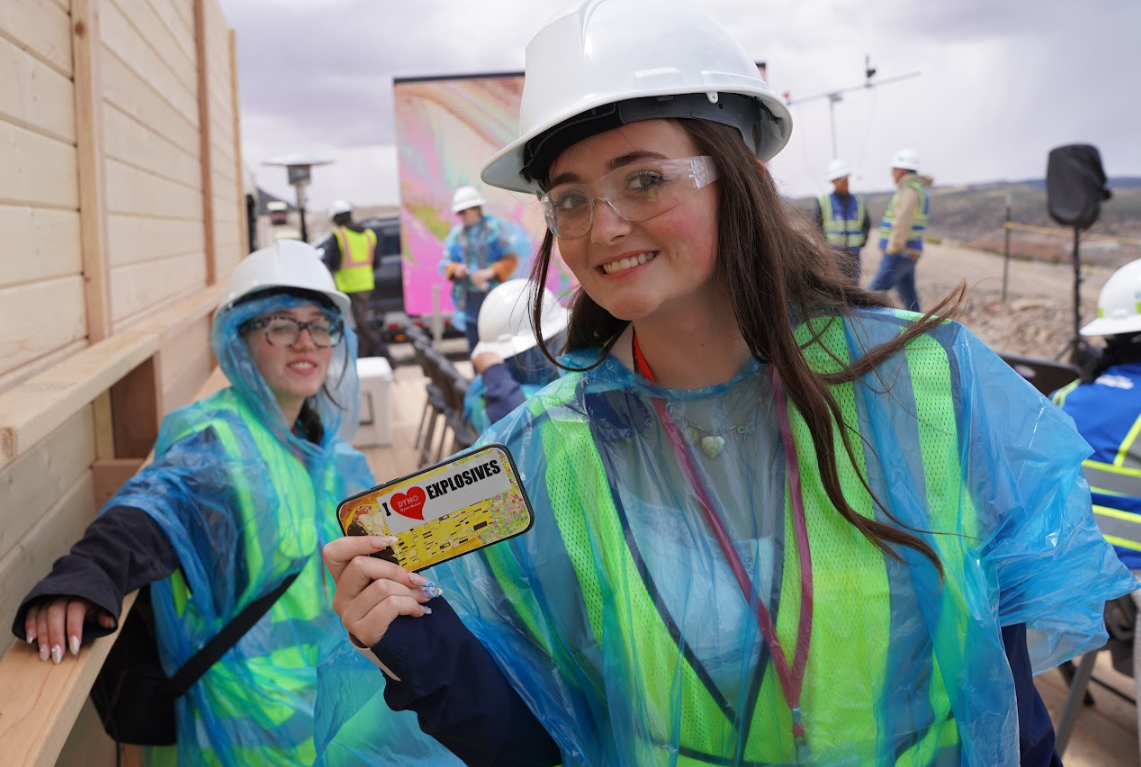
The wind was already ripping across the high desert when the crowd gathered at the rim. Investors in safety vests stood next to county commissioners. Federal officials from Washington squinted into the sun alongside engineers barely old enough to remember when this mine last ran. Everyone had been handed two things: a foam earplugs and a sticker that read "I ♥ explosives."
Governor Spencer Cox and Mariana Minerals CEO Turner Caldwell were on the edge of the freshly-built stage overlooking the mine, holding a detonator.
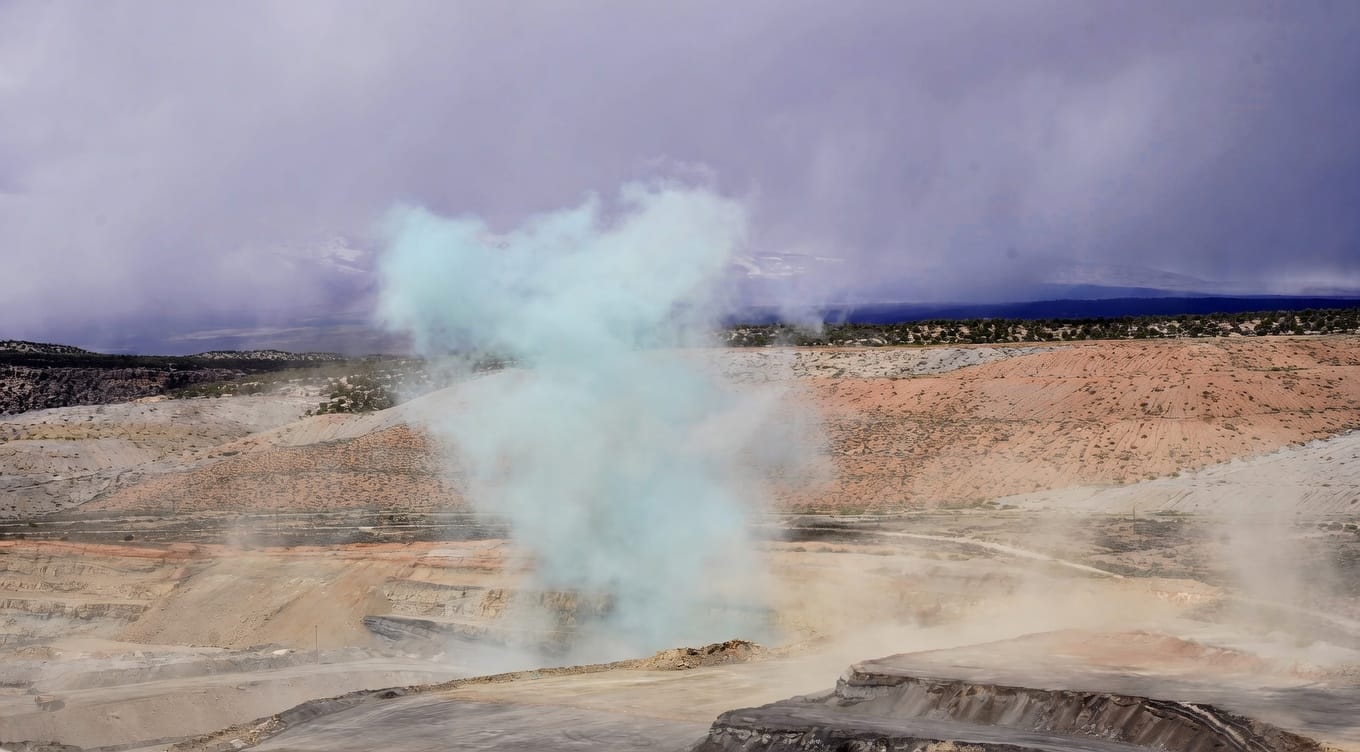
At 2:30 in the afternoon, they pushed the button. A moment later, the floor of the open pit at Copper One rippled — a low, rolling percussion you felt in your chest before you heard it — and a massive plume of dust and rock rose into the Utah sky. Someone had added blue dye to the explosive charge, probably tannerite. The blue cloud bloomed vivid and unmistakable against the darkened sky over the La Sal Mountains — the same range that gives the nearest town its name, and that miners and ranchers in this country have been looking up at for more than a century.
A voice from somewhere in the crowd shouted: "It's a boy!"
"It's a boy!" — Blue dye added to the ceremonial blast charge sent a turquoise plume billowing over the open pit at Copper One, as Governor Spencer Cox and Mariana Minerals CEO Turner Caldwell detonated the first blast of the company's historic mine restart in San Juan County, Utah, on April 27, 2026. The accidental gender reveal drew laughter from a crowd that included federal officials, Silicon Valley investors, state legislators and commissioners, and the Governor and First Lady. Photo: Coco Tullis / TechBuzz
The crowd laughed. And in the laughter, something real happened: a room full of people who spend their lives talking about supply chains and critical minerals and national security suddenly looked like exactly what they were — people who had just watched something ancient and powerful come back to life.
"It felt good to push the button," Cox told me a few minutes later, still grinning. "It felt even better when we saw it worked. Because that's representative — it's representative of more jobs for Utah, more families that get to stay here."
A mine like no other
Copper One, operated by San Francisco-based startup Mariana Minerals, officially restarted operations today in southeastern Utah — and it did so as something no mine in the world has ever been: fully autonomous across all three operational domains simultaneously. Mining. Refining. Capital project execution. One AI platform. No equivalent anywhere on earth.
The platform is called MarianaOS. It integrates three core subsystems — MineOS, which orchestrates autonomous drilling, blasting, and haul truck dispatch; PlantOS, a reinforcement learning engine for refinery process control; and CapitalProjectOS, which manages engineering and construction execution — into a single intelligence layer coordinating the entire operation in real time. Simulation, predictive maintenance, and machine learning handle everything from blast optimization to process chemistry, all driven by live sensor data fed through a unified data layer the company calls "the bridge."
For autonomous haulage, Mariana has partnered with Pronto (San Francisco), deploying camera-based machine learning and satellite navigation to run fully driverless haul trucks across the mine's haul roads — Pronto's first commercial deployment since being acquired in April 2026 by Travis Kalanick's Atoms Inc. (Los Angeles), a robotics / “physical AI” startup that launched in March 2026. Kalanick co-founded Uber in 2009 and served as CEO until 2017.
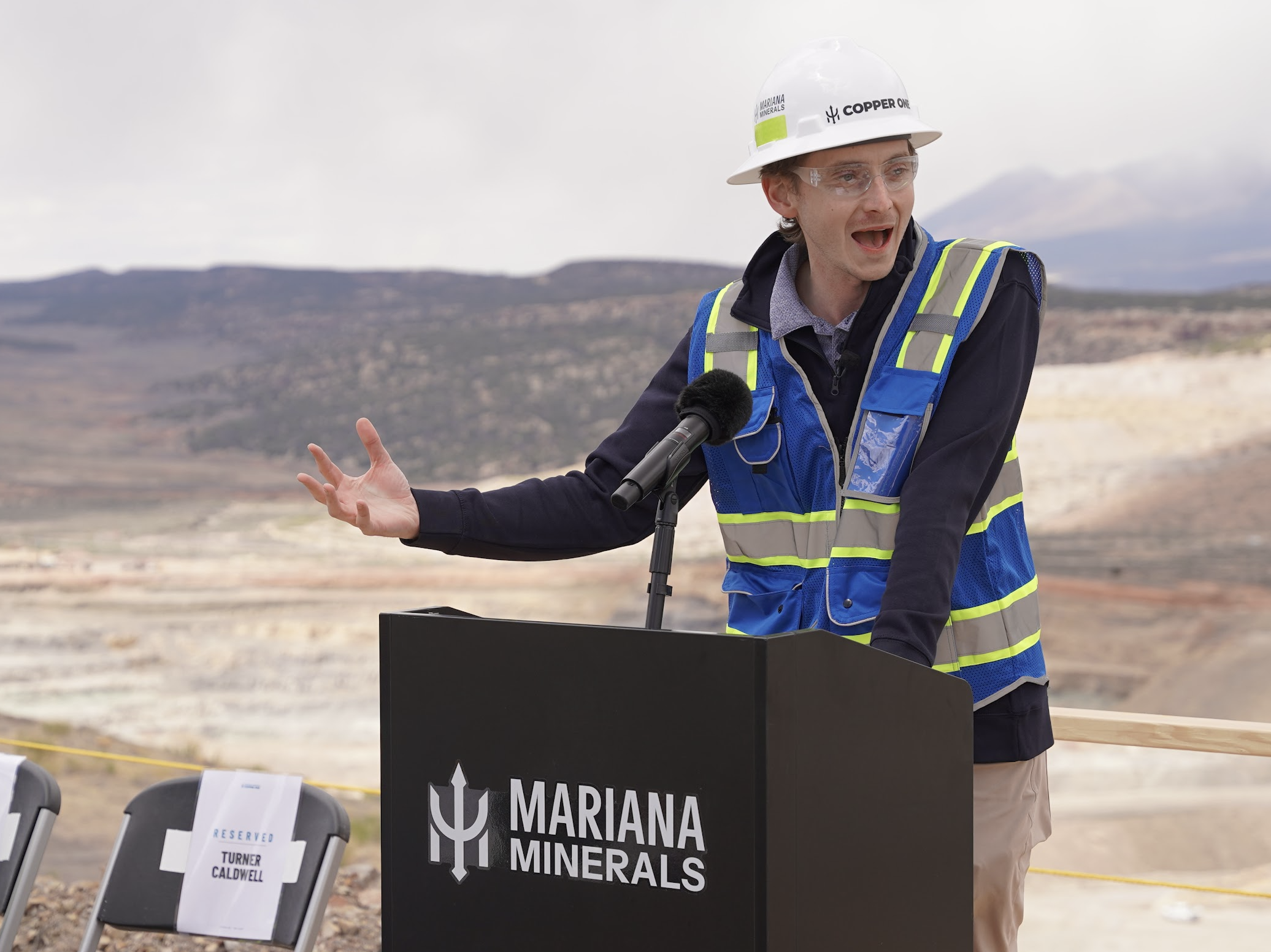
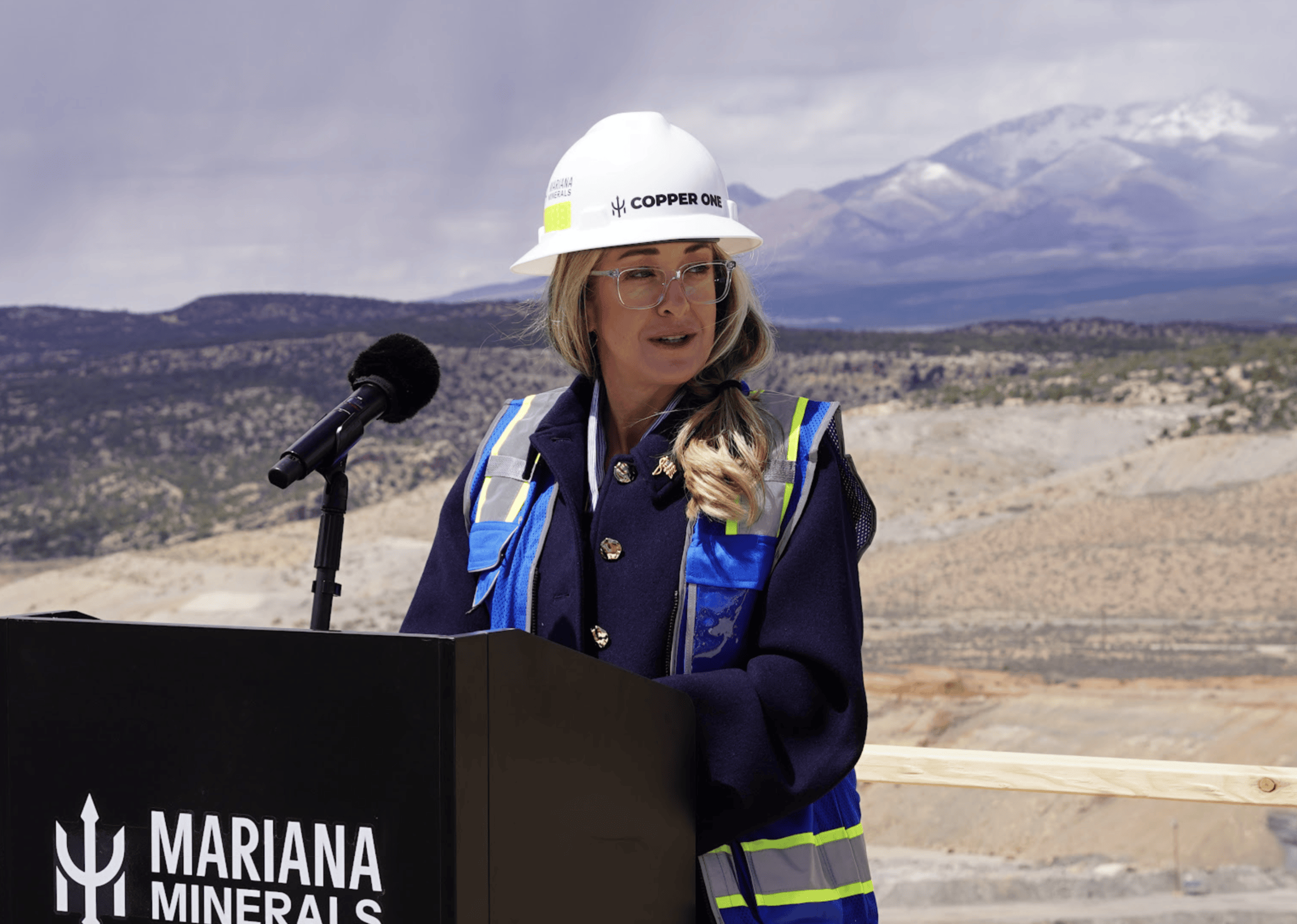
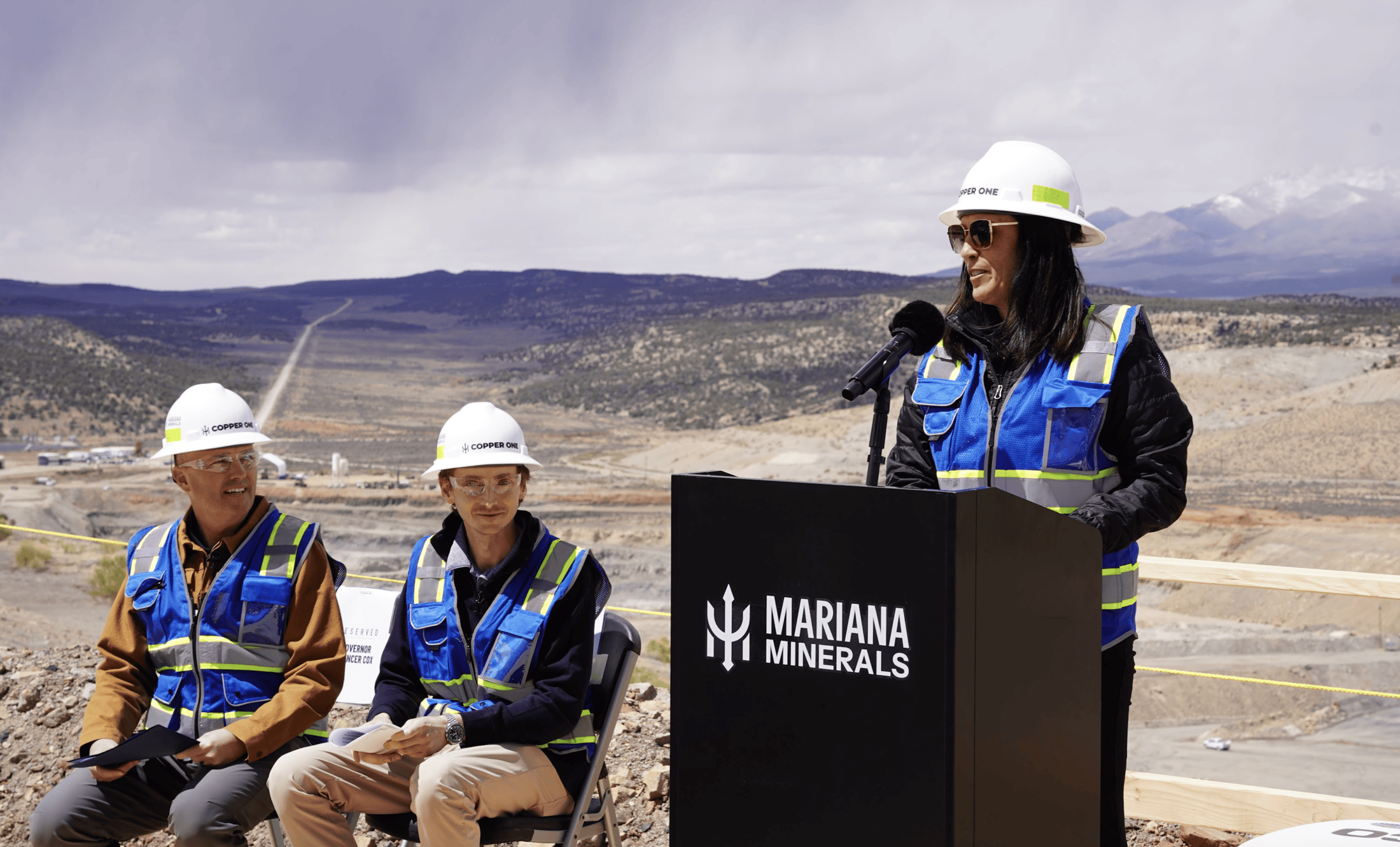
Mariana Minerals Co-Founder and CEO Turner Caldwell addresses the crowd at the Copper One restart ceremony on April 27, 2026, with the open pit copper mine visible behind him. "Success here means three things — more critical minerals produced in the U.S., more investment and economic activity in regions like San Juan County, and more good-paying jobs. Not less," he told investors, federal officials, and local community members gathered at the rim of the mine. Photo: Coco Tullis / TechBuzz
"Copper One will be the first mine where delivering end-to-end autonomy is the priority," CEO Turner Caldwell told the assembled crowd of investors, officials, and engineers. "We're producing now and ramping output aggressively."
Why autonomy, and why now
To understand why Mariana exists, you have to understand the scope of what's coming. The world needs to build roughly 500 new world-scale mines and refineries in the next decade — not small operations, but major facilities across the full range of critical minerals. Copper is foundational to all of it. Every data center, every EV, every defense system, every grid upgrade runs on copper.
The problem: the U.S. currently imports approximately 50% of its refined copper, and the domestic workforce that once built and operated these facilities has been shrinking for thirty years. In the next decade, another 40% of that remaining workforce will retire.
"We do not have the time to organically grow the labor pool back," Caldwell said from the podium, his voice cutting through the wind. "That's going to take a generation — probably multiple generations. And so in parallel, we have to aggressively deploy autonomy and agentic workflows across the entire stack."
He was careful to say what this is not. "This is not about a 5% reduction in operating costs. This is about maximizing efficiency, maximizing throughput, and giving ourselves a fighting chance at delivering the minerals that the world needs." And he pushed back on the automation-kills-jobs narrative directly: "Success here means three things — more critical minerals produced in the U.S., more investment and economic activity in regions like San Juan County, and more good-paying jobs. Not less."
Mariana's numbers back the claim. The company plans to triple headcount at Copper One over the next three years and invest roughly $1 billion in capital and operating costs at the site over the next decade. The long-term target is 50,000 metric tons of refined copper per year by 2030 — twenty times the roughly 2,500 tons the previous operator produced annually — with half from mined ore and half from copper scrap recycled through the same refinery circuit.
That last point matters. The U.S. currently exports around a billion pounds of copper scrap annually to China and Southeast Asia because domestic refining capacity is the bottleneck. A scrap pilot plant is already running at Copper One. When it scales, it closes that loop — keeping American copper in American supply chains.
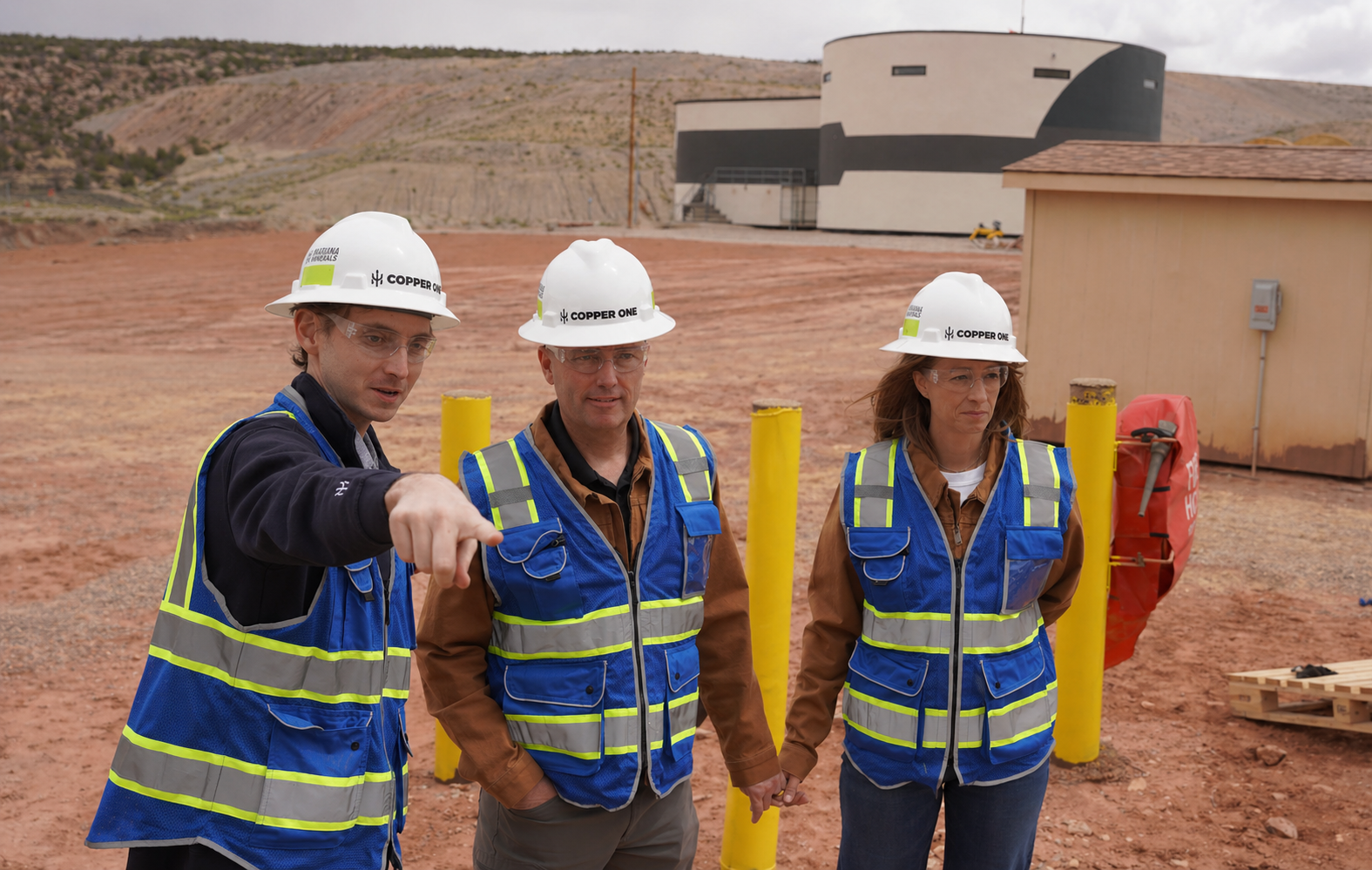
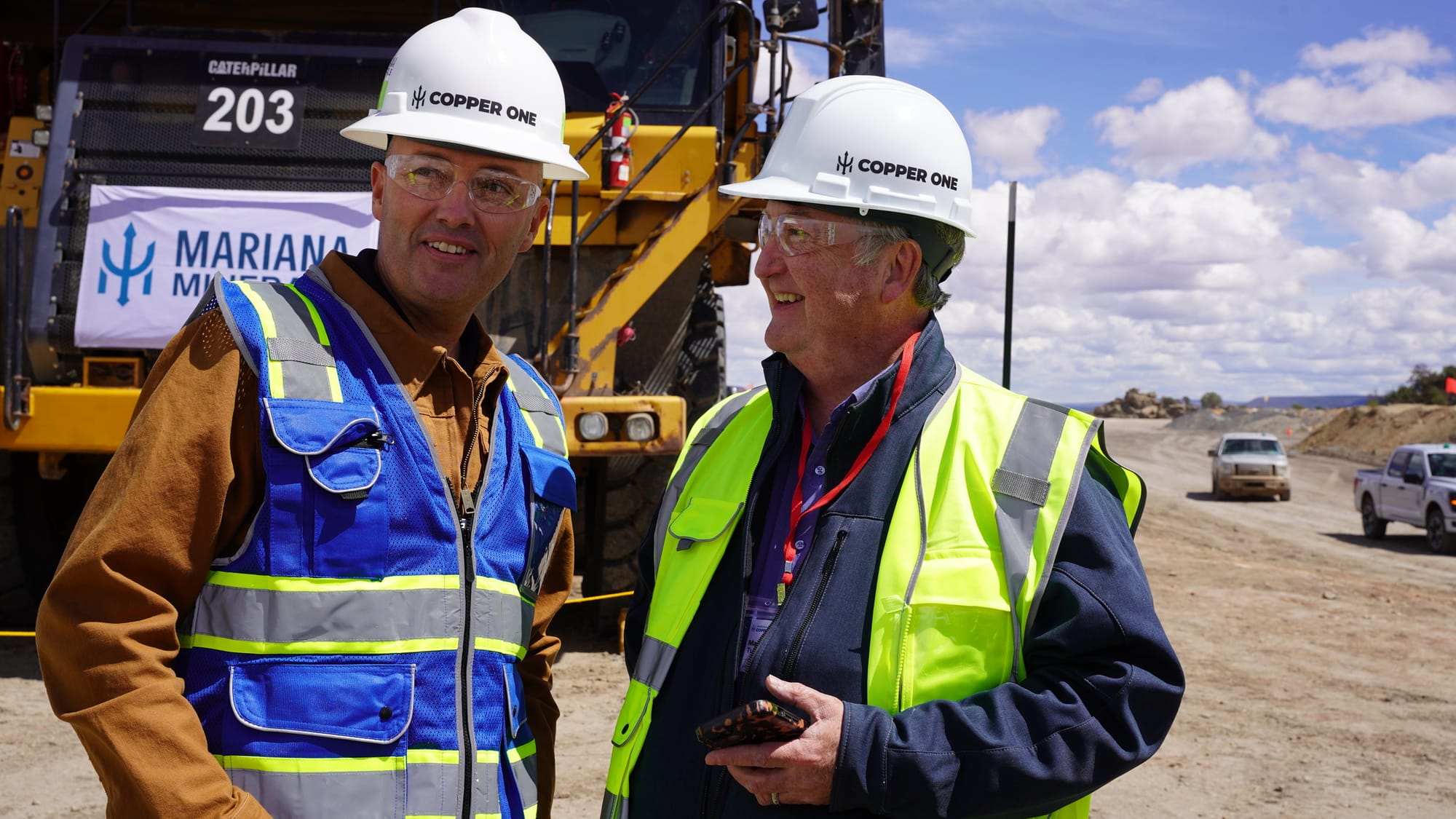
Mariana Minerals CEO Turner Caldwell giving Governor Spencer Cox and First Lady Abby Cox a personal tour of the Copper One plant. Photo: Coco Tullis / TechBuzz
"AI is only effective when you have a first principles understanding of the physical systems," Caldwell added. "Everything we're building here is ingrained with fundamental physics. You can't just sit in front of a screen and build software that looks really good and then try to sell people on it."
Inside the refinery: purity to five nines
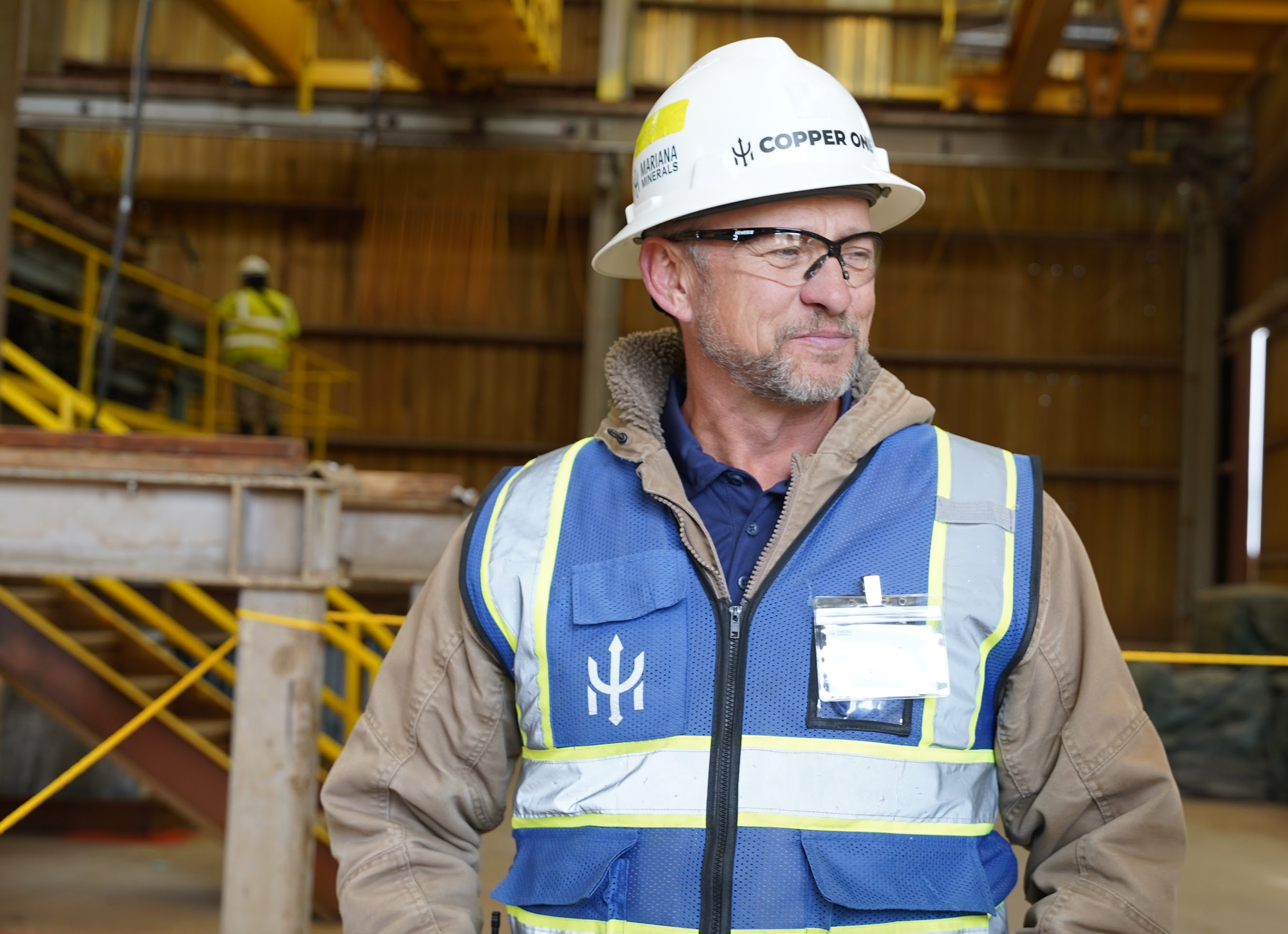
Before the speeches and the explosion, I got a tour of the copper processing plant from James Gill, Process Operations Manager at Copper One, 35-year resident of nearby Moab, and a man who gives the impression that he has forgotten more about copper hydrometallurgy than most people ever learn.
James Gill, Process Operations Manager, Copper One. Photo: Coco Tullis / TechBuzz
The refinery produces copper cathode through a hydrometallurgical process: ore from the open pit undergoes heap bioleaching, where microbes help dissolve copper into solution, which then passes through solvent extraction and electrowinning cells to plate out pure copper onto stainless steel blanks. The blanks are stripped, inspected, stacked, and bundled. The result is copper cathode at 99.999% purity — five nines, in the industry shorthand — some of the cleanest copper produced anywhere.
Purity matters more than it might seem. Copper One's cathode travels to U.S. rod mills, where it is melted and extruded into copper rod, then drawn into wire as fine as communications cable. At that gauge, a single microscopic impurity can snap the wire mid-extrusion and force an entire production line to shut down. "If there's any impurities, it'll break," Gill said over the noise of the plant. "So they like good pure copper so they can stay running."
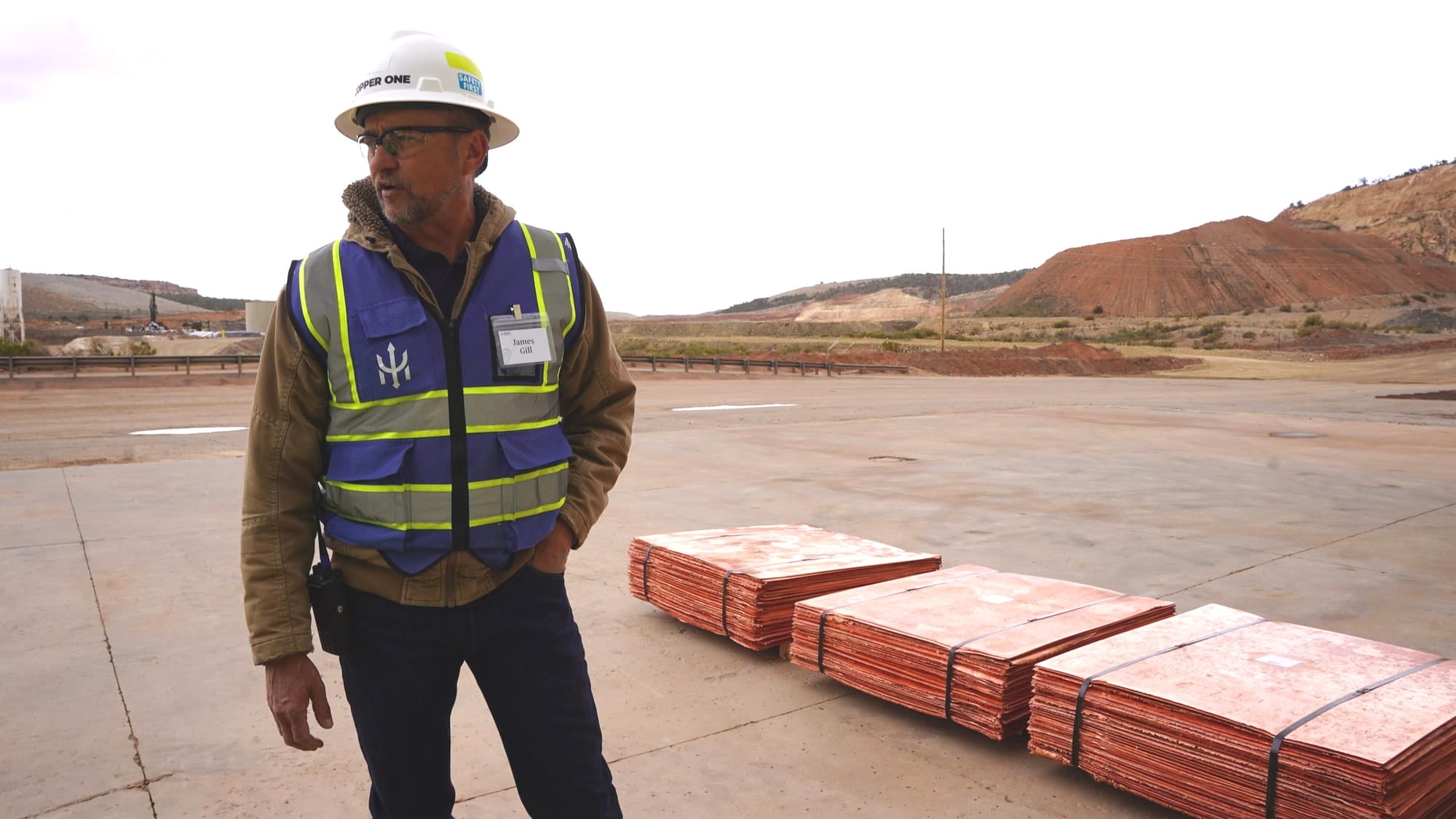
The finished bundles are striking objects. Each is a stack of copper sheets roughly 40 by 45 inches across and about a foot tall, tagged with a sticker and QR code displaying its weight. Most run around 4,800 pounds; some lighter ones weigh closer to 2,800. A flatbed truck takes around ten bundles per load. All of it, Gill noted with quiet pride, stays in the United States.
Jim Gill, Process Operations Manager at Copper One, standing next to finished copper cathode bundles at Copper One's refinery plant — each tagged with a QR code logging its weight and purity, between 2,500 and 4,800 lbs per bundle and typically 99.999% pure copper. (Photo: Coco Tullis / TechBuzz)
"We're just getting ready to do a first-class restart," he said. He has been at this site through its previous ownership under Lisbon Valley Mining, watched it go quiet, and now watches it wake up under a company deploying more computing power per ton of copper than anything that has come before.
A scrap recycling pilot plant is already running at the site. When it scales, production could roughly double. "It's gonna be big," Gill said. He said it the way experienced people say things they already know to be true.
CMEI Representation
Rachael Overbey, Chief of Staff and Acting External Affairs Director for the Department of Energy's Office of Critical Minerals and Energy Innovation (CMEI), was present at the event. CMEI was created by Energy Secretary Wright specifically to consolidate the federal government's critical minerals programs under a single office reporting directly to the Secretary — a structural choice that signals these supply chains are a personal priority, not a departmental afterthought.
Rachael Overbey, Chief of Staff and Acting External Affairs Director for the Department of Energy's Office of Critical Minerals and Energy Innovation (CMEI) Photo: Coco Tullis / TechBuzz
Overbey was refreshingly candid about what her presence meant. "Sadly, the Department of Energy can't take any credit for the project you're launching today," she told the crowd, to knowing laughter. "Nonetheless, we want to express our enthusiasm and support for an initiative that moves us closer to our shared goal of end-to-end supply chain security for the critical minerals that underpin the modern economy."
"Energy security is national security," she said. The reasoning, she explained, is simple: the U.S. cannot build AI data centers, defense systems, or energy infrastructure without secure supplies of the metals those systems require. The Trump administration, she said, has made critical minerals among its very highest priorities.
The fact that DOE couldn't claim credit — that a venture-backed startup moved faster than any federal program — was not lost on anyone in the audience.
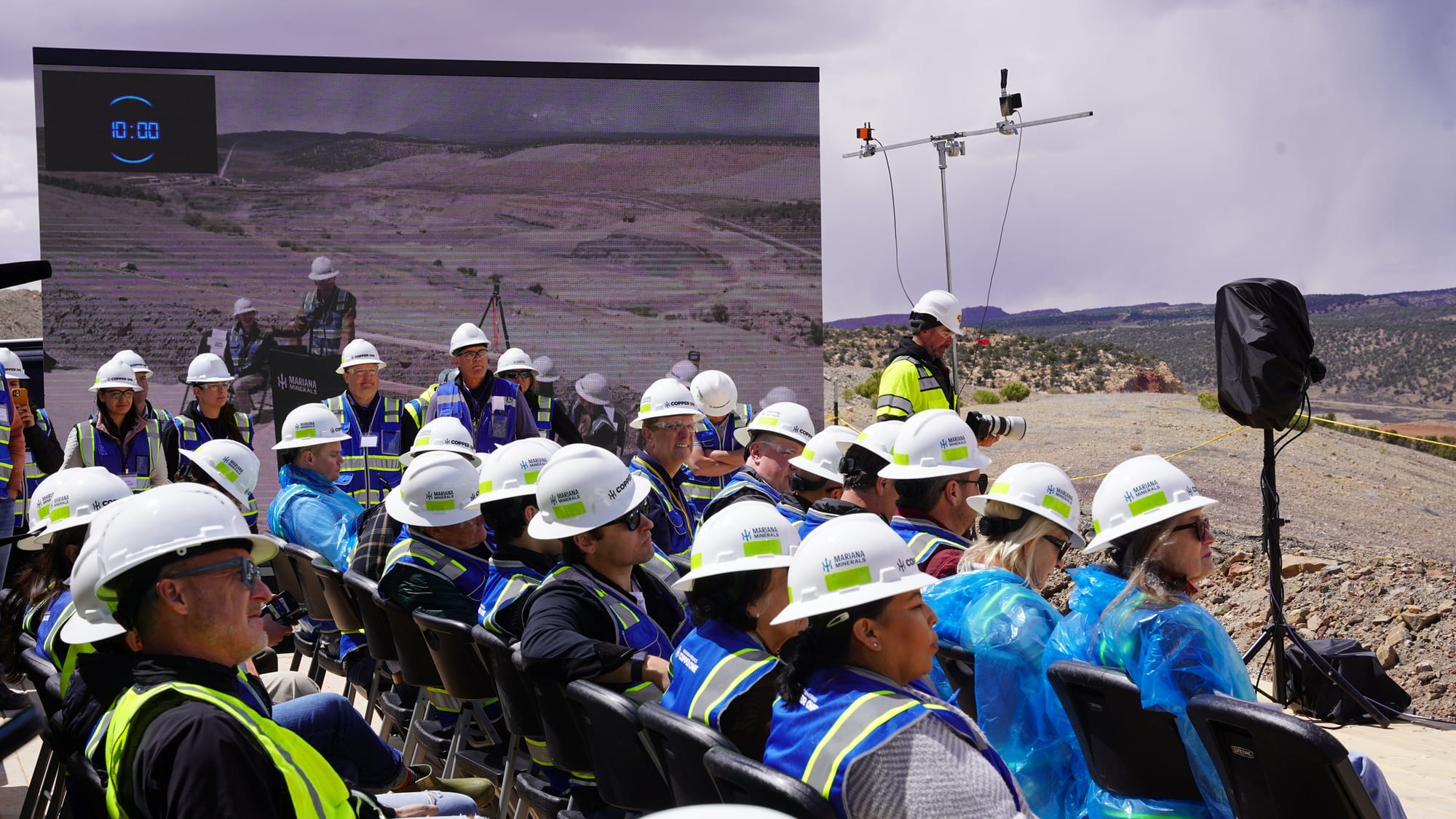
The kick off ceremony, dramatically staged on the rim of the Copper One mine, drew Governor Spencer Cox and First Lady Abby Cox, DOE officials, state legislators, county commissioners, and investors from across the country. Photo: Coco Tullis / TechBuzz
"This is how you begin to change the trajectory of a rural economy"
San Juan County is one of the poorest counties in Utah. Its median household income sits well below the state average. Its young people leave for opportunities elsewhere. Its employers struggle to find skilled labor. The cycle, as San Juan County Commission Chair Lori Maughan described it from the podium, just continues on and on.
She told a story that resonated with many in the audience. Not long ago, she spoke with a young person raised in the county who wanted to come back but couldn't — there was nothing to come back to. "I also have four children," she said, "who are unable to come back to this area for that exact reason."
She paused. Then she looked up.
"This mine represents real, measurable opportunity. It brings good-paying jobs that can support families, creates stable employment in an area that needs it, and allows us to keep our workforce here at home." She was precise about what that means beyond the mine itself: more tax revenue for schools, roads, emergency services, and local businesses that grow when families stay. "This is how you begin to change the trajectory of a rural economy.”
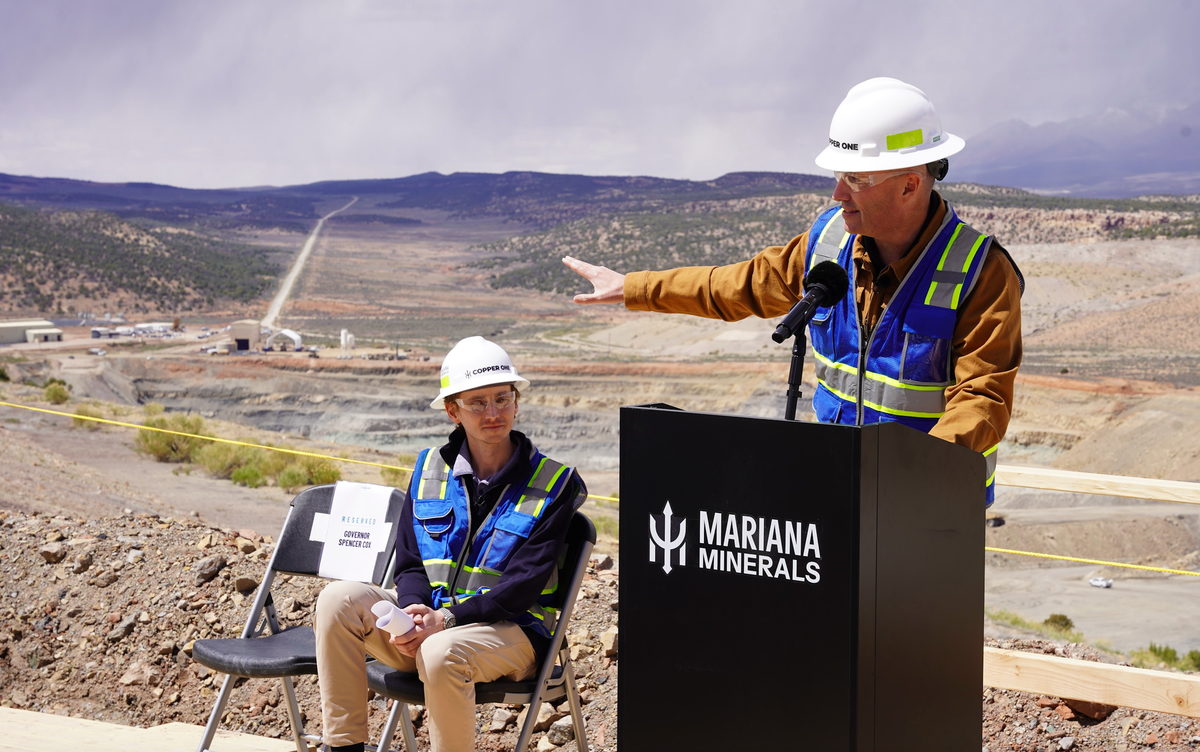
San Juan County Commission Chair Lori Maughan speaks at the Mariana Minerals Copper One restart ceremony on April 27, 2026, with the open pit mine and La Sal Mountains visible behind her. "This is how you begin to change the trajectory of a rural economy," she told the crowd. Also on stage: Governor Spencer Cox and Mariana Minerals CEO Turner Caldwell. Photo: Coco Tullis / TechBuzz
The Governor and the button
Governor Spencer Cox had notes. He set them aside; it was too windy anyway. He spoke without them, and what came out was more honest for it.
"I want you to take a moment and just look around," he told the crowd. "I want you to remember this moment — because I truly believe that decades from now, all of us will be remembering this as one of the most important moments in our state's history, and in our country's history, and maybe in the history of the world."
He traced the arc of American industrial decline plainly: we used to lead the world, we invented the technologies that built it, and then we decided to outsource the hard work and depend on countries that, in some cases, actively wish us harm. Utah's response was Operation Gigawatt — a state-level push to streamline energy and critical minerals permitting and make Utah the most attractive state in the country for this kind of investment. He thanked Senator Ann Milner and Representative David Shallenberger, both present, for supporting the 2025 legislation, SB 132, that made it possible.
Then he turned to San Juan County specifically — "the most rural of our counties" — and said something that, in the context of everything else said that day, landed harder than anything in his prepared remarks.
"San Juan County is at the center of solving the biggest problems facing the world today. You should be incredibly proud. This means your kids and grandkids get to stay here. And that's what this is all about."
After the speeches, I caught a few minutes with Governor Cox one-on-one. I asked whether, as someone from a small Utah town himself, this felt personal.
"I was one of the lucky ones who got to go back home to my small town," he said. "But so many of my friends never did. They never had this opportunity." He let that sit for a moment. "So I feel like that's exciting."
Governor Spencer Cox discussing his thoughts about the significance of Mariana Minreals Copper One mine with Mark Tullis "Ten years from now," He told me, "we're going to look back on this moment and others and realize this was a real turning point in our state." Photo: Coco Tullis / TechBuzz
Lori Maughan's four children could not come home. Spencer Cox's friends never came back. Jim Gill has lived in Moab for 35 years and watched this mine go quiet and now watches it wake up under software he barely recognizes. These are not abstractions. They are the actual stakes of what happened in San Juan County today.
The explosion, the blue smoke, and what comes next
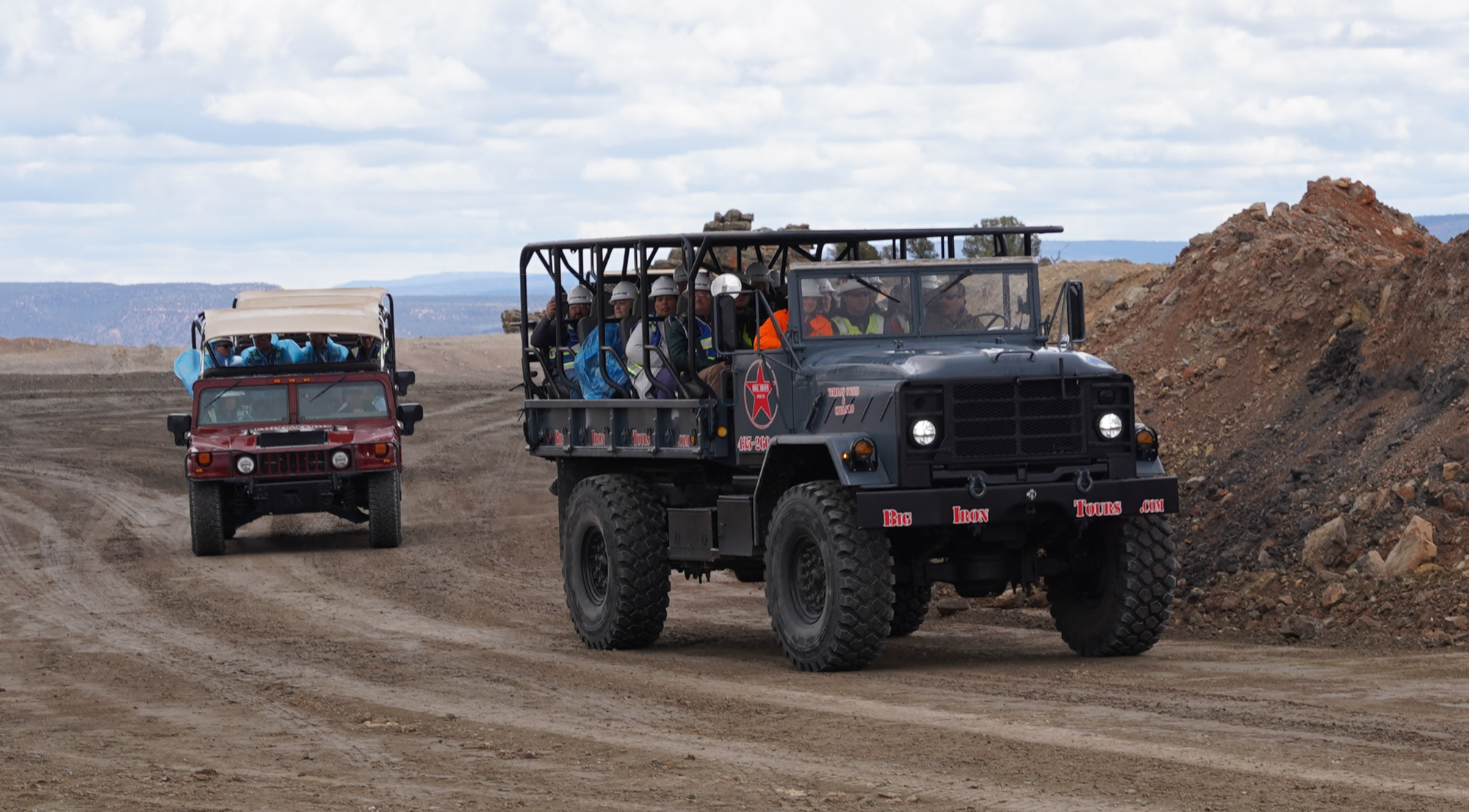
When the blue cloud finally settled over the pit, leaving a fresh broken face of copper-bearing rock exposed to the Utah afternoon, the crowd began to drift back toward the vintage, upfitted M35 2½‑ton cargo trucks, the famed deuce and a halfs, and a handful of Humvees brought in from adventure tour operators out of Moab to transport the attendees to the rim of the copper mine. People were still laughing about the gender reveal.
Mariana has raised $120 million — a Series A led by Andreessen Horowitz (Menlo Park, CA), with Breakthrough Energy Ventures (Kirkland, WA — Bill Gates-founded) Khosla Ventures (Menlo Park, CA) as strategic investors at the table. Its second active project, Lithium One, is already under construction in Joaquin, Texas, located in Shelby County, within the Haynesville shale region — the world's first GWh-scale lithium extraction facility drawing from oil and gas produced water. Lithium One is considered to be capable of producing up to 3,000 metric tons per year of battery-grade lithium. The U.S. — which accounted for more than 35% of global lithium supply in the 1990s — today produces just 1% of global supply.
Caldwell's ambitious goal for Mariana Minerals is ten projects in ten years. "It only happens," he said, "if Copper One is the success we expect."
The site itself looks like what it is: a mining operation being built by people who came up through Tesla and Silicon Valley and find the idea of running a 2025-era operation with 1975-era tools genuinely baffling. The mine is back to life, but in a different way than before. Autonomous trucks move with unhurried confidence. The refinery hums, cranking out heavy bundles of copper cathode — each one tagged, weighed, accounted for, and destined for somewhere in the American supply chain.
All of it, Jim Gill shared, stays in the U.S.
"We're just getting ready to do a first-class restart," he said.
In San Juan County, Utah, on a rainy, windy Monday in April 2026, that is exactly what they did.
Attendees received I ♥ explosives stickers, ear plugs and protective gear at Mariana Minerals' historic mine restart, Copper One, in San Juan County, Utah, April 27, 2026
Share this article
The link has been copied!
Your link has expired. Please request a new one.
Your link has expired. Please request a new one.
Your link has expired. Please request a new one.
Great! You've successfully signed up.
Great! You've successfully signed up.
Welcome back! You've successfully signed in.
Success! You now have access to additional content.