Remembrance Aims to Detect Cognitive Decline Years Before Symptoms
Remembrance is developing an AI-powered voice analysis tool to detect early cognitive decline years before symptoms, aiming to improve intervention timing and provide accessible, guided next steps for patients.
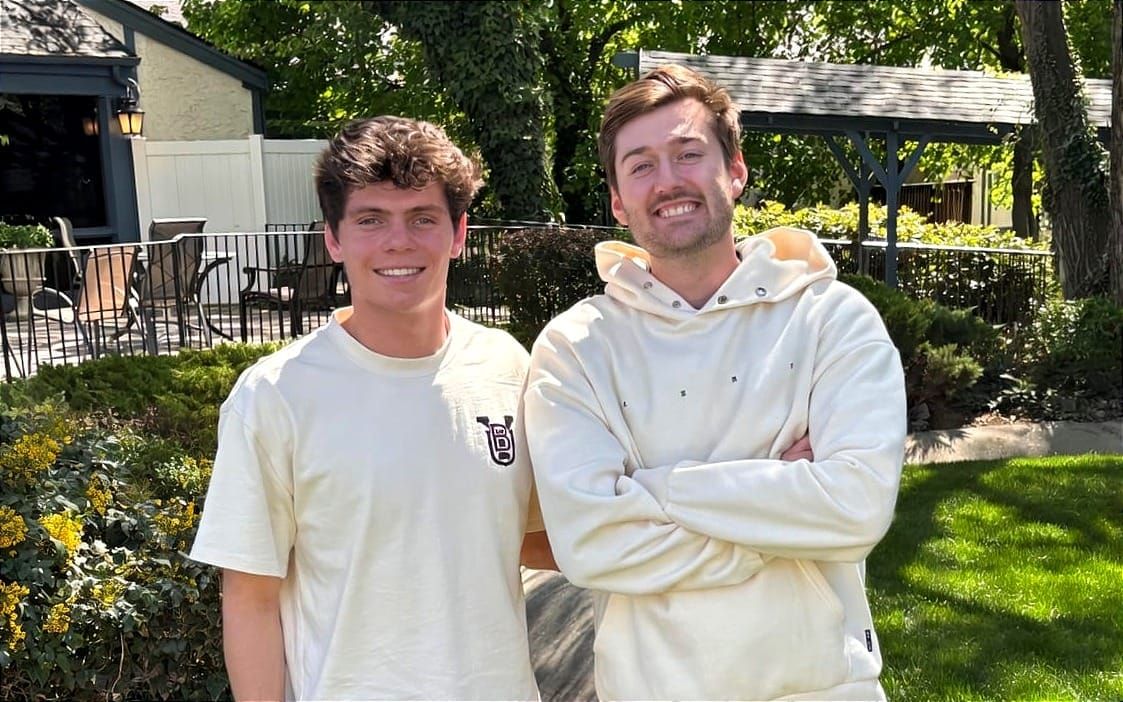
Drew Blackwell and Forrest Harrison are building Remembrance through the Sandbox program—an early cognitive decline detection tool designed to give users a heads-up potentially three to five years before physical symptoms appear.
Most people don’t think about Alzheimer’s until someone they love is diagnosed. By then, the window for early intervention is already closing.
Blackwell didn’t initially set out to work on cognitive decline. The idea emerged from a conversation that stuck.
“I was working on something I wasn’t super interested in,” he said. “Then I ended up talking with another entrepreneur who mentioned that one of the biggest risk factors for Alzheimer’s is lack of social interaction. That stopped me.”
That insight pushed him to dig deeper.
“I started looking into what people were actually doing in this space,” Blackwell said. “It just never felt like enough.”
That conviction became Remembrance.
Blackwell, a student at Brigham Young University, and Harrison, a student at Utah Valley University, are building the company through Sandbox. Their goal: detect cognitive decline earlier than traditional systems—and give users a clear path forward.
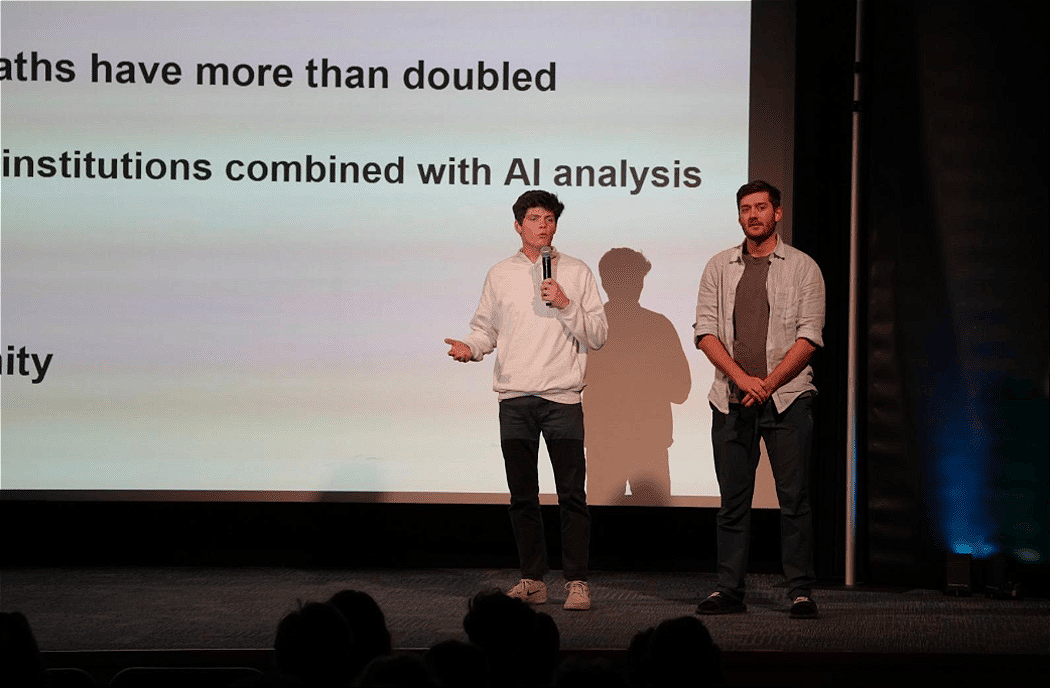
Drew Blackwell and Forrest Harrison, Co-Founders of Remembrance, pitching at BYU Sandbox Demo Day 2026, Provo, Utah, April 1, 2026
A Gap in Early Detection
Most cognitive decline is diagnosed reactively. Patients are typically evaluated only after symptoms become noticeable.
Advanced diagnostics exist, including blood tests, but they are often expensive and inaccessible.
“Most people aren’t going to see a doctor unless something already feels off,” Harrison said. “And even then, there’s not always a clear roadmap for what to do next.”
Remembrance is targeting that gap.
A One-Minute Audio Test
The product is designed to be simple.
Users visit the website, record a one-minute audio sample, and submit it. The platform analyzes the recording using AI-powered vocal biomarker technology, looking for subtle changes in speech patterns linked to early cognitive decline.
The approach builds on research from groups like Canary Speech, UMass Medical School, and Japan’s National Center for Cardiovascular and Cerebral Health.
If a result is flagged, the company says it provides follow-up guidance rather than leaving users on their own.
“We don’t just send results and leave people there,” Blackwell said. “If something comes back positive, we help guide next steps.”
Beyond Screening
The founders see Remembrance as more than a detection tool.
Their long-term vision includes a broader cognitive health platform, potentially including a clinic model that pairs early detection with accessible care.
“We don’t want this to become another financial burden,” Harrison said. “People should be able to get help without worrying about cost.”
At its core, Remembrance is trying to shift the timeline—moving intervention earlier and giving families more time to act.
The company is still early, and questions remain around validation and clinical adoption. But the premise is straightforward: if cognitive decline can be detected earlier, outcomes could change.