Altitude Lab Portfolio Tops $205 Million in Funding as Salt Lake City’s Biotech Scene Gains Real Traction
Altitude Lab’s biotech accelerator portfolio has surpassed $205 million in funding, with Salt Lake City startups reaching clinical trials, pharma partnerships, and commercialization milestones that underscore Utah’s life sciences influence.
Recursion-backed accelerator says its startups are landing Series A rounds, pharma partnerships, and clinical milestones despite a difficult market for early-stage biotech.
Salt Lake City, Utah — May 19, 2026
Altitude Lab, the Salt Lake City biotech accelerator founded by Recursion, says its portfolio companies have now raised more than $205 million in early-stage funding since the program launched in 2020, a milestone that signals growing momentum for Utah’s life sciences ecosystem.
The announcement comes at a time when biotech fundraising remains selective and many early-stage startups are facing a tougher capital environment. Against that backdrop, Altitude Lab’s latest numbers suggest that its model — backing platform-first biotech founders early and surrounding them with investors, operators, and lab resources — is starting to produce tangible results.
More importantly for Salt Lake City, the accelerator’s startups are no longer just early experiments. Several are moving into the clinic, signing strategic partnerships, and building technologies with commercial traction.
“Altitude Lab serving as our biotech basecamp” helped Peel Therapeutics grow into a clinical-stage biotech company, Peel CEO and co-founder Dr. Joshua Schiffman said in the release.
From accelerator bets to clinical-stage companies
A big part of that momentum came in 2025, when two alumni from Altitude Lab’s inaugural cohort — Peel Therapeutics and Rebel Medicine — closed Series A rounds to push their programs forward.
Peel Therapeutics raised a fully subscribed $20 million Series A to support continued development of PEEL-224, an optimized TOP1 inhibitor. In a Phase 1A trial, the therapy posted a 68% disease control rate in heavily pre-treated solid tumor patients, with limited gastrointestinal toxicity, according to Altitude Lab. The company plans to use the new funding to support Phase 1B/2 work in metastatic colorectal cancer and pediatric solid tumors, while advancing its broader oncology pipeline.
Rebel Medicine, meanwhile, closed a $7.5 million Series A led by Crocker Ventures and also received FDA IND clearance for Alevatrix, its long-acting bupivacaine reformulation designed to deliver up to 72 hours of non-opioid pain relief. The company is now running its first-in-human Phase 2 trial as it looks to position the therapy as an opioid-sparing option.
Those are the kinds of milestones that matter for any startup ecosystem: companies graduating from lab concepts into real clinical development.
Portfolio wins go beyond fundraising
Altitude Lab’s update also shows that its portfolio’s progress isn’t limited to venture rounds.
Leash Bio signed a multi-target agreement with Monte Rosa Therapeutics focused on degrader discovery for difficult-to-drug targets. According to Altitude Lab, Leash’s platform had already identified tractable material for more than 500 targets before the deal.
3Helix announced a partnership with BASF and launched NeoHelix Regenerate, a precision peptide ingredient based on its collagen-hybridizing peptide technology. In clinical studies cited by Altitude Lab, the ingredient showed a 41% reduction in damaged collagen and a 65% increase in hyaluronic acid levels after 56 days.
Intactis Bio raised fresh funding from Nucleus Fund and RPV while hitting a research milestone involving lab-grown neurons derived from iPSCs. Sethera Therapeutics entered award negotiations tied to the CDMRP Breast Cancer Research Program and expanded its scientific advisory board with high-profile academic names, including a Nobel laureate.
Altitude Lab’s newest cohort is also already producing signals of momentum. Calycia Biosciences, a University of Utah spinout, won the accelerator’s 2026 Demo Day and secured $400,000 in pre-seed funding from University of Utah Ventures and the Cumming Foundation.
A bigger moment for Salt Lake City biotech
Salt Lake City has long had academic and healthcare strengths, but in biotech it has often been viewed as an emerging market rather than a national player. Altitude Lab’s progress suggests that narrative is beginning to shift.
The accelerator has positioned itself as part startup studio, part founder community, and part gateway into a wider biotech network. That network now includes more than 200 investor and strategic partner firms, according to the organization.
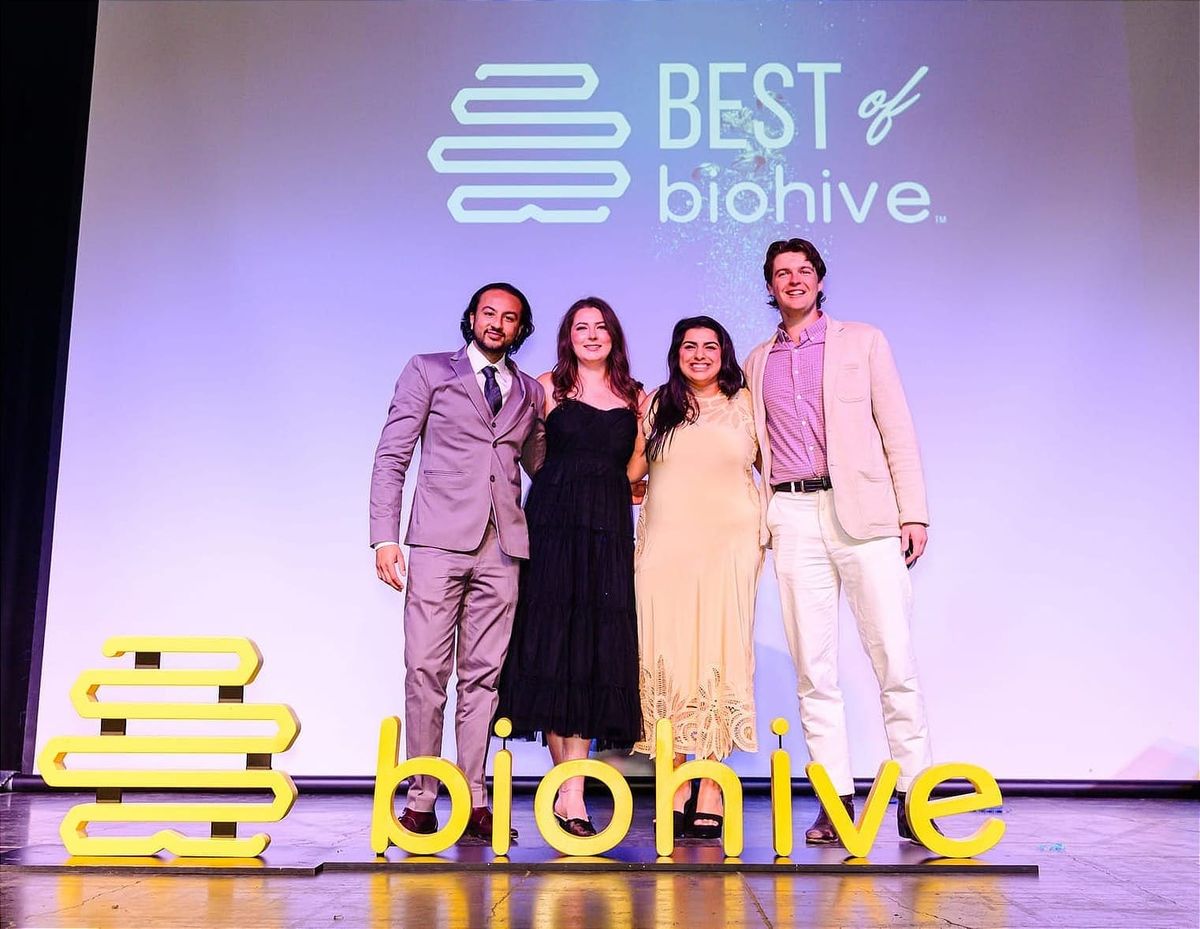
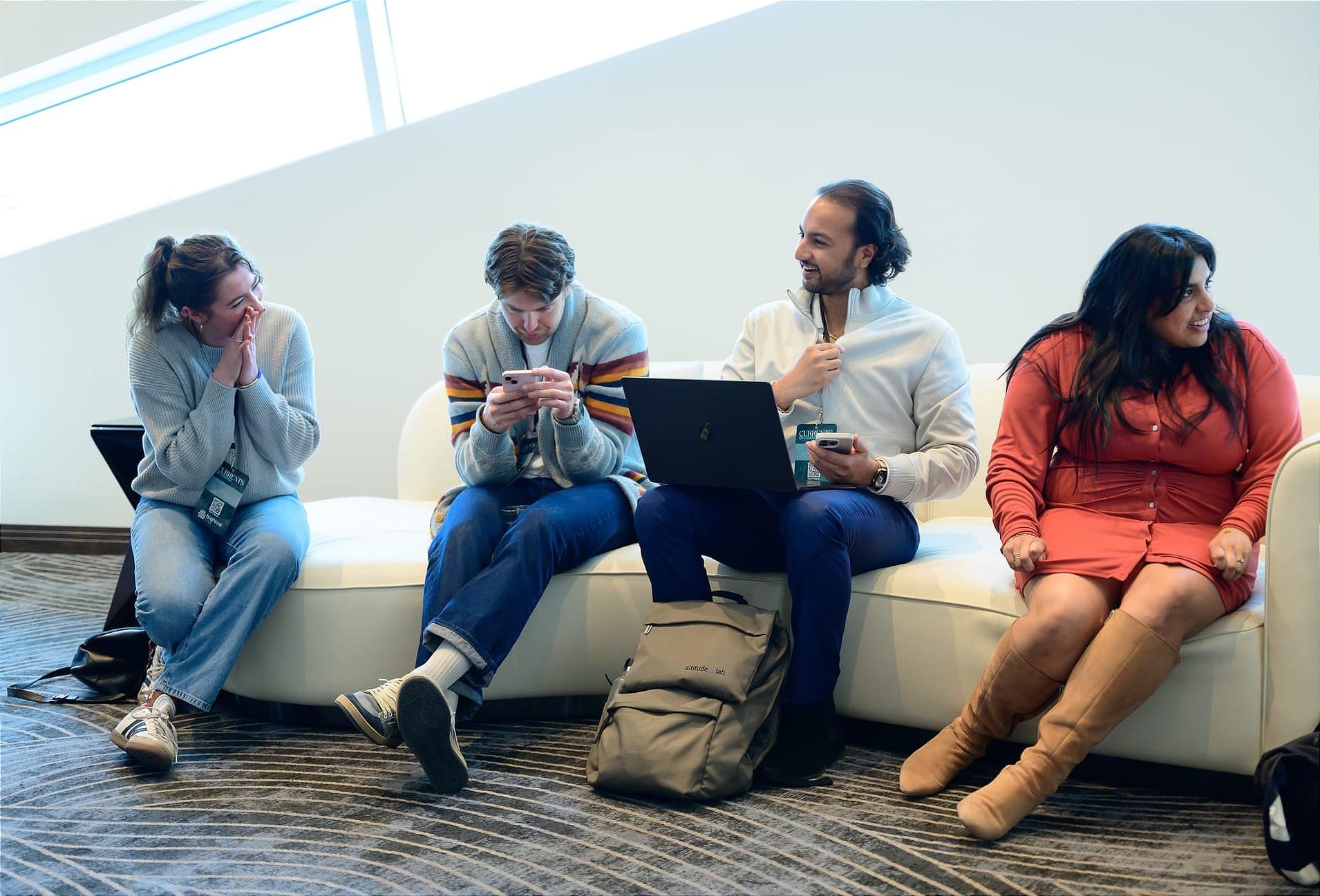
Lauryn Narramore, Jake Corrigan, Kapil Sharma, and Chandana Haque
Altitude Lab also announced a leadership change, naming Kapil Sharma as interim executive director. Sharma has spent the past four years helping raise the accelerator’s national profile and deepen its ties to investors and strategic partners. Co-founder and former executive director Chandana Haque will remain involved as a board member.
“Our mission remains unchanged: to build a new breed of biotech companies and a nationally interconnected ecosystem, while strengthening Salt Lake City’s position as an upcoming biotech hub,” Sharma stated.
For a program that previously expanded its platform with a pre-seed venture fund, announced in February 2025, the latest milestone adds another proof point: Altitude Lab is not just helping launch biotech startups. It’s helping create the infrastructure for a more durable biotech economy in Utah. Salt Lake City has emerged as a national biotechnology hub. Altitude Lab is making a positive impact on where and how the next generation of biotech companies gets built.
Learn more about Altitude Lab here. See early TechBuzzcoverage of Altitude Lab here. See April 2025 SheTech Media intern interview of Chandana Haque.
Share this article
The link has been copied!
Your link has expired. Please request a new one.
Your link has expired. Please request a new one.
Your link has expired. Please request a new one.
Great! You've successfully signed up.
Great! You've successfully signed up.
Welcome back! You've successfully signed in.
Success! You now have access to additional content.