Utah's Business and Chancery Court: What Startup Founders Should Know
Utah's Business and Chancery Court handles qualifying commercial disputes involving contracts, corporate governance, financing and emerging technologies. Here's how the court works, what its early cases reveal, and why startup founders and investors should understand its role.
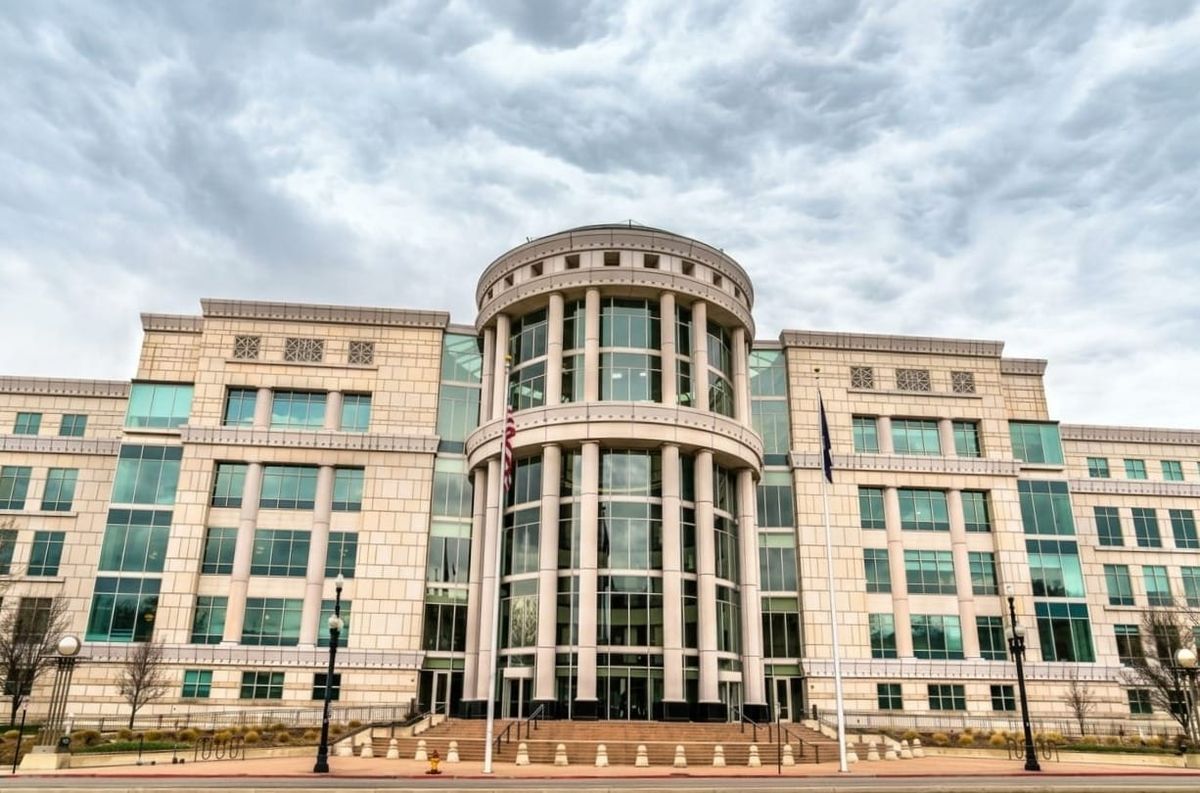
Scott M. Matheson Courthouse in Salt Lake City. Photo: Utah State Bar
Scott M. Matheson Courthouse in Salt Lake City. Photo: Utah State Bar
Startup 101 legal feature: Utah's specialized court handles qualifying disputes involving contracts, corporate governance, financing and emerging technologies. Here's how it works, what its early cases reveal, and why founders and investors should understand its role.
Salt Lake City, Utah – October 9, 2026
Utah startups spend considerable time thinking about incorporation, fundraising, intellectual property and growth. Less attention typically goes to what happens when a founder dispute escalates, an executive leaves with confidential information, an investor challenges a company decision, or a financing agreement falls apart.
Utah's Business and Chancery Court offers a specialized forum for resolving certain business disputes. The court opened Oct. 1, 2024, following legislation signed by Gov. Spencer Cox in March 2023. Judge Rita M. Cornish was appointed to the court in July 2024.
The court is still developing its body of decisions, but its early cases offer a first look at how it operates and the kinds of commercial disputes it handles.
For founders, executives and investors, understanding the court's jurisdiction and procedures can help inform conversations with legal counsel when structuring agreements, managing disputes and evaluating litigation options.
What is the Business and Chancery Court?
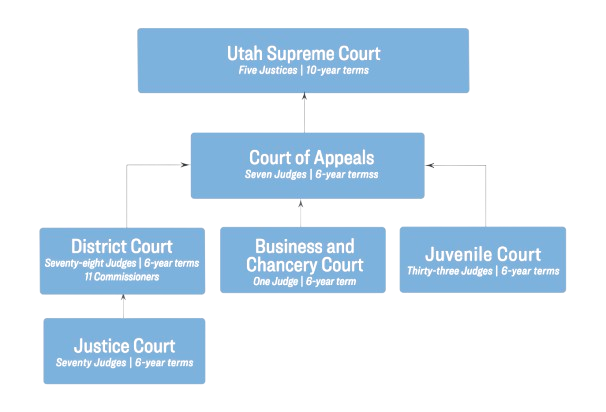
The Business and Chancery Court is a specialized trial court with limited, statewide jurisdiction. Its jurisdiction is concurrent with Utah’s district courts, meaning it does not replace them. Instead, it provides another forum for qualifying business and commercial cases across 21 statutorily defined categories, as shown in Utah's Business and Chancery Court statutes.
A case generally must seek at least $300,000 in monetary damages or seek solely equitable relief, such as an injunction, declaratory judgment or receivership. It must also involve a category of claims authorized by statute. The monetary threshold excludes punitive or exemplary damages, interest, attorney fees and costs.
Qualifying disputes can include:
Breach of contract and business torts.
Breach of fiduciary duty and internal corporate-governance disputes.
Mergers, dissolutions, shareholder derivative actions and receiverships.
Securities transactions and certain commercial financing disputes.
Trade-secret and intellectual-property misappropriation.
Restrictive covenants and disputes involving confidentiality agreements.
Certain disputes involving blockchain technology and decentralized autonomous organizations.
The statute also establishes exclusions and limitations involving areas such as consumer contracts, personal injury, domestic relations, governmental disputes and criminal matters.
A business dispute does not automatically qualify simply because a company is involved. The claims, requested relief and other statutory requirements determine whether the court can hear the case. Founders should not assume that a routine contract disagreement belongs in this forum.
An important distinction: jury trials
The Business and Chancery Court generally decides both the facts and the law without a jury. This is an important consideration for businesses evaluating litigation.
Under Utah Code Section 78A-5a-104, a plaintiff filing in the Business and Chancery Court waives the plaintiff's right to a jury trial on the claims raised in the complaint. A defendant may have a right to demand a jury on qualifying issues, subject to the applicable procedural requirements. When a jury trial is properly demanded and legally available, the relevant claim must be transferred to district court.
The court may still address pleadings, discovery, motions and provisional remedies before a transfer.
For founders and investors, this means the forum is not simply a faster or more specialized version of an ordinary lawsuit. Its procedures can affect how a dispute is decided.
Why Utah created a specialized business court
Utah established the court to provide a specialized forum for complex commercial disputes and to encourage more predictable, effective business-related decisions.
Several procedural features distinguish it from an ordinary civil docket.
Under Utah Code Section 78A-5a-302, the court must provide the parties with a proposed ruling on each dispositive motion within the 48 hours before oral argument. It may provide proposed rulings on other motions as well. This gives the parties an opportunity to understand the court's preliminary analysis before arguing the remaining issues.
The court also must publish final decisions or orders that it determines would provide valuable precedent or serve the public interest. Under Utah's business-court procedural rules, parties may cite both reported and unreported Business and Chancery Court decisions as persuasive authority.
That growing body of decisions could eventually help businesses and their attorneys assess how Utah law applies to recurring questions involving commercial contracts, fiduciary duties, financing agreements, restrictive covenants and emerging technologies.
The potential benefit is greater clarity about how certain disputes are likely to be analyzed. Whether the court ultimately reduces litigation costs or materially improves predictability remains to be established.
What the early numbers show
The court's 2026 annual report reports that the Business and Chancery Court has received more than 100 case filings since opening in October 2024. The report describes the court as a statewide forum for complex business disputes involving more than $300,000 in monetary damages across 21 statutorily defined business-related categories.
The cumulative filing figure provides a more recent measure of the court's activity than the initial caseload reports. It does not, by itself, establish how quickly cases are resolved, whether litigation costs are lower, or whether the court has influenced business formation and investment decisions.
Three cases illustrate the court's reach
The court's early decisions offer a more concrete picture of the disputes it can encounter. Each also illustrates why founders should understand the distinction between a court's jurisdiction, its procedural role and the merits of an underlying dispute.
Digital assets and decentralized organizations
One case involved a secured digital-asset loan of up to $10 million, approximately $11 million in cryptocurrency collateral and companies based outside Utah.
In May 2026, the court dismissed the claims without prejudice because the defendants lacked sufficient contacts with Utah to establish personal jurisdiction.
The distinction matters for technology companies conducting business across state lines. Electronic communications, remote contracting or a transaction involving digital assets do not automatically establish that a defendant can be sued in Utah.
The ruling addressed the court's authority over the defendants, not the underlying merits of the transaction.
Executive agreements and restrictive covenants
Another dispute involved smart-home companies and a former executive. The parties contested restrictive covenants and compensation allegedly owed under a consulting agreement.
The case illustrates the kinds of disagreements that can arise when an executive departs a company: the enforceability and scope of contractual restrictions, compensation obligations, and the use of information or relationships developed during employment.
For founders, it is a reminder that executive and employee agreements deserve careful drafting. The court's involvement does not mean every restrictive covenant is enforceable or that every dispute over a departing employee belongs in this forum.
Complex financing and receivership
A third dispute involved special-purpose entities and $94 million in bond financing for a large real-estate development.
A receivership is an equitable remedy that places specified assets or operations under the control of a court-appointed receiver. Such proceedings can be consequential when a financing structure breaks down and parties disagree about how assets should be managed or protected.
The case illustrates the court's role in complex financing disputes and requests for equitable relief. It does not establish that the court will grant a receivership in other cases with different facts.
What the court could mean for Utah startups
The court's jurisdiction covers several areas that can become important as technology companies grow.
Founder and governance disputes. Disagreements over control, fiduciary duties, ownership or company decisions can threaten a startup's operations. A specialized forum may provide a setting for resolving qualifying disputes involving internal business governance.
Fundraising and commercial agreements. Financing arrangements, securities transactions and complex contractual relationships can create disputes among founders, investors, lenders and other counterparties. Written decisions may help counsel assess how similar issues have been addressed.
Intellectual property and departing employees. Trade secrets, confidential information, licensing agreements and restrictive covenants can become central when an employee or executive leaves, a competitor enters the market, or a commercial relationship deteriorates.
Emerging technologies. Utah's statute expressly includes certain disputes involving blockchain technology and decentralized autonomous organizations. This gives the court authority to address qualifying disputes in areas where business models and legal questions continue to evolve.
Statewide access. The court has statewide jurisdiction, and the ordinary statutory venue requirements applicable to district-court actions do not apply in the same way to actions filed there. The governing statutes define the court's jurisdiction and venue framework.
These features could be useful to Utah companies, but the practical implications depend on the circumstances of each dispute. Founders should not assume that every disagreement involving a technology company qualifies, that filing in the court is necessarily preferable, or that the court will deliver a particular outcome.
Utah and the Delaware comparison
Delaware's Court of Chancery has played a significant role in the state's corporate-law ecosystem. Its influence reflects decades of decisions, specialized judicial experience and an extensive body of corporate-law precedent.
Utah's court is much newer. It cannot yet offer a comparable history of decisions, and its jurisdiction differs from Delaware's system.
Over time, a body of written Utah decisions could provide additional guidance for businesses drafting governance documents, negotiating financing agreements and addressing commercial disputes. Whether that development will influence where companies incorporate, attract investment or resolve disputes will require more evidence.
For now, the clearest conclusion is narrower: Utah has established a specialized statewide forum for certain commercial disputes, including matters relevant to technology companies and their investors.
Still an early-stage institution
The Business and Chancery Court remains a new institution, and its long-term filing volume, disposition times, appellate record, and broader influence on Utah commercial law will require additional years of data. The Utah Judicial Council’s 2026 annual report reports more than 100 case filings since the court began operations on Oct. 1, 2024. More detailed breakdowns of its early docket provide a useful starting point, but they do not yet establish how efficiently the court resolves cases or how its decisions affect business behavior.
The court’s early docket has included contracts, internal business governance, fiduciary duties, digital assets, executive restrictive covenants, complex financing structures, injunctive relief, and receiverships.
For Utah’s technology industry, the court adds a specialized statewide forum focused on many of the legal issues that accompany company formation, investment, growth, intellectual-property development, executive departures, and emerging technologies. Its ultimate influence will depend on the decisions it produces and the degree to which those decisions create greater predictability for Utah businesses and investors.
Editor's note: This article is intended for general informational and educational purposes only. It is not legal advice and should not be relied upon as a substitute for advice from a qualified attorney familiar with the facts and circumstances of a particular matter.
About the author: Leonardo Lupiano is an Entrepreneur in Residence at Utah Tech University and co-founder of legal tech startup Notorio. A final-year law student at UNLV Boyd School of Law from São Paulo, Brazil with an MBA, he focuses on the intersection of law, technology, entrepreneurship, and business strategy. Notorio is a founder-first legal technology platform that helps businesses—especially international founders—organize, manage, and streamline their core legal infrastructure, corporate data, and key documents in one central hub.
Share this article
The link has been copied!
Your link has expired. Please request a new one.
Your link has expired. Please request a new one.
Your link has expired. Please request a new one.
Great! You've successfully signed up.
Great! You've successfully signed up.
Welcome back! You've successfully signed in.
Success! You now have access to additional content.