Proximity (Lehi, UT) launches Smart Messaging Engine, an AI platform that helps civic and political leaders monitor community sentiment and craft targeted outreach — bringing campaign-grade intelligence to any leader, at any level.
The conventional wisdom on AI in politics goes something like this: it's coming, it's vaguely terrifying, and whoever controls it wins. What's less discussed is the basic mechanics — what does AI actually do inside a campaign, and who gets to use it?
Becki Wright has a very specific answer to that question. And today, her company Proximity is putting it on the market.
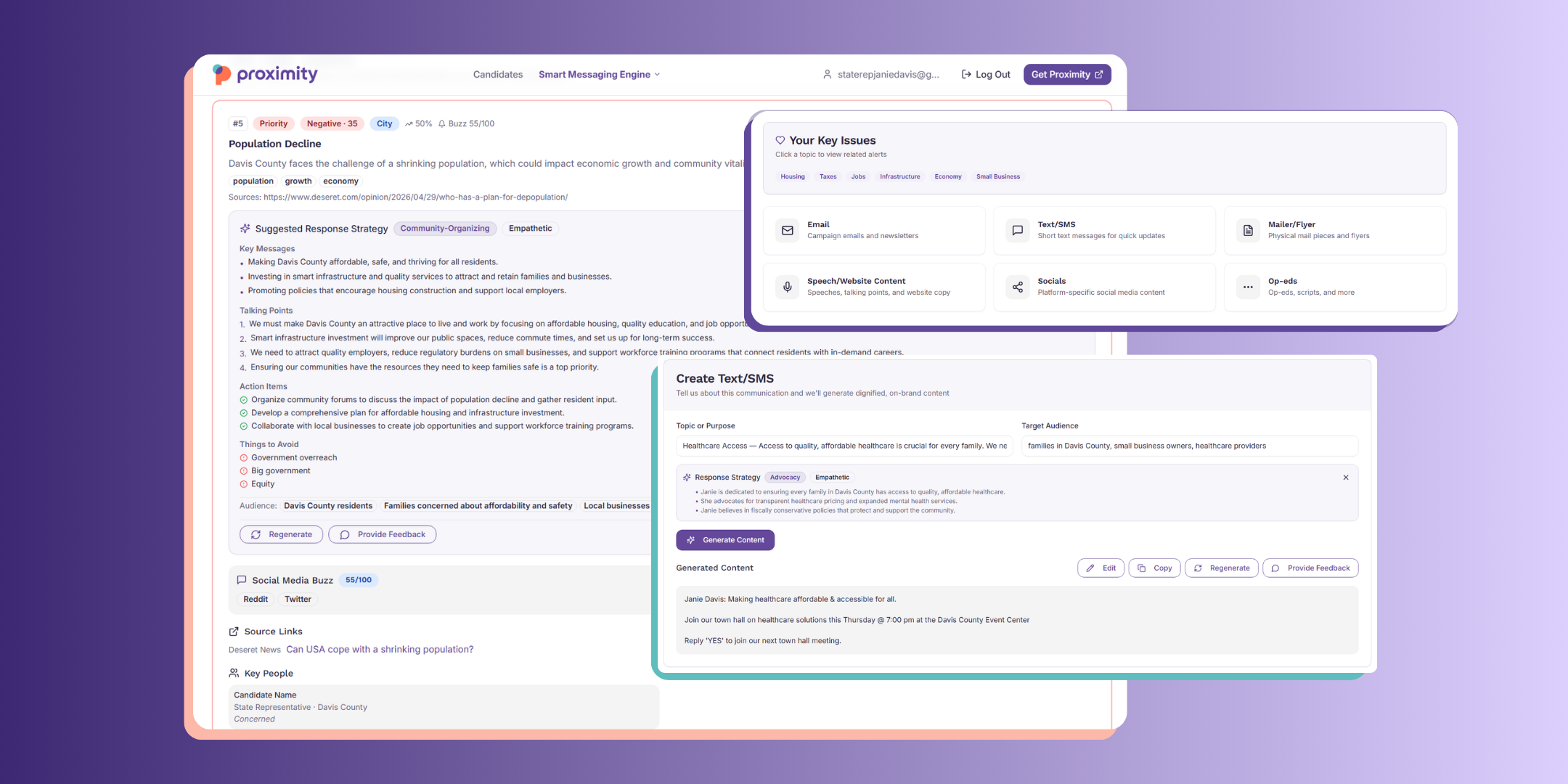
This week Proximity launched its Smart Messaging Engine, the company's first major AI product, and what Wright describes as the first artificial intelligence built specifically for civic and political leaders. It's not a chatbot. It's not a general-purpose assistant with a civics prompt bolted on. It's a purpose-built intelligence layer that monitors news sources, social media, and community conversations in a leader's district, surfaces what constituents actually care about in real time, and then helps that leader respond — fast, in their own voice, on the right channels.
The pitch is direct: "Most campaigns don't lose because they're wrong about the issues," Wright shared in a recent conversation with TechBuzz. "They lose because they connect with communities too late."
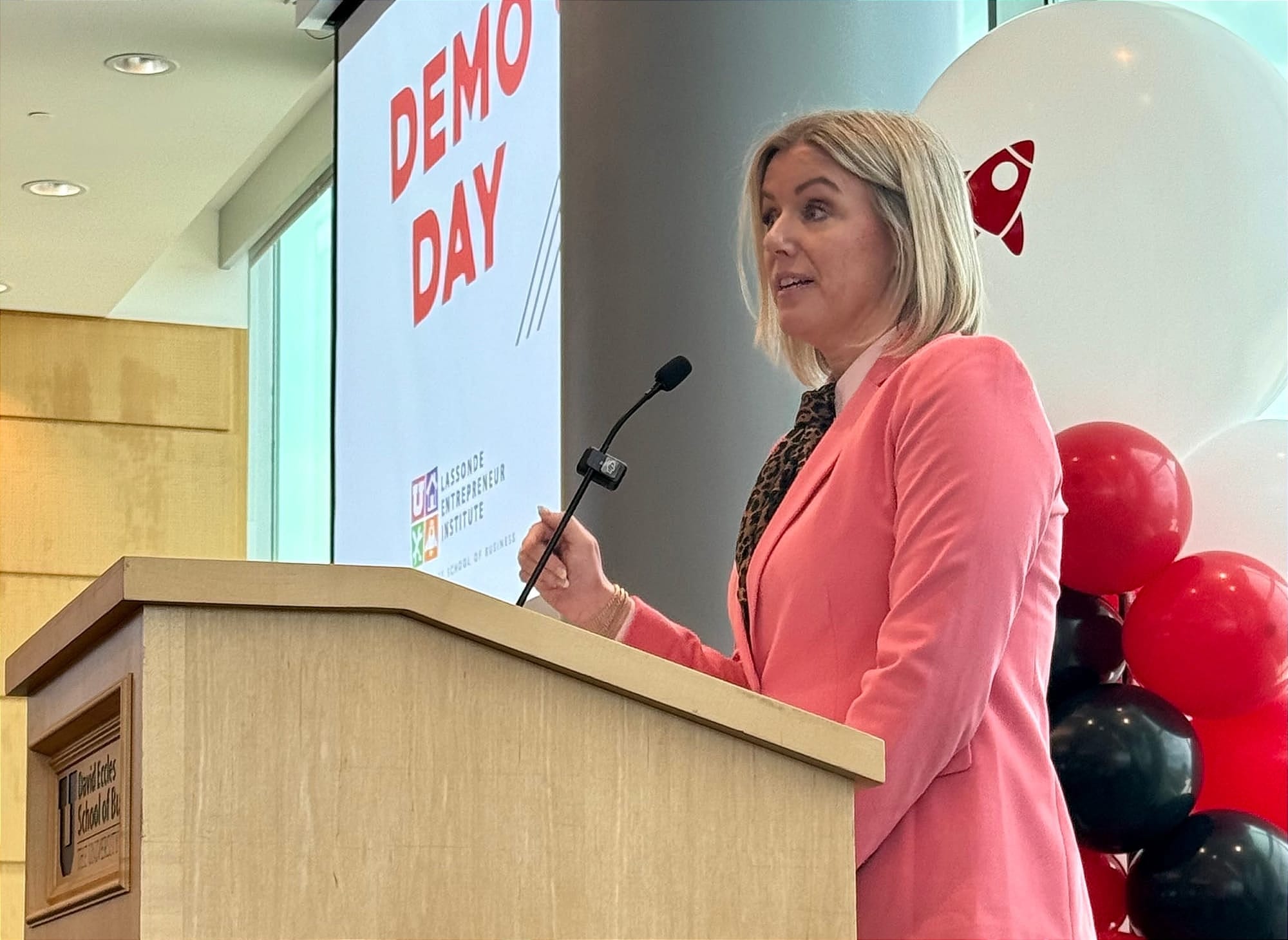
Proximity founder and CEO Becki Wright speaks at Demo Day at the University of Utah's Lassonde Entrepreneur Institute. Wright's company launched its Smart Messaging Engine today, bringing purpose-built civic AI to political and community leaders across 30+ states.
The Gap Nobody Fixed
Here's the problem Proximity is trying to solve. A city council member in suburban Utah, a state senate candidate in Georgia, a nonprofit running an advocacy campaign — they all have the same fundamental challenge. Public opinion is everywhere and fragmented. It's in Facebook groups, TikTok comments, local newspaper letters to the editor, and town hall Q&As that nobody transcribed. Traditional polling takes weeks and costs money most down-ballot campaigns don't have. By the time a candidate figures out that their district suddenly cares intensely about a specific infrastructure issue, the moment to respond authentically has passed.
What the best-funded, most sophisticated national campaigns have always had is a continuous read on that sentiment: opposition research teams, comms directors who live on social media, pollsters running weekly trackers. Smart Messaging Engine is, in essence, an attempt to bottle that infrastructure and sell it for $499 a month.
The product lets leaders build a profile, their district, their issues, their competitors, their preferred sources, and then monitors the information landscape continuously. When something moves, the system alerts them, recommends a response strategy, drafts content (emails, texts, social posts, talking points), and connects to Proximity's existing CRM platform for outreach. A human reviews everything before it goes out. That last part is deliberate and emphasized.
The Builder
Wright came to this from inside the industry she's now trying to disrupt. She spent years as a campaign manager, finance director, and political consultant, putting her close enough to the machinery to be frustrated by it. The tools were fragmented, outdated, expensive, and often inaccessible to the kinds of candidates who most needed an edge. Legacy platforms built for big campaigns, sold to small ones.
She launched Proximity's first beta in 2023, starting with what she calls the "system of record," a unified CRM with email, texting, phone banking, events, and fundraising in one platform. The intelligence layer, the AI, was always the plan. It just had to wait for the infrastructure to exist first.
"We were intentional about building those gateways first," Wright said, "and now being able to add that intelligence so that people could utilize it in the most effective way."
That sequencing matters. A lot of AI products in politics have arrived before the plumbing was ready: flashy tools without the distribution, the trust, or the workflow integration to actually change how campaigns operate. Proximity's approach was slower and more deliberate: build the everyday platform first, earn the user relationships, then layer in the intelligence once people were already living inside the product.
The result is a company now operating in more than 30 U.S. states and Canada, with roughly 25% of its customer base in Utah. Wright reports a two-to-one win ratio for candidates using the platform in the last election cycle, a number that, if it holds, is the kind of data point that writes its own marketing campaign.
Proximity Smart Messaging Engine is built specifically for civic and political leaders. It listens across news, social media, and community conversations based on a leader's biography, priority issues, and trusted sources, so every outbound communication connects and helps mobilize people to action.
The Team, and the Technology Challenge
Here's what makes building political AI uniquely hard: the technology is moving faster than any roadmap can contain.
"AI is changing daily," Wright stated. She's not being hyperbolic. The challenge for her engineering team wasn't just building a product, it was building a product that wouldn't be obsolete by the time it shipped.
Their solution was architectural flexibility. Rather than committing to a single model or infrastructure, Proximity designed its backend to swap models as better ones emerge. They are using smaller, focused models for understanding and classifying signals, and larger models for drafting, with an explicit layer of what Wright calls "civic intelligence" trained on the specific context of political communication.
To anchor the AI buildout, Proximity recently brought on Mou Nandi as CTO. Nandi's background spans computer engineering, healthcare, education, and legal tech — she previously helped build AI-powered document search systems at NetDocuments and founded Monere, a Lehi-based health tech company that uses smartphone photos to screen for anemia, as described by SheTech-TechBuzz media interns earlier this year. It's exactly the kind of pre-hype, applied AI credibility Wright was looking for when she brought Nandi on as CTO.
The Smart Messaging Engine also comes with hard commitments on data: customer data stays with the customer and is never used to train external models. In a political context, where the data in question is constituent relationships and opposition research, that's not a small footnote.
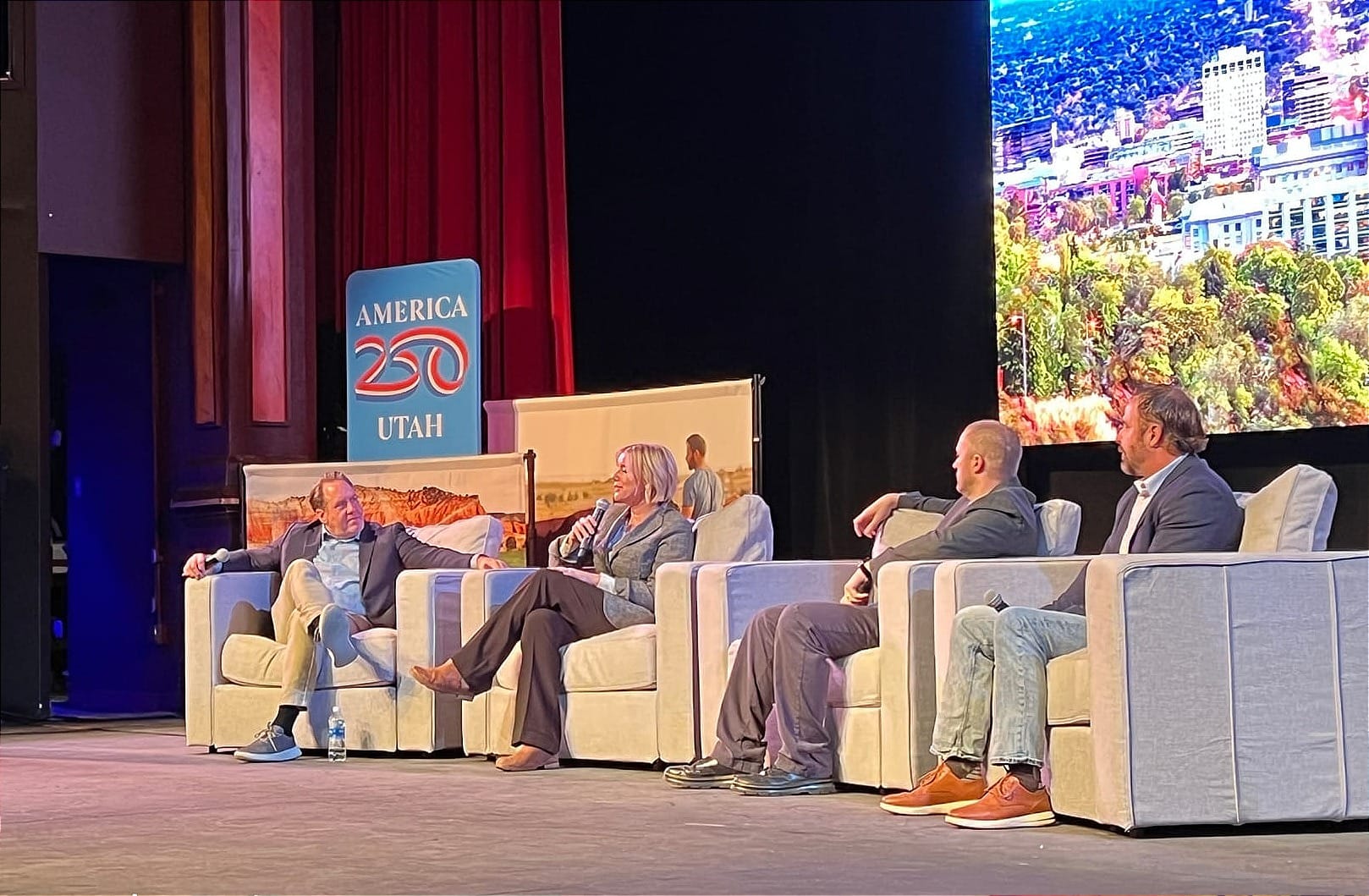
Becki Wright speaking on an entrepreneurial panel at the One Utah Summit
Who's Actually Using This
The customer base is more interesting than it might initially appear. Wright describes it as a "political life cycle." That same person might be a candidate today, an elected official in two years, and running a policy organization five years after that. Proximity is building for the whole arc, not just the campaign moment.
Unexpected use cases have emerged. Educational institutions came asking whether they could use the platform. So did advocacy organizations and think tanks. The platform's core functionality — understand what your community cares about, communicate with them efficiently, track whether it's working — turns out to be useful anywhere that leadership involves constituent relationships.
Two current Utah users Wright highlights: Stephanie Hollist, a Republican running for State Senate to represent District 7 (parts of Davis County and as far east as Morgan), and Karli Black, a Democratic candidate running for the Utah House of Representatives to represent District 58. Different parties, different districts, same platform.
That cross-partisan appeal is part of the brand identity Wright is building. Proximity markets itself explicitly as nonpartisan — a platform that levels the playing field, not one that advantages any particular ideology. In the current political climate, that framing requires some maintenance. But it's also genuinely the product's architecture: the system's intelligence is local and constituent-driven, not nationally ideological.
What's Coming Next
The Smart Messaging Engine is only phase one of what Wright is calling Proximity's "intelligence infrastructure."
Phase two, targeted for Q3, goes a step further. Instead of just monitoring what communities are saying and helping leaders respond, it will track how communities respond to the messages leaders actually send. Close the loop. Turn the outreach data back into intelligence. Recommend next best actions: who to reach, when, on what issue, through which channel.
The framing Wright uses is "engagement pipeline." It is less a messaging tool than an operational guide that tells a leader's team exactly what to do tomorrow, based on what happened today.
If that works the way she describes, it starts to look less like campaign software and more like a continuous intelligence operation, the kind of situational awareness that serious political organizations have historically had to build in-house, at significant cost, and that has largely been unavailable to the local races where most political careers actually begin.
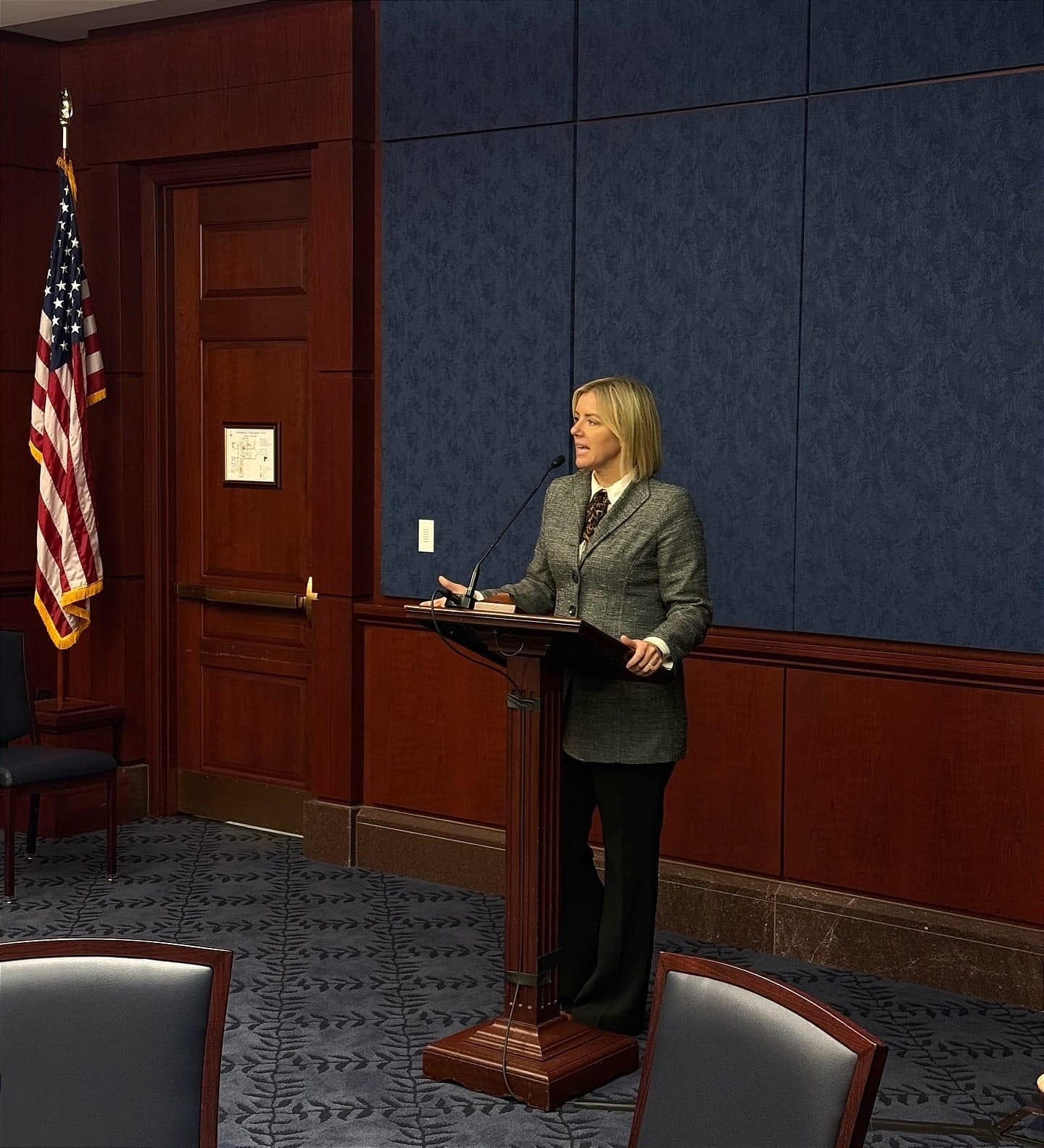
Becki Wright addressing the Salt Lake Chamber in Washington D.C
The Bigger Question
There's a version of this story that's slightly alarming. AI making political communication more sophisticated, more targeted, more efficient. Wright has clearly thought about this tension, and she addresses it with a phrase worth quoting directly: people see AI as either a savior or a pariah, with nothing in between.
Her argument is that purpose-built, vertical AI is different from general AI applied to sensitive contexts. The human-in-the-loop requirement on every outbound message isn't just a feature; it's a values statement. The nonpartisan positioning isn't just a marketing choice; it's a structural constraint on how the product is built and sold.
Whether that holds as the product scales is a genuine question. But the more immediate reality is simpler: AI is already in politics. It's being used, right now, by campaigns and political operatives and influence operations, with and without guardrails, in the open and in the dark. The question Proximity is actually answering isn't whether AI should be in politics. It's whether the civic leaders who are supposed to represent normal people will have access to the same tools as everyone else trying to influence them.
That's the case Wright is making. And from a small office at Kiln Lehi, Utah, she's building the infrastructure to prove it.
Proximity's Smart Messaging Engine is available now, starting at $499/month per user. A second product in the civic intelligence suite is expected in Q3 2026. Learn more at proximityimpact.com.
See the full video of the interview with Becki Wright here:
Share this article
The link has been copied!
Your link has expired. Please request a new one.
Your link has expired. Please request a new one.
Your link has expired. Please request a new one.
Great! You've successfully signed up.
Great! You've successfully signed up.
Welcome back! You've successfully signed in.
Success! You now have access to additional content.